
Microbiology Chapter 15 Innate Immunity 2018 Pearson Education
Microbiology Chapter 15 Innate Immunity © 2018 Pearson Education, Inc.
An Overview of the Body’s Defenses • Resistance to most plant and animal pathogens • Species resistance • Due to physiological processes of humans that are incompatible with those of the pathogen • Correct chemical receptors not present on human cells • Conditions may be incompatible with those needed for pathogen’s survival • Numerous pathogens can cause disease in humans © 2018 Pearson Education, Inc.
The Body’s First Line of Defense • Structures, chemicals, and processes that work to prevent pathogens entering the body • Skin and mucous membranes of the respiratory, digestive, urinary, and reproductive systems © 2018 Pearson Education, Inc.
The Body’s First Line of Defense • The Role of Skin in Innate Immunity • Skin composed of two major layers • Epidermis • Multiple layers of tightly packed cells • Few pathogens can penetrate these layers • Shedding of dead skin cells removes microorganisms • Epidermal dendritic cells phagocytize pathogens • Dermis • Collagen fibers help skin resist abrasions that could introduce microorganisms © 2018 Pearson Education, Inc.
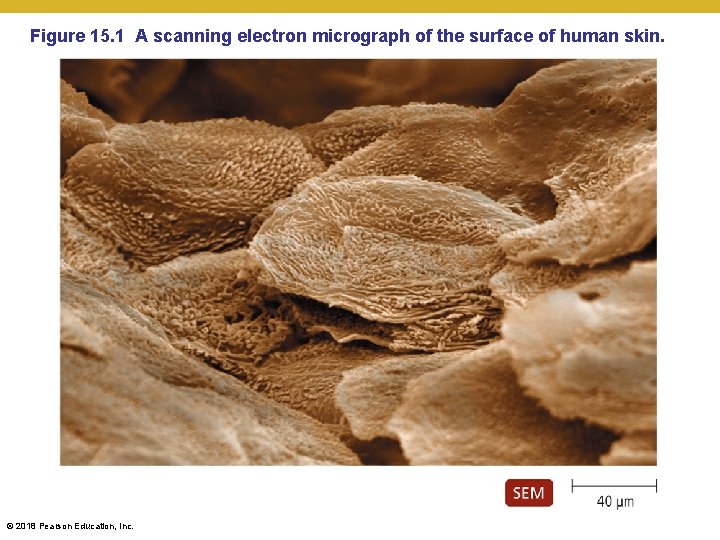
Figure 15. 1 A scanning electron micrograph of the surface of human skin. © 2018 Pearson Education, Inc.
The Body’s First Line of Defense • The Role of Skin in Innate Immunity • Skin has chemicals that defend against pathogens • Perspiration secreted by sweat glands • Salt inhibits growth of pathogens • Antimicrobial peptides act against microorganisms • Lysozyme destroys cell wall of bacteria • Sebum secreted by sebaceous (oil) glands • Helps keep skin pliable and less likely to break or tear • Lowers skin p. H to a level inhibitory to many bacteria © 2018 Pearson Education, Inc.
The Body’s First Line of Defense • The Role of Mucous Membranes in Innate Immunity • Mucous membranes line all body cavities open to environment • Two distinct layers • Epithelium • Thin outer covering of the mucous membranes • Epithelial cells are living • Tightly packed to prevent entry of many pathogens • Continual shedding of cells carries away microorganisms • Dendritic cells below epithelium phagocytize pathogens • Goblet and ciliated columnar cells help remove invaders • Deeper connective layer that supports the epithelium • Produce chemicals that defend against pathogens © 2018 Pearson Education, Inc.
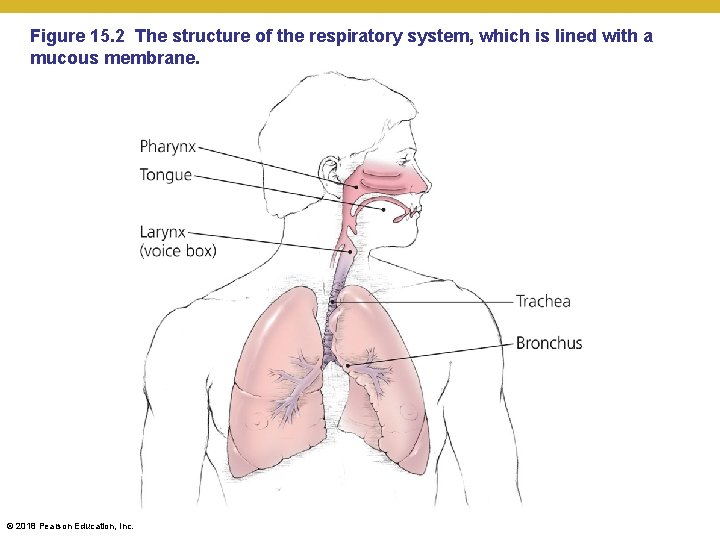
Figure 15. 2 The structure of the respiratory system, which is lined with a mucous membrane. © 2018 Pearson Education, Inc.
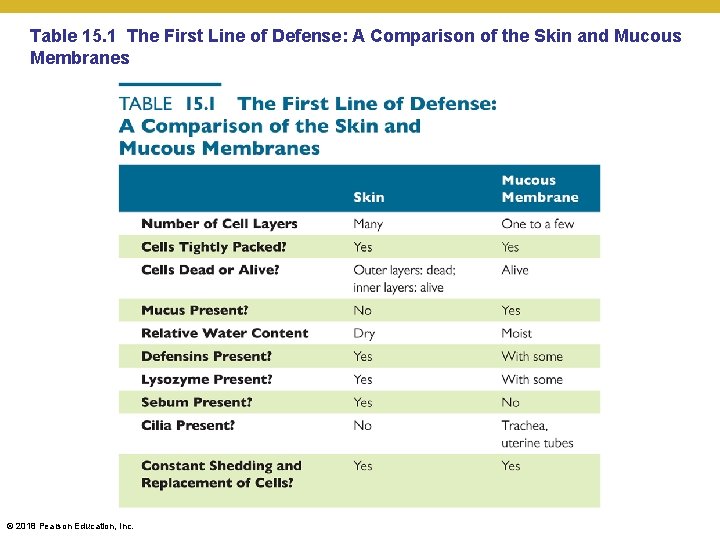
Table 15. 1 The First Line of Defense: A Comparison of the Skin and Mucous Membranes © 2018 Pearson Education, Inc.
The Body’s First Line of Defense • The Role of the Lacrimal Apparatus in Innate Immunity • Lacrimal apparatus • Produces and drains tears • Blinking spreads tears and washes surface of the eye • Lysozyme in tears destroys bacteria © 2018 Pearson Education, Inc.
The Body’s First Line of Defense • The Role of the Microbiome in Innate Immunity • Microbial antagonism • Microbiome competes with potential pathogens • Members of the microbiome make it hard for pathogens to compete • Consumption of nutrients • Create an environment unfavorable to other microorganisms • Prevent pathogens from attaching to host cells • Help stimulate the body’s second line of defense • Generate antimicrobial compounds • Promote overall health by providing vitamins to host © 2018 Pearson Education, Inc.
The Body’s First Line of Defense • Other First-Line Defenses • Antimicrobial peptides • Present in skin, mucous membranes, and neutrophils • Act against a variety of microbes • Work in several ways • Other processes and chemicals • Many organs secrete chemicals with antimicrobial properties © 2018 Pearson Education, Inc.
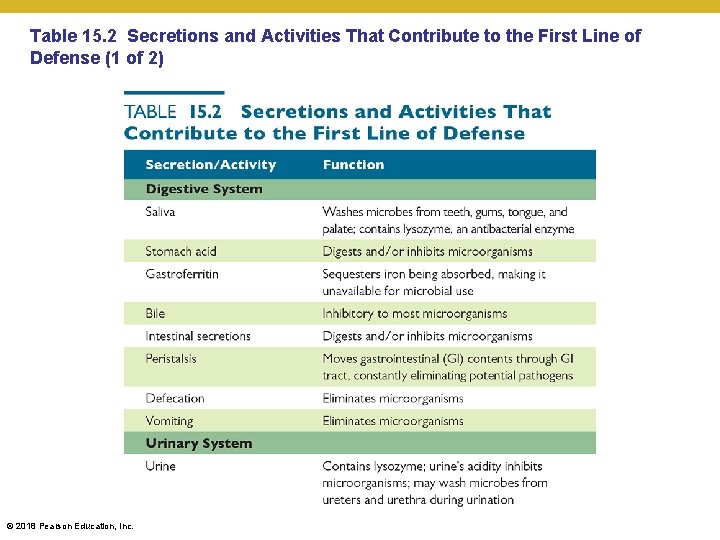
Table 15. 2 Secretions and Activities That Contribute to the First Line of Defense (1 of 2) © 2018 Pearson Education, Inc.
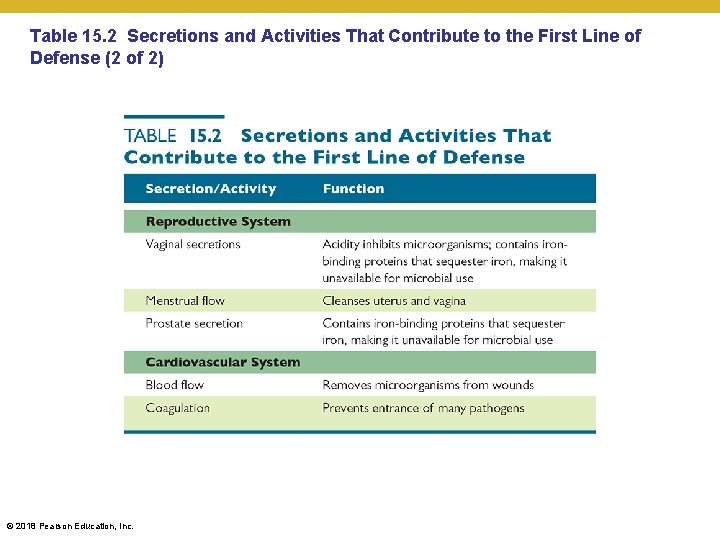
Table 15. 2 Secretions and Activities That Contribute to the First Line of Defense (2 of 2) © 2018 Pearson Education, Inc.
The Body’s Second Line of Defense • Operates when pathogens penetrate the skin or mucous membranes • Composed of cells, antimicrobial chemicals, and processes • Many of these components are contained in or originate in the blood © 2018 Pearson Education, Inc.
The Body’s Second Line of Defense • Defense Components of Blood • Plasma • Mostly water containing electrolytes, dissolved gases, nutrients, and proteins • Serum is the fluid remaining when clotting factors are removed • Contains iron-binding compounds • Iron needed for metabolism • Some microbes produce proteins that bind iron • Complement proteins and antibodies are also found in plasma © 2018 Pearson Education, Inc.
The Body’s Second Line of Defense • Defense Components of Blood • Defensive blood cells: Leukocytes • Cells and cell fragments in plasma called formed elements • Three types of formed elements • Erythrocytes • Carry oxygen and carbon dioxide in the blood • Platelets • Involved in blood clotting • Leukocytes • Involved in defending the body against invaders • Divided into granulocytes and agranulocytes © 2018 Pearson Education, Inc.
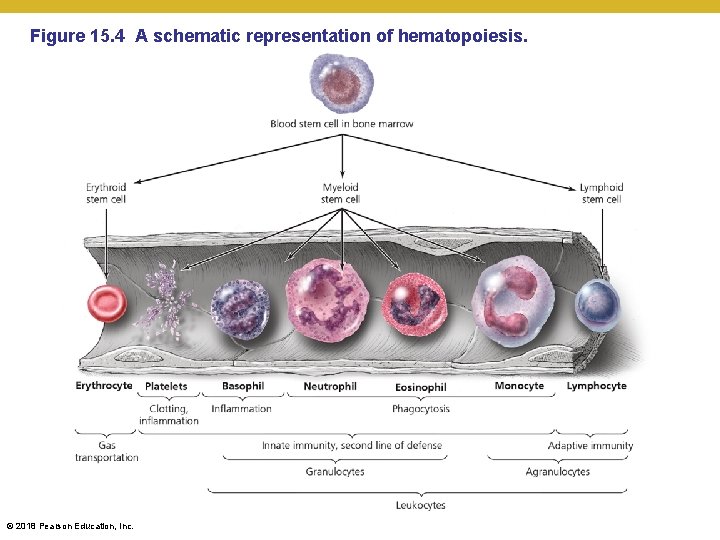
Figure 15. 4 A schematic representation of hematopoiesis. © 2018 Pearson Education, Inc.
The Body’s Second Line of Defense • Defense Components of Blood • Defensive blood cells: Leukocytes • Granulocytes • Contain large granules that stain different colors • Three types • Basophils—stain blue with basic dye methylene blue • Eosinophils—stain red/orange with acidic dye eosin • Neutrophils—stain lilac with mix of acidic and basic dyes • Neutrophils and eosinophils • Phagocytize pathogens • Capable of diapedesis © 2018 Pearson Education, Inc.
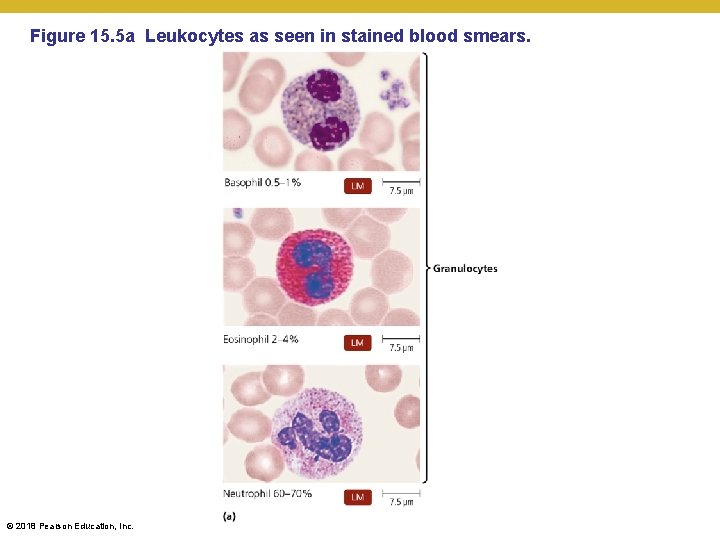
Figure 15. 5 a Leukocytes as seen in stained blood smears. © 2018 Pearson Education, Inc.
The Body’s Second Line of Defense • Defense Components of Blood • Defensive blood cells: Leukocytes • Agranulocytes • Cytoplasm appears uniform under a light microscope • Two types • Lymphocytes • Most involved in adaptive immunity • Natural killer lymphocytes • Monocytes • Leave the blood and mature into macrophages • Phagocytic cells that devour foreign objects © 2018 Pearson Education, Inc.
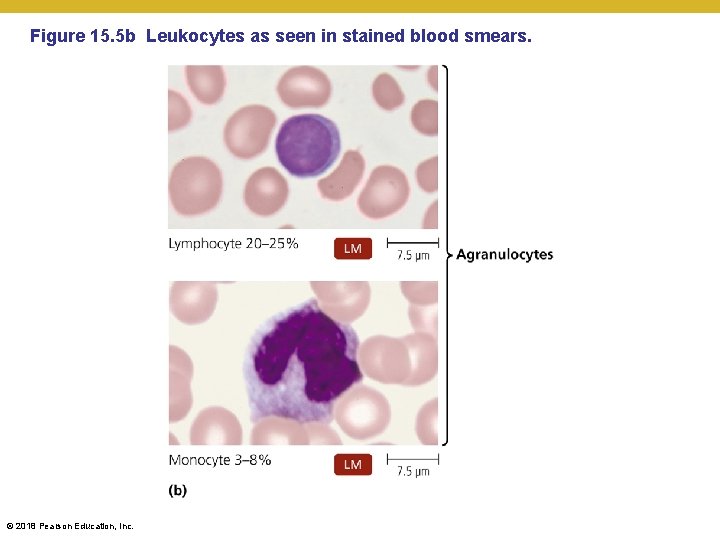
Figure 15. 5 b Leukocytes as seen in stained blood smears. © 2018 Pearson Education, Inc.
The Body’s Second Line of Defense • Defense Components of Blood • Defensive blood cells: Leukocytes • Lab analysis of leukocytes • Differential white blood cell count can signal disease • Increased eosinophils indicate allergies or parasitic worm infection • Bacterial diseases often show increase in leukocytes and neutrophils • Viral infections show increase in lymphocytes © 2018 Pearson Education, Inc.
The Body’s Second Line of Defense • Phagocytosis • Cells capable of phagocytosis are called phagocytes • Phagocytosis is not completely understood • Can be divided into six stages • • • Chemotaxis Adhesion Ingestion Maturation Killing Elimination © 2018 Pearson Education, Inc.
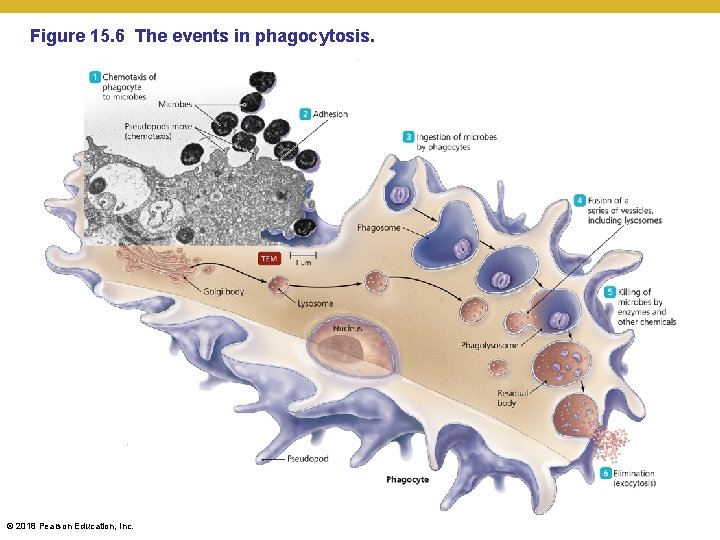
Figure 15. 6 The events in phagocytosis. © 2018 Pearson Education, Inc.
The Body’s Second Line of Defense • Nonphagocytic Killing • Killing by eosinophils • Attack parasitic helminths by adhering to their surface • Secrete toxins that weaken or kill the helminth • Eosinophilia is often indicative of a helminth infestation or allergies • Eosinophil mitochondrial DNA and proteins form structure that kills some bacteria © 2018 Pearson Education, Inc.
The Body’s Second Line of Defense • Nonphagocytic Killing • Killing by natural killer lymphocytes (NK cells) • Secrete toxins onto surface of virally infected cells and tumors • Differentiate normal body cells because they have membrane proteins similar to the NK cells © 2018 Pearson Education, Inc.
The Body’s Second Line of Defense • Nonphagocytic Killing • Killing by neutrophils • Can destroy microbes without phagocytosis • Produce chemicals that kill nearby invaders • Generate extracellular fibers called neutrophil extracellular traps (NETs) that bind to and kill bacteria © 2018 Pearson Education, Inc.
The Body’s Second Line of Defense • Nonspecific Chemical Defenses Against Pathogens • Interferons • Protein molecules released by host cells to nonspecifically inhibit the spread of viral infections • Cause many symptoms associated with viral infections • Two types • Type I (alpha and beta) • Type II (gamma) © 2018 Pearson Education, Inc.
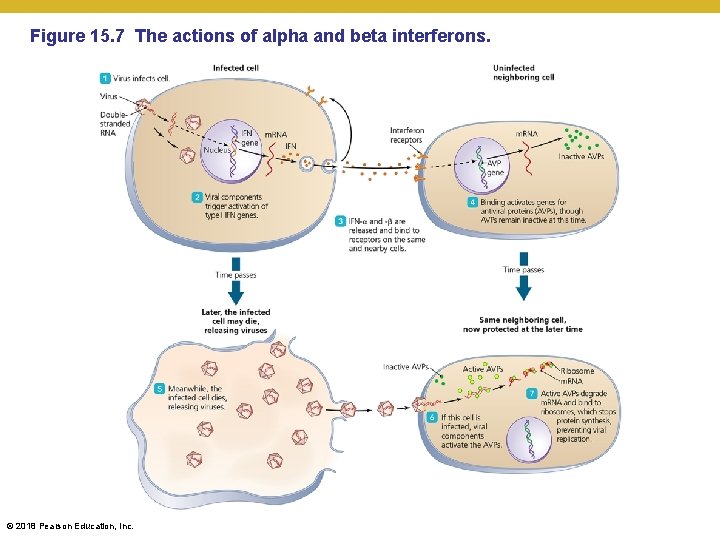
Figure 15. 7 The actions of alpha and beta interferons. © 2018 Pearson Education, Inc.
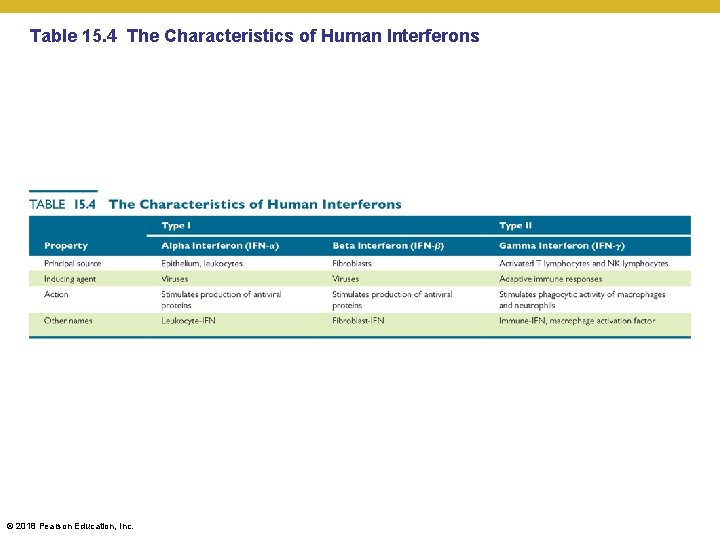
Table 15. 4 The Characteristics of Human Interferons © 2018 Pearson Education, Inc.
The Body’s Second Line of Defense • Nonspecific Chemical Defenses Against Pathogens • Complement • Set of serum proteins designated numerically according to their order of discovery • Complement activation results in lysis of the foreign cell • Indirectly trigger inflammation and fever © 2018 Pearson Education, Inc.
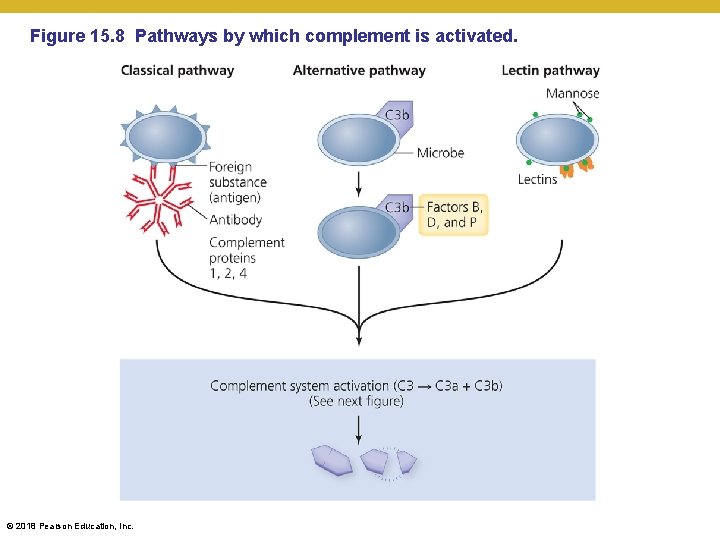
Figure 15. 8 Pathways by which complement is activated. © 2018 Pearson Education, Inc.
The Body’s Second Line of Defense • Inflammation • Nonspecific response to tissue damage from various causes • Characterized by redness, heat, swelling, and pain • Two types • Acute • Chronic © 2018 Pearson Education, Inc.
The Body’s Second Line of Defense • Inflammation • Acute inflammation • Develops quickly and is short lived • Is typically beneficial • Is important in the second line of defense • Dilation and increased permeability of the blood vessels • Migration of phagocytes • Tissue repair • Chronic inflammation • Long-lasting • Damage to tissues can cause disease © 2018 Pearson Education, Inc.
The Body’s Second Line of Defense • Inflammation • Dilation and increased permeability of blood vessels • Vasodilation produces redness and localized heat associated with inflammation • Many chemicals trigger and promote dilation • Delivers blood clotting proteins to site of injury © 2018 Pearson Education, Inc.
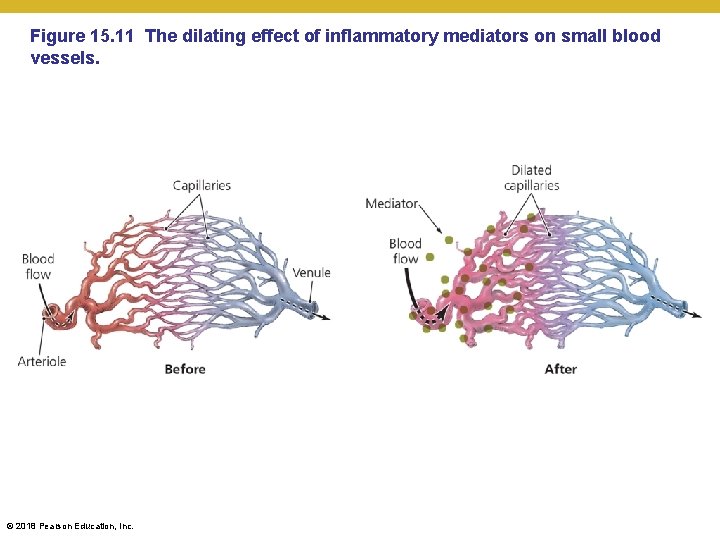
Figure 15. 11 The dilating effect of inflammatory mediators on small blood vessels. © 2018 Pearson Education, Inc.
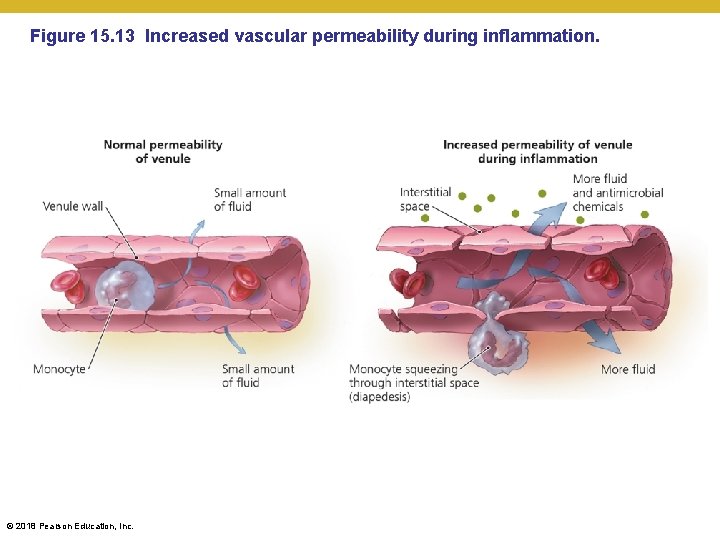
Figure 15. 13 Increased vascular permeability during inflammation. © 2018 Pearson Education, Inc.
The Body’s Second Line of Defense • Inflammation • Migration of phagocytes • Neutrophils and monocytes delivered to site of infection • Recruited by chemotactic factors • Attach to receptors on blood vessels • Squeeze between cells of vessel wall and enter site of infection • Tissue repair • Delivery of nutrients and oxygen to site facilitates repair • Some tissues cannot be repaired © 2018 Pearson Education, Inc.
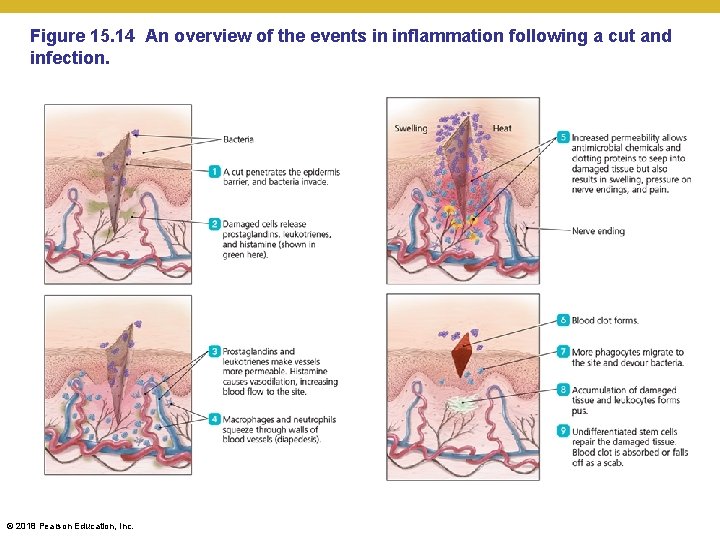
Figure 15. 14 An overview of the events in inflammation following a cut and infection. © 2018 Pearson Education, Inc.
The Body’s Second Line of Defense • Fever • A body temperature over 37°C • Results when pyrogens trigger the hypothalamus to increase the body's core temperature • Various types of pyrogens • • Bacterial toxins Cytoplasmic contents of bacteria released by lysis Antibody-antigen complexes Pyrogens released by phagocytes that have phagocytized bacteria • Exact mechanism of fever is not known © 2018 Pearson Education, Inc.
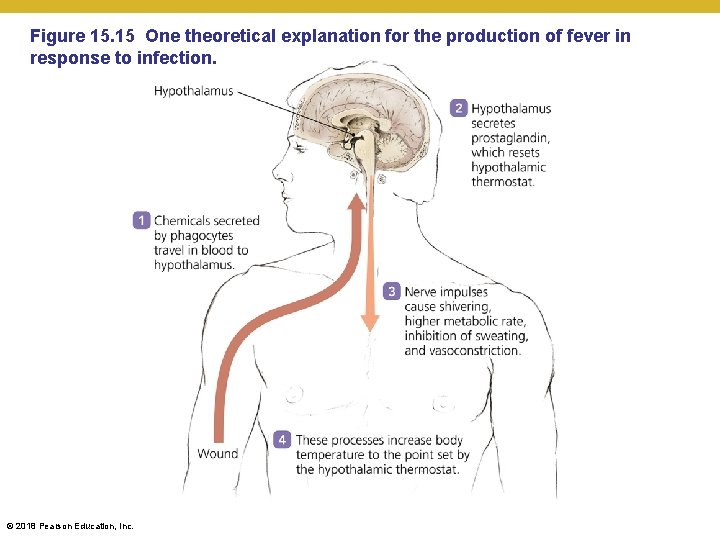
Figure 15. 15 One theoretical explanation for the production of fever in response to infection. © 2018 Pearson Education, Inc.
The Body’s Second Line of Defense • Fever • Continues as long as pyrogens are present • Outcomes of fever • Enhances effects of interferons • Inhibits growth of some microbes • May enhance the activities of phagocytes, cells of specific immunity, and the process of tissue repair © 2018 Pearson Education, Inc.
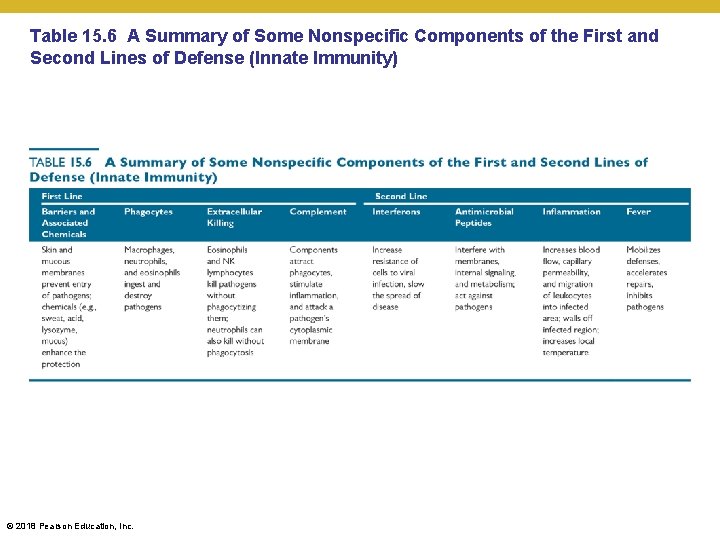
Table 15. 6 A Summary of Some Nonspecific Components of the First and Second Lines of Defense (Innate Immunity) © 2018 Pearson Education, Inc.
- Slides: 44