
Microbiology Chapter 15 Innate Immunity 2018 Pearson Education
Microbiology Chapter 15 Innate Immunity © 2018 Pearson Education, Inc.
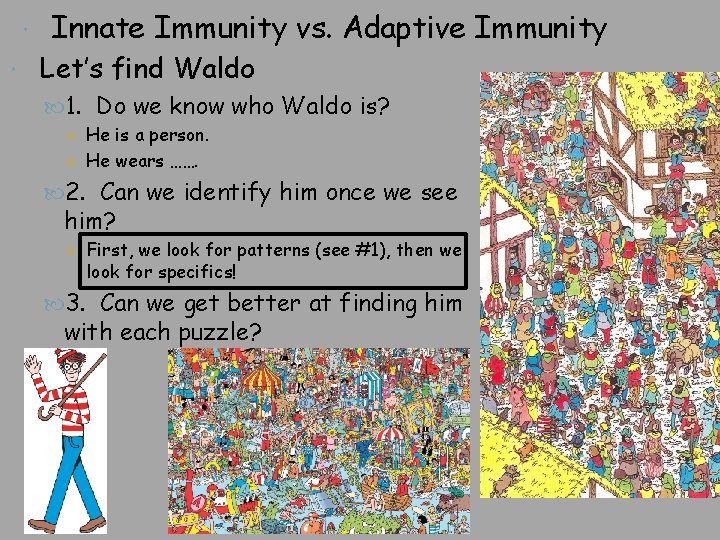
Innate Immunity vs. Adaptive Immunity Let’s find Waldo 1. Do we know who Waldo is? ○ He is a person. ○ He wears ……. 2. Can we identify him once we see him? ○ First, we look for patterns (see #1), then we look for specifics! 3. Can we get better at finding him with each puzzle?
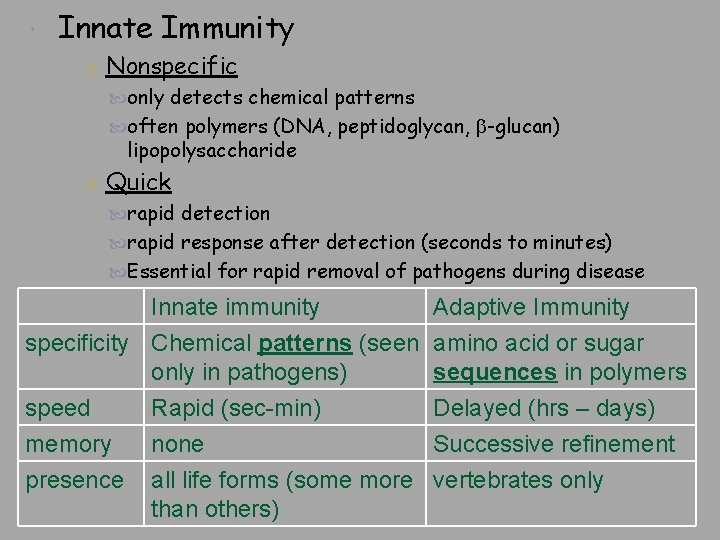
Innate Immunity ○ Nonspecific only detects chemical patterns often polymers (DNA, peptidoglycan, b-glucan) lipopolysaccharide ○ Quick rapid detection rapid response after detection (seconds to minutes) Essential for rapid removal of pathogens during disease Innate immunity Adaptive Immunity specificity Chemical patterns (seen amino acid or sugar only in pathogens) sequences in polymers speed memory presence Rapid (sec-min) Delayed (hrs – days) none Successive refinement all life forms (some more vertebrates only than others)
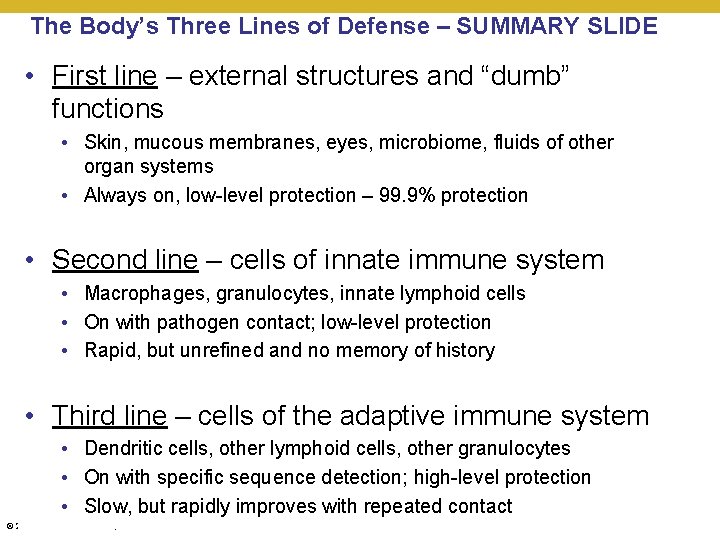
The Body’s Three Lines of Defense – SUMMARY SLIDE • First line – external structures and “dumb” functions • Skin, mucous membranes, eyes, microbiome, fluids of other organ systems • Always on, low-level protection – 99. 9% protection • Second line – cells of innate immune system • Macrophages, granulocytes, innate lymphoid cells • On with pathogen contact; low-level protection • Rapid, but unrefined and no memory of history • Third line – cells of the adaptive immune system • Dendritic cells, other lymphoid cells, other granulocytes • On with specific sequence detection; high-level protection • Slow, but rapidly improves with repeated contact © 2018 Pearson Education, Inc.
The Body’s First Line of Defense – SUMMARY SLIDE • Structures, chemicals, and processes that work to prevent pathogens from entering the body • Skin – physical and biochemical defenses • Mucous membranes – thick mobile fluid • • Biochemicals - lysozyme, antimicrobial peptides, acids, salt Respiratory – ciliary elevator Intestinal – peristalsis, high volume excretion Reproductive system (women) – probiotic acidity • Eyes – tear fluid • Microbiome – microbial antagonism • Organ-specific fluids • Stomach – high acidity, digestive enzymes • Urinary – acidic, high volume excretion © 2018 Pearson Education, Inc.
Skin - The Body’s First Line of Defense • Physical defenses • Skin composed of two major layers • Epidermis – epithelial tissue • Multiple layers of tightly packed dead and living cells • Few pathogens can penetrate these layers • New dead cells constantly produced from living cells, pushing older cells further away • Shedding of dead skin cells removes microorganisms embedded in skin • Epidermal dendritic cells and macrophages phagocytize invading pathogens • Dermis – loose connective tissue • Collagen and elastin fibers help seal epidermal abrasions that could introduce microorganisms • Also contains dendritic cells and macrophages © 2018 Pearson Education, Inc.
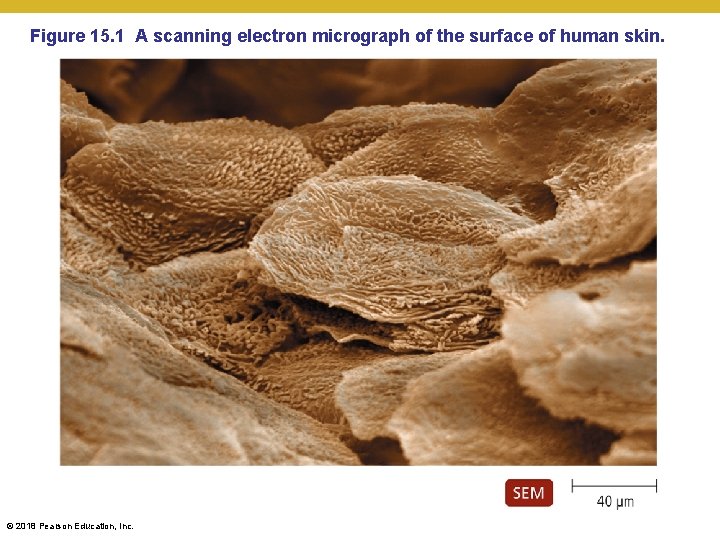
Figure 15. 1 A scanning electron micrograph of the surface of human skin. © 2018 Pearson Education, Inc.
Skin - The Body’s First Line of Defense • (Bio)chemical defenses • Skin has chemicals that defend against pathogens • Several of these are also seen in mucus fluid • Perspiration secreted by sweat glands • Salt inhibits growth of pathogens • Antimicrobial peptides act against microorganisms • Lysozyme destroys cell wall of bacteria • Ig. A binds known pathogens before they infect • Sebum secreted by sebaceous (oil) glands • Helps keep skin pliable and less likely to break or tear (~ conditioner for hair or skin/hand lotion) • Lowers skin p. H to a level inhibitory to many pathogenic bacteria (p. H of 5 -6) © 2018 Pearson Education, Inc.
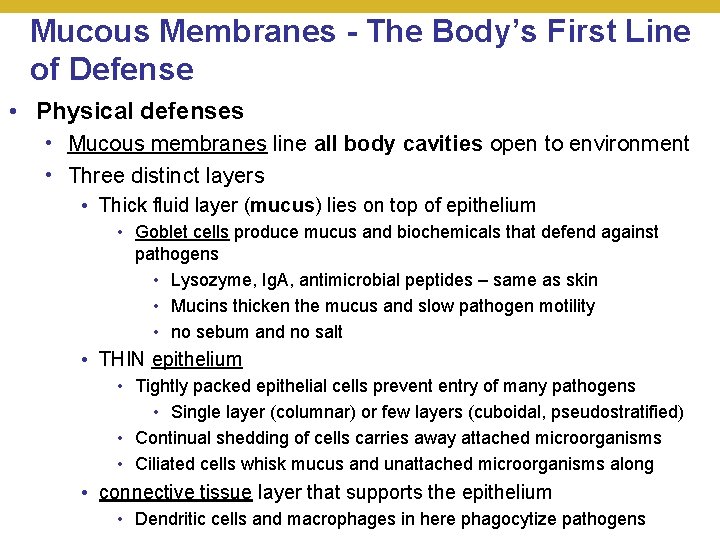
Mucous Membranes - The Body’s First Line of Defense • Physical defenses • Mucous membranes line all body cavities open to environment • Three distinct layers • Thick fluid layer (mucus) lies on top of epithelium • Goblet cells produce mucus and biochemicals that defend against pathogens • Lysozyme, Ig. A, antimicrobial peptides – same as skin • Mucins thicken the mucus and slow pathogen motility • no sebum and no salt • THIN epithelium • Tightly packed epithelial cells prevent entry of many pathogens • Single layer (columnar) or few layers (cuboidal, pseudostratified) • Continual shedding of cells carries away attached microorganisms • Ciliated cells whisk mucus and unattached microorganisms along • connective tissue layer that supports the epithelium • Dendritic cells and macrophages in here phagocytize pathogens © 2018 Pearson Education, Inc.
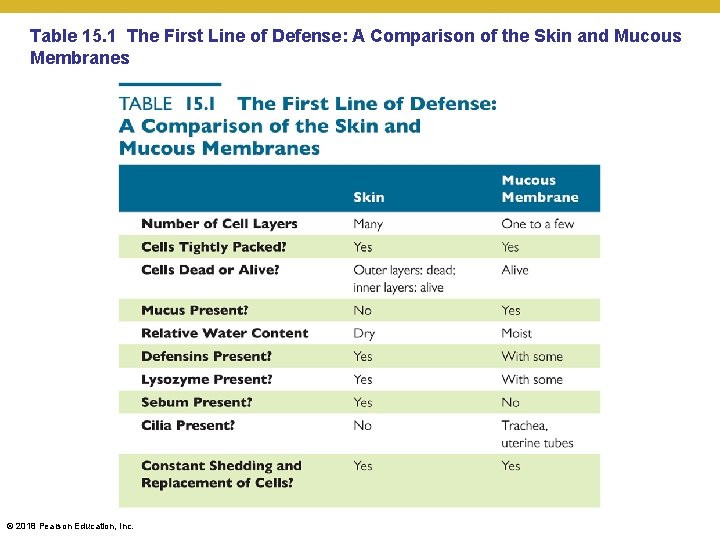
Table 15. 1 The First Line of Defense: A Comparison of the Skin and Mucous Membranes © 2018 Pearson Education, Inc.
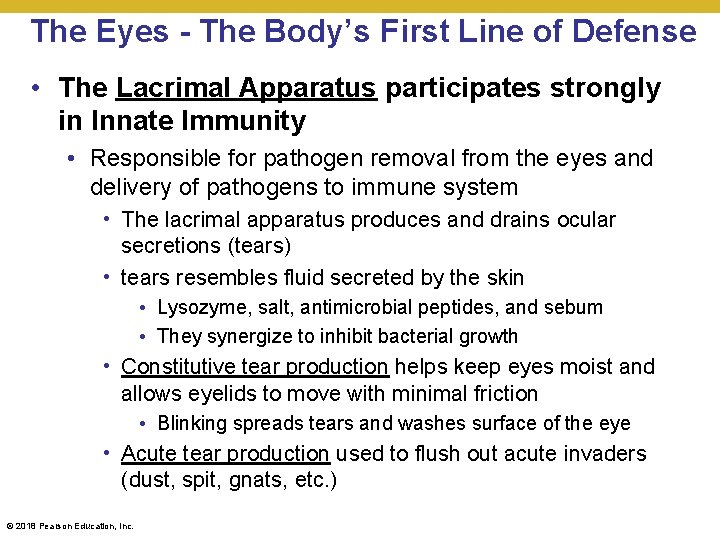
The Eyes - The Body’s First Line of Defense • The Lacrimal Apparatus participates strongly in Innate Immunity • Responsible for pathogen removal from the eyes and delivery of pathogens to immune system • The lacrimal apparatus produces and drains ocular secretions (tears) • tears resembles fluid secreted by the skin • Lysozyme, salt, antimicrobial peptides, and sebum • They synergize to inhibit bacterial growth • Constitutive tear production helps keep eyes moist and allows eyelids to move with minimal friction • Blinking spreads tears and washes surface of the eye • Acute tear production used to flush out acute invaders (dust, spit, gnats, etc. ) © 2018 Pearson Education, Inc.
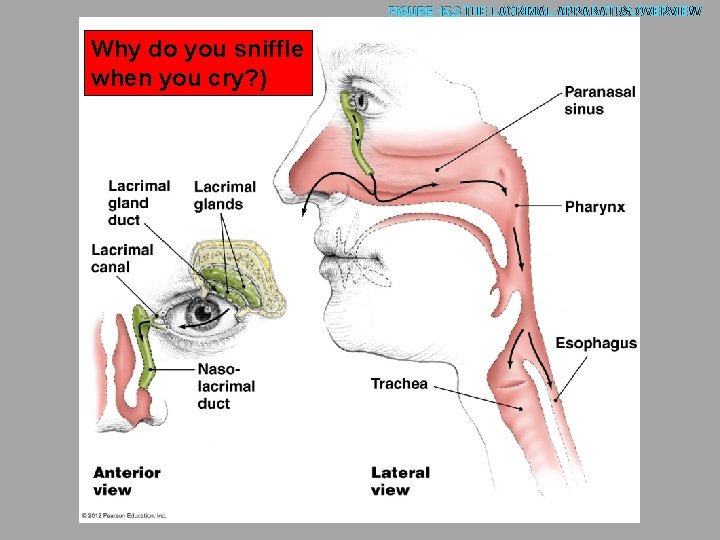
FIGURE 15. 3 THE LACRIMAL APPARATUS-OVERVIEW Why do you sniffle when you cry? )

Microbial antagonism - The Body’s First Line of Defense • Microbial antagonism • Resident microbiota compete with one another as well as transient microbes and potential pathogens • Members of the microbiome make it hard for pathogens to establish themselves • Consumption of nutrients • Create an environment unfavorable to other microorganisms – metabolic wastes and antiobiotics • Prevent pathogens from attaching to host cells • Their continual “detection” by the immune system keeps the body’s second line of defense primed © 2018 Pearson Education, Inc.
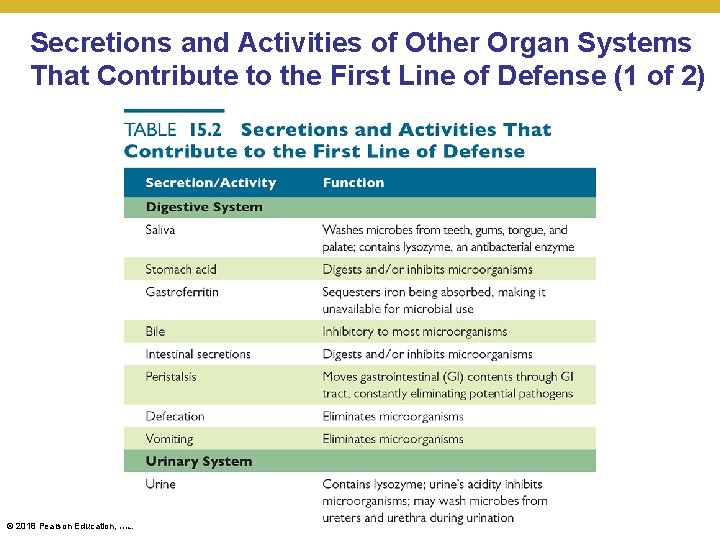
Secretions and Activities of Other Organ Systems That Contribute to the First Line of Defense (1 of 2) © 2018 Pearson Education, Inc.
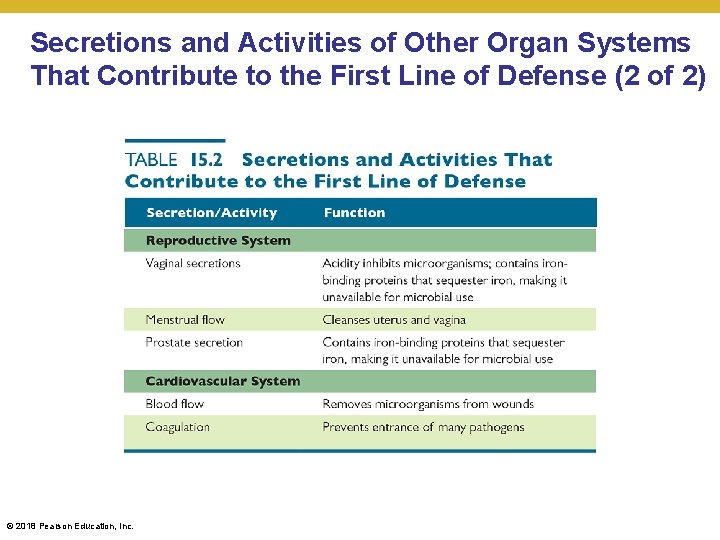
Secretions and Activities of Other Organ Systems That Contribute to the First Line of Defense (2 of 2) © 2018 Pearson Education, Inc.
The Body’s Second Line of Defense – SUMMARY SLIDE • If pathogens get past the physical and chemical barriers, the 2 nd line of the innate immune system comes into play • pathogens have penetrated the skin or mucous membranes and have now entered connective tissues • Composed of cells, antimicrobial chemicals, and cellular processes • Many of these components are contained in or originate in the blood © 2018 Pearson Education, Inc.
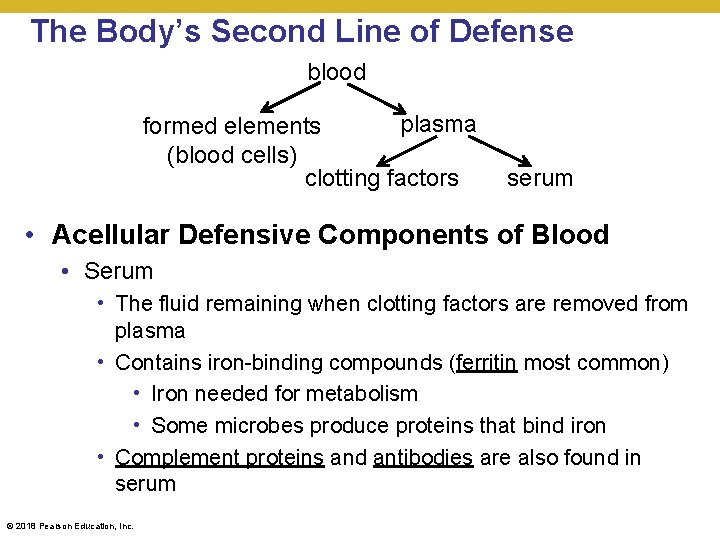
The Body’s Second Line of Defense blood plasma formed elements (blood cells) clotting factors serum • Acellular Defensive Components of Blood • Serum • The fluid remaining when clotting factors are removed from plasma • Contains iron-binding compounds (ferritin most common) • Iron needed for metabolism • Some microbes produce proteins that bind iron • Complement proteins and antibodies are also found in serum © 2018 Pearson Education, Inc.
Blood cells - The Body’s Second Line of Defense – SUMMARY SLIDE • Defensive blood cells: Leukocytes • Cells and cell fragments in plasma called formed elements • Three types of formed elements • Erythrocytes – red blood cells • Carry oxygen and carbon dioxide in the blood • Platelets • Fragments of a megakaryocyte • Involved in blood clotting • Analogous to stuff caught in strainers that clogs the sink • the strainer ~ clotting factors • Leukocytes • Involved in defending the body against invaders • Divided into granulocytes and agranulocytes © 2018 Pearson Education, Inc.
Blood cells - The Body’s Second Line of Defense – SUMMARY SLIDE • Cells and cell fragments in plasma called formed elements • Three types of formed elements • Erythrocytes – red blood cells • Carry oxygen and carbon dioxide in the blood • Platelets • Fragments of a megakaryocyte • Involved in blood clotting • Analogous to stuff caught in strainers that clogs the sink • the strainer ~ clotting factors • Leukocytes – white blood cells • Involved in defending the body against invaders • Inc. Divided into granulocytes and agranulocytes © 2018 Pearson Education,
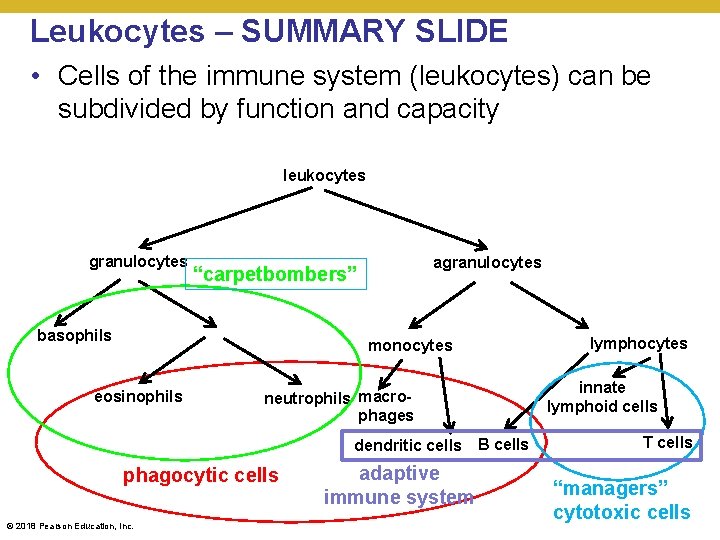
Leukocytes – SUMMARY SLIDE • Cells of the immune system (leukocytes) can be subdivided by function and capacity leukocytes granulocytes agranulocytes “carpetbombers” basophils monocytes eosinophils neutrophils macrophages dendritic cells B cells phagocytic cells © 2018 Pearson Education, Inc. adaptive immune system lymphocytes innate lymphoid cells T cells “managers” cytotoxic cells
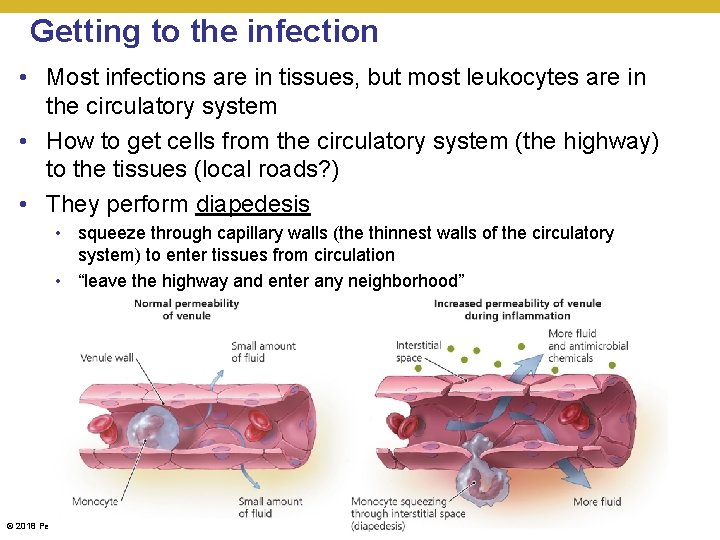
Getting to the infection • Most infections are in tissues, but most leukocytes are in the circulatory system • How to get cells from the circulatory system (the highway) to the tissues (local roads? ) • They perform diapedesis • squeeze through capillary walls (the thinnest walls of the circulatory system) to enter tissues from circulation • “leave the highway and enter any neighborhood” © 2018 Pearson Education, Inc.
Granulocytes - The Body’s Second Line of Defense • Contain large granules that they release when activated • Granules contains inflammatory chemicals and toxic enzymes – “carpet bombing” and “flares”’ • They tend to respond to infections outside of host cells (extracellular or exogenous infections) • Some swallow pathogens and their debris; some do not • Phagocytic cells – engulf pathogens or their debris (especially when “tagged” by immune system) and release granule contents (called degranulation) • Eosinophils — attack large pathogens (helminths, organ transplants) • Neutrophils — attack any foreign pathogen; most common leukocyte • Non-phagocytic cells – only release granule contents • Basophils — attack blood-borne pathogens © 2018 Pearson Education, Inc.
Agranulocytes - The Body’s Second Line of Defense • Cytoplasm appears uniform under a light microscope • Two types • • Lymphocytes – common in the blood • Manage immune response to infections • Innate lymphoid cells recognize non-self or “compromised-self” cells • B cells, T cells, NKT cells – to be discussed in Chapter 16 Monocytes • Circulate in the blood, looking for inflammatory signals • Leave the blood (by what process? ) and mature into phagocytes • FAR more common in tissues • They are phagocytic in tissues but do not affect healthy tissues • • © 2018 Pearson Education, Inc. Macrophages – engulf and destroy engulfed pathogens Dendritic cells – macrophages interfacing with adaptive immune cells
Effector functions - The Body’s Second Line of Defense – SUMMARY SLIDE • How do immune cells eliminate pathogens? • Killing and removing pathogens is crucial to reducing disease and infections • Degranulation – “carpet bombing” of large or mobile pathogens – accompanies inflammation • Cytotoxicity – direct cell to cell killing of intracellular pathogens – often occurs without inflammation • Phagocytosis - swallow and digest pathogens or their debris © 2018 Pearson Education, Inc.
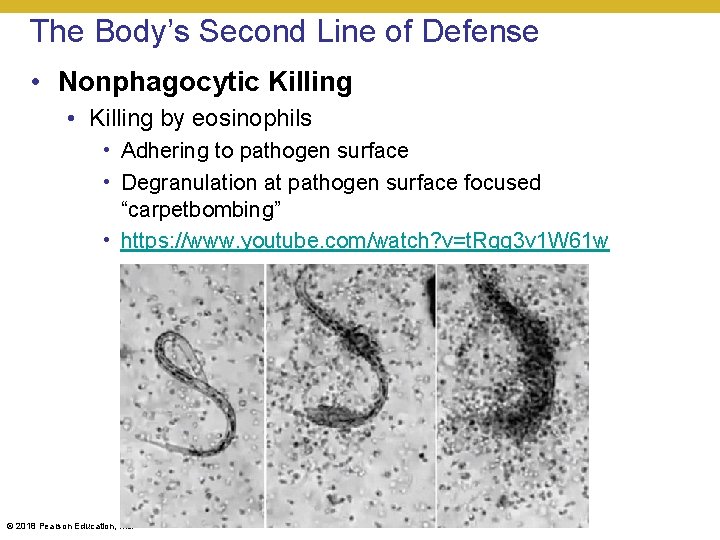
The Body’s Second Line of Defense • Nonphagocytic Killing • Killing by eosinophils • Adhering to pathogen surface • Degranulation at pathogen surface focused “carpetbombing” • https: //www. youtube. com/watch? v=t. Rgq 3 v 1 W 61 w © 2018 Pearson Education, Inc.
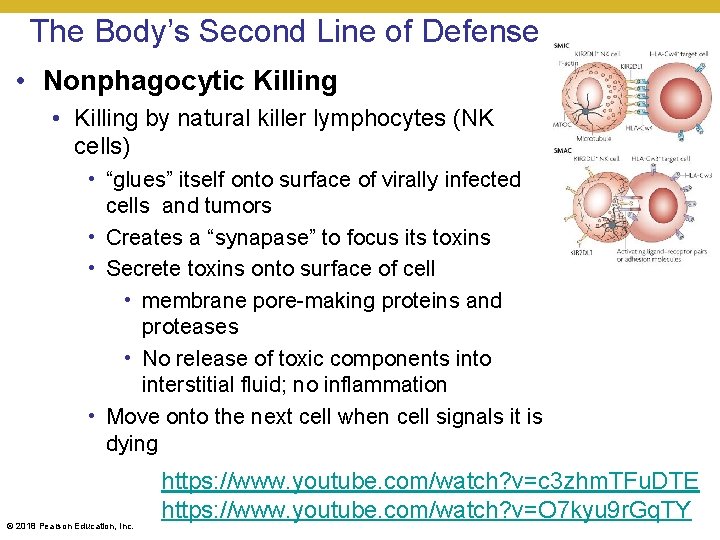
The Body’s Second Line of Defense • Nonphagocytic Killing • Killing by natural killer lymphocytes (NK cells) • “glues” itself onto surface of virally infected cells and tumors • Creates a “synapase” to focus its toxins • Secrete toxins onto surface of cell • membrane pore-making proteins and proteases • No release of toxic components into interstitial fluid; no inflammation • Move onto the next cell when cell signals it is dying © 2018 Pearson Education, Inc. https: //www. youtube. com/watch? v=c 3 zhm. TFu. DTE https: //www. youtube. com/watch? v=O 7 kyu 9 r. Gq. TY
The Body’s Second Line of Defense • Phagocytic Killing • Killing by neutrophils • Often phagocytoses microbes and destroyed them internally • Can also destroy microbes by degranulation • Short lived – only live hours after germination at bone marrow • https: //www. youtube. com/watch? v=Z_m. XDv. ZQ 6 d. U © 2018 Pearson Education, Inc.
Phagocytes - The Body’s Second Line of Defense • Phagocytosis – swallowing of pathogens • Phagocytosis is divided into six stages • Chemotaxis – detect inflammatory or infection signals; diapedesis; move toward pathogen signals • Adhesion – attach to pathogen (who may tagged for clearance) • using pathogen receptors (if untagged or to confirm foreign status) • using “immune system tags” to make identification easier • • Ingestion – swallow pathogen Maturation – fuse “swallowed” pathogen with lysosome Killing – let the lysosome do its work Elimination – release pieces of pathogen that cannot be digested • Antigen Presentation – digested pieces of microbe (antigens) presented to adaptive immune system © 2018 Pearson Education, Inc.
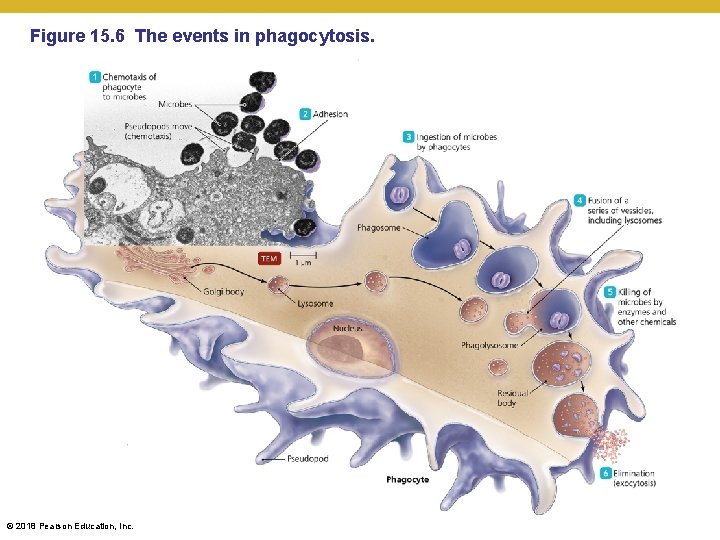
Figure 15. 6 The events in phagocytosis. © 2018 Pearson Education, Inc.
How does the immune system knows it contacted a pathogen? ? ? Toll-like receptors (TLRs) ○ TLRs are found at: cell surface (touch extracellular pathogen) in endosomes (touch swallowed pathogen) ○ Bind pathogen-associated molecular patterns (PAMPs) present in bacteria and viruses (capsules, cell walls, lipids, DNA) ○ TLR binding of pathogen initiates immune activation Apoptosis (if it detects pathogens on or in cells) Secretion of inflammatory mediators Production of stimulants of immune response
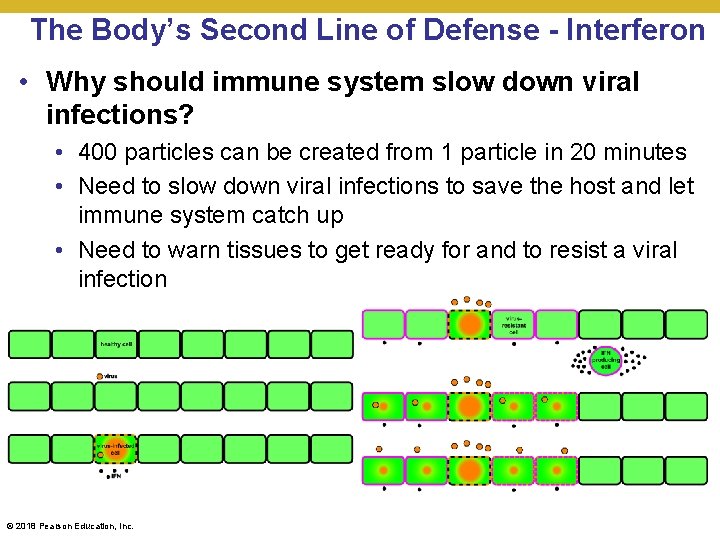
The Body’s Second Line of Defense - Interferon • Why should immune system slow down viral infections? • 400 particles can be created from 1 particle in 20 minutes • Need to slow down viral infections to save the host and let immune system catch up • Need to warn tissues to get ready for and to resist a viral infection © 2018 Pearson Education, Inc.
Interferons - The Body’s Second Line of Defense • Interferons • Protein molecules released by host cells (especially lymphocytes) to inhibit the spread of viral infections • Cause many symptoms associated with viral infections – nausea, muscle soreness, weakness • Warns nearby cells to initiate virus-resistance programming • Three types • Type I (alpha and beta) – rapidly induced; highly active; initial viral clearance at tissues • Type II (gamma) – shift immune response to anti-viral response • Type III (lambda) – less active than Type I, final viral clearance from tissues? ? © 2018 Pearson Education, Inc.
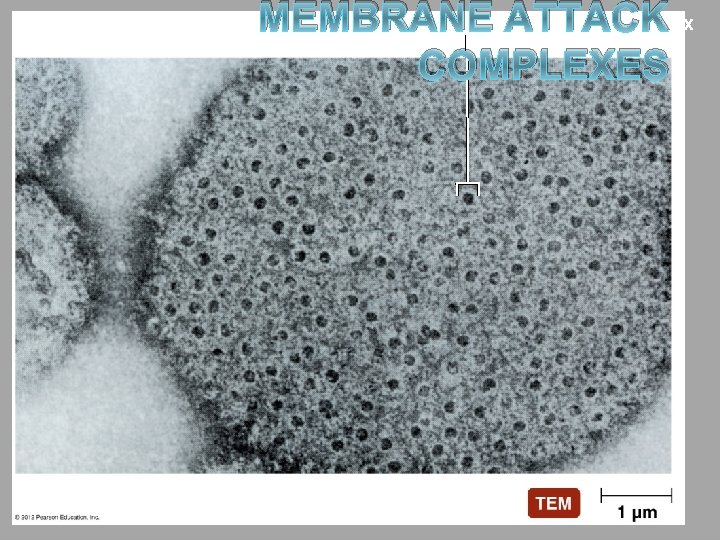
The Body’s Second Line of Defense - complement • Complement • Set of serum proteins that interact in groups to kill pathogens • Complement activation results in lysis of the foreign or compromised cell by forming the membrane attack complex on the cell membrane of the pathogen • Bacteria (especially gram-neg), protozoa, helminth, enveloped virus • Pathogen-infected host cell (if labeled by the immune system) • Pathogens or pathogen-infected cells covered in complement (especially C 3) are “labeled” and are quickly recognized by the immune system • bound and ingested by phagocytes, or killed by cytotoxic lymphocytes • triggers inflammation and fever • Activated by three pathways: • Alternative – always on at low level, but healthy cells shut it off • Lectin – when clustered pathogen polysaccharides are detected (innate) – rapid on to high level • Classical – when clustered antibodies are detected (adaptive) – rapid on to high level © 2018 Pearson Education, Inc.
MEMBRANE ATTACK Membrane attack complex COMPLEXES
Inflammation – SUMMARY SLIDE • How does our body let the immune system know there is an infection? • How does our body help the immune system arrive at and fight an infection? • Inflammation • Four classic signs: Redness, heat, swelling, pain • Inflammation is classified by duration • Acute – days to a few weeks - the body successfully clears the infection and repairs any tissue damage • Chronic – the body cannot clear the infection, no matter how long and hard it tries (weeks/months/years) • The effects of chronic immune activation, and poorquality tissue repair, begin to permanently damage tissues © 2018 Pearson Education, Inc.
The fours signs of inflammation • So what is inflammation? • Nonspecific response to tissue damage from various causes (infection, burn, physical trauma) • Characterized by redness, heat, swelling, and pain • Redness is increased blood flow to get the immune system to the site of infection • Heat inhibits pathogens • Swelling (localized edema) • makes room for immune cells at site of damage • Restricted drainage into lymphatic system • Better tissue clearing of infections • More careful monitoring of interstitial fluid by downstream lymph nodes • Pain alerts body to damage to protect from further insult © 2018 Pearson Education, Inc.
Acute vs. Chronic Inflammation • Acute inflammation • Develops quickly and is short lived – days to weeks • Is typically beneficial • Is important in the success of the second line of defense • Dilation and increased permeability of the blood vessels • Migration of phagocytes • Tissue repair • Chronic inflammation • Long-lasting (pathogen may be present, or not!) • Damage to tissues can cause secondary disease called sequelae (e. g. , arthritis or neurologia after Lyme’s Disease, liver failure after hepatitis, paralysis after polio; immunodeficiency after HIV) © 2018 Pearson Education, Inc.
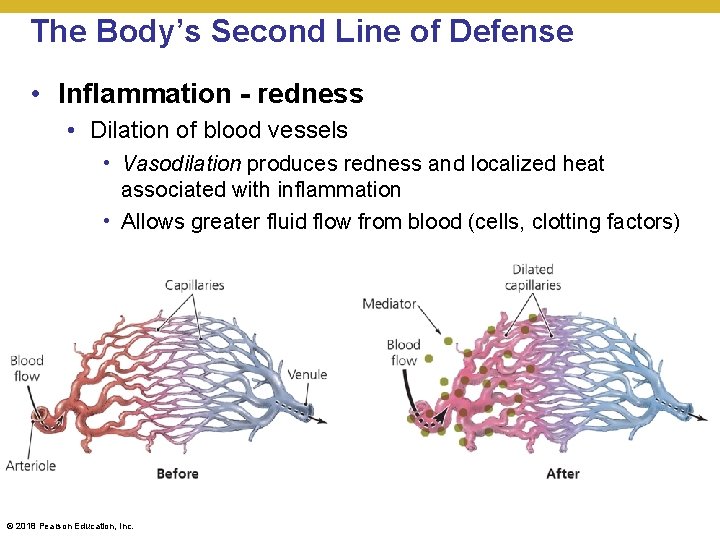
The Body’s Second Line of Defense • Inflammation - redness • Dilation of blood vessels • Vasodilation produces redness and localized heat associated with inflammation • Allows greater fluid flow from blood (cells, clotting factors) © 2018 Pearson Education, Inc.
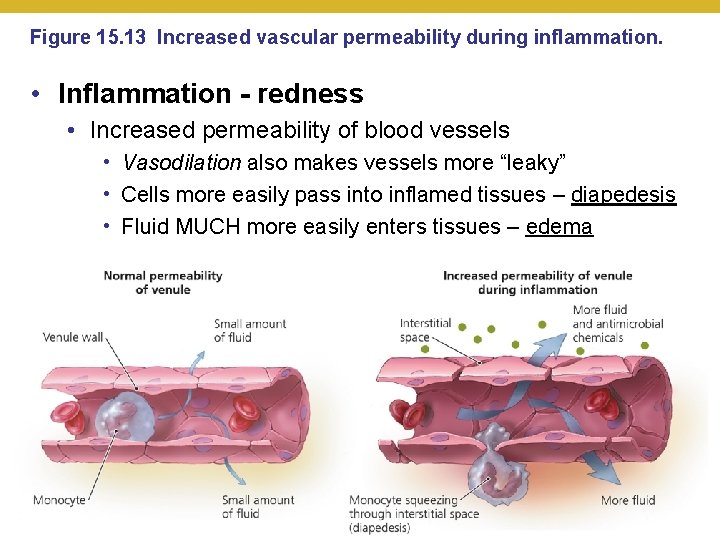
Figure 15. 13 Increased vascular permeability during inflammation. • Inflammation - redness • Increased permeability of blood vessels • Vasodilation also makes vessels more “leaky” • Cells more easily pass into inflamed tissues – diapedesis • Fluid MUCH more easily enters tissues – edema © 2018 Pearson Education, Inc.
The Body’s Second Line of Defense • Tissue repair (after pathogens cleared) • Immune system lowers the “caution flag” – no more pathogens • Restarted delivery of nutrients and oxygen to site facilitates repair • Phagocytes clear all debris (dead tissues and pathogens) • Some tissues cannot be repaired (biological limitations) • Fibrinogen deposition to make tissue more resistant to subsequent attack – scar tissue • Scar tissue often inhibits tissue function – degenerative disease – commonly seen in older organs © 2018 Pearson Education, Inc.
The Body’s Second Line of Defense • Fever • Systemic temperature increase • A body temperature over 37°C (or the body’s natural set point) • Results when pyrogens trigger the hypothalamus to increase the body's core temperature • Endogenous pyrogens • IL-1 released by phagocytes that have encountered exogenous pyrogens • Exogenous pyrogens • Bacterial toxins • Bacterial membrane lipids, especially lipopolysaccharide (LPS) • Cytoplasmic contents of bacteria released by lysis • Antibody-antigen complexes © 2018 Pearson Education, Inc.
- Slides: 41