
MICROBIOLOGY Chapter 12 The Eukaryotes Fungi Algae Protozoa
MICROBIOLOGY Chapter 12 The Eukaryotes: Fungi, Algae, Protozoa, and Helminths Dr. Abdelraouf A. Elmanama Ph. D Microbiology Medical Technology Department, Faculty of Science, Islamic University-Gaza 2008
The Fungi • Eukaryotic • Aerobic or facultatively anaerobic • Chemoheterotrophic • Most are decomposers • Mycology is the study of fungi 2008
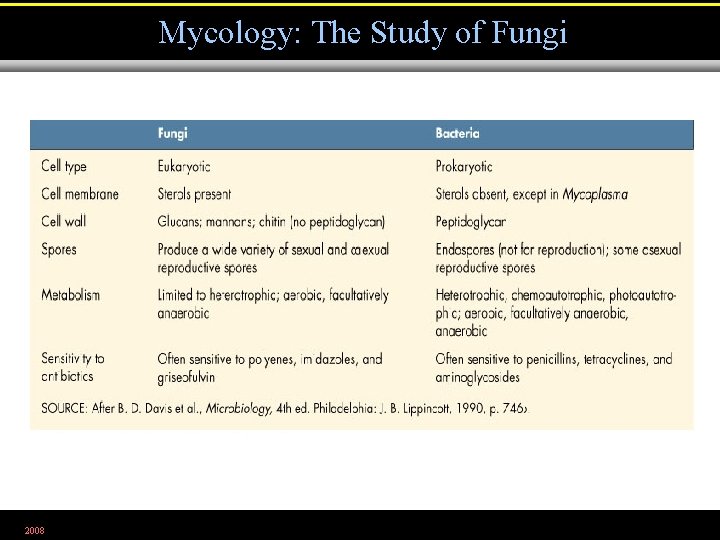
Mycology: The Study of Fungi 2008 Table 12. 2
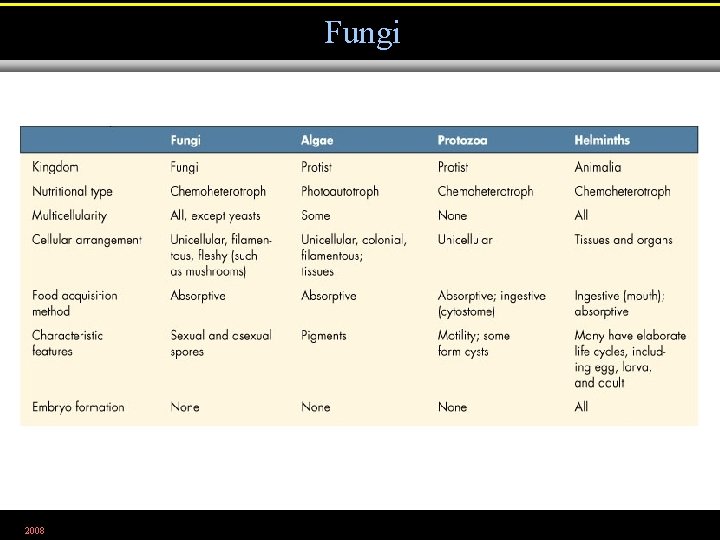
Fungi Table 12. 1 2008

Molds • The fungal thallus consists of hyphae; a mass of hyphae is a mycelium. 2008 Figure 12. 2
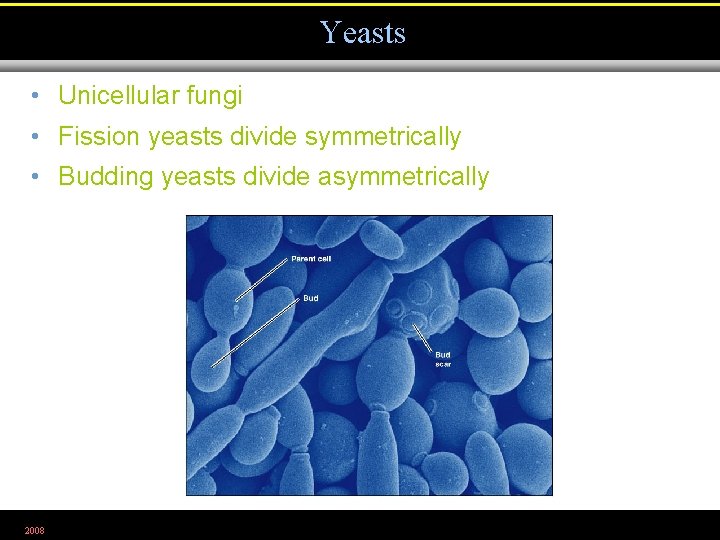
Yeasts • Unicellular fungi • Fission yeasts divide symmetrically • Budding yeasts divide asymmetrically 2008 Figure 12. 3

Dimorphism • Pathogenic dimorphic fungi are yeastlike at 37°C and moldlike at 25°C 2008 Figure 12. 4
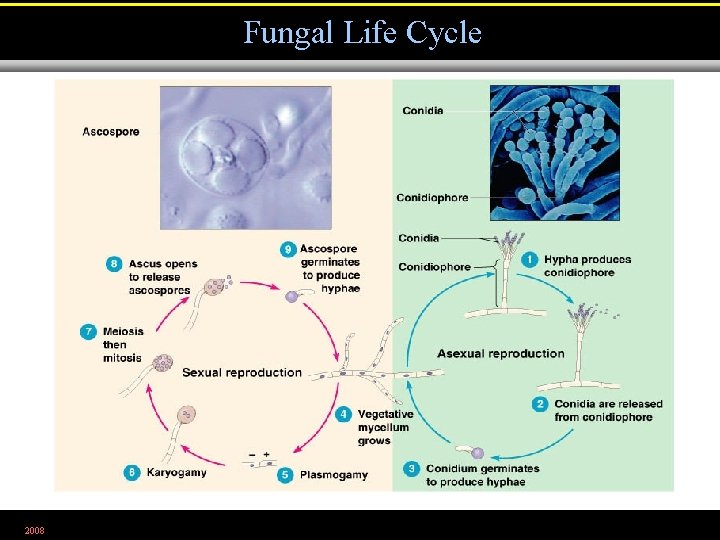
Fungal Life Cycle 2008 Figure 12. 7
Fungal Diseases (mycoses) • Systemic mycoses Deep within body • Subcutaneous mycoses Beneath the skin • Cutaneous mycoses Affect hair, skin, nails • Superficial mycoses Localized, e. g. , hair shafts • Opportunistic mycoses Caused by normal microbiota or fungi that are normally 2008
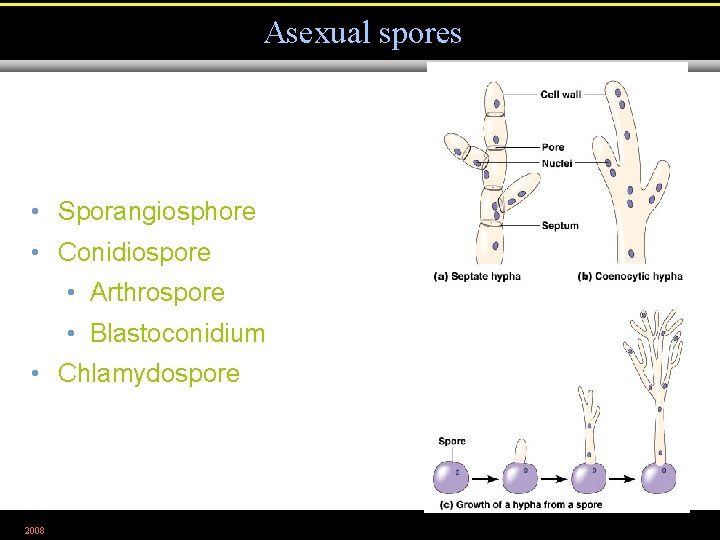
Asexual spores • Sporangiosphore • Conidiospore • Arthrospore • Blastoconidium • Chlamydospore 2008 Figure 12. 1
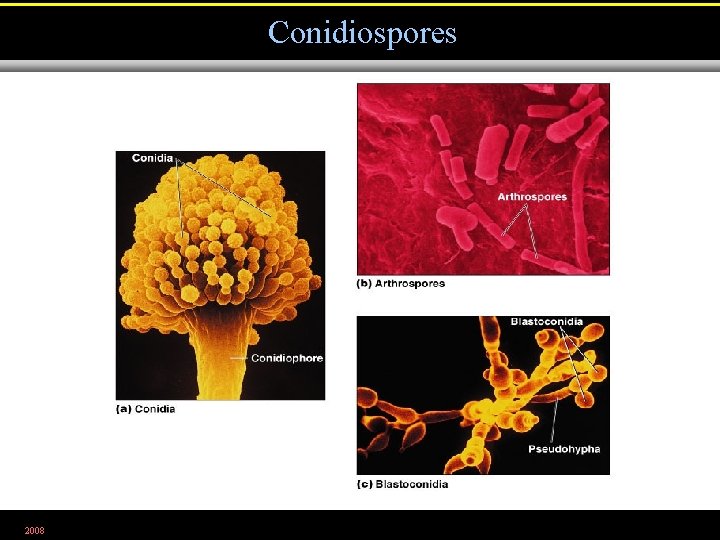
Conidiospores 2008 Figure 12. 5
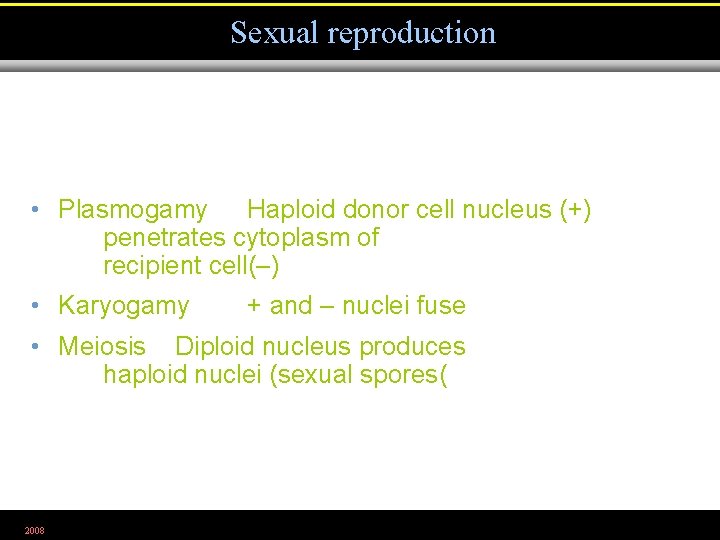
Sexual reproduction • Plasmogamy Haploid donor cell nucleus (+) penetrates cytoplasm of recipient cell(–) • Karyogamy + and – nuclei fuse • Meiosis Diploid nucleus produces haploid nuclei (sexual spores( 2008
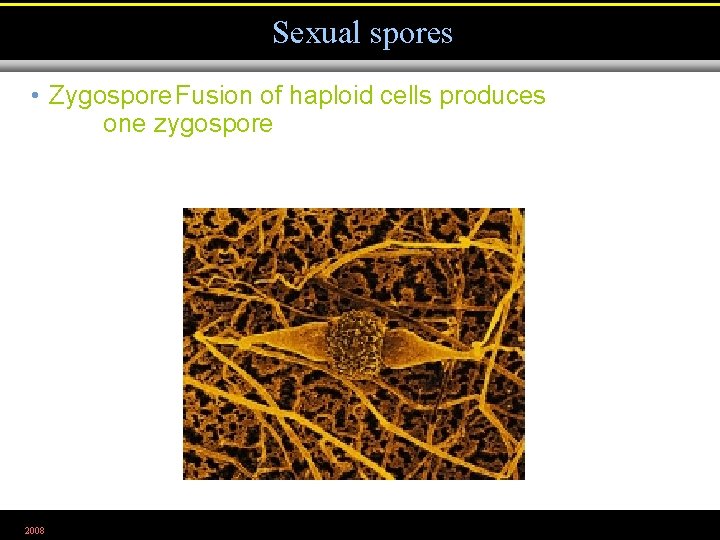
Sexual spores • Zygospore Fusion of haploid cells produces one zygospore 2008 Figure 12. 6
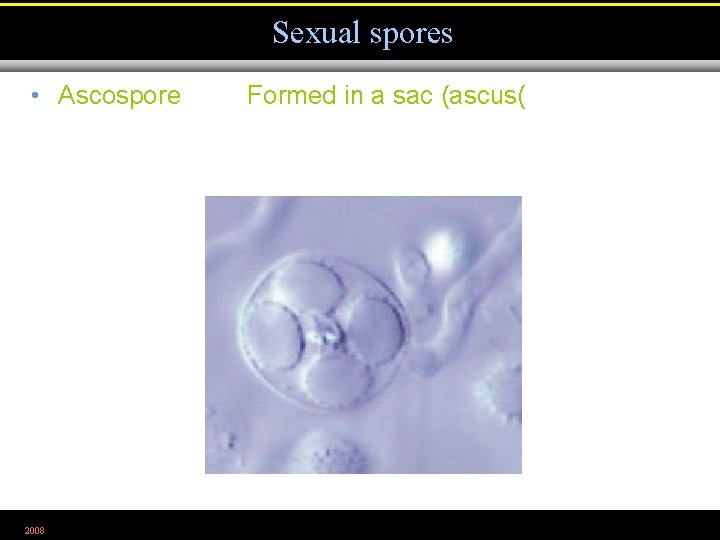
Sexual spores • Ascospore 2008 Formed in a sac (ascus( Figure 12. 7

Sexual spores • Basidiospore Formed externally on a pedestal (basidium( 2008 Figure 12. 8
Zygomycota • Conjugation fungi. Coenocytic. Produce sporangiospores and zygospores. • Rhizopus, Mucor (Opportunistic, systemic mycoses) 2008
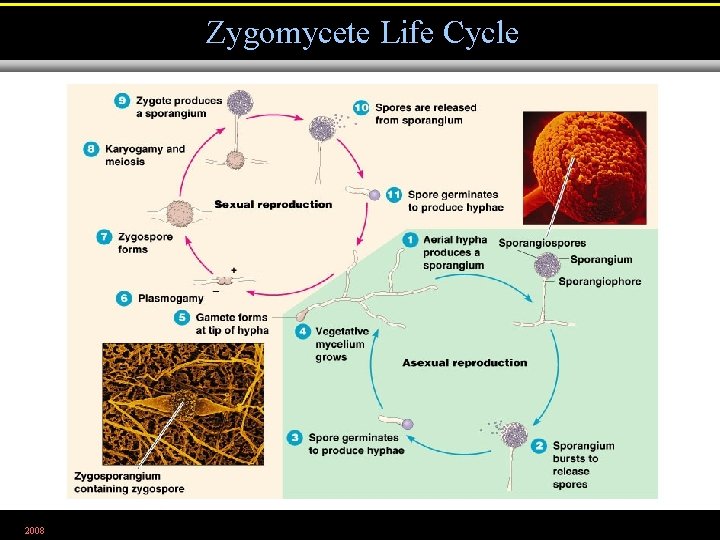
Zygomycete Life Cycle 2008 Figure 12. 6
Ascomycota • Sac fungi. Septate. Produce ascospores and frequently conidiospores. • Aspergillus (opportunistic, systemic mycosis) • Blastomyces dermatitidis, Histoplasma capsulatum (systemic mycoses) • Microsporum, Trichophyton (cutaneous mycoses) 2008
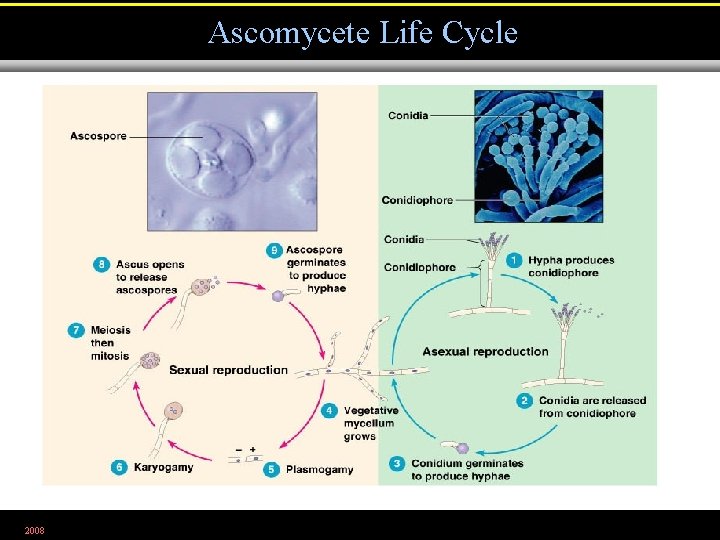
Ascomycete Life Cycle 2008 Figure 12. 7
Basidiomycota • Club fungi. Septate. Produce basidiospores and sometimes conidiospores. • Cryptococcus neoformans (systematic mycosis) 2008
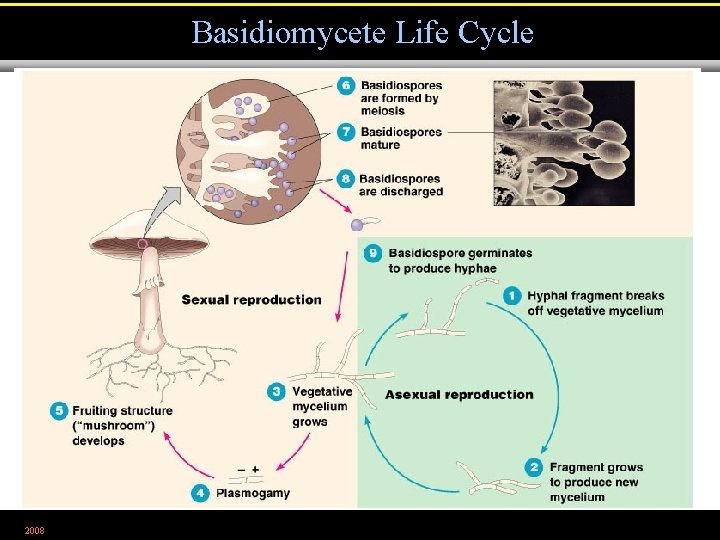
Basidiomycete Life Cycle 2008 Figure 12. 8
Anamorphs • Teleomorphic fungi: • Produce sexual and asexual spores. • Anamorphic fungi: • Produce asexual spores only. • r. RNA sequencing places most in Ascomycota, a few are Basidiomycota • Penicillium • Sporothrix (subcutaneous mycosis) • Stachybotrys, Coccidioides, Pneumocystis (systemic mycoses) • Candida albicans (Cutaneous mycoses) 2008
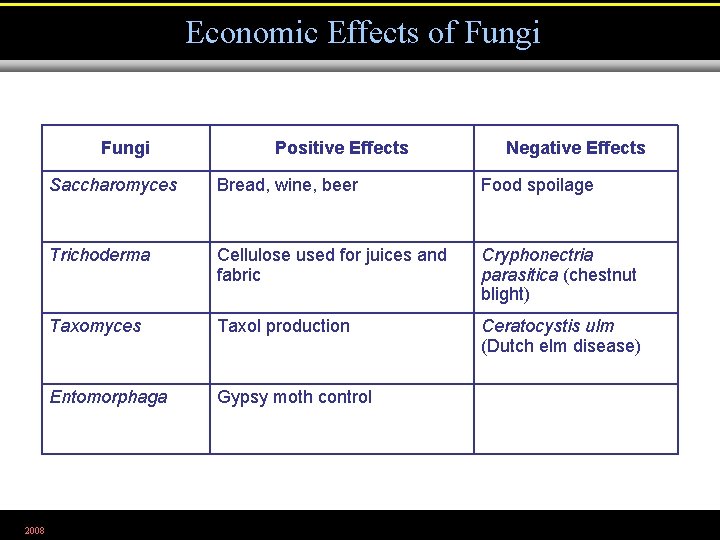
Economic Effects of Fungi 2008 Positive Effects Negative Effects Saccharomyces Bread, wine, beer Food spoilage Trichoderma Cellulose used for juices and fabric Cryphonectria parasitica (chestnut blight) Taxomyces Taxol production Ceratocystis ulm (Dutch elm disease) Entomorphaga Gypsy moth control
Lichens • Mutualistic combination of an alga (or cyanobacterium) & fungus • Alga produces and secretes carbohydrates, fungus provides holdfast 2008
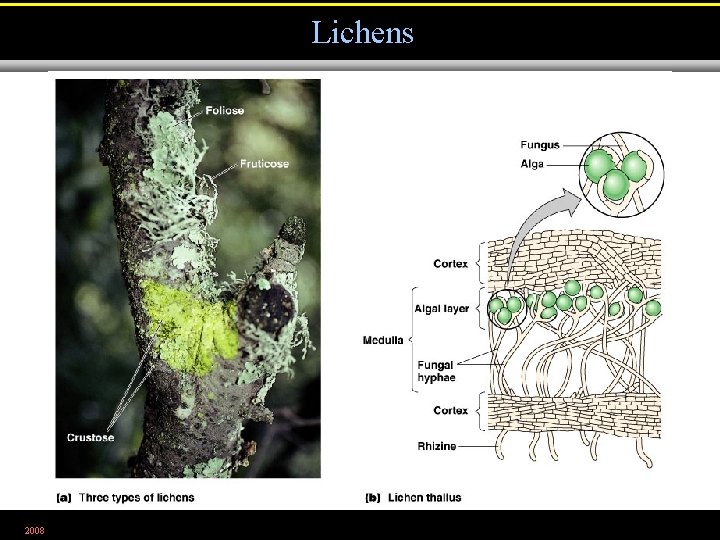
Lichens 2008 Figure 12. 10
The Algae • Eukaryotic • Unicellular, filamentous, or multicellular (thallic( • Most are photoautotrophs 2008
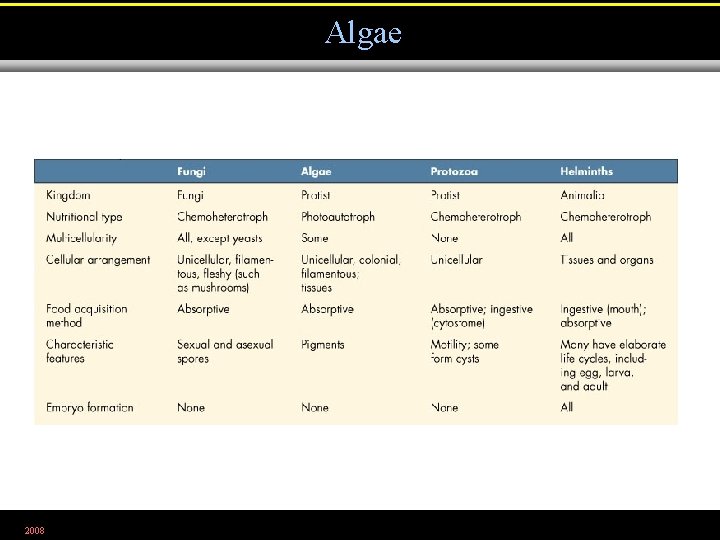
Algae Table 12. 1 2008
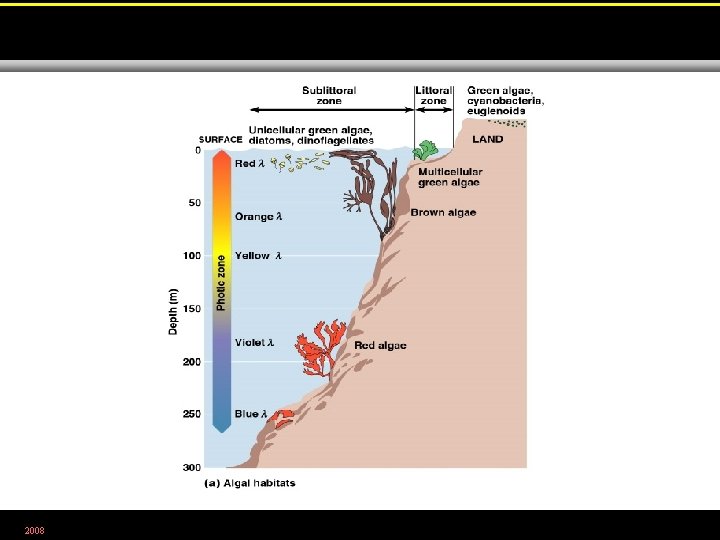
2008 Figure 12. 11 a
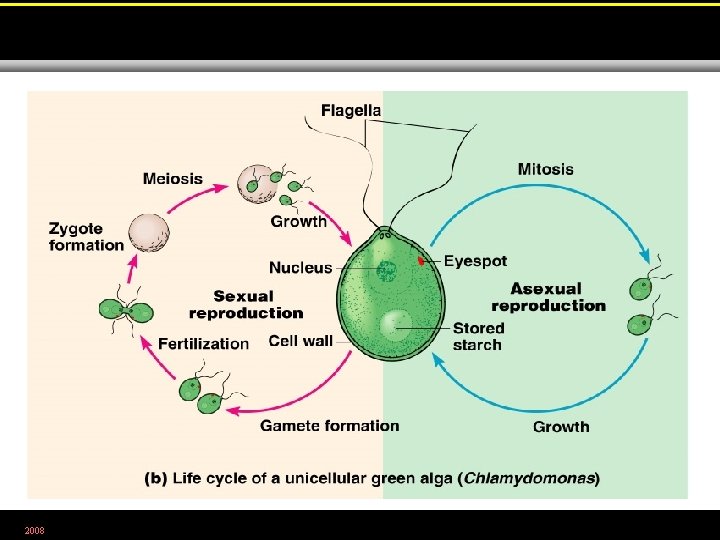
2008 Figure 12. 12 b
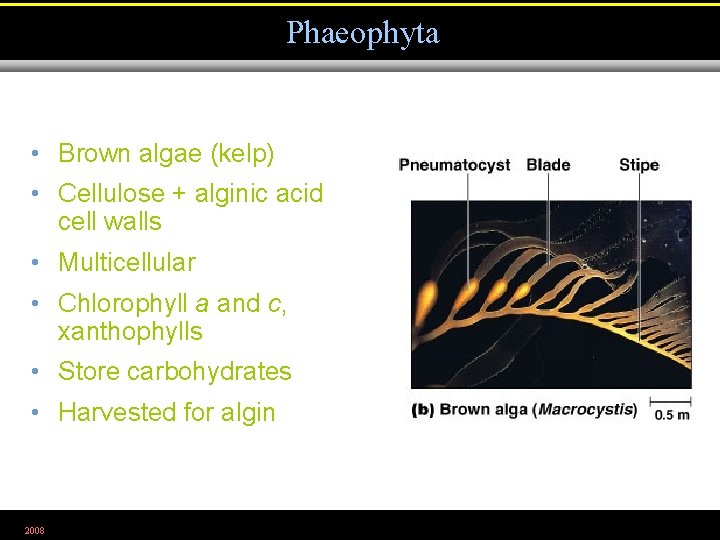
Phaeophyta • Brown algae (kelp) • Cellulose + alginic acid cell walls • Multicellular • Chlorophyll a and c, xanthophylls • Store carbohydrates • Harvested for algin 2008 Figure 12. 11 b
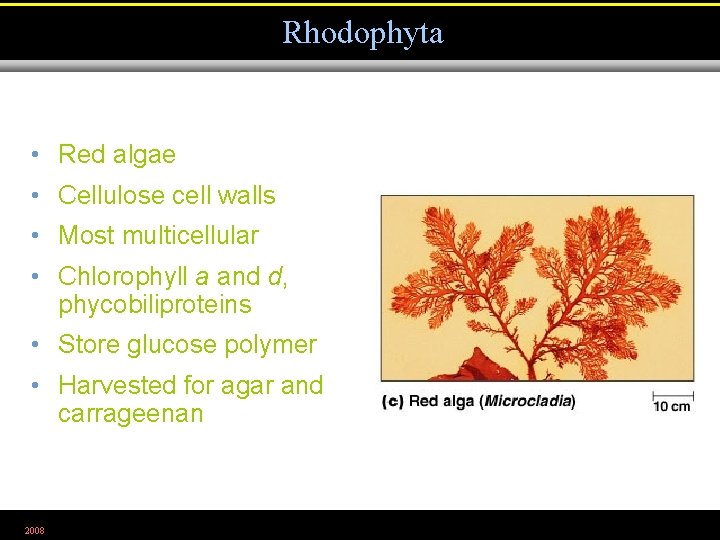
Rhodophyta • Red algae • Cellulose cell walls • Most multicellular • Chlorophyll a and d, phycobiliproteins • Store glucose polymer • Harvested for agar and carrageenan 2008 Figure 12. 11 c
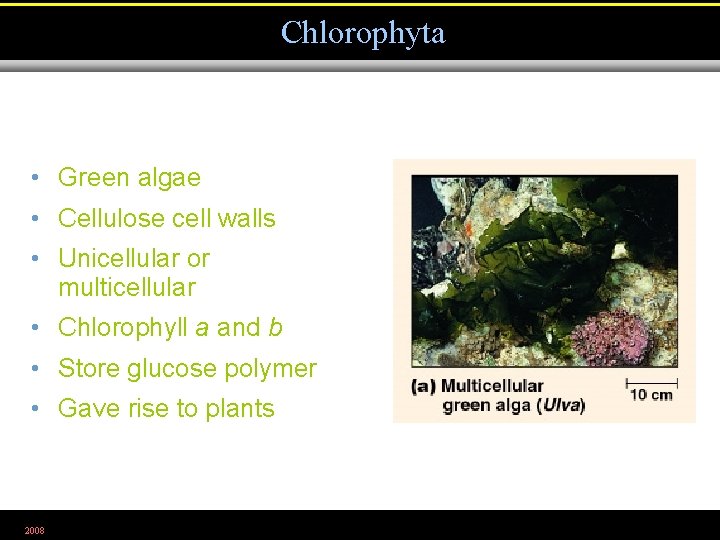
Chlorophyta • Green algae • Cellulose cell walls • Unicellular or multicellular • Chlorophyll a and b • Store glucose polymer • Gave rise to plants 2008 Figure 12. 12 a
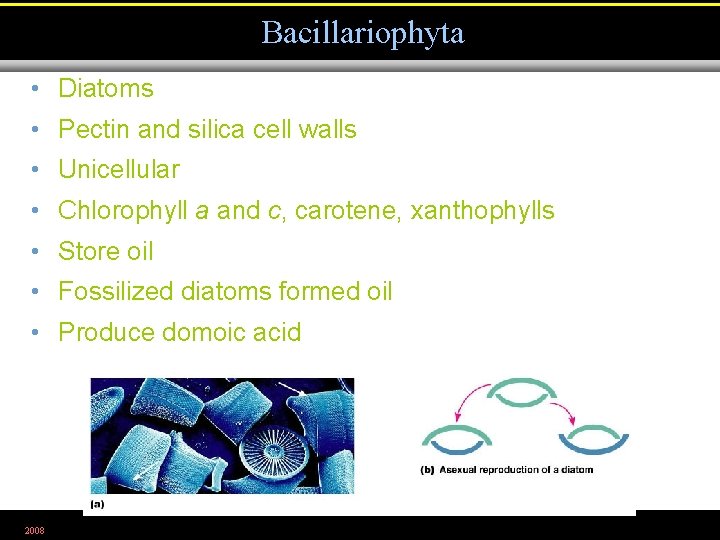
Bacillariophyta • Diatoms • Pectin and silica cell walls • Unicellular • Chlorophyll a and c, carotene, xanthophylls • Store oil • Fossilized diatoms formed oil • Produce domoic acid 2008 Figure 12. 13
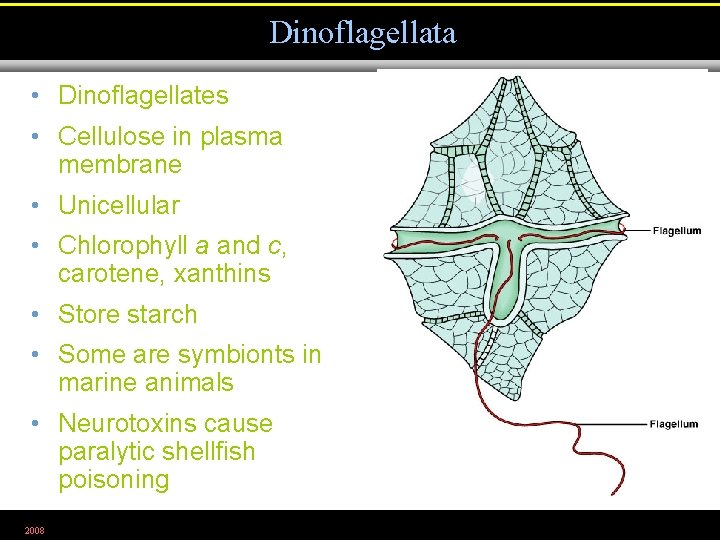
Dinoflagellata • Dinoflagellates • Cellulose in plasma membrane • Unicellular • Chlorophyll a and c, carotene, xanthins • Store starch • Some are symbionts in marine animals • Neurotoxins cause paralytic shellfish poisoning 2008 Figure 12. 14
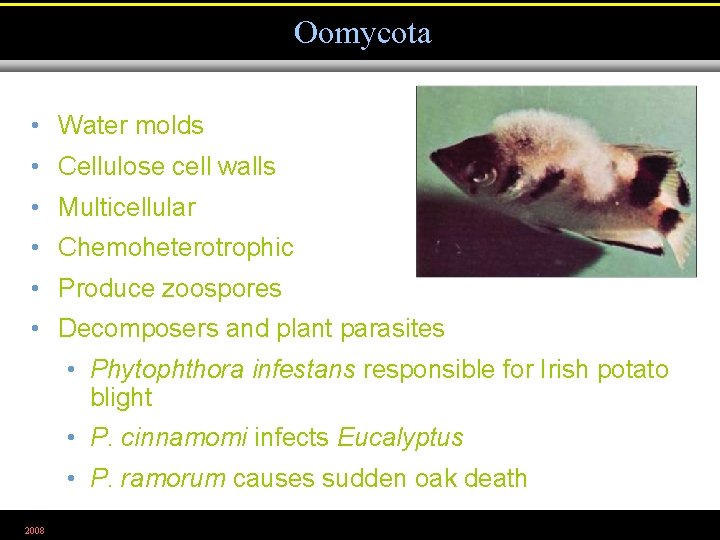
Oomycota • Water molds • Cellulose cell walls • Multicellular • Chemoheterotrophic • Produce zoospores • Decomposers and plant parasites • Phytophthora infestans responsible for Irish potato blight • P. cinnamomi infects Eucalyptus • P. ramorum causes sudden oak death 2008 Figure 12. 15
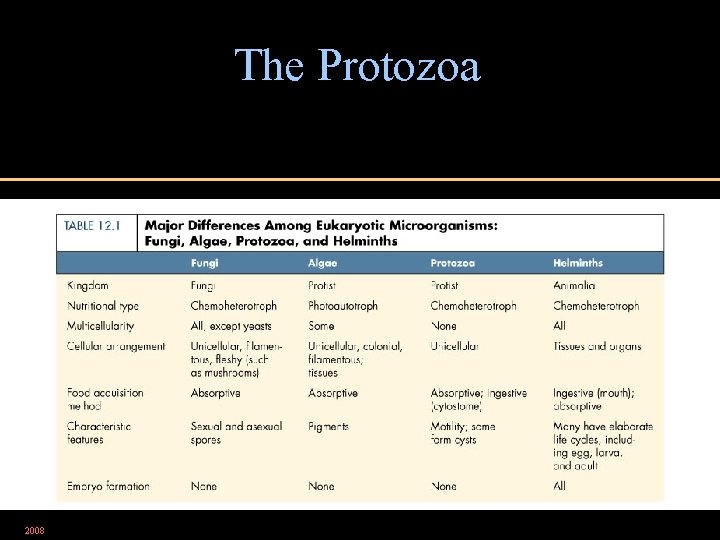
The Protozoa 2008 Table 12. 1
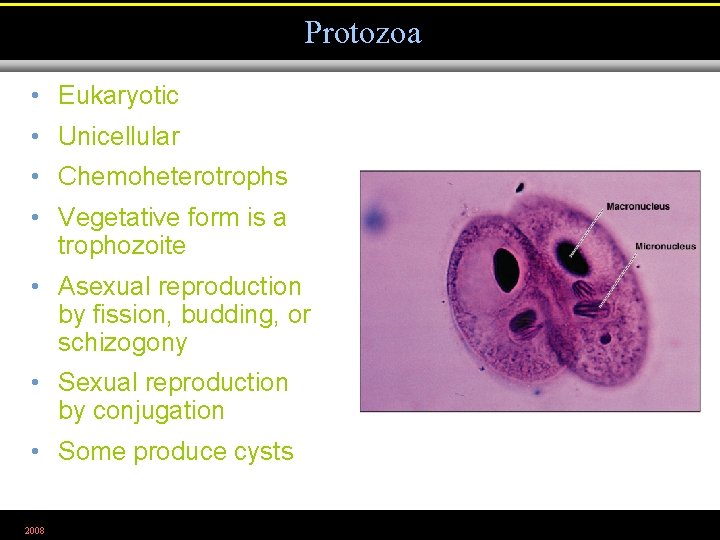
Protozoa • Eukaryotic • Unicellular • Chemoheterotrophs • Vegetative form is a trophozoite • Asexual reproduction by fission, budding, or schizogony • Sexual reproduction by conjugation • Some produce cysts 2008 Figure 12. 16
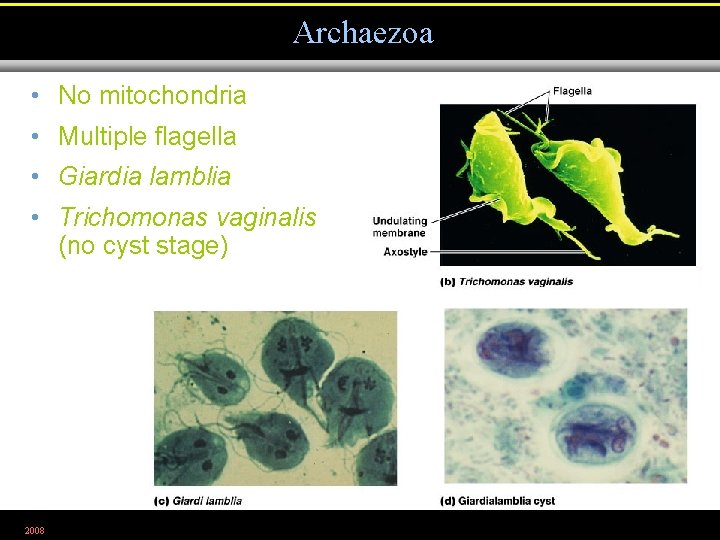
Archaezoa • No mitochondria • Multiple flagella • Giardia lamblia • Trichomonas vaginalis (no cyst stage) 2008 Figure 12. 17 b-d
Microspora • No mitochondria • Nonmotile • Intracellular parasites • Nosema 2008
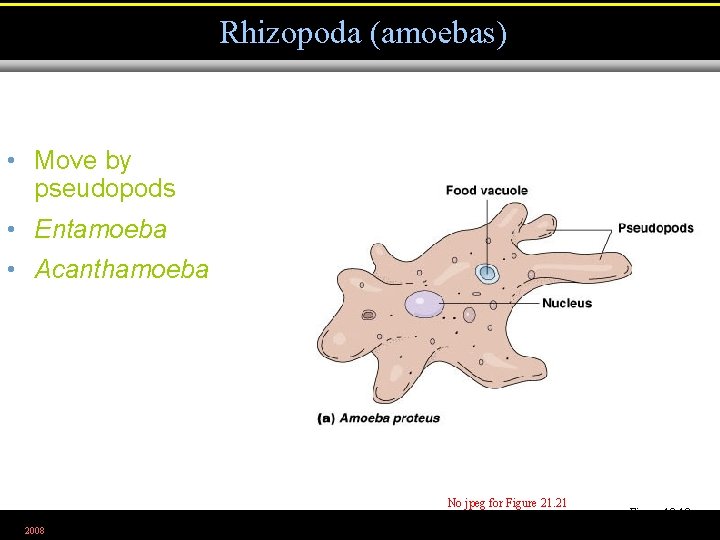
Rhizopoda (amoebas) • Move by pseudopods • Entamoeba • Acanthamoeba No jpeg for Figure 21. 21 2008 Figure 12. 18 a
Apicomplexa • Nonmotile • Intracellular parasites • Complex life cycles • Plasmodium • Babesia • Cryptosporidium • Cyclospora 2008
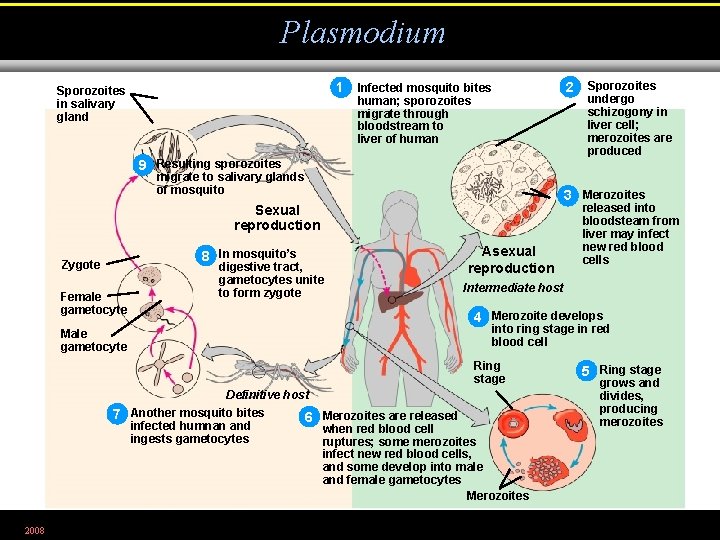
Plasmodium 1 Infected mosquito bites Sporozoites in salivary gland human; sporozoites migrate through bloodstream to liver of human 9 Resulting sporozoites migrate to salivary glands of mosquito Zygote Female gametocyte Male gametocyte digestive tract, gametocytes unite to form zygote Asexual reproduction released into bloodsteam from liver may infect new red blood cells Intermediate host 4 Merozoite develops into ring stage in red blood cell Ring stage Definitive host 7 Another mosquito bites 6 Merozoites are released infected humnan and when red blood cell ingests gametocytes ruptures; some merozoites infect new red blood cells, and some develop into male and female gametocytes Merozoites 2008 Sporozoites undergo schizogony in liver cell; merozoites are produced 3 Merozoites Sexual reproduction 8 In mosquito’s 2 5 Ring stage grows and divides, producing merozoites Figure 12. 19
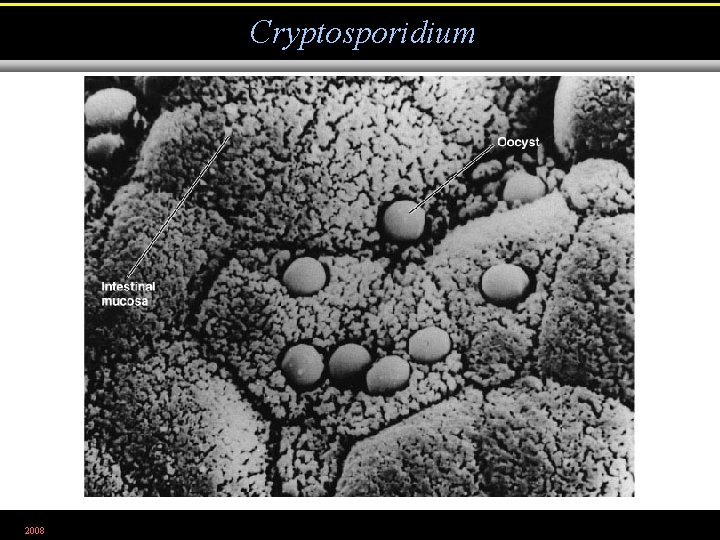
Cryptosporidium 2008 Figure 25. 19
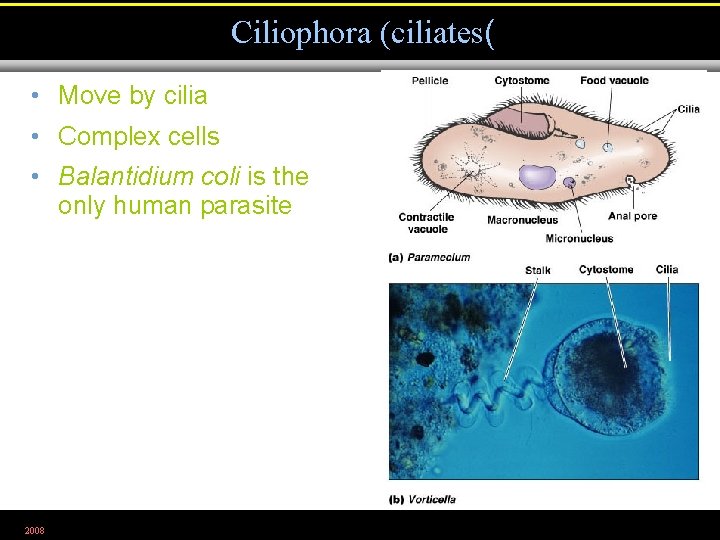
Ciliophora (ciliates( • Move by cilia • Complex cells • Balantidium coli is the only human parasite 2008 Figure 12. 20
Euglenozoa • Move by flagella • Photoautotrophs • Euglenoids • Chemoheterotrophs • Naegleria • Flagellated and amoeboid forms, meningoencephalitis • Trypanosoma • Undulating membrane, transmitted by vectors • Leishmania • Flagellated form in sand fly vector, ovoid form in vertebrate host 2008
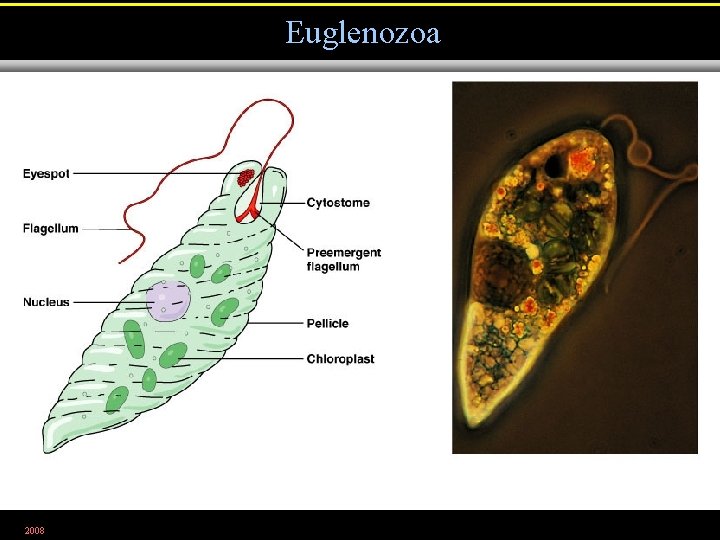
Euglenozoa 2008 Figure 12. 21
Slime Molds 2008
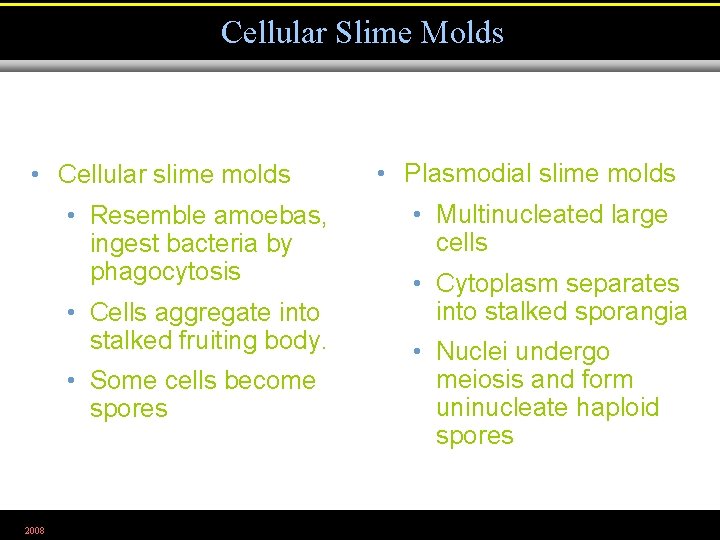
Cellular Slime Molds • Cellular slime molds • Resemble amoebas, ingest bacteria by phagocytosis • Cells aggregate into stalked fruiting body. • Some cells become spores 2008 • Plasmodial slime molds • Multinucleated large cells • Cytoplasm separates into stalked sporangia • Nuclei undergo meiosis and form uninucleate haploid spores
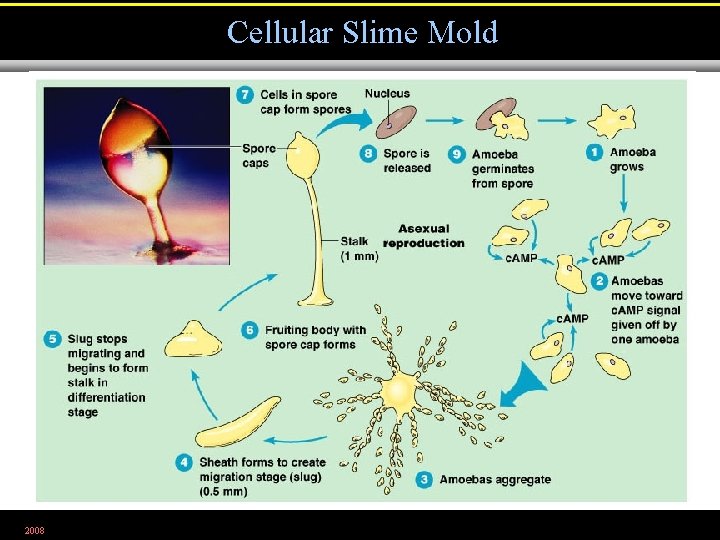
Cellular Slime Mold 2008 Figure 12. 22
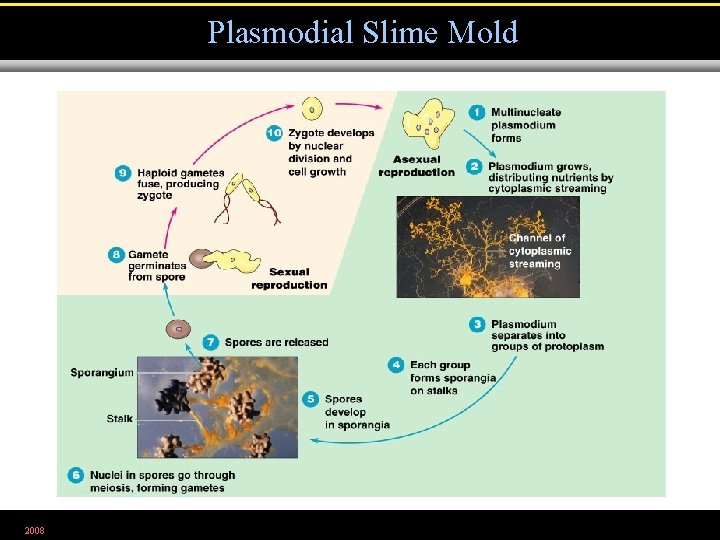
Plasmodial Slime Mold 2008 Figure 12. 23
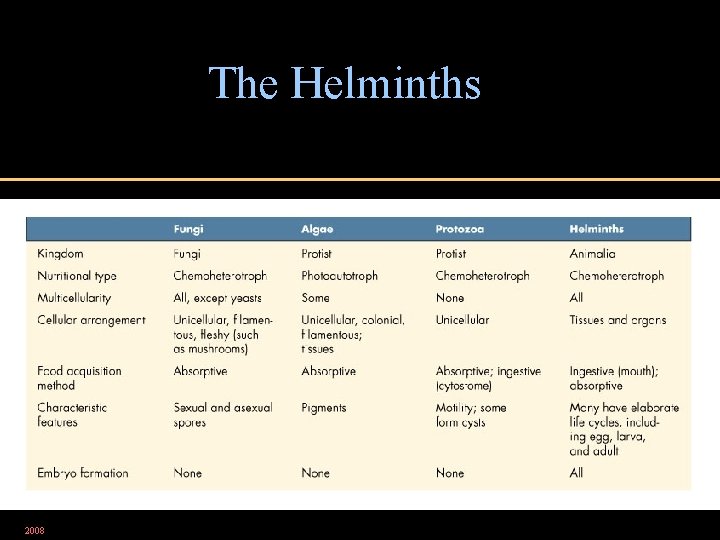
The Helminths 2008 Table 12. 1
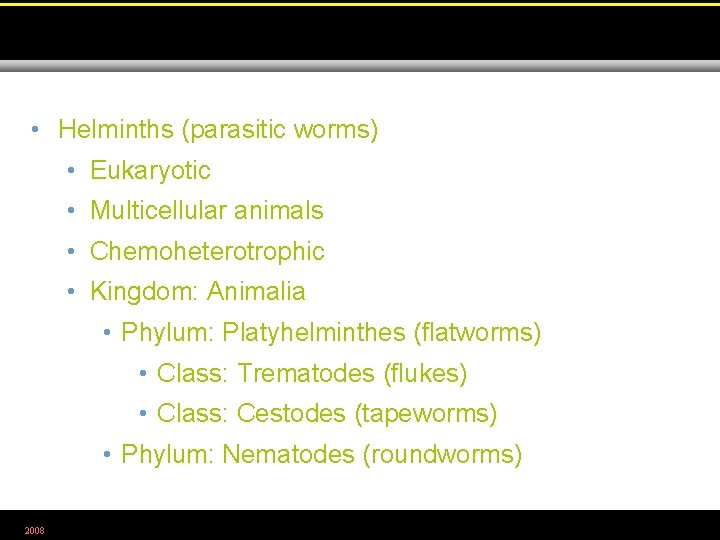
• Helminths (parasitic worms) • Eukaryotic • Multicellular animals • Chemoheterotrophic • Kingdom: Animalia • Phylum: Platyhelminthes (flatworms) • Class: Trematodes (flukes) • Class: Cestodes (tapeworms) • Phylum: Nematodes (roundworms) 2008
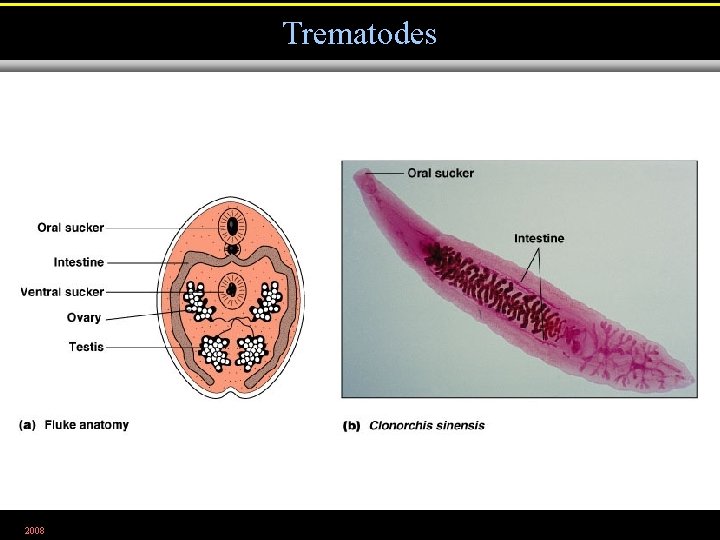
Trematodes 2008 Figure 12. 25
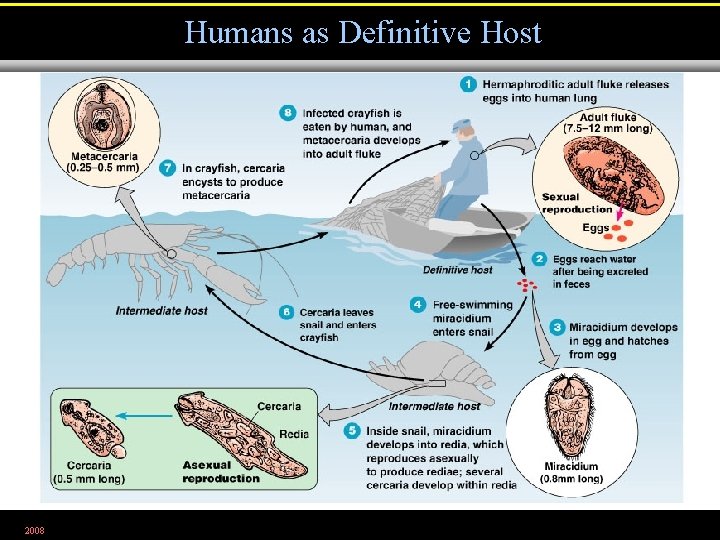
Humans as Definitive Host 2008 Figure 12. 26
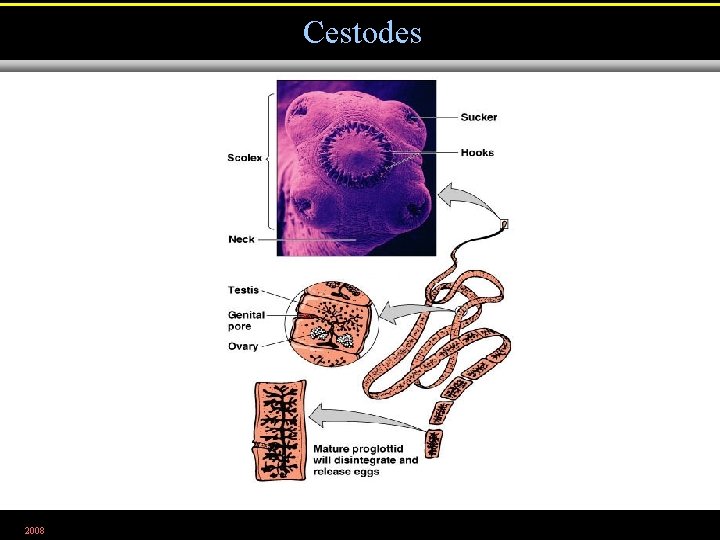
Cestodes 2008 Figure 12. 27
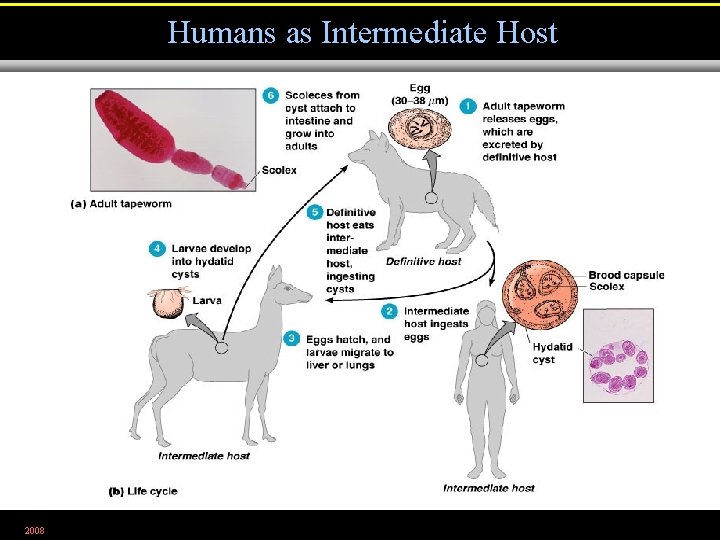
Humans as Intermediate Host 2008 Figure 12. 28
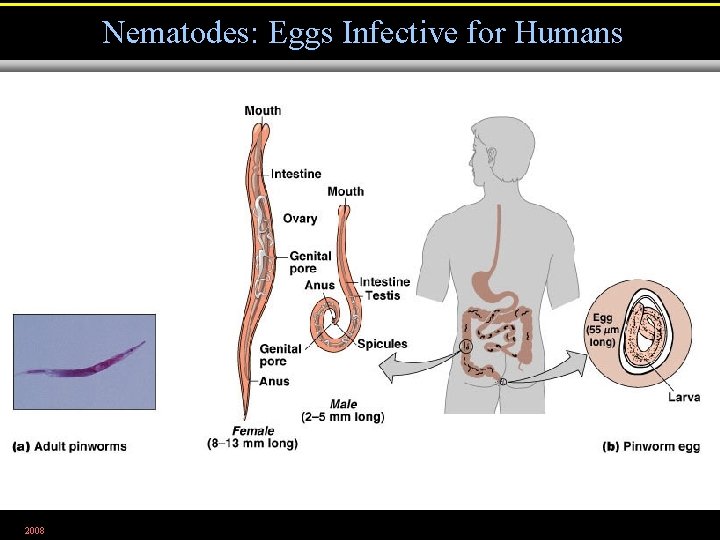
Nematodes: Eggs Infective for Humans 2008 Figure 12. 29
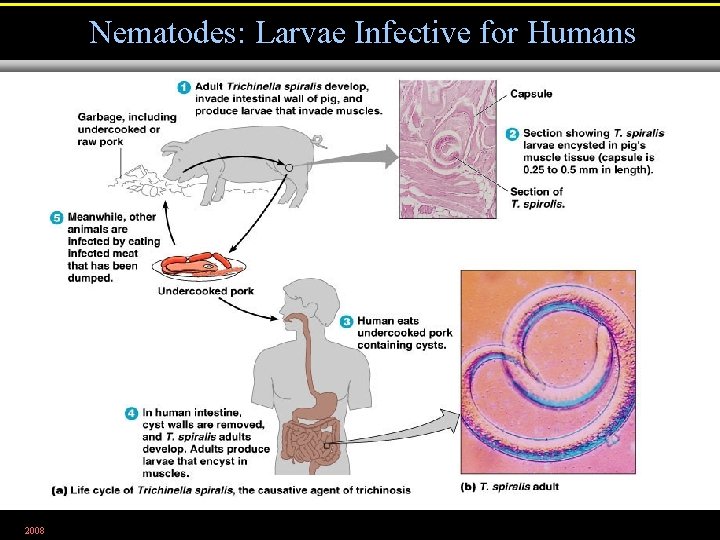
Nematodes: Larvae Infective for Humans 2008 Figure 25. 26
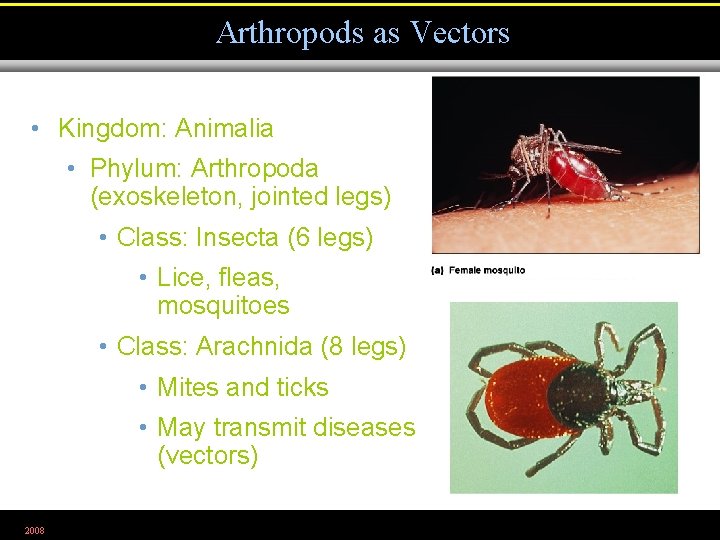
Arthropods as Vectors • Kingdom: Animalia • Phylum: Arthropoda (exoskeleton, jointed legs) • Class: Insecta (6 legs) • Lice, fleas, mosquitoes • Class: Arachnida (8 legs) • Mites and ticks • May transmit diseases (vectors) 2008 Figure 12. 31, 32
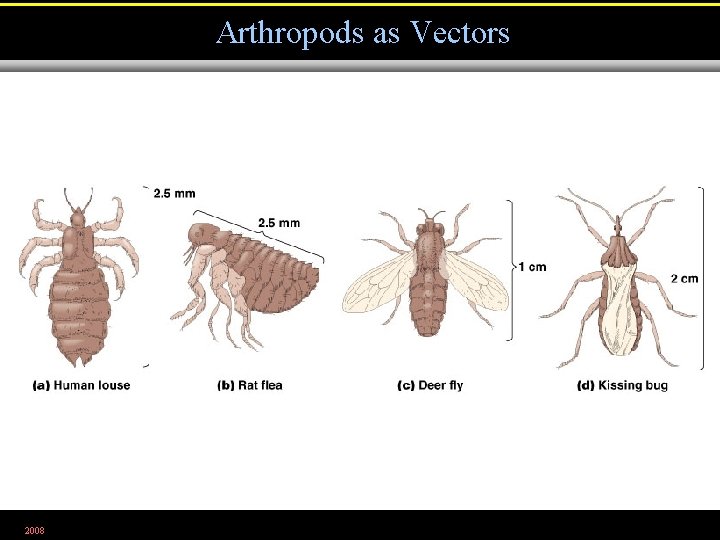
Arthropods as Vectors 2008 Figure 12. 33
- Slides: 60