
Microbiology A Systems Approach 2 nd ed Chapter
Microbiology: A Systems Approach, 2 nd ed. Chapter 20: Infectious Diseases Affecting the Cardiovascular and Lymphatic Symptoms
20. 1 The Cardiovascular and Lymphatic Systems and Their Defenses • Cardiovascular System – Blood vessels and heart – Moves blood in a closed circuit – Also known as the circulatory system – Provides tissues with oxygen and nutrients and carries away carbon dioxide and waste products
The Heart • Divided into two halves, each half divided into an upper and lower chamber • Upper chambers: atria; lower chambers: ventricles • Covered by the pericardium • Three layers to the wall of the heart (from outer to inner) – Epicardium – Myocardium – Endocardium
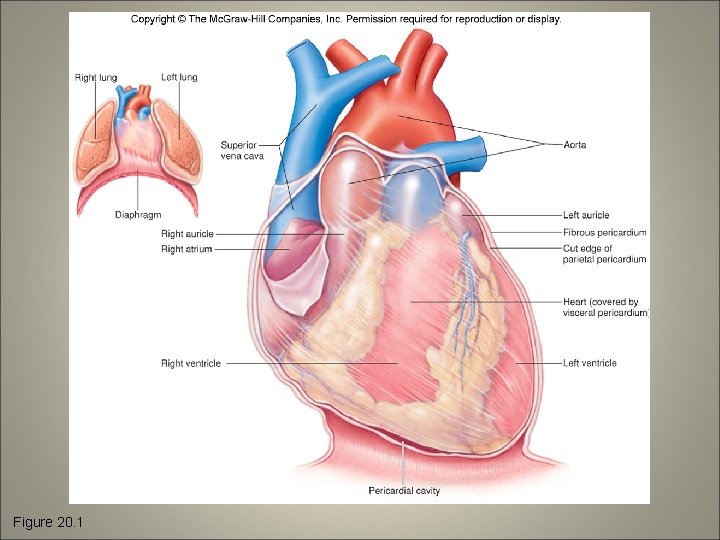
Figure 20. 1
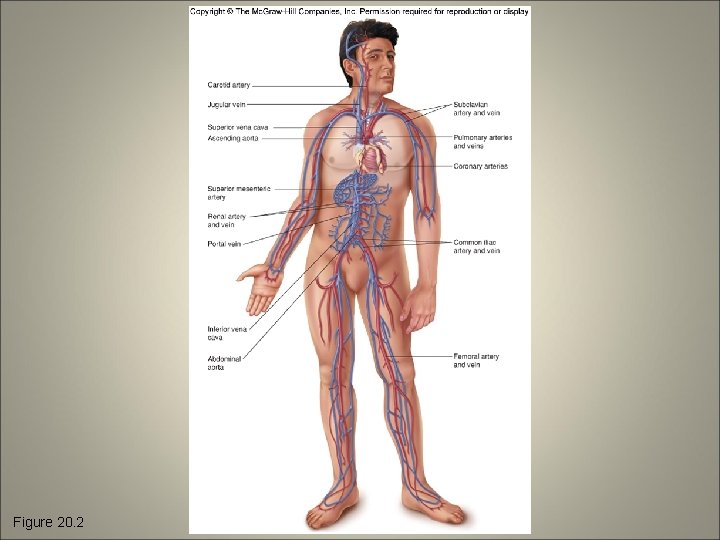
Figure 20. 2

Lymphatic System • One-way passage • Returns fluids from the tissues to the cardiovascular system
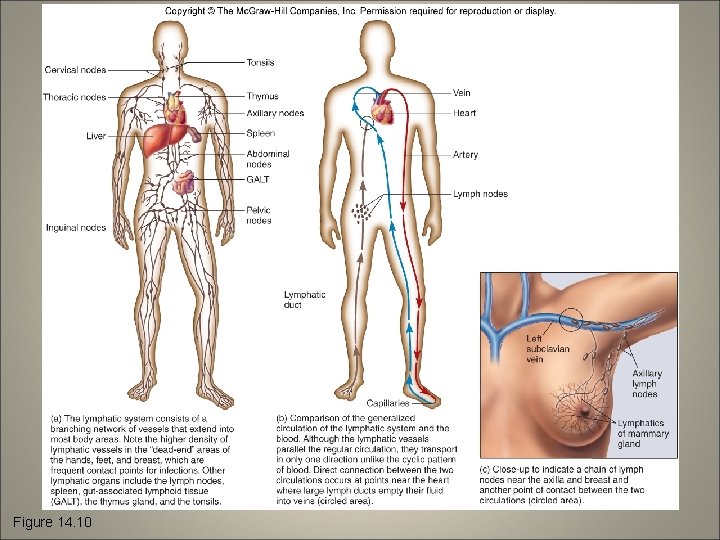
Figure 14. 10

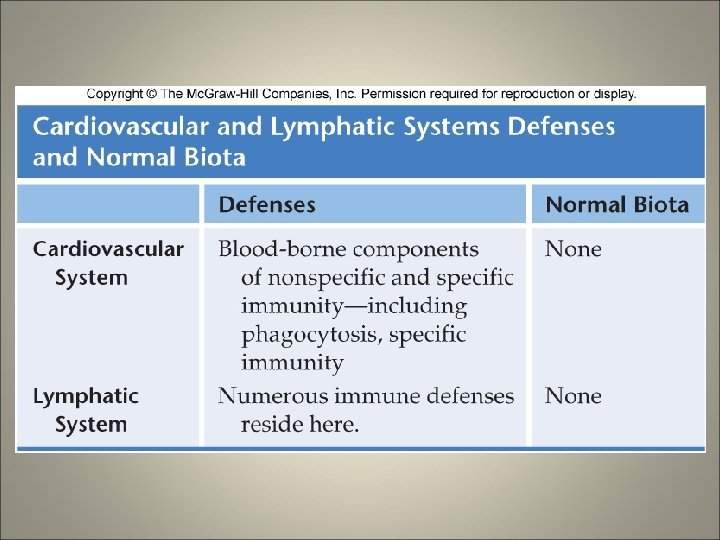
Defenses of the Cardiovascular and Lymphatic Systems • Cardiovascular system is highly protected, however, if microbes do invade they gain access to every part of the body • Bloodstream infections are systemic infections; often with the suffix –emia – Viremia – Fungemia – Bacteremia – Septicemia (can lead to septic shock) • Defenses in the bloodstream- leukocytes
20. 2 Normal Biota of the Cardiovascular and Lymphatic Systems • None • Some microorganisms may be present transiently (filtering out of tissues) but they do not colonize the systems in the healthy state
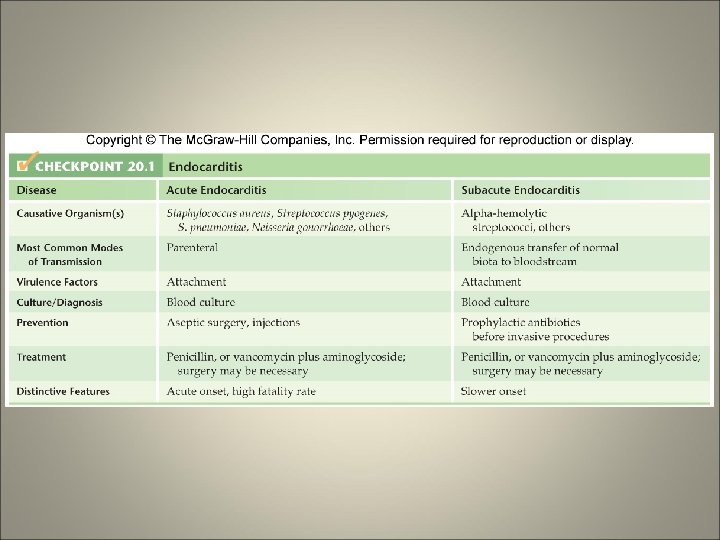
20. 3 Cardiovascular and Lymphatic System Diseases Caused by Microorganisms • Endocarditis – Inflammation of the endocardium – Usually refers to an infection of the valves of the heart – Acute and subacute, with similar symptoms (in subacute the symptoms develop more slowly and are less pronounced) – Fever, anemia, abnormal heartbeat – Sometimes symptoms similar to heart attack – Abdominal or side pain may be reported – Petechiae over the upper half of the body and under the fingernails may be present – In subacute cases, may have enlarged spleen
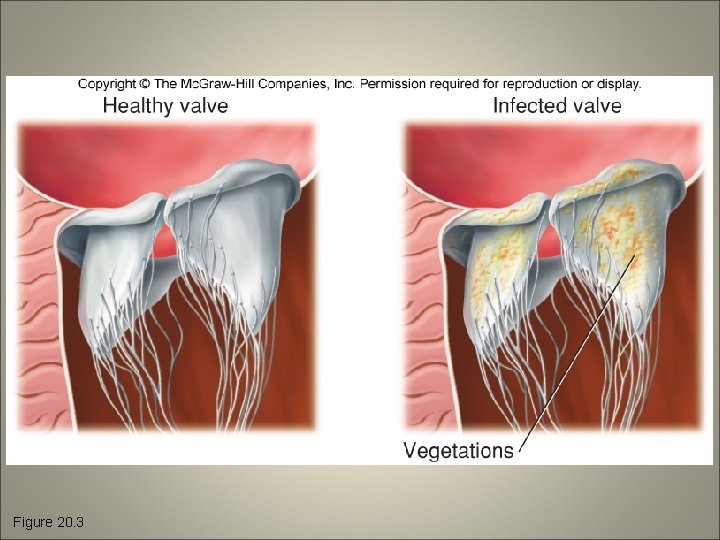
Figure 20. 3
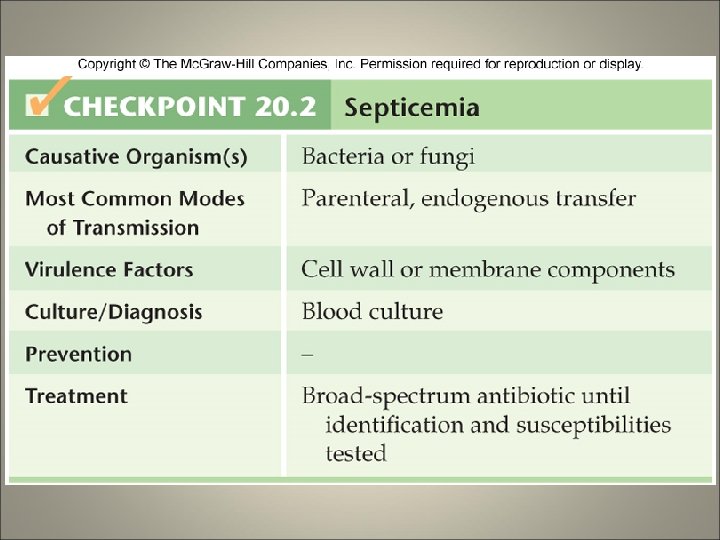
Septicemias • Occurs when organisms are actively multiplying in the blood • Many different bacteria and a few fungi can cause this condition • Fever- prominent symptom • Patient appears very ill, may have an altered mental state, shaking chills, and gastrointestinal symptoms • Often exhibits increased breathing rate and respiratory alkalosis • Low blood pressure
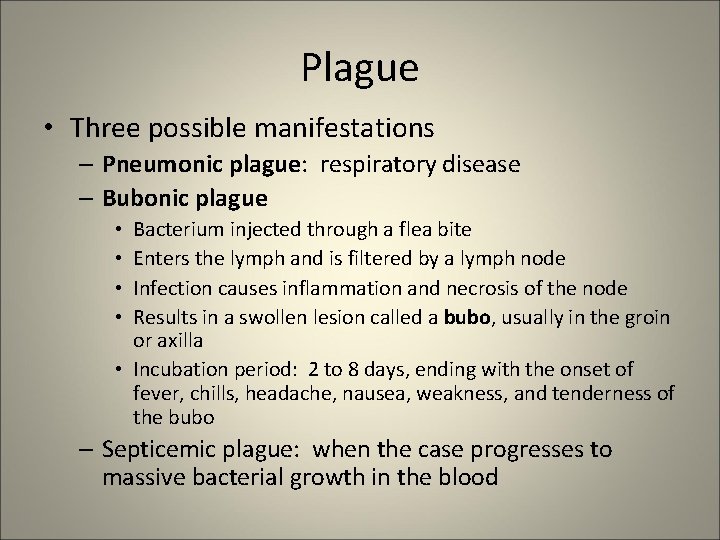
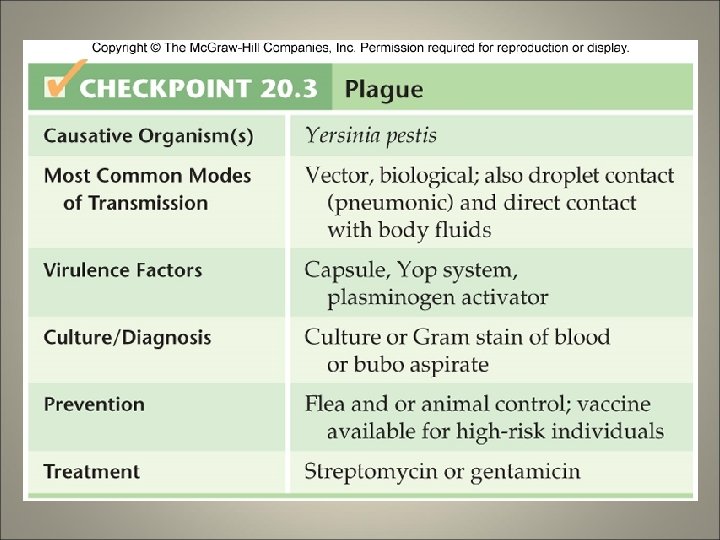
Plague • Three possible manifestations – Pneumonic plague: respiratory disease – Bubonic plague Bacterium injected through a flea bite Enters the lymph and is filtered by a lymph node Infection causes inflammation and necrosis of the node Results in a swollen lesion called a bubo, usually in the groin or axilla • Incubation period: 2 to 8 days, ending with the onset of fever, chills, headache, nausea, weakness, and tenderness of the bubo • • – Septicemic plague: when the case progresses to massive bacterial growth in the blood
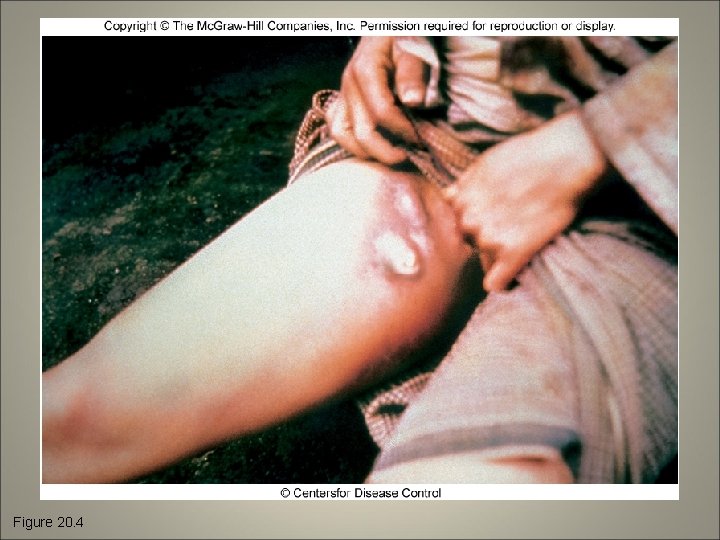
Figure 20. 4
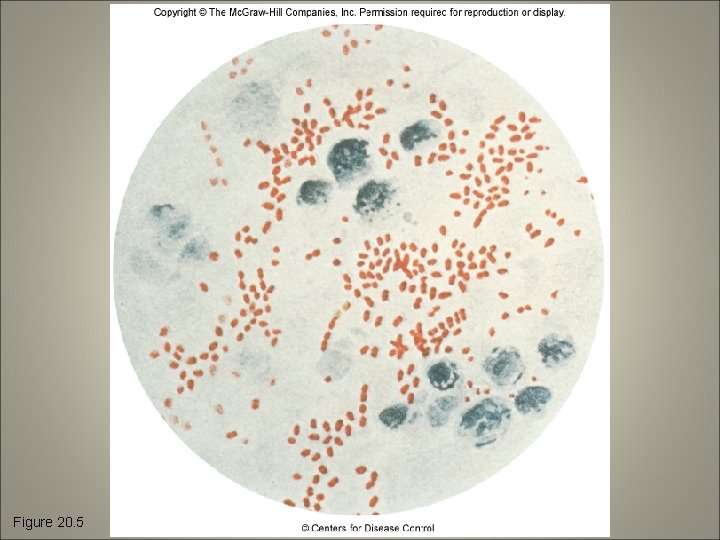
Figure 20. 5
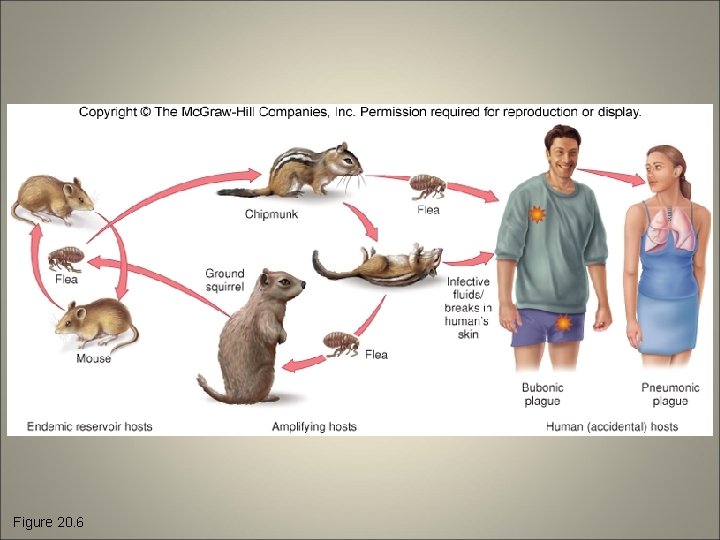
Figure 20. 6
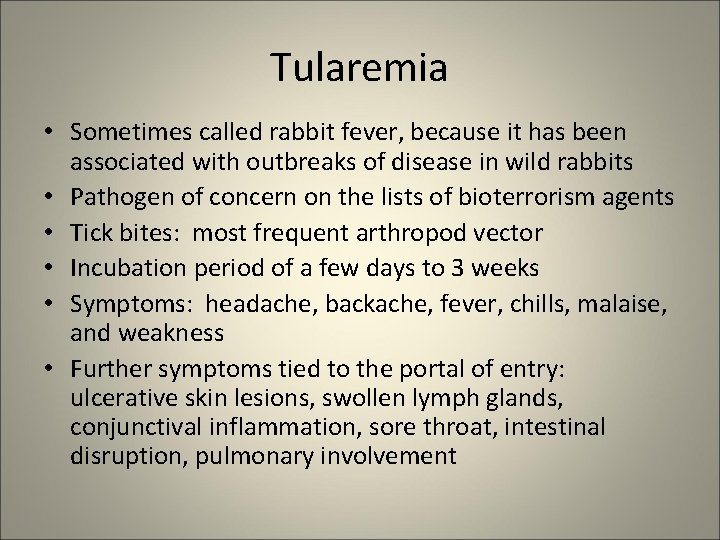
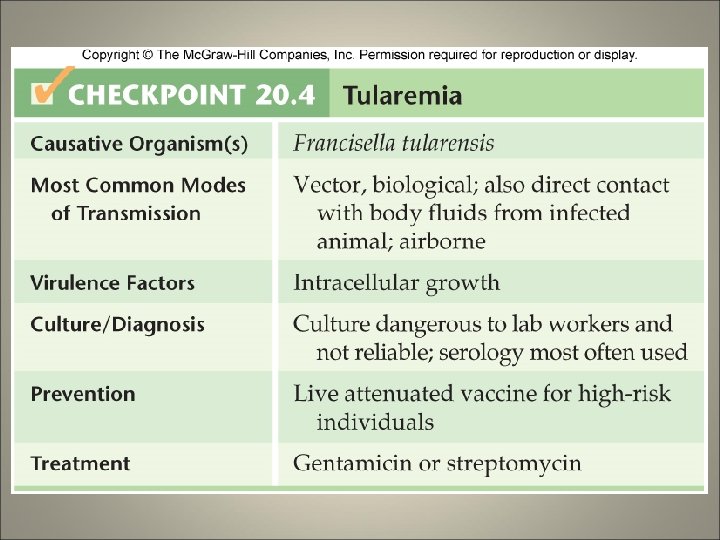
Tularemia • Sometimes called rabbit fever, because it has been associated with outbreaks of disease in wild rabbits • Pathogen of concern on the lists of bioterrorism agents • Tick bites: most frequent arthropod vector • Incubation period of a few days to 3 weeks • Symptoms: headache, backache, fever, chills, malaise, and weakness • Further symptoms tied to the portal of entry: ulcerative skin lesions, swollen lymph glands, conjunctival inflammation, sore throat, intestinal disruption, pulmonary involvement
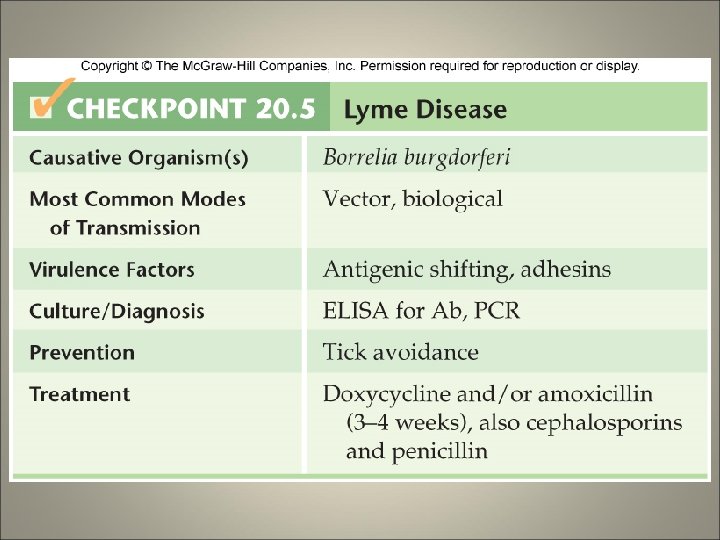
Lyme Disease • Nonfatal • Evolves into a slowly progressive syndrome that mimics neuromuscular and rheumatoid conditions • Early symptom: rash a the site of a tick bite • Other early symptoms: fever, headache, stiff neck, and dizziness • Second stage: cardiac and neurological symptoms develop
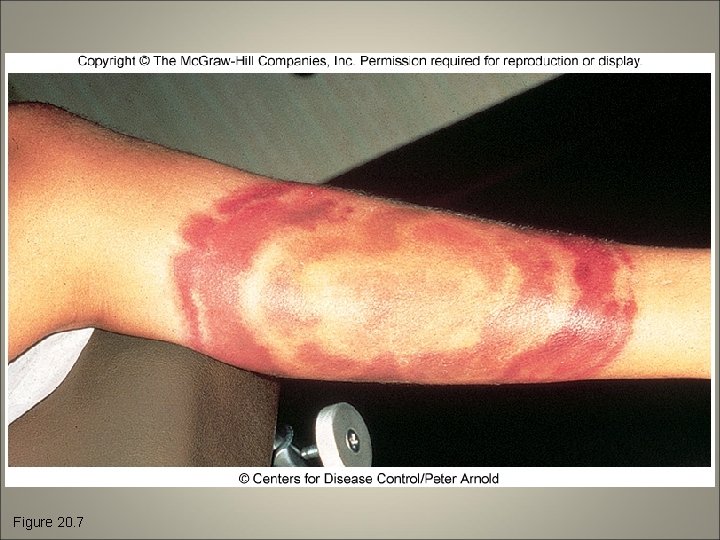
Figure 20. 7
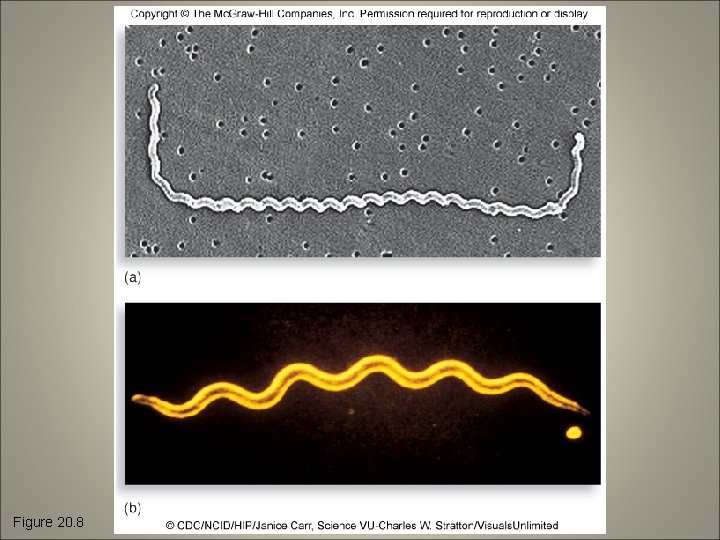
Figure 20. 8
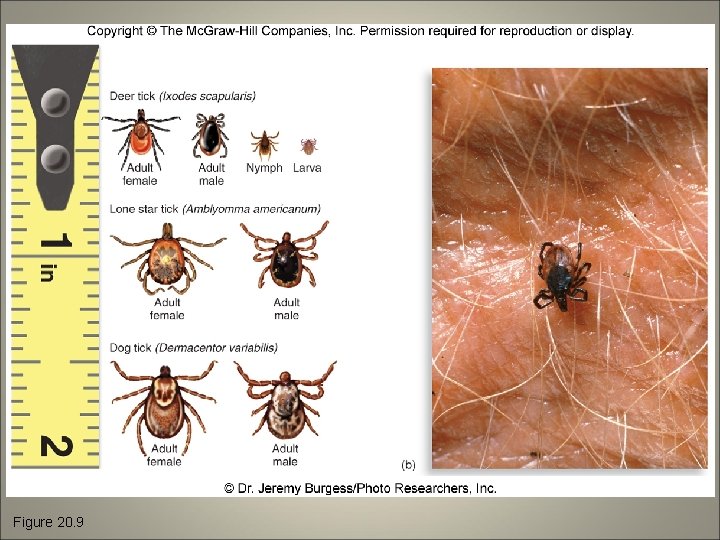
Figure 20. 9
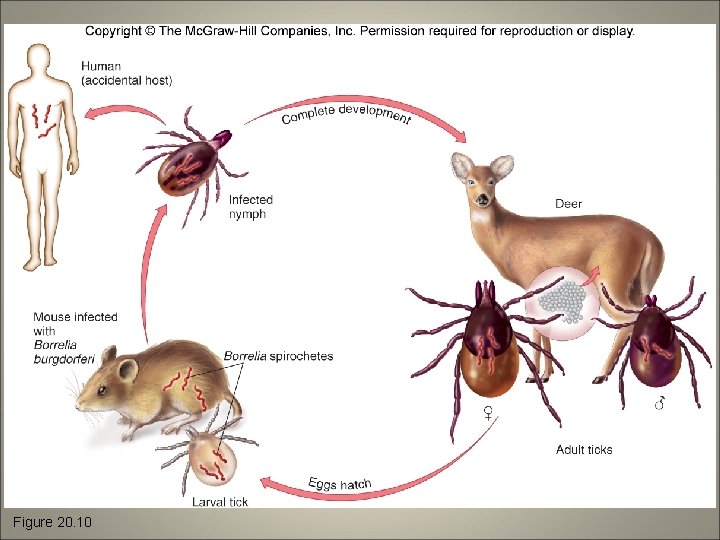
Figure 20. 10
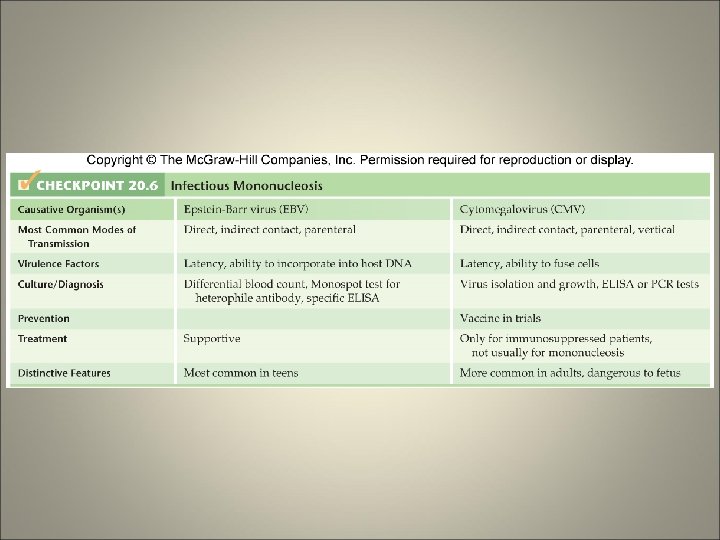
Infectious Mononucleosis • Majority caused by Epstein-Barr virus (EBV) • Most of the remainder caused by cytomegalovirus (CMV) • Sore throat, high fever, and cervical lymphadenopathy • Long incubation period- 30 to 50 days • Also may exhibit a gray-white exudates in the throat, skin rash, and enlarged spleen and liver • Sudden leukocytosis • Fatigue
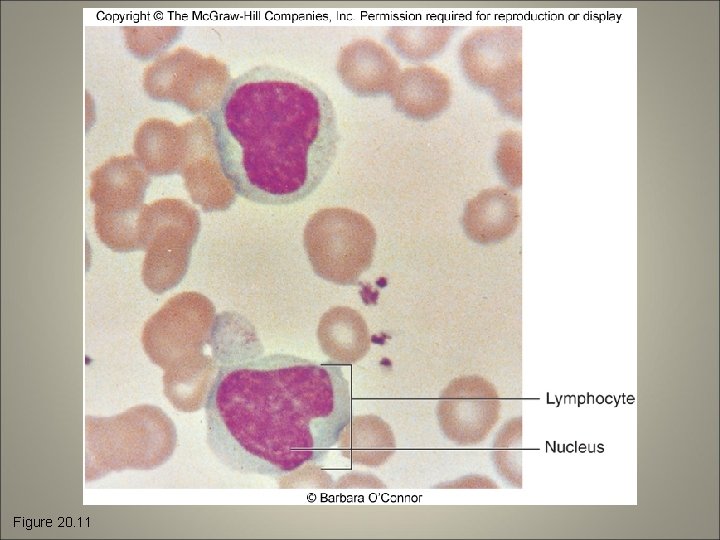
Figure 20. 11
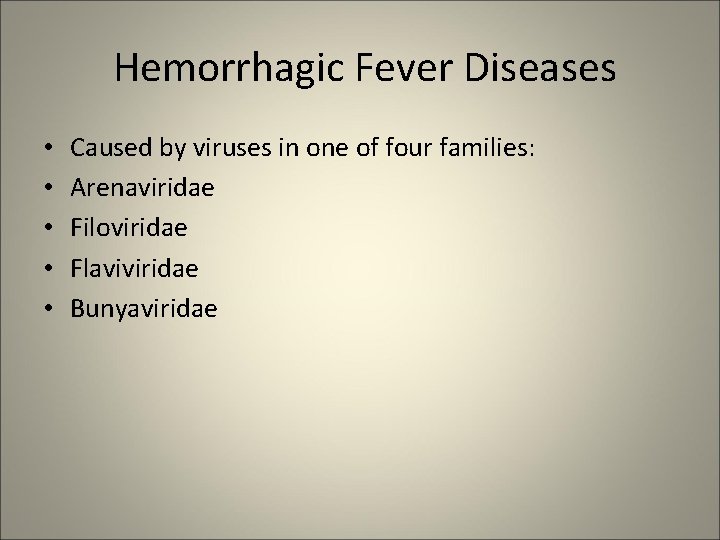
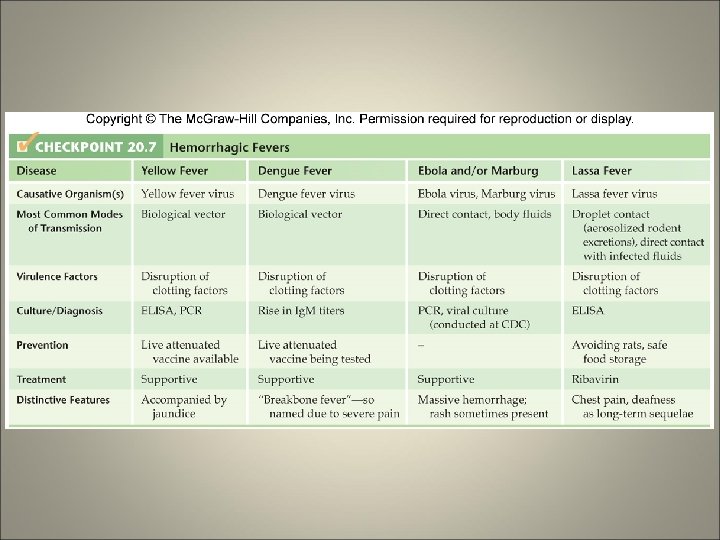
Hemorrhagic Fever Diseases • • • Caused by viruses in one of four families: Arenaviridae Filoviridae Flaviviridae Bunyaviridae

Yellow Fever • • Capillary fragility Disrupts the blood-clotting system Begins with fever, headache, and muscle pain Sometimes progresses to oral hemorrhage, nosebleed, vomiting, jaundice, and liver and kidney damage
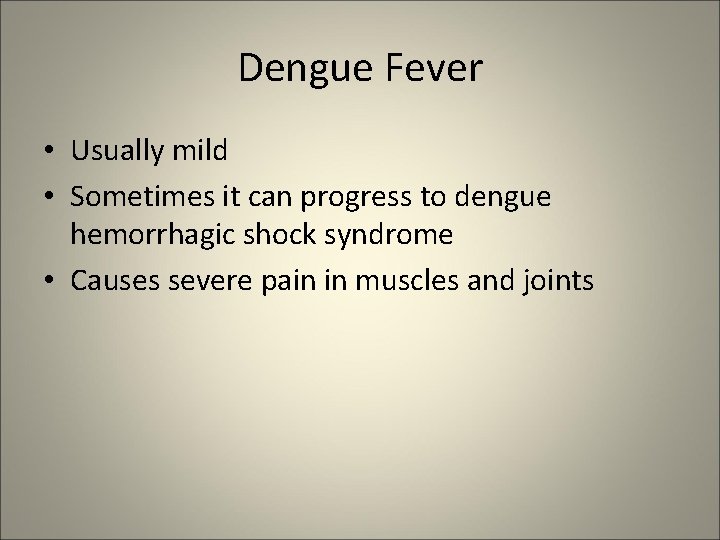
Dengue Fever • Usually mild • Sometimes it can progress to dengue hemorrhagic shock syndrome • Causes severe pain in muscles and joints
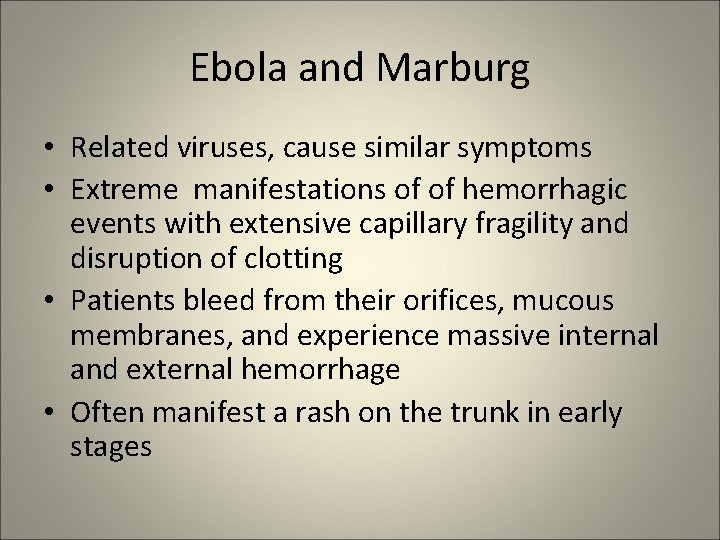
Ebola and Marburg • Related viruses, cause similar symptoms • Extreme manifestations of of hemorrhagic events with extensive capillary fragility and disruption of clotting • Patients bleed from their orifices, mucous membranes, and experience massive internal and external hemorrhage • Often manifest a rash on the trunk in early stages
Lassa Fever • Most cases asymptomatic • In 20% of the cases a severe hemorrhagic syndrome develops • Chest pain, hemorrhaging, sore throat, back pain, vomiting, diarrhea, and sometimes encephalitis • Patients who recover often suffer from deafness
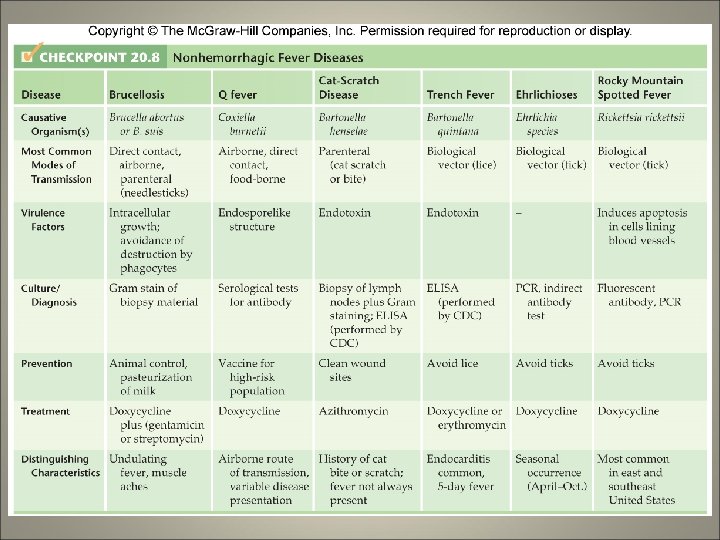
Nonhemorrhagic Fever Diseases • Brucellosis – On the CDC list of possible bioterror agents – Bacteria is carried into the bloodstream by phagocytic cells, creating focal lesions in the liver, spleen, bone marrow, and kidney – Fluctuating pattern of fever accompanied by chills, profuse sweating, headache, muscle pain and weakness, and weight loss
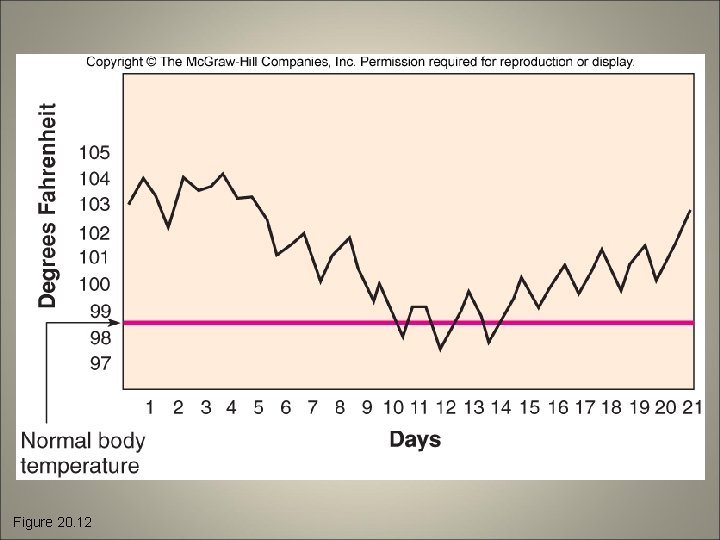
Figure 20. 12
Q Fever • Abrupt onset of fever, chills, head and muscle ache, and occasionally a rash • Sometimes complicated by pneumonitis, hepatitis, and endocarditis
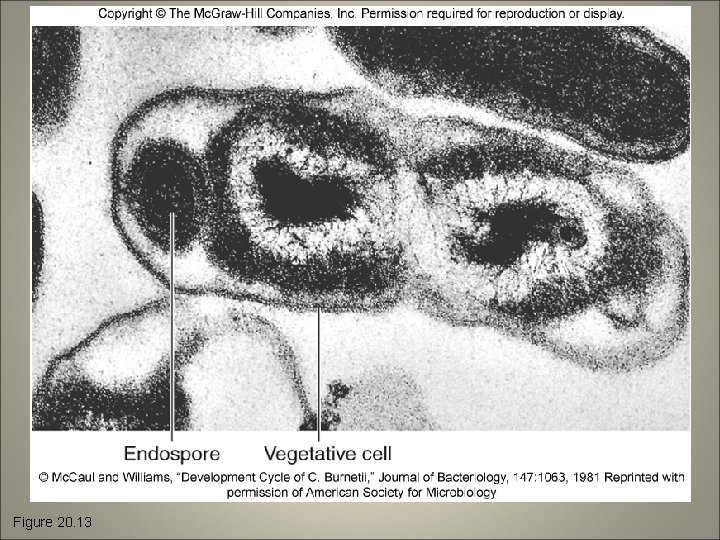
Figure 20. 13
Cat-Scratch Disease • Symptoms start after 1 to 2 weeks • Cluster of small papules at the site of inoculation • In a few weeks, lymph nodes swell and can become pus-filled • Only about 1/3 of patients experience high fever
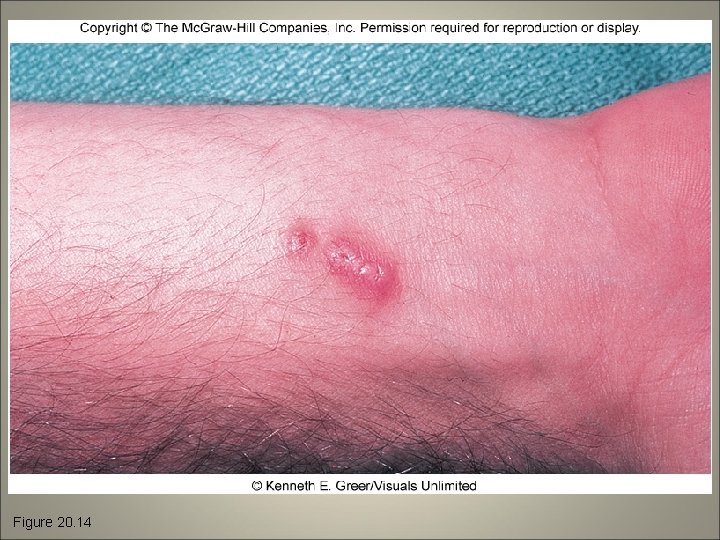
Figure 20. 14
Trench Fever • • • Highly variable symptoms 5 - to 6 -day fever Leg pains, especially in the tibial region Headache, chills, and muscle aches Macular rash can occur Endocarditis can develop
HGA and HME • Similar signs and symptoms • Acute febrile state • Headache, muscle pain, and rigors
Rocky Mountain Spotted Fever (RMSF) • 2 to 4 days incubation • First symptoms: sustained fever, chills, headache, and muscular pain • Distinctive spotted rash within 2 to 4 days after the prodrome • In most severe untreated cases, enlarged lesions merge and become necrotic • Other manifestations: cardiovascular disruption; conditions of restlessness, delirium, convulsions, tremor, and coma
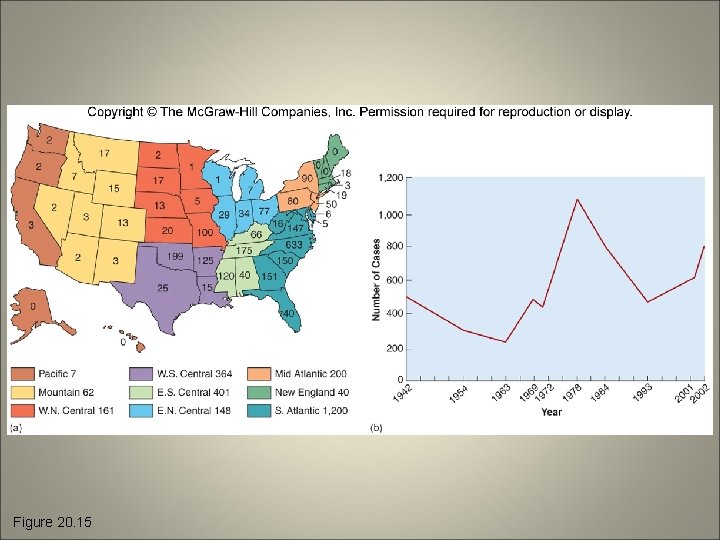
Figure 20. 15

Figure 20. 16
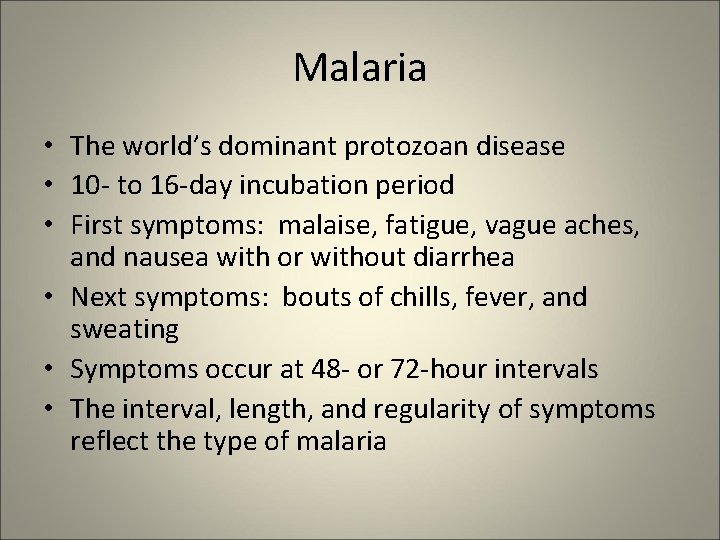
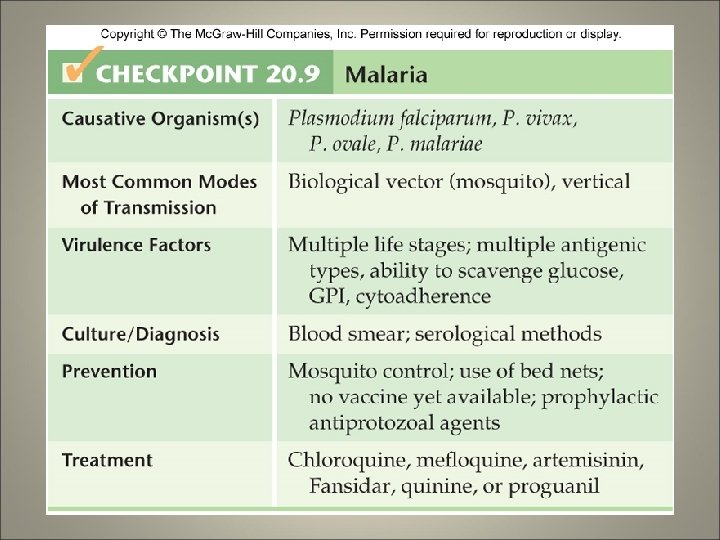
Malaria • The world’s dominant protozoan disease • 10 - to 16 -day incubation period • First symptoms: malaise, fatigue, vague aches, and nausea with or without diarrhea • Next symptoms: bouts of chills, fever, and sweating • Symptoms occur at 48 - or 72 -hour intervals • The interval, length, and regularity of symptoms reflect the type of malaria
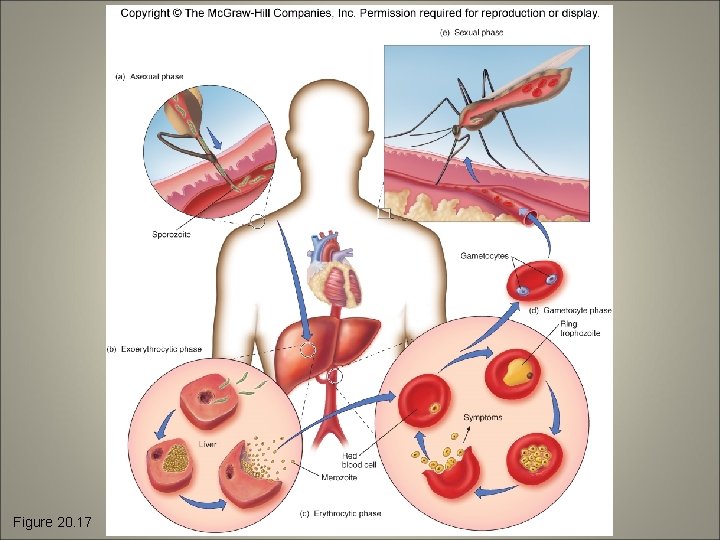
Figure 20. 17
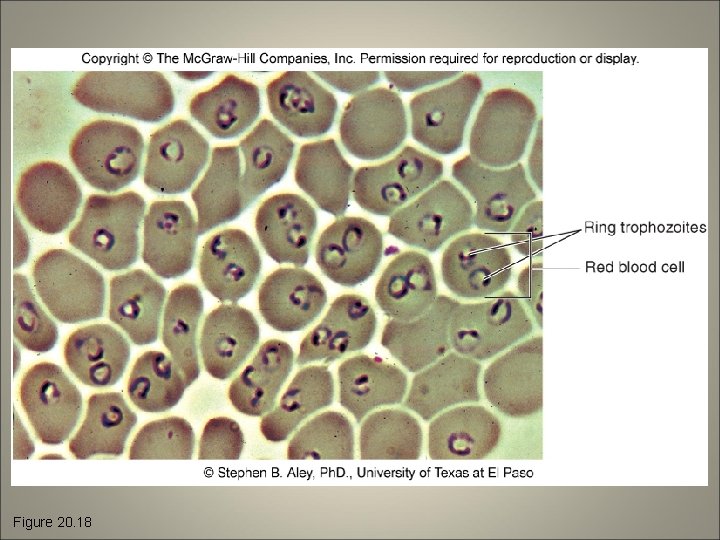
Figure 20. 18

Figure 20. 19
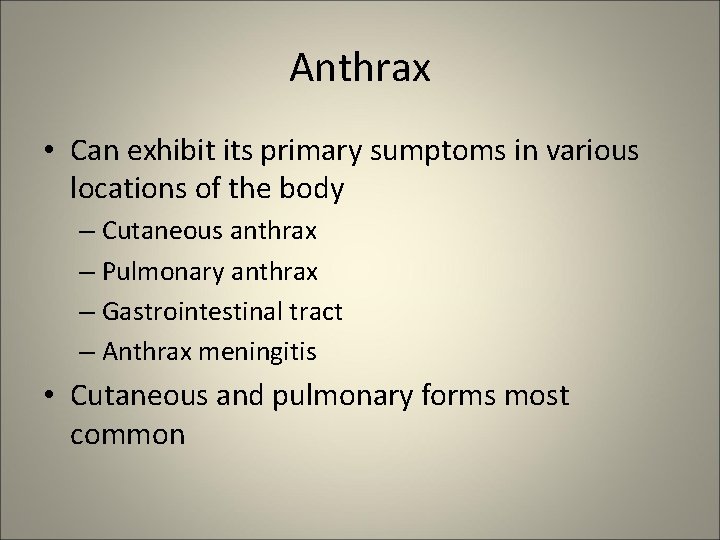
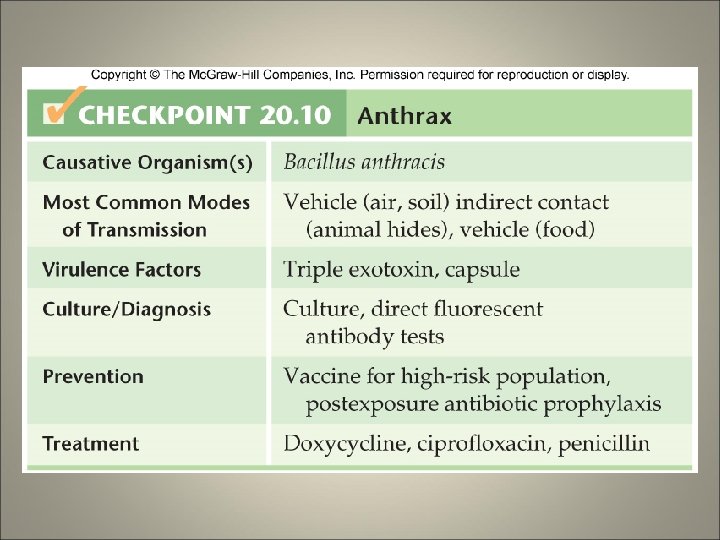
Anthrax • Can exhibit its primary sumptoms in various locations of the body – Cutaneous anthrax – Pulmonary anthrax – Gastrointestinal tract – Anthrax meningitis • Cutaneous and pulmonary forms most common
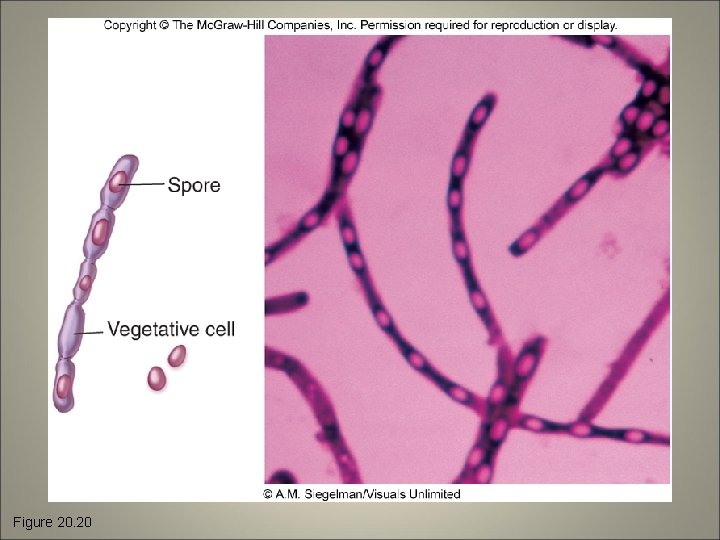
Figure 20. 20
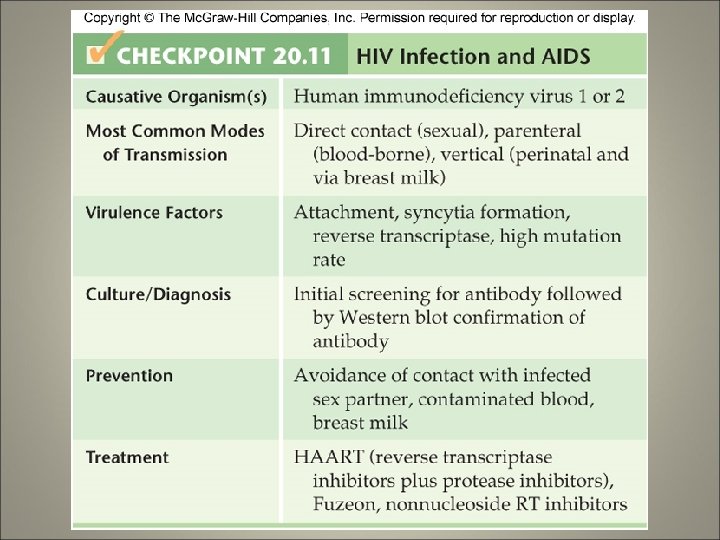
HIV Infection and AIDS • Retrovirus: human immunodeficiency virus (HIV) – Hybrid virus- genetic sequences from two separate monkey SIVs • The disease: acquired immunodeficiency syndrome (AIDS) • Spectrum of clinical disease associated with HIV infection • Symptoms directly tied to two things: the level of virus in the blood and the level of T cells in the blood
Symptoms • Initial infection: vague, mononucleosis-like symptoms that soon disappear (initial high levels of virus) – Within days, about 50% of the T helper cells with memory for the virus are destroyed • Period of asymptomatic infection that varies in length from 2 to 15 years – During this period the number of T cells in the blood is steadily decreasing – Once T cells reach low enough levels, symptoms of AIDS ensue • Initial symptoms of AIDS: fatigue, diarrhea, weight loss, and neurological changes
Other Symptoms as the Disease Progresses • Opportunistic infections or neoplasms • Severe immune deregulation, hormone imbalances, metabolic disturbances • Pronounced wasting of body mass • Protracted fever, fatigue, sore throat, and night sweats • Lesions in the brain, meninges, spinal column, and peripheral nerves
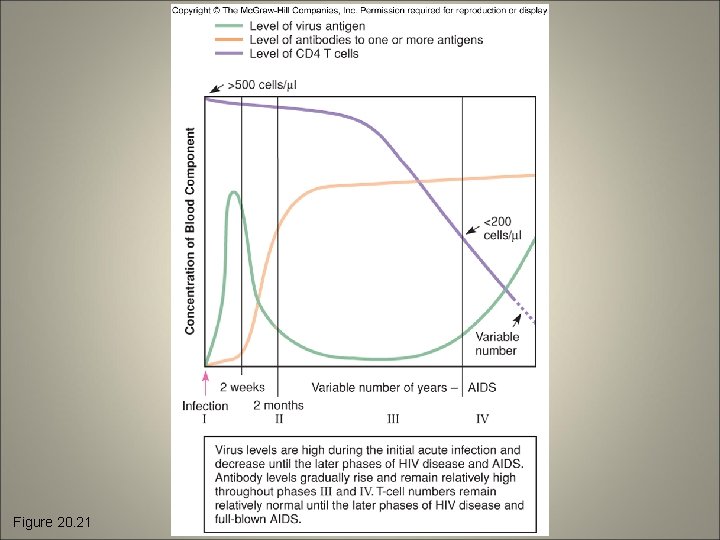
Figure 20. 21
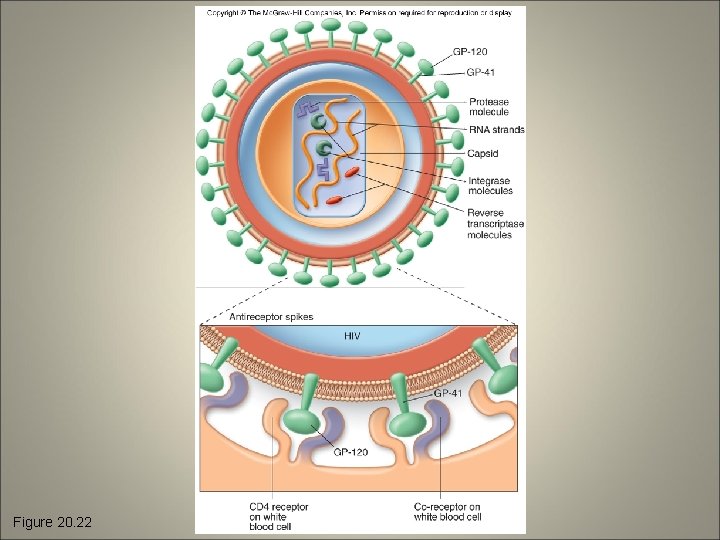
Figure 20. 22
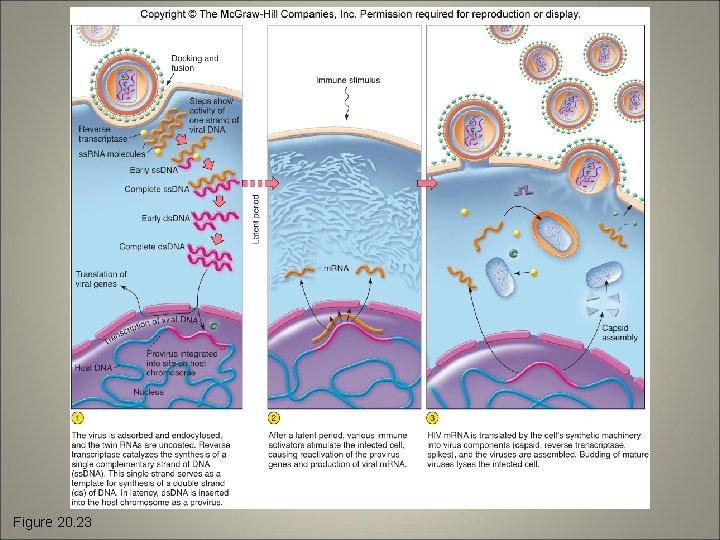
Figure 20. 23
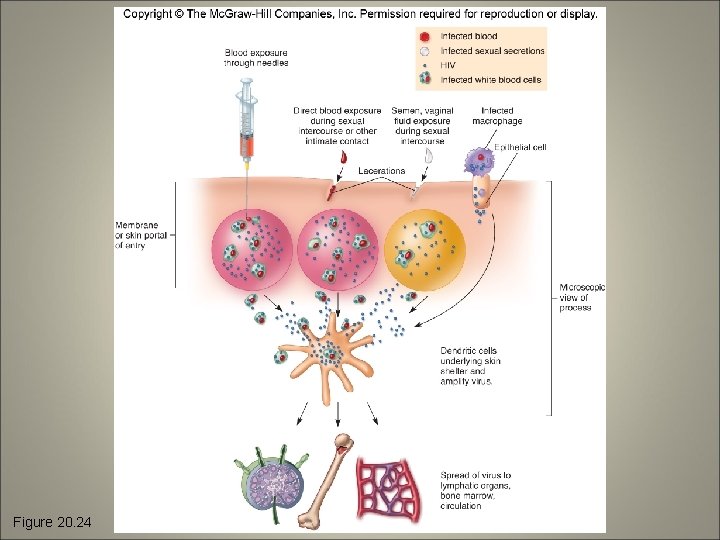
Figure 20. 24
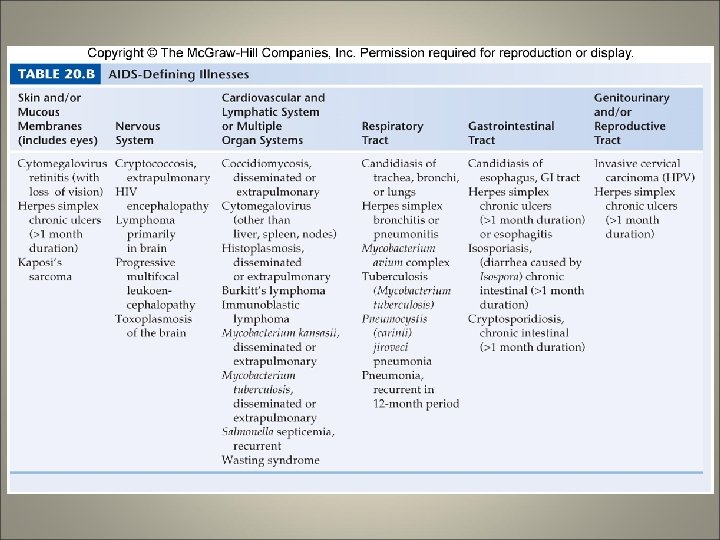
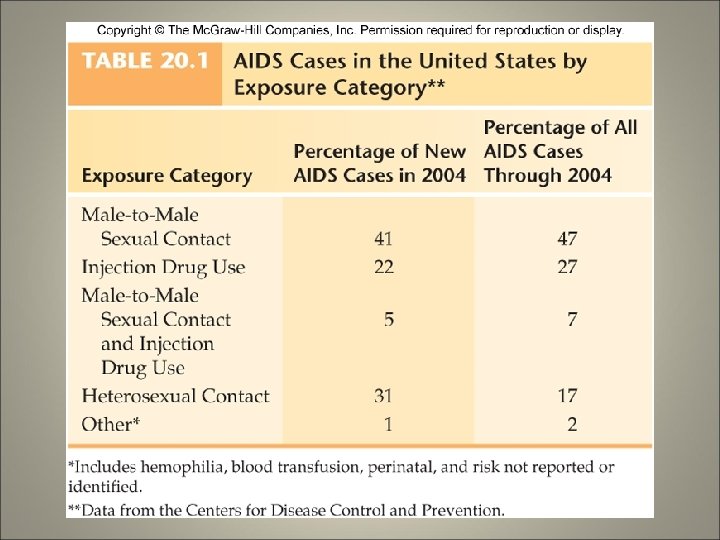
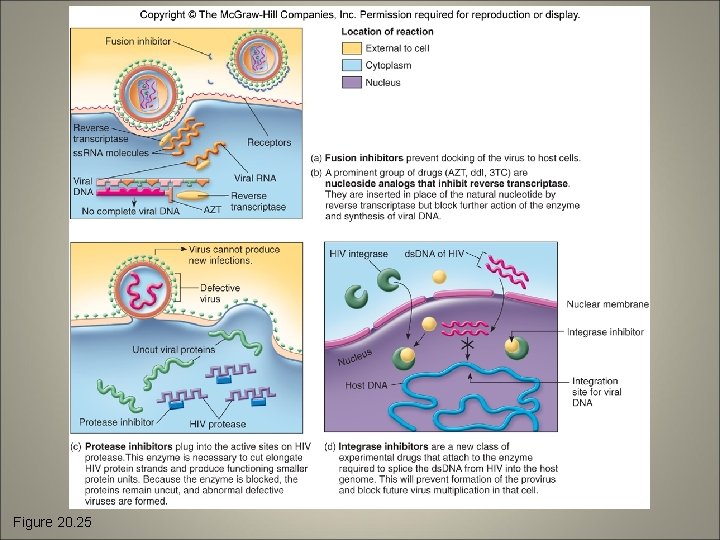
Figure 20. 25
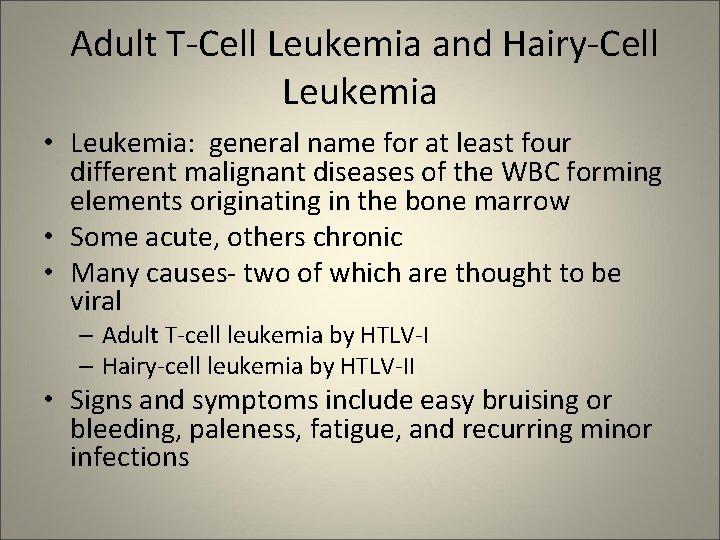
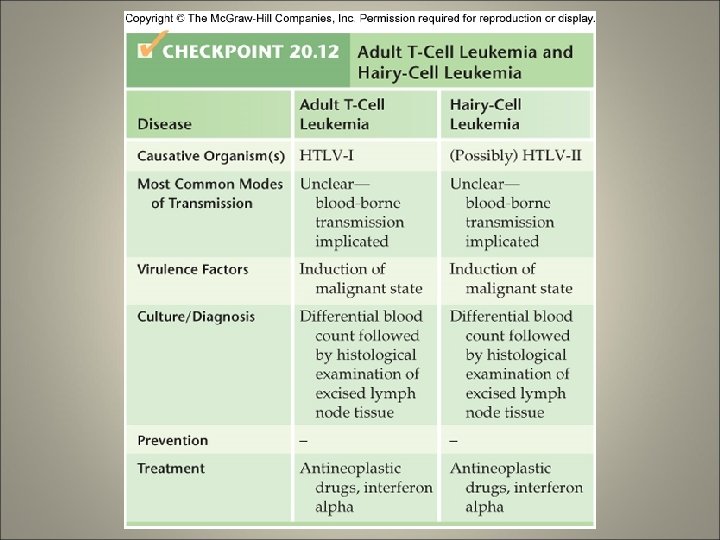
Adult T-Cell Leukemia and Hairy-Cell Leukemia • Leukemia: general name for at least four different malignant diseases of the WBC forming elements originating in the bone marrow • Some acute, others chronic • Many causes- two of which are thought to be viral – Adult T-cell leukemia by HTLV-I – Hairy-cell leukemia by HTLV-II • Signs and symptoms include easy bruising or bleeding, paleness, fatigue, and recurring minor infections

- Slides: 71