
Microbiological endpoints for a Group B Streptococcus human
Microbiological endpoints for a Group B Streptococcus human challenge study Kirsty Le Doare St. George’s, University of London IABS meeting 7 th February 2020
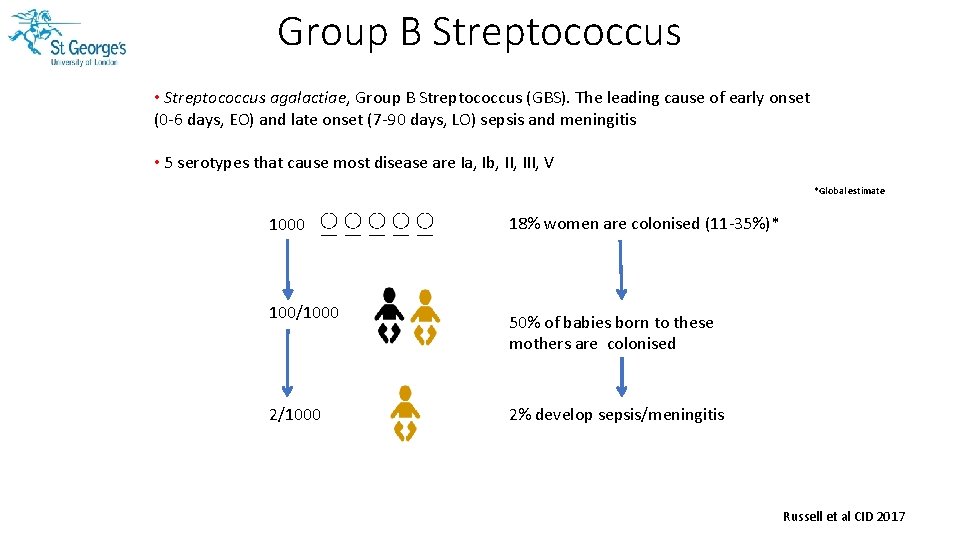
Group B Streptococcus • Streptococcus agalactiae, Group B Streptococcus (GBS). The leading cause of early onset (0 -6 days, EO) and late onset (7 -90 days, LO) sepsis and meningitis • 5 serotypes that cause most disease are Ia, Ib, III, V *Global estimate 1000 ♀♀♀♀♀ 100/1000 2/1000 18% women are colonised (11 -35%)* 50% of babies born to these mothers are colonised 2% develop sepsis/meningitis Russell et al CID 2017
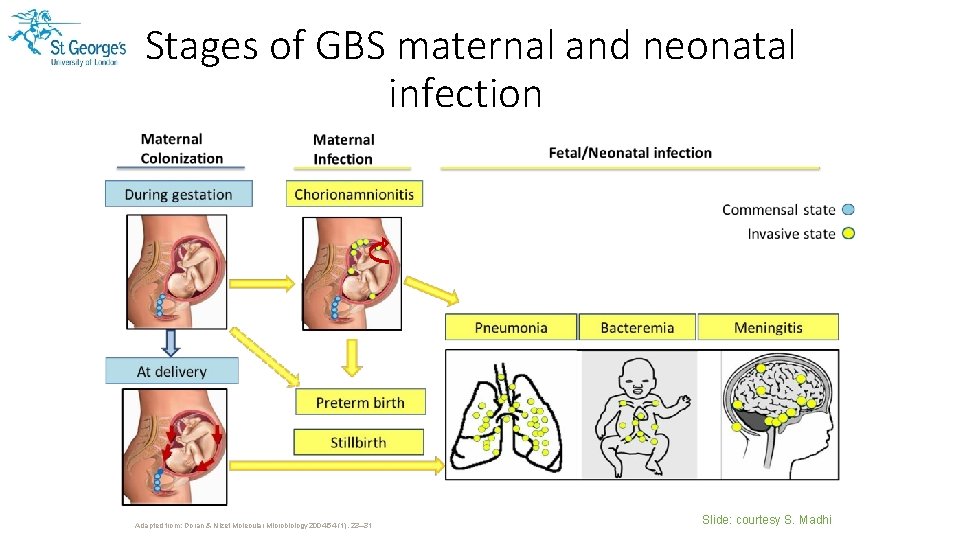
Stages of GBS maternal and neonatal infection Adapted from: Doran & Nizet Molecular Microbiology 2004 54 (1), 23– 31 Slide: courtesy S. Madhi
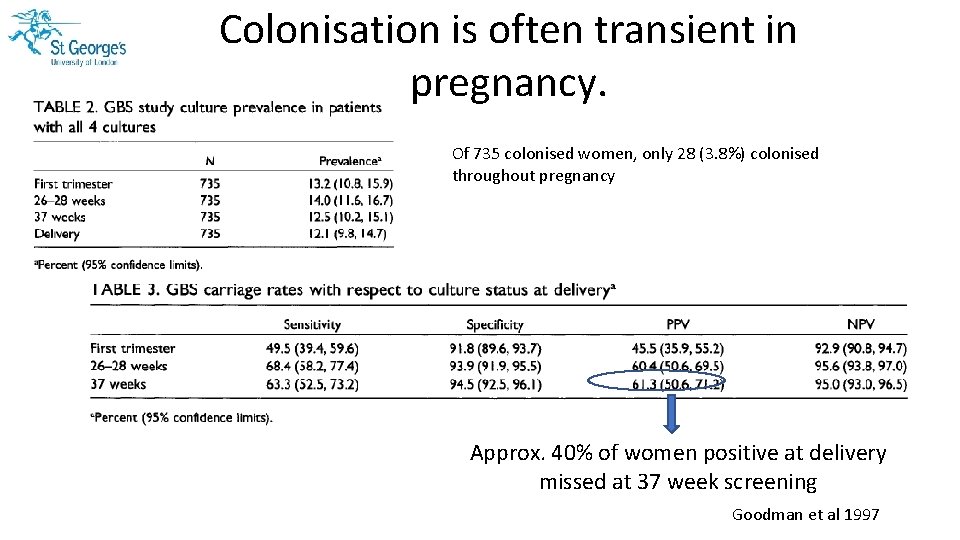
Colonisation is often transient in pregnancy. Of 735 colonised women, only 28 (3. 8%) colonised throughout pregnancy Approx. 40% of women positive at delivery missed at 37 week screening Goodman et al 1997
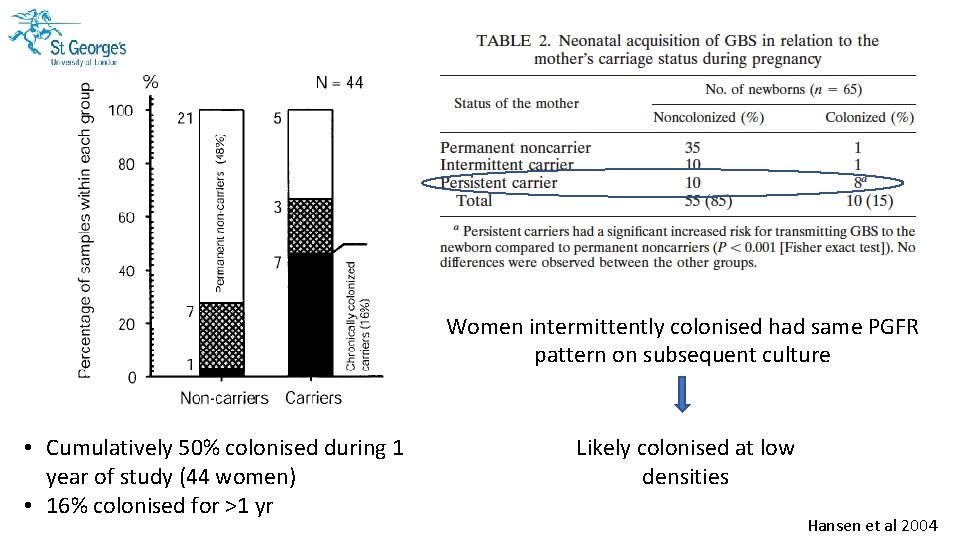
Women intermittently colonised had same PGFR pattern on subsequent culture • Cumulatively 50% colonised during 1 year of study (44 women) • 16% colonised for >1 yr Likely colonised at low densities Hansen et al 2004

Multiple serotype carriage hampers strain selection
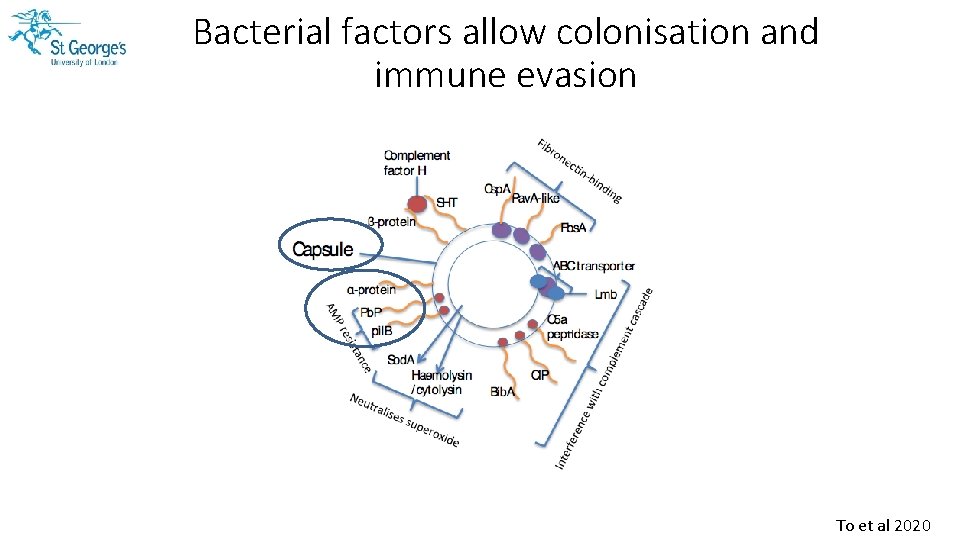
Bacterial factors allow colonisation and immune evasion To et al 2020
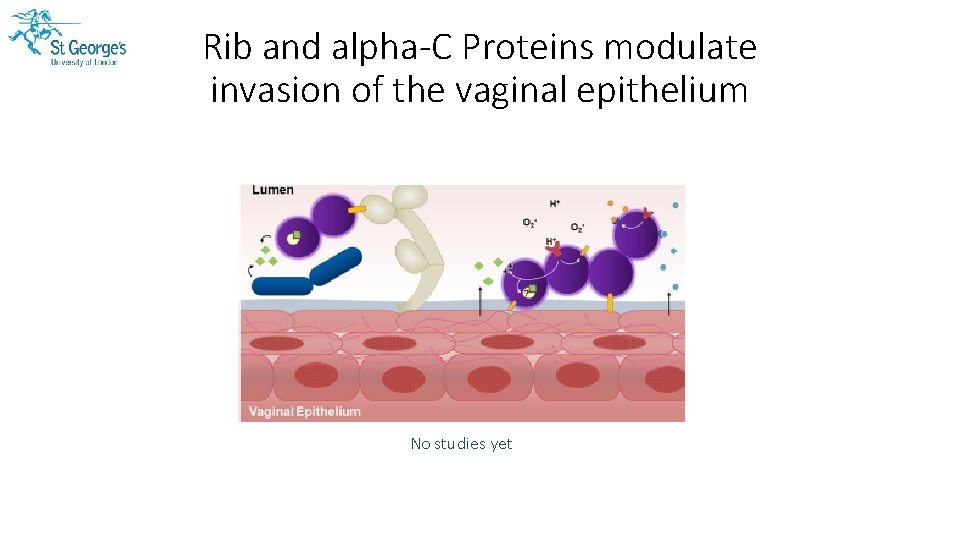
Rib and alpha-C Proteins modulate invasion of the vaginal epithelium No studies yet
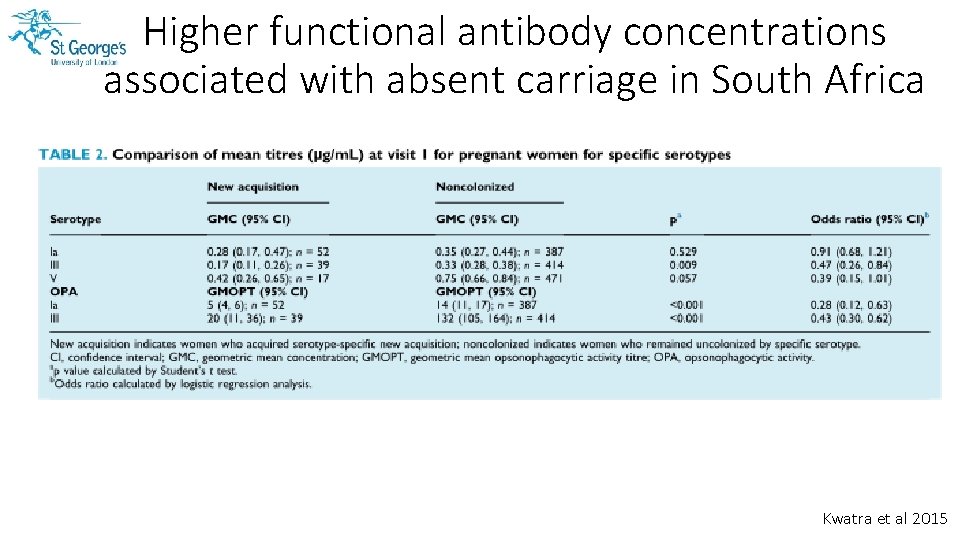
Higher functional antibody concentrations associated with absent carriage in South Africa Kwatra et al 2015
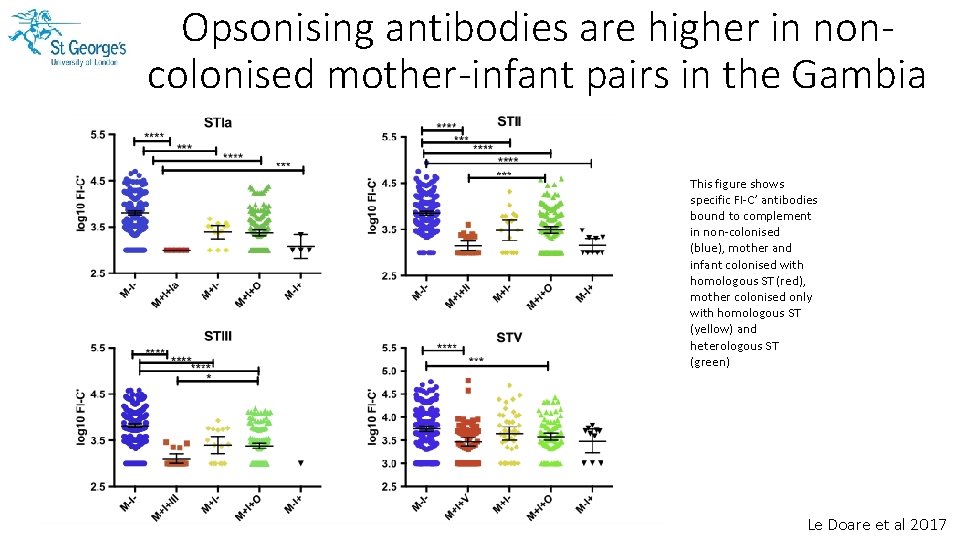
Opsonising antibodies are higher in noncolonised mother-infant pairs in the Gambia This figure shows specific FI-C’ antibodies bound to complement in non-colonised (blue), mother and infant colonised with homologous ST (red), mother colonised only with homologous ST (yellow) and heterologous ST (green) Le Doare et al 2017
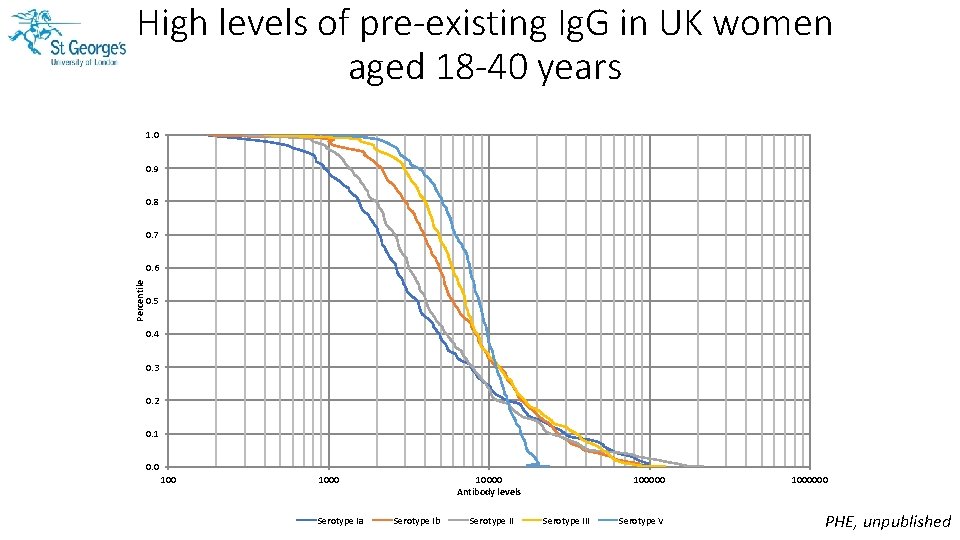
High levels of pre-existing Ig. G in UK women aged 18 -40 years 1. 0 0. 9 0. 8 0. 7 Percentile 0. 6 0. 5 0. 4 0. 3 0. 2 0. 1 0. 0 1000 Serotype Ia 10000 Antibody levels Serotype Ib Serotype II 100000 Serotype III Serotype V 1000000 PHE, unpublished
Protective efficacy of colonisation in a GBS HIC study • Immunological and protective role of GBS colonisation is unknown, but colonisation in pregnancy is associated with increased disease risk. • A challenge model evaluating the immunising effect of experimental GBS carriage in non-pregnant women First step towards reducing GBS associated preterm and stillbirth and early onset disease
Challenges on the road to a GBS HIC model • The relative contribution of anti-capsular vs. anti-protein responses in protection against carriage • The correlation between mucosal and systemic immunity • The differences in relative contribution of serotypes to colonisation and immunity is not known • Identification of most sensitive method of detection of carriage
Thanks John Tregoning Tom Hall Suzy Lim Bengt Lindbom
- Slides: 14