
MICROBIAL WATER POLLUTION OF VJOSA RIVER AND THE
• MICROBIAL WATER POLLUTION OF VJOSA RIVER AND THE VEGETABLE CONTAMINATION BY IRRIGATION • Margarita Hysko, Blerina Gace, Klementina Puto
• We monitored, coliform water pollution of Vjosa River in Permeti areas, Albania, during 20082009 and the impact the water has on vegetables by the irrigations with Vjosa river water.
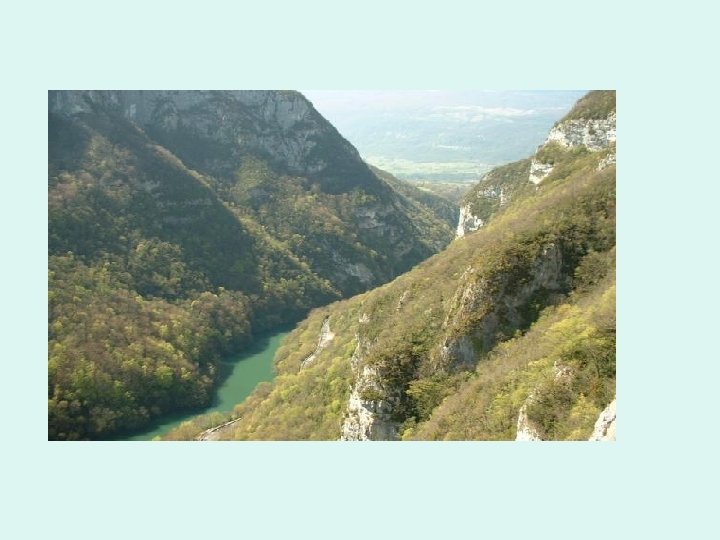
Vjosa River • Vjosa River is the second longest river in Albania. • in Greece, it runs, from Mountains Pindi • in Albania it runs for 192 km, joining some other small rivers on the way down, having a high degree of natural aspect and streams into Adriatic Sea
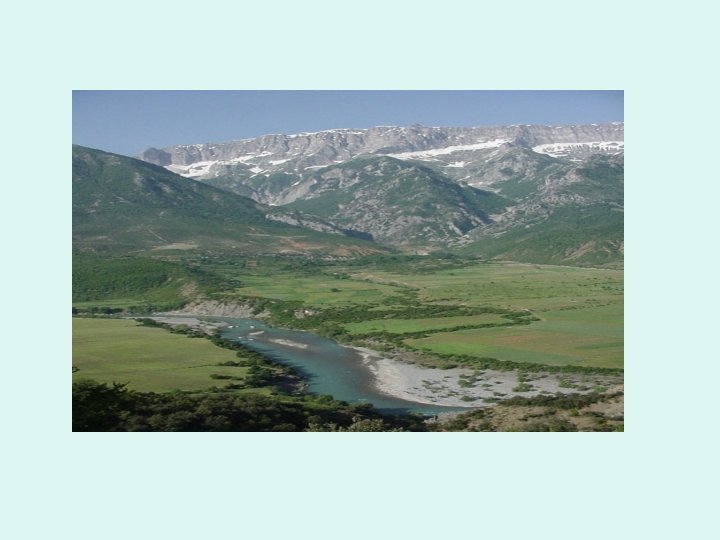
Vjosa River • The large area of Vjosa River is very fertile farmland agriculture activity is present. • Non-modified human wastes are discharged into the river causing a high pollution. • Another issue is industrial and urban waste dumped on the banks of this river.
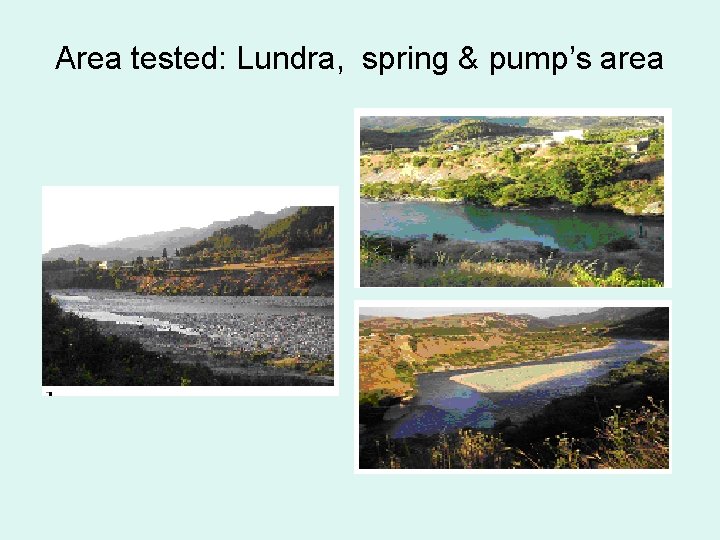
Area tested: Lundra, spring & pump’s area
Materials and methods • The microbial parameters were examined for a number of samples from three selected sampling sites at regular intervals during the 2008 -2009 years. • The tests were carried out in the Laboratory of Plant Physiology and Microbiology at Faculty of Sciences, University of Tirana. • The sampling and the tests are performed in accordance with the European and World Standard Methods.
Materials and methods • Water and vegetable samples were collected and brought in a chilly bin to the laboratory within the sampling day and were tested within 30 hours from the time the first sample in the field was taken. • The method we used was pour plating and the MPN (Most Probable Number) test.
Materials and methods • The method used for vegetables tests are Multiply Tube Test and pour plating • the media PCA and TSA, Mc Konkey, Nutrient broth, XLD, Brilliant Green, TSI are used and incubations were done at 35 -37ºC • For Suspicious colonies for Salmonella, API 20 E test is used
Materials and methods • We have tested 60 water samples for coliforms in all tested areas • There are some interesting differences of coliforms in months and season and among the sites
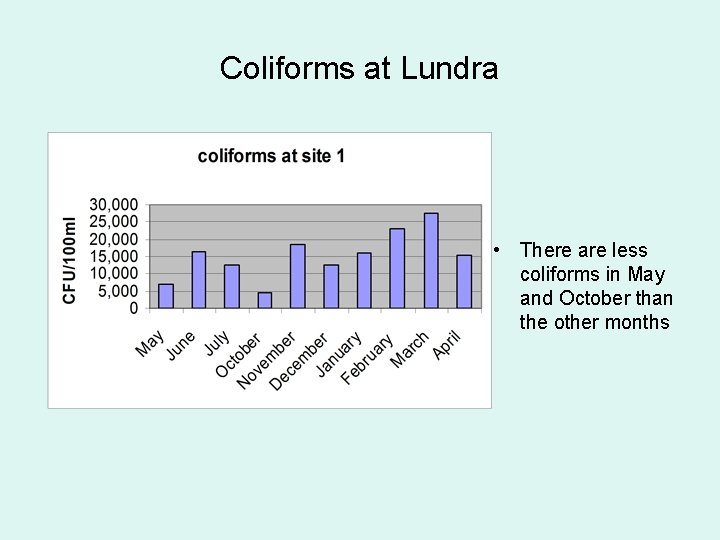
Coliforms at Lundra • There are less coliforms in May and October than the other months
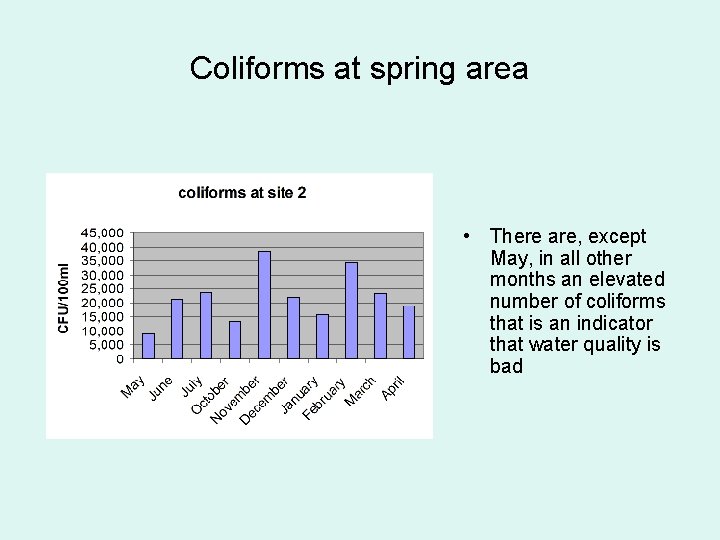
Coliforms at spring area • There are, except May, in all other months an elevated number of coliforms that is an indicator that water quality is bad
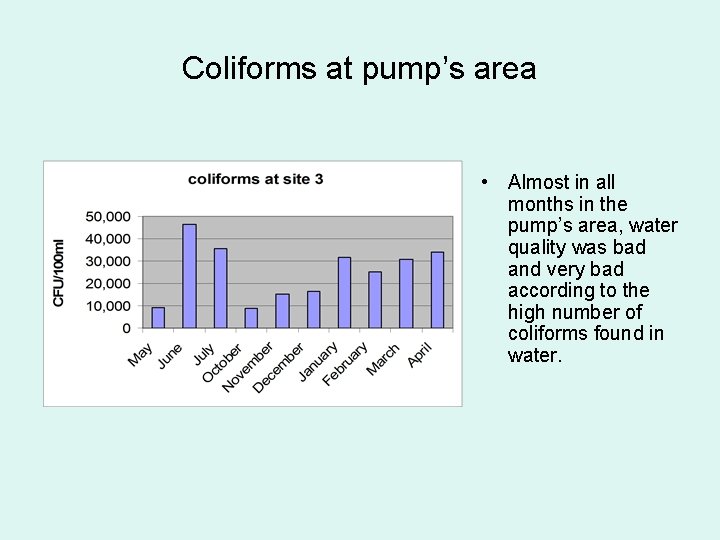
Coliforms at pump’s area • Almost in all months in the pump’s area, water quality was bad and very bad according to the high number of coliforms found in water.
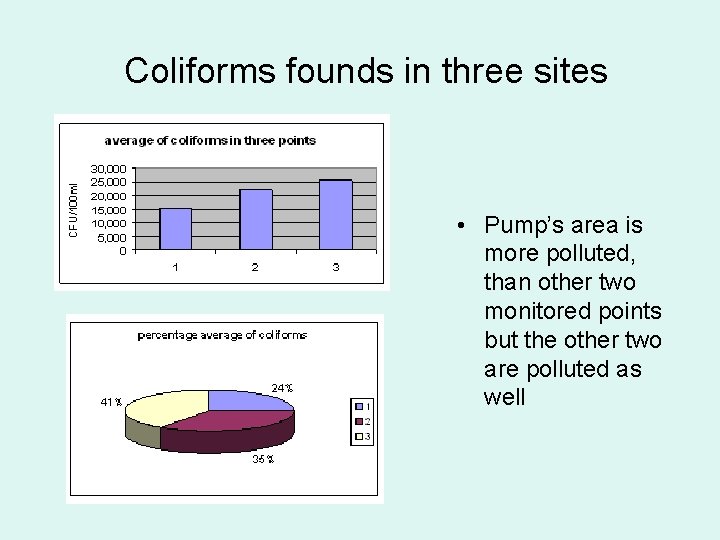
Coliforms founds in three sites • Pump’s area is more polluted, than other two monitored points but the other two are polluted as well
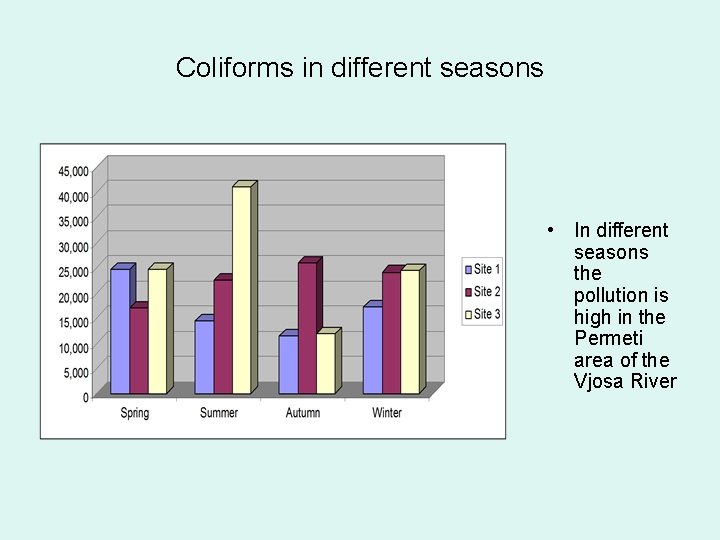
Coliforms in different seasons • In different seasons the pollution is high in the Permeti area of the Vjosa River
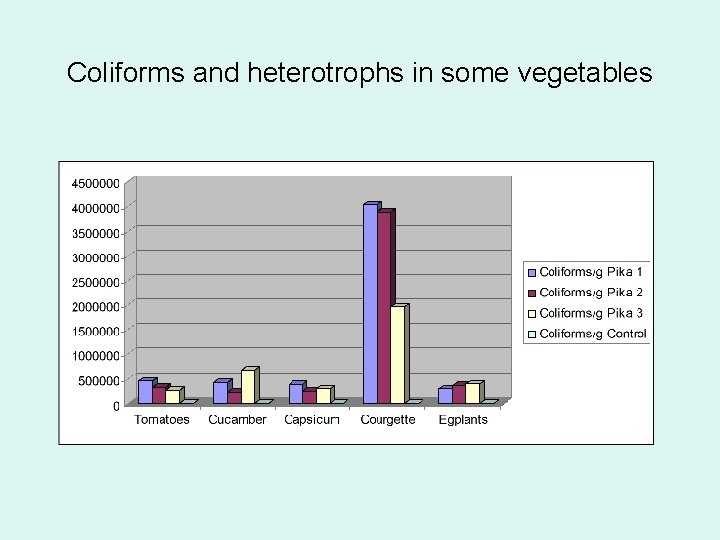
Coliforms and heterotrophs in some vegetables • There are tested 30 samples of vegetables taken from the gardens were the plant irrigation was done using the Vjosa River water. • Vegetables tested are tomatoes, cucumber, eggplants, courgettes and capsicum. • All samples taken were tested for heterotrophs, coliforms and the presence of salmonella. .
Coliforms and heterotrophs in some vegetables
Coliforms in some vegetables • The high amount of bacteria found in these vegetables comes from polluted water and from the soil as well. • The presence of coliforms is an indication of faecal pollution that comes from river water used for irrigation.
Salmonella test in some vegetables • We tested the vegetables samples for the presence of salmonella and there were not detected. • But the presence of coliforms remains a strong indication for the presence of pathogens that are very dangerous for human health.
Conclusions • Vjosa River water is less polluted than some other rivers of Albania, but the microbial pollution is still very high • The high level of coliforms in water has an impact in vegetable because is used for irrigation, being the risk for public health • Vjosa river water is used by people of Permet and countryside for fishing, swimming and other human activities; it’s water is a high potencial risk on public health. • We strongly recommend stopping the discharge of solid and urban west to the Vjosa River.

Thank You
- Slides: 22