
Microbial ToxinBIOC 422 Lecture 14 15 What are
Microbial Toxin-BIOC 422 Lecture- 14 -15
What are Microbial Toxins? They are toxins produced by microbes and have the ability to promote infection and disease by directly damaging host tissues and disabling the immune system.
What are Microbes? Ø Microbe is a microscopic living organism, which may be singlecell or multicellular; [tiny organisms—too tiny to see without a microscope, yet they are abundant on Earth]. Ø They live everywhere—in air, soil, rock, and water. ØThe term is very general. It is used to describe many different types of life forms, with dramatically different sizes and characteristics: *Viruses *Bacteria *Fungi *Protozoa *Microscopic Algae
This course will focus on Toxins that are produced by: • Bacteria (Exotoxins/Endo toxins) • Algea • Fungi
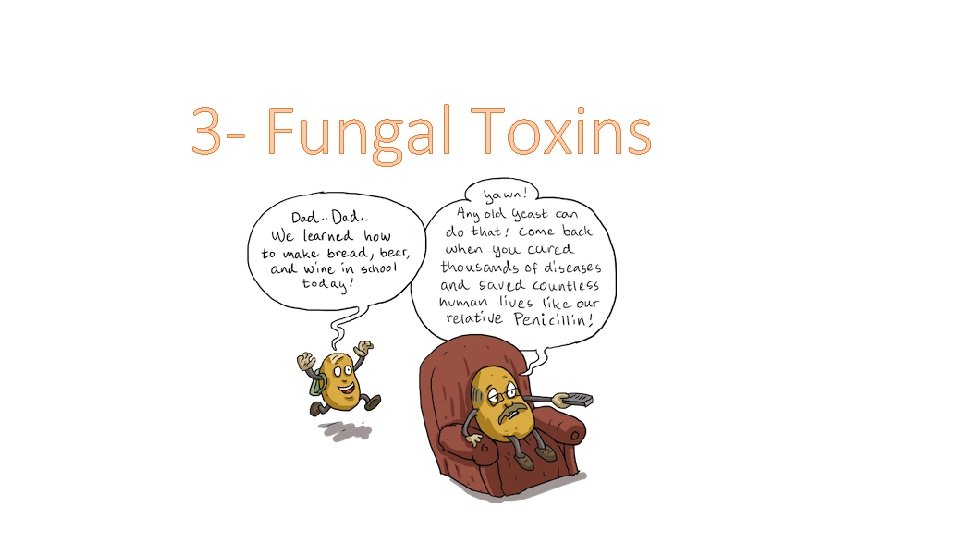
3 - Fungal Toxins
About fungi Fungi are not plants! • Fungi were first officially recognized as a distinct group in 1969. • more recently, using DNA sequences and comparisons of cell structure, we have learned that Fungi are in fact more closely related to animals than they are to plants. • Superficially, they remind us more of plants than animals because they don’t move, but this is the only thing they have in common. How do Fungi eat? • Unlike plants, which make their own food, Fungi are like miniature versions of our stomachs, turned inside-out. • Fungi 'eat' by releasing enzymes outside of their bodies that break down nutrients into smaller pieces that they can then absorb. • This feeding strategy means that Fungi always live in and on their food
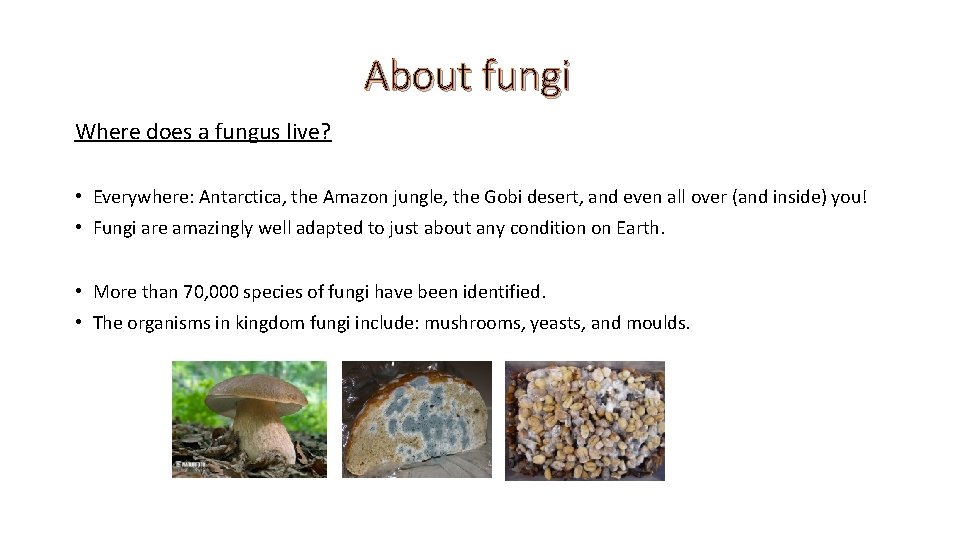
About fungi Where does a fungus live? • Everywhere: Antarctica, the Amazon jungle, the Gobi desert, and even all over (and inside) you! • Fungi are amazingly well adapted to just about any condition on Earth. • More than 70, 000 species of fungi have been identified. • The organisms in kingdom fungi include: mushrooms, yeasts, and moulds.
About fungi Many Fungi are useful to humans: ØAlthough we often think of fungi as organisms that cause disease and rot food, fungi are important to human life on many levels. ØThey provide fundamental products including foods, medicines, and enzymes important to industry. üRecycling: Fungi, together with bacteria, are responsible for most of the recycling which returns dead material to the soil in a form in which it can be reused.
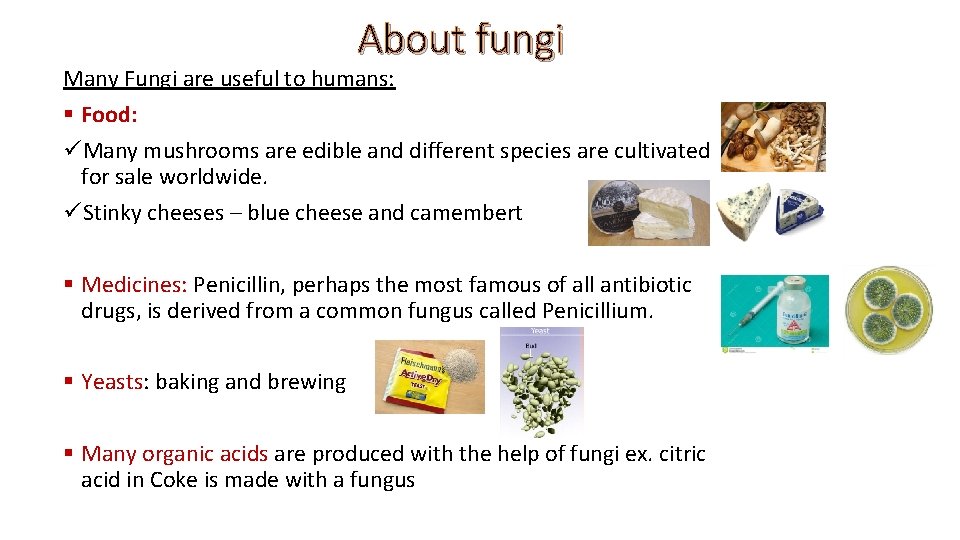
About fungi Many Fungi are useful to humans: § Food: üMany mushrooms are edible and different species are cultivated for sale worldwide. üStinky cheeses – blue cheese and camembert § Medicines: Penicillin, perhaps the most famous of all antibiotic drugs, is derived from a common fungus called Penicillium. § Yeasts: baking and brewing § Many organic acids are produced with the help of fungi ex. citric acid in Coke is made with a fungus
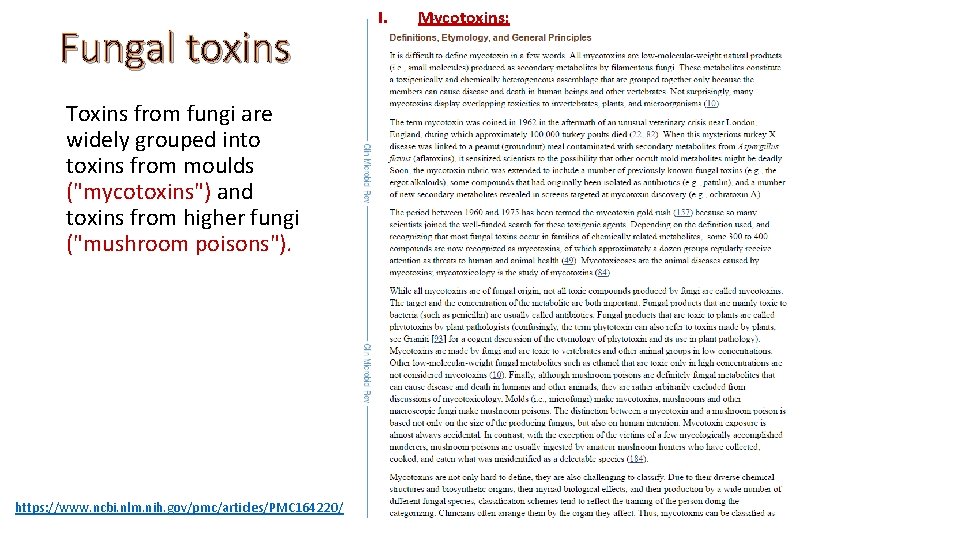
Fungal toxins Toxins from fungi are widely grouped into toxins from moulds ("mycotoxins") and toxins from higher fungi ("mushroom poisons"). https: //www. ncbi. nlm. nih. gov/pmc/articles/PMC 164220/ I. Mycotoxins:
Fungal toxins I. Mycotoxins: There are many definitions for what a mycotoxin is: Ø It is a "natural products from moulds that evoke a toxic response when introduced in low concentrations to vertebrates". Ø Mycotoxins are products of a fungus' secondary metabolism, i. e. that part of fungal metabolism that is not essential for cell growth and maintenance of basic cell function. Why fungi produce such substances is not entirely clear, but they may, at least in part, be used for "chemical warfare" and thus provide some advantage to survive in the environment.
Fungal toxins I. Mycotoxins: ØMycoses vs Mycotoxicoses: Frank growth of fungi on animal hosts produces the diseases called MYCOSES, while dietary, respiratory, dermal, and other exposures to toxic fungal metabolites produce the diseases called MYCOTOXICOSES. § Mycoses range from merely annoying (e. g. , athlete's foot) to life-threatening (e. g. , invasive aspergillosis). § Mycotoxicoses are examples of “poisoning by natural means” and thus are similar to the pathologies caused by exposure to pesticides or heavy metal residues. In Summary: Mycosis is tissue invasion by a fungi and mycotoxicoses is toxin production by a fungi growing on foodstuffs which is then ingested causing disease. Ø The production of toxins (mycotoxins) depends on the surrounding intrinsic and extrinsic environments Ø The severity of the toxins varies greatly, depending on the organism infected and its susceptibility, metabolism, and defence mechanisms.
Fungal toxins I. Mycotoxins: Ø Major mycotoxins • Aflatoxins • Citrinin • Ergot Alkaloids • Fumonisins • Ochratoxin • Patulin https: //www. ncbi. nlm. nih. gov/pmc/articles/PMC 164220/
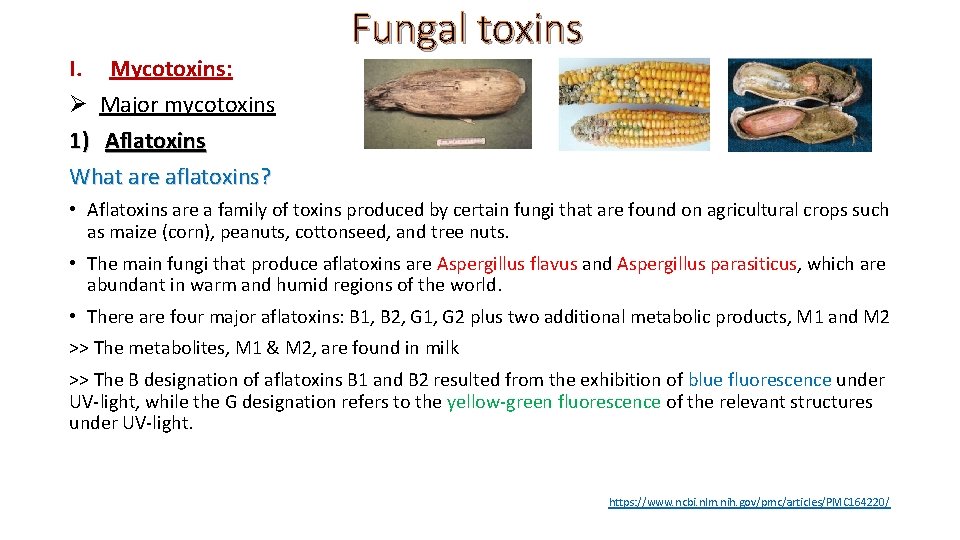
I. Mycotoxins: Ø Major mycotoxins 1) Aflatoxins What are aflatoxins? Fungal toxins • Aflatoxins are a family of toxins produced by certain fungi that are found on agricultural crops such as maize (corn), peanuts, cottonseed, and tree nuts. • The main fungi that produce aflatoxins are Aspergillus flavus and Aspergillus parasiticus, which are abundant in warm and humid regions of the world. • There are four major aflatoxins: B 1, B 2, G 1, G 2 plus two additional metabolic products, M 1 and M 2 >> The metabolites, M 1 & M 2, are found in milk >> The B designation of aflatoxins B 1 and B 2 resulted from the exhibition of blue fluorescence under UV-light, while the G designation refers to the yellow-green fluorescence of the relevant structures under UV-light. https: //www. ncbi. nlm. nih. gov/pmc/articles/PMC 164220/
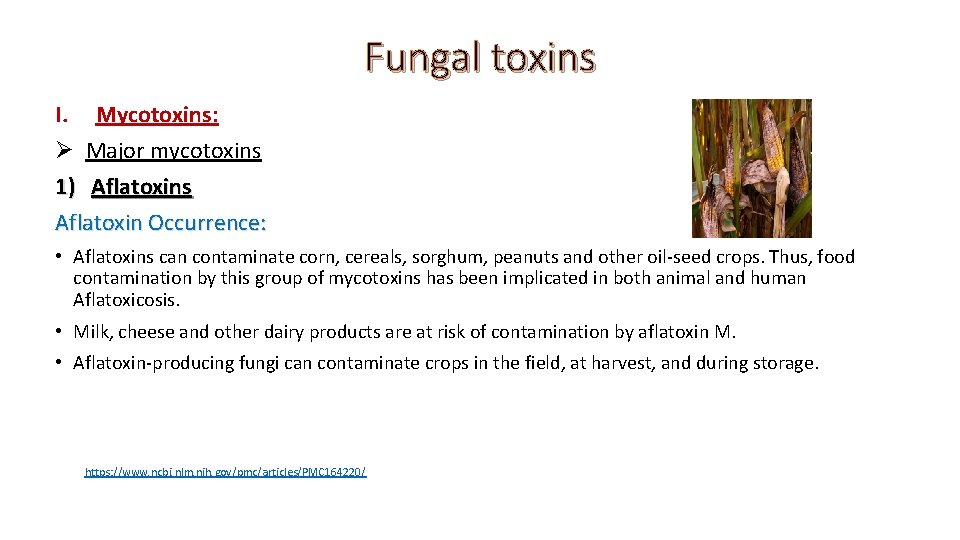
Fungal toxins I. Mycotoxins: Ø Major mycotoxins 1) Aflatoxins Aflatoxin Occurrence: • Aflatoxins can contaminate corn, cereals, sorghum, peanuts and other oil-seed crops. Thus, food contamination by this group of mycotoxins has been implicated in both animal and human Aflatoxicosis. • Milk, cheese and other dairy products are at risk of contamination by aflatoxin M. • Aflatoxin-producing fungi can contaminate crops in the field, at harvest, and during storage. https: //www. ncbi. nlm. nih. gov/pmc/articles/PMC 164220/
I. Mycotoxins: Ø Major mycotoxins 1) Aflatoxins Health effects: Fungal toxins • Aflatoxin is associated with both toxicity and carcinogenicity in human and animal populations • The diseases caused by aflatoxin consumption are loosely called aflatoxicoses. ü Acute aflatoxicosis results in death: § At high enough exposure levels, aflatoxins can cause acute toxicity, and potentially death, in mammals, birds and fish, as well as in humans. § The liver is the principal organ affected, but high levels of aflatoxin have also been found in the lungs, kidneys, brains and hearts of individuals dying of acute aflatoxicosis. *Acute conditions are severe and sudden in onset. **A chronic condition, is a long-developing syndrome. https: //www. ncbi. nlm. nih. gov/pmc/articles/PMC 164220/
I. Mycotoxins: Ø Major mycotoxins 1) Aflatoxins Health effects: Fungal toxins ü Chronic aflatoxicosis results in cancer, immune suppression, and other “slow” pathological conditions. § Chronic toxicity is probably more important from a food safety point of view, certainly in more developed regions of the world. § Aflatoxin B 1 is a very potent carcinogen and a mutagen in many animals, and therefore potentially in humans, and the liver is again the main target organ. § Ingestion of low levels over a long period has been implicated in primary liver cancer, chronic hepatitis, jaundice, cirrhosis and impaired nutrient conversion § Less is known about the chronic toxicity of aflatoxin G 1 and M 1, but these are also thought to be carcinogens, though probably a little less potent than B 1. *Acute conditions are severe and sudden in onset. **A chronic condition, is a long-developing syndrome. https: //www. ncbi. nlm. nih. gov/pmc/articles/PMC 164220/
Carcinogenic effect: Aflatoxin may exert its hepatocellular carcinogenic activity through p 53 dysregulation • In the body, After ingestion, aflatoxin is metabolized by cytochrome p 450 group of enzymes in the liver, >> where it is bio-transformed to various metabolites; especially the active AFB 1 -exo-8, 9 -epoxide (AFBO). {AFB 1 requires metabolic conversion to its exo-8, 9 -epoxide in order to damage DNA } • The AFB, AFBO and other metabolites interact with various biomolecules in the body including nucleic acids such as DNA and RNA and the various metabolic pathways such as protein synthesis, glycolytic pathway and electron transport chain involved in ATP production in body cells. • The AFB -DNA interaction forms AFB-DNA adduct >> causes a transversion (the substitution of a purine for a pyrimidine or vice versa, in DNA) at codon 249 in p 53 gene in liver >> this mutation will inactivate p 53 >> this inactivation gives cells a selective growth advantage >> which may lead to hepatic carcinoma. A DNA adduct is a segment of DNA bound to a cancer-causing chemical. This process could be the start of a cancerous cell, or carcinogenesis. What is p 53? p 53 is a transcriptional activator that has been shown to regulate the cell cycle, to play a role in the apoptosis pathway and to be involved with DNA repair >> therefore it is an important tumor-suppressor gene.
Fungal toxins I. Mycotoxins: Ø Major mycotoxins 1) Aflatoxins Health effects: • In general, little is known about the level of dietary exposure to aflatoxins necessary to affect health, especially in humans, and diagnosis of chronic toxicity is very difficult. • It is generally agreed that the best approach is to minimise the levels in all foods as far as is technically possible and to assume that any dietary exposure is undesirable. https: //www. ncbi. nlm. nih. gov/pmc/articles/PMC 164220/
Fungal toxins I. Mycotoxins: Ø Major mycotoxins 1) Aflatoxins How are people exposed to aflatoxins? People can be exposed to aflatoxins by: • eating contaminated plant products (such as peanuts/corn) • consuming meat or dairy products from animals that ate contaminated feed. • Farmers and other agricultural workers may be exposed by inhaling dust generated during the handling and processing of contaminated crops and feeds https: //www. ncbi. nlm. nih. gov/pmc/articles/PMC 164220/
Fungal toxins I. Mycotoxins: Ø Major mycotoxins 1) Aflatoxins Are they stable in foods? • Aflatoxins are quite stable compounds and survive at relatively high temperatures with little degradation. • Their heat stability is influenced by other factors, such as moisture level and p. H, but heating or cooking processes cannot be relied upon to destroy aflatoxins. For example, roasting green coffee at 180°C for 10 minutes gave only a 50% reduction in aflatoxin B 1 level. • The stability of aflatoxin M 1 in milk fermentation processes has also been studied and although appreciable losses do occur, significant quantities of the toxin were found to remain in both cheese and yoghurt.
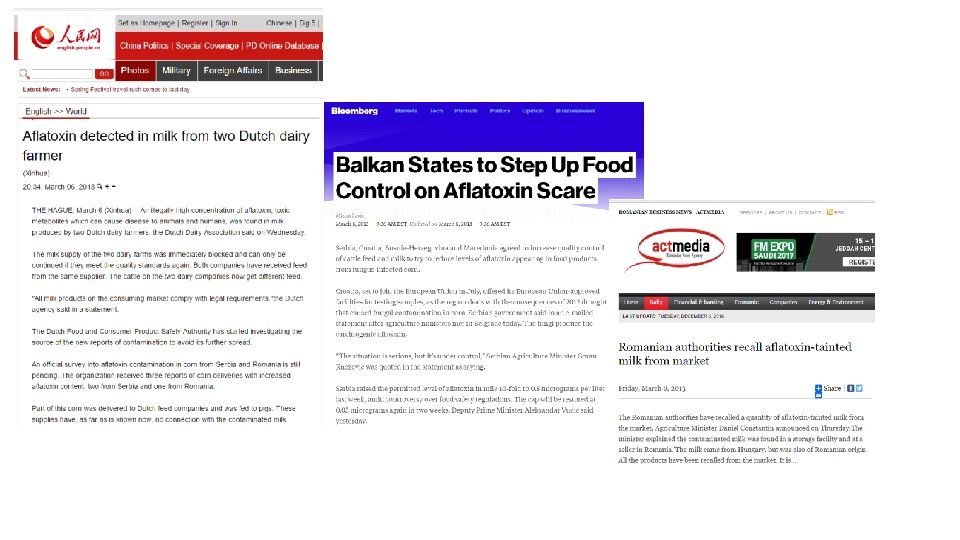
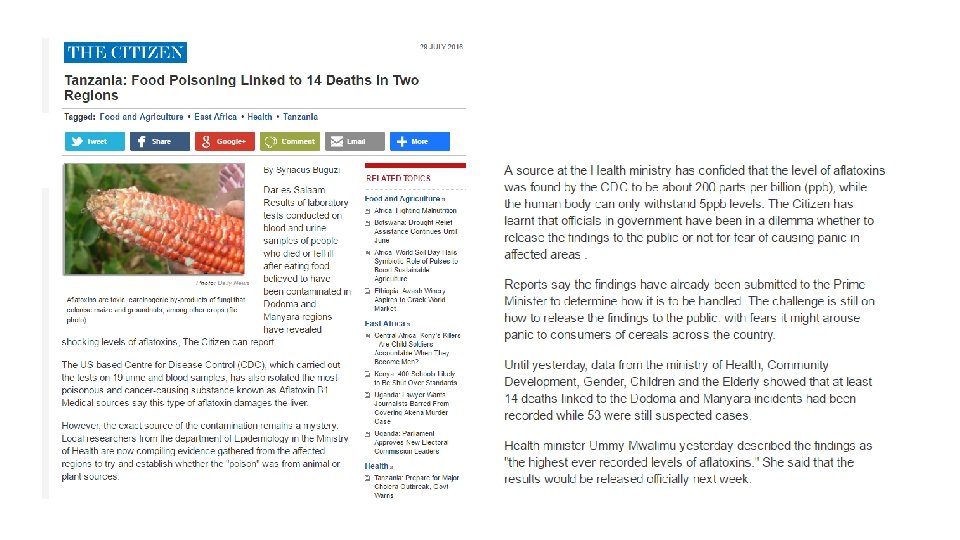
Fungal toxins I. Mycotoxins: Ø Major mycotoxins 1) Aflatoxins How can aflatoxin exposure be reduced? • You can reduce your aflatoxin exposure by buying only major commercial brands of nuts and nut butters. • Discard nuts that look mouldy, discoloured, or shrivelled. • To date, no outbreak of human illness caused by aflatoxins has been reported in the United States, but such outbreaks have occurred in some developing countries.

• https: //www. youtube. com/watch? v=47 r. QYo. ETWm 4
- Slides: 25