
Microbial Production of 1 Deoxynojirimycin and Its Industrial
Microbial Production of 1 -Deoxynojirimycin and Its Industrial Application Su-Il Seong ; Young-Ho Kim, Hyun-Su Kim Department of Life Science, College of Natural Sciences, The University of Suwon, 445 -743, Korea BIOTOPIA Co. , Ltd. 1
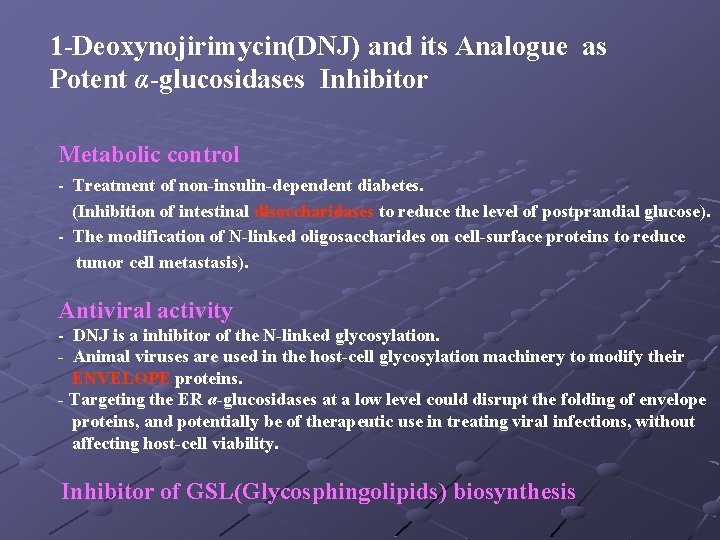
1 -Deoxynojirimycin(DNJ) and its Analogue as Potent α-glucosidases Inhibitor Metabolic control - Treatment of non-insulin-dependent diabetes. (Inhibition of intestinal disaccharidases to reduce the level of postprandial glucose). - The modification of N-linked oligosaccharides on cell-surface proteins to reduce tumor cell metastasis). Antiviral activity - DNJ is a inhibitor of the N-linked glycosylation. - Animal viruses are used in the host-cell glycosylation machinery to modify their ENVELOPE proteins. - Targeting the ER α-glucosidases at a low level could disrupt the folding of envelope proteins, and potentially be of therapeutic use in treating viral infections, without affecting host-cell viability. Inhibitor of GSL(Glycosphingolipids) biosynthesis
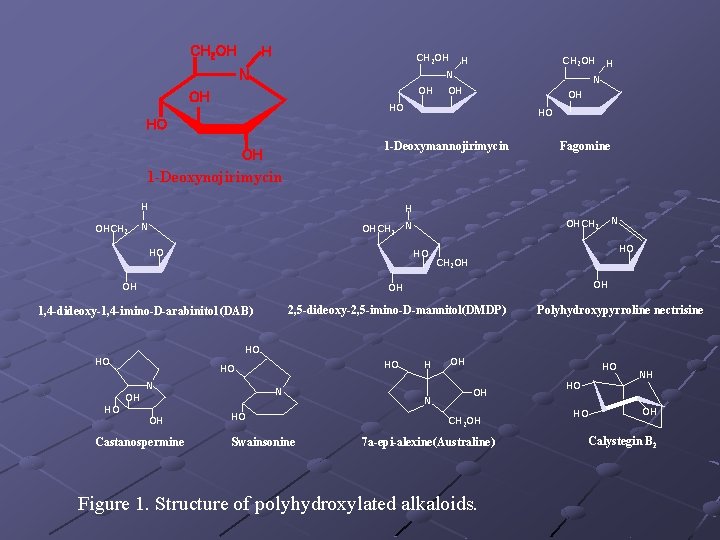
CH 2 OH H CH 2 OH N CH 2 OH H N OH OH HO HO HO 1 -Deoxymannojirimycin OH H Fagomine 1 -Deoxynojirimycin H OHCH 2 H N OHCH 2 HO HO OH HO CH 2 OH OH OH 2, 5 -dideoxy-2, 5 -imino-D-mannitol(DMDP) 1, 4 -dideoxy-1, 4 -imino-D-arabinitol (DAB) N OHCH 2 N Polyhydroxypyrroline nectrisine HO HO N N OH HO OH Castanospermine HO Swainsonine H N OH HO OH CH 2 OH 7 a-epi-alexine(Australine) Figure 1. Structure of polyhydroxylated alkaloids. NH HO HO OH Calystegin B 2
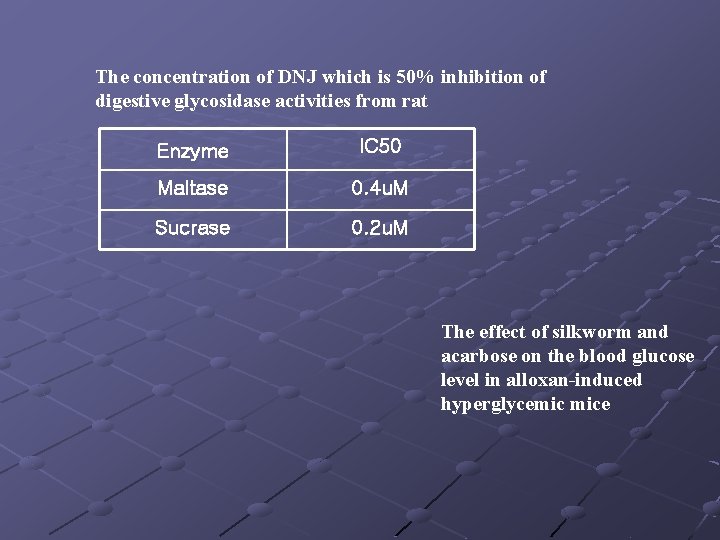
The concentration of DNJ which is 50% inhibition of digestive glycosidase activities from rat Enzyme IC 50 Maltase 0. 4 u. M Sucrase 0. 2 u. M The effect of silkworm and acarbose on the blood glucose level in alloxan-induced hyperglycemic mice
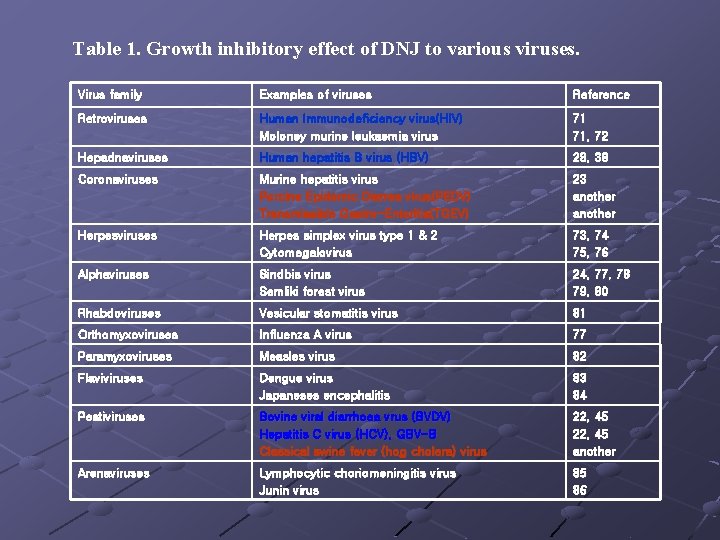
Table 1. Growth inhibitory effect of DNJ to various viruses. Virus family Examples of viruses Reference Retroviruses Human Immunodeficiency virus(HIV) Moloney murine leukaemia virus 71 71, 72 Hepadnaviruses Human hepatitis B virus (HBV) 28, 38 Coronaviruses Murine hepatitis virus Porcine Epidemic Diarrea virus(PEDV) Transmissible Gastro-Enteritis(TGEV) 23 another Herpesviruses Herpes simplex virus type 1 & 2 Cytomegalovirus 73, 74 75, 76 Alphaviruses Sindbis virus Semliki forest virus 24, 77, 78 79, 80 Rhabdoviruses Vesicular stomatitis virus 81 Orthomyxoviruses Influenza A virus 77 Paramyxoviruses Measles virus 82 Flaviviruses Dengue virus Japaneses encephalitis 83 84 Pestiviruses Bovine viral diarrhoea vrus (BVDV) Hepatitis C virus (HCV), GBV-B Classical swine fever (hog cholera) virus 22, 45 another Arenaviruses Lymphocytic choriomeningitis virus Junin virus 85 86
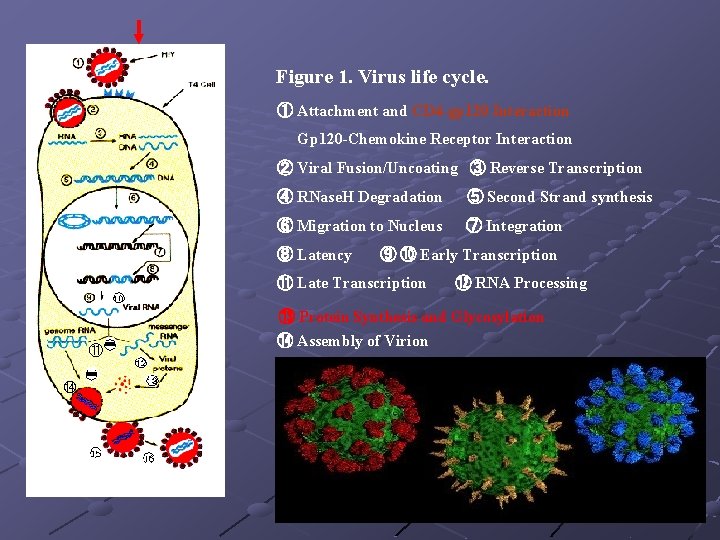
Figure 1. Virus life cycle. ① Attachment and CD 4 -gp 120 Interaction Gp 120 -Chemokine Receptor Interaction ② Viral Fusion/Uncoating ③ Reverse Transcription ④ RNase. H Degradation ⑤ Second Strand synthesis ⑥ Migration to Nucleus ⑦ Integration ⑧ Latency ⑨ ⑩ Early Transcription ⑪ Late Transcription ⑫ RNA Processing ⑬ Protein Synthesis and Glycosylation ⑪ ⑭ Assembly of Virion ⑮ Viral Budding and Virion Maturation ⑭ Modified from M. Nasr, J. Cradoc and M. Johnston, Drug News and Perspectives Vol. 6 pg 338; Courtesy f J. R. Prous S. A. Barcelona, Spain
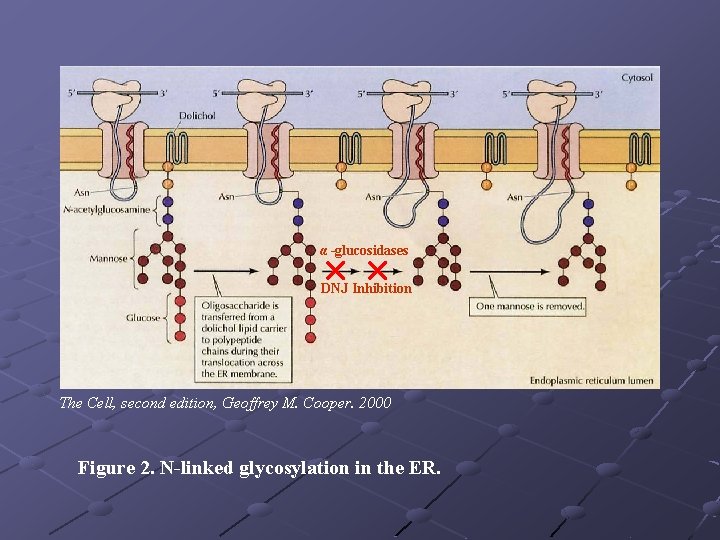
α -glucosidases DNJ Inhibition The Cell, second edition, Geoffrey M. Cooper. 2000 Figure 2. N-linked glycosylation in the ER.
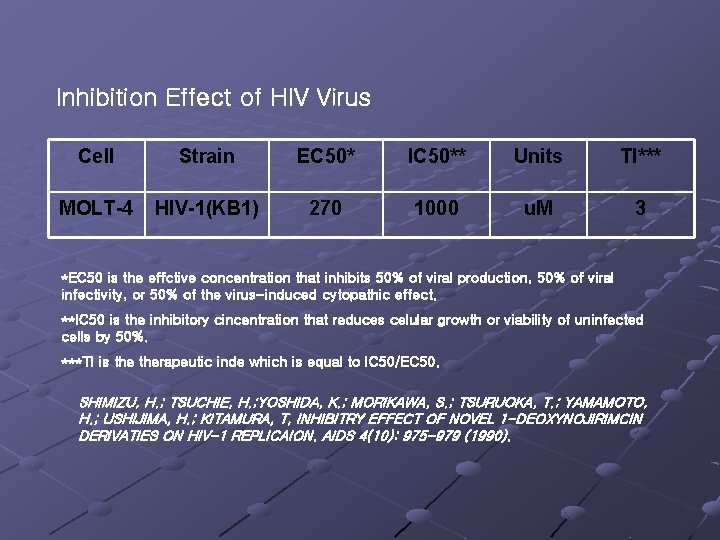
Inhibition Effect of HIV Virus Cell Strain EC 50* IC 50** Units TI*** MOLT-4 HIV-1(KB 1) 270 1000 u. M 3 *EC 50 is the effctive concentration that inhibits 50% of viral production, 50% of viral infectivity, or 50% of the virus-induced cytopathic effect. **IC 50 is the inhibitory cincentration that reduces celular growth or viability of uninfected cells by 50%. ***TI is therapeutic inde which is equal to IC 50/EC 50. SHIMIZU, H. ; TSUCHIE, H. ; YOSHIDA, K. ; MORIKAWA, S. ; TSURUOKA, T. ; YAMAMOTO, H. ; USHIJIMA, H. ; KITAMURA, T, INHIBITRY EFFECT OF NOVEL 1 -DEOXYNOJIRIMCIN DERIVATIES ON HIV-1 REPLICAION. AIDS 4(10): 975 -979 (1990).
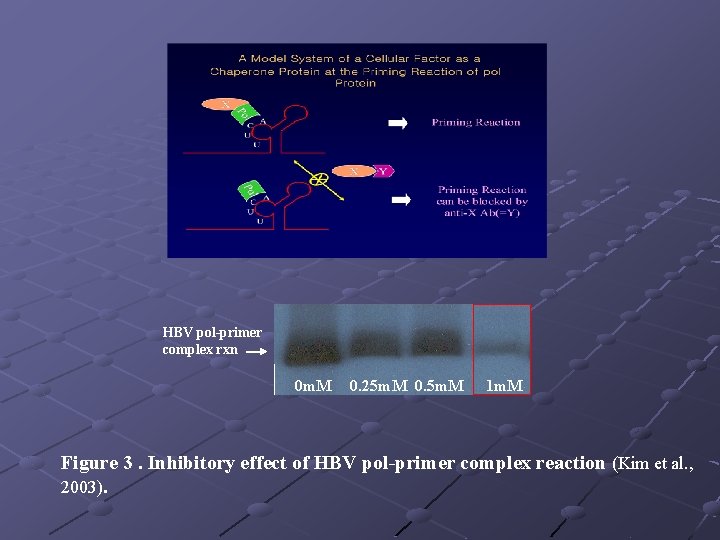
HBV pol-primer complex rxn 0 m. M 0. 25 m. M 0. 5 m. M 1 m. M Figure 3. Inhibitory effect of HBV pol-primer complex reaction (Kim et al. , 2003).
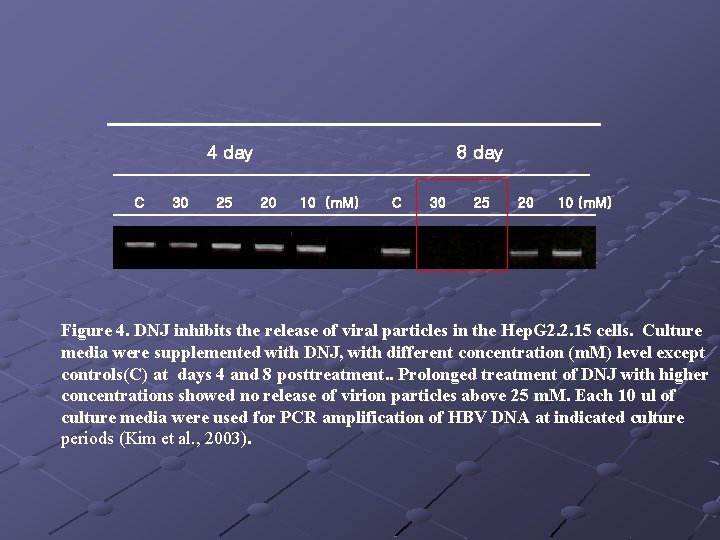
4 day C 30 25 8 day 20 10 (m. M) C 30 25 20 10 (m. M) Figure 4. DNJ inhibits the release of viral particles in the Hep. G 2. 2. 15 cells. Culture media were supplemented with DNJ, with different concentration (m. M) level except controls(C) at days 4 and 8 posttreatment. . Prolonged treatment of DNJ with higher concentrations showed no release of virion particles above 25 m. M. Each 10 ul of culture media were used for PCR amplification of HBV DNA at indicated culture periods (Kim et al. , 2003).
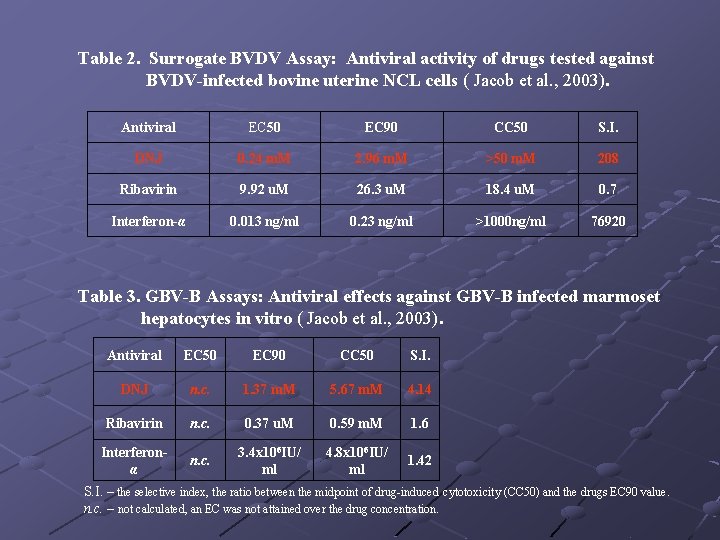
Table 2. Surrogate BVDV Assay: Antiviral activity of drugs tested against BVDV-infected bovine uterine NCL cells ( Jacob et al. , 2003). Antiviral EC 50 EC 90 CC 50 S. I. DNJ 0. 24 m. M 2. 96 m. M >50 m. M 208 Ribavirin 9. 92 u. M 26. 3 u. M 18. 4 u. M 0. 7 Interferon-α 0. 013 ng/ml 0. 23 ng/ml >1000 ng/ml 76920 Table 3. GBV-B Assays: Antiviral effects against GBV-B infected marmoset hepatocytes in vitro ( Jacob et al. , 2003). Antiviral EC 50 EC 90 CC 50 S. I. DNJ n. c. 1. 37 m. M 5. 67 m. M 4. 14 Ribavirin n. c. 0. 37 u. M 0. 59 m. M 1. 6 Interferonα n. c. 3. 4 x 10⁶ IU/ ml 4. 8 x 10⁶ IU/ ml 1. 42 S. I. – the selective index, the ratio between the midpoint of drug-induced cytotoxicity (CC 50) and the drugs EC 90 value. n. c. – not calculated, an EC was not attained over the drug concentration.
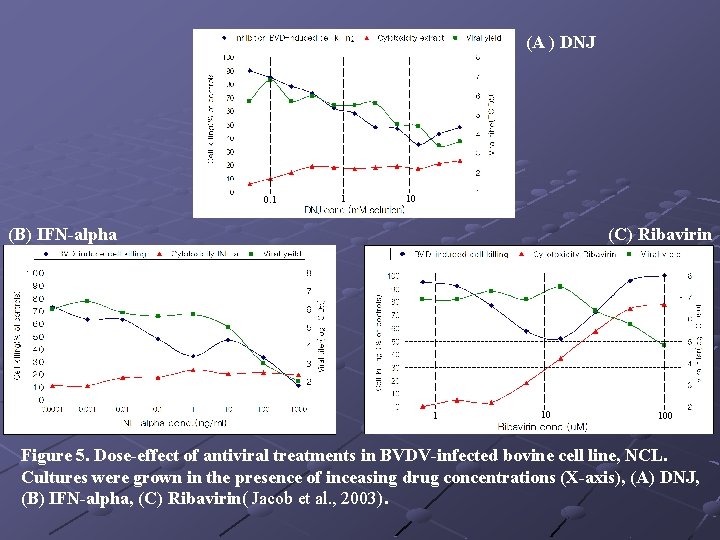
(A ) DNJ 0. 1 1 10 (B) IFN-alpha (C) Ribavirin 1 10 100 Figure 5. Dose-effect of antiviral treatments in BVDV-infected bovine cell line, NCL. Cultures were grown in the presence of inceasing drug concentrations (X-axis), (A) DNJ, (B) IFN-alpha, (C) Ribavirin( Jacob et al. , 2003).
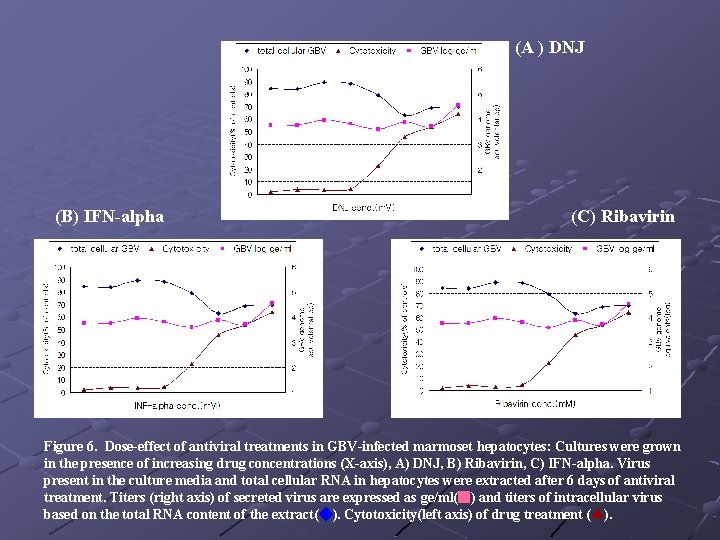
(A ) DNJ (B) IFN-alpha (C) Ribavirin Figure 6. Dose-effect of antiviral treatments in GBV-infected marmoset hepatocytes: Cultures were grown in the presence of increasing drug concentrations (X-axis), A) DNJ, B) Ribavirin, C) IFN-alpha. Virus present in the culture media and total cellular RNA in hepatocytes were extracted after 6 days of antiviral treatment. Titers (right axis) of secreted virus are expressed as ge/ml(■) and titers of intracellular virus based on the total RNA content of the extract(◆). Cytotoxicity(left axis) of drug treatment (▲).

Figure 7. DNJ inhibitory activity against TGEV.
Routes to Produce DNJ - Extraction from plants such as the mulberry trees (root bark). - Extraction from silkworm. - Fermentation of various Bacillus or Streptomyces. - Chemical synthesis following different synthetic strategies.
Isolation and Identification of DNJ Producing Bacteria Isolation - Screen the bacteria producing inhibitors of maltase and α-glucosidases. - DNJ analysis and purification Identification - API kit analyze according to sugar fermentation pattern. - Analysis of cell wall fatty acids composition. - Analysis of quinone components. - Analysis of 16 S r. DNA sequences. Physicochemacal property analysis of bacterial DNJ - Ion-exchange chromatography - HPLC, LC-MS, 1 H, 13 C-NMR
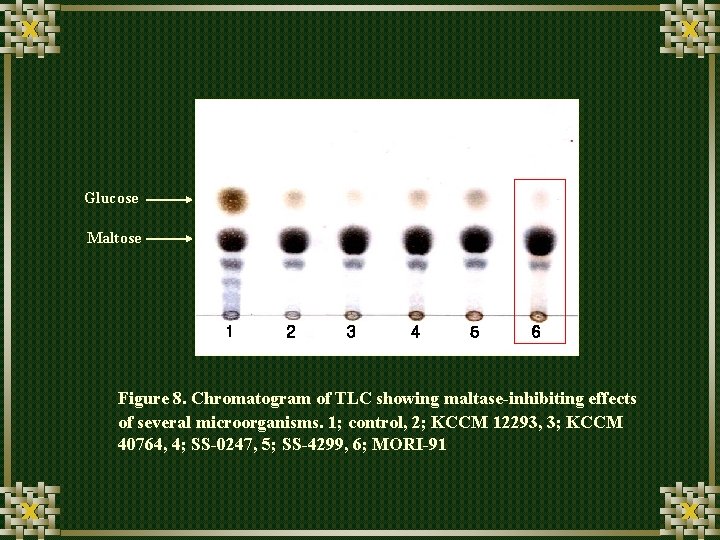
Glucose Maltose 1 2 3 4 5 6 Figure 8. Chromatogram of TLC showing maltase-inhibiting effects of several microorganisms. 1; control, 2; KCCM 12293, 3; KCCM 40764, 4; SS-0247, 5; SS-4299, 6; MORI-91
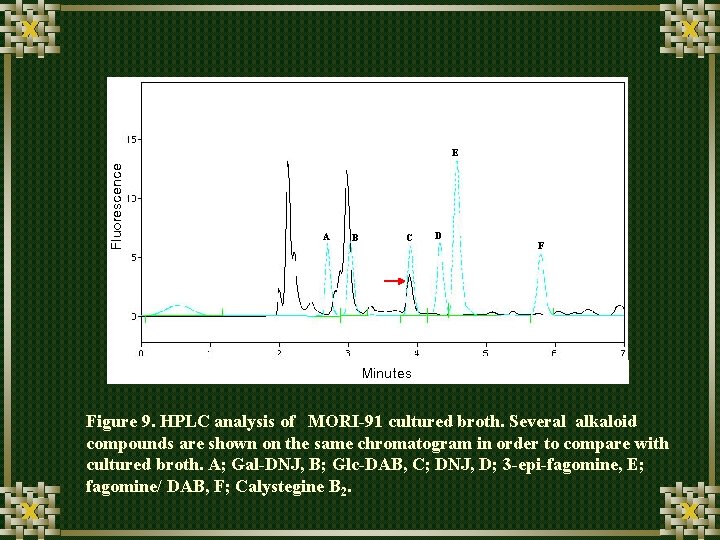
Fluorescence E A B C D F Minutes Figure 9. HPLC analysis of MORI-91 cultured broth. Several alkaloid compounds are shown on the same chromatogram in order to compare with cultured broth. A; Gal-DNJ, B; Glc-DAB, C; DNJ, D; 3 -epi-fagomine, E; fagomine/ DAB, F; Calystegine B 2.
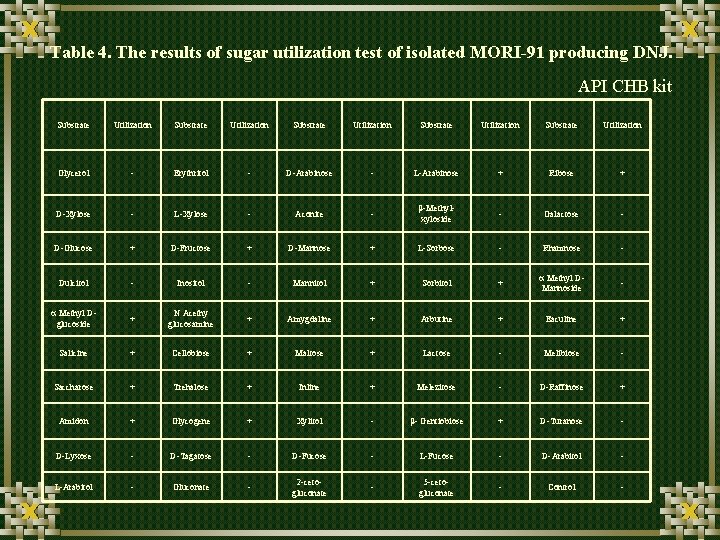
Table 4. The results of sugar utilization test of isolated MORI-91 producing DNJ. API CHB kit Substrate Utilization Substrate Utilization Glycerol - Erythritol - D-Arabinose - L-Arabinose + Ribose + D-Xylose - L-Xylose - Aconite - -Methylxyloside - Galactose - D-Glucose + D-Fructose + D-Mannose + L-Sorbose - Rhamnose - Dulcitol - Inositol - Mannitol + Sorbitol + Methyl DMannoside - Methyl Dglucoside + N Acethy glucosamine + Amygdaline + Arbutine + Eaculine + Salicine + Cellobiose + Maltose + Lactose - Melibiose - Saccharose + Trehalose + Inline + Melezitose - D-Raffinose + Amidon + Glycogene + Xylitol - - Gentiobiose + D-Turanose - D-Lyxose - D-Tagatose - D-Fucose - L-Fucose - D-Arabitol - L-Arabitol - Gluconate - 2 -cetogluconate - 5 -cetogluconate - Control -
iso fatty acid anteiso fatty acid Figure 10. GC analysis of whole cell wall fatty acids composition of MORI-91.
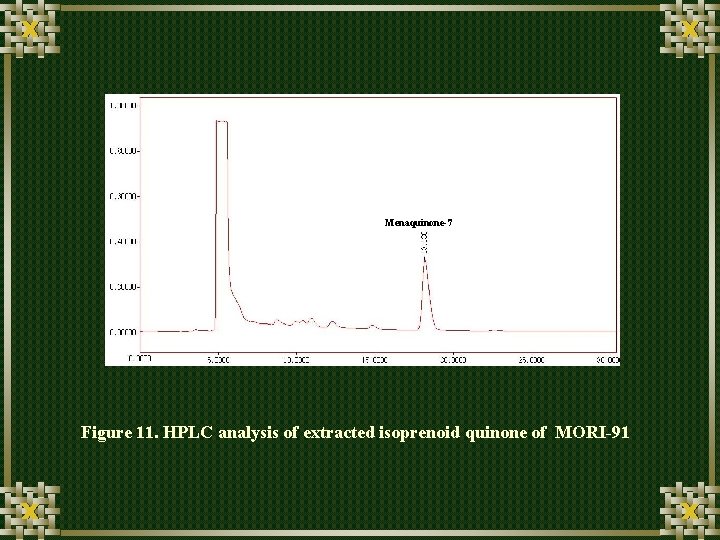
Menaquinone-7 Figure 11. HPLC analysis of extracted isoprenoid quinone of MORI-91
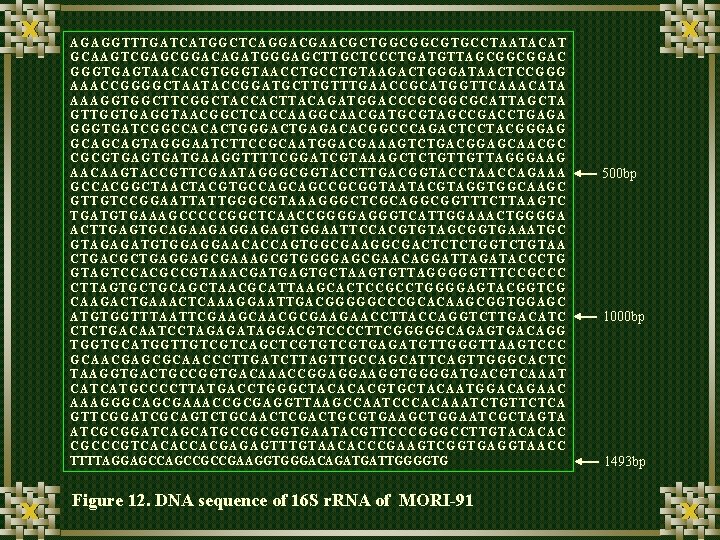
AG AG G T T T G AT CAT G G CT CAG G ACG AACG CT G G CG T G CCT AAT ACAT GCAAGTCGAGCGGACAGATGGGAGCTTGCTCCCTGATGTTAGCGGCGGAC G G G TG AG TAACACG TG G G TAACCTG TAAG ACTG G G ATAACTCCG G G AAACCGGGGCTAATACCGGATGCTTGTTTGAACCGCATGGTTCAAACATA AAAG G T G G CT T CG G CT ACCACT T ACAG AT G G ACCCG CG CAT T AG CT A GTTGGTGAGGTAACGGCTCACCAAGGCAACGATGCGTAGCCGACCTGAGA GGGTGATCGGCCACACTGGGACTGAGACACGGCCCAGACTCCTACGGGAG GCAGCAGTAGGGAATCTTCCGCAATGGACGAAAGTCTGACGGAGCAACGC CG CG T G AT G AAG G T T CG G AT CG T AAAG CT CT G T T AG G G AACAAG T ACCG T T CG AAT AG G G CG G T ACCT T G ACG G T ACCT AACCAG AAA GCCACGGCTAACTACGTGCCAGCAGCCGCGGTAATACGTAGGTGGCAAGC G T T G T CCG G AAT T G G G CG T AAAG G G CT CG CAG G CG G T T T CT T AAG T C TGATGTGAAAGCCCCCGGCTCAACCGGGGAGGGTCATTGGAAACTGGGGA ACTTG AG TG CAG AG AG TG G AATTCCACG TG TAG CG G TG AAATG C G TAG AG ATG TG G AACACCAG TG G CG AAG G CG ACTCTCTG G TCTG TAA CTGACGCTGAGGAGCGAAAGCGTGGGGAGCGAACAGGATTAGATACCCTG G T AG T CCACG CCG T AAACG AT G AG T G CT AAG T T AG G G T T T CCG CCC CT T AG T G CAG CT AACG CAT T AAG CACT CCG CCT G G AG T ACG G T CG CAAGACTGAAACTCAAAGGAATTGACGGGGGCCCGCACAAGCGGTGGAGC ATGTGGTTTAATTCGAAGCAACGCGAAGAACCTTACCAGGTCTTGACATC CTCTG ACAATCCTAG AG ATAG G ACG TCCCCTTCG G G CAG AG TG ACAG G TGGTGCATGGTTGTCGTCAGCTCGTGAGATGTTGGGTTAAGTCCC GCAACGAGCGCAACCCTTGATCTTAGTTGCCAGCATTCAGTTGGGCACTC TAAGGTGACTGCCGGTGACAAACCGGAGGAAGGTGGGGATGACGTCAAAT CATCATGCCCCTTATGACCTGGGCTACACACGTGCTACAATGGACAGAAC AAAG G G CAG CG AAACCG CG AG G T T AAG CCAAT CCCACAAAT CT G T T CT CA G T T CG G AT CG CAG T CT G CAACT CG ACT G CG T G AAG CT G G AAT CG CT AG T A AT CG CG G AT CAG CAT G CCG CG G T G AAT ACG T T CCCG G G CCT T G T ACACAC CG CCCG T CACACCACG AG AG T T T G T AACACCCG AAG T CG G T G AG G T AACC TTTTAGGAGCCGCCGAAGGTGGGACAGATGATTGGGGTG Figure 12. DNA sequence of 16 S r. RNA of MORI-91 500 bp 1000 bp 1493 bp
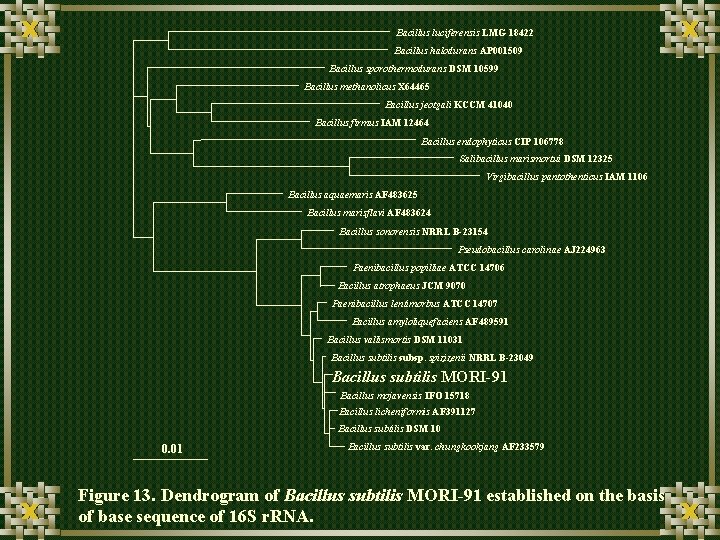
Bacillus luciferensis LMG 18422 Bacillus halodurans AP 001509 Bacillus sporothermodurans DSM 10599 Bacillus methanolicus X 64465 Bacillus jeotgali KCCM 41040 Bacillus firmus IAM 12464 Bacillus endophyticus CIP 106778 Salibacillus marismortui DSM 12325 Virgibacillus pantothenticus IAM 1106 Bacillus aquaemaris AF 483625 Bacillus marisflavi AF 483624 Bacillus sonorensis NRRL B-23154 Pseudobacillus carolinae AJ 224963 Paenibacillus popilliae ATCC 14706 Bacillus atrophaeus JCM 9070 Paenibacillus lentimorbus ATCC 14707 Bacillus amyloliquefaciens AF 489591 Bacillus vallismortis DSM 11031 Bacillus subtilis subsp. spizizenii NRRL B-23049 Bacillus subtilis MORI-91 Bacillus mojavensis IFO 15718 Bacillus licheniformis AF 391127 Bacillus subtilis DSM 10 0. 01 Bacillus subtilis var. chungkookjang AF 233579 Figure 13. Dendrogram of Bacillus subtilis MORI-91 established on the basis of base sequence of 16 S r. RNA.
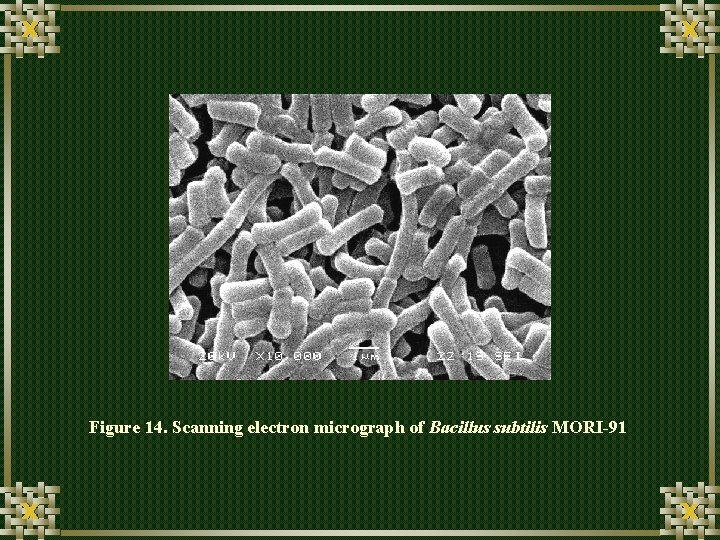
Figure 14. Scanning electron micrograph of Bacillus subtilis MORI-91
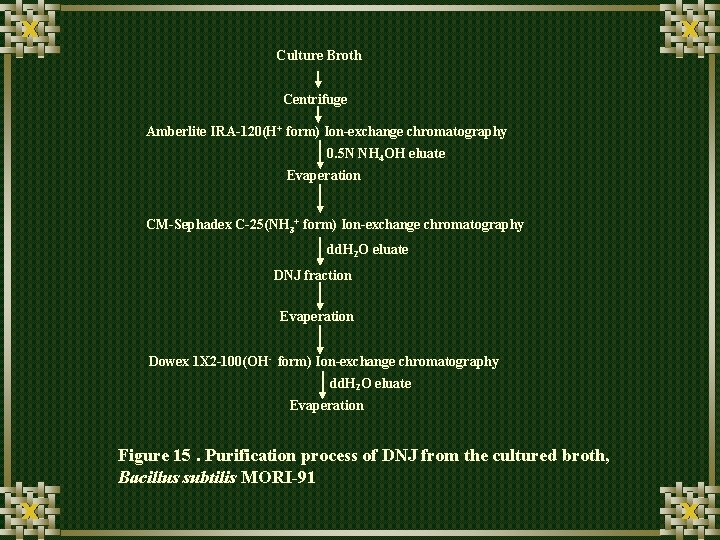
Culture Broth Centrifuge Amberlite IRA-120(H+ form) Ion-exchange chromatography 0. 5 N NH 4 OH eluate Evaperation CM-Sephadex C-25(NH 3+ form) Ion-exchange chromatography dd. H 2 O eluate DNJ fraction Evaperation Dowex 1 X 2 -100(OH- form) Ion-exchange chromatography dd. H 2 O eluate Evaperation Figure 15. Purification process of DNJ from the cultured broth, Bacillus subtilis MORI-91
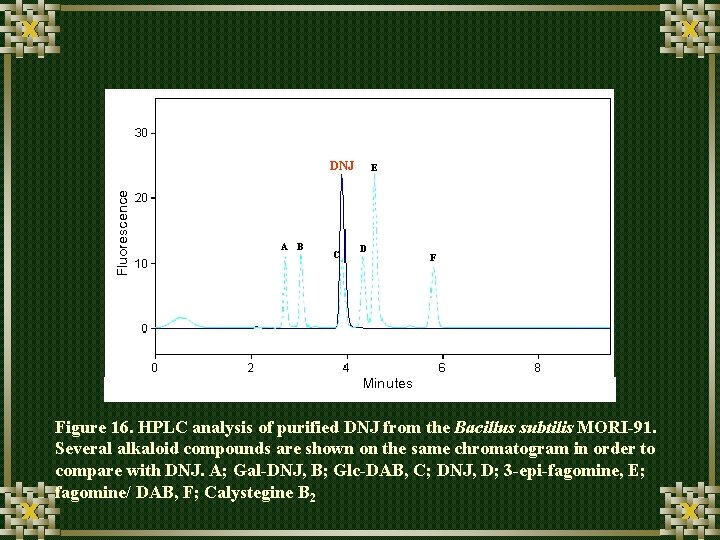
Fluorescence DNJ A B C E D F Minutes Figure 16. HPLC analysis of purified DNJ from the Bacillus subtilis MORI-91. Several alkaloid compounds are shown on the same chromatogram in order to compare with DNJ. A; Gal-DNJ, B; Glc-DAB, C; DNJ, D; 3 -epi-fagomine, E; fagomine/ DAB, F; Calystegine B 2
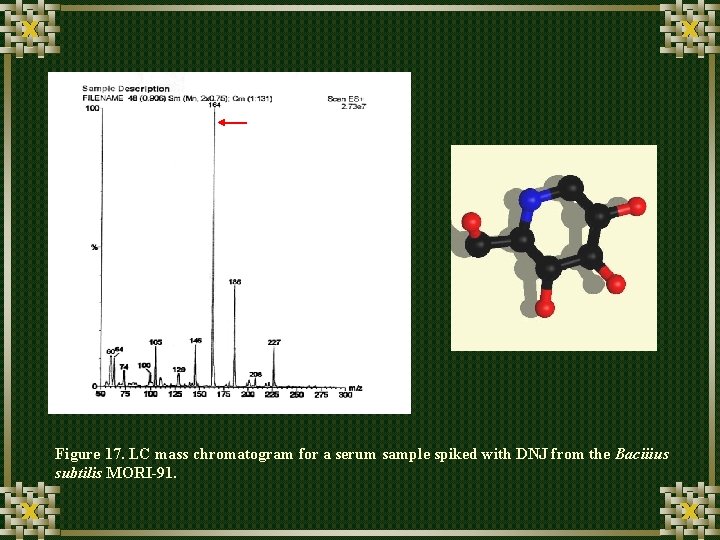
Figure 17. LC mass chromatogram for a serum sample spiked with DNJ from the Baciiius subtilis MORI-91.
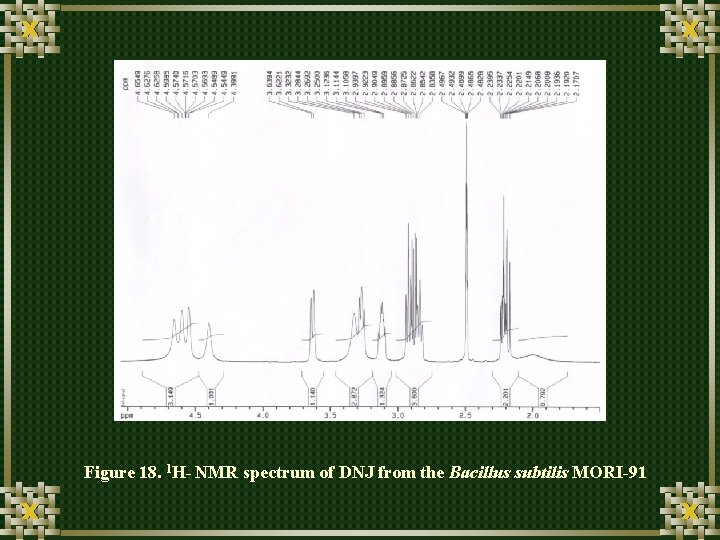
Figure 18. 1 H- NMR spectrum of DNJ from the Bacillus subtilis MORI-91
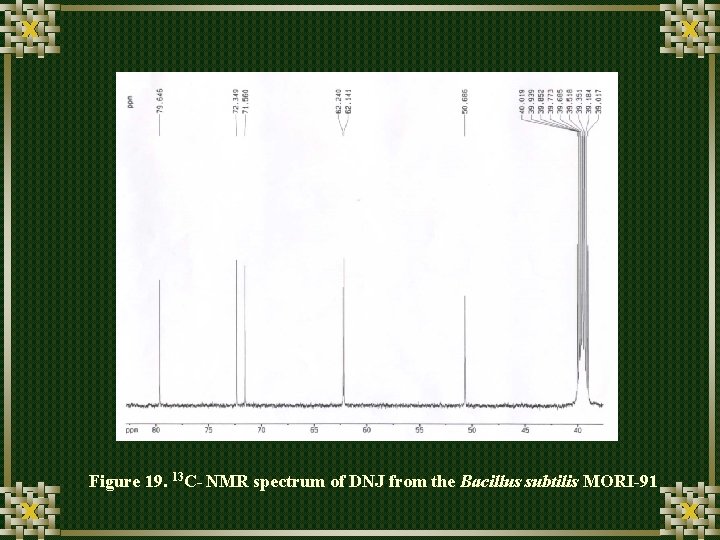
Figure 19. 13 C- NMR spectrum of DNJ from the Bacillus subtilis MORI-91
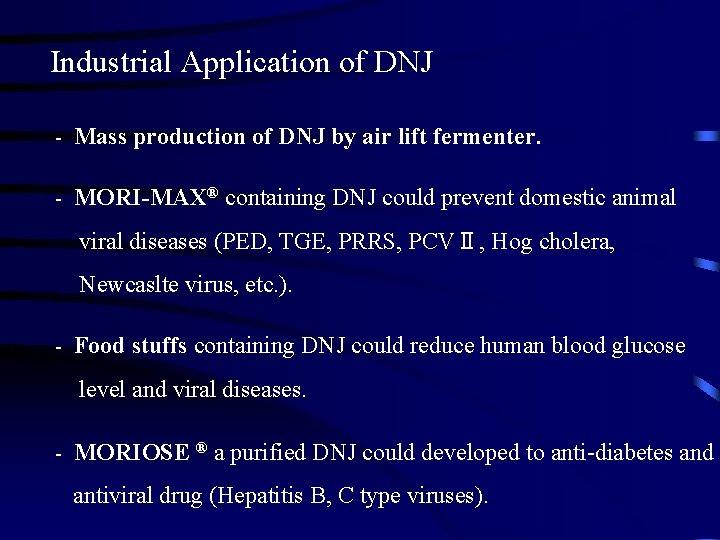
Industrial Application of DNJ - Mass production of DNJ by air lift fermenter. - MORI-MAX® containing DNJ could prevent domestic animal viral diseases (PED, TGE, PRRS, PCVⅡ, Hog cholera, Newcaslte virus, etc. ). - Food stuffs containing DNJ could reduce human blood glucose level and viral diseases. - MORIOSE ® a purified DNJ could developed to anti-diabetes and antiviral drug (Hepatitis B, C type viruses).
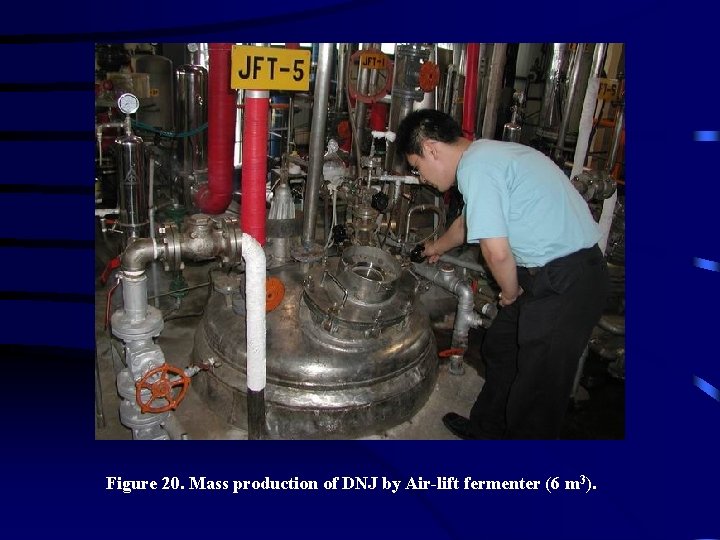
Figure 20. Mass production of DNJ by Air-lift fermenter (6 m 3).
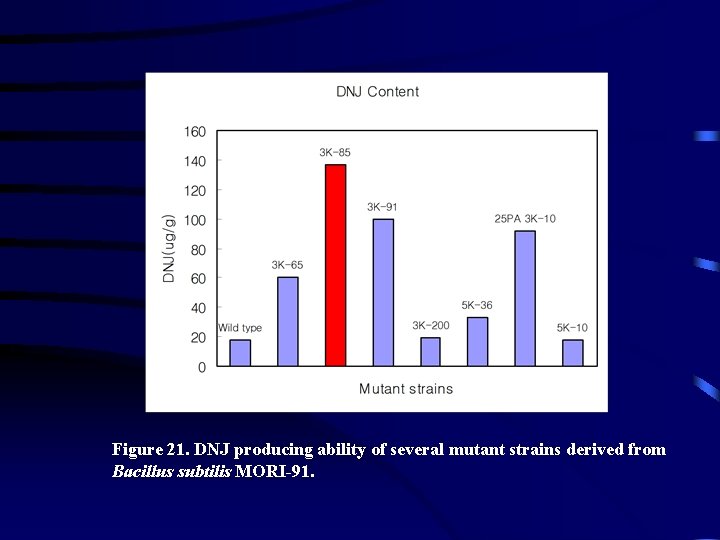
Figure 21. DNJ producing ability of several mutant strains derived from Bacillus subtilis MORI-91.
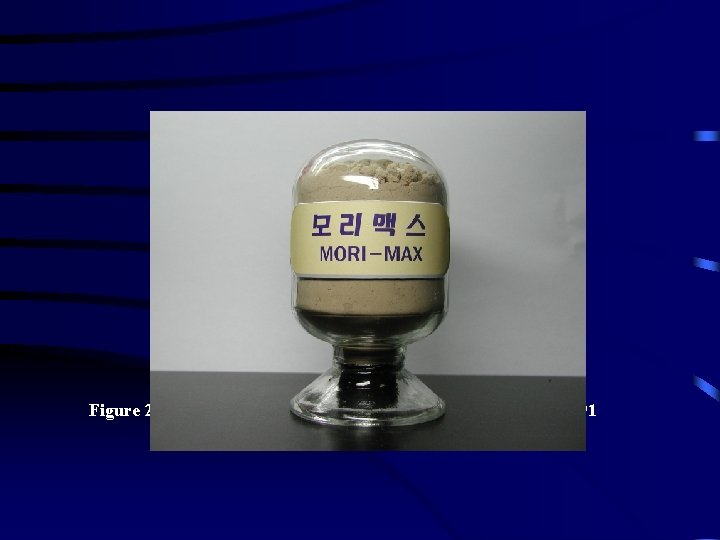
Figure 22. The fermentation patterns of Bacillus subtilis MORI-91
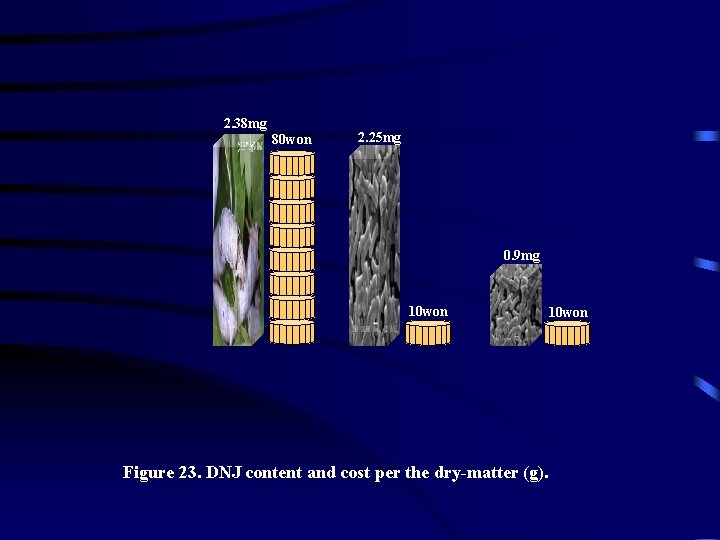
2. 38 mg 80 won 2. 25 mg 0. 9 mg 10 won Figure 23. DNJ content and cost per the dry-matter (g). 10 won
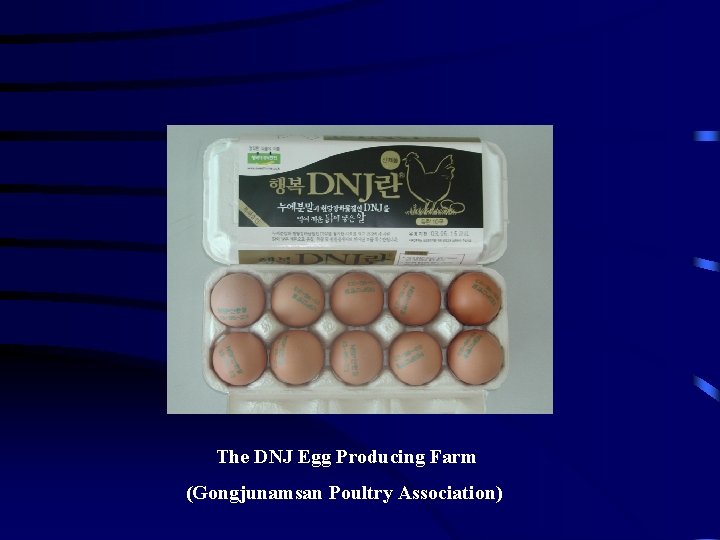
The DNJ Egg Producing Farm (Gongjunamsan Poultry Association)
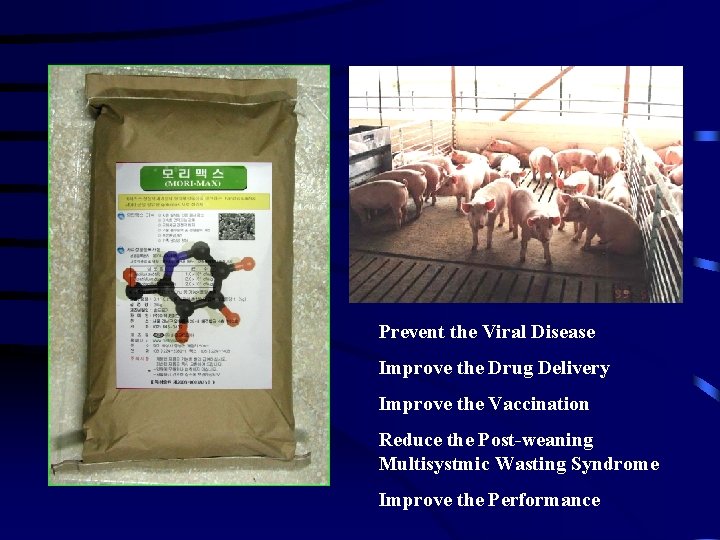
Prevent the Viral Disease Improve the Drug Delivery Improve the Vaccination Reduce the Post-weaning Multisystmic Wasting Syndrome Improve the Performance
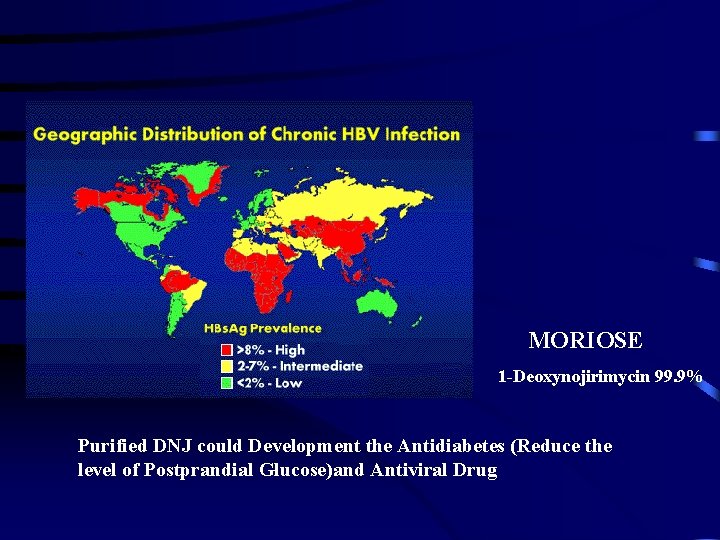
MORIOSE 1 -Deoxynojirimycin 99. 9% Purified DNJ could Development the Antidiabetes (Reduce the level of Postprandial Glucose)and Antiviral Drug
Conclusion l DNJ could develop the antiviral drugs, several kinds of food and feed additives. l Bacillus subtilis MORI produce mass amount of high-quality DNJ with low cost and easy processing. l Silkworm- and Bacillus-DNJ could be applicable to the new field of industry and the manufacture of various products.
- Slides: 38