
MICROBIAL INTERACTION LECTURE CONTENTS 1 Types of interaction
MICROBIAL INTERACTION
LECTURE CONTENTS 1. Types of interaction – – Interaction with other microbes Interaction with plants Interaction with animals Interaction with human 1. Microbes and Disease 2. Microbes and the Environment
The inter- and intra-relationships between various microorganisms which can include both positive (like SYMBIOSIS) and negative (like ANTIBIOSIS) interactions. Examples include virus - bacteria and bacteria - bacteria. The consortium may be in intermittent, cyclic or permanent. These are ubiquitous, diverse and critically important in the function of any biological community.
These includeso. Neutralism o. Mutualism o. Commensalism o. Parasitism o. Cooperation o. Predation o. Amensalism o. Competition o. Syntropism

NEUTRALISM • Microorganisms have no effect on each other. • Observed in natural communities if Culture density is low. Nutrient level is high. Each culture has distinct requirements.
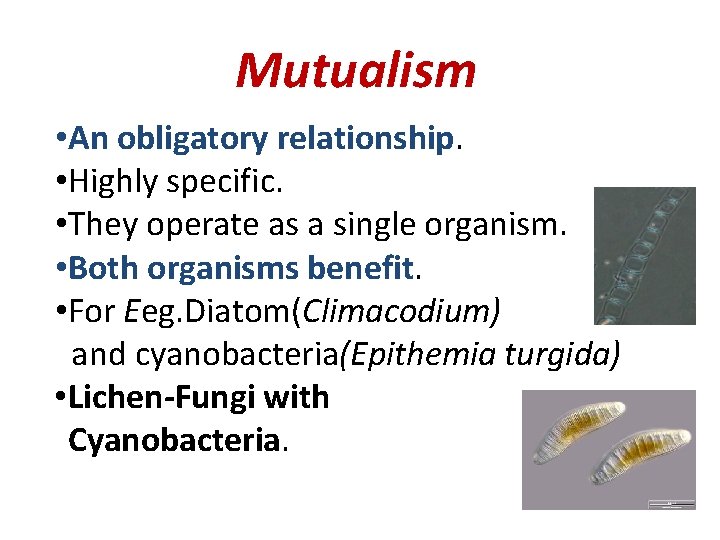
Mutualism • An obligatory relationship. • Highly specific. • They operate as a single organism. • Both organisms benefit. • For Eeg. Diatom(Climacodium) and cyanobacteria(Epithemia turgida) • Lichen-Fungi with Cyanobacteria.
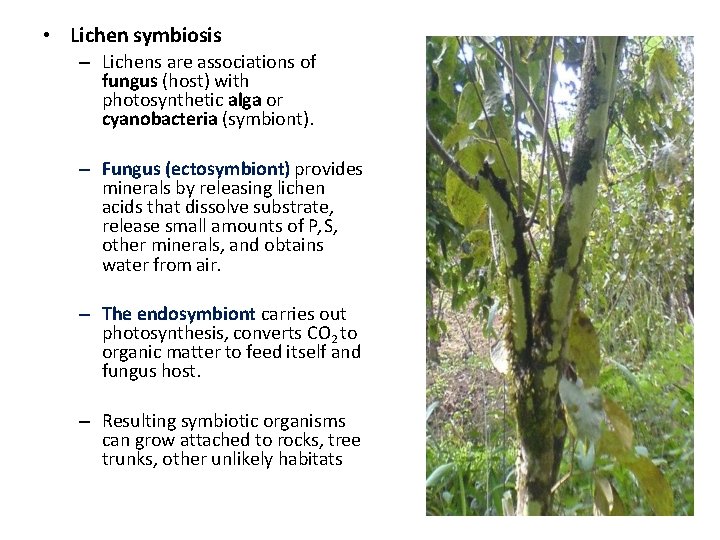
• Lichen symbiosis – Lichens are associations of fungus (host) with photosynthetic alga or cyanobacteria (symbiont). – Fungus (ectosymbiont) provides minerals by releasing lichen acids that dissolve substrate, release small amounts of P, S, other minerals, and obtains water from air. – The endosymbiont carries out photosynthesis, converts CO 2 to organic matter to feed itself and fungus host. – Resulting symbiotic organisms can grow attached to rocks, tree trunks, other unlikely habitats
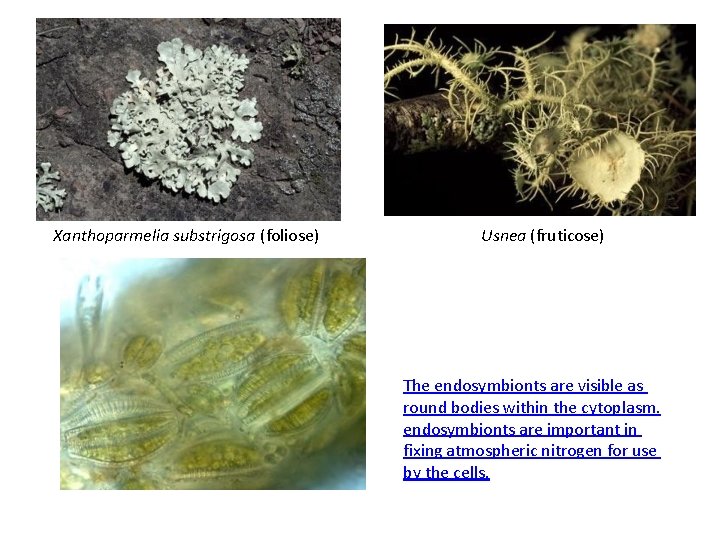
Xanthoparmelia substrigosa (foliose) Clim Usnea (fruticose) The endosymbionts are visible as round bodies within the cytoplasm. endosymbionts are important in fixing atmospheric nitrogen for use by the cells.
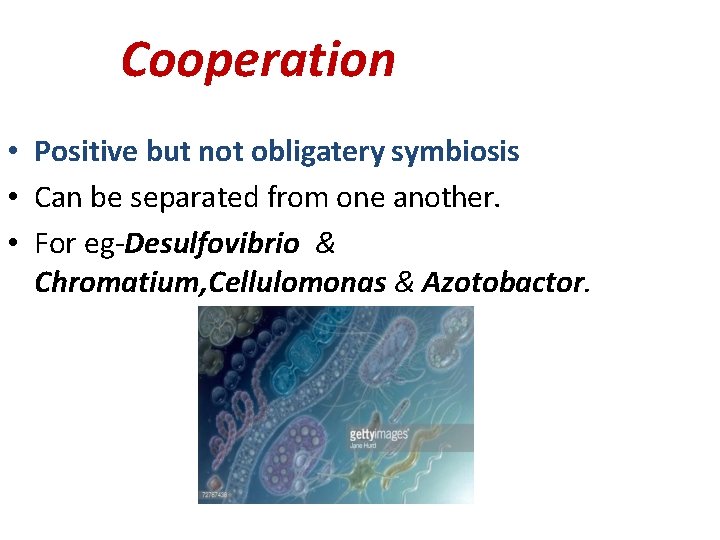
Cooperation • Positive but not obligatery symbiosis • Can be separated from one another. • For eg-Desulfovibrio & Chromatium, Cellulomonas & Azotobactor.
Commensalism • • • One partner(commensal) benefits. while other(host) remains unaffected. – Common among organisms, not obligatory – Unidirectional – Usually, unaffected population modifies the environment in a way that other population benefits. For eg-during Nitrification , oxidation of NH 4+ ions get convert into nitrate. Nitrosomonas convert NH 4+ Ions to nitrite and nitrobacter oxidise nitrite into nitrate.
Parasitism o. One speices is dependent on a another for nutrition and growth. o. In it, one organism is benefitted and other is harmed. o. Closly related to predation. o. Coexistence between host and parasite. o. For eg-Viruses are the highly specialized intracellular parasites, generally kill the host.
Cont…. • cell. Myxococcus xanthus and E. coli. • Microbial parasite may kill the host or can have stable relationship without killing the host. (lysogeny provirus is carried on host chromosome). • Pathogenic parasite may attack and kill the plant or animal host. • Obligate parasite Treponema pallidum(syphilis), Rickettsia(Rockey mountain fever) can’t grow without an appropriate host.
Predation • It involves predator species which target other microbe for material to survive. • Predator attacks and kills its prey. • They can be obligate or facultative. • Members of predatory bacteria are known as ‘Bdellovibrio and like organisms’(BALO). They can be epibiotic, periplasmic, cytoplasmic. • For eg • Bdellovibrio-E. coli interaction (Vampirococcus, Daptobacter both attack Chromatium.

Antibiotic production
Amensalism • Focuses on exclusion of an organism from growing on a specific site to prevent the utilization of limiting nutrients. • Unidirectional process based on the release of a specific compound by one organism that has negative effect on another. • Product of one impact another i. e one species remains uneffected while other is harmed. • For eg- microbial production of antibiotics that can inhibits or kill another. penicillin by fungi inhibit a type of cell wall found
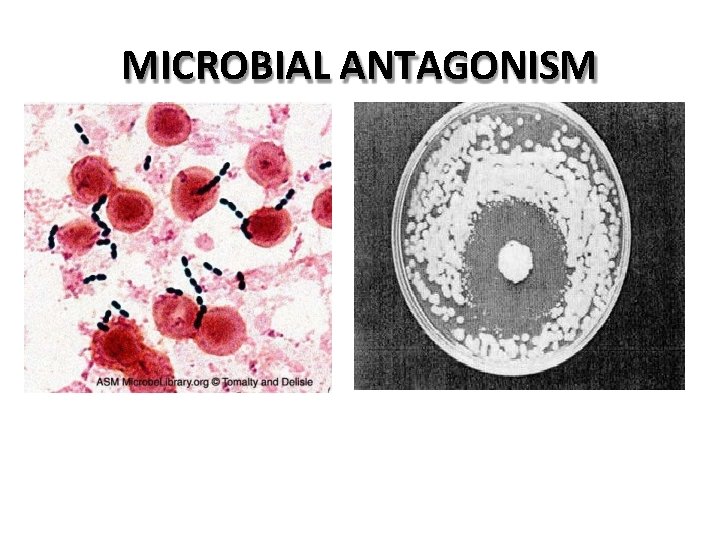
MICROBIAL ANTAGONISM
Competition • It arises when different organisms within population try to acquire same resources. • Both the species are harmed. • Competiton within the species or among different species can be attributed to availability of Nitrogen source, carbon source, electron donors, electron accepter, vitamins, light, water. • Competition may result in exclusion of other species or the establishment of a steady state where multiple species coexist.
Cont…. . • Eg- In aquatic environment where extensive phototrophic activity results in blooms of single species of diatoms or cyanobacteria. • Thermophilic springs chemolithotrophic organisms are selected. • Lactic acid fermentation of food. • Large intestine of animals, a single species doesn’t dominate but a mixed population coexist.
Syntropism • Two species are required for growth on a specific electron donor that is not metabolized by either organism alone or one of the organisms remove end products of metabolism from other, which enables both the organisms to grow. • Both the species are benefited. • This relationship was discovered by Meyer Wolin and colleagues, when fermentation of propionic acid occurred when there was a coculture. • Synophobacter produces H during fermentation and accumulation of H makes the reaction thermodynamically unstable. • Pesence of methanogen, Methanospirillum makes the oxidation favourable by consuming the H. ’
Bacteria that perform anaerobic fermentation often partner with methanogenic bacteria to provide necessary products such as hydrogen
Microbe-Plant Interactions • Different interactions between microorganisms and plants have been identified and the most obvious environment for such interactions is soil. • Microbe-plant association can be mutulistic (a highly specialized interaction where there is considerable specificity found in mutulistic activities)or it can be commensilistic(secretions from plants benefit bacteria and fungi but no apparent benefit to plant.
Symbiosis with Cyanobacteria • Beneficial aspects of plant-microbe symbiosis are, plants provide c-material to support growth of microbes and microbes promote plant growth by supplying minerals or N 2. • Eg. Azolla(fresh water aquatic fern)lives in symbiotic association with Anabena azollae , where cyanobacteria fixes atmospheric N 2 and Azolla provides carbohydrates. cyanobacteria are present in trichomes and nutrient exchange occurs through tiny fibres extending from plant to cavity.
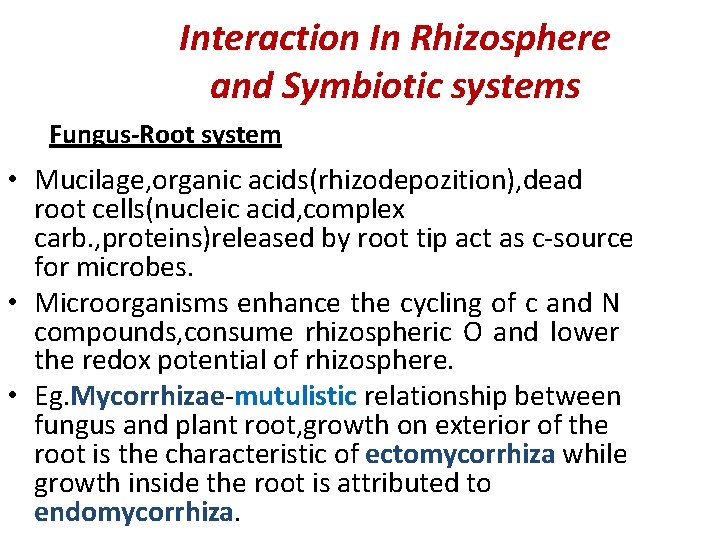
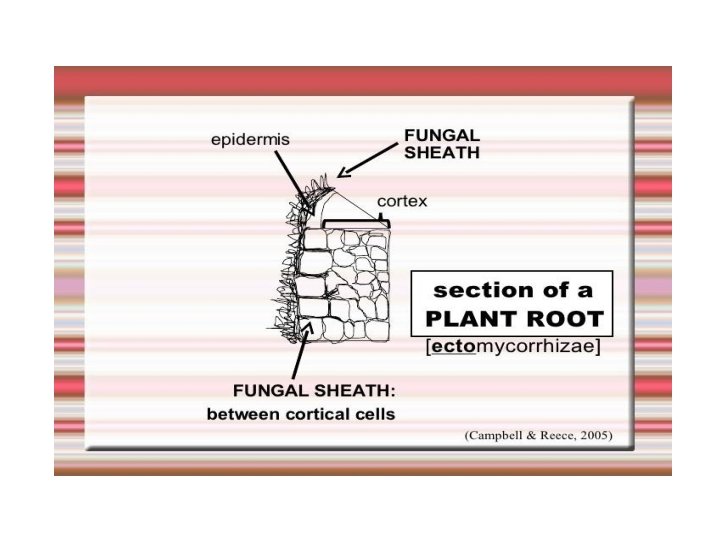
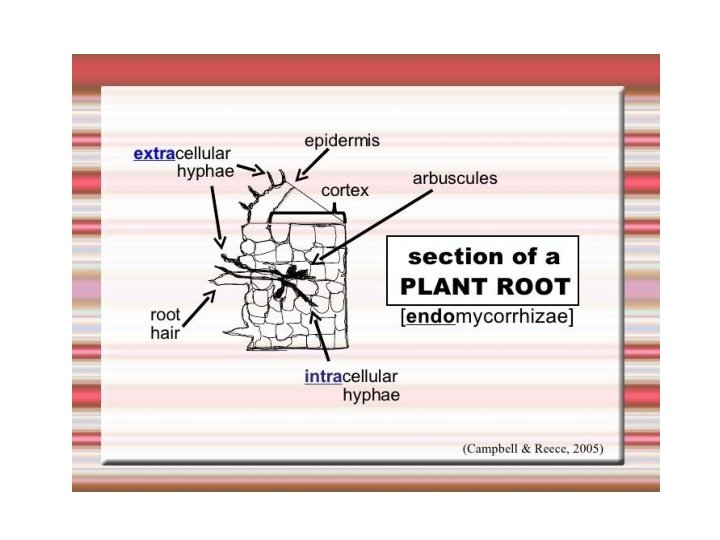
Interaction In Rhizosphere and Symbiotic systems Fungus-Root system • Mucilage, organic acids(rhizodepozition), dead root cells(nucleic acid, complex carb. , proteins)released by root tip act as c-source for microbes. • Microorganisms enhance the cycling of c and N compounds, consume rhizospheric O and lower the redox potential of rhizosphere. • Eg. Mycorrhizae-mutulistic relationship between fungus and plant root, growth on exterior of the root is the characteristic of ectomycorrhiza while growth inside the root is attributed to endomycorrhiza.
Bacteria-Root nodule system • Enzyme system for N 2 fixation is present only in prokaryotes and nodules are associated with roots of Leguminous plants, bacteria(rhizobia) are specific for a legume species. • Assciation is beneficial for both, plant provide c and energy source to bacteria and bacteria fix N 2 and provide amino acid to plant. • Rhizobium leguminosarum sp. and pea, beans tropical(root nodules). • Azorhizobium caulinodan and Aquatic tropical legume(stem nodule).
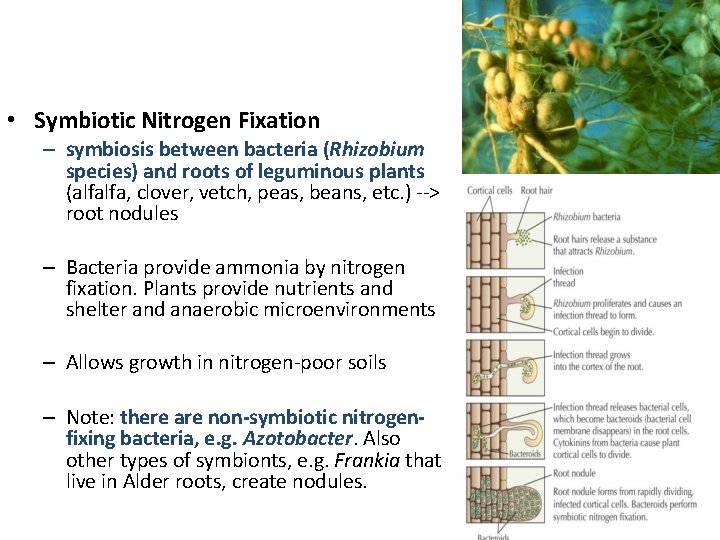
• Symbiotic Nitrogen Fixation – symbiosis between bacteria (Rhizobium species) and roots of leguminous plants (alfalfa, clover, vetch, peas, beans, etc. ) --> root nodules – Bacteria provide ammonia by nitrogen fixation. Plants provide nutrients and shelter and anaerobic microenvironments – Allows growth in nitrogen-poor soils – Note: there are non-symbiotic nitrogenfixing bacteria, e. g. Azotobacter. Also other types of symbionts, e. g. Frankia that live in Alder roots, create nodules.
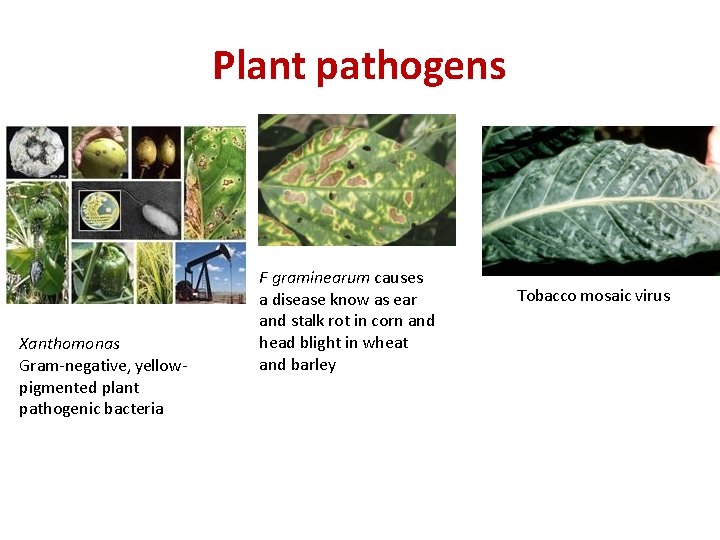
Plant pathogens Xanthomonas Gram-negative, yellowpigmented plant pathogenic bacteria F graminearum causes a disease know as ear and stalk rot in corn and head blight in wheat and barley Tobacco mosaic virus
Microbe-Animal Interactions • Bacteria and fungi interact with humans and other animals and this interaction can be symbiotic, commensalistic or parasitic. • Symbiotic relationships are widespread and has evolved new metabolic capabilities and cellular structures. (symbiogenesis). • Evolutionary benefits in a symbiotic relationship are; -provision of dietary needs that their hosts lack including essential amino acids, cofactors, metabolic factors etc. • N storage and recycling. • Large alterations in genome of symbionts and adaptations by host to favour the symbiosis occur during long association which can be in form of genome size reduction or increase in AT content in genome. since endosymbionts protect their hosts from pathogens, this may have influenced the evolution of sociality in animals to acquire the endosymbiont through horizontal and vertical transmission.
• Ruminants & Resident microbes – Ruminants (R) are herbivorous animals with four-chambered stomach = rumen. – R eat grasses containing mainly cellulose, but lack enzymes to digest cellulose. – Bacteria and Protists in rumen produce cellulases, hydrolyze cellulose to sugar which is then fermented. – Products include: methane (from methanogens); organic acids (acetate, propionate, butyrate). – Acids are adsorbed by R into bloodstream, provide source of energy. – Methane must be released by belching, ~2 liters/min. Disease "bloat" when cows can't belch. – Microbial population totally anaerobic, achieves highest density of bacteria (up to 1012 cells/ml). – Cellulose digestion is slow process. Animals regurgitate rumen contents back to mouth to facilitate breakdown, "chewing cud".
Microbe-Animal Mutulism • In vertebrates gut microbial community produce vitamins needed by host, help digetion and colonization resistence. • Termite(Reticulitermis speratus) gut community(symbioses within symbiosis) responsible for cellulose degradation include bacteria(spirochaetes, TG 1, 2, 3, bacteroidetes, firmicutes) which provide. N-comp. by fixing N 2 and nutrients to host and protists with their bacterial and archeal ecto and endosymbionts degrade cellulose, provide a. acid and cofactors to protists. • Ambrosia beetle carries fungus to a new environment where fungus flourishes beetle uses fungus as food.
Microbe-Animal Parasitism • One fascinating parasitic interaction involves nematod(Heterorhabditis bacteriophora harboring a bacterial endosymbiont Photorhabdus luminescens) and parasitize insects and humans. The beneficial nematodes can be used to control a broad range of soil inhabiting insects and above ground insects in their soil inhabiting stage of life. White grubs, Beetle grubs, Japanese beetle • This nematod arrest their development in a phase called infective juvinile larval stage at which it is infected by endosymbiont and when it infects the insect, nematod further development is induced by insects hemolymph. • Endosymbiont secretes proteases supressing insects immune system and damage the insect and nematod parasite feeds on endosymbiont and the insect as well.
Microbe-Animal Comensalism • Comensal(species that benefits from association) may obtain nutrient, shelter, support, locomotion from the host species which remains unmodified. • Comensal species may show great structural adaptation. eg. Titan triggerfish(Balistoides viridescens) which creates feeding opportunities for smaller fishes by moving large rocks too big for them to shift themselves. • Another example is of a vulture which eats the leftover food from a lion and the lion is not affected by this while the vulture gets to eat.
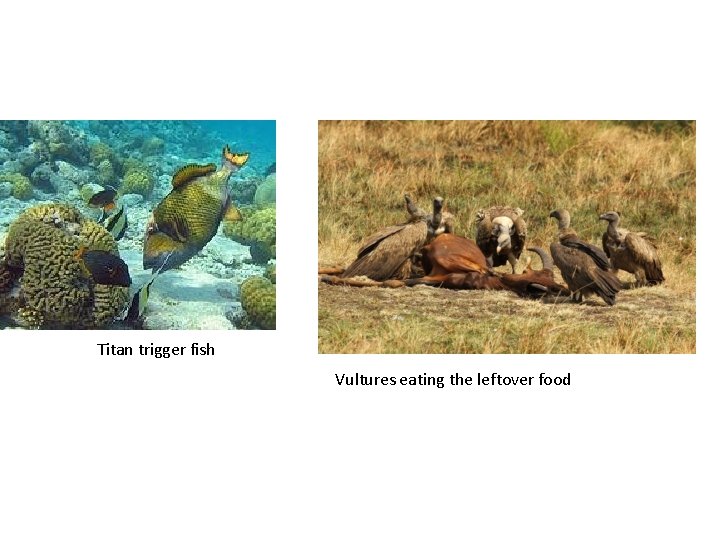
Titan trigger fish Vultures eating the leftover food
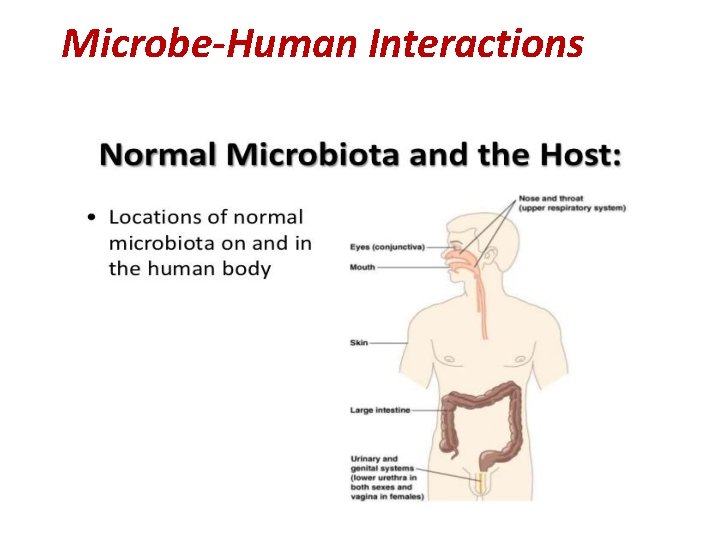
Microbe-Human Interactions
Normal Microbiota and the Host • Transient microbiota may be present for days, weeks, or months • Normal microbiota permanently colonize the host • Symbiosis is the relationship between normal microbiota and the host
Normal Microbiota and the Host: • Microbial antagonism is competition between microbes. • Normal microbiota protect the host by: – occupying niches that pathogens might occupy – producing acids – producing bacteriocins • Probiotics are live microbes applied to or ingested into the body, intended to exert a beneficial effect.
- Slides: 37