
Microbial Genetics Bacteria Viruses Fig 19 1 Are
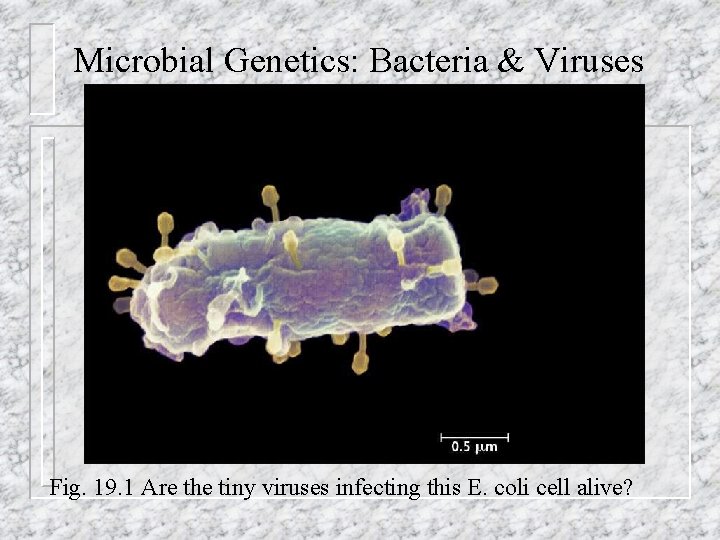
Microbial Genetics: Bacteria & Viruses Fig. 19. 1 Are the tiny viruses infecting this E. coli cell alive?
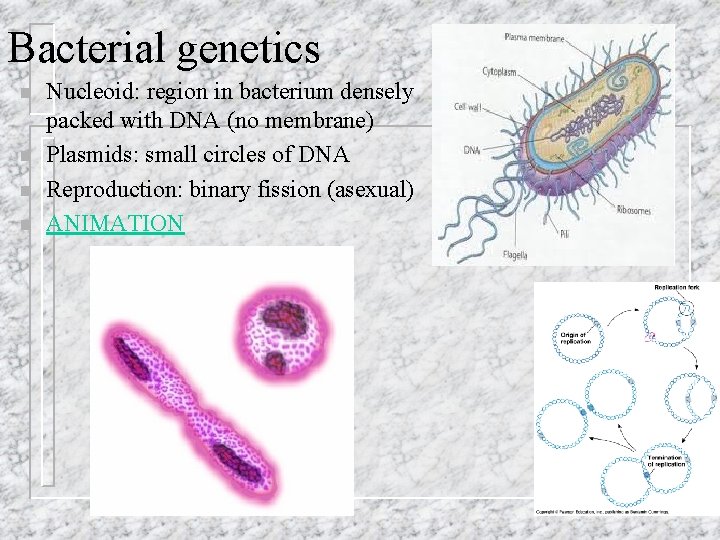
Bacterial genetics n n Nucleoid: region in bacterium densely packed with DNA (no membrane) Plasmids: small circles of DNA Reproduction: binary fission (asexual) ANIMATION

“Sexual” Bacterial Reproduction n Transformation: genotype alteration by the uptake of naked, foreign DNA from the environment (Griffith expt. ) Transduction: phages that carry bacterial genes from 1 host cell to another • generalized~ random transfer of host cell chromosome Conjugation: direct transfer of genetic material via sex pilis
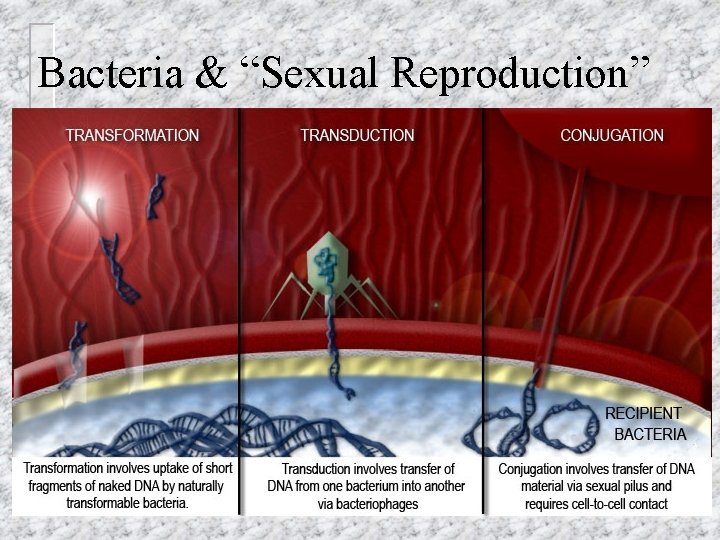
Bacteria & “Sexual Reproduction”

Viral structure n n Virus: “poison” (Latin); infectious particles consisting of a nucleic acid (DNA OR RNA) inside a protein coat (capsid) Some viruses also have envelopes, derived from host cell membrane Bacteriophages (phages) are viruses that infect bacteria and contain “head” and “tail” – resemble spaceship. Viruses only able to replicate in host cells.
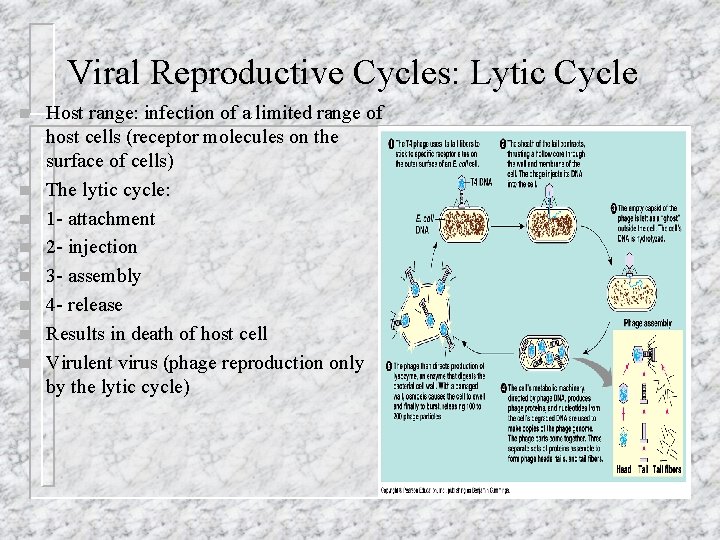
Viral Reproductive Cycles: Lytic Cycle n n n n Host range: infection of a limited range of host cells (receptor molecules on the surface of cells) The lytic cycle: 1 - attachment 2 - injection 3 - assembly 4 - release Results in death of host cell Virulent virus (phage reproduction only by the lytic cycle)
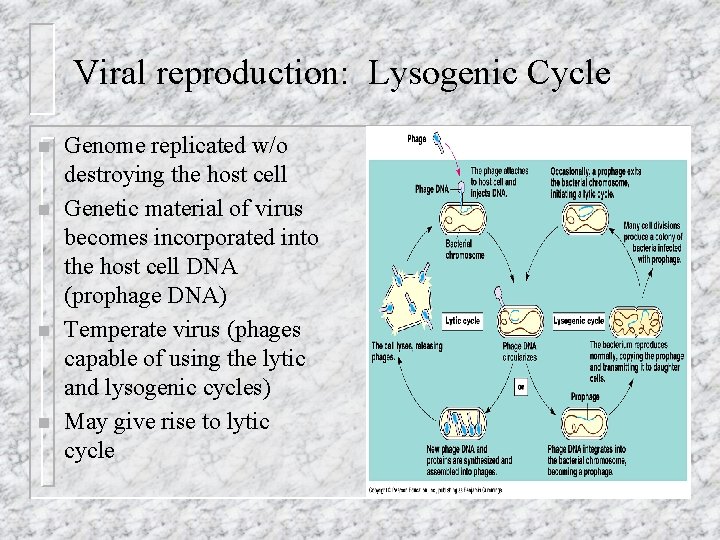
Viral reproduction: Lysogenic Cycle n n Genome replicated w/o destroying the host cell Genetic material of virus becomes incorporated into the host cell DNA (prophage DNA) Temperate virus (phages capable of using the lytic and lysogenic cycles) May give rise to lytic cycle
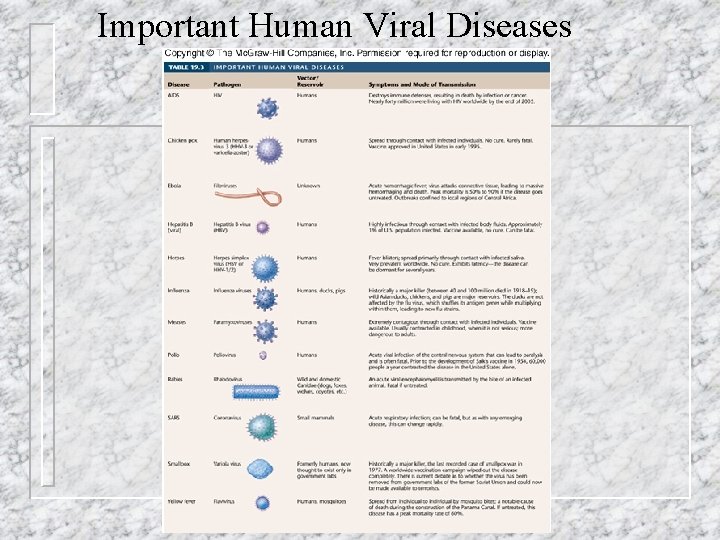
Important Human Viral Diseases

How Animal Viruses Enter Cells n n animal viruses typically enter their host cells by membrane fusion a diverse array of viruses occur among animals – – a typical example of an animal virus is human immunodeficiency virus (HIV) HIV infection leads to acquired immunodeficiency syndrome (AIDS) *there is a long latency period between HIV infection and developing AIDS
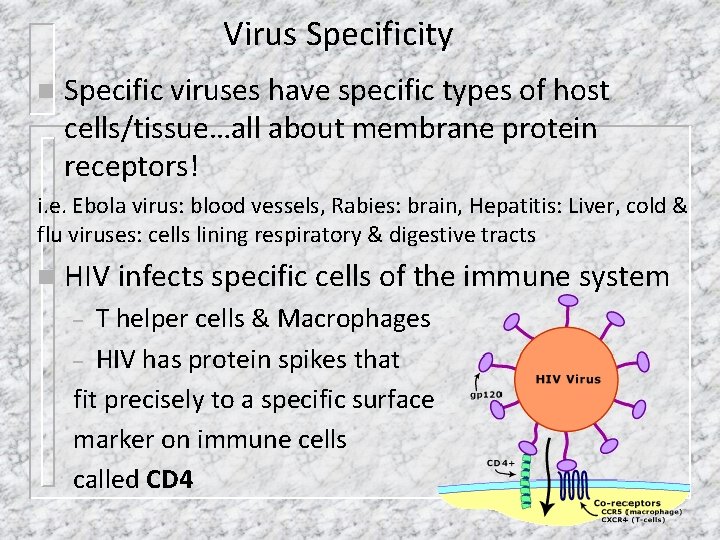
Virus Specificity n Specific viruses have specific types of host cells/tissue…all about membrane protein receptors! i. e. Ebola virus: blood vessels, Rabies: brain, Hepatitis: Liver, cold & flu viruses: cells lining respiratory & digestive tracts n HIV infects specific cells of the immune system T helper cells & Macrophages – HIV has protein spikes that fit precisely to a specific surface marker on immune cells called CD 4 –

RNA viruses: Retroviruses n n Retroviruses: transcribe DNA from an RNA template (RNA DNA) Reverse transcriptase (catalyzes RNA DNA) HIV = Human Immunodeficiency Virus AIDS = Acquired Immune Deficiency Syndrome HIV Animation AZT Animation Origin of HIV
- Slides: 11