
Microbial Enzymes 2 nd Year Students MicrobiologyChemistry Prof
Microbial Enzymes 2 nd Year Students Microbiology/Chemistry Prof. Dr. Mamdouh Nemat Alla
Microbial Enzymes Lecture 9

4. Isomerases Rearrangement a- Isomerization (Isomerases) b- Epimerization (Epimerases) c- mutation (Mutases)

5. Transferases transfer a group Transaminases, Adenylate Kinase, Sucrose transglucosylase, Starch transglucosylase Methyl transferase Acetyl transferase

5. Transferases transfer a group Transaminases, Adenylate Kinase, Sucrose transglucosylase, Starch transglucosylase Methyl transferase Acetyl transferase

5. Transferases transfer a group Transaminases, Adenylate Kinase, Sucrose transglucosylase, Starch transglucosylase Methyl transferase Acetyl transferase
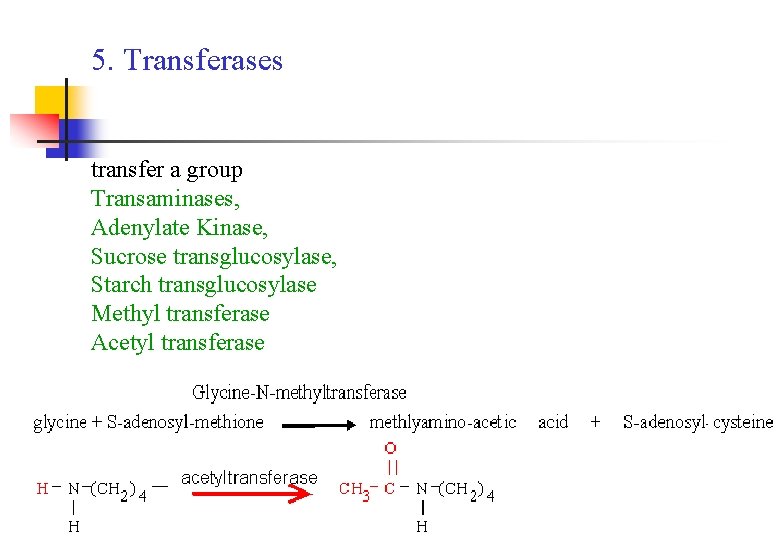
5. Transferases transfer a group Transaminases, Adenylate Kinase, Sucrose transglucosylase, Starch transglucosylase Methyl transferase Acetyl transferase
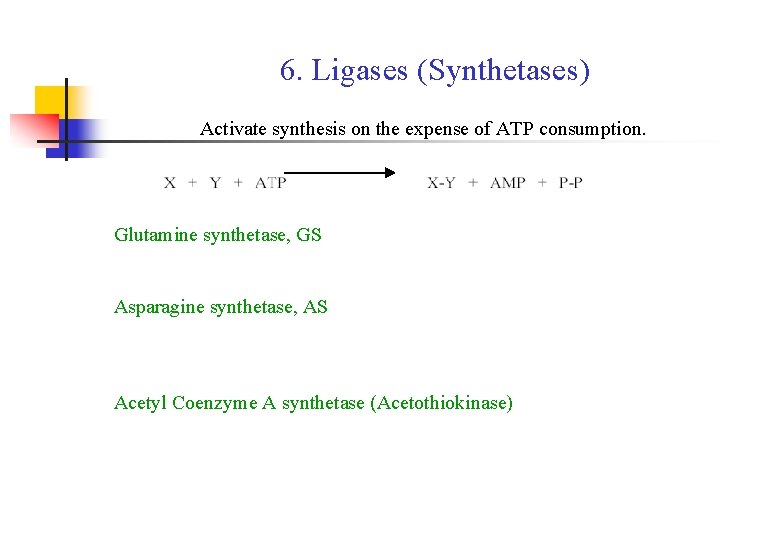
6. Ligases (Synthetases) Activate synthesis on the expense of ATP consumption. Glutamine synthetase, GS Asparagine synthetase, AS Acetyl Coenzyme A synthetase (Acetothiokinase)
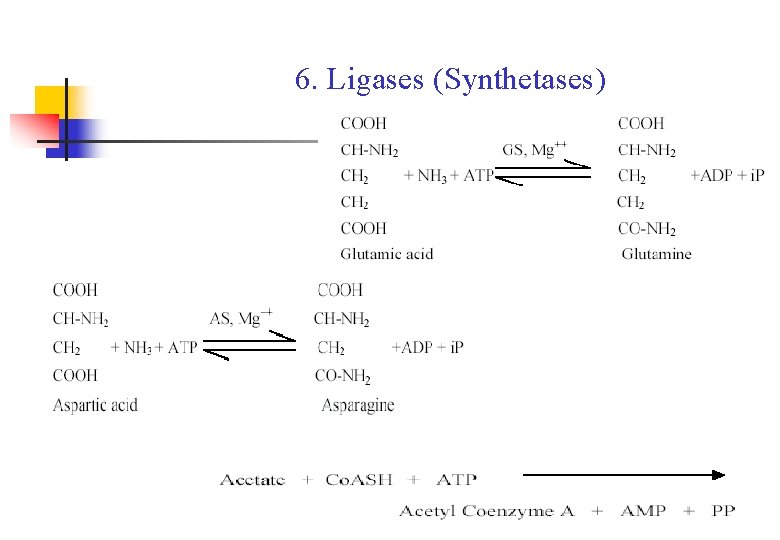
6. Ligases (Synthetases)
Extracellular microbial enzymes • Microorganisms have the ability to produce the extracellular enzymes that are needed for the bioremediation of organic waste, known as heterotrophic organisms. • The decomposition process of the organic material consists of various types of microorganisms such as proteolytic, cellulolytic, amylolytic, nitrification and denitrification.
Extracellular microbial enzymes • Heterotrophic microorganisms utilize ammonia as an energy source for cell regeneration and use organic compounds such as acetate, pyruvate and oxaloacetate as a carbon source in pond water. • Proteins, carbohydrates, and fats are the main components of the feed and have a large percentage of feed formulation.
Extracellular microbial enzymes • Remover microorganisms of organic material are a biological activator that grows naturally or is intentionally given to accelerate the transformation of organic matter. Heterotrophic bacteria participate in energy transformation which can be utilized by cultivated organisms. Heterotrophic microorganisms can be obtained by a series of nutrient hydrolysis tests using media mixed with protein, starch, and cellulose.
Extracellular microbial enzymes • Heterotrophic microorganisms had the ability to produce proteolytic, amylolytic and cellulolytic extracellular enzymes • Biologically active enzymes may be extracted from any living organism. A very wide range of sources are used for commercial enzyme production from Actinoplanes to Zymomonas, from spinach to snake venom.
Extracellular microbial enzymes • Of the hundred or so enzymes being used industrially, over a half are from fungi and yeast and over a third are from bacteria with the remainder divided between animal (8%) and plant (4%) sources • A very much larger number of enzymes find use in chemical analysis and clinical diagnosis. Nonmicrobial sources provide a larger proportion of these, at the present time.
Extracellular microbial enzymes • Microbes are preferred to plants and animals as sources of enzymes because: 1. they are generally cheaper to produce. 2. their enzyme contents are more predictable and controllable, 3. reliable supplies of raw material of constant composition are more easily arranged, and
Extracellular microbial enzymes 4. plant and animal tissues contain more potentially harmful materials than microbes, including phenolic compounds (from plants), endogenous enzyme inhibitors and proteases. • In practice, the great majority of microbial enzymes come from a very limited number of genera, of which Aspergillus species, Bacillus species and Kluyveromyces (also called Saccharomyces) species predominate.
Extracellular microbial enzymes • Most of the strains used have either been employed by the food industry for many years or have been derived from such strains by mutation and selection. • There are very few examples of the industrial use of enzymes having been developed for one task. • Shining examples of such developments are the production of high fructose syrup using glucose isomerase and the use of pullulanase in starch hydrolysis.
Extracellular microbial enzymes • Producers will aim to use strains of microbe that are known to be generally safe. • Users will pay little regard to the way in which the enzyme is produced but will insist on having preparations that have a known activity and keep that activity for extended periods, stored at room temperature or with routine refrigeration.
Extracellular microbial enzymes • They will pay little attention to the purity of the enzyme preparation provided that it does not contain materials (enzymes or not) that interfere with their process. • Both producers and users will wish to have the enzymes in forms that present minimal hazard to those handling them or consuming their product.
Extracellular microbial enzymes • The development of commercial enzymes is a specialized business which is usually undertaken by a handful of companies which have high skills in 1. screening for new and improved enzymes, 2. fermentation for enzyme production, 3. large scale enzyme purifications, 4. formulation of enzymes for sale, 5. customer liaison, and 6. dealing with the regulatory authorities.
- Slides: 20