
MICROBIAL ECOLOGY AND NORMAL HUMAN BODY MICROBIAL FLORA
MICROBIAL ECOLOGY AND NORMAL HUMAN BODY MICROBIAL FLORA Presenter: HURUMA J. ELIAFYE Facilitator: PROF MHALU 6/13/2021 Microbial ecology and normal human microbial floral 1
Outline- Microbial ecology • • Introduction Relationship btn microbials & environment Microbes &natural environment General concepts 6/13/2021 Microbial ecology and normal human microbial floral 2
Outline-Normal microbial flora • • Introduction Classification Origin of normal flora Factors determining the nature of the normal flora • Role of normal flora • Normal flora of different sites &clinical importances 6/13/2021 Microbial ecology and normal human microbial floral 3

Microbial ecology-Introduction-1 • Microbial ecology centers on the diversity in survival and growth strategies that allow microbes to exist in many different environments. • In natural environments, interaction of a microbe with the physical and chemical characteristics of the habitat and with other organisms, will determine its success in growing. 6/13/2021 Microbial ecology and normal human microbial floral 4
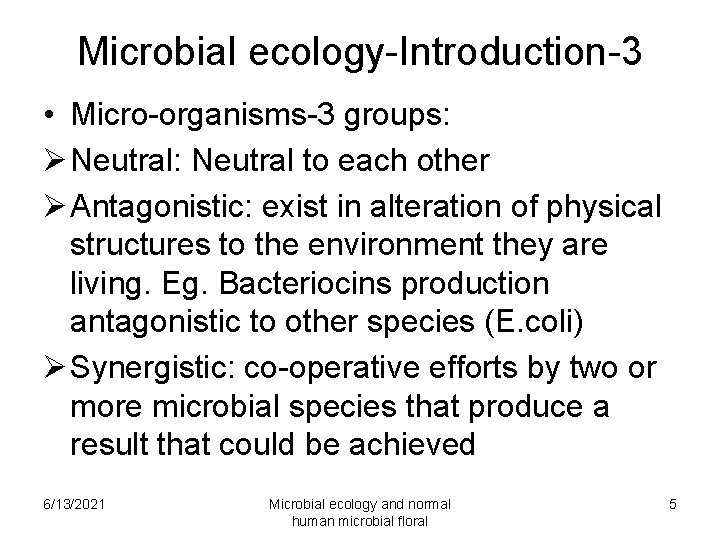
Microbial ecology-Introduction-3 • Micro-organisms-3 groups: Ø Neutral: Neutral to each other Ø Antagonistic: exist in alteration of physical structures to the environment they are living. Eg. Bacteriocins production antagonistic to other species (E. coli) Ø Synergistic: co-operative efforts by two or more microbial species that produce a result that could be achieved 6/13/2021 Microbial ecology and normal human microbial floral 5
Microbial ecology-Introduction-2 • Microbial ecology: The study of interactions between living microorganisms and their environment. 6/13/2021 Microbial ecology and normal human microbial floral 6
Microbial ecology-Introduction-4 • Micro-organisms live in simple forms: Ø Autotrophy/Lithotrophy- live in water, salt and utilize CO 2 as source of energy. Ø Photolithotrophy/ Phototrophy-use radiant energy as source of energy. Ø Chemolithotrophy- use inorganic substances such as iron. Ø Heterotrophy- utilize organic substances as source of energy 6/13/2021 Microbial ecology and normal human microbial floral 7
Microbial ecology-Introduction-5 • Saprophytes-feed on dead matter and cause complete destruction. 6/13/2021 Microbial ecology and normal human microbial floral 8
Relationship btn microbials and environment-1 • Commensalism: Mutual associationwith neither harm nor benefit between microbial and animal life. • Opportunism: Commenser invades the body and cause disease only when the host’s resistance is impaired. • Symbiosis: A mutual beneficial association between two organisms. • Parasitism: one organism benefits ie. The host provides the primary benefit to the parasite. 6/13/2021 Microbial ecology and normal human microbial floral 9
Relationship btn microbials and environment-1 • Microbes are divided into Ø Pathogens: Microorganisms capable of causing disease. Ø Opportunists: capable of causing disease only when the host’s resistance is impaired. 6/13/2021 Microbial ecology and normal human microbial floral 10
Microbes &natural environment-1 • Habitat: an area with characteristics nearly uniform to those of ecological significance for a certain organism. • Natural habitats of microbes Ø Soil: Autotrophs-fungi, actinomyces, chlostridium tetani, bacillus. Ø Animals Ø Air 6/13/2021 Microbial ecology and normal human microbial floral 11
Microbes &natural environment-1 Ø Water: • Psychrophils(Low temperature environment). • Thermophils (high temperature environment) • Mesophils (Very low temperatures) 6/13/2021 Microbial ecology and normal human microbial floral 12
General concepts • Nutrient availability limits growth rate • Microbes are often found attached to surfaces because the nutrient concentrations are higher. • Microbial species compete for the limiting nutrient in the environment. v. Survival is therefore determined by successful competition and maintanance of a pool of living cells. 6/13/2021 Microbial ecology and normal human microbial floral 13
Normal microbial flora-Introduction 1 • Normal microbial flora- The population of microorganisms that are found in a particular site in a healthy normal individual. • A diverse microbial flora-skin and mucous membranes of every human being from shortly after birth until death. • Viruses and parasites-Not considered members of the normal microbial flora by most investigators because they are not commensals and do not aid the host. 6/13/2021 Microbial ecology and normal human microbial floral 14
Normal microbial flora-Intoduction-2 • The human body contains ~1013 cells, routinely harbors ~1014 bacteria. This bacterial population constitutes the normal microbial flora. 6/13/2021 Microbial ecology and normal human microbial floral 15
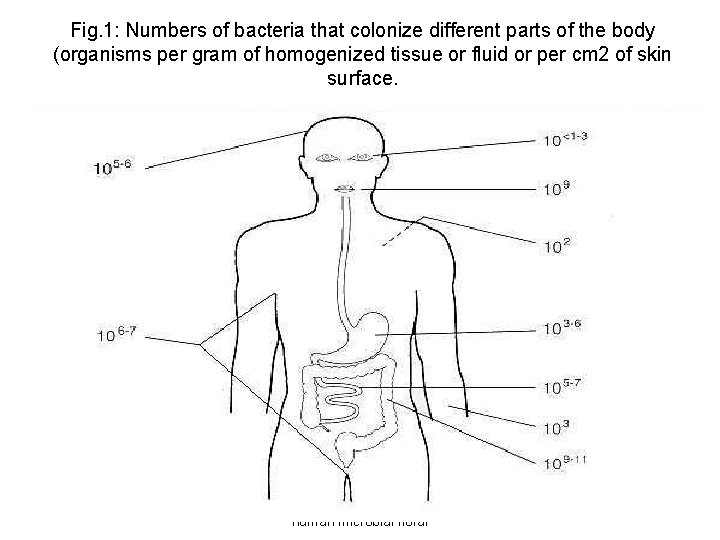
Fig. 1: Numbers of bacteria that colonize different parts of the body (organisms per gram of homogenized tissue or fluid or per cm 2 of skin surface. 6/13/2021 Microbial ecology and normal human microbial floral 16
Classification of normal flora-1 • According to interaction with host: Ø Opportunists: May harm the host (by causing dental caries, abscesses, or other infectious diseases). Ø Symbionts: May aid the host (by competing for microenvironments more effectively than such pathogens as Salmonella spp or by producing nutrients the host can use). Ø Commensals: By inhabiting the host for long periods without causing detectable harm or benefit. 6/13/2021 Microbial ecology and normal human microbial floral 17
Classification of normal flora-2 • 1. Ø Ø 2. Ø According to duration of stay in the body: Residents: Regularly found in a given area at a given age If disturbed, promptly reestablishes itself. Transients: May establish themselves briefly for colonization or infection without disease but tend to be excluded by competition from residents or by the host’s immune defense mechanisms. 6/13/2021 Microbial ecology and normal human microbial floral 18
Origin of normal flora-1 • The healthy fetus is sterile until the birth membranes rupture. • During and after birth, the infant is exposed to the flora of the mother’s genital tract, to the skin and respiratory flora of those handling it, and to organisms in the environment. v Normal flora in humans usually develops in an orderly sequence, or succession, after birth, leading to the stable populations of bacteria that make up the normal adult flora. 6/13/2021 Microbial ecology and normal human microbial floral 19
Origin of normal flora-2 eg. Gastrointestinal tract • Early in life -if breast- fed- A Gram-positive population (bifidobacteria and lactobacilli). when bottle-fed, this population is reduced and displaced somewhat by a Gram-negative flora (Enterobacteriaceae). The type of liquid diet provided to the infant is the principal instrument of this flora control; immunoglobulins and, perhaps, other elements in breast milk may also be important. 6/13/2021 Microbial ecology and normal human microbial floral 20
Factors determining the nature of the normal flora Ø Physiologic conditions: amount and types of nutrients available, p. H, resistance to local antibacterial substances (eg. Bile, lysozymes), age, health status of an individual. Ø Bacterial adherence: affinity for receptors on specific types of epithelial cells to which they attach and multiply. Ø Bacterial interactions: competition for nutrients, inhibition by metabolic products of other organisms. 6/13/2021 Microbial ecology and normal human microbial floral 21
Role of normal flora-1 • In certain areas, play a definite role in maintaining health and normal function. Ø Intestinal tract –synthesize vitamin K and aid in absorption of nutrients Ø Mucous membranes and skin-may prevent colonization by pathogens and possible disease through “bacterial interference” 6/13/2021 Microbial ecology and normal human microbial floral 22
Role of normal flora-2 • Bacterial interference may involve: – Competition for receptors or binding sites on host cells – Competition for nutrients – Mutual inhibition by antibiotic materials or bacteriocins Supression of the normal flora creates a partial local void that tends to be filled by organisms from the environment or from other parts of the body. Such organisms behave as opportunists and may become pathogens. 6/13/2021 Microbial ecology and normal human microbial floral 23
Role of normal flora-3 • If forcefully removed from the restrictions of that environment and introduced into the blood stream or tissues, become pathogenic • Opportunistic infections in the immunocompromised 6/13/2021 Microbial ecology and normal human microbial floral 24
Normal flora of different sites • Blood: Sterile, occasional transient bacteremia may be source of infection to damaged/abnormal heart valves (bacterial endocarditis) • Tissue: CSF, urinary bladder, uterus, fallopian tubes, middle ear and para nasal sinuses. -sterile 6/13/2021 Microbial ecology and normal human microbial floral 25
Normal flora of the skin-1 • Vary from site to site according to the character of the microenvironment. Three regions of skin: 1. axilla, perineum, and toe webs; Increased amount of moisture, higher body temperature, and greater concentrations of skin surface lipids. More microorganisms (mostly Gram negative bacilli) 2. hand, face and trunk; and 3. upper arms and legs. . 6/13/2021 Microbial ecology and normal human microbial floral 26
Normal flora of the skin-2 • • • Staphylococcus epidermidis - major Staphylococcus aureus Micrococcus species (M. luteus) Nonpathogenic Neisseria species Alpha-hemolytic and non-hemolytic streptococci(small numbers due to presence of lipids on the skin- lethal to streptococci). • Diptheroids (Propionibacterium acnes and P. granulosum) • Peptostreptococcus spp • Others in small numbers: Candida spp, Acinetobacter spp, Gram-negative (Enterobacter, Klebsiella, E. coli, and Proteus spp) 6/13/2021 Microbial ecology and normal human microbial floral 27
Normal flora of the skin-3 • Factors important in eliminating nonresident microorganisms from the skin: – Low p. H, fatty acids in sebaceous secretions and presence of lysozyme. v. Anaerobes and aerobic bacteria often join to form synergistic infections of the skin and soft tissues such as gangrene, necrotizing fasciitis, cellulitis. 6/13/2021 Microbial ecology and normal human microbial floral 28
Normal flora of the nail • Generally similar to skin. • Dust particles may carry fungi and bacilli. Aspergillus, Penicillium, Cladosporium, and Mucor are the major types of fungi found under the nails. 6/13/2021 Microbial ecology and normal human microbial floral 29
Normal flora of the mouth and upper respiratory tract-1 • Nose- corynebacteria, Staph epidermidis, Staph aureus and streptococci. • Mouth and pharynx- often sterile at birth Ø Within 4 -12 hrs after birth: Streptococcus viridans. Most prominent for life. Ø Early in life: Aerobic and anaerobic staphylococci, gram negative diplococci (neisseriae, Moraxella catarrhalis), diptheroids and lactobacilli occasionally. 6/13/2021 Microbial ecology and normal human microbial floral 30
Normal flora of the mouth and upper respiratory tract- 2 Ø When teeth begin to erupt (at about 6 months): anaerobic spirochetes, Prevotella spp. (especially P. melaninogenica), Fusobacterium spp. , Rothia spp and Capnocytophaga spp. , anaerobic vibrios and lactobacilli. • Tonsillar tissues and gingivae in adults Actinomyces spp. 6/13/2021 Microbial ecology and normal human microbial floral 31
Normal flora of the mouth and upper respiratory tract-3 • Pharynx and trachea contain primarily those bacterial generally found in the normal oral cavity (eg. alpha-and ß-hemolytic streptococci); Also anaerobes, staphylococci, neisseriae, diphtheroids. • Pharynx- non-hemolytic and alpha hemolytic streptococci, neisseriae, staphylococci, diptheroids, haemophili, pneumococci, mycoplasmas and prevotela. 6/13/2021 Microbial ecology and normal human microbial floral 32
Normal flora of the mouth and upper respiratory tract-4 • Lower respiratory tract (small bronchi and alveoli) usually sterile- bacteria do not readily reach it , if reach- encounter host defense mechanisms-alveolar macrophages, that are not present in the pharynx. 6/13/2021 Microbial ecology and normal human microbial floral 33
Normal flora of the mouth and upper respiratory tract-clinical importance-1 • Perioral abscesses, sinusitis and mastoiditispredominantly Prevotela melaninogenica, fusobacteria and peptostreptococci. • Gingivitis: accumulation of supragingival plaque along the gingival margins of the teeth (Actinomyces viscosus, Veillonella). • Dental caries: Streptococcus mutans, actinomyetes and lactobacilli 6/13/2021 Microbial ecology and normal human microbial floral 34
Normal flora of the mouth and upper respiratory tract-clinical importance-2 • Infective endocarditis: Streptococci viridans (large numbers) into blood stream settle on deformed or prosthetic heart valves. • Periodontitis: Actinobacillus actinomycetemcomitans, Bacteroides forsythus, Porphyromonas gingivalis , Prevotella intermedia, Treponema denticola Capnocytophaga and Wolinella species. • Aspiration of saliva (containing up to 102 microbes may result in necrotizing pneumonia, lung abscess and empyema 6/13/2021 Microbial ecology and normal human microbial floral 35
Gastrointestinal Tract Flora-1 • Stomach: Ø A relatively hostile environment for bacteria. Ø Contains bacteria swallowed with the food and those dislodged from the mouth. Ø Acidity lowers the bacterial count, which is highest (approximately 103 to 106 organisms/g of contents) after meals and lowest (frequently undetectable) after digestion. 6/13/2021 Microbial ecology and normal human microbial floral 36
Gastrointestinal Tract Flora-2 • Duodenum/jejunum contain approximately 103 organisms/ml in most individuals. Ø Mostly streptococci, lactobacilli, Bacteroides. Are thought to be transients. Ø Levels of 105 -107 bacteria/ml- abnormality in the digestive system (eg. malabsorption syndrome). v Rapid peristalsis and presence of bile may explain in part the paucity of organisms in the upper GIT. 6/13/2021 Microbial ecology and normal human microbial floral 37
Gastrointestinal Tract Flora-3 v. Further along the jejunum and ileum, bacterial populations begin to increase, and at the ileocecal junction they reach levels of 106 -108 organisms/ml, with streptococci, lactobacilli, Bacteroides, and bifidobacteria predominating. 6/13/2021 Microbial ecology and normal human microbial floral 38
Gastrointestinal Tract Flora-4 • Colon and feces Ø 109 to 1011 bacteria/g of contents Ø >400 species have been identified, 95 to 99%anaerobic eg. Bacteroides, Bifidobacterium, Eubacterium, Peptostreptococcus, and Clostridium. Ø The strict anaerobic conditions, physical exclusion and bacterial waste products inhibit the growth of other bacteria in the large bowel. 6/13/2021 Microbial ecology and normal human microbial floral 39
Gastrointestinal Tract Floraclinical importance • Anaerobes- Primary agents of intra-abdominal abscesses and peritonitis. • Treatment with antibiotics may allow certain anaerobic species to become predominant and cause disease. Eg. Clostridium difficilepseudomembranous colitis. • Other intestinal pathologic conditions or surgery. Cause bacterial overgrowth in the upper small intestine, which then deconjugate bile acids and bind available vitamin B 12 so that the vitamin and fats are malabsorbed. 6/13/2021 Microbial ecology and normal human microbial floral 40
Gastrointestinal Tract Floraclinical importance-2 • Some Helicobacter species can colonize the stomach and are associated with type B gastritis and peptic ulcer disease. • Biosynthesis of vitamin K and other hostutilizable products, • Conversion of bile acids (perhaps to cocarcinogens), and ammonia production (which can play a role in hepatic coma) show the dual role of the microbial flora in influencing the health of the host. 6/13/2021 Microbial ecology and normal human microbial floral 41
urogenital flora-1 • Vagina: Depends on age, p. H, and hormonal levels of the host. Ø Infants (1 st month)-Lactobacillus spp predominate (vaginal p. H, approximately 5). Ø I month to puberty: diphtheroids, S epidermidis, streptococci, and E coli predominate (Glycogen secretion ceases, p. H approximately 7). Ø Puberty: L acidophilus, corynebacteria, peptostreptococci, staphylococci, streptococci, and Bacteroides predominate (glycogen secretion resumes, the p. H drops, and women acquire an adult flora. Ø After menopause, p. H again rises, less glycogen is secreted, and the flora returns to that found in prepubescent females. 6/13/2021 Microbial ecology and normal human microbial floral 42
Urogenital flora-2 • Yeasts (Torulopsis and Candida) occasionally found in the vagina. These sometimes increase and cause vaginitis. • Anterior urethra: S epidermidis, enterococci, and diphtheroids frequently; E coli, Proteus, and Neisseria (nonpathogenic species) occasionally. v Urine samples may contain these organisms at a level of 104/ml if a midstream (clean-catch) specimen is not obtained. 6/13/2021 Microbial ecology and normal human microbial floral 43
Urogenital flora-clinical importance • Urinary tract infections- E. coli ascend urethra • Vaginitis • Neonatal sepsis and meningitis: group B streptococci acquired during birth process • Recurrent UTI: In some women containing a heavy vaginal flora resembling that of perineum and perianal area 6/13/2021 Microbial ecology and normal human microbial floral 44
Conjunctival flora • Sparse. • Lysozyme, secreted in tears, may play a role in controlling the bacteria-interfers with cell wall formation. • Corynebacteria, neisseriae, moraxellae, Staphylococci and streptococci. 6/13/2021 Microbial ecology and normal human microbial floral 45

THANK YOU 6/13/2021 Microbial ecology and normal human microbial floral 46
- Slides: 46