
Microbial community structure and photoheterotrophic activity across different

Microbial community structure and photoheterotrophic activity across different Australian oceanic environments Investigator Ph. D Candidate Jaume Bibiloni Isaksson Supervisors Dr. Justin Seymour – C 3 Plant Functional Biology and Climate Change Cluster, UTS Dr. Mark Brown School of Biotechnology and Biomolecular Sciences, UNSW
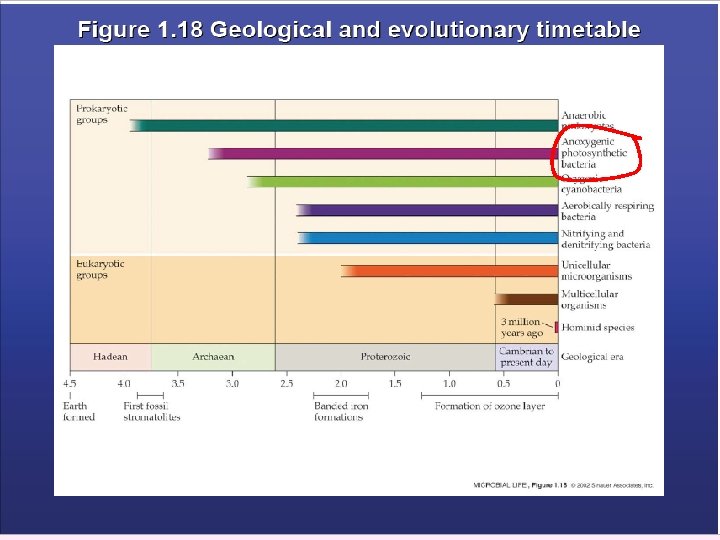
D. J. Des Marais Science, 8 September 2000
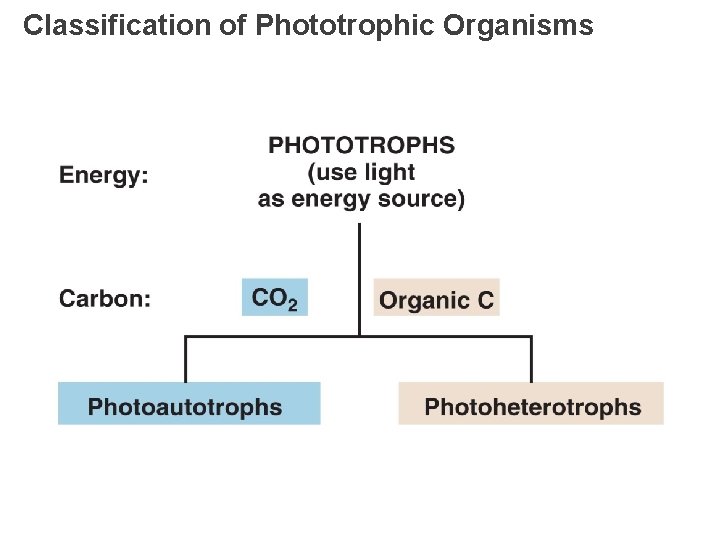
Classification of Phototrophic Organisms
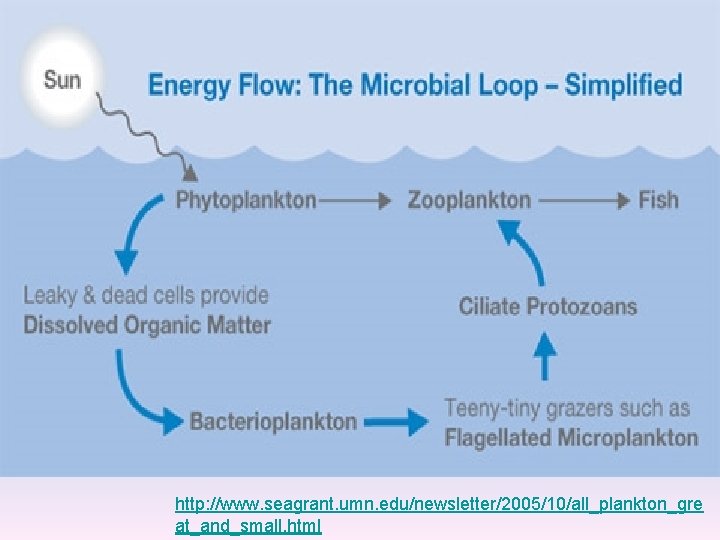
http: //www. seagrant. umn. edu/newsletter/2005/10/all_plankton_gre at_and_small. html
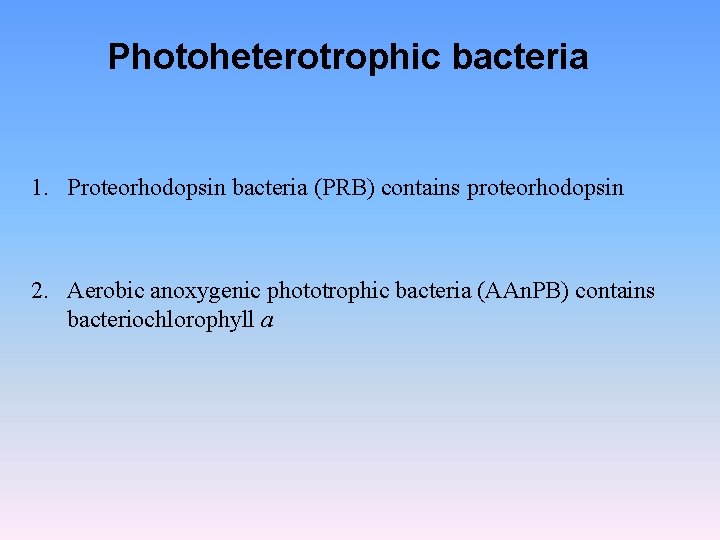
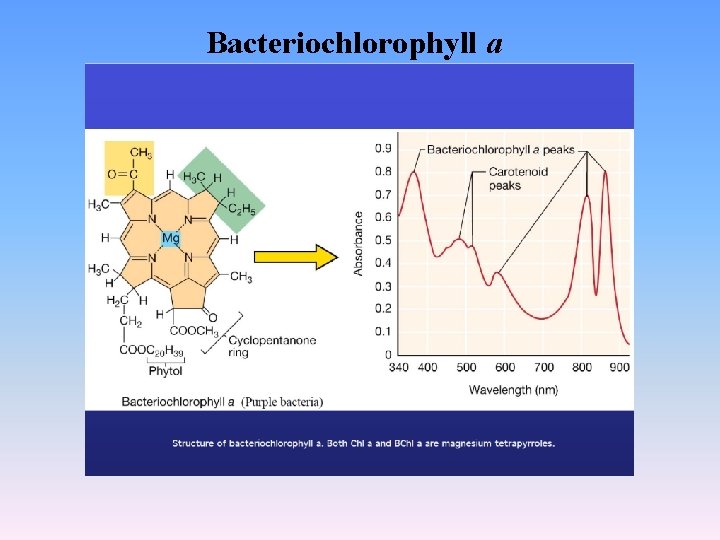
Photoheterotrophic bacteria 1. Proteorhodopsin bacteria (PRB) contains proteorhodopsin 2. Aerobic anoxygenic phototrophic bacteria (AAn. PB) contains bacteriochlorophyll a
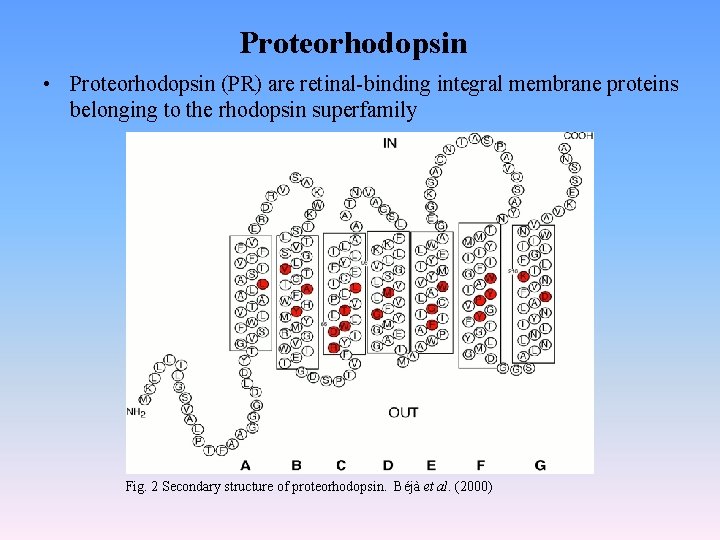
Proteorhodopsin • Proteorhodopsin (PR) are retinal-binding integral membrane proteins belonging to the rhodopsin superfamily Fig. 2 Secondary structure of proteorhodopsin. Béjà et al. (2000)
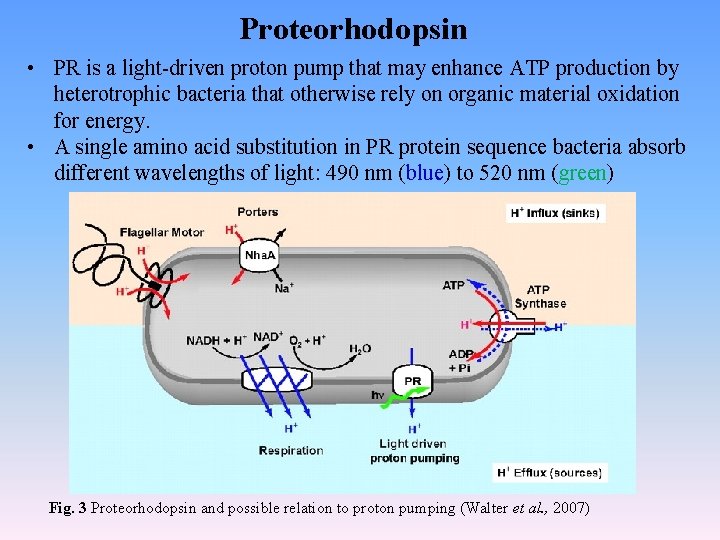
Proteorhodopsin • PR is a light-driven proton pump that may enhance ATP production by heterotrophic bacteria that otherwise rely on organic material oxidation for energy. • A single amino acid substitution in PR protein sequence bacteria absorb different wavelengths of light: 490 nm (blue) to 520 nm (green) Fig. 3 Proteorhodopsin and possible relation to proton pumping (Walter et al. , 2007)
Bacteriochlorophyll a
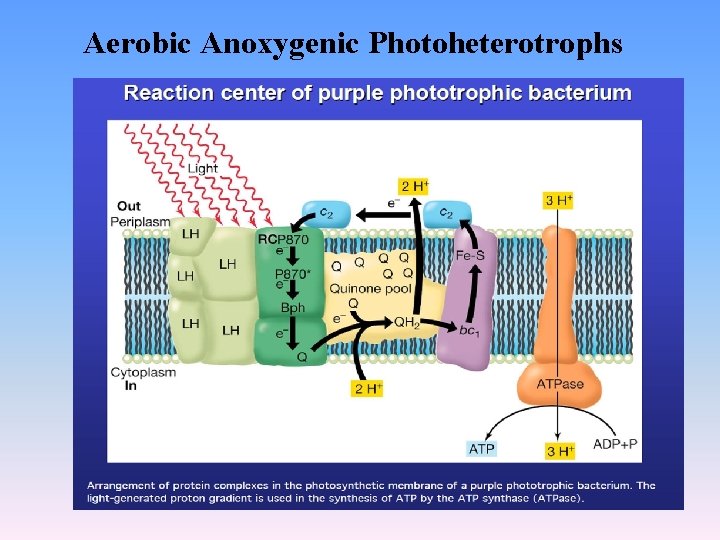
Aerobic Anoxygenic Photoheterotrophs

Why are photoheterotrophs important?
• PR genes have been identified in a wide variety of cultured and uncultured bacterioplankton, such as α and γ-Proteobacteria, Flavobacteria, Actinobacteria, and Archaea. • PR in Pelagibacter ubique, a cultured representative, the most abundant bacterial group inhabiting the upper ocean marine, clades SAR 11 • • • up to 70% of the bacteria in the Sargasso Sea 7 to 57% North Atlantic Ocean 13% of the bacteria in the Mediterranean Sea Contain PR
• AAn. PB have been identified in a wide variety of cultured and uncultured bacterioplankton, such as α, β, and γ-Proteobacteria. • Roseobacter group belong to AAn. PB, a cultured representative, 1 in 5 bacteria cells inhabiting coastal waters. • Also important in DMSP degradation (cleavage/demethylation). Results liberation of climate-influencing dimethyl sulfide, thus key in marine sulfur cycle. • (not all Roseobacter synthesize Bchla). • • • ~ 10 to 20 in mesotrophic estuaries positively correlate with Chla in variety of environments up to 25% in hyperoligotrophic South Pacific Ocean AAn. PB
• Both AAn. BP and PRB are incapable of photoautotrophy (do not have enzyme Rubis. CO) and rely on heterotrophy of their cellular energetics • Sunlight provide additional energy to cell, reducing the need for respiratory oxidation of organic substrates • The ability to use light energy seems to allow more economical utilization of dissolved organic matter, thus photoheterotrophic bacteria may play a unique role in the microbial carbon pump (MCP).
Objectives i) Identify major bacteria and archaea groups including PR and Bchla groups ii) Estimate the ratio of PR and Bchla genes expression and abundance to bacterial populations iii) Examine how the abundance, diversity and activity of different PR and Bchla types varies temporally in different oceanographic coastal region, which are suffering from the impacts of climate change iv) Perform laboratory growth experiments to test the dynamics of photoheterotrophy under different light and nutrient condition
Hypotheses H 1: PR and AAn. BP diversity, abundance and activity will vary throughout the sample period/location, since significant physicochemical changes in seawater will provide more suitable conditions for different types of bacteria H 2: PR-bearing bacteria abundance will become more abundant during summer (Austral) period, since PR bearing bacteria may help to provide energetic and physiological advantages under in more oligotrophic conditions
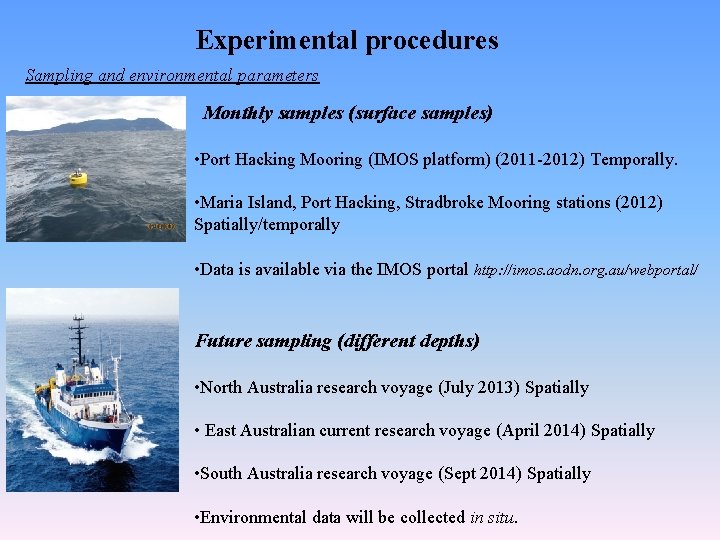
Experimental procedures Sampling and environmental parameters Monthly samples (surface samples) • Port Hacking Mooring (IMOS platform) (2011 -2012) Temporally. • Maria Island, Port Hacking, Stradbroke Mooring stations (2012) Spatially/temporally • Data is available via the IMOS portal http: //imos. aodn. org. au/webportal/ Future sampling (different depths) • North Australia research voyage (July 2013) Spatially • East Australian current research voyage (April 2014) Spatially • South Australia research voyage (Sept 2014) Spatially • Environmental data will be collected in situ.
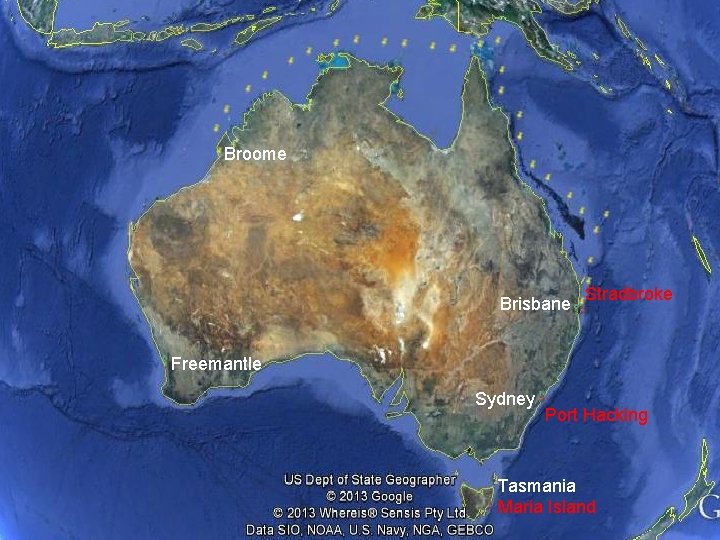
Broome Brisbane Stradbroke Freemantle Sydney Port Hacking Tasmania Maria Island
Experimental procedures Molecular experiments • DNA/RNA extraction (Standards Kit extraction) • PCR amplification of 16 S r. RNA, PR and puf. M genes • 454/Illumina pyrosequencing of 16 S r. RNA, PR and puf. M genes to assess diversity • Determination of ratios of 16 S r. RNA (all bacteria, SAR 11 clade) and PR (SAR 11 clade, Flavobacteria) and puf. M gene abundance/expression via real-time quantitative PCR • Screen for PR and Bchla genes in seawater isolates
Data Analysis • 454/Illumina pyrosequencing data with QIIME • Relationship between abundance, diversity and physicochemical parameters using PERMANOVA in PRIMER+ • PR/puf. M sequence compilations and analysis using ARB software • Network analysis
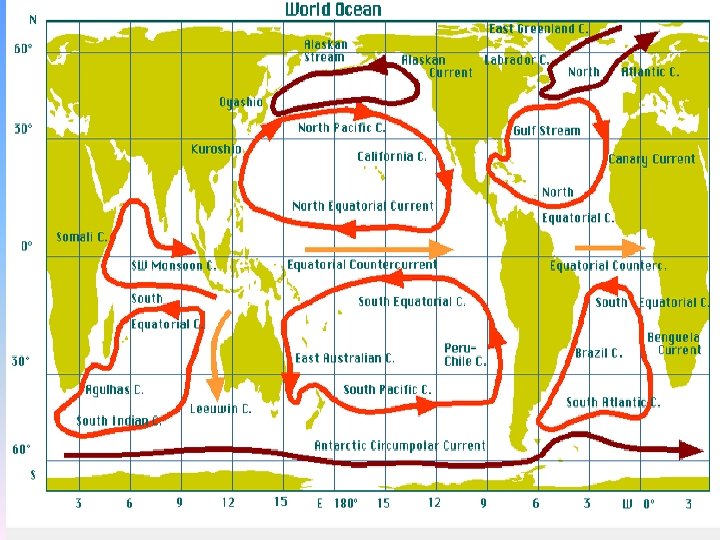
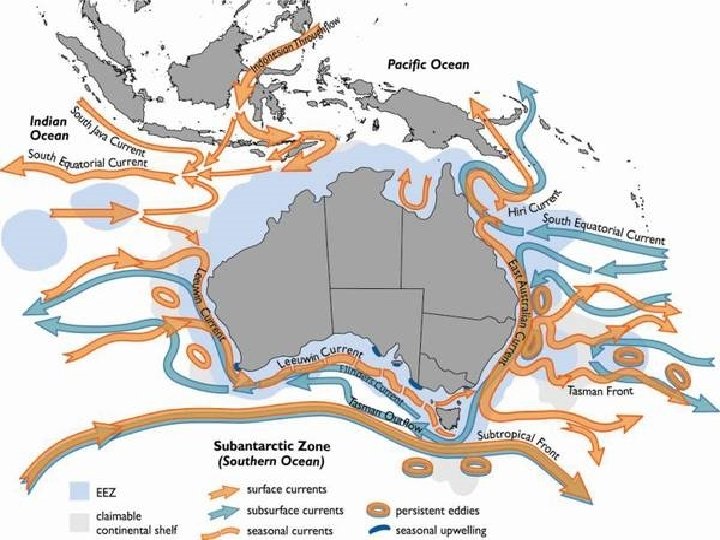
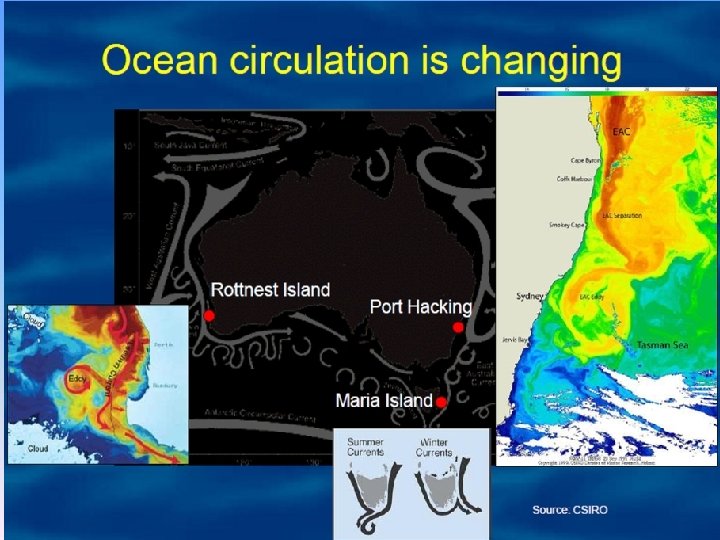
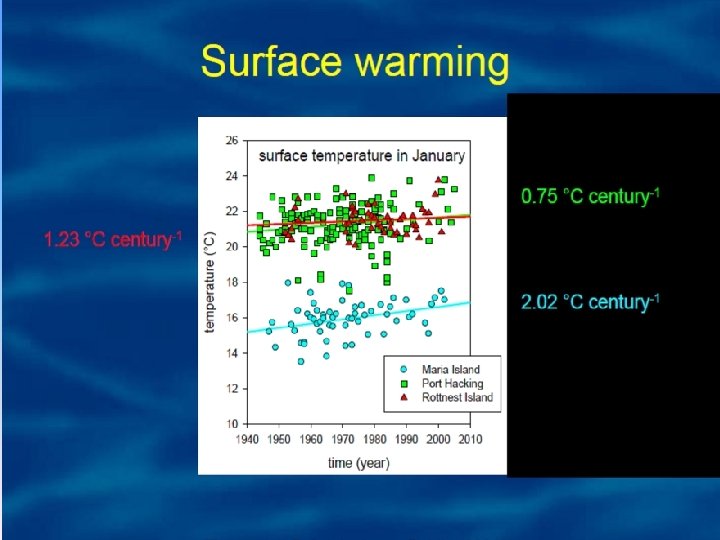
Two major questions to be answer in this project • How do Australian marine microbial communities (i. e. photoheterotrophs) and their biogeochemical function vary in space and time? • Will shifting ocean circulation patterns alter microbial community structure and function in ways that will have potential feed-back effects on ecosystem stability?
People in our Lab Dr Justin Seymour - Leader and supervisor Dr Mark Brown – Co-supervisor (UNSW) Dr Tom Jeffries - Post-doc Lauren Messer - Ph. D student Project is funding by an ARC grant from Australia government
- Slides: 26