
Micro Urban Electric Vehicle Phase II Vehicle Modeling
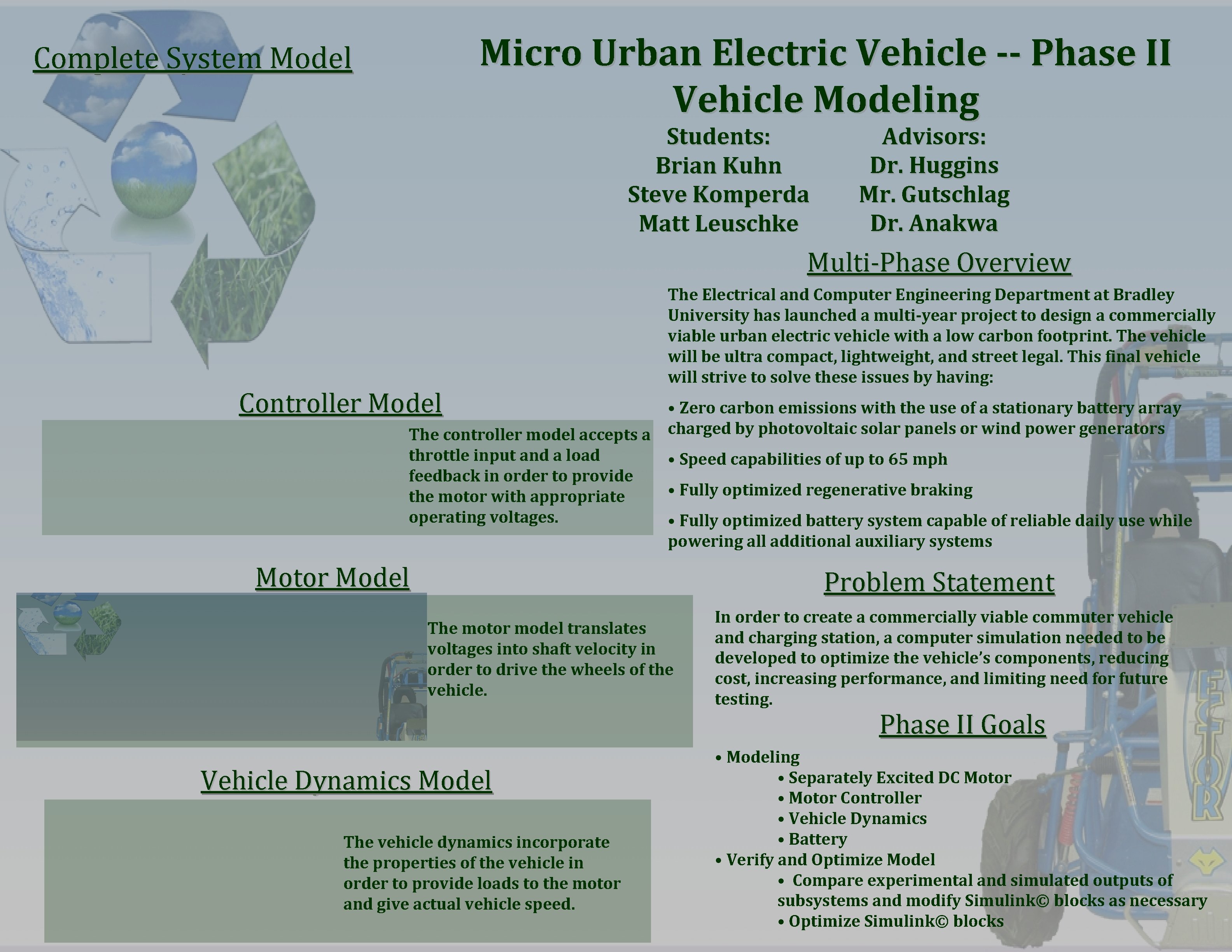
Micro Urban Electric Vehicle -- Phase II Vehicle Modeling Complete System Model Students: Brian Kuhn Steve Komperda Matt Leuschke Advisors: Dr. Huggins Mr. Gutschlag Dr. Anakwa Multi-Phase Overview Controller Model The Electrical and Computer Engineering Department at Bradley University has launched a multi-year project to design a commercially viable urban electric vehicle with a low carbon footprint. The vehicle will be ultra compact, lightweight, and street legal. This final vehicle will strive to solve these issues by having: • Zero carbon emissions with the use of a stationary battery array charged by photovoltaic solar panels or wind power generators The controller model accepts a throttle input and a load • Speed capabilities of up to 65 mph feedback in order to provide • Fully optimized regenerative braking the motor with appropriate operating voltages. • Fully optimized battery system capable of reliable daily use while powering all additional auxiliary systems Motor Model Problem Statement The motor model translates voltages into shaft velocity in order to drive the wheels of the vehicle. In order to create a commercially viable commuter vehicle and charging station, a computer simulation needed to be developed to optimize the vehicle’s components, reducing cost, increasing performance, and limiting need for future testing. Phase II Goals Vehicle Dynamics Model The vehicle dynamics incorporate the properties of the vehicle in order to provide loads to the motor and give actual vehicle speed. • Modeling • Separately Excited DC Motor • Motor Controller • Vehicle Dynamics • Battery • Verify and Optimize Model • Compare experimental and simulated outputs of subsystems and modify Simulink© blocks as necessary • Optimize Simulink© blocks
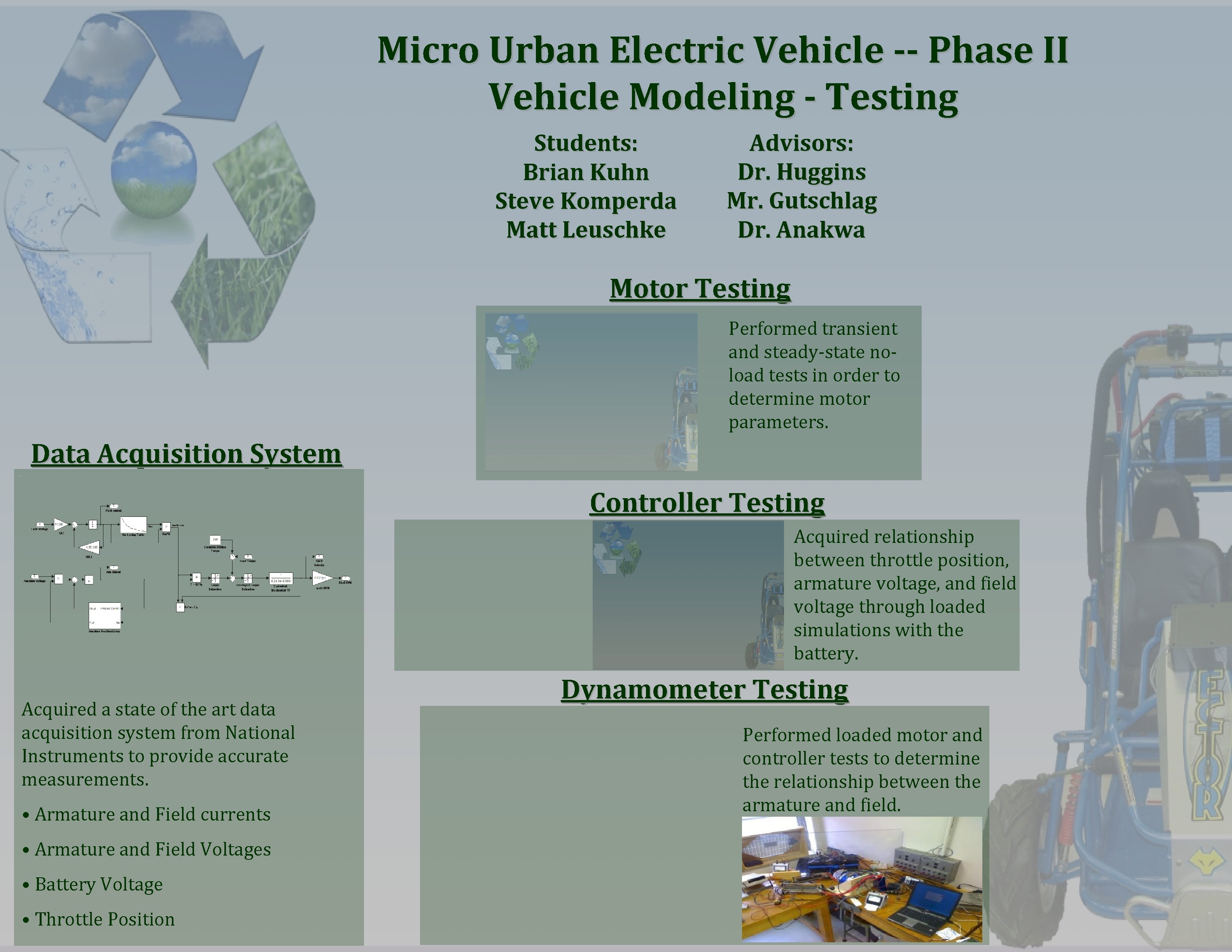
Micro Urban Electric Vehicle -- Phase II Vehicle Modeling - Testing Students: Brian Kuhn Steve Komperda Matt Leuschke Advisors: Dr. Huggins Mr. Gutschlag Dr. Anakwa Motor Testing Performed transient and steady-state noload tests in order to determine motor parameters. Data Acquisition System Controller Testing Acquired relationship between throttle position, armature voltage, and field voltage through loaded simulations with the battery. Acquired a state of the art data acquisition system from National Instruments to provide accurate measurements. • Armature and Field currents • Armature and Field Voltages • Battery Voltage • Throttle Position Dynamometer Testing Performed loaded motor and controller tests to determine the relationship between the armature and field.
- Slides: 2