
Micro Rain Radar Observation of MRR Tomoki Koshida
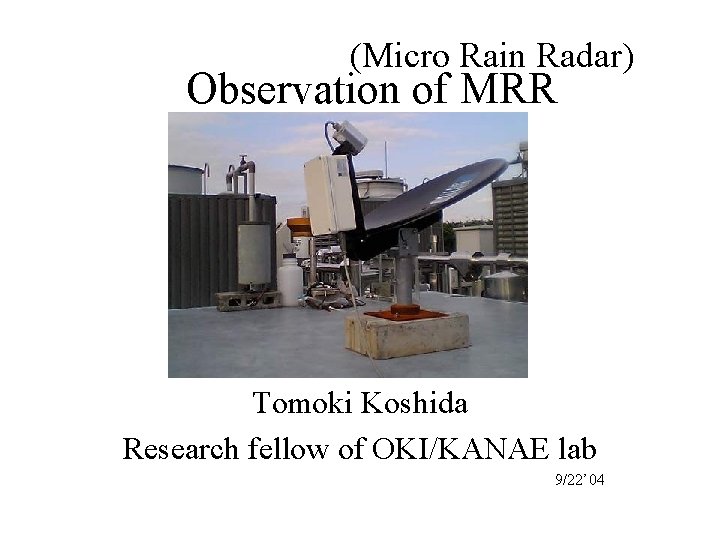
(Micro Rain Radar) Observation of MRR Tomoki Koshida Research fellow of OKI/KANAE lab 9/22’ 04
Today’s topic • The sample of MRR observation - what we can observe? • The basic of radar observation - how we can observe? • The object of MRR observation - my interest
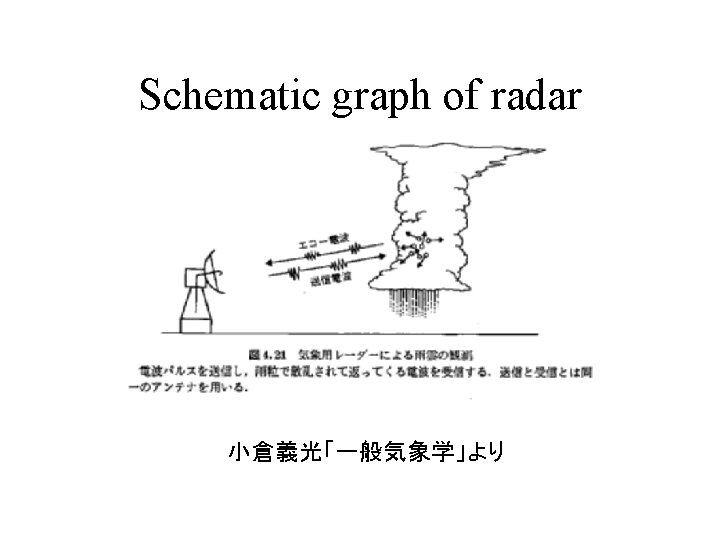
Schematic graph of radar 小倉義光「一般気象学」より
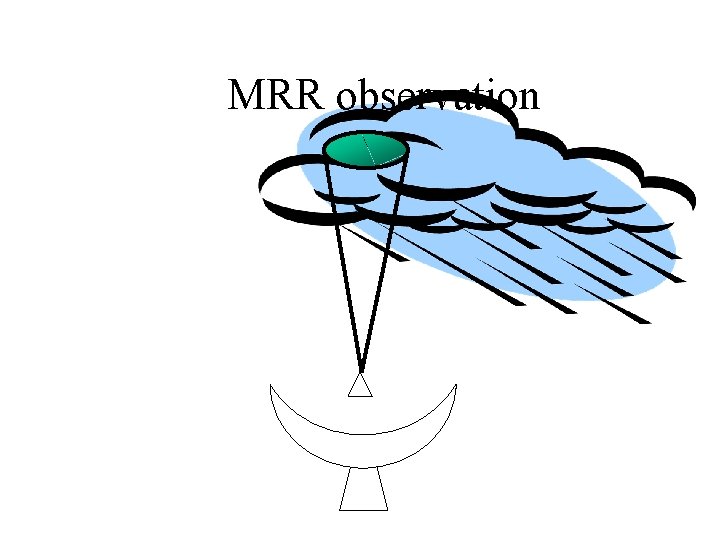
MRR observation
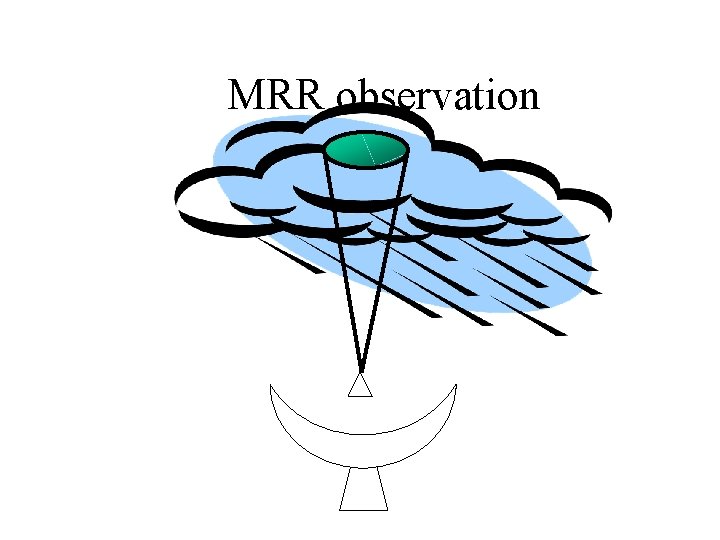
MRR observation
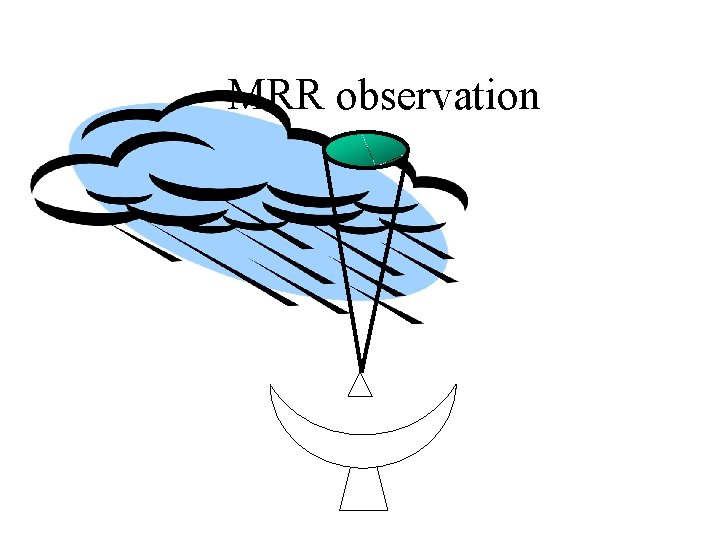
MRR observation
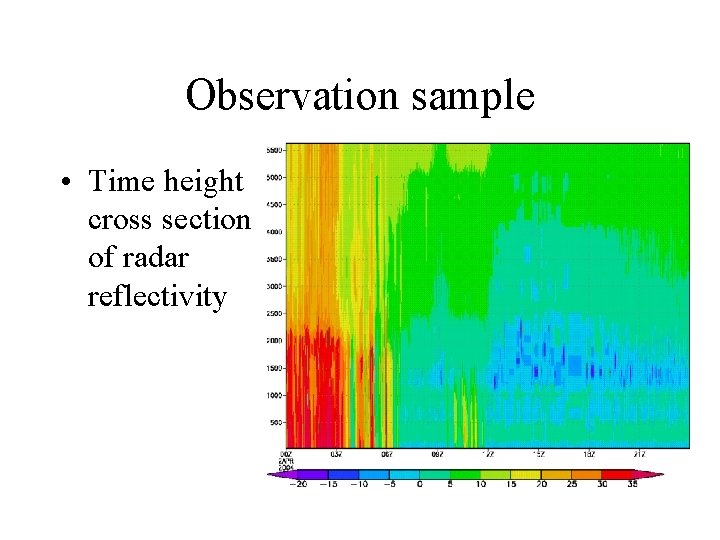
Observation sample • Time height cross section of radar reflectivity
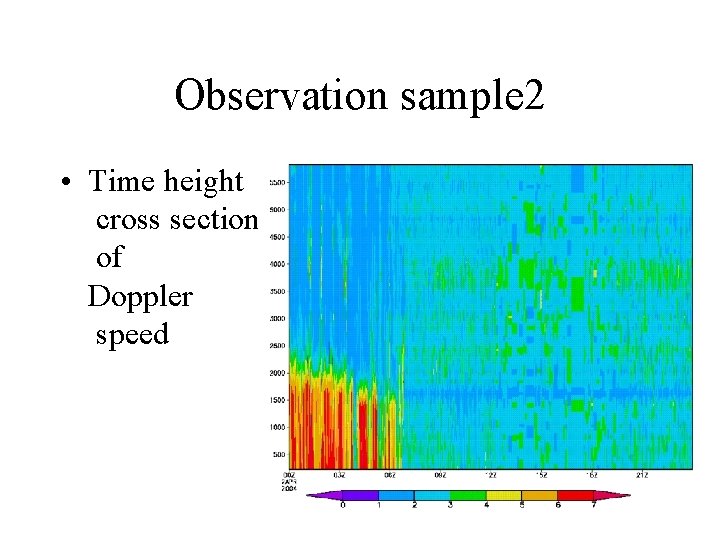
Observation sample 2 • Time height cross section of Doppler speed
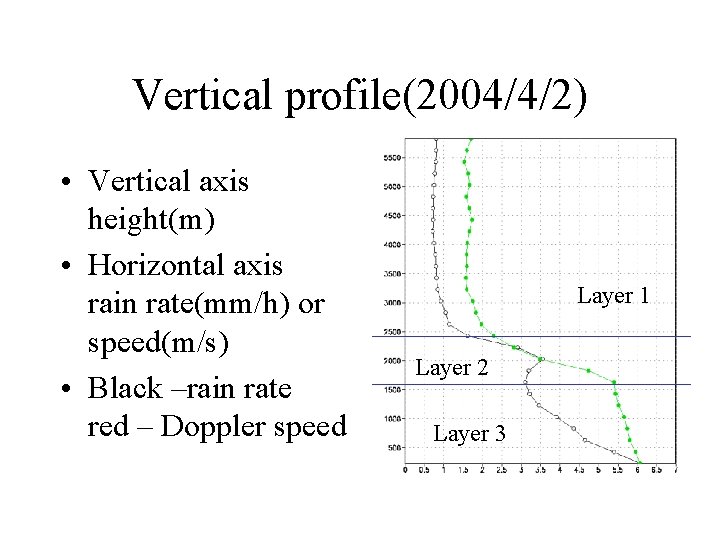
Vertical profile(2004/4/2) • Vertical axis height(m) • Horizontal axis rain rate(mm/h) or speed(m/s) • Black –rain rate red – Doppler speed Layer 1 Layer 2 Layer 3
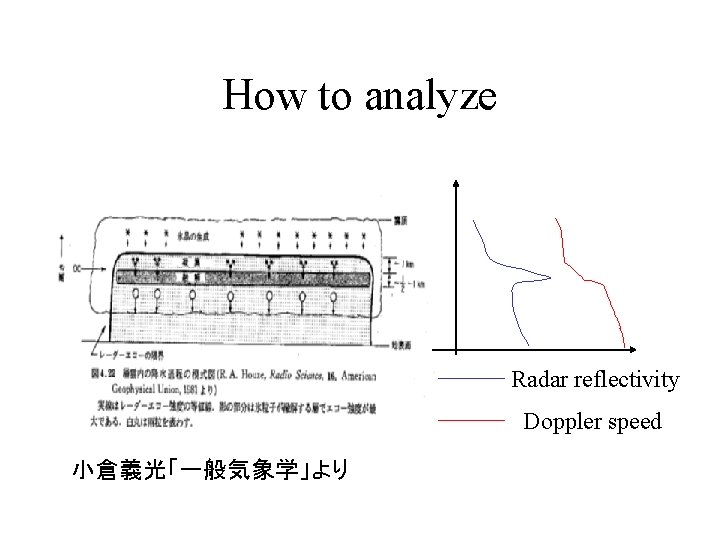
How to analyze Radar reflectivity Doppler speed 小倉義光「一般気象学」より
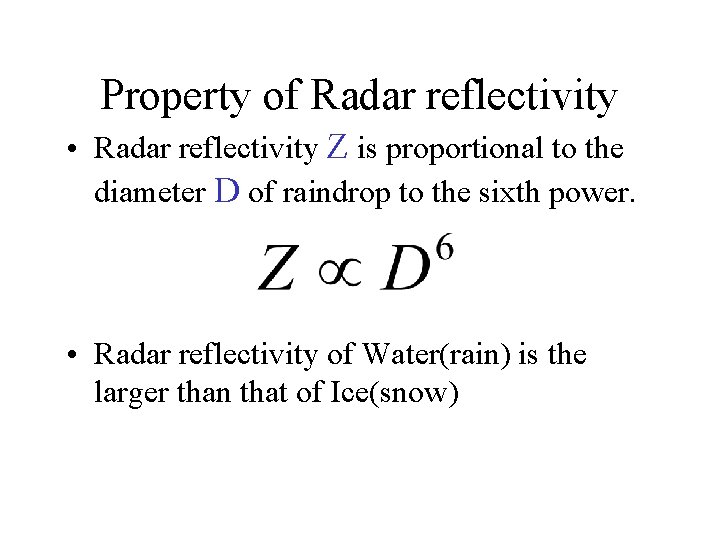
Property of Radar reflectivity • Radar reflectivity Z is proportional to the diameter D of raindrop to the sixth power. • Radar reflectivity of Water(rain) is the larger than that of Ice(snow)
Summary one • MRR observe radar reflectivity of rain vertically. • MRR observe Doppler speed of falling rain vertically.
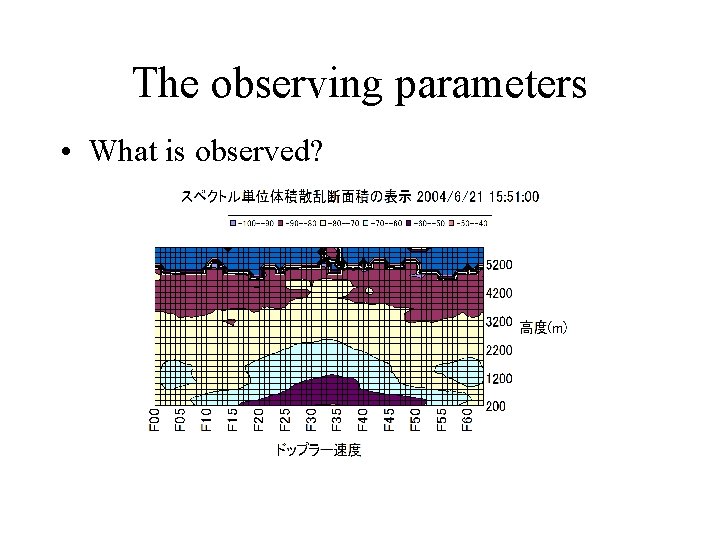
The observing parameters • What is observed?
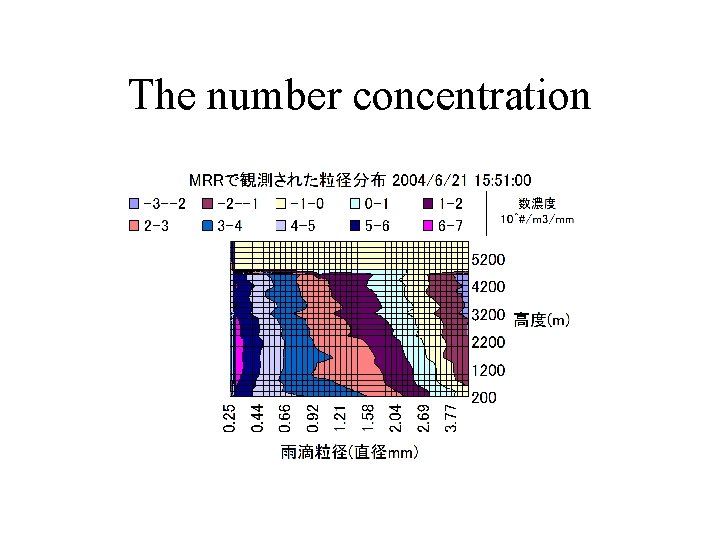
The number concentration
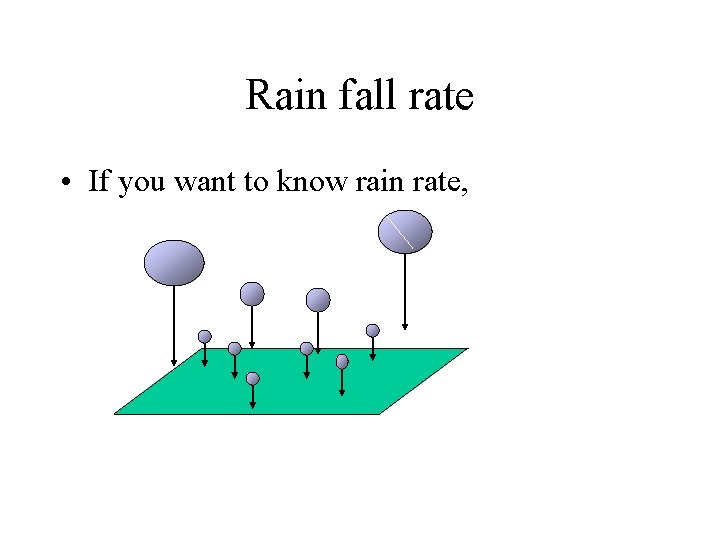
Rain fall rate • If you want to know rain rate,
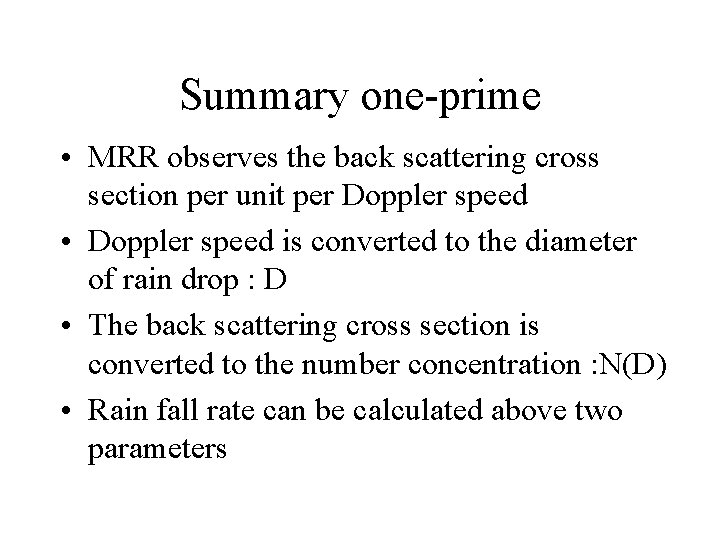
Summary one-prime • MRR observes the back scattering cross section per unit per Doppler speed • Doppler speed is converted to the diameter of rain drop : D • The back scattering cross section is converted to the number concentration : N(D) • Rain fall rate can be calculated above two parameters
MRR physical Basis • Basis of Radar observation – History of Radar observation to rain – Radar equation – scattering • Difference of MRR and standard radar system – Pulse radar vs. CW (continuous wave) radar – Doppler radar vs. (ordinary) radar
The history of radar observation • Radar = radio detection and ranging • To find the enemy airplane or battleship • rain as noise –but if heavy rain cause strong echo then you can measure the rain fall rate
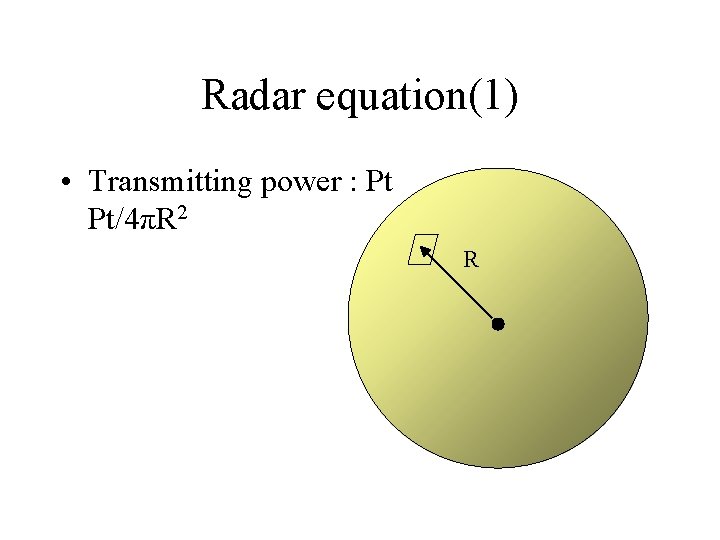
Radar equation(1) • Transmitting power : Pt Pt/4πR 2 R
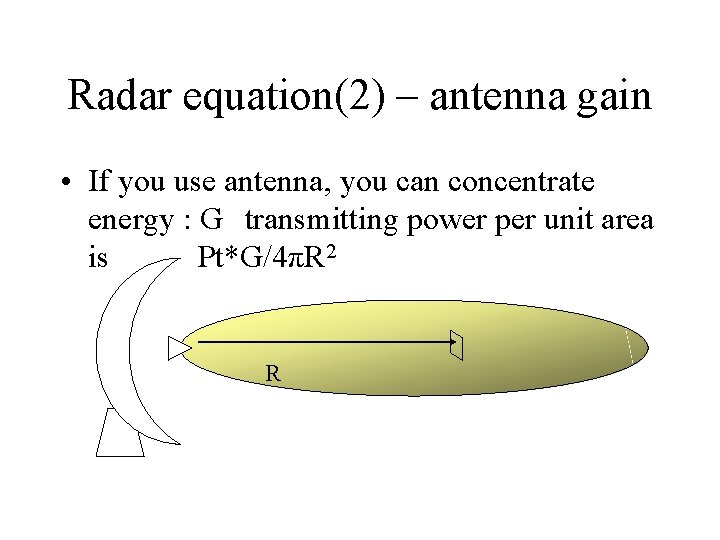
Radar equation(2) – antenna gain • If you use antenna, you can concentrate energy : G transmitting power per unit area is Pt*G/4πR 2 R
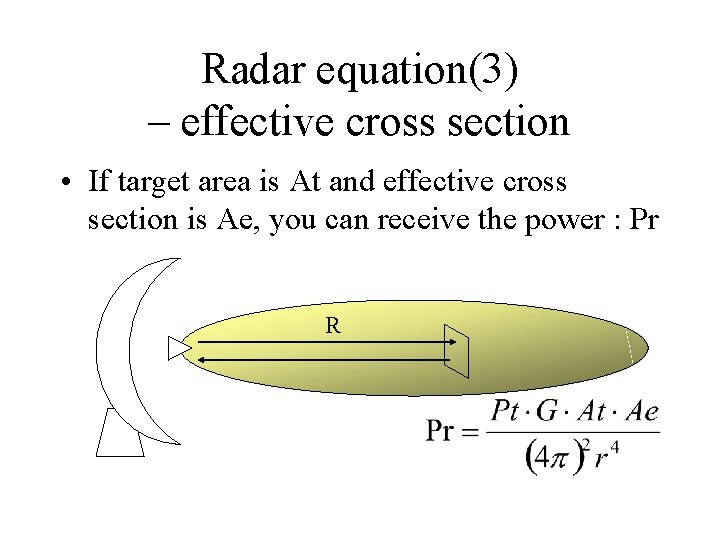
Radar equation(3) – effective cross section • If target area is At and effective cross section is Ae, you can receive the power : Pr R
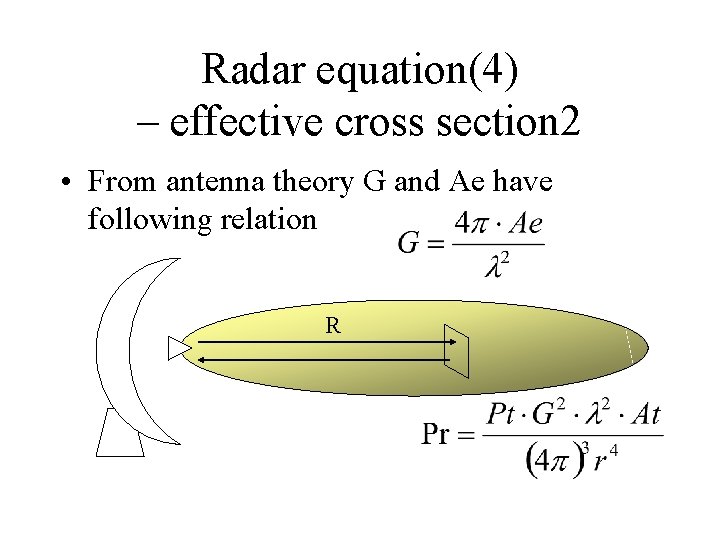
Radar equation(4) – effective cross section 2 • From antenna theory G and Ae have following relation R
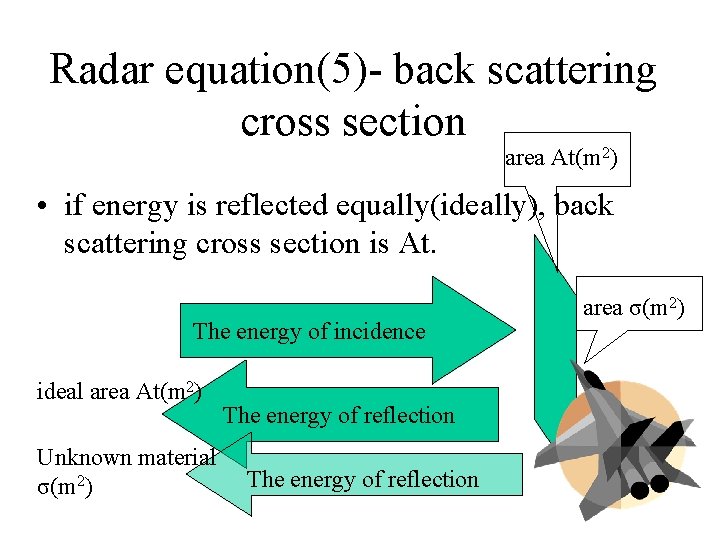
Radar equation(5)- back scattering cross section area At(m 2) • if energy is reflected equally(ideally), back scattering cross section is At. The energy of incidence ideal area At(m 2) Unknown material σ(m 2) The energy of reflection area σ(m 2)
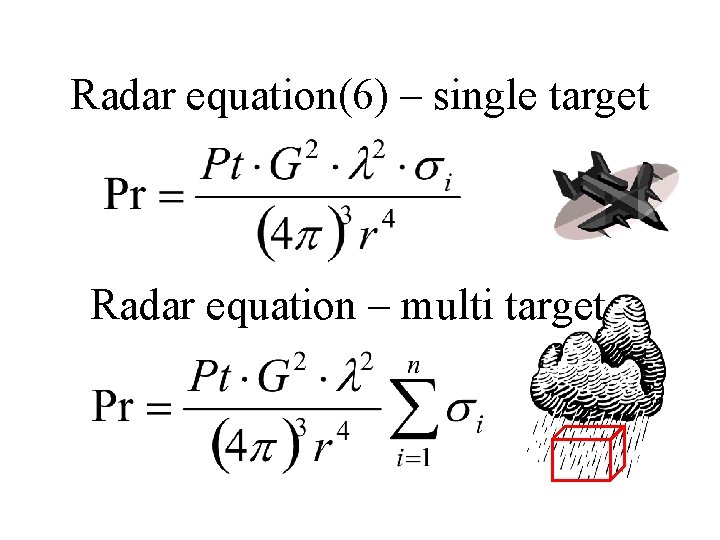
Radar equation(6) – single target Radar equation – multi target
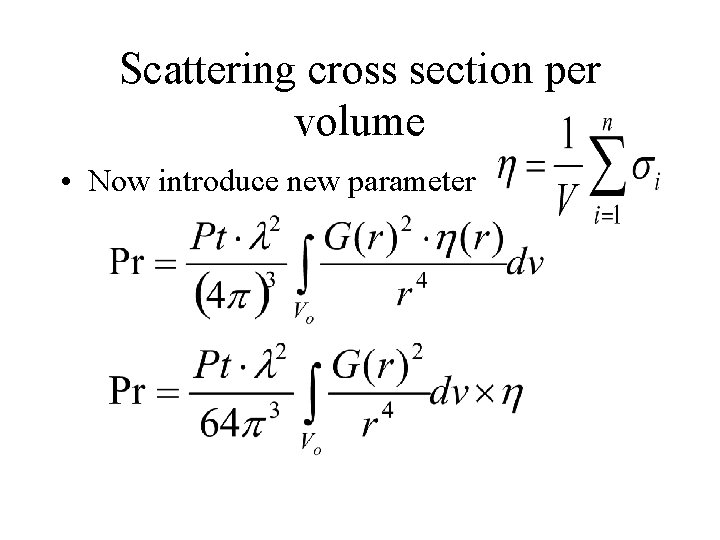
Scattering cross section per volume • Now introduce new parameter
Physical property of η • Radar reflectivity for raindrop • Rain drops are scattering equally in observing volume • => the back scattering cross section of each drop
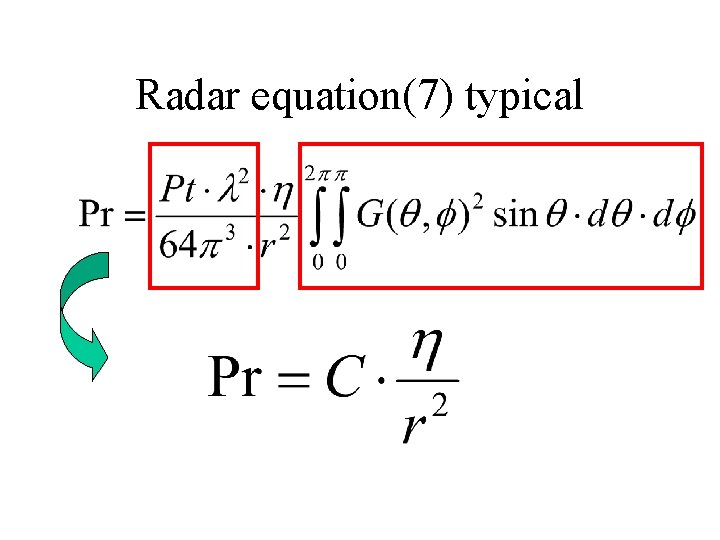
Radar equation(7) typical
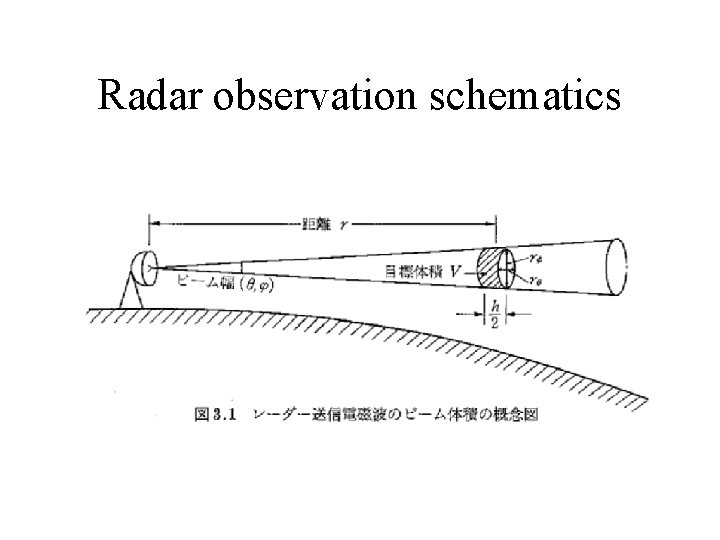
Radar observation schematics
Calculate distance • Pulse radar calculate distance from time
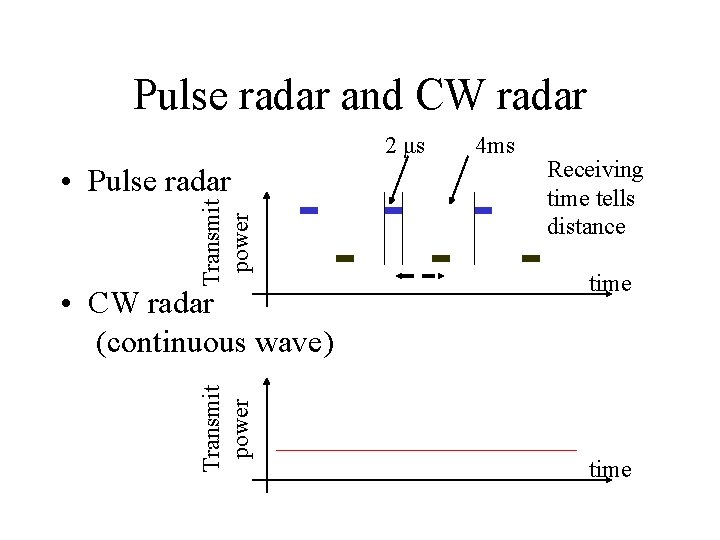
Pulse radar and CW radar 2 μs Transmit power • Pulse radar Transmit power • CW radar (continuous wave) 4 ms Receiving time tells distance time
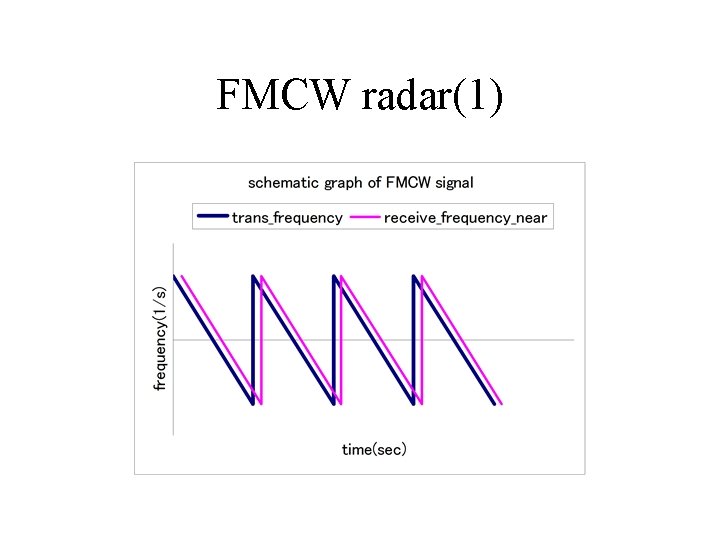
FMCW radar(1)
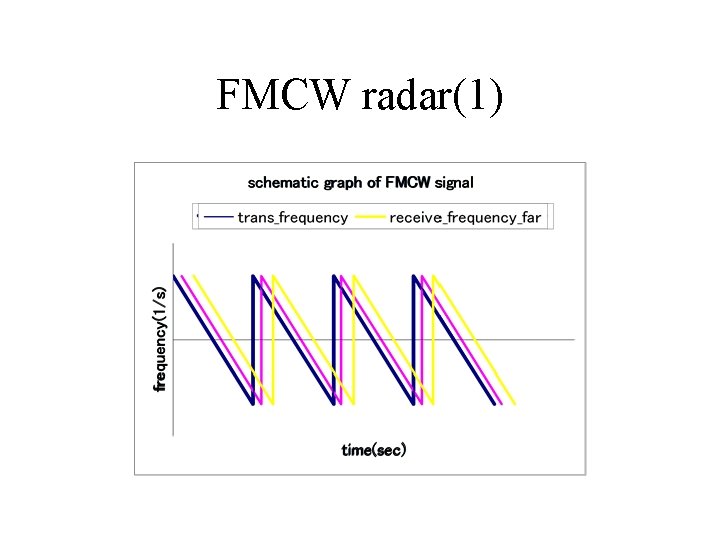
FMCW radar(1)
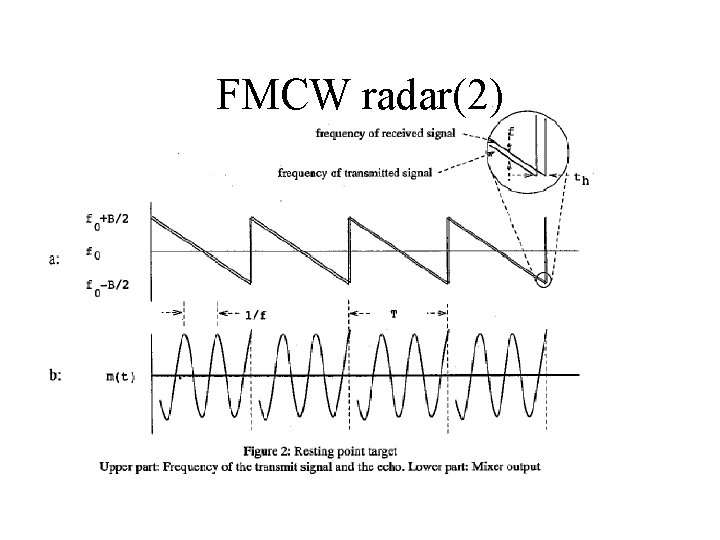
FMCW radar(2)
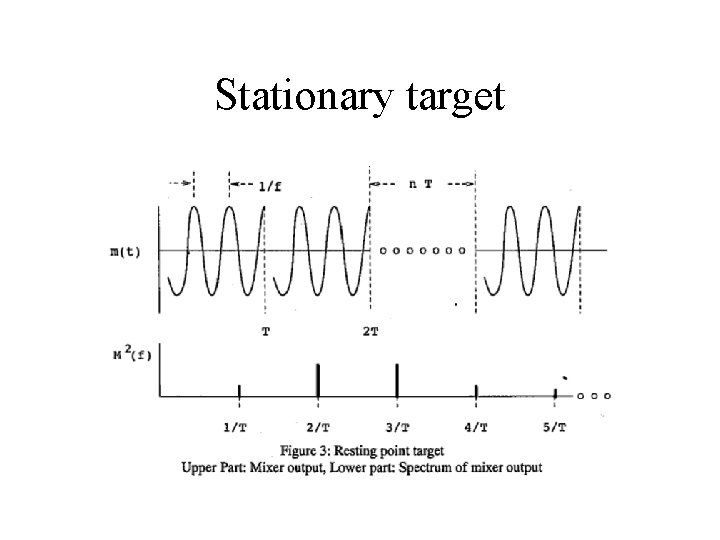
Stationary target
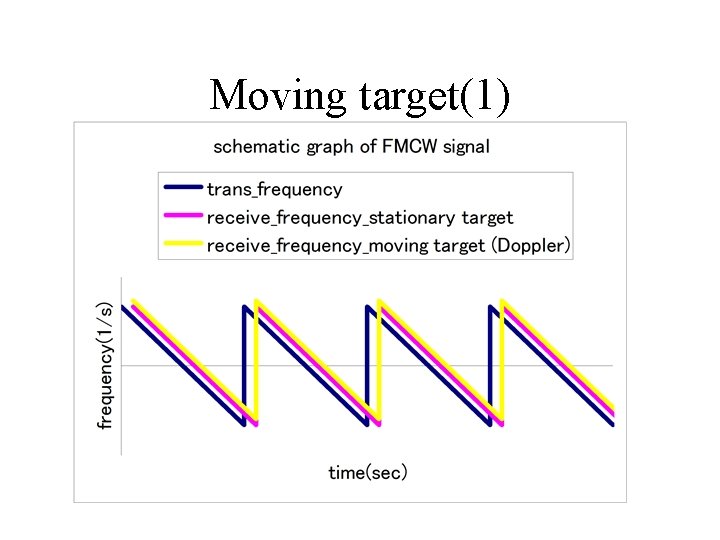
Moving target(1)
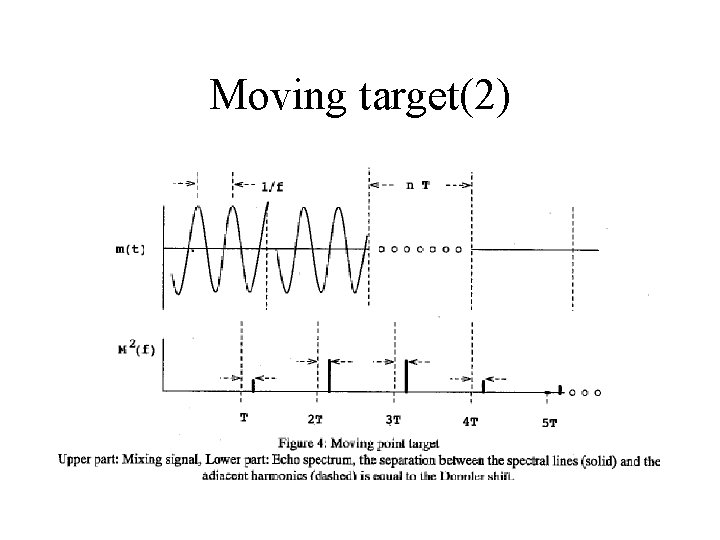
Moving target(2)
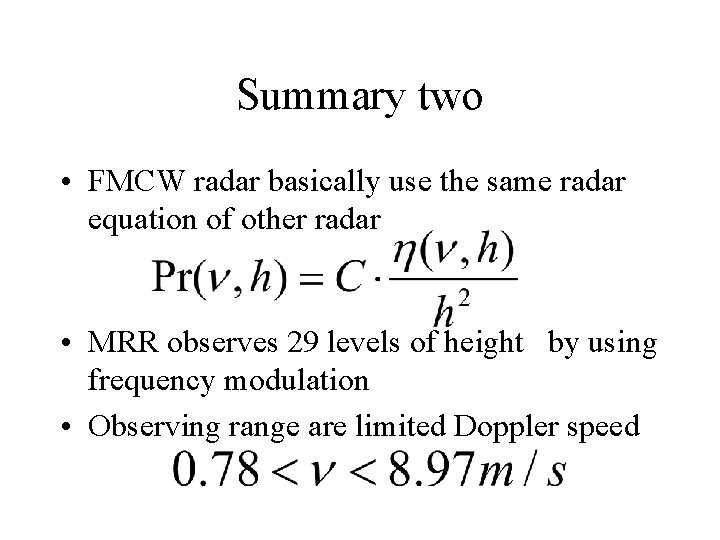
Summary two • FMCW radar basically use the same radar equation of other radar • MRR observes 29 levels of height by using frequency modulation • Observing range are limited Doppler speed
Example of analysis • My interest is to know the rain drop size distribution in the air • Radar system calculate rain fall rate using Z -R relation
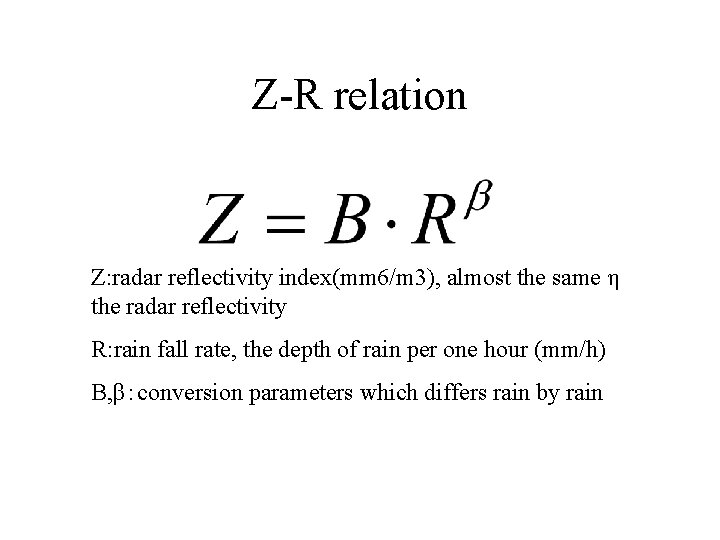
Z-R relation Z: radar reflectivity index(mm 6/m 3), almost the same η the radar reflectivity R: rain fall rate, the depth of rain per one hour (mm/h) B, β:conversion parameters which differs rain by rain
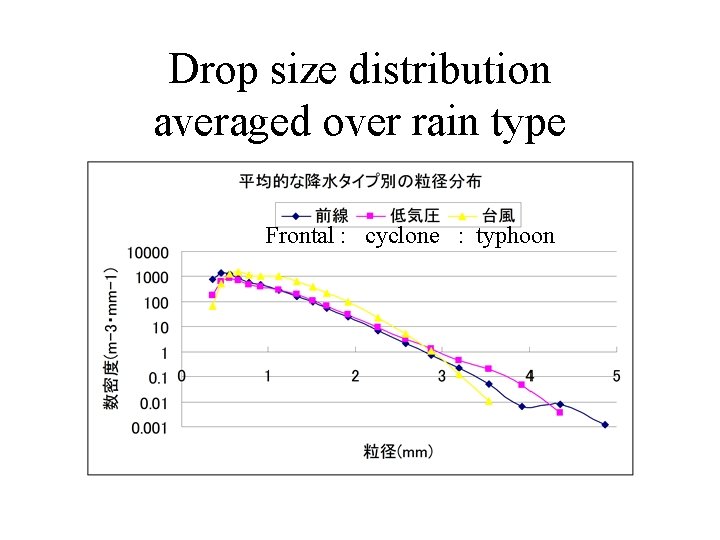
Drop size distribution averaged over rain type Frontal : cyclone : typhoon
The first task • Comparison between MRR and disdrometer at the ground • And to know MRR character of observation about rain drop size distribution
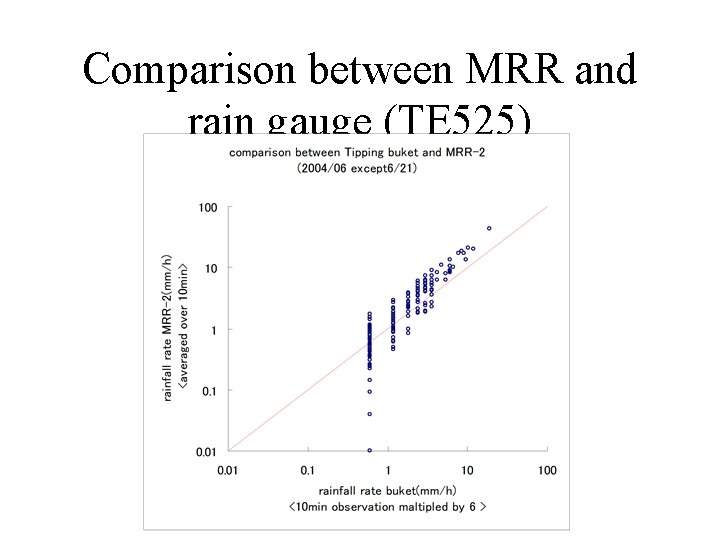
Comparison between MRR and rain gauge (TE 525)
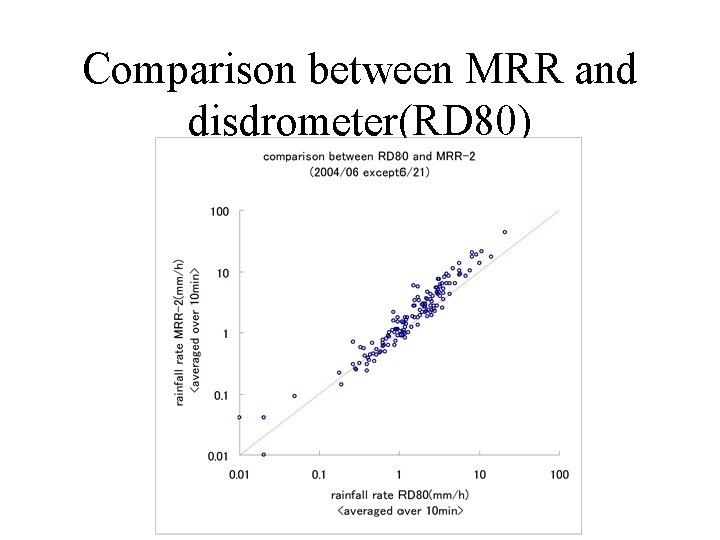
Comparison between MRR and disdrometer(RD 80)
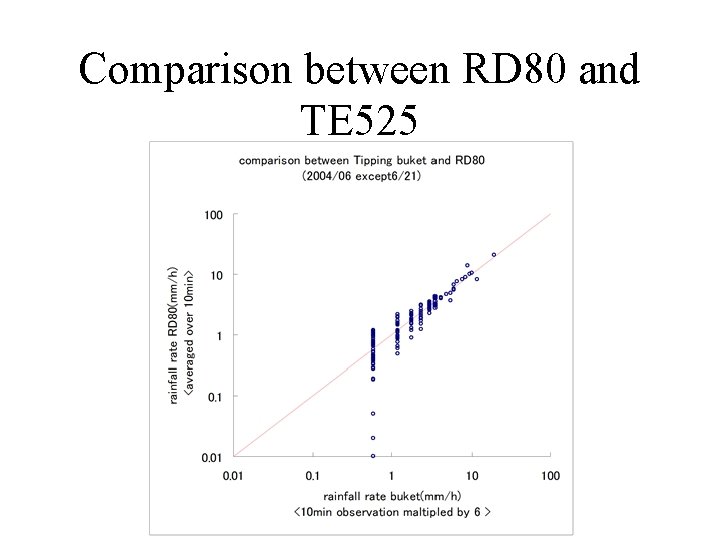
Comparison between RD 80 and TE 525
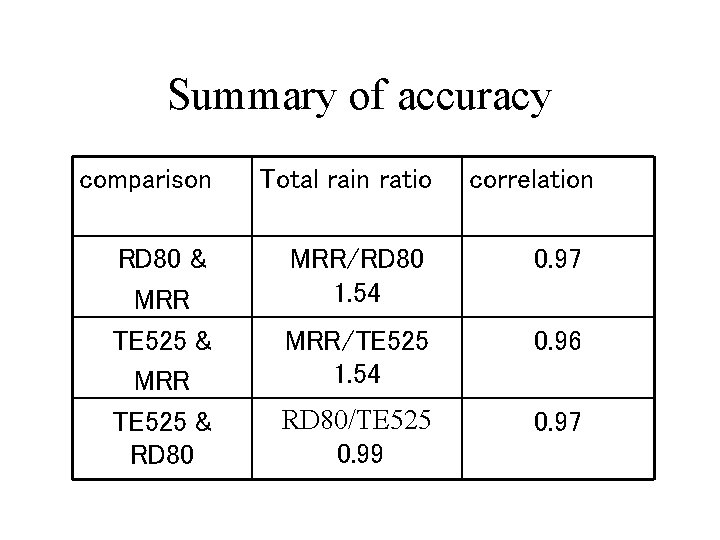
Summary of accuracy comparison Total rain ratio correlation RD 80 & MRR TE 525 & RD 80 MRR/RD 80 1. 54 0. 97 MRR/TE 525 1. 54 0. 96 RD 80/TE 525 0. 99 0. 97
Comparison of rain drop size distribution • MRR and RD 80 observe the rain drop size distribution • We can calculate of radar reflectivity of rain drop size spectrum
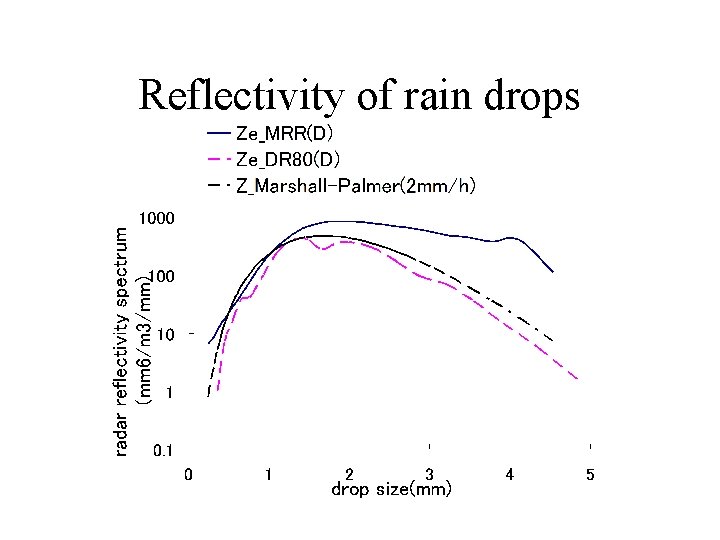
Reflectivity of rain drops
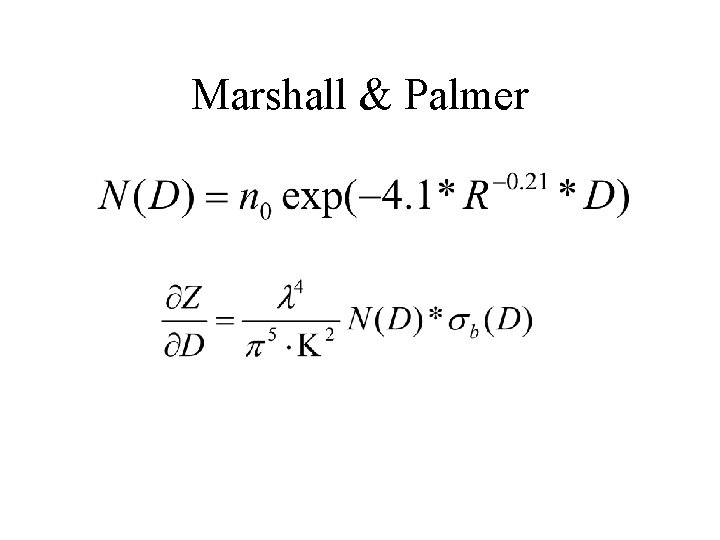
Marshall & Palmer
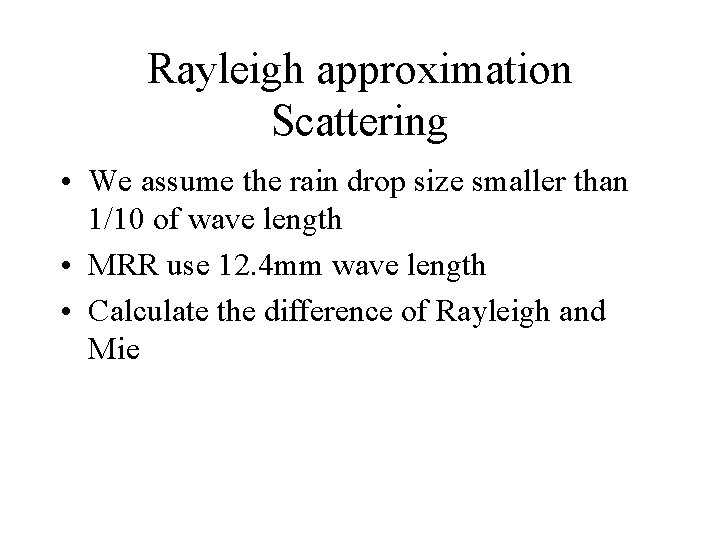
Rayleigh approximation Scattering • We assume the rain drop size smaller than 1/10 of wave length • MRR use 12. 4 mm wave length • Calculate the difference of Rayleigh and Mie
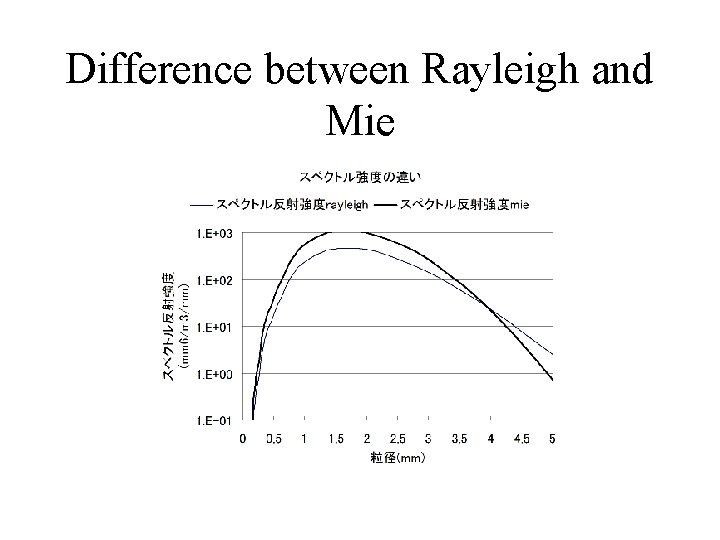
Difference between Rayleigh and Mie
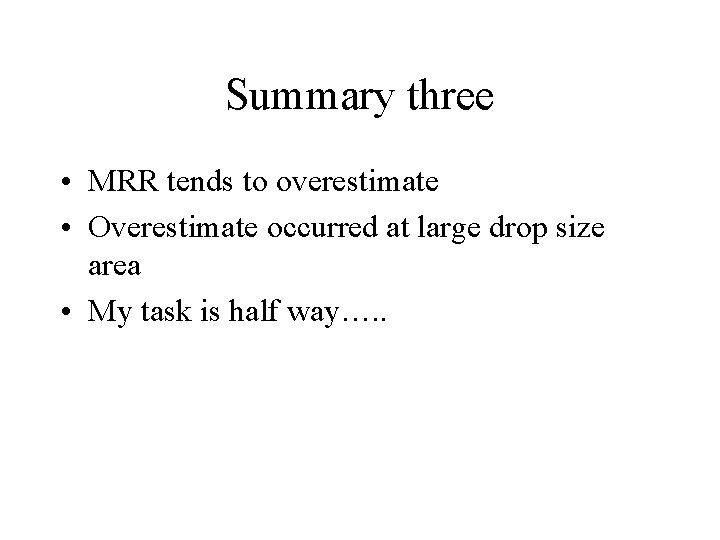
Summary three • MRR tends to overestimate • Overestimate occurred at large drop size area • My task is half way…. .

Than you for your attention
- Slides: 52