
micro Economics Unit 8 Slide 1 Competition brings
micro Economics Unit 8 Slide 1 Competition brings out the best in products and the worst in people. --David Sarnoff Created: Jan 2007 by Jim Luke.

micro Economics Unit 8 Slide 2 Market Structures: Degrees of Competition Aspects # of firms Product homogeneity Ease of entry/exit Form of competition Info Availability
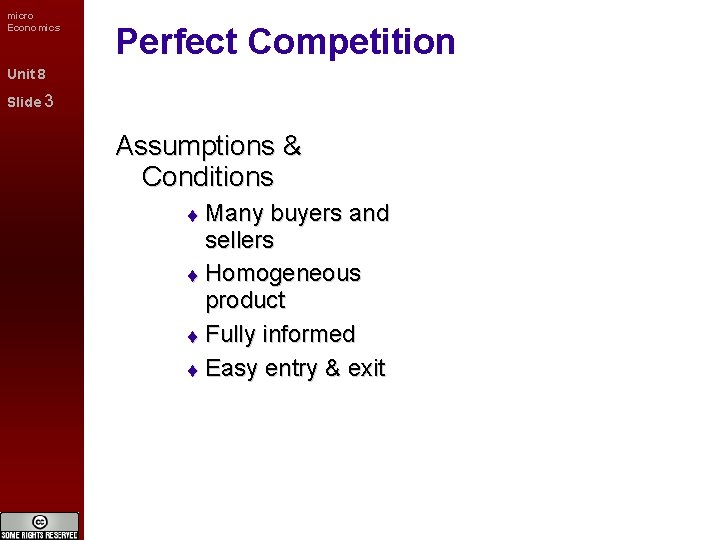
micro Economics Perfect Competition Unit 8 Slide 3 Assumptions & Conditions Many buyers and sellers Homogeneous product Fully informed Easy entry & exit
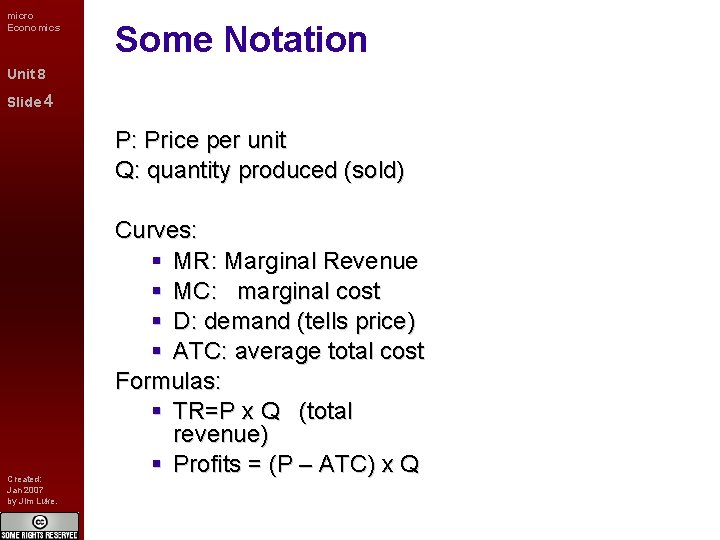
micro Economics Some Notation Unit 8 Slide 4 P: Price per unit Q: quantity produced (sold) Created: Jan 2007 by Jim Luke. Curves: MR: Marginal Revenue MC: marginal cost D: demand (tells price) ATC: average total cost Formulas: TR=P x Q (total revenue) Profits = (P – ATC) x Q
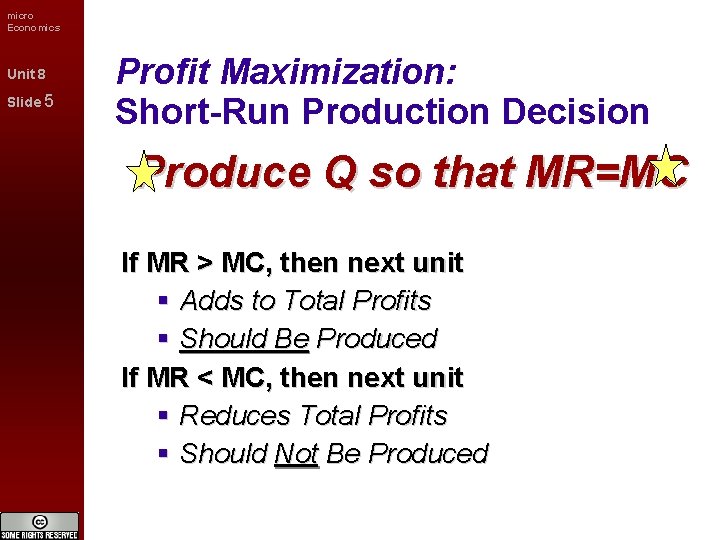
micro Economics Unit 8 Slide 5 Profit Maximization: Short-Run Production Decision Produce Q so that MR=MC If MR > MC, then next unit Adds to Total Profits Should Be Produced If MR < MC, then next unit Reduces Total Profits Should Not Be Produced
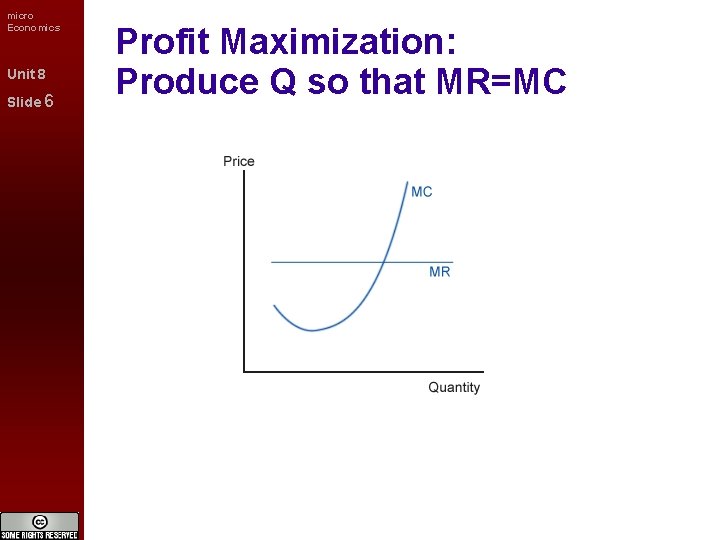
micro Economics Unit 8 Slide 6 Profit Maximization: Produce Q so that MR=MC
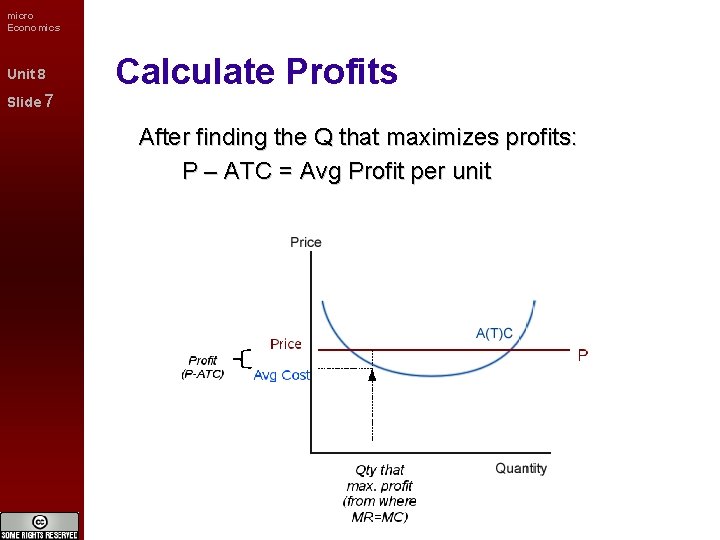
micro Economics Unit 8 Slide 7 Calculate Profits After finding the Q that maximizes profits: P – ATC = Avg Profit per unit
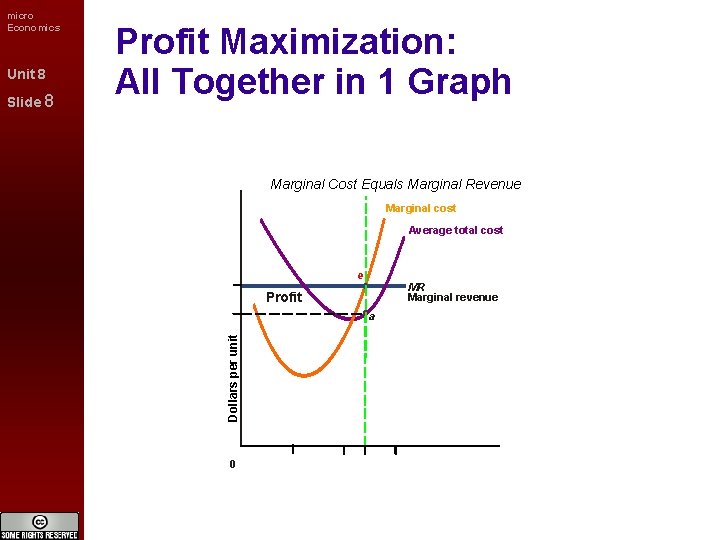
Unit 8 Slide 8 Profit Maximization: All Together in 1 Graph Marginal Cost Equals Marginal Revenue Marginal cost Average total cost e MR Marginal revenue Profit a Dollars per unit micro Economics 0
micro Economics Minimizing Losses Unit 8 Slide 9 In Short-Run, If P < ATC firm loses money If P <ATC, but P > AVC, produce @ loss If P < AVC, shut-down (produce 0 units)
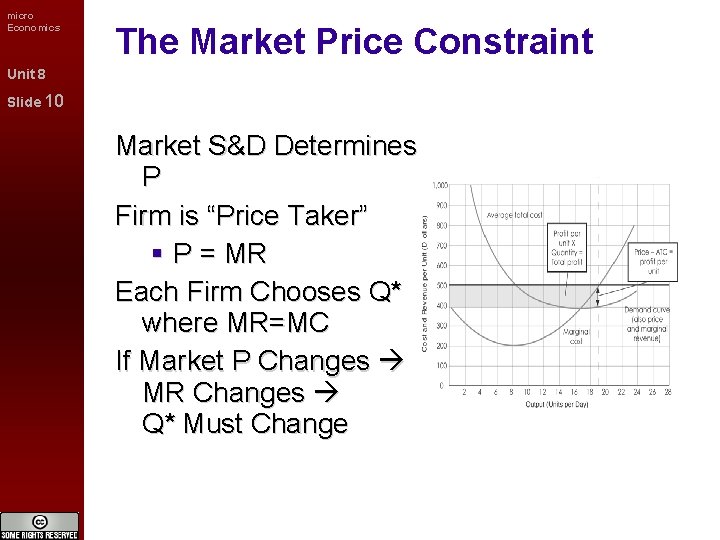
micro Economics The Market Price Constraint Unit 8 Slide 10 Market S&D Determines P Firm is “Price Taker” P = MR Each Firm Chooses Q* where MR=MC If Market P Changes MR Changes Q* Must Change
micro Economics Unit 8 Slide 11 Competitive Dynamics Under Perfect Competition Short-Run: Profits Attract New Firms Supply increases Market Price drops Profits Drop Losses Cause Exit Supply decreases Market Price increases Losses Reduced Only Long Run Stable Point: Firms Break Even P = ATC
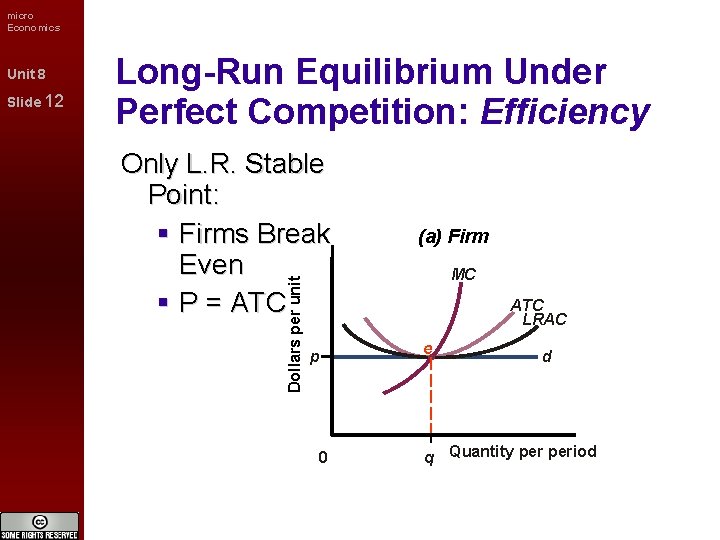
micro Economics Slide 12 Long-Run Equilibrium Under Perfect Competition: Efficiency Only L. R. Stable Point: Firms Break Even P = ATC Dollars per unit Unit 8 p 0 (a) Firm MC ATC LRAC e d q Quantity period
micro Economics Monopoly Conditions Unit 8 Slide 13 Sole Supplier of Good No Close Substitutes and/or Inelastic Demand Barriers to Entry New Firms Not Able to Enter Industry
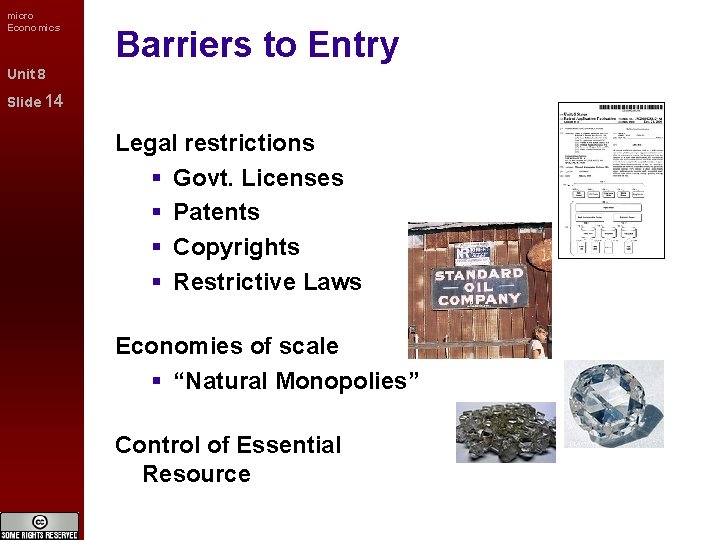
micro Economics Barriers to Entry Unit 8 Slide 14 Legal restrictions Govt. Licenses Patents Copyrights Restrictive Laws Economies of scale “Natural Monopolies” Control of Essential Resource
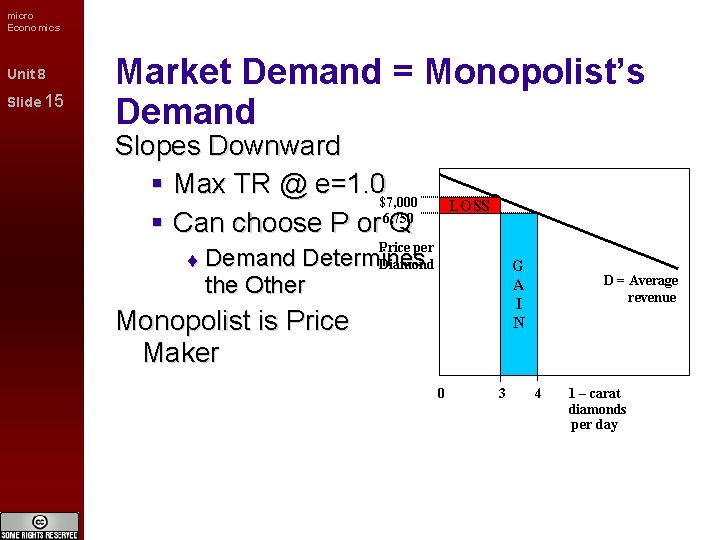
micro Economics Unit 8 Slide 15 Market Demand = Monopolist’s Demand Slopes Downward Max TR @ e=1. 0$7, 000 Can choose P or 6, 750 Q LOSS Price per Demand Determines Diamond the Other G A I N Monopolist is Price Maker 0 3 D = Average revenue 4 1 – carat diamonds per day
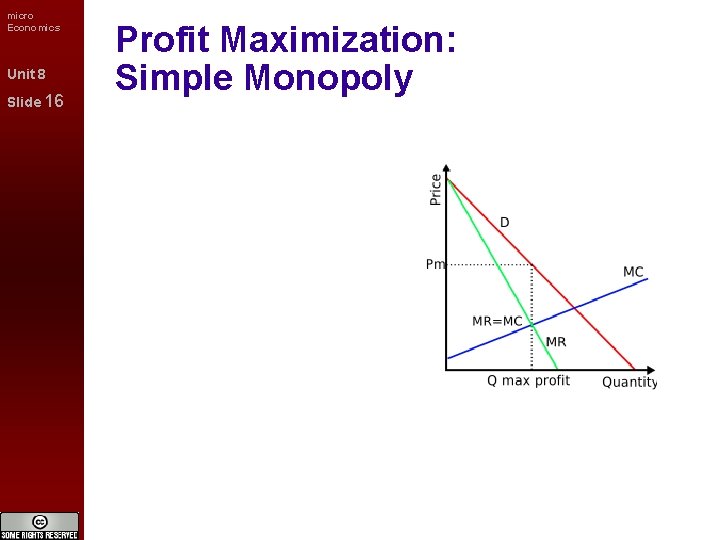
micro Economics Unit 8 Slide 16 Profit Maximization: Simple Monopoly
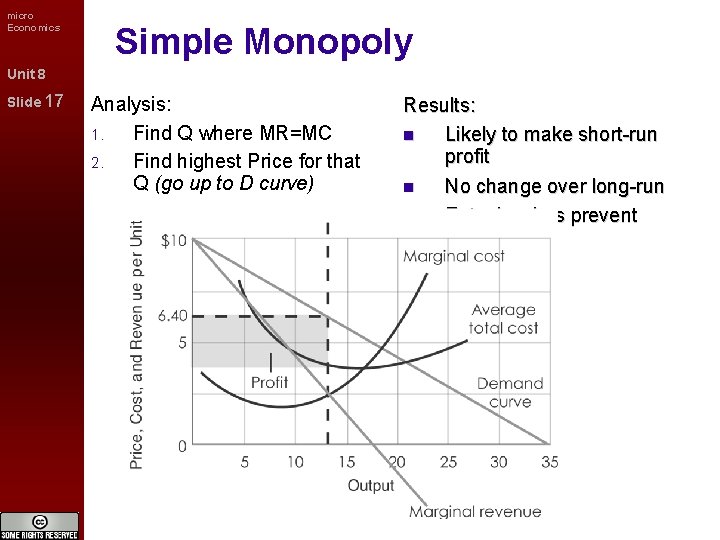
micro Economics Simple Monopoly Unit 8 Slide 17 Analysis: 1. Find Q where MR=MC 2. Find highest Price for that Q (go up to D curve) Results: Likely to make short-run profit No change over long-run Entry barriers prevent competition
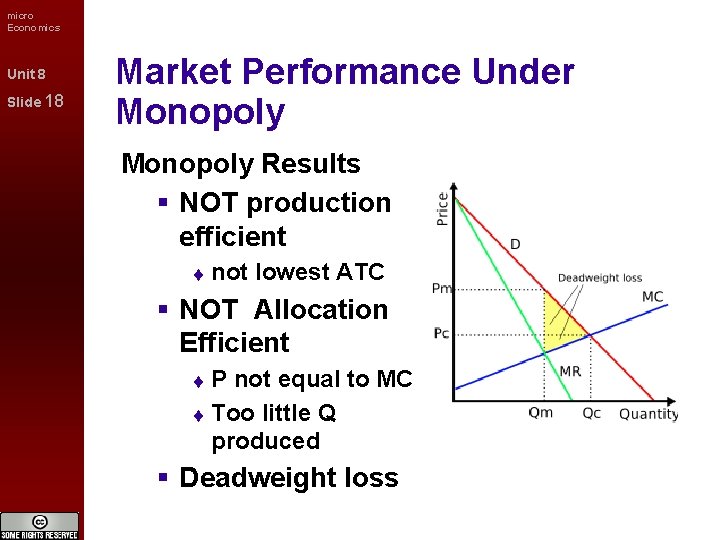
micro Economics Unit 8 Slide 18 Market Performance Under Monopoly Results NOT production efficient not lowest ATC NOT Allocation Efficient P not equal to MC Too little Q produced Deadweight loss
micro Economics Problems From Monopolies Unit 8 Slide 19 Inefficient Production Inefficient Allocation of Resource Too little Q produced Too high Price Rent seeking activities No Innovation No Choice
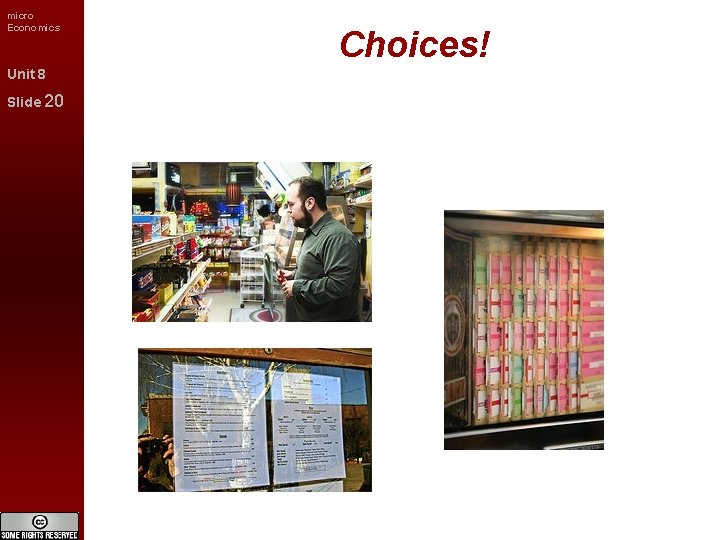
micro Economics Unit 8 Slide 20 Choices!
micro Economics Unit 8 Slide 21 Monopolistic Competition: Conditions Many Small Producers Low Concentration Heterogenous Products Differentiated Substitutes Some Pricing Power Low Entry Barriers Sellers Act Independently
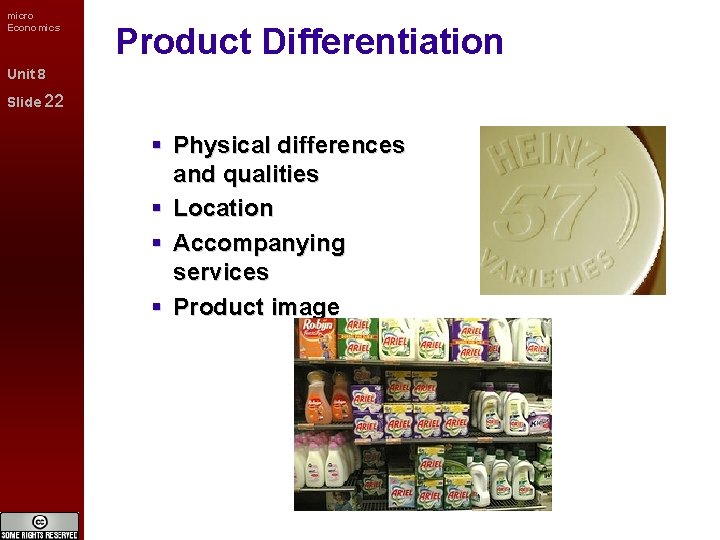
micro Economics Product Differentiation Unit 8 Slide 22 Physical differences and qualities Location Accompanying services Product image
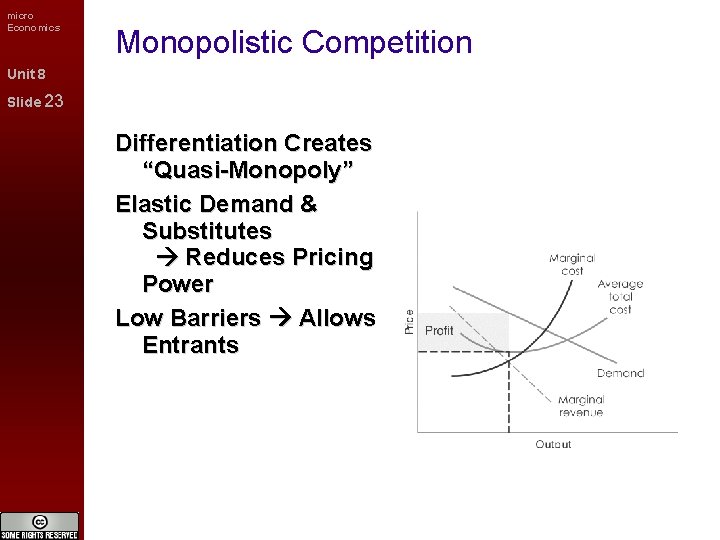
micro Economics Monopolistic Competition Unit 8 Slide 23 Differentiation Creates “Quasi-Monopoly” Elastic Demand & Substitutes Reduces Pricing Power Low Barriers Allows Entrants
micro Economics Oligopoly Conditions Unit 8 Slide 24 Few Firms - High Concentration Homo- or Hetero-genous Barriers to Entry Likely Economies of Scale High costs of entry Standards or Patents Brand
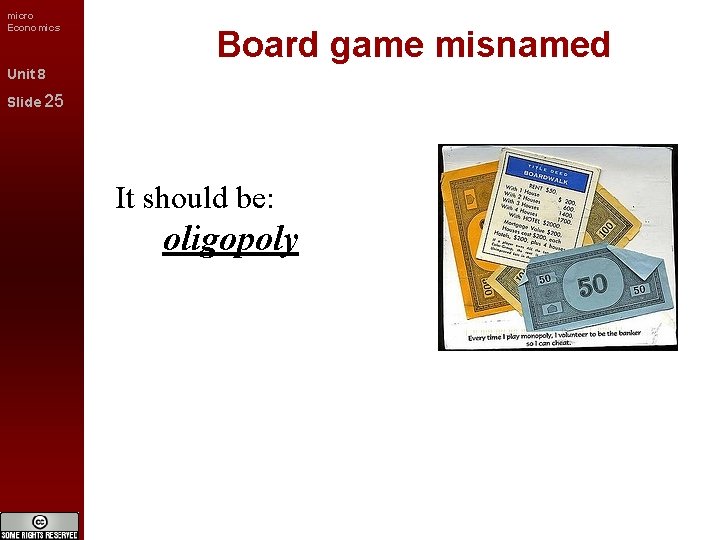
micro Economics Board game misnamed Unit 8 Slide 25 It should be: oligopoly
micro Economics Unit 8 Slide 26 The Oligopolist’s Constraint: Interdependence Market Price Depends: Own & Competitors’ P & Q Decisions Competitors Are Known Will React Result: Strategic Behavior Game Theory Models
micro Economics Oligopoly “Games” or Models Unit 8 Slide 27 Cartel / Collusion Difficult & Not Stable Informal, Tacit Collusion Price Leadership / Signalling Dominant Firms Duopoly Game Theory Analysis
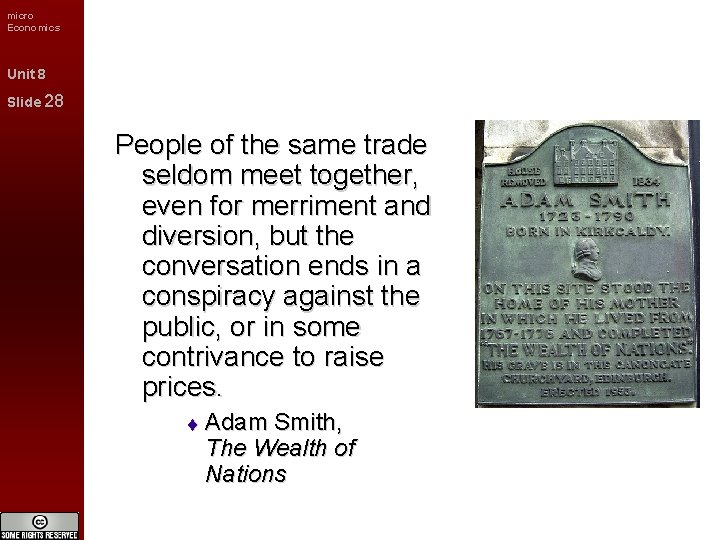
micro Economics Unit 8 Slide 28 People of the same trade seldom meet together, even for merriment and diversion, but the conversation ends in a conspiracy against the public, or in some contrivance to raise prices. Adam Smith, The Wealth of Nations
- Slides: 28