
MICHIGAN SPINE SURGERY IMPROVEMENT COLLABORATIVE MSSIC WORKING TOGETHER
MICHIGAN SPINE SURGERY IMPROVEMENT COLLABORATIVE (MSSIC) WORKING TOGETHER FOR BETTER PATIENT OUTCOMES MSSIC ERAS PATHWAY INTRODUCTION 2021 AND BEYOND
What is Enhanced Recovery After Surgery (ERAS)? • ERAS is a systematized and validated perioperative management model based on best available evidence. • ERAS is a multidisciplinary management strategy encompassing several items and interventions, challenging old dogmas such as preoperative fasting. • Enhanced recovery after surgery (ERAS) is a protocolized scientific pathway applied to boost the outcome and enhance the recovery phase after surgery. • ERAS protocols include patient education and a dedicated multidisciplinary team approach for implementing these standardized protocols 2
Why ERAS for Spine Surgery? • ERAS guidelines have been shown to substantially reduce postoperative complications, length of stay (LOS) and overall costs, and to increase both patient and staff satisfaction. • ERAS pathways decrease surgical stress, maintain physiological homeostasis, and improve postoperative recovery. • It positively influences patient subjective well-being and puts the patient at the center of perioperative management and recovery, empowering him or her by increasing motivation to recover quickly and accept responsibility in their own recovery plan. 3
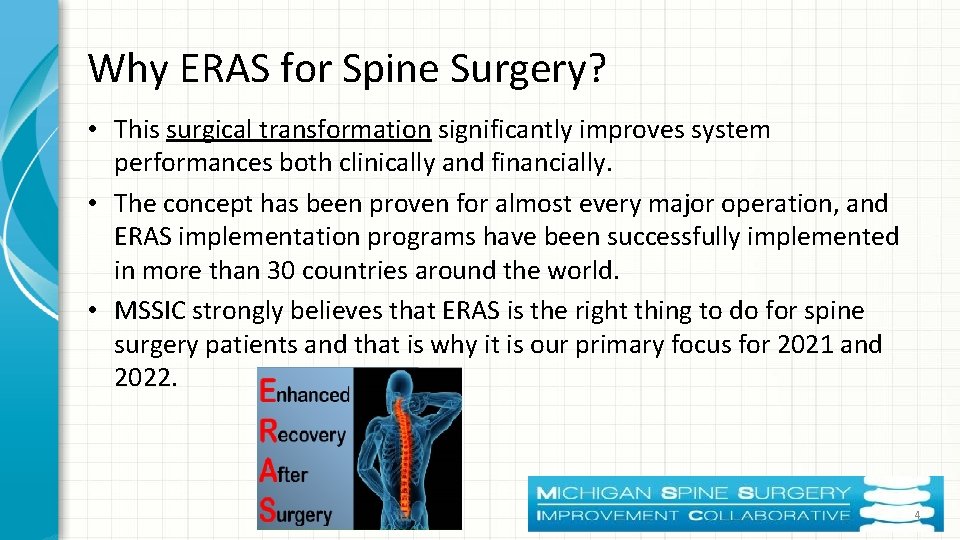
Why ERAS for Spine Surgery? • This surgical transformation significantly improves system performances both clinically and financially. • The concept has been proven for almost every major operation, and ERAS implementation programs have been successfully implemented in more than 30 countries around the world. • MSSIC strongly believes that ERAS is the right thing to do for spine surgery patients and that is why it is our primary focus for 2021 and 2022. 4
Reassurance… • MSSIC sites are not expected to have the ERAS pathway, order sets, and patient education developed and implemented at the start of the 2021 measurement time frame (10/1/20) • 2021 Performance Period is Phase 1 of ERAS – – ERAS development and demonstration of multi-disciplinary team engagement 5
MSSIC & ERAS Timeline… • 2019 - ERAS for Spine was introduced at the August MSSIC meeting • 2020 – Sites were encouraged to research, strategize, and align with current ERAS pathways that may already exist at each site. Also, identify an ERAS for Spine Surgery team. • 2021 Performance Index - Phase 1 – ERAS development & team engagement • 2022 Performance Index - Phase 2 – ERAS implementation and measurement 6
MSSIC ERAS Goals – Short-term • By the end of 2021 measurement period (9/30/21) – All MSSIC sites have ERAS protocols, order sets, and patient education developed and implemented • 2022 measurement period (starts 10/1/21) – ERAS is implemented and sites will demonstrate at least 80% compliance with the implementation of the above 7

MSSIC ERAS Goals – Long-term • State-wide and national dissemination of MSSIC ERAS protocols • Related publication in peerreviewed literature • Michigan is the destination for spine surgery in the nation 8

Basics of the MSSIC ERAS Pathway 9
• Two required components for each of the three phases of care • The remainder of the ERAS protocol is up to each MSSIC site • MSSIC has: – Outlined what is required – Provided suggestions for other components, based upon literature findings and other currently existing spine surgery pathways – Posted tools and resources on MSSIC website (mssic. org) to support sites in the development of their own ERAS pathways 10
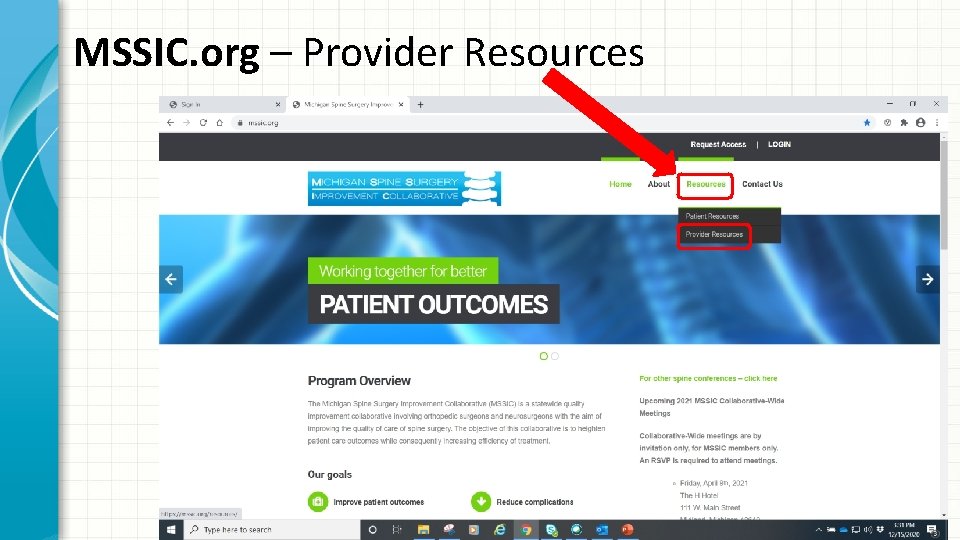
MSSIC. org – Provider Resources 11

12
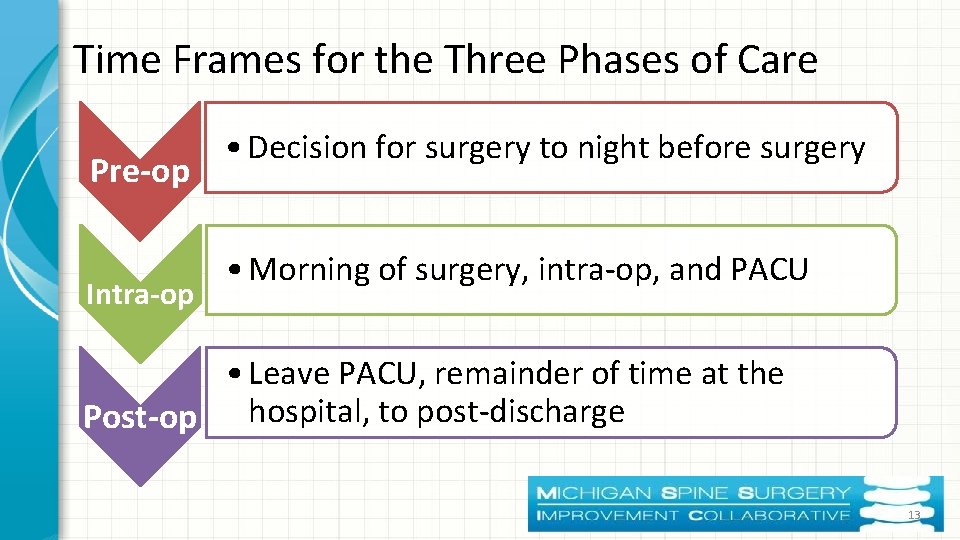
Time Frames for the Three Phases of Care Pre-op Intra-op • Decision for surgery to night before surgery • Morning of surgery, intra-op, and PACU • Leave PACU, remainder of time at the Post-op hospital, to post-discharge 13
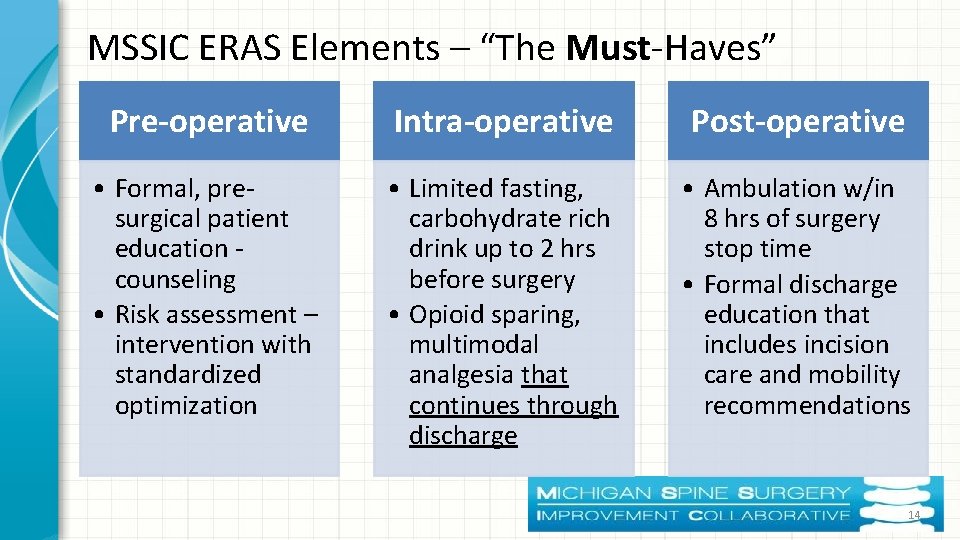
MSSIC ERAS Elements – “The Must-Haves” Pre-operative Intra-operative Post-operative • Formal, presurgical patient education counseling • Risk assessment – intervention with standardized optimization • Limited fasting, carbohydrate rich drink up to 2 hrs before surgery • Opioid sparing, multimodal analgesia that continues through discharge • Ambulation w/in 8 hrs of surgery stop time • Formal discharge education that includes incision care and mobility recommendations 14
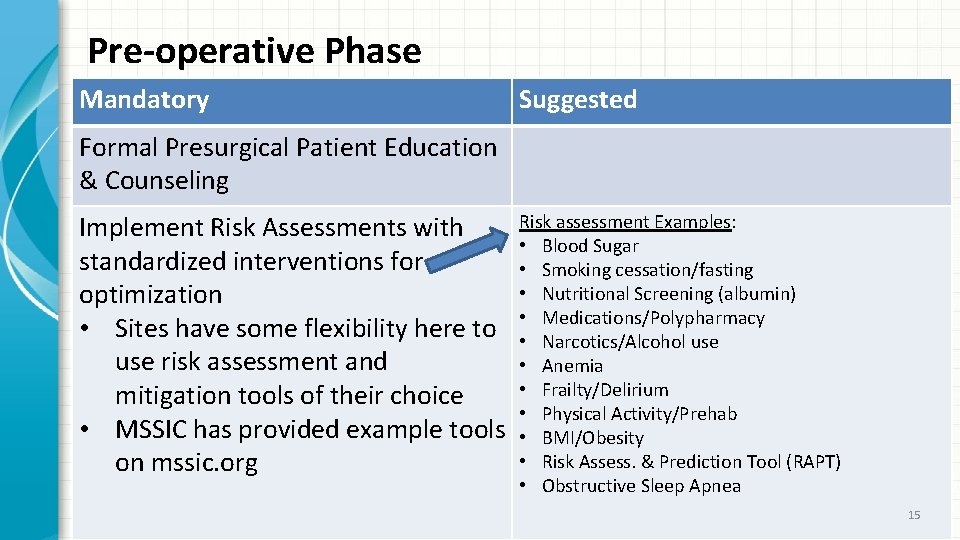
Pre-operative Phase Mandatory Suggested Formal Presurgical Patient Education & Counseling Implement Risk Assessments with standardized interventions for optimization • Sites have some flexibility here to use risk assessment and mitigation tools of their choice • MSSIC has provided example tools on mssic. org Risk assessment Examples: • Blood Sugar • Smoking cessation/fasting • Nutritional Screening (albumin) • Medications/Polypharmacy • Narcotics/Alcohol use • Anemia • Frailty/Delirium • Physical Activity/Prehab • BMI/Obesity • Risk Assess. & Prediction Tool (RAPT) • Obstructive Sleep Apnea 15
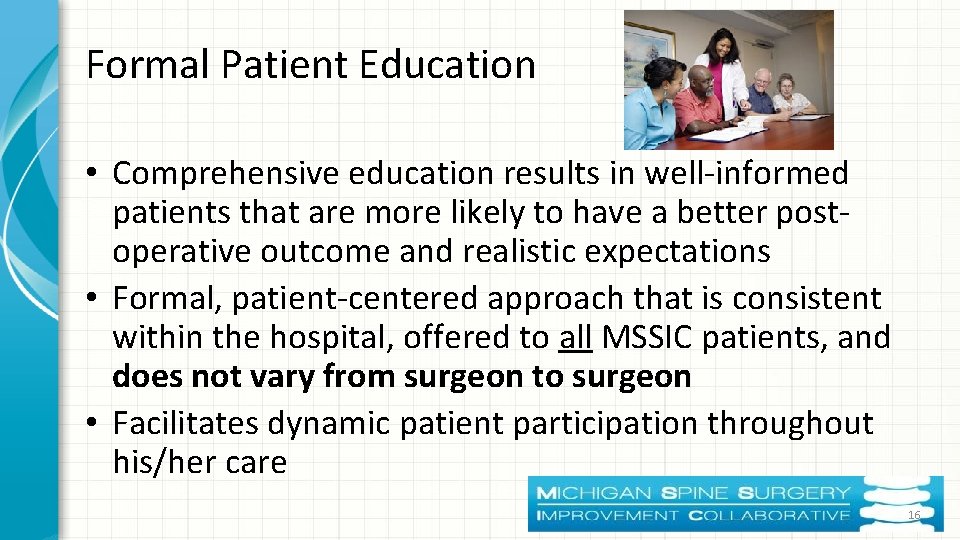
Formal Patient Education • Comprehensive education results in well-informed patients that are more likely to have a better postoperative outcome and realistic expectations • Formal, patient-centered approach that is consistent within the hospital, offered to all MSSIC patients, and does not vary from surgeon to surgeon • Facilitates dynamic patient participation throughout his/her care 16
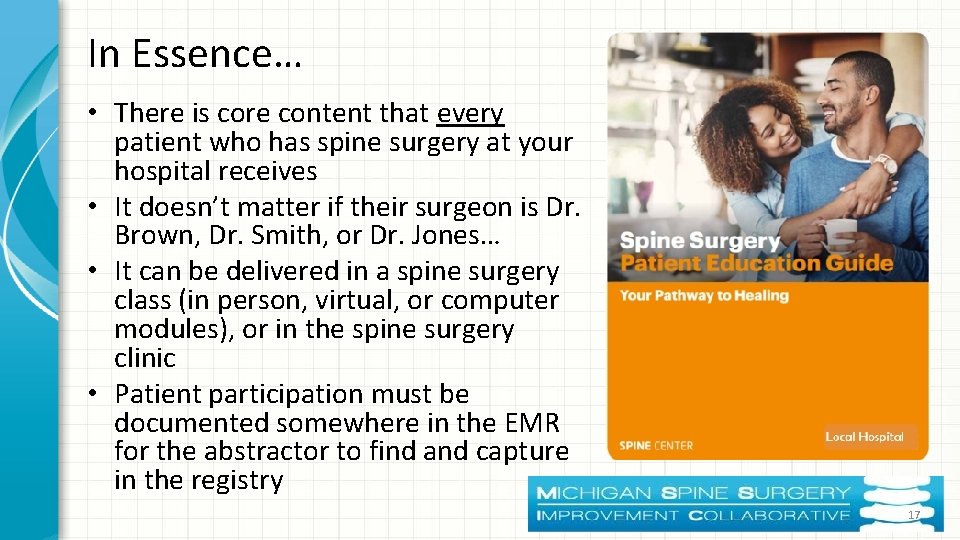
In Essence… • There is core content that every patient who has spine surgery at your hospital receives • It doesn’t matter if their surgeon is Dr. Brown, Dr. Smith, or Dr. Jones… • It can be delivered in a spine surgery class (in person, virtual, or computer modules), or in the spine surgery clinic • Patient participation must be documented somewhere in the EMR for the abstractor to find and capture in the registry 17
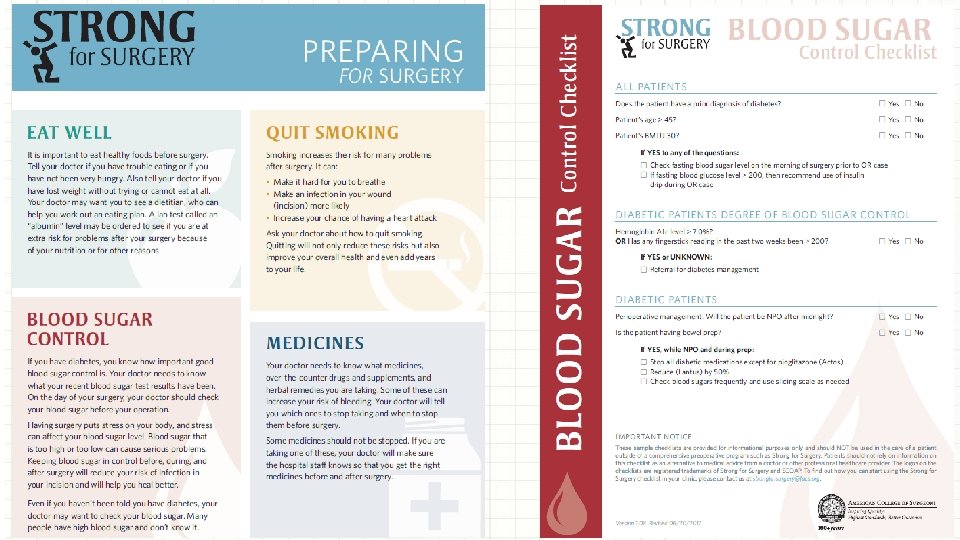
Risk Assessments • Sites have flexibility, but must implement risk assessments with standardized interventions – MSSIC is not prescribing how many – Optimize the physical, mental and functional status – Reduce the dramatic stress response of surgery • MSSIC has provided examples and tools: MSSIC. org – Example: American College of Surgeons Quality Program… 18
19
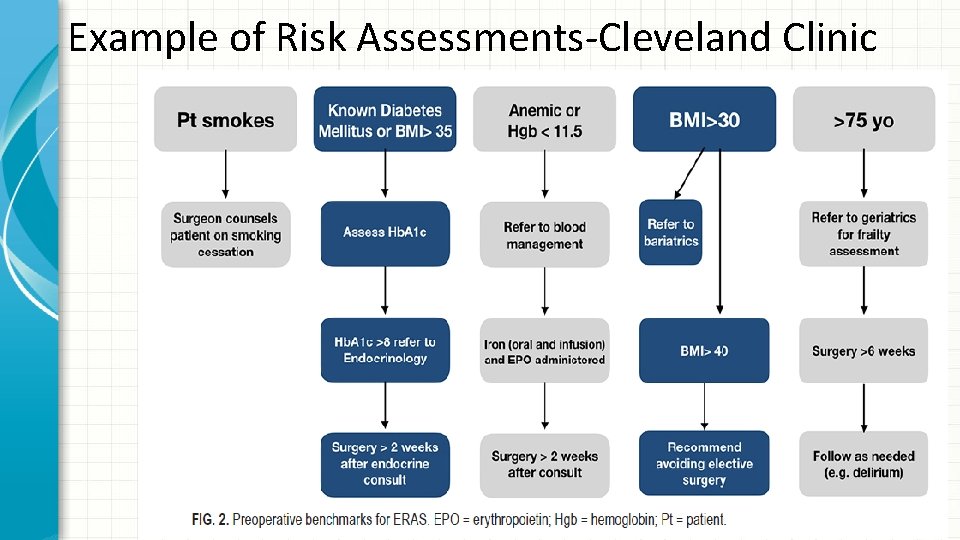
Example of Risk Assessments-Cleveland Clinic 20
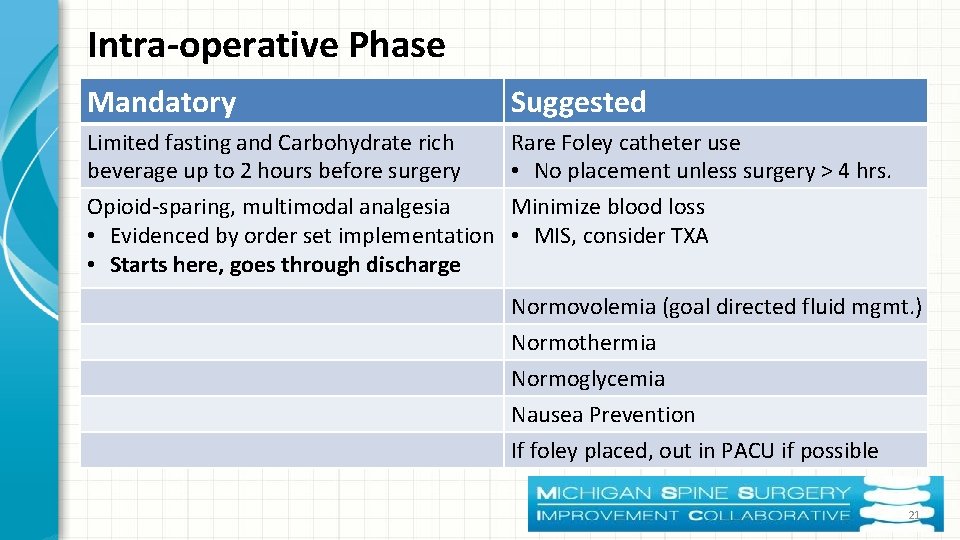
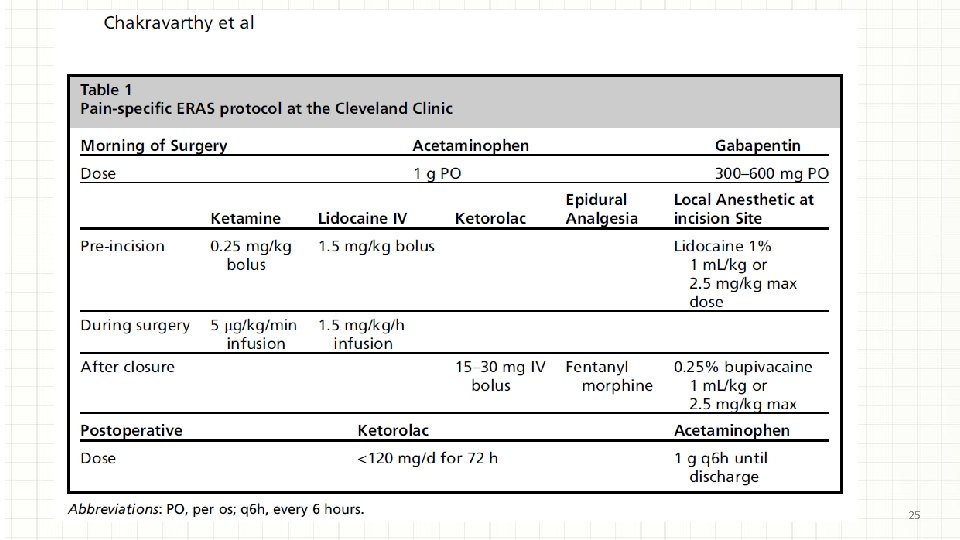
Intra-operative Phase Mandatory Suggested Limited fasting and Carbohydrate rich beverage up to 2 hours before surgery Rare Foley catheter use • No placement unless surgery > 4 hrs. Opioid-sparing, multimodal analgesia Minimize blood loss • Evidenced by order set implementation • MIS, consider TXA • Starts here, goes through discharge Normovolemia (goal directed fluid mgmt. ) Normothermia Normoglycemia Nausea Prevention If foley placed, out in PACU if possible 21
22
23
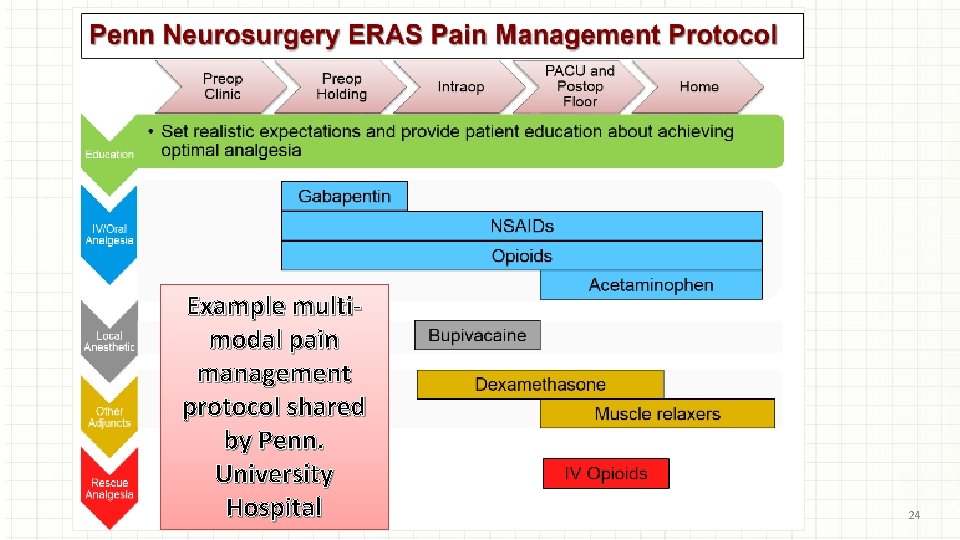
Example multimodal pain management protocol shared by Penn. University Hospital 24
25
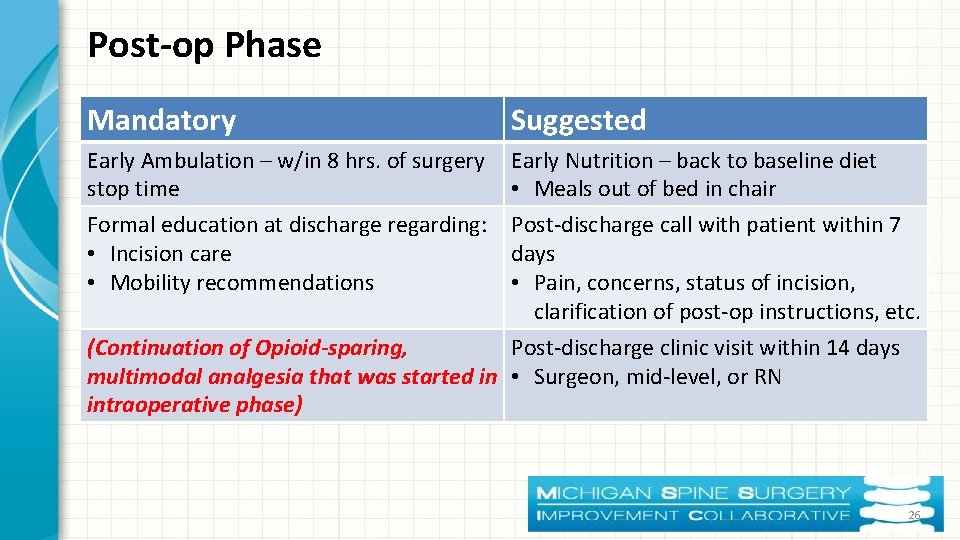
Post-op Phase Mandatory Suggested Early Ambulation – w/in 8 hrs. of surgery stop time Early Nutrition – back to baseline diet • Meals out of bed in chair Formal education at discharge regarding: • Incision care • Mobility recommendations Post-discharge call with patient within 7 days • Pain, concerns, status of incision, clarification of post-op instructions, etc. (Continuation of Opioid-sparing, Post-discharge clinic visit within 14 days multimodal analgesia that was started in • Surgeon, mid-level, or RN intraoperative phase) 26
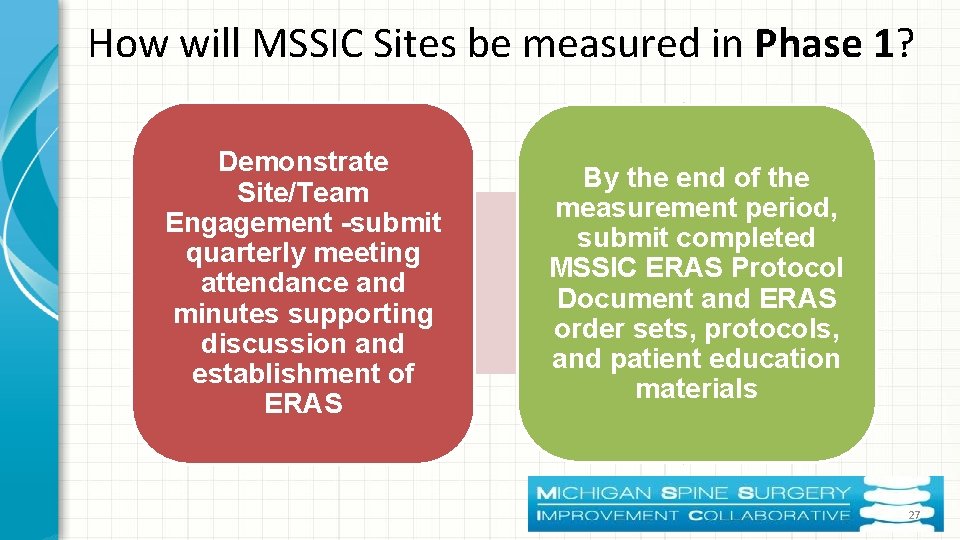
How will MSSIC Sites be measured in Phase 1? Demonstrate Site/Team Engagement -submit quarterly meeting attendance and minutes supporting discussion and establishment of ERAS By the end of the measurement period, submit completed MSSIC ERAS Protocol Document and ERAS order sets, protocols, and patient education materials 27
Suggestions for Success • ERAS Team Members… – – – Surgeons Surgeon Clinic Staff Anesthesia Pharmacy Administration Nursing (all levels) Pre-Admission Testing QI Staff Care Management Physical Therapy IT Department Nutrition/Dietary • Is there an existing ERAS program for other specialties? • Nurse Spine Navigator – Do you have one? • ERAS Coordinator? • ERAS Mobile app – can greatly enhance an ERAS initiative 28
• Phase 1 ERAS – 2021 (OR cases 10/1/20 -9/30/21): ERAS team engagement, development and submission of protocol, order sets, and education. Implementation by the end of the measurement period. • Phase 2 ERAS – 2022 (OR cases 10/1/21 -9/30/22): Measurement of successful implementation compliance of ERAS. 29

30
- Slides: 30