
Michigan Data Hub Overview MASA Conference Technology Readiness
Michigan Data Hub Overview MASA Conference Technology Readiness in Michigan
Data Hub Top 10 – The data hubs… Address data challenges 2. Are free and voluntary 3. Preserve local control of data & student privacy 4. Improve integration of systems 5. Provide state reporting enhancements 6. Provide a platform for collaboration 7. Provide dashboards 8. Provide single sign-on 9. Serve as a springboard to state initiatives 10. Can save Michigan districts over $56 M per year 1.
We have data challenges… Do you feel that your district or ISD does a great job with using data to improve student achievement? What are some of the data challenges that you experience? Others are experiencing too these

What data challenges do you/we face? Cost Inaccurate and Inconsistent Data Various Data Formats Data Security and Privacy Timeliness of data Integrations Prone to Breaking Need for actionable data
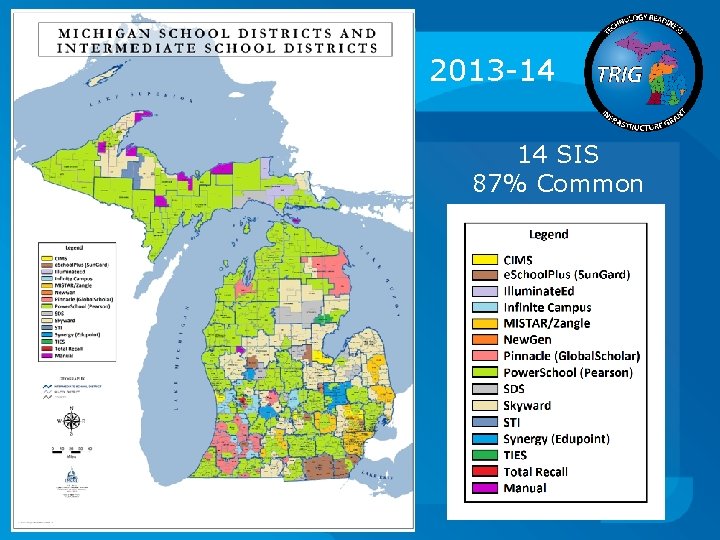
2013 -14 14 SIS 87% Common
Language in School Aid Budget Sec. 19(7) - BEGINNING IN 2016 -2017, THE DEPARTMENT SHALL IMPLEMENT statewide standard reporting requirements for education data approved by the department in conjunction with the center. The department shall work with the center, intermediate districts, and other interested stakeholders to IMPLEMENT this policy change. A district or intermediate district shall implement the statewide standard reporting requirements not later than 2017 -2018 or when a district or intermediate district updates its education data reporting system, whichever is later.

Data Integration Activity Vision The Data Integration activity is designed to streamline the use of educational information statewide through common data & common solutions
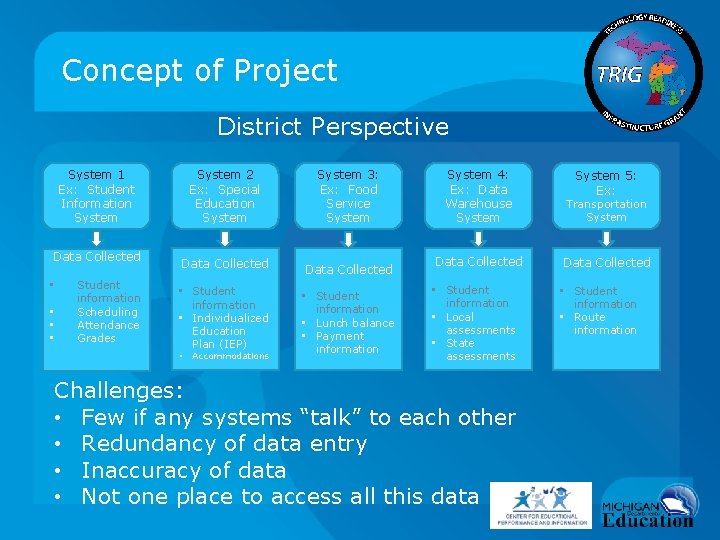
Concept of Project District Perspective System 1 Ex: Student Information System Data Collected • • Student information Scheduling Attendance Grades System 2 Ex: Special Education System 3: Ex: Food Service System Data Collected • Student information • Individualized Education Plan (IEP) • Accommodations • Student information • Lunch balance • Payment information System 4: Ex: Data Warehouse System Transportation System Data Collected • Student information • Local assessments • State assessments • Student information • Route information Challenges: • Few if any systems “talk” to each other • Redundancy of data entry • Inaccuracy of data • Not one place to access all this data System 5: Ex:
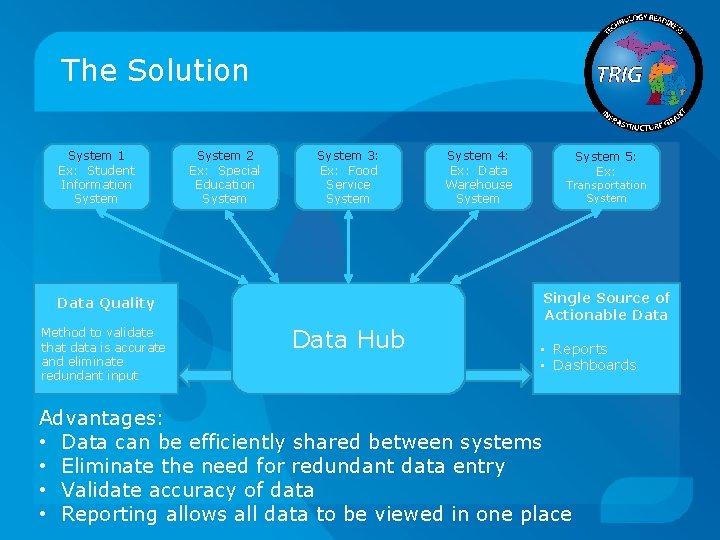
The Solution System 1 Ex: Student Information System 2 Ex: Special Education System 3: Ex: Food Service System 5: Ex: Transportation System Single Source of Actionable Data Quality Method to validate that data is accurate and eliminate redundant input System 4: Ex: Data Warehouse System Data Hub • Reports • Dashboards Advantages: • Data can be efficiently shared between systems • Eliminate the need for redundant data entry • Validate accuracy of data • Reporting allows all data to be viewed in one place
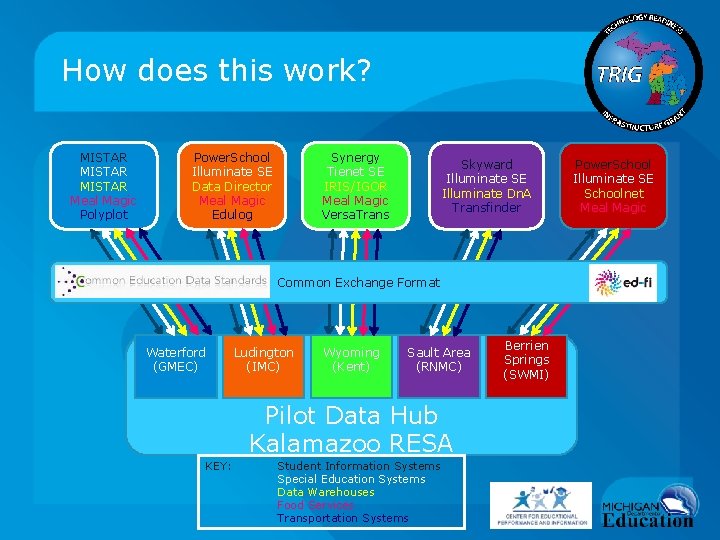
How does this work? MISTAR Meal Magic Polyplot Power. School Illuminate SE Data Director Meal Magic Edulog Synergy Tienet SE IRIS/IGOR Meal Magic Versa. Trans Skyward Illuminate SE Illuminate Dn. A Transfinder Common Exchange Format Waterford (GMEC) Ludington (IMC) Wyoming (Kent) Sault Area (RNMC) Pilot Data Hub Kalamazoo RESA KEY: Student Information Systems Special Education Systems Data Warehouses Food Services Transportation Systems Berrien Springs (SWMI) Power. School Illuminate SE Schoolnet Meal Magic
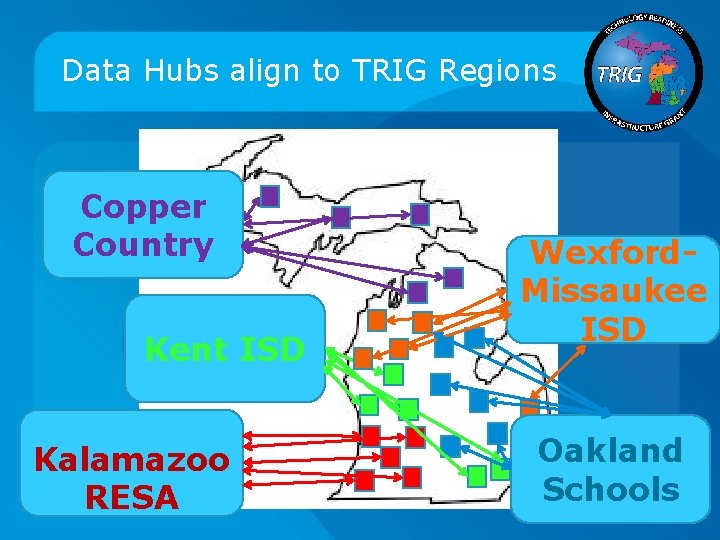
Data Hubs align to TRIG Regions Copper Country Kent ISD Kalamazoo RESA Wexford. Missaukee ISD Oakland Schools

2 - Are free and voluntary Currently have TRIG Funding through at least June, 2017 Expecting about $425, 000 to fill July 1 October 1, 2017 New state funding anticipated October 1, 2017 for at least a few years Need to realize tangible benefits before a cost would apply Data hubs not mandated, but potential to save money and increase actionable data Legislative mandate for data standards
3 – Local control and data privacy

Control of who has access
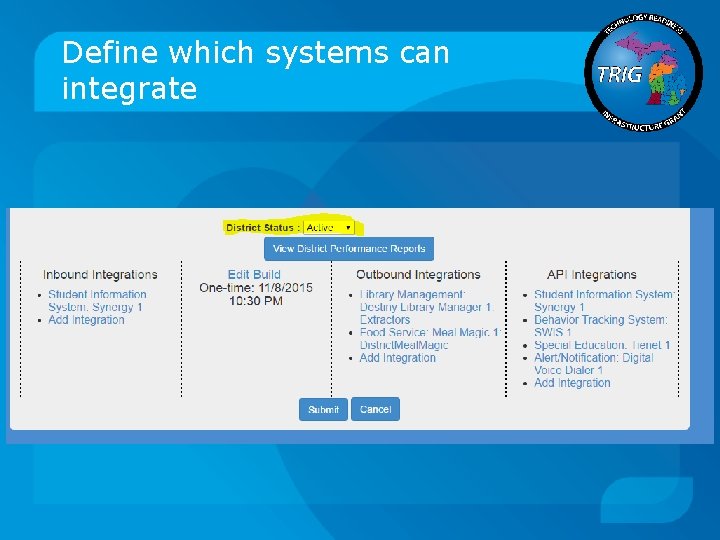
Define which systems can integrate
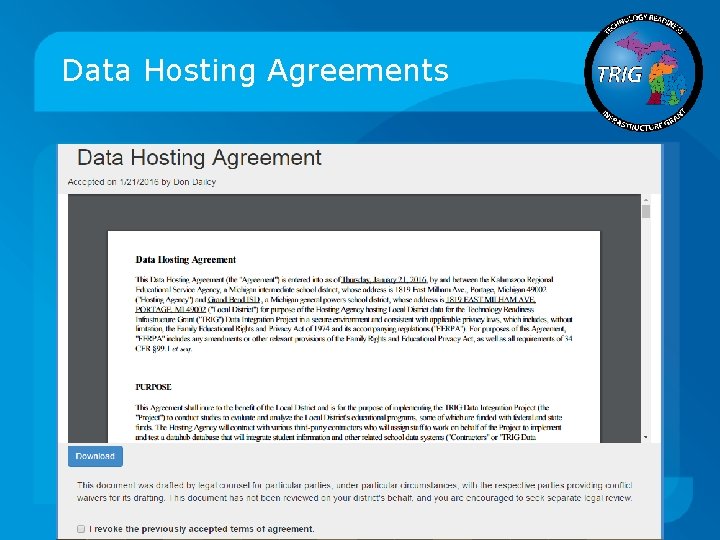
Data Hosting Agreements
Other protections Encryption at rest and in transit FERPA training for all data hub staff Very limited staff who have access to data Planning a security audit Ability to enable disable any or all integrations Data breach liability insurance at each hub • $1 M per occurrence • $2 M aggregate
4 – Improve Integrations Poor and lacking integration leads to: • Duplicate data entry • Inaccurate data • Time spent on data cleanup during state reporting Current efforts to integrate systems: • Prone to breaking • Duplicated effort across the state • Moving target as new systems constantly come onboard
What data is included? Demographic Program Attendance Discipline Grades Gradebook* Local Assessment State Assessment** Cohort Any extensions we create (MSDS, REP, FID)
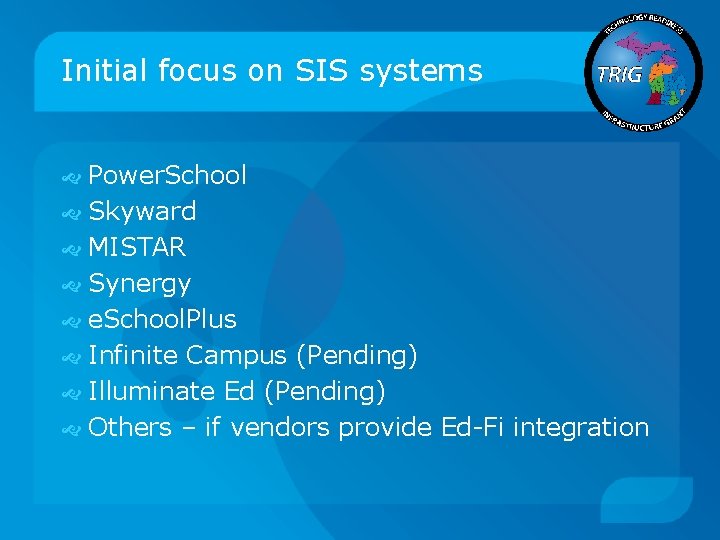
Initial focus on SIS systems Power. School Skyward MISTAR Synergy e. School. Plus Infinite Campus (Pending) Illuminate Ed (Pending) Others – if vendors provide Ed-Fi integration
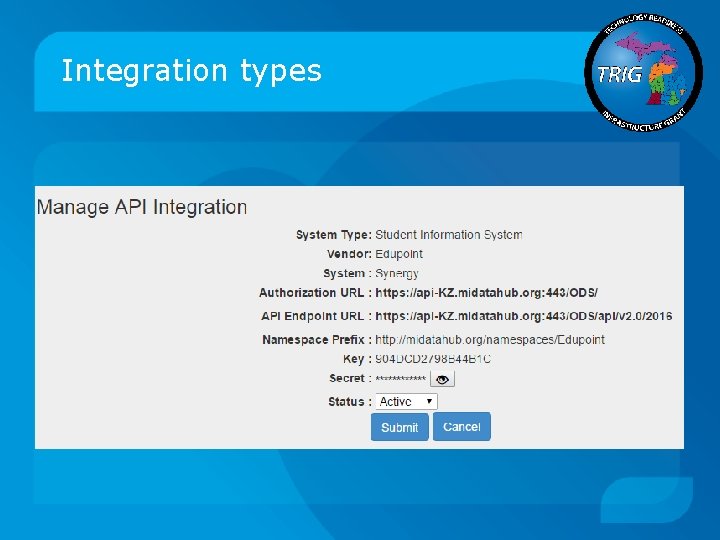
Integration types
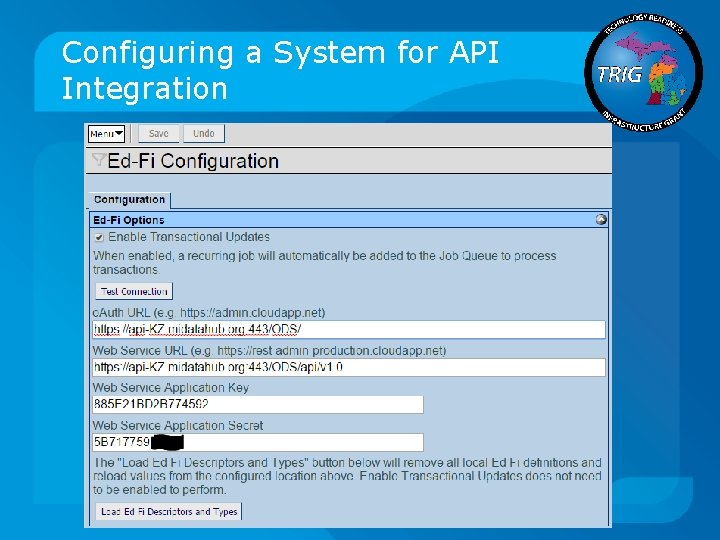
Configuring a System for API Integration
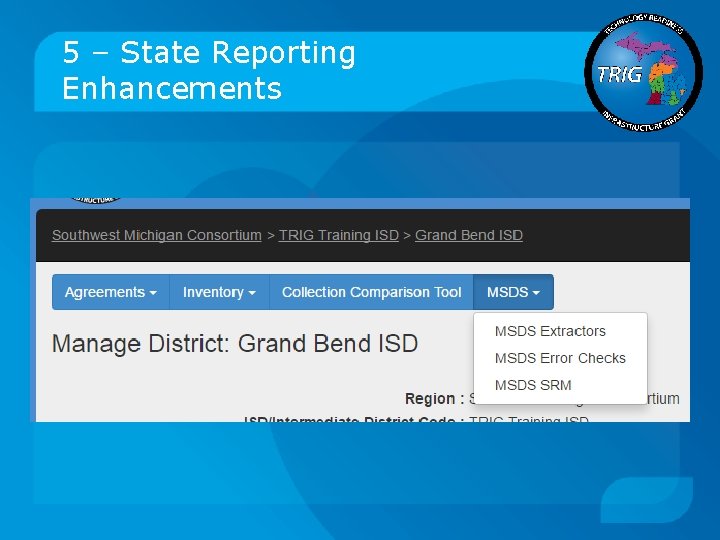
5 – State Reporting Enhancements

Reports
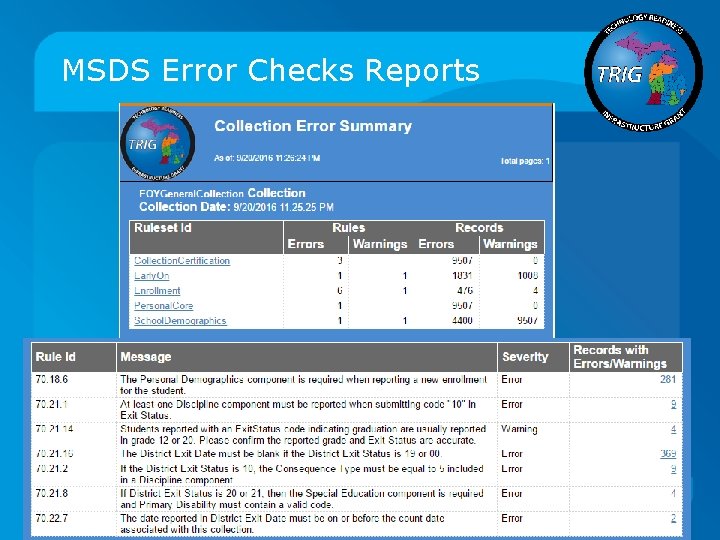
MSDS Error Checks Reports
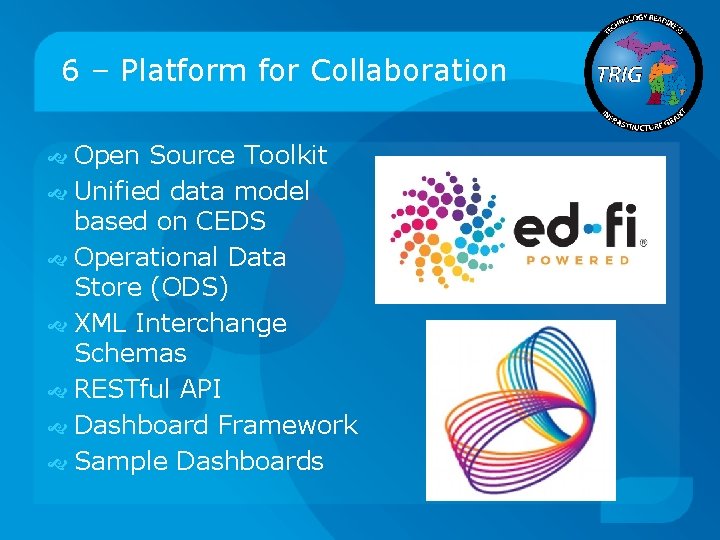
6 – Platform for Collaboration Open Source Toolkit Unified data model based on CEDS Operational Data Store (ODS) XML Interchange Schemas RESTful API Dashboard Framework Sample Dashboards
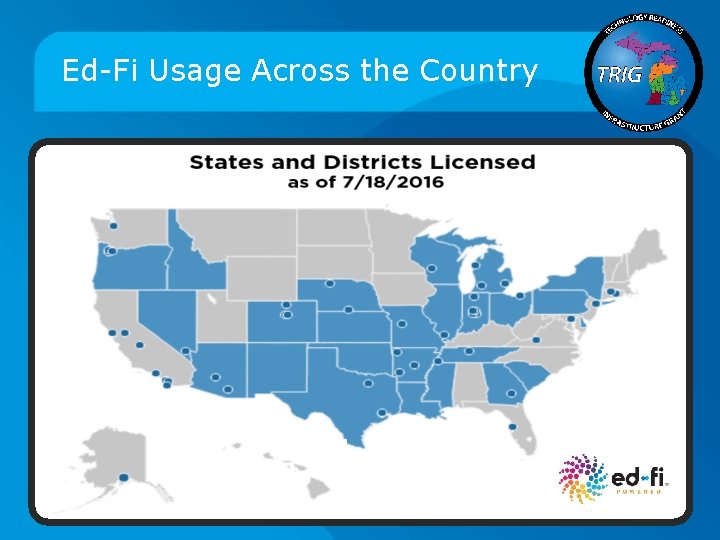
Ed-Fi Usage Across the Country
7 – Provide Dashboards Ed-Fi Dashboards Student dropout Early Warning System (EWS) Early Learning Insights Anything else we want to create
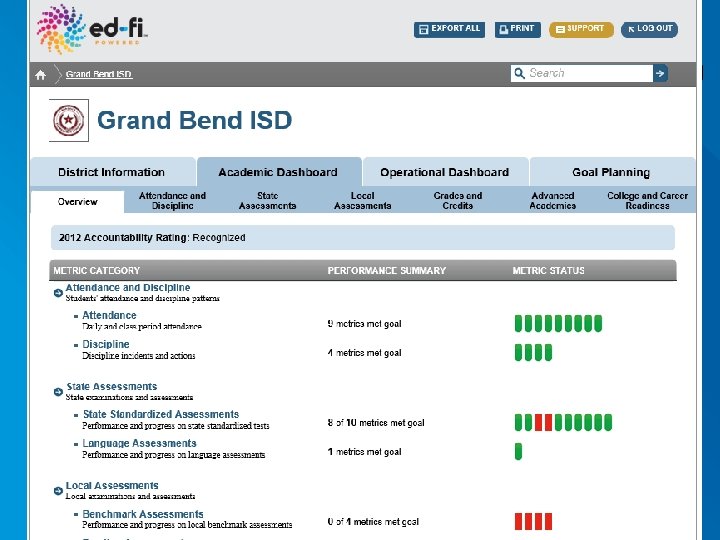
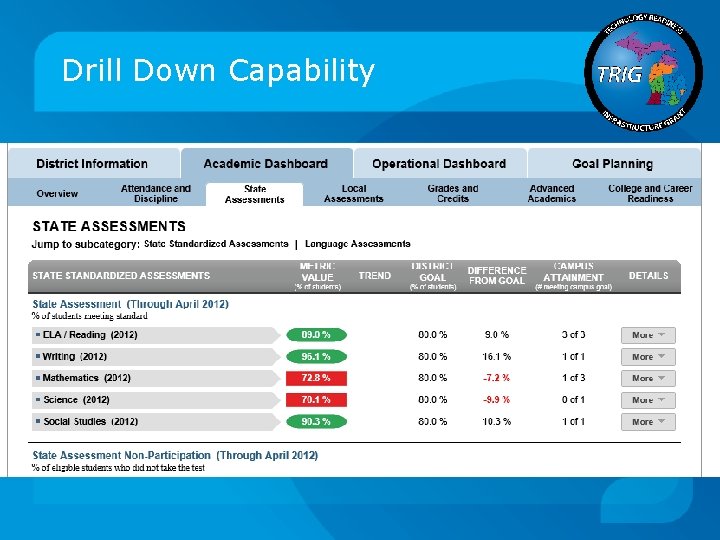
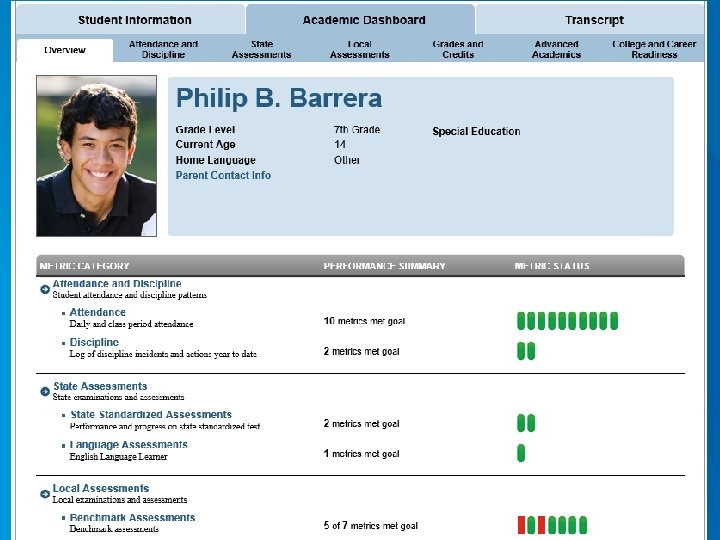
Drill Down Capability
Dynamic Watch Lists Teachers and administrators can create at a school, grade, or classroom level by using metric-based criteria as filters. When students cross thresholds defined by filter criteria, they are added to the specific Dynamic List. Categories for metric filters are: • • • student information attendance and discipline assessments grades and credits interventions sections (classes) Notifications are sent to list owners when students are added to or dropped from a Dynamic Lists can be shared among educators within a school that allow filter criteria to be a template. This feature is in the core dashboard.

Student Info
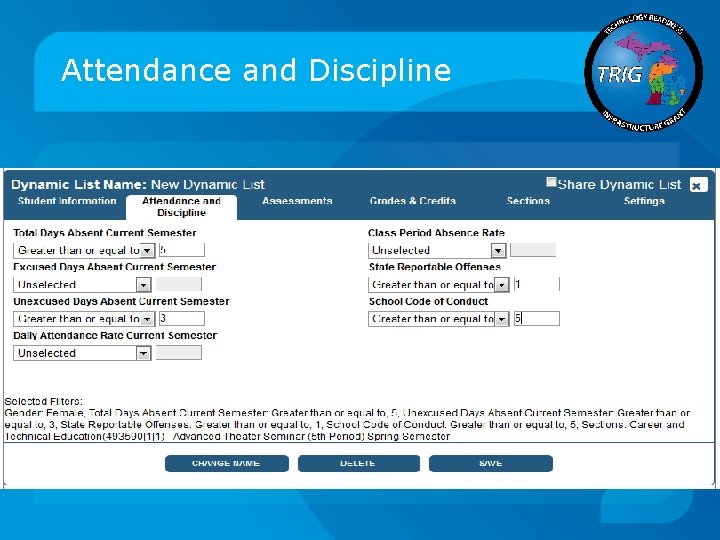
Attendance and Discipline

Assessments

Grades and Credits

Sections

Settings
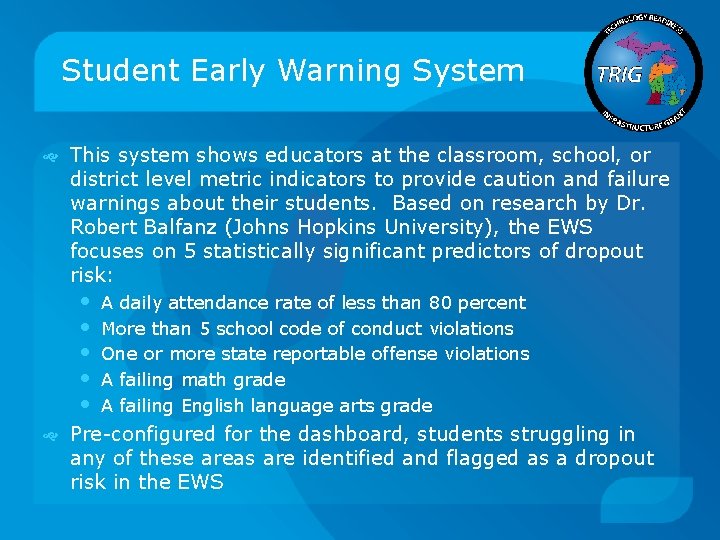
Student Early Warning System This system shows educators at the classroom, school, or district level metric indicators to provide caution and failure warnings about their students. Based on research by Dr. Robert Balfanz (Johns Hopkins University), the EWS focuses on 5 statistically significant predictors of dropout risk: • • • A daily attendance rate of less than 80 percent More than 5 school code of conduct violations One or more state reportable offense violations A failing math grade A failing English language arts grade Pre-configured for the dashboard, students struggling in any of these areas are identified and flagged as a dropout risk in the EWS
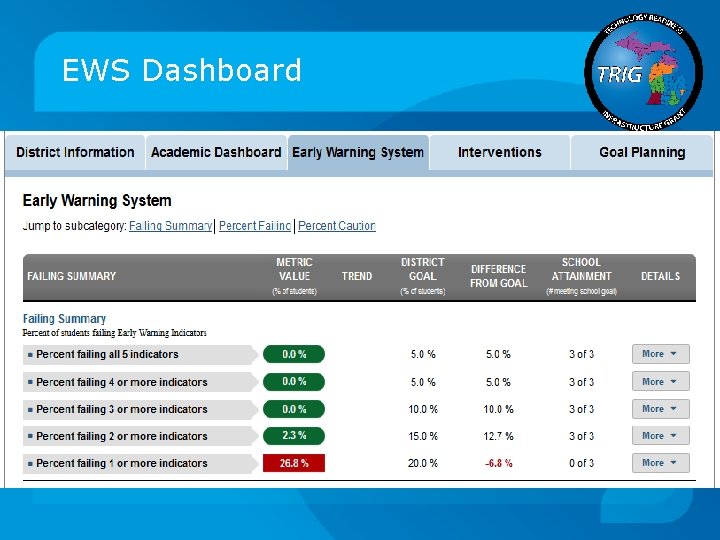
EWS Dashboard
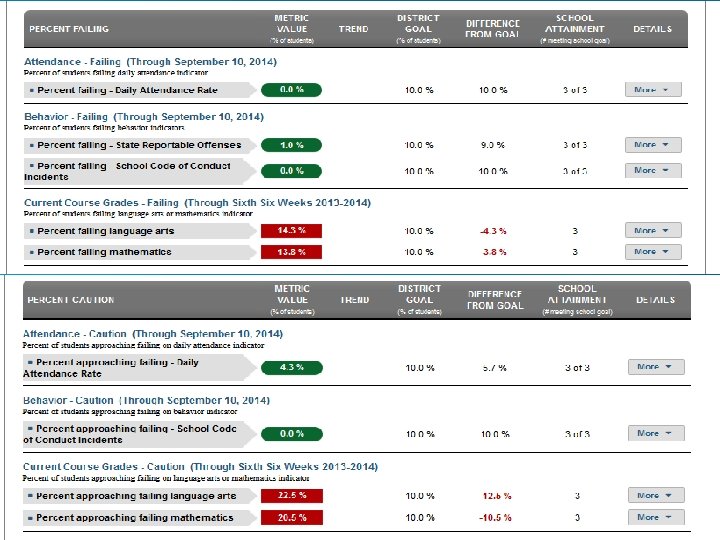

Student Level Detail
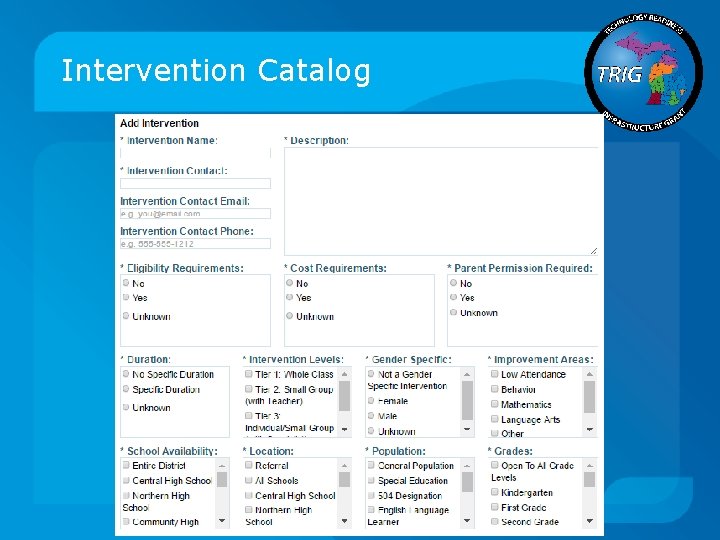
Intervention Catalog
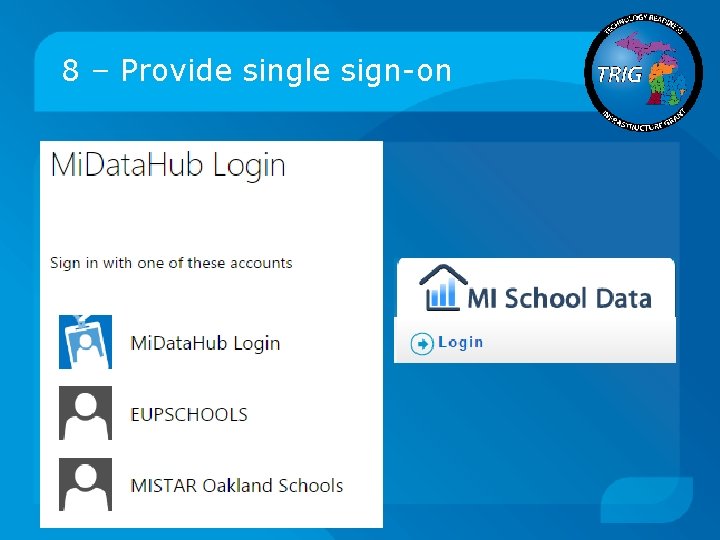
8 – Provide single sign-on
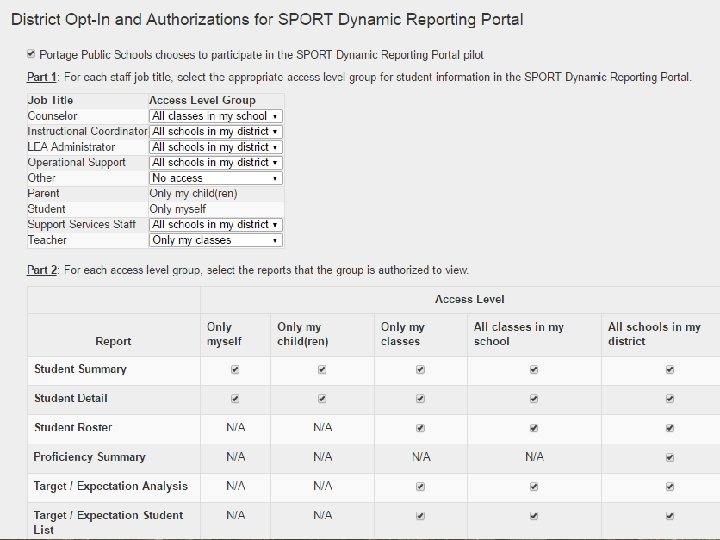
9 – Springboard state initiatives SPORT – Student Parent Online Reporting Tool MIExcel – Dashboards for Priority and Focus schools EWS Supports Pilot Competency-based transcripts Transfer of state assessment data direct to hubs Evaluate others as they come along
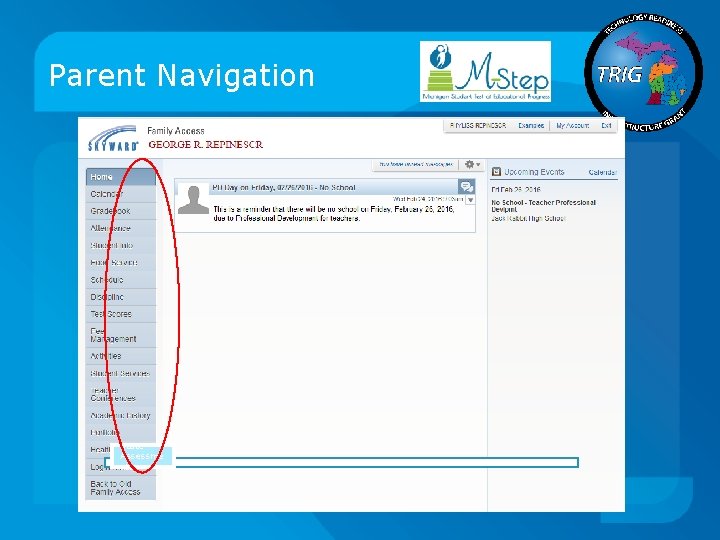
Parent Navigation State Assessme nts
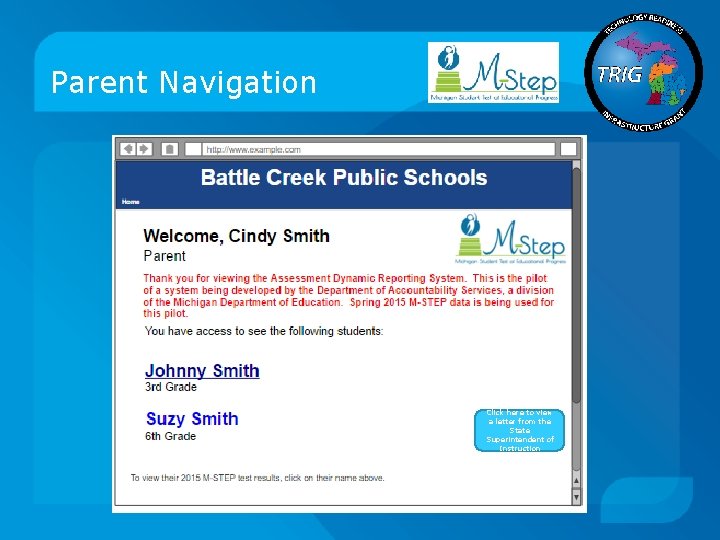
Parent Navigation Click here to view a letter from the State Superintendent of Instruction
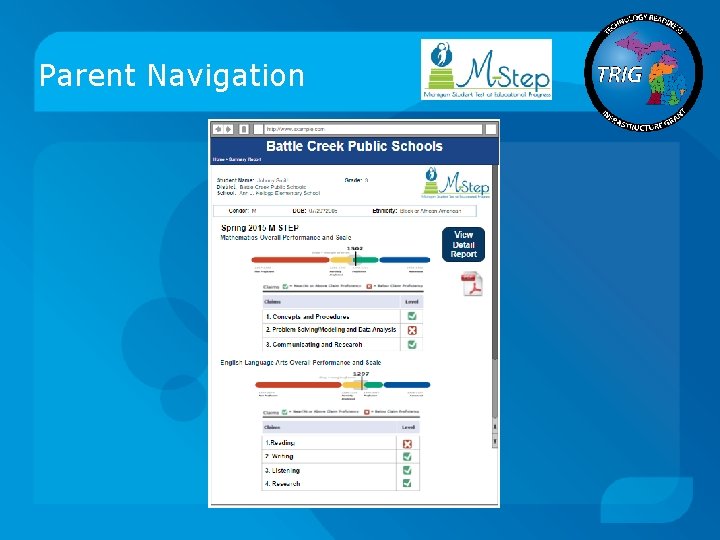
Parent Navigation
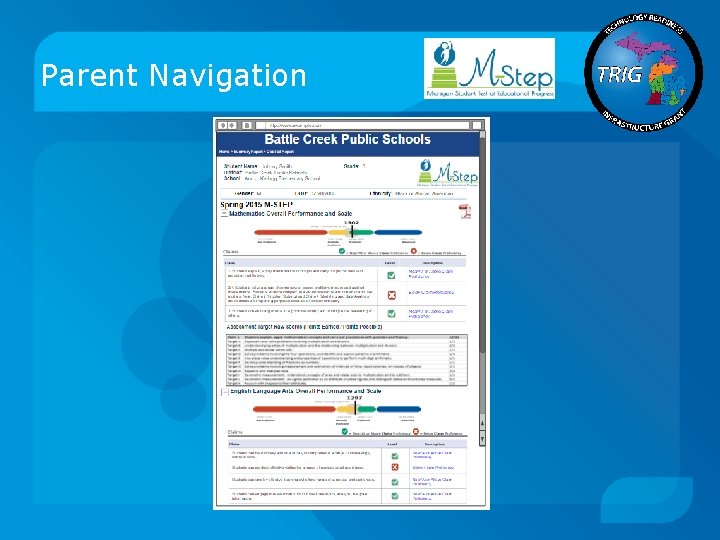
Parent Navigation
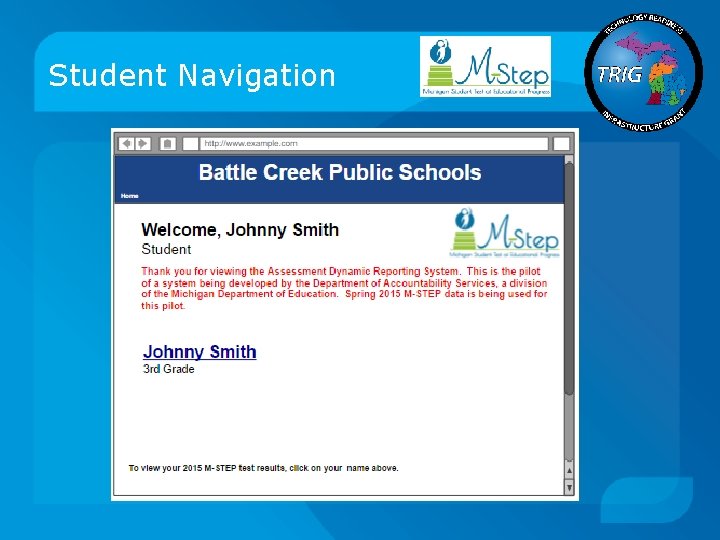
Student Navigation

Student Navigation
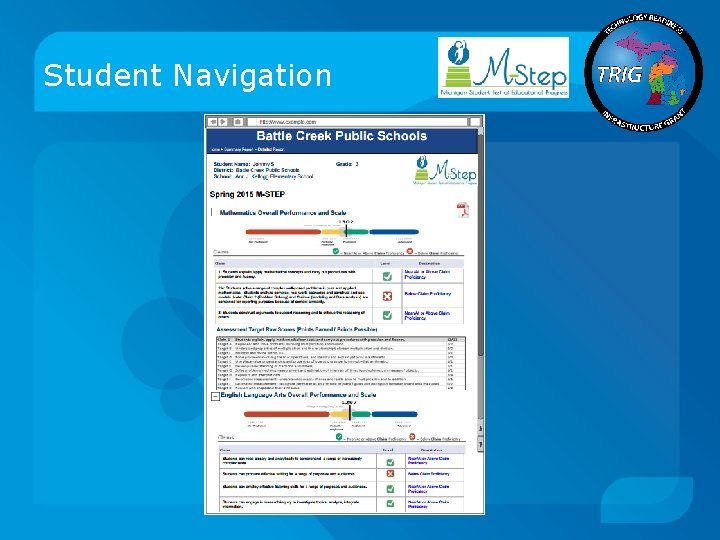
Student Navigation
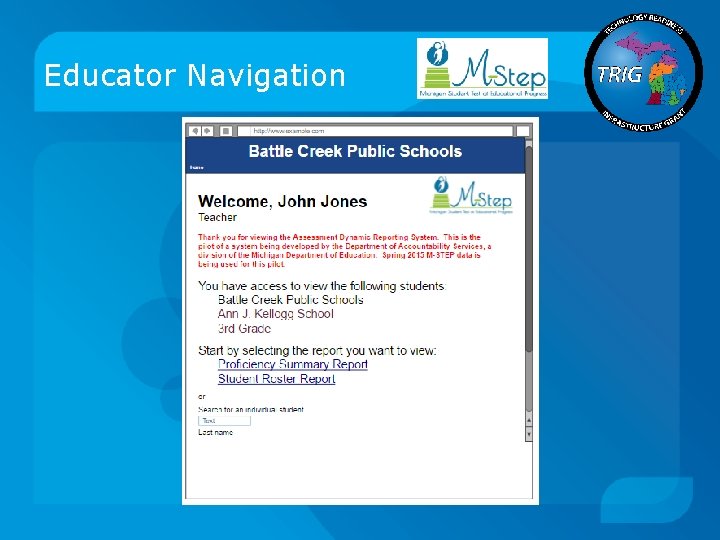
Educator Navigation
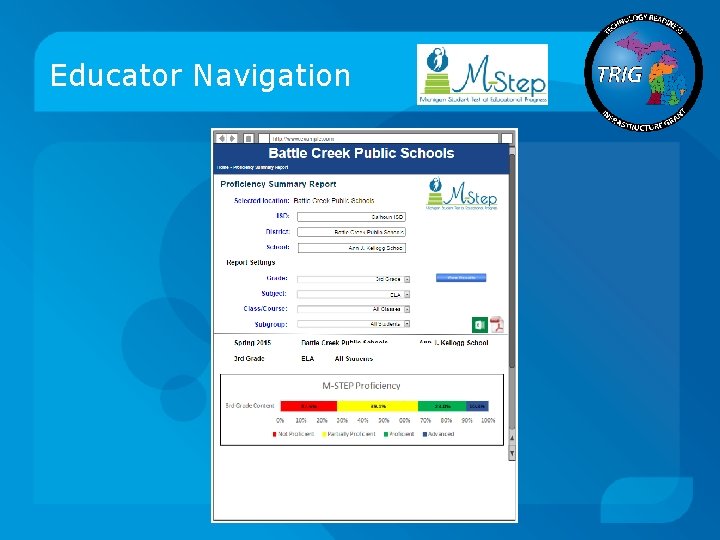
Educator Navigation

Educator Navigation

Educator Navigation

Educator Navigation
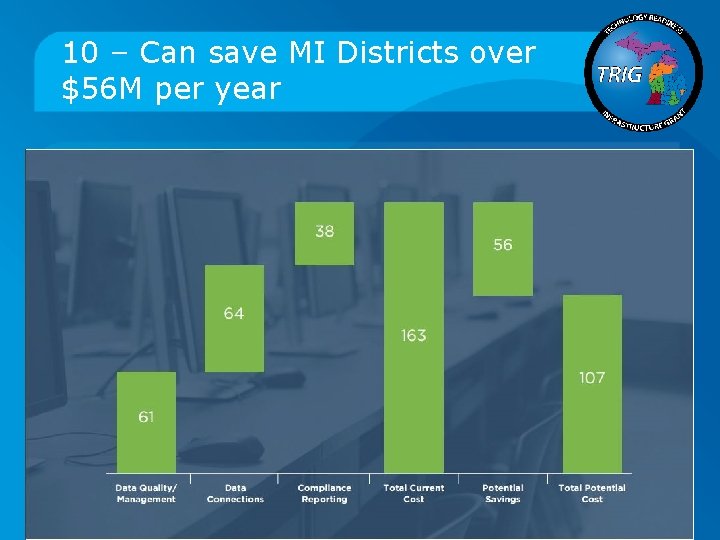
10 – Can save MI Districts over $56 M per year
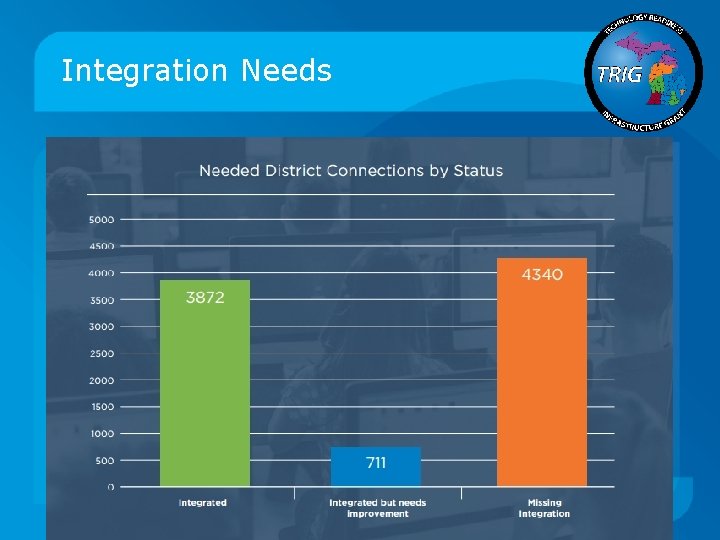
Integration Needs
For Future Consideration Student Record Movement Data Warehouse/Analytics Interventions App Store
Implementation Steps Complete Data Hosting Agreement – Electronic Signature Data Hub Support Specialist Assigned Cockpit Configuration SIS Config and Integration Data Quality Verification Usage of Approved Third-Party Integrations Usage of Additional Data Hub Capabilities
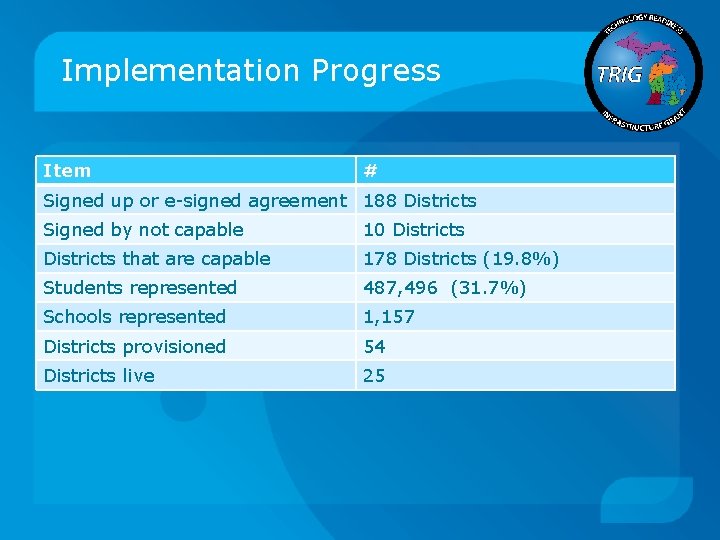
Implementation Progress Item # Signed up or e-signed agreement 188 Districts Signed by not capable 10 Districts that are capable 178 Districts (19. 8%) Students represented 487, 496 (31. 7%) Schools represented 1, 157 Districts provisioned 54 Districts live 25
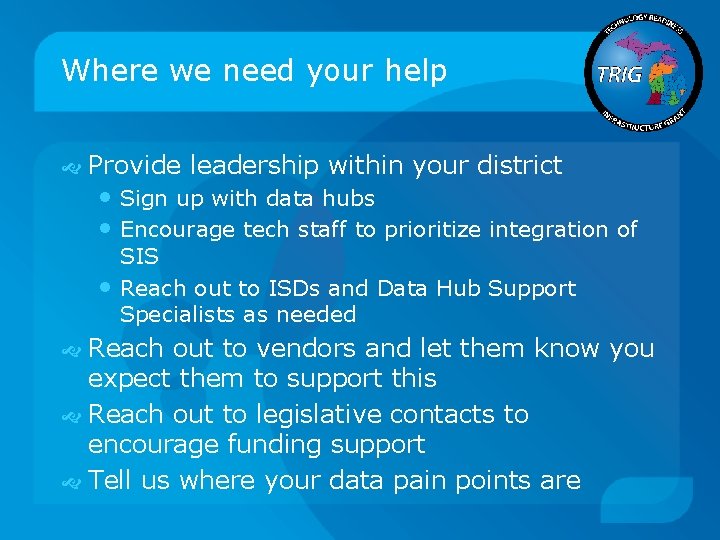
Where we need your help Provide leadership within your district • Sign up with data hubs • Encourage tech staff to prioritize integration of • SIS Reach out to ISDs and Data Hub Support Specialists as needed Reach out to vendors and let them know you expect them to support this Reach out to legislative contacts to encourage funding support Tell us where your data pain points are
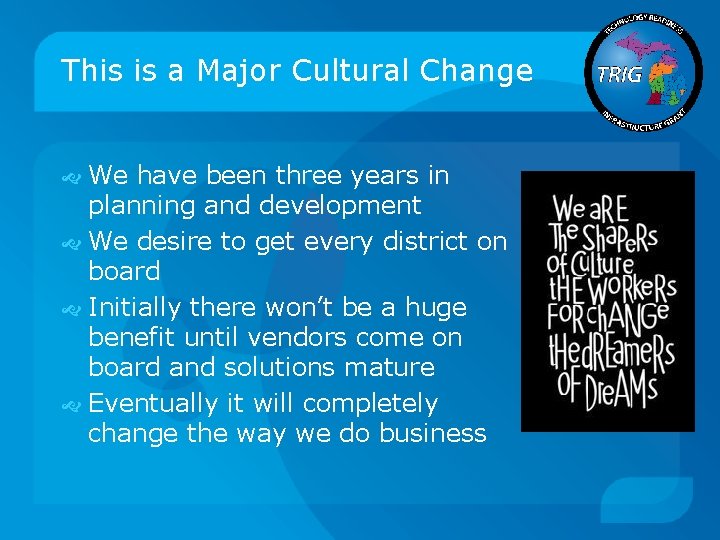
This is a Major Cultural Change We have been three years in planning and development We desire to get every district on board Initially there won’t be a huge benefit until vendors come on board and solutions mature Eventually it will completely change the way we do business
Questions Visit our website at 22 itrig. org for more information Contact Information • Don Dailey • Don. Dailey@Kresa. org • 269 -250 -9264
- Slides: 67