
MHD Turbulence and Energetic Particles Alex Lazarian Astronomy
MHD Turbulence and Energetic Particles Alex Lazarian (Astronomy, Physics and CMSO) Thanks to: H. Yan, A. Beresnyak, J. Cho, G. Kowal, A. Chepurnov , G. Brunetti, V. Petrosian, E. Vishniac, G.
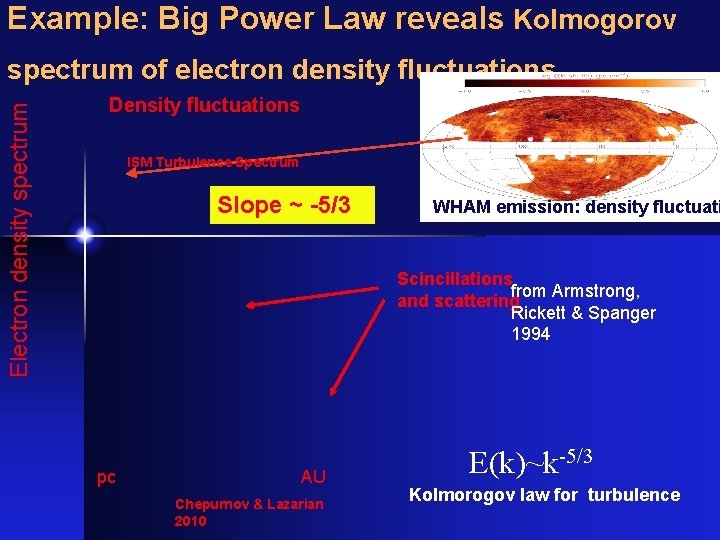
Example: Big Power Law reveals Kolmogorov Electron density spectrum of electron density fluctuations Density fluctuations ISM Turbulence Spectrum Slope ~ -5/3 WHAM emission: density fluctuati Scincillations from Armstrong, and scattering Rickett & Spanger 1994 pc AU Chepurnov & Lazarian 2010 E(k)~k-5/3 Kolmorogov law for turbulence
This talk shows that turbulence is essential for understanding CR acceleration, makes 4 points: Turbulent 2 nd order Fermi Acceleration Turbulence and shock acceleration Turbulent reconnection induces acceleration “
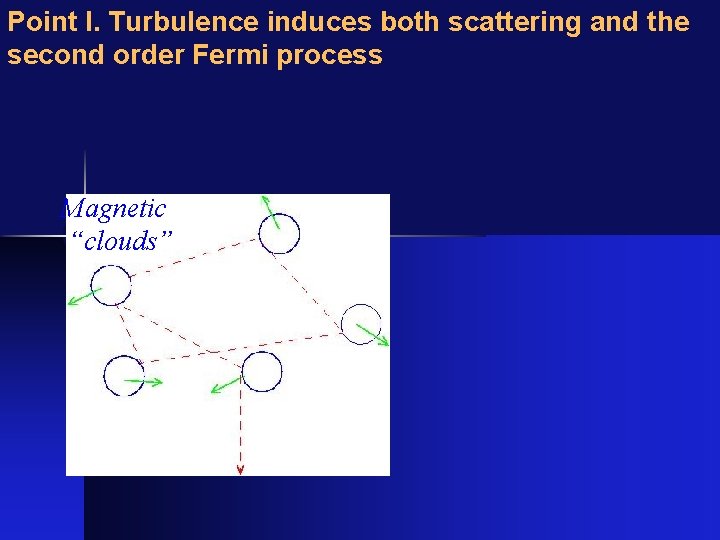
Point I. Turbulence induces both scattering and the second order Fermi process Magnetic “clouds”
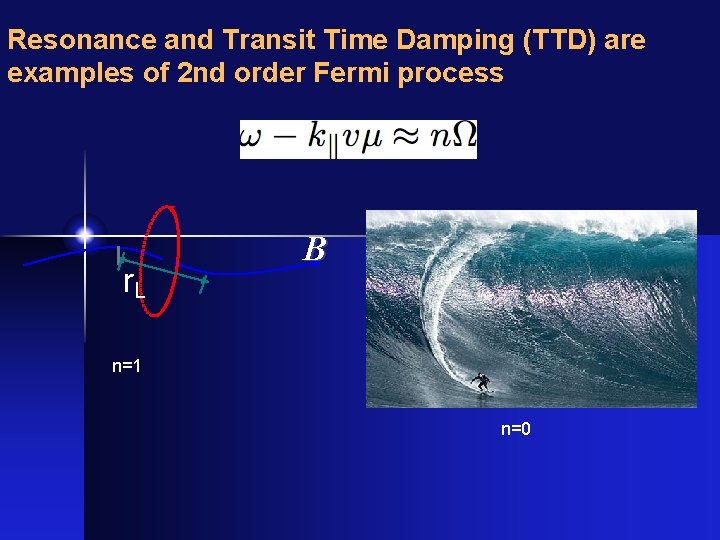
Resonance and Transit Time Damping (TTD) are examples of 2 nd order Fermi process r. L B n=1 n=0
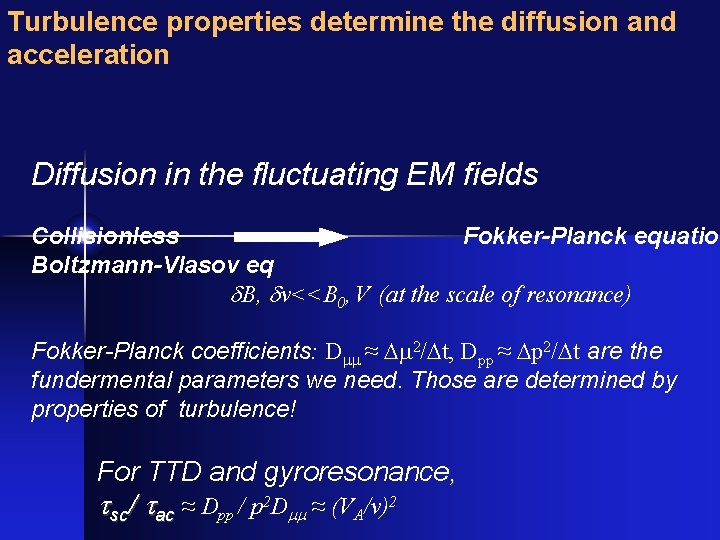
Turbulence properties determine the diffusion and acceleration Diffusion in the fluctuating EM fields Collisionless Fokker-Planck equation Boltzmann-Vlasov eq d. B, dv<<B 0, V (at the scale of resonance) Fokker-Planck coefficients: Dmm ≈ Dm 2/Dt, Dpp ≈ Dp 2/Dt are the fundermental parameters we need. Those are determined by properties of turbulence! For TTD and gyroresonance, tsc/ tac ≈ Dpp / p 2 Dmm ≈ (VA/v)2
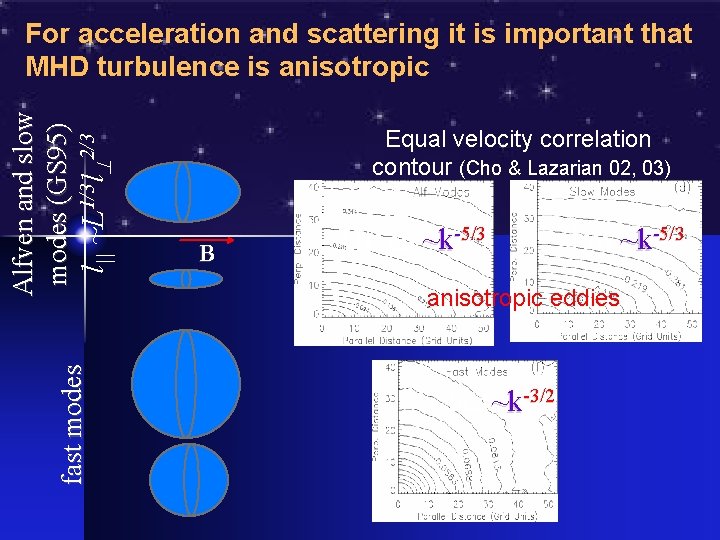
l|| ~L 1/3 l^2/3 fast modes Alfven and slow modes (GS 95) For acceleration and scattering it is important that MHD turbulence is anisotropic Equal velocity correlation contour (Cho & Lazarian 02, 03) B Alfven ~k-5/3 slow ~k-5/3 anisotropic eddies fast ~k-3/2
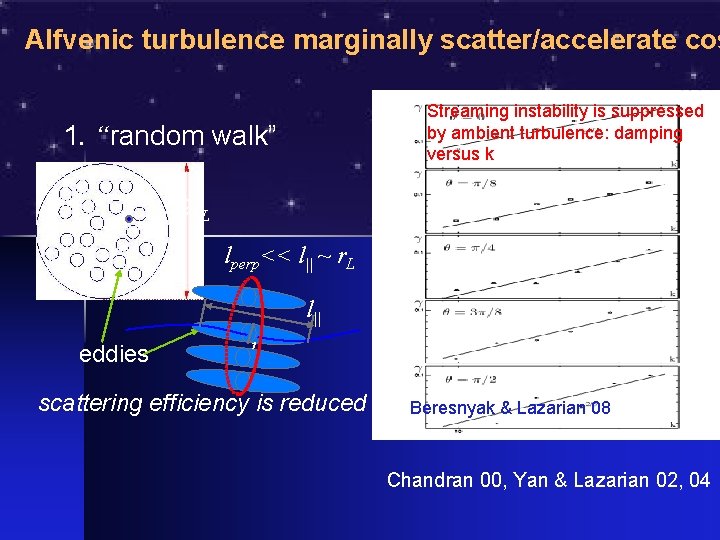
1. “random walk” B 2 r. L lperp<< l|| ~ r. L l|| eddies l⊥ scattering efficiency is reduced Scattering frequency Alfvenic turbulence marginally scatter/accelerate cos Streaming instability is suppressed Alfven modes by ambient turbulence: damping 2. “steep spectrum” versus k -5/3, k ~ L 1/3 k 3/2 E(k ⊥)~ k(Kolmogorov) ⊥ ⊥ || -2 Big. E(k difference!!! ) ~ k || || B steeper than Kolmogorov! Less energy on resonant B scale (Chandran 2000) Kinetic energy Beresnyak & Lazarian 08 Chandran 00, Yan & Lazarian 02, 04
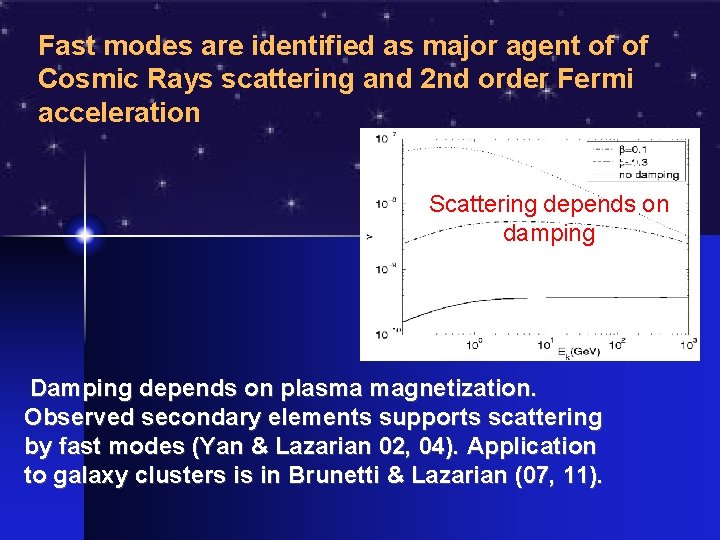
Fast modes are identified as major agent of of Cosmic Rays scattering and 2 nd order Fermi acceleration fast modes Scattering depends on damping Damping depends on plasma magnetization. Observed secondary elements supports scattering by fast modes (Yan & Lazarian 02, 04). Application to galaxy clusters is in Brunetti & Lazarian (07, 11).
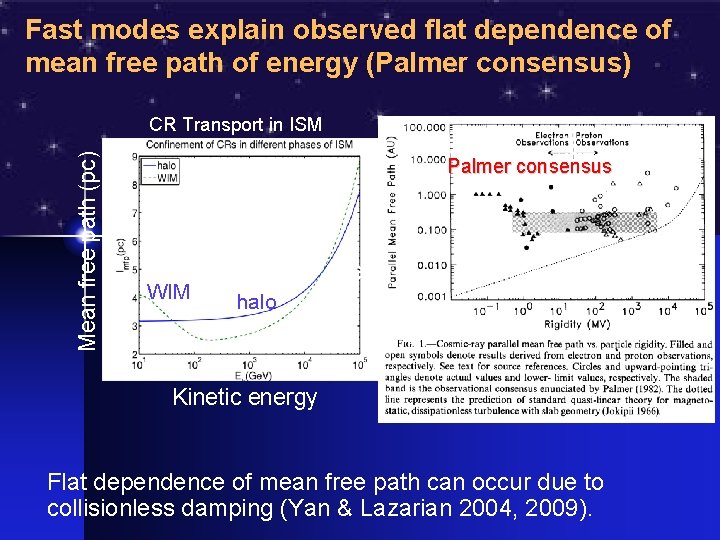
Fast modes explain observed flat dependence of mean free path of energy (Palmer consensus) Mean free path (pc) CR Transport in ISM Palmer consensus WIM Text halo from Bieber et al 1994 Kinetic energy Flat dependence of mean free path can occur due to collisionless damping (Yan & Lazarian 2004, 2009).
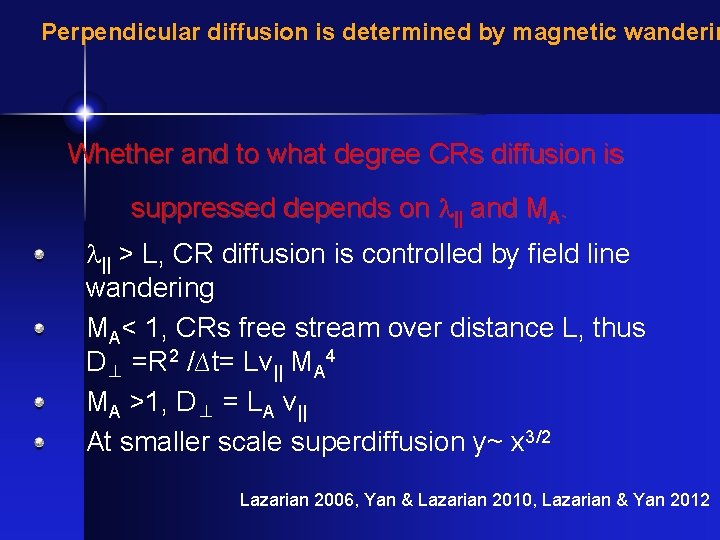
Perpendicular diffusion is determined by magnetic wanderin Whether and to what degree CRs diffusion is suppressed depends on || and MA. || > L, CR diffusion is controlled by field line wandering MA< 1, CRs free stream over distance L, thus D⊥ =R 2 /∆t= Lv|| MA 4 MA >1, D⊥ = LA v|| At smaller scale superdiffusion y~ x 3/2 Lazarian 2006, Yan & Lazarian 2010, Lazarian & Yan 2012
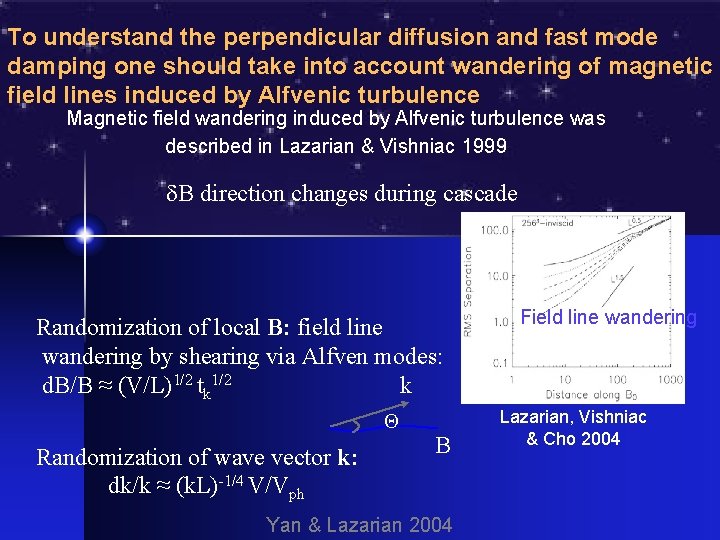
To understand the perpendicular diffusion and fast mode damping one should take into account wandering of magnetic field lines induced by Alfvenic turbulence Magnetic field wandering induced by Alfvenic turbulence was described in Lazarian & Vishniac 1999 d. B direction changes during cascade Randomization of local B: field line wandering by shearing via Alfven modes: k d. B/B ≈ (V/L)1/2 tk 1/2 Q Randomization of wave vector k: dk/k ≈ (k. L)-1/4 V/Vph B Yan & Lazarian 2004 Field line wandering Lazarian, Vishniac & Cho 2004
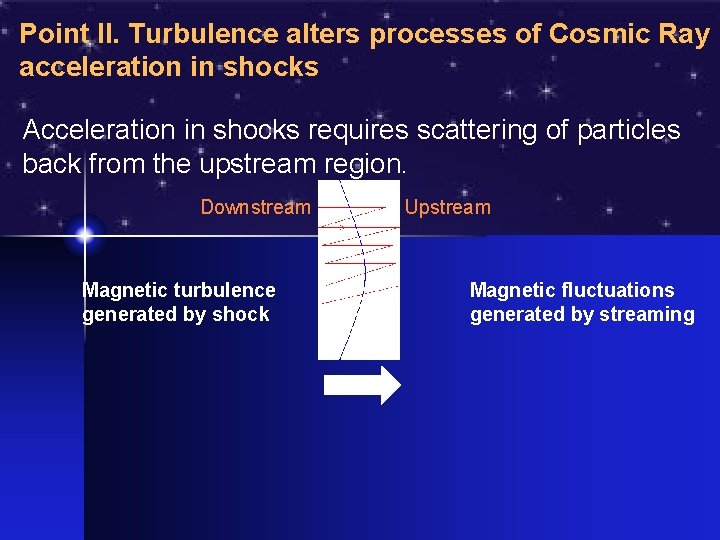
Point II. Turbulence alters processes of Cosmic Ray acceleration in shocks Acceleration in shocks requires scattering of particles back from the upstream region. Downstream Magnetic turbulence generated by shock Upstream Magnetic fluctuations generated by streaming
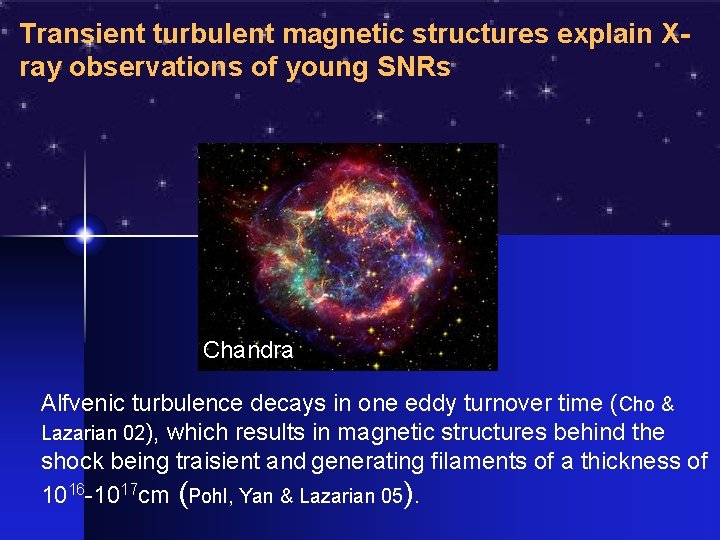
Transient turbulent magnetic structures explain Xray observations of young SNRs Chandra Alfvenic turbulence decays in one eddy turnover time (Cho & Lazarian 02), which results in magnetic structures behind the shock being traisient and generating filaments of a thickness of 1016 -1017 cm (Pohl, Yan & Lazarian 05).
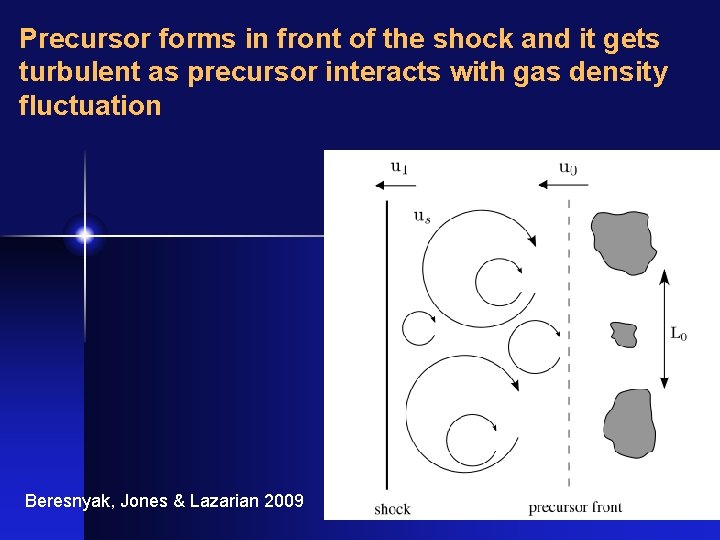
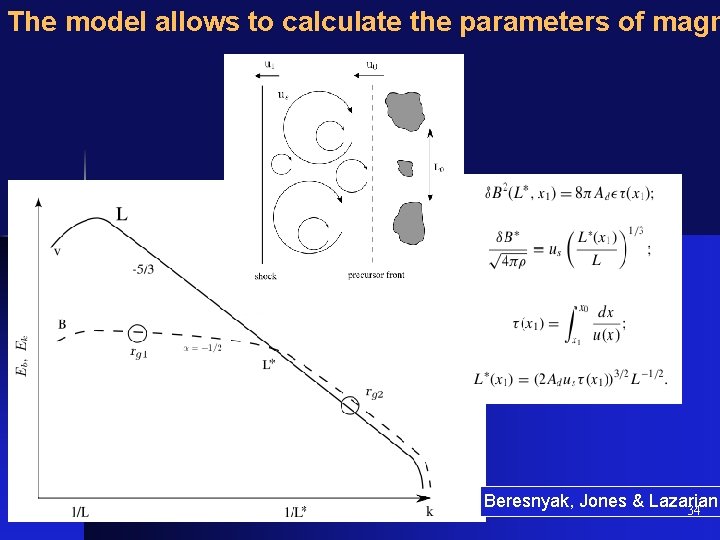
Precursor forms in front of the shock and it gets turbulent as precursor interacts with gas density fluctuation Beresnyak, Jones & Lazarian 2009 15
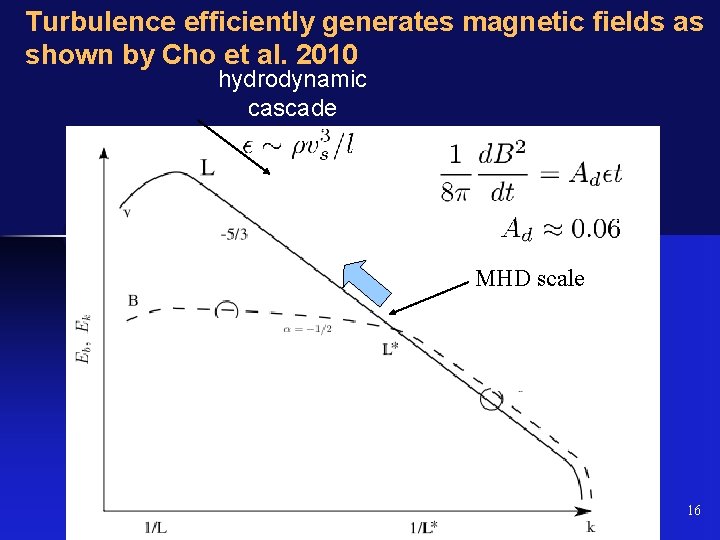
Turbulence efficiently generates magnetic fields as shown by Cho et al. 2010 hydrodynamic cascade MHD scale 16
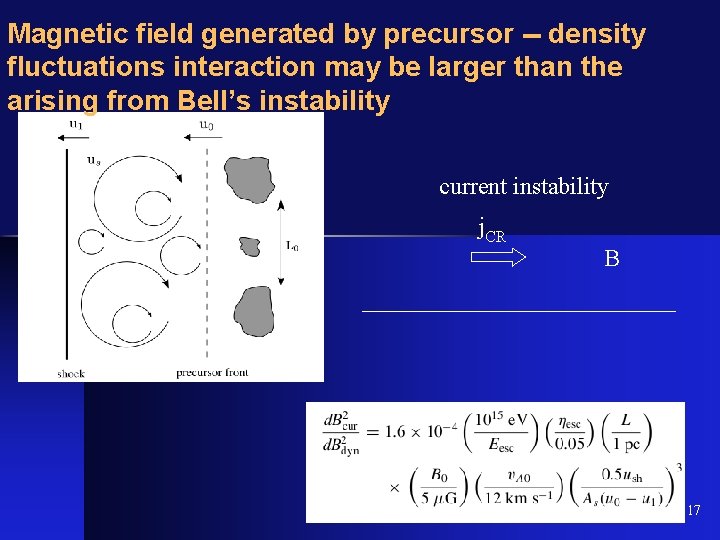
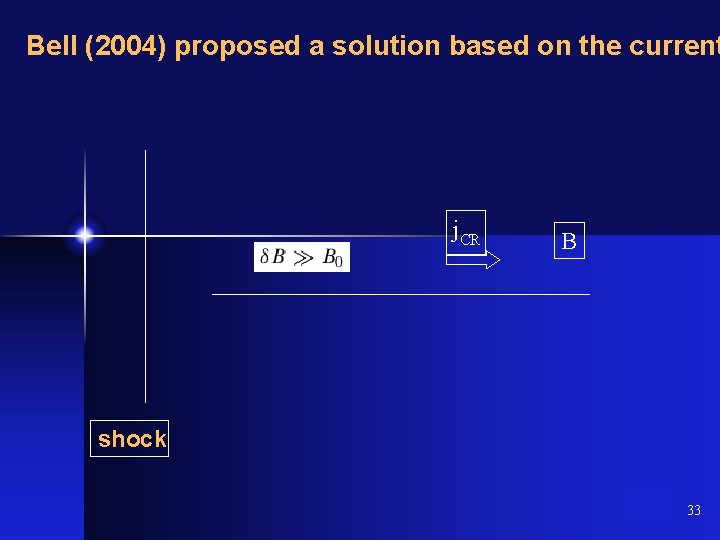
Magnetic field generated by precursor -- density fluctuations interaction may be larger than the arising from Bell’s instability current instability j. CR B 17
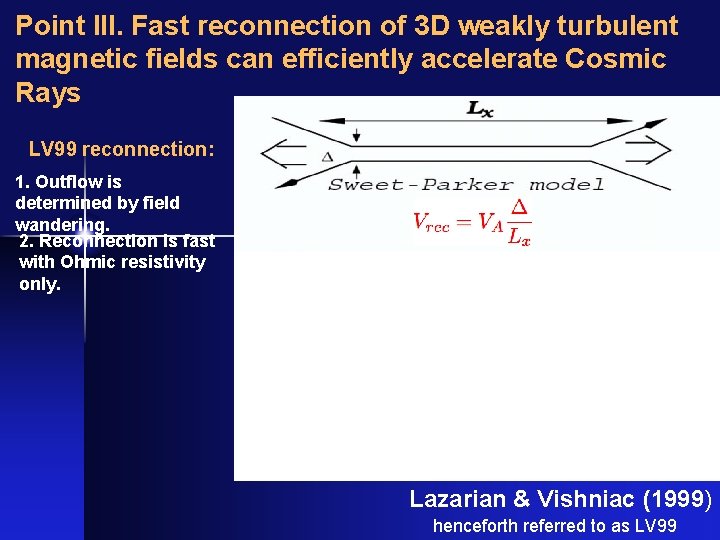
Point III. Fast reconnection of 3 D weakly turbulent magnetic fields can efficiently accelerate Cosmic Rays LV 99 reconnection: 1. Outflow is determined by field wandering. 2. Reconnection is fast with Ohmic resistivity only. B dissipates on a small scale || determined by turbulence statistics. Lazarian & Vishniac (1999) henceforth referred to as LV 99
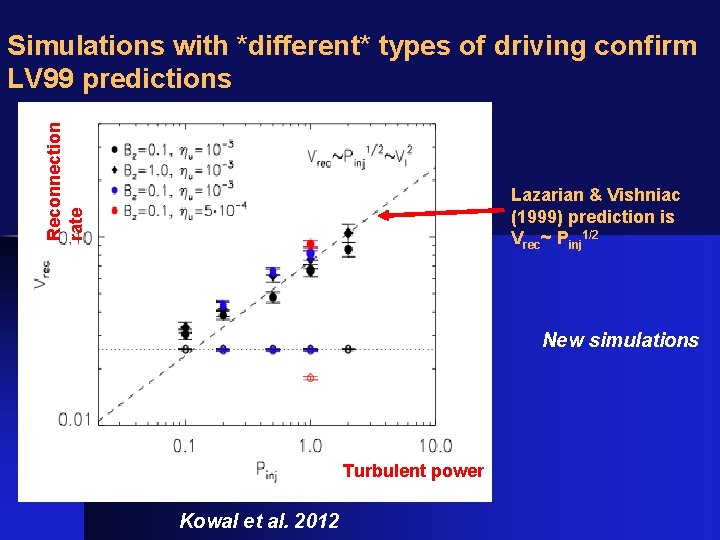
Reconnection rate Simulations with *different* types of driving confirm LV 99 predictions Lazarian & Vishniac (1999) prediction is Vrec~ Pinj 1/2 New simulations Turbulent power Kowal et al. 2012
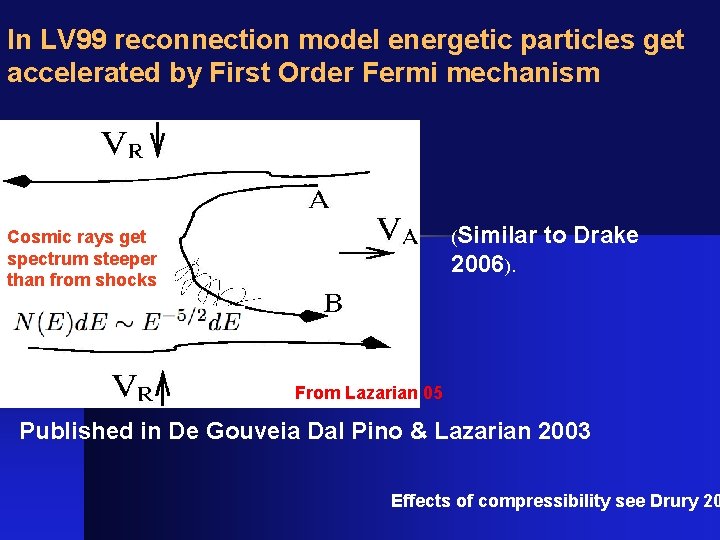
In LV 99 reconnection model energetic particles get accelerated by First Order Fermi mechanism (Similar Cosmic rays get spectrum steeper than from shocks to Drake 2006). From Lazarian 05 Published in De Gouveia Dal Pino & Lazarian 2003 Effects of compressibility see Drury 20
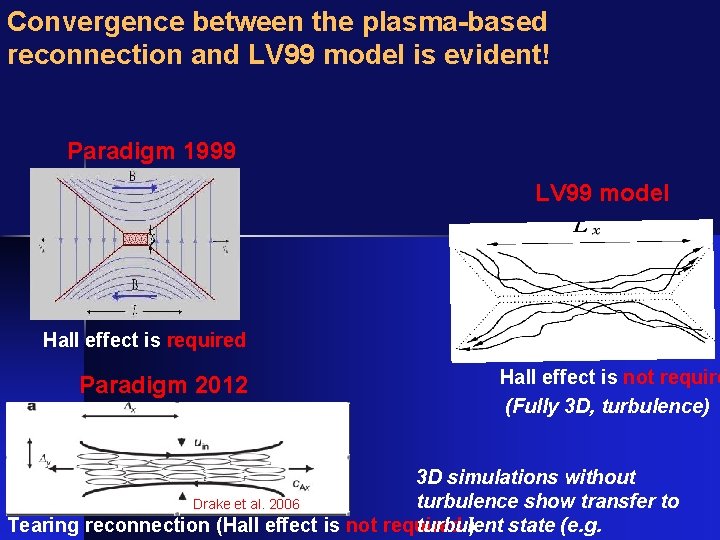
Convergence between the plasma-based reconnection and LV 99 model is evident! Paradigm 1999 LV 99 model Hall effect is required Paradigm 2012 Hall effect is not require (Fully 3 D, turbulence) 3 D simulations without turbulence show transfer to Drake et al. 2006 Tearing reconnection (Hall effect is not required ) turbulent state (e. g.
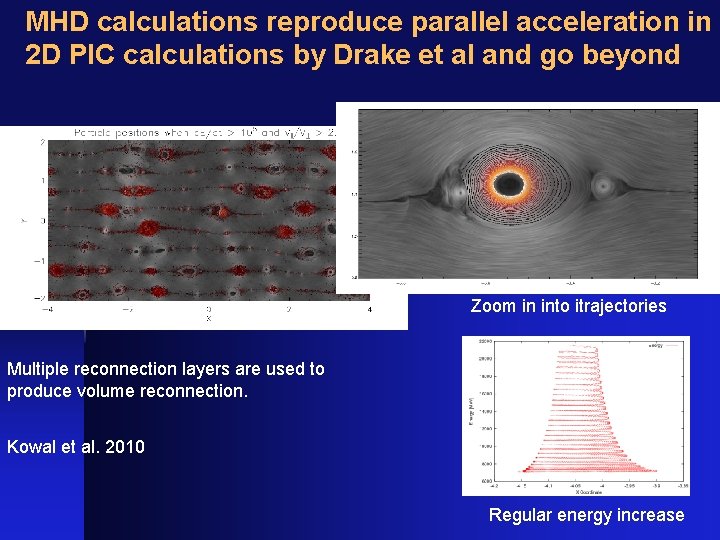
MHD calculations reproduce parallel acceleration in 2 D PIC calculations by Drake et al and go beyond Zoom in into itrajectories Multiple reconnection layers are used to produce volume reconnection. Kowal et al. 2010 Regular energy increase
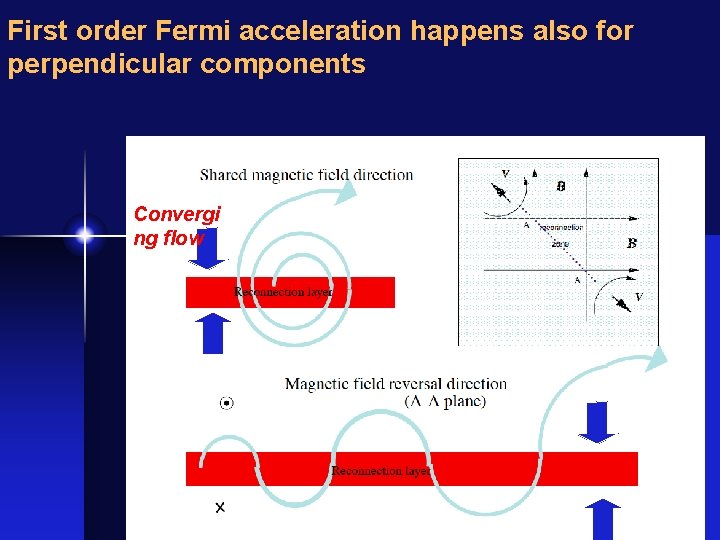
First order Fermi acceleration happens also for perpendicular components Convergi ng flow
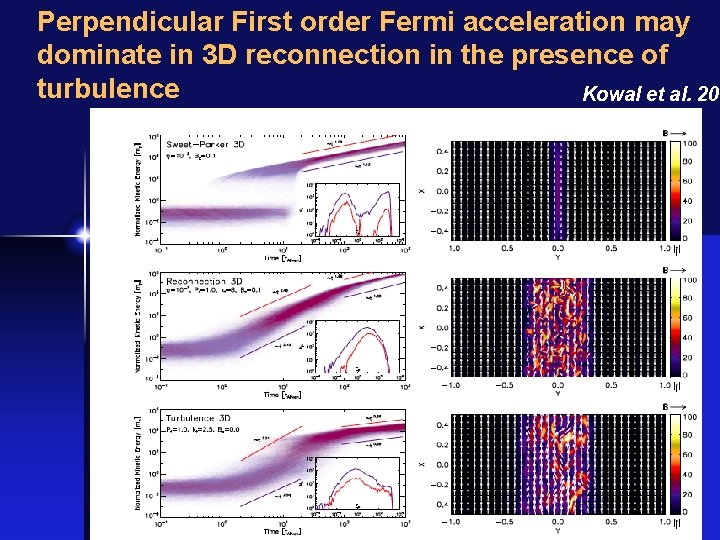
Perpendicular First order Fermi acceleration may dominate in 3 D reconnection in the presence of turbulence Kowal et al. 201
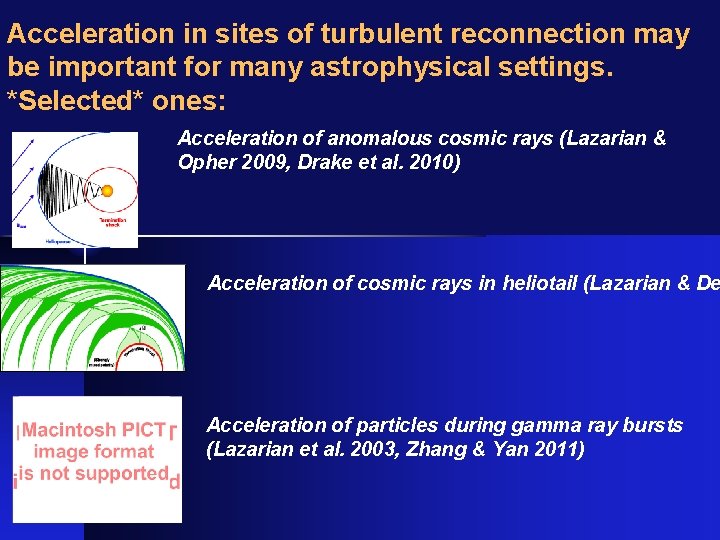
Acceleration in sites of turbulent reconnection may be important for many astrophysical settings. *Selected* ones: Acceleration of anomalous cosmic rays (Lazarian & Opher 2009, Drake et al. 2010) Acceleration of cosmic rays in heliotail (Lazarian & De Acceleration of particles during gamma ray bursts (Lazarian et al. 2003, Zhang & Yan 2011)
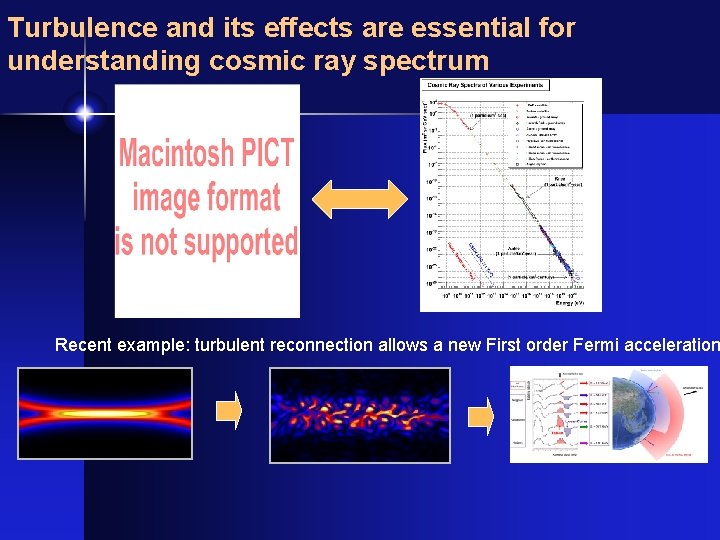
Turbulence and its effects are essential for understanding cosmic ray spectrum Recent example: turbulent reconnection allows a new First order Fermi acceleration
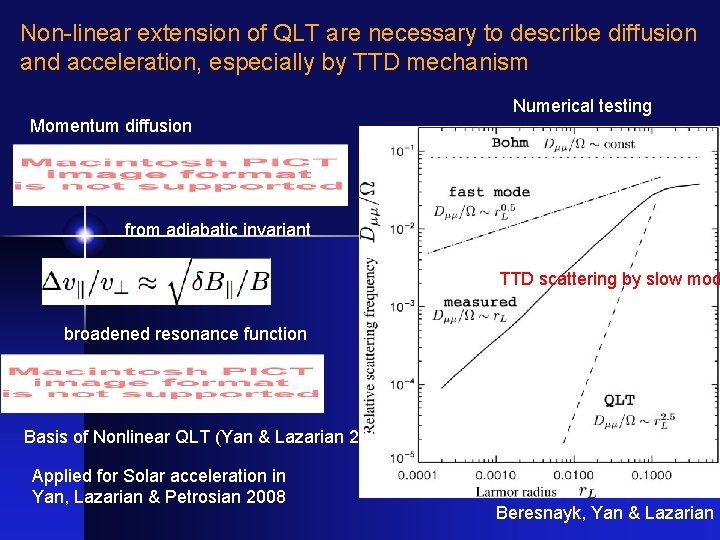
Non-linear extension of QLT are necessary to describe diffusion and acceleration, especially by TTD mechanism Momentum diffusion Numerical testing from adiabatic invariant TTD scattering by slow mod broadened resonance function Basis of Nonlinear QLT (Yan & Lazarian 2008) Applied for Solar acceleration in Yan, Lazarian & Petrosian 2008 Beresnayk, Yan & Lazarian 2
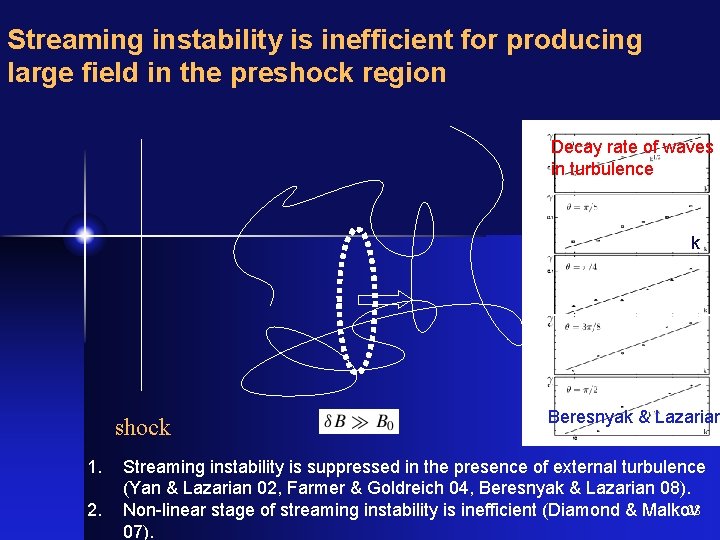
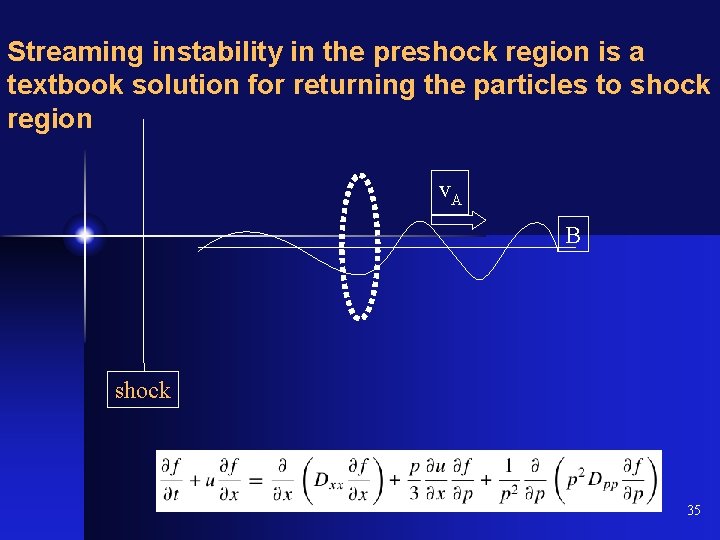
Streaming instability is inefficient for producing large field in the preshock region Decay rate of waves in turbulence k B shock 1. 2. Beresnyak & Lazarian Streaming instability is suppressed in the presence of external turbulence (Yan & Lazarian 02, Farmer & Goldreich 04, Beresnyak & Lazarian 08). 28 Non-linear stage of streaming instability is inefficient (Diamond & Malkov 07).
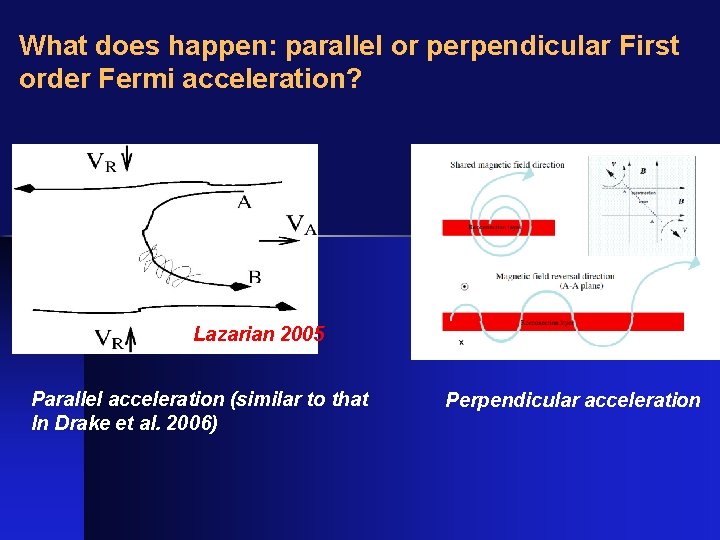
What does happen: parallel or perpendicular First order Fermi acceleration? Lazarian 2005 Parallel acceleration (similar to that In Drake et al. 2006) Perpendicular acceleration
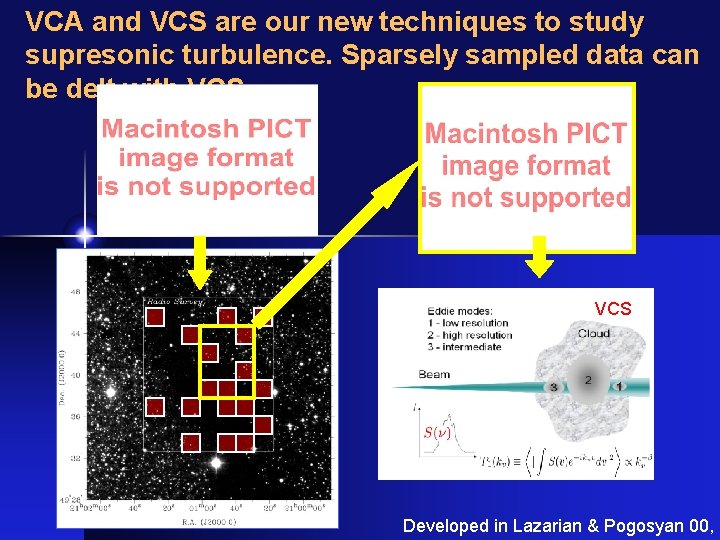
VCA and VCS are our new techniques to study supresonic turbulence. Sparsely sampled data can be delt with VCS Developed in Lazarian & Pogosyan 00, 0
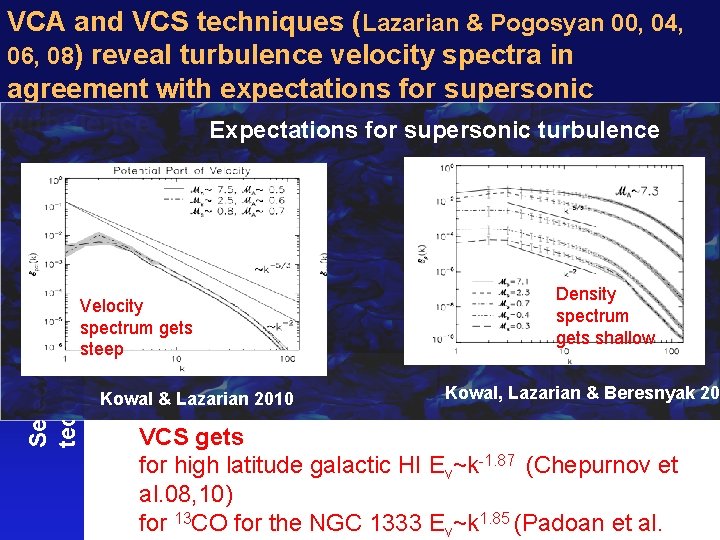
Selected results for the techniques VCA and VCS techniques (Lazarian & Pogosyan 00, 04, 06, 08) reveal turbulence velocity spectra in agreement with expectations for supersonic turbulence Expectations for supersonic turbulence Velocity spectrum gets steep Kowal & Lazarian 2010 Density spectrum gets shallow Kowal, Lazarian & Beresnyak 20 VCS gets for high latitude galactic HI Ev~k-1. 87 (Chepurnov et al. 08, 10) for 13 CO for the NGC 1333 Ev~k 1. 85 (Padoan et al.
Big Implication: LV 99 means that magnetic field in turbulent fluids is not frozen in Hannes Alfven Violation of magnetic field frozen in condition in turbulent fluids discussed in Eyink (2010, 2011). The equivalence of this to LV 99 approach was demonstrated in Eyink, Lazarian & Vishniac 2011. Recent numerical evidence is in Eyink et al. (2012, Nature, submitted).
Bell (2004) proposed a solution based on the current j. CR B shock 33
The model allows to calculate the parameters of magn Beresnyak, Jones & Lazarian 34
Streaming instability in the preshock region is a textbook solution for returning the particles to shock region v. A B shock 35
- Slides: 35