
MGMT 464 Project Management Chapter One Modern Project
- Slides: 18
MGMT 464 Project Management Chapter One: Modern Project Management
Chapter Objectives • To determine what is a project. • To understand the evolution of project management. • To understand the importance of project management.
WHAT IS A PROJECT? A complex, non-routine, one-time effort limited by time, budget, resources, and performance specifications designed to meet customer needs.
Characteristic of a Project – Has an established objective. – Has a defined life span with a beginning and an end. – Requires across-the-organizational participation. – Involves doing something never been done before. – Has specific time, cost, and performance requirements.
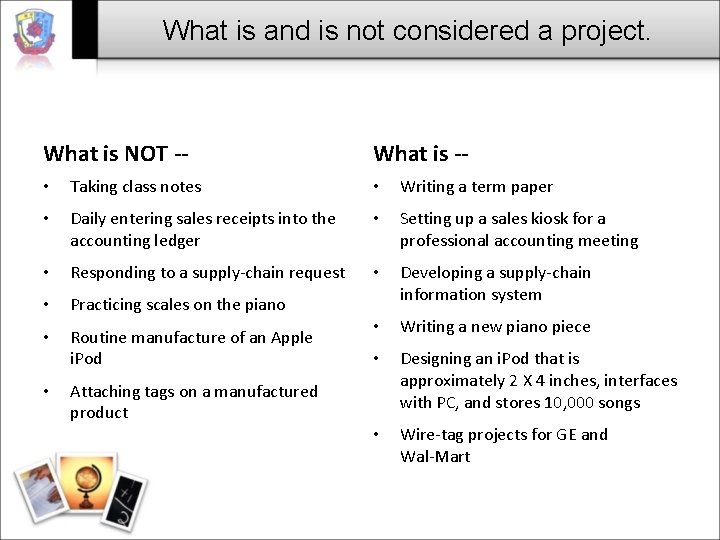
What is and is not considered a project. What is NOT -- What is -- • Taking class notes • Writing a term paper • Daily entering sales receipts into the accounting ledger • Setting up a sales kiosk for a professional accounting meeting • Responding to a supply-chain request • • Practicing scales on the piano Developing a supply-chain information system • Routine manufacture of an Apple i. Pod • Writing a new piano piece • Designing an i. Pod that is approximately 2 X 4 inches, interfaces with PC, and stores 10, 000 songs • Wire-tag projects for GE and Wal-Mart • Attaching tags on a manufactured product
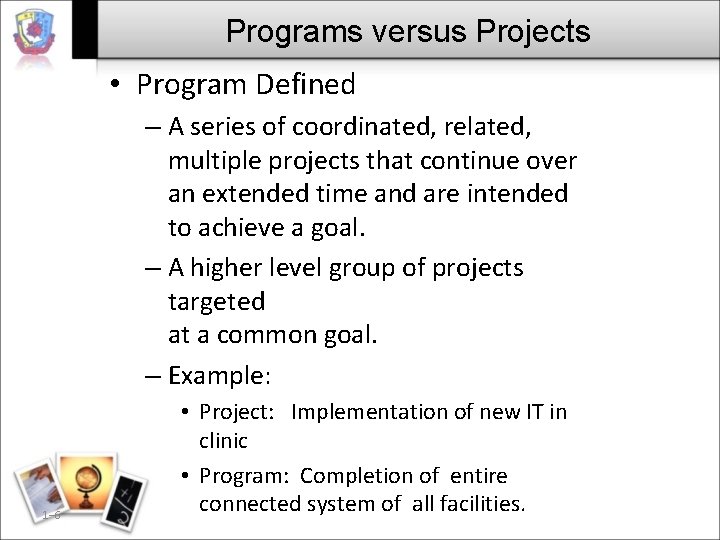
Programs versus Projects • Program Defined – A series of coordinated, related, multiple projects that continue over an extended time and are intended to achieve a goal. – A higher level group of projects targeted at a common goal. – Example: 1– 6 • Project: Implementation of new IT in clinic • Program: Completion of entire connected system of all facilities.
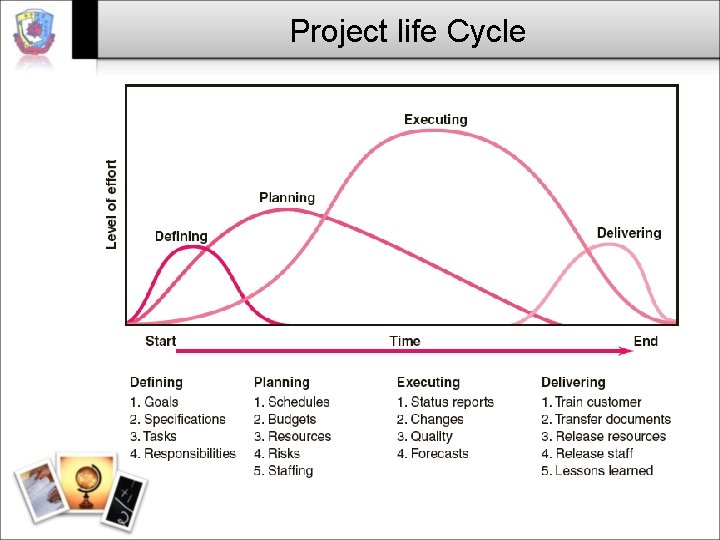
Project life Cycle
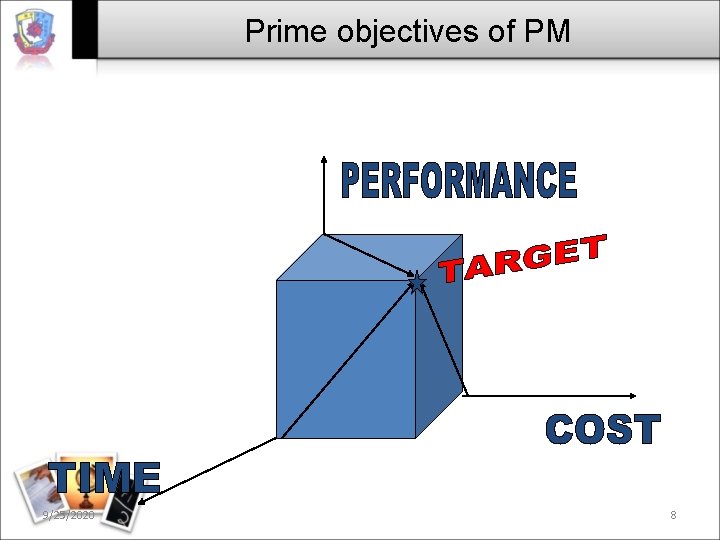
Prime objectives of PM 9/25/2020 8
IMPORTANCE OF PROJECT MANAGEMENT
Factors leading to PM emergence • Knowledge explosion • Increased Customer Focus • Growing demand for flexibility • Remain competitive • Downsizing • Global competition
What is Project Management • It is the application of knowledge, skills, tools, and techniques to project activities in order to meet or exceed stakeholder needs and expectations from a project. • Involves balancing competing demand: – Time, Cost, & Performance (quality) – Stakeholders – Requirements
The Challenge of Project Management • The Project Manager – Manages temporary, non-repetitive activities and frequently acts independently of the formal organization. • Marshals resources for the project. • Is linked directly to the customer interface. • Provides direction, coordination, and integration to the project team. • Is responsible for performance and success of the project. – Must induce the right people at the right time to address the right issues and make the right decisions. 1– 12
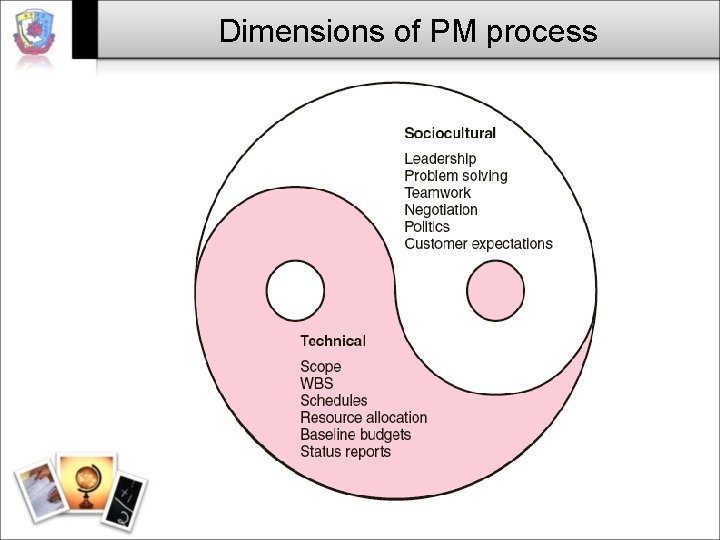
Dimensions of PM process
Integrated Project Management Systems • Problems resulting from the use of piecemeal project management systems: – Do not tie together the overall strategies of the firm. – Fail to prioritize selection of projects by their importance of their contribution to the firm. – Are not integrated throughout the project life cycle. – Do not match project planning and controls with organizational culture to make appropriate adjustments in support of project endeavors. 1– 14
Major Functions of Portfolio Management • Oversee project selection. • Monitor aggregate resource levels and skills. • Encourage use of best practices. • Balance projects in the portfolio in order to represent a risk level appropriate to the organization. • Improve communication among all stakeholders. • Create a total organization perspective that goes beyond silo thinking. • Improve overall management of projects over time. 1– 15
PROJECT MANAGEMENT INSTITUTE WWW. PMI. ORG
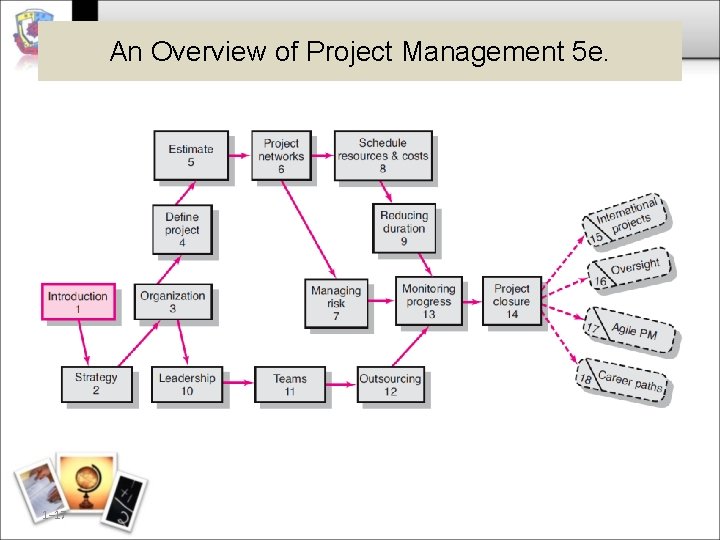
An Overview of Project Management 5 e. 1– 17
ANY QUESTIONS?