
Mgmt 371 Chapter Eighteen Managing Interpersonal Relations and
- Slides: 24
Mgmt 371 Chapter Eighteen Managing Interpersonal Relations and Communications Much of the slide content was created by Dr, Charlie Cook, Houghton Mifflin, Co. © 1
The Interpersonal Nature of Organizations n Interpersonal Dynamics n Positive n When two parties know each other, have mutual respect and affection, and enjoy interacting with one another. n Negative n When two parties dislike one another, do not have mutual respect, and do not enjoy interacting with one another. 2
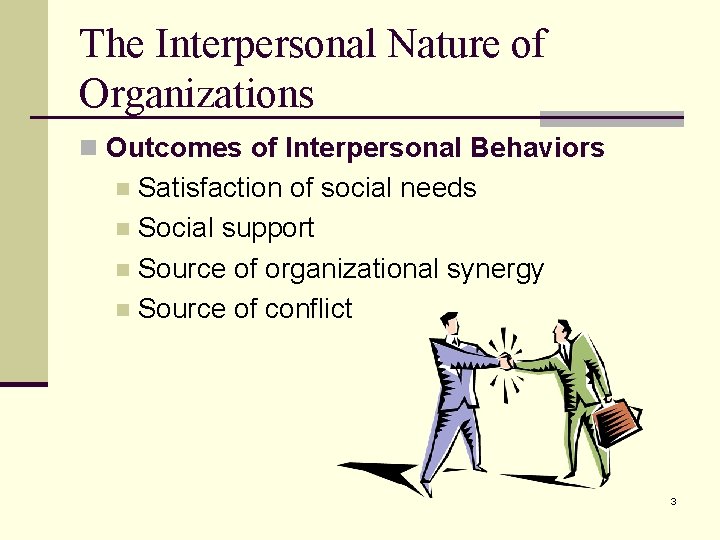
The Interpersonal Nature of Organizations n Outcomes of Interpersonal Behaviors Satisfaction of social needs n Social support n Source of organizational synergy n Source of conflict n 3
Communication and the Manager’s Job n Communication n The process of transmitting information from one person to another. n Effective Communication n The process of sending a message in such a way that the message received is as close in meaning as possible to the message intended. 4
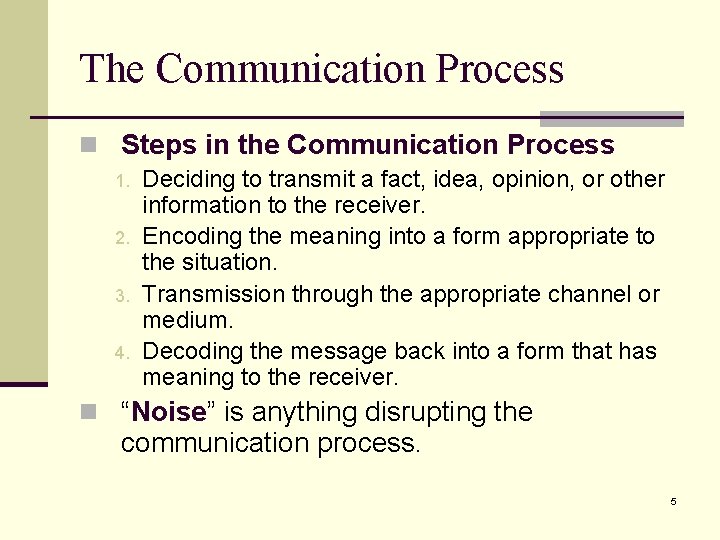
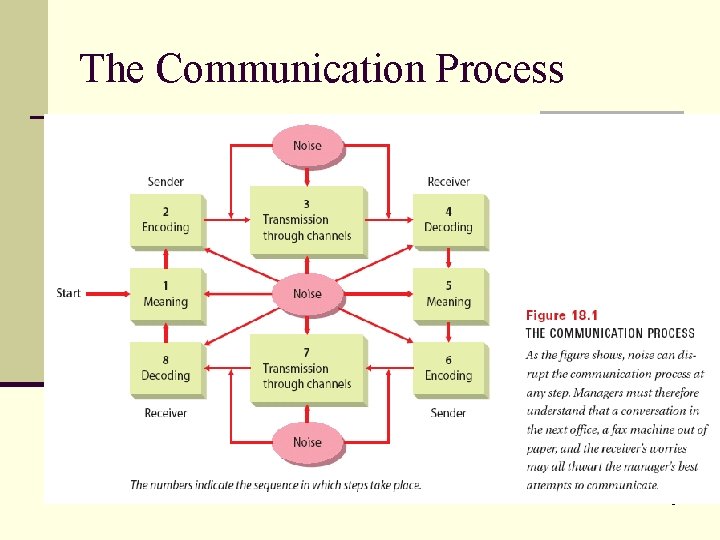
The Communication Process n Steps in the Communication Process 1. 2. 3. 4. Deciding to transmit a fact, idea, opinion, or other information to the receiver. Encoding the meaning into a form appropriate to the situation. Transmission through the appropriate channel or medium. Decoding the message back into a form that has meaning to the receiver. n “Noise” is anything disrupting the communication process. 5
The Communication Process 6
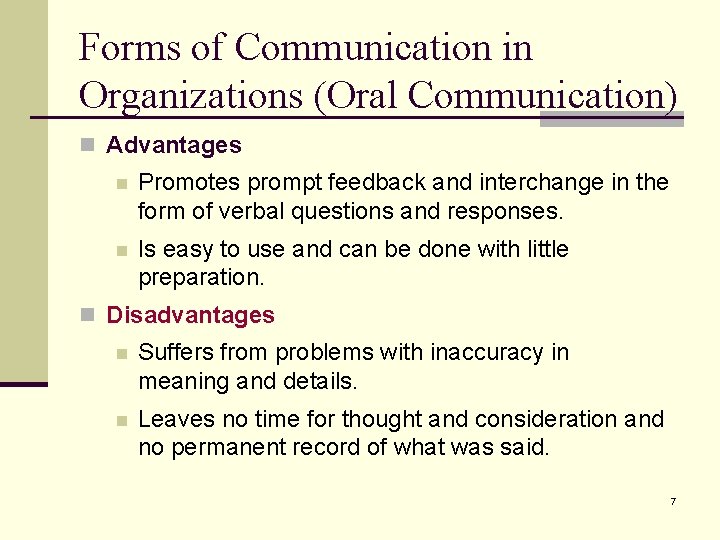
Forms of Communication in Organizations (Oral Communication) n Advantages n Promotes prompt feedback and interchange in the form of verbal questions and responses. n Is easy to use and can be done with little preparation. n Disadvantages n Suffers from problems with inaccuracy in meaning and details. n Leaves no time for thought and consideration and no permanent record of what was said. 7
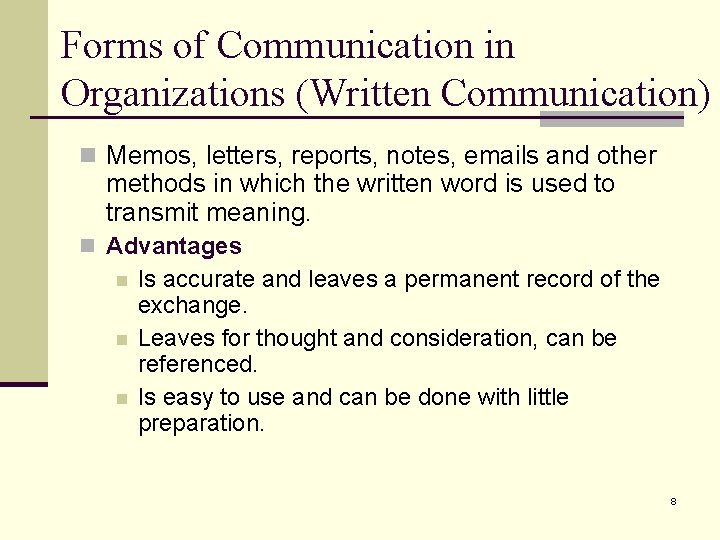
Forms of Communication in Organizations (Written Communication) n Memos, letters, reports, notes, emails and other methods in which the written word is used to transmit meaning. n Advantages n n n Is accurate and leaves a permanent record of the exchange. Leaves for thought and consideration, can be referenced. Is easy to use and can be done with little preparation. 8
Forms of Communication in Organizations (Written Communication) n Disadvantages n n Inhibits feedback and interchange due to burden of the process of preparing a physical document. Considerable delay can occur in clarifying message meanings. 9
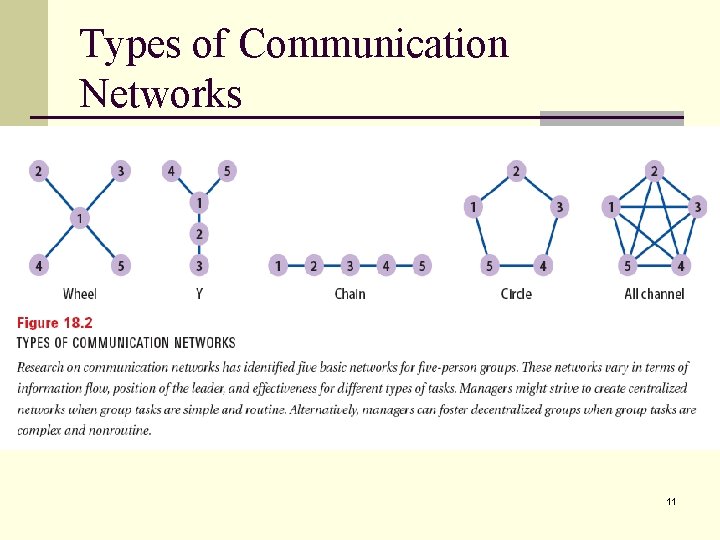
Communication in Networks and Work Teams) n Communication network n The pattern through which the members of a group or team communicate. n Research suggests: n When the group’s task is simple and routine, centralized networks perform with the greatest efficiency and accuracy. n When the group’s task is complex and nonroutine, decentralized networks with open communications that foster interaction and exchange of relevant information tend to be most effective. 10
Types of Communication Networks 11
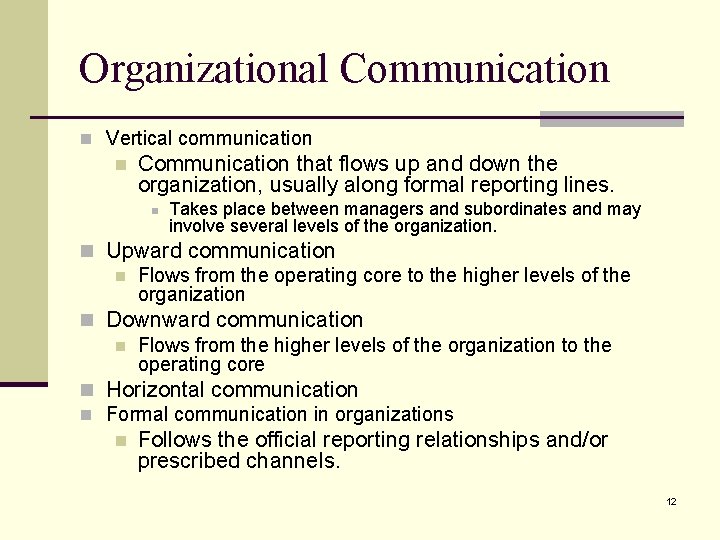
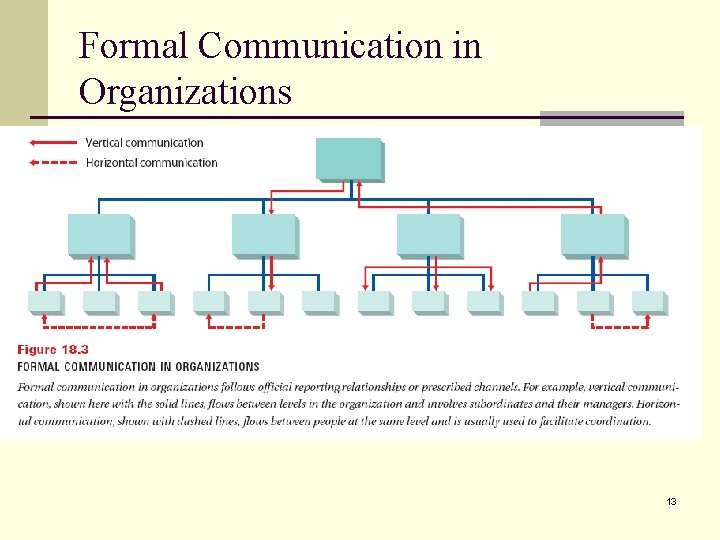
Organizational Communication n Vertical communication n Communication that flows up and down the organization, usually along formal reporting lines. n Takes place between managers and subordinates and may involve several levels of the organization. n Upward communication n Flows from the operating core to the higher levels of the organization n Downward communication n Flows from the higher levels of the organization to the operating core n Horizontal communication n Formal communication in organizations n Follows the official reporting relationships and/or prescribed channels. 12
Formal Communication in Organizations 13
Forms of Communication in Organizations n Electronic Communication n Formal Information Systems n Accomplished (created) by either: § A managerial approach § An operational approach n Personal Electronic Technology n Corporate intranets, the Internet, teleconferences, email n Telecommuting n Disadvantages: the lack of face-to-face contact, strong personal relationships, falling behind professionally, and losing out in organizational politics. 14
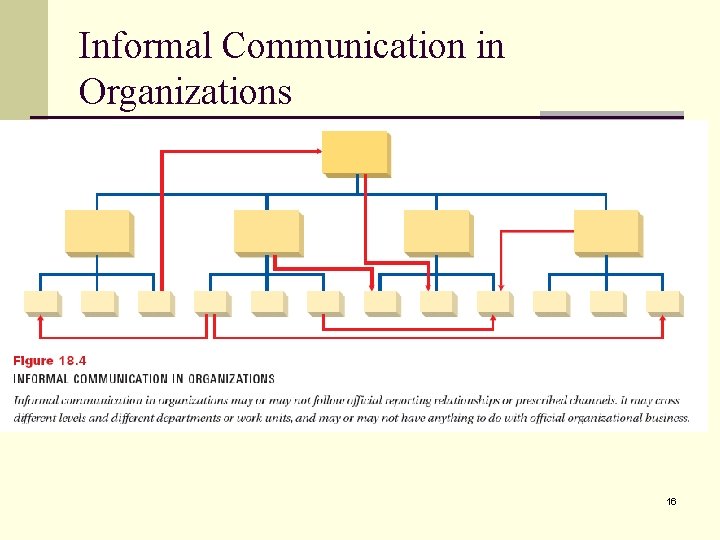
Informal Communication in Organizations n Informal Communications May or may not follow official reporting relationships and/or prescribed organizational channels n May have nothing to do with official organizational business. n Common forms: n n Management by wandering around The grapevine Nonverbal communication 15
Informal Communication in Organizations 16
Informal Communication in Organizations n Management by Wandering Around (MBWA) n Managers keep in touch with what’s going on by wandering around and talking to people on all levels in the organization n Grapevine n An informal communication network that can permeate an organization. 17
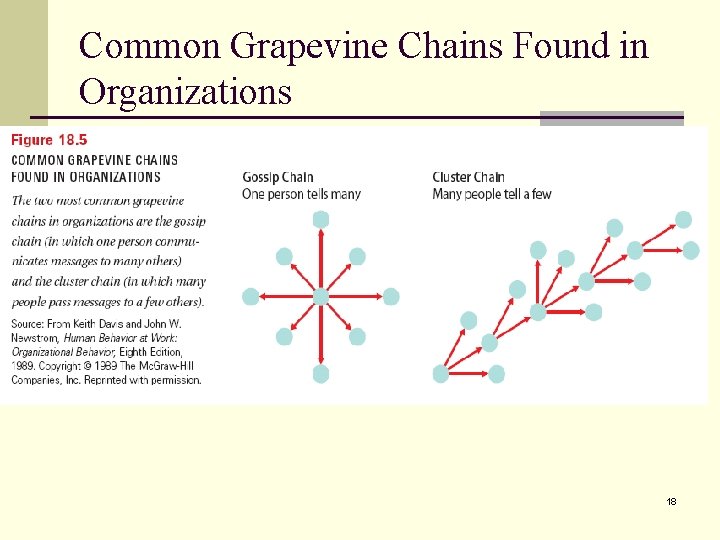
Common Grapevine Chains Found in Organizations 18
Informal Communication in Organizations (Nonverbal Communication) n Any communication exchange that does not use words, or uses words to carry more meaning than the strict definition of the words themselves. n Facial expression n Inflection and tone of the voice. n Only a small portion of the message content is due to the words in the message. n Kinds of nonverbal managerial communication: n Images n Settings n Body language 19
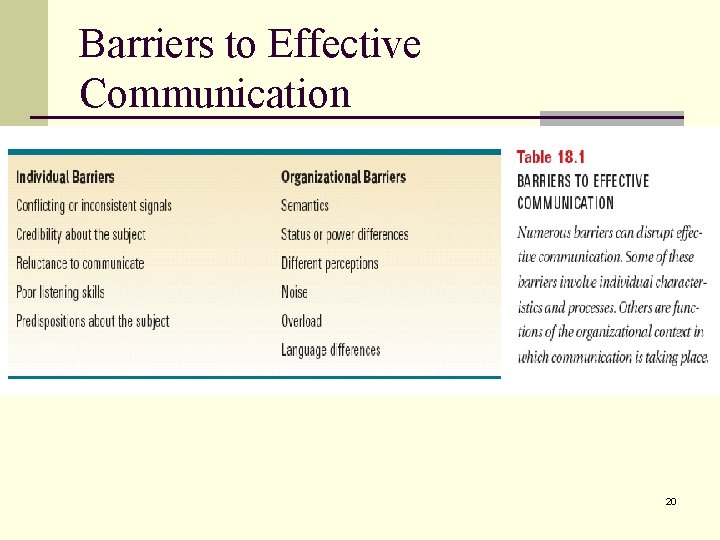
Barriers to Effective Communication 20
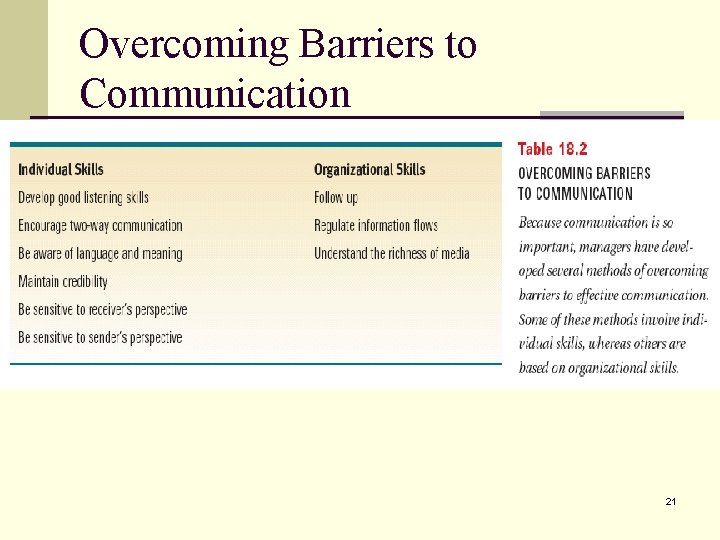
Overcoming Barriers to Communication 21
Improving Communication Effectiveness n Individual Skills Being a good listener n Providing feedback (two-way communications) n Awareness word meaning differences n Maintain credibility n Sensitive to the receiver’s perspective n Sensitive to the sender’s perspective n 22
Improving Communication Effectiveness n Organizational Skills n Following up n Regulating information flow n Understanding the richness of different media 23
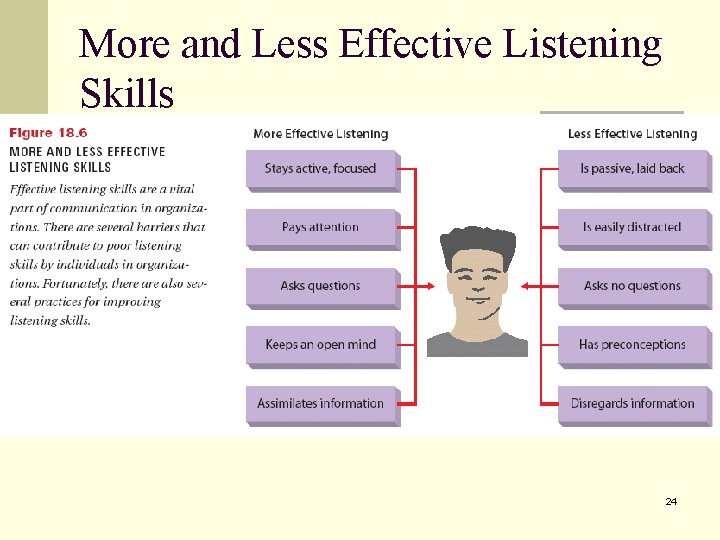
More and Less Effective Listening Skills 24