
Mexico Mexican Miracle Rapidly increasing GNP Orderly transition

- Slides: 13
Mexico
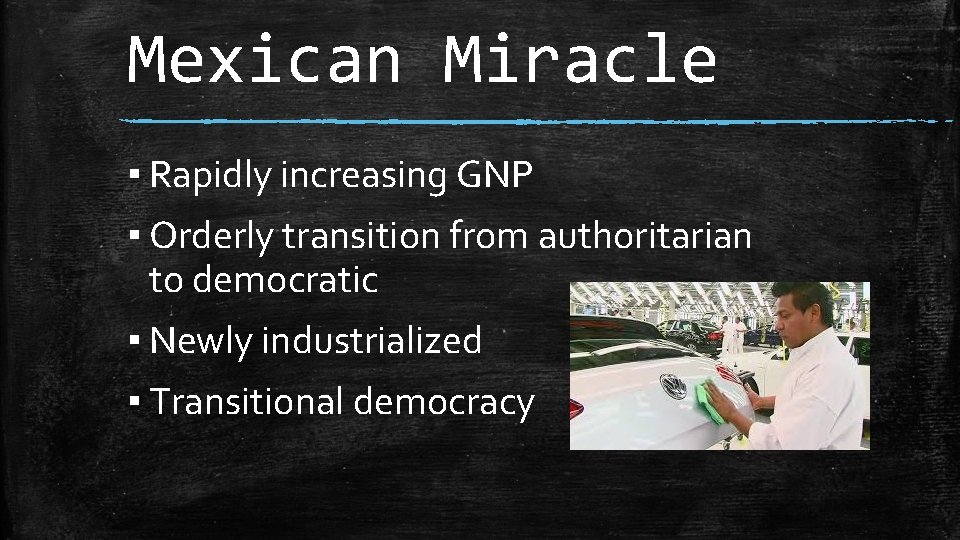
Mexican Miracle ▪ Rapidly increasing GNP ▪ Orderly transition from authoritarian to democratic ▪ Newly industrialized ▪ Transitional democracy
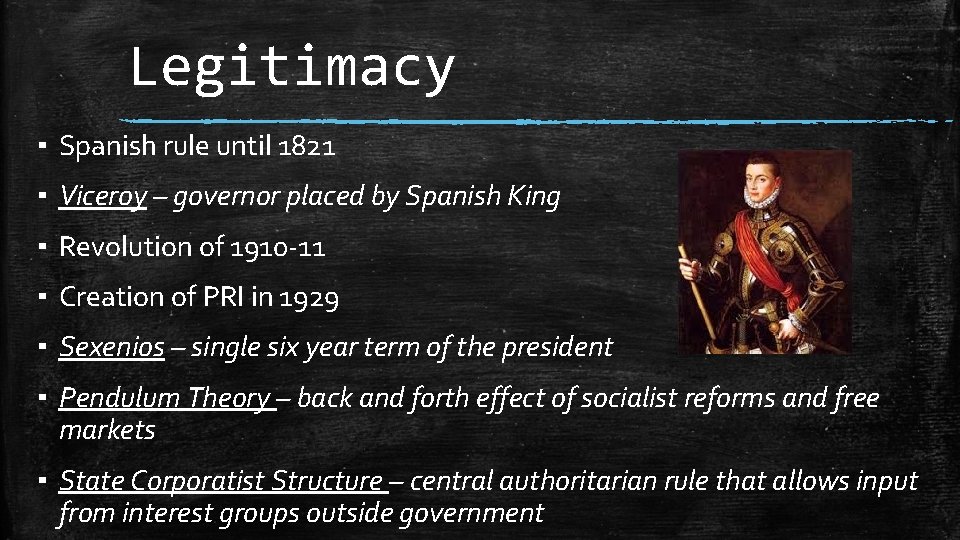
Legitimacy ▪ Spanish rule until 1821 ▪ Viceroy – governor placed by Spanish King ▪ Revolution of 1910 -11 ▪ Creation of PRI in 1929 ▪ Sexenios – single six year term of the president ▪ Pendulum Theory – back and forth effect of socialist reforms and free markets ▪ State Corporatist Structure – central authoritarian rule that allows input from interest groups outside government
Political Culture Stages of Development Historic Traditions ▪ Colonialism ▪ Authoritarianism ▪ Chaos ▪ Populism ▪ Economic Development ▪ Power Plays ▪ Instability
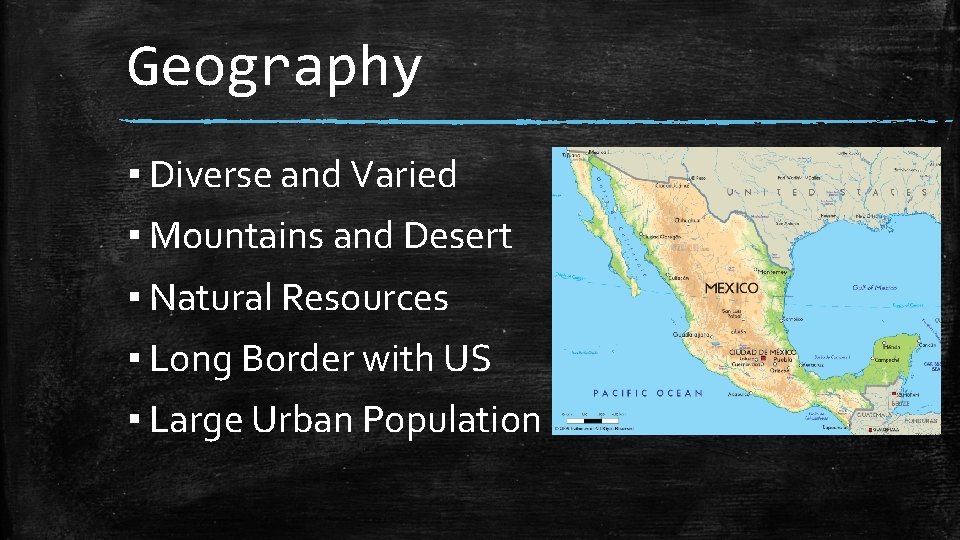
Geography ▪ Diverse and Varied ▪ Mountains and Desert ▪ Natural Resources ▪ Long Border with US ▪ Large Urban Population
Political and Economic Change ▪ Mexico has had many cycles of power and at times has lacked political and economic stability – Heterogeneity ▪ Agriculture and – Catholicism Mining ▪ Military ▪ Dependency on US ▪ US cession –Porfiriato ▪ Natural Resources –Constitution ▪ Industrialization –Cardenas
Modern Mexico ▪ Caudillos –Zapata and Villa ▪ Redistribution of Land ▪ Nationalization of Industry ▪ Constitution (1917) ▪ Investment in Public Works ▪ Catholic Church ▪ Encourage Unions ▪ PRI (sexenio) ▪ Concentration in Presidency
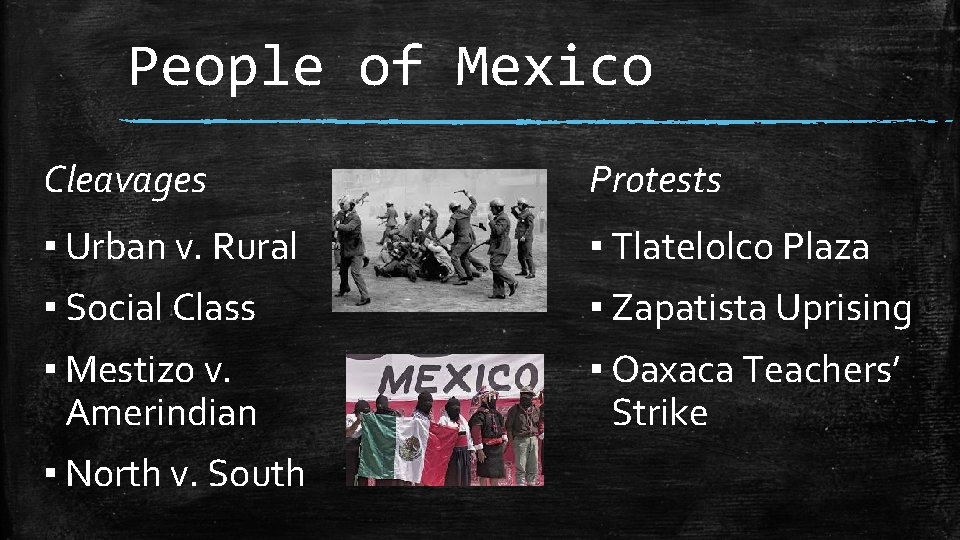
People of Mexico Cleavages Protests ▪ Urban v. Rural ▪ Tlatelolco Plaza ▪ Social Class ▪ Zapatista Uprising ▪ Mestizo v. Amerindian ▪ Oaxaca Teachers’ Strike ▪ North v. South
People of Mexico Participation Civil Society ▪ Revolution and Protest ▪ State Corporatism – PRI – Labor – Peasants – Middle Class ▪ Patron-clientelism – Caudillos – loyal supporters – Camarilla – hierarchical networks ▪ Legitimate, regular elections
Institutions (political) Parties ▪ PRI – Coalition of elites – Small town, south – Rural, less educated ▪ PAN – Business interests – Religious, middle class – Educated, free markets ▪ PRD – Social justice – Urban, younger State Corporatist Structure ▪ Educational Workers’ Union ▪ Ejido – land grants from gov. ▪ Opening of the media
Institutions (government) ▪ Strong Executive ▪ Large Bureaucracy – Para-statal ▪ Semi-autonomous agencies ▪ PEMEX ▪ No independent judiciary ▪ Code Law ▪ Six year resignations ▪ Legislature – Chamber of Deputies – Senate ▪ Diverse representations ▪ De-politicized military – Political favors – Drug deals
Issues ▪ Economy – Growing gap between rich and poor – Rapid and unplanned urbanization ▪ Cuts in government spending ▪ Debt reduction ▪ Privitization – Maquiladora District – Trade Agreement ▪ GATT/WTO ▪ NAFTA ▪ Immigration Policy ▪ Drug Trafficking ▪ Ethnic Rebellion ▪ Democracy/Electoral Reform – Campaign finance restrictions – Critical media coverage – International watch teams – Election monitoring – “Pact for Mexico”