
Mexico City Confluence of complex meteorology and air





- Slides: 40
Mexico City: Confluence of complex meteorology and air pollution Photoacoustic measurements of aerosol light absorption and scattering at four sites in and near Mexico City Lupita Paredes-Miranda & W. Patrick Arnott Atmospheric Sciences Program University of Nevada Reno, Physics Department MS/220 AMS Student Chapter Presentation, Nov. 09, 2006
REFERENCES AND ACKNOLEDGEMENTS Jerome Fast: PNNL Jeffrey Gaffney & Nancy Marley: University of Arkansas
The MILAGRO field campaign was carried out in March 1 -30, 2006 in Mexico City. (fixed and mobile ground sites, aircraft, and satellites). Understand the local and global radiative and cloud micro physical impacts of aerosol from a large city, Mexico City. MCMA Mexico City Metropolitan Area (DOE, NSF, Mexico) MAX-MEX Megacity Aerosol Experiment in Mexico City (DOE) MIRAGE Megacities Impacts on Regional and Global Environment (NSF) INTEX Intercontinental Chemical Transport Experiment (NASA, DOE, NSF)
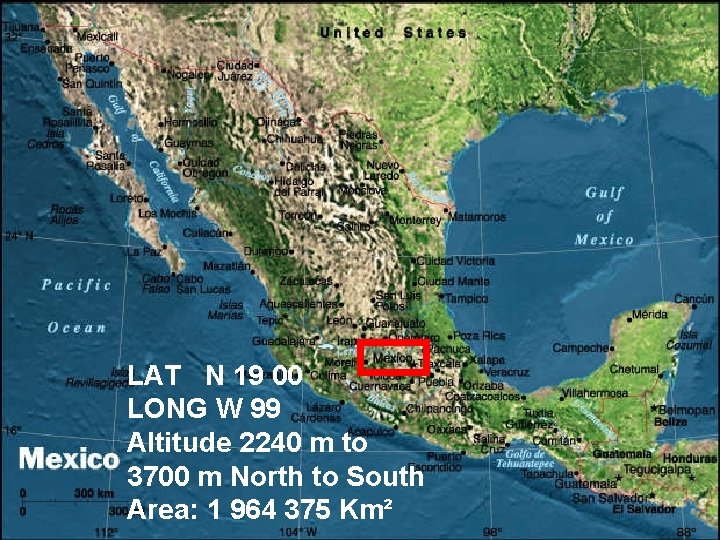
LAT N 19 00 LONG W 99 Altitude 2240 m to 3700 m North to South Area: 1 964 375 Km²
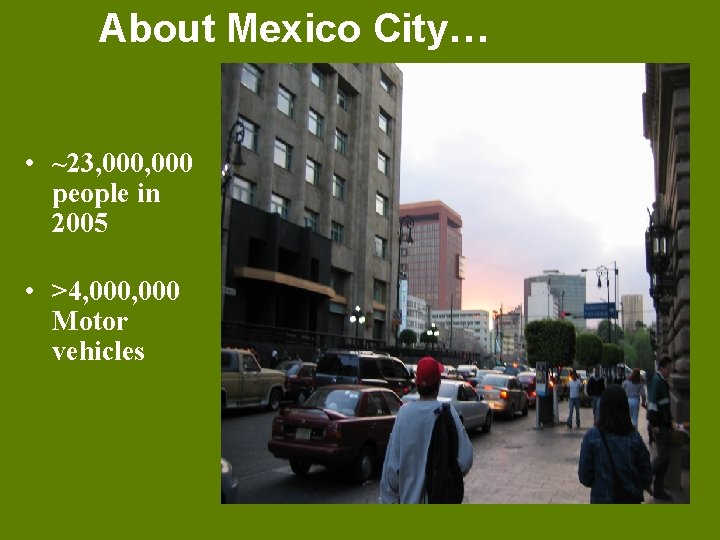
About Mexico City… • ~23, 000 people in 2005 • >4, 000 Motor vehicles
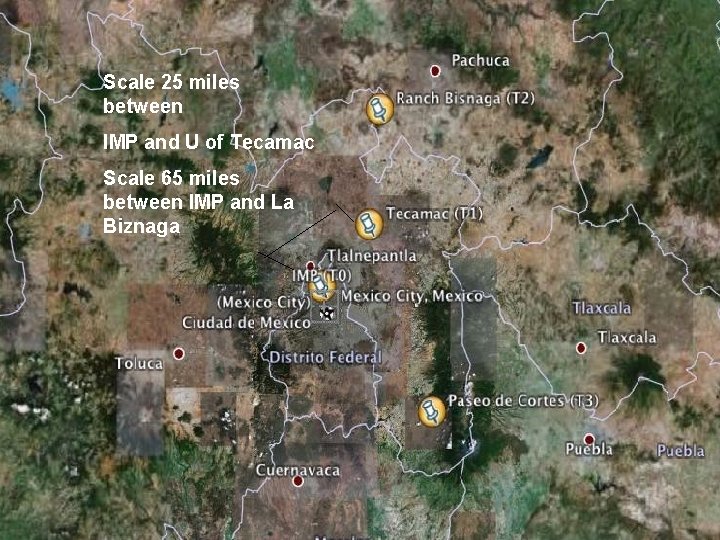
MEASUREMENT SITES • T 0: Instituto Mexicano del Petroleo, Distrito Federal, Northeast Mexico City. • T 1: University of Tecamac, north of Mexico City. • T 2: Rancho La Biznaga, Road to Pachuca Hidalgo, north of Mexico City. • T 3: Paseo De Cortes, Ameca, 12, 500’ ASL on the saddle between volcanos Popocatepetl (17, 883’ ASL) and Iztaccihuatl (17, 338’ ASL).
Scale 25 miles between IMP and U of Tecamac Scale 65 miles between IMP and La Biznaga
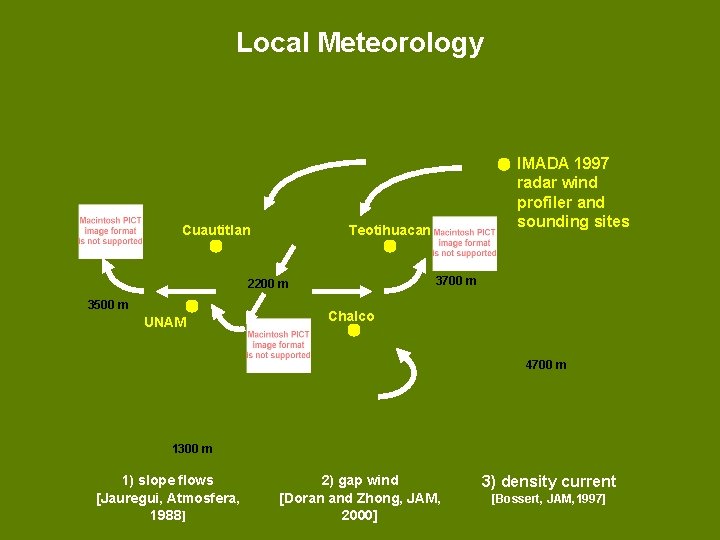
Local Meteorology Cuautitlan Teotihuacan 3700 m 2200 m 3500 m UNAM IMADA 1997 radar wind profiler and sounding sites Chalco 4700 m 1300 m 1) slope flows [Jauregui, Atmosfera, 1988] 2) gap wind [Doran and Zhong, JAM, 2000] 3) density current [Bossert, JAM, 1997]
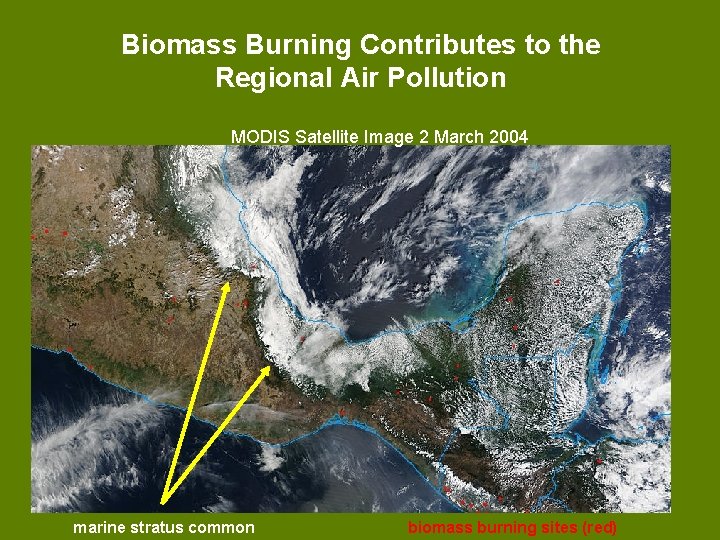
Biomass Burning Contributes to the Regional Air Pollution MODIS Satellite Image 2 March 2004 marine stratus common biomass burning sites (red)
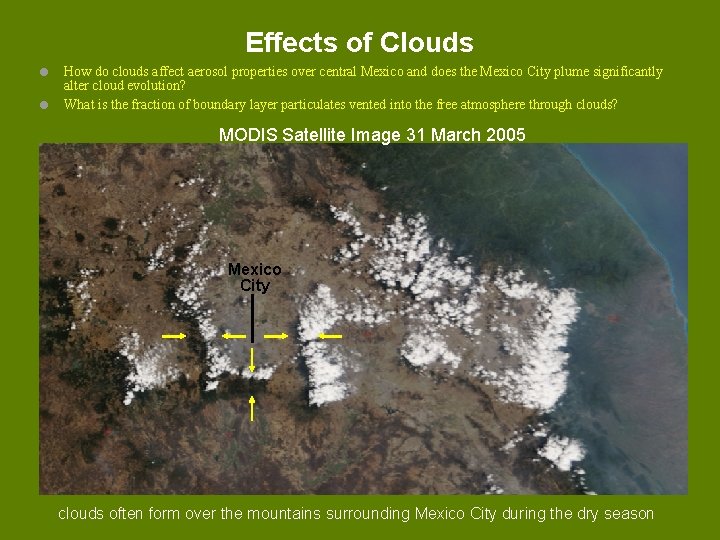
Effects of Clouds = How do clouds affect aerosol properties over central Mexico and does the Mexico City plume significantly alter cloud evolution? = What is the fraction of boundary layer particulates vented into the free atmosphere through clouds? MODIS Satellite Image 31 March 2005 Mexico City clouds often form over the mountains surrounding Mexico City during the dry season
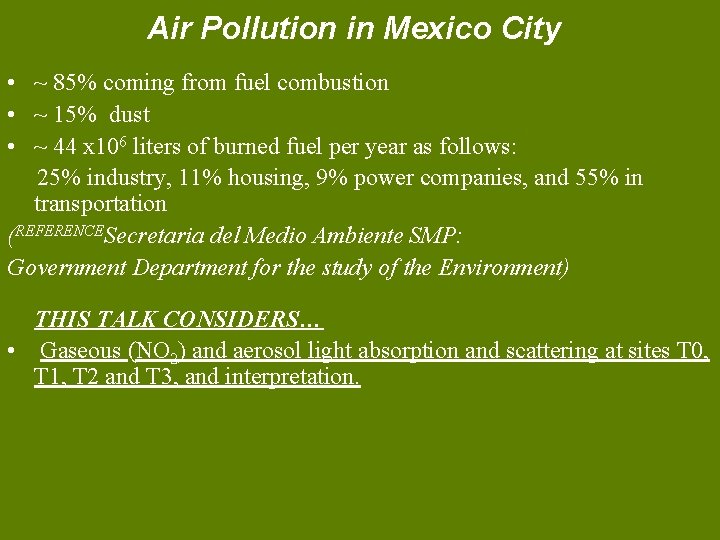
Air Pollution in Mexico City • ~ 85% coming from fuel combustion • ~ 15% dust • ~ 44 x 106 liters of burned fuel per year as follows: 25% industry, 11% housing, 9% power companies, and 55% in transportation (REFERENCESecretaria del Medio Ambiente SMP: Government Department for the study of the Environment) THIS TALK CONSIDERS… • Gaseous (NO 2) and aerosol light absorption and scattering at sites T 0, T 1, T 2 and T 3, and interpretation.
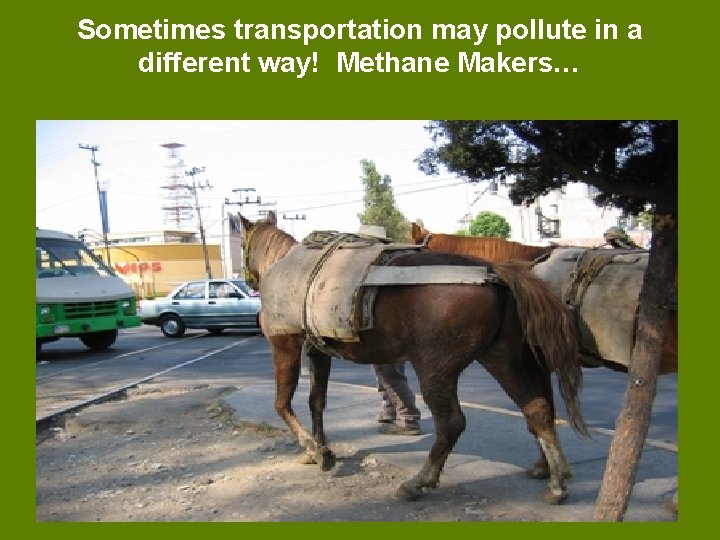
Sometimes transportation may pollute in a different way! Methane Makers…
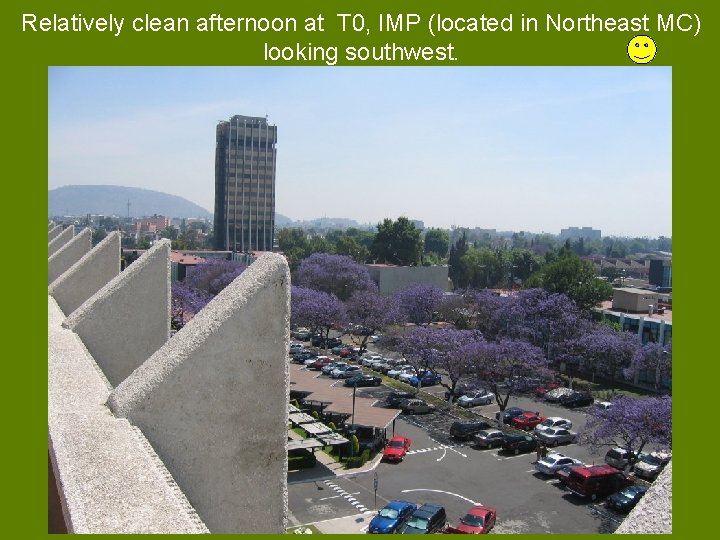
Relatively clean afternoon at T 0, IMP (located in Northeast MC) looking southwest.
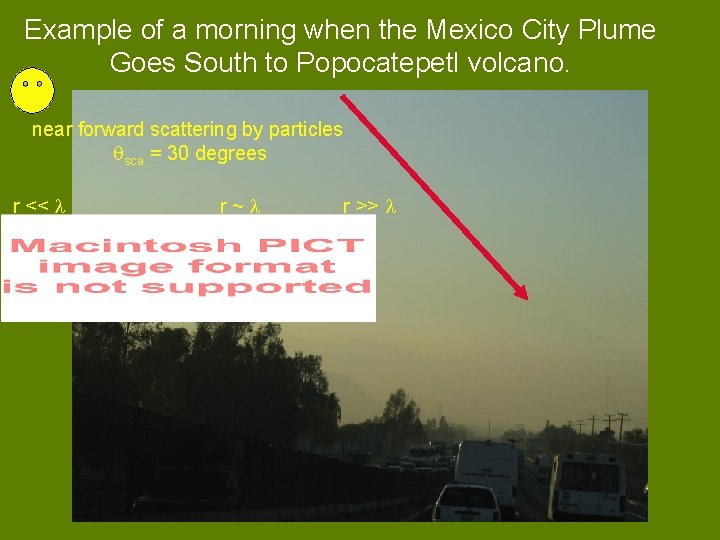
Example of a morning when the Mexico City Plume Goes South to Popocatepetl volcano. near forward scattering by particles sca = 30 degrees r << r ~ r >>
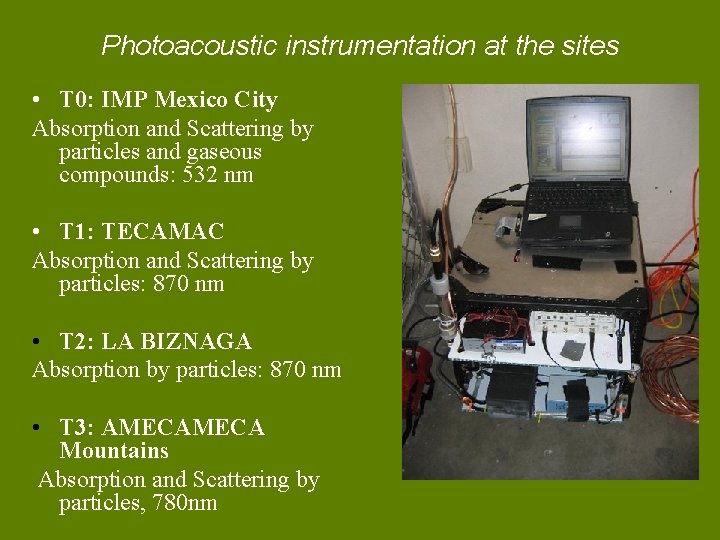
Photoacoustic instrumentation at the sites • T 0: IMP Mexico City Absorption and Scattering by particles and gaseous compounds: 532 nm • T 1: TECAMAC Absorption and Scattering by particles: 870 nm • T 2: LA BIZNAGA Absorption by particles: 870 nm • T 3: AMECA Mountains Absorption and Scattering by particles, 780 nm
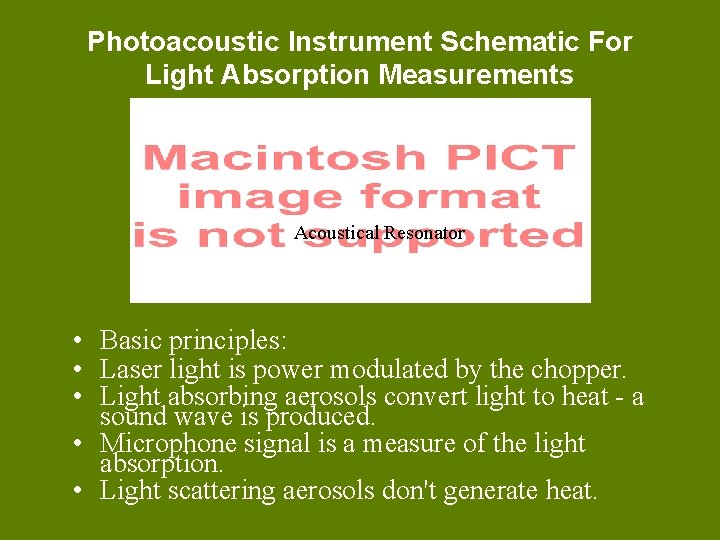
Photoacoustic Instrument Schematic For Light Absorption Measurements Acoustical Resonator • Basic principles: • Laser light is power modulated by the chopper. • Light absorbing aerosols convert light to heat - a sound wave is produced. • Microphone signal is a measure of the light absorption. • Light scattering aerosols don't generate heat.
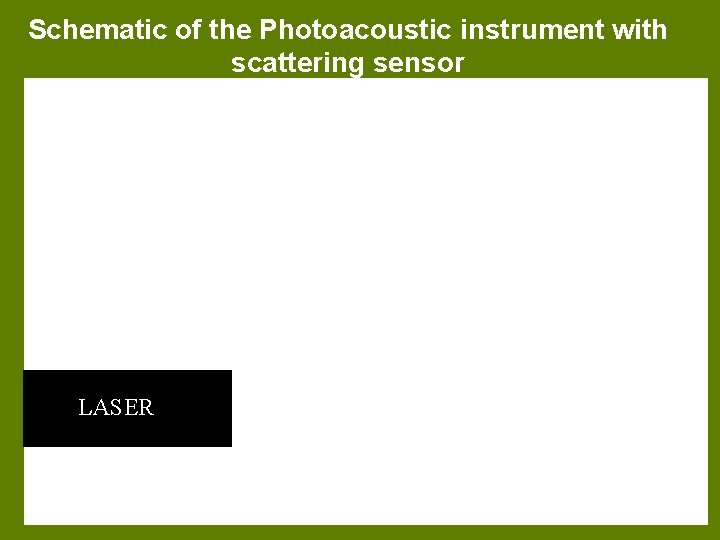
Schematic of the Photoacoustic instrument with scattering sensor LASER
Photoacoustic Instrument Details: Equation to Obtain Light Absorption Coefficient. }From the piezoelectric sound source
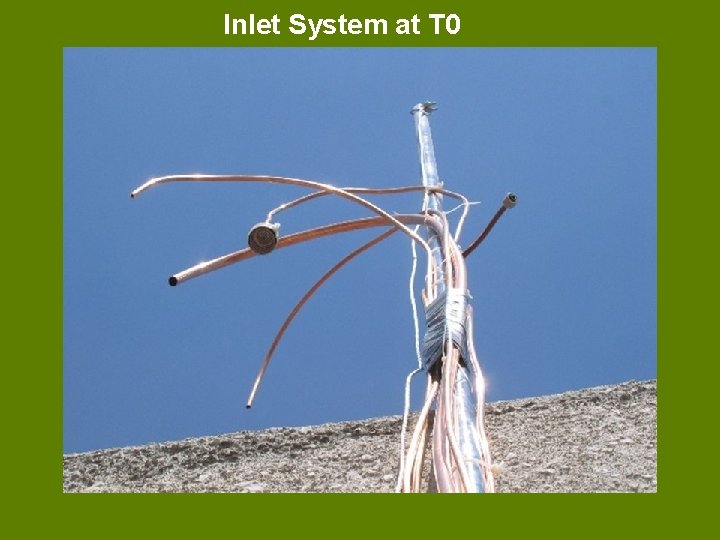
Inlet System at T 0
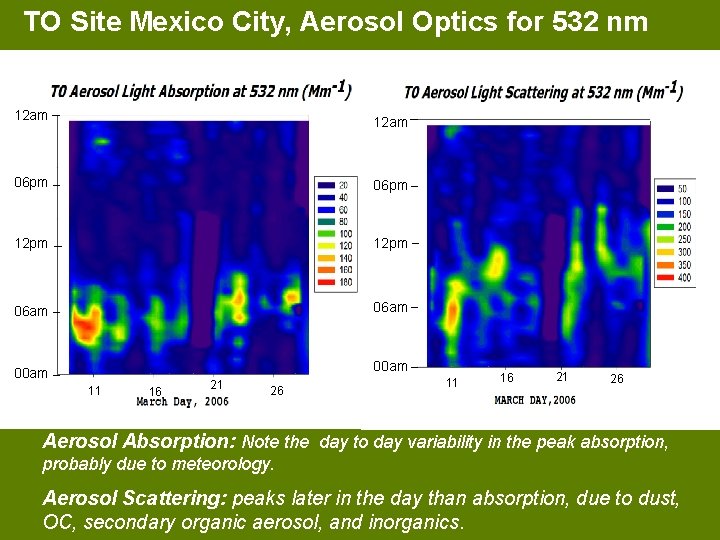
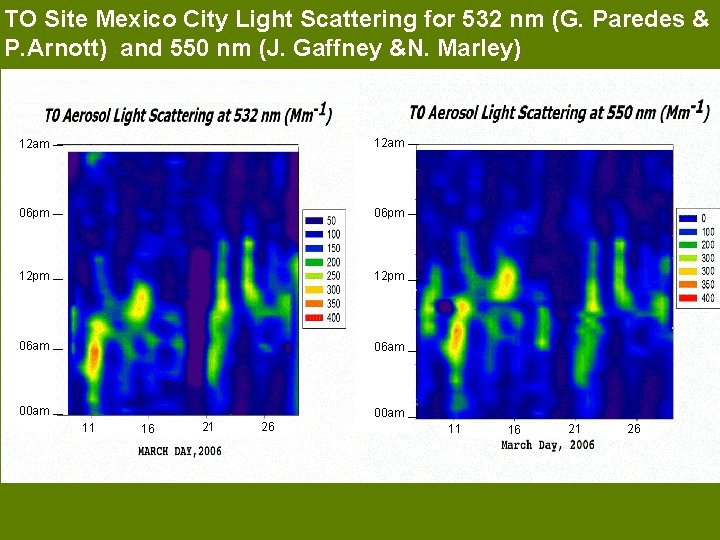
TO Site Mexico City, Aerosol Optics for 532 nm 12 am 06 pm 12 pm 06 am 00 am 11 16 21 26 Aerosol Absorption: Note the day to day variability in the peak absorption, probably due to meteorology. Aerosol Scattering: peaks later in the day than absorption, due to dust, OC, secondary organic aerosol, and inorganics.
1 Day = 1 hr = 2 m/s wind speed = 4. 48 mph Arrow tail marks the day and the hour of the day
WESTERLIES EASTERLIES
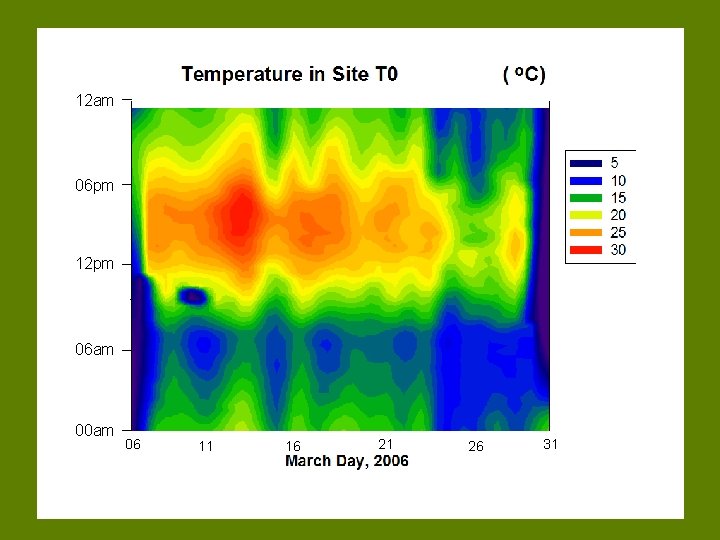
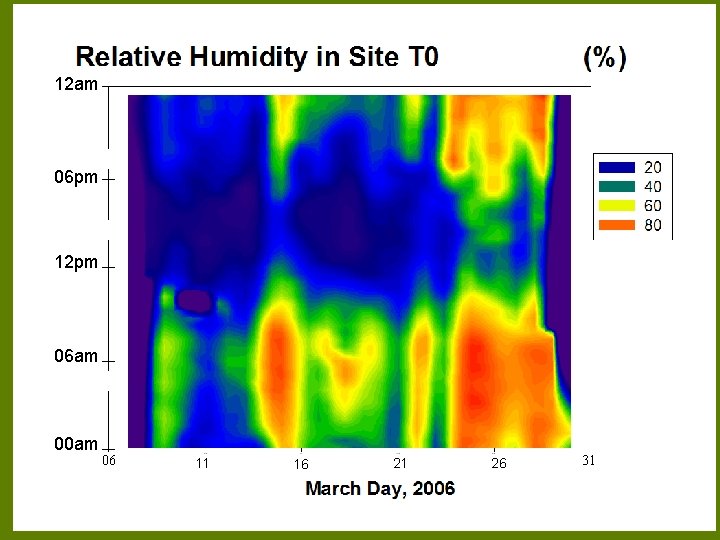
12 am 06 pm 12 pm 06 am 00 am 06 11 16 21 26 31
12 am 06 pm 12 pm 06 am 00 am 06 11 16 21 26 31
TO Site Mexico City Light Scattering for 532 nm (G. Paredes & P. Arnott) and 550 nm (J. Gaffney &N. Marley) 12 am 06 pm 12 pm 06 am 00 am 11 16 21 26
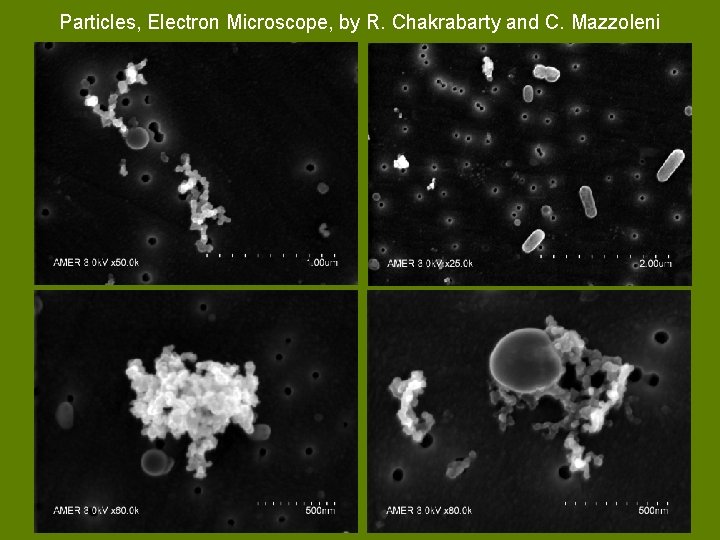
Particles, Electron Microscope, by R. Chakrabarty and C. Mazzoleni
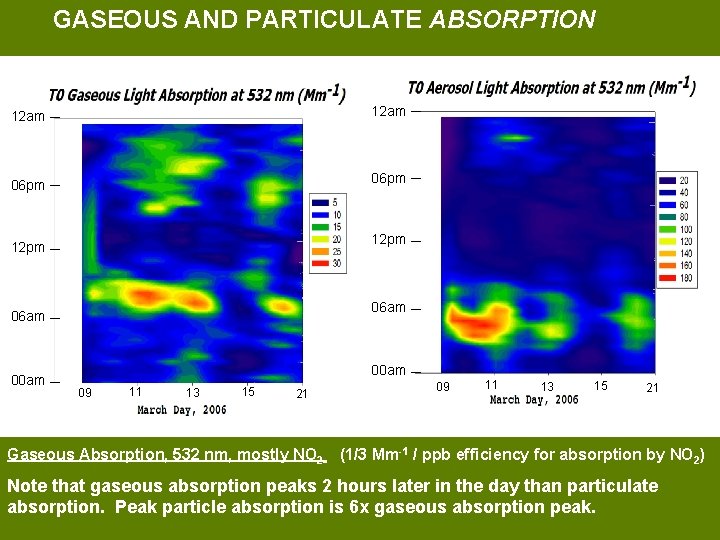
GASEOUS AND PARTICULATE ABSORPTION 12 am 06 pm 12 pm 06 am 00 am 09 11 13 15 21 Gaseous Absorption, 532 nm, mostly NO 2 09 11 13 15 21 (1/3 Mm-1 / ppb efficiency for absorption by NO 2) Note that gaseous absorption peaks 2 hours later in the day than particulate absorption. Peak particle absorption is 6 x gaseous absorption peak.
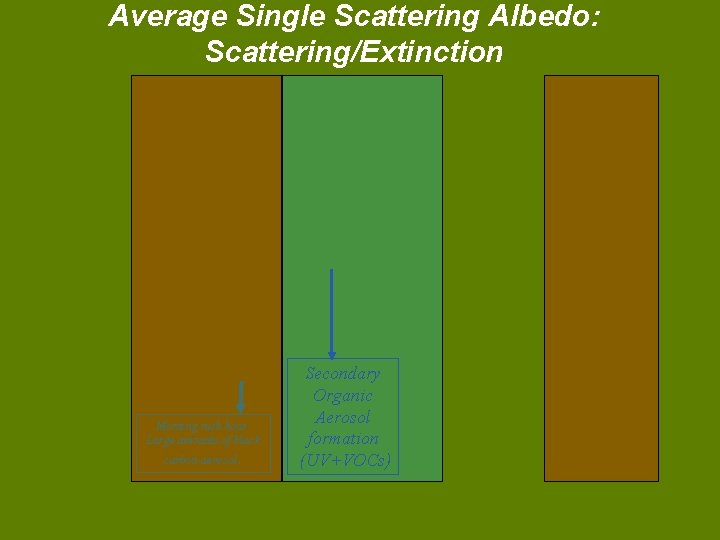
Average Single Scattering Albedo: Scattering/Extinction Morning rush hour. Large amounts of black carbon aerosol. Secondary Organic Aerosol formation (UV+VOCs)
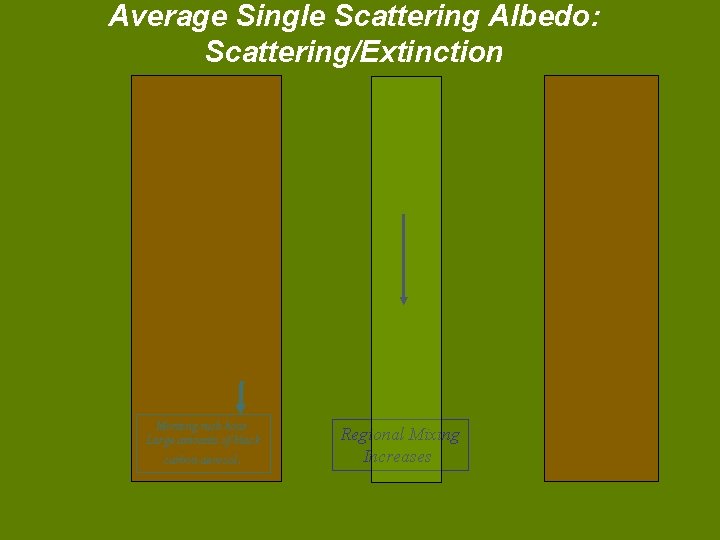
Average Single Scattering Albedo: Scattering/Extinction Morning rush hour. Large amounts of black carbon aerosol. Regional Mixing Increases
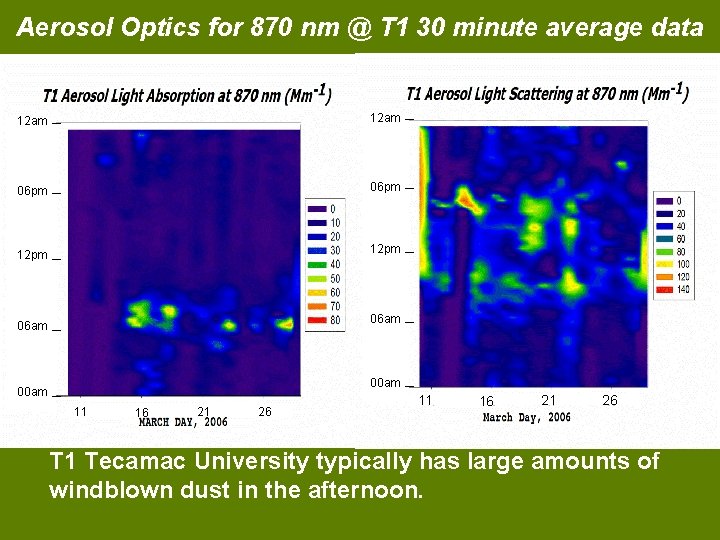
Aerosol Optics for 870 nm @ T 1 30 minute average data 12 am 06 pm 12 pm 06 am 00 am 11 16 21 26 T 1 Tecamac University typically has large amounts of windblown dust in the afternoon.
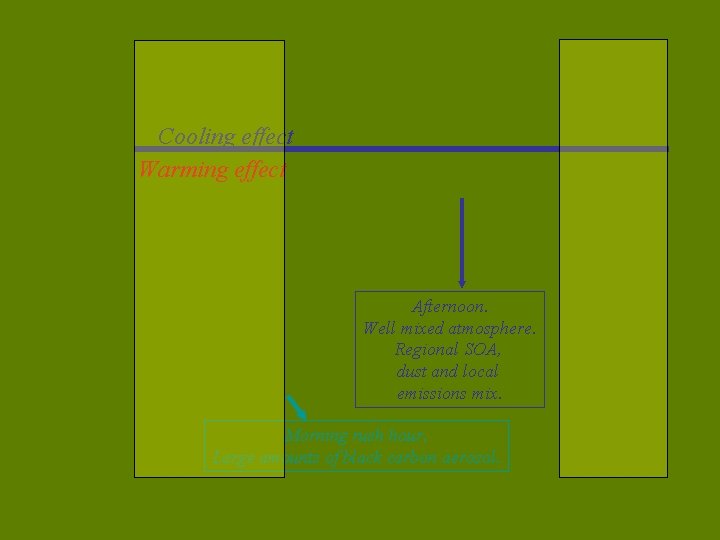
Cooling effect Warming effect Afternoon. Well mixed atmosphere. Regional SOA, dust and local emissions mix. Morning rush hour. Large amounts of black carbon aerosol.
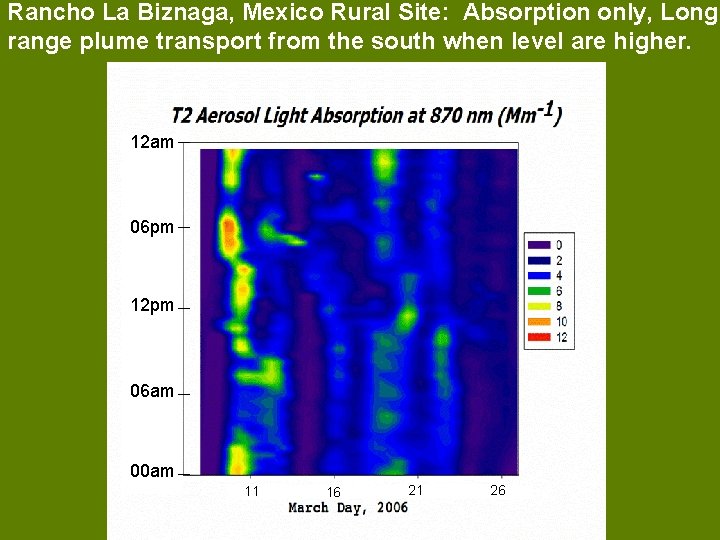
Rancho La Biznaga, Mexico Rural Site: Absorption only, Long range plume transport from the south when level are higher. 12 am 06 pm 12 pm 06 am 00 am 11 16 21 26
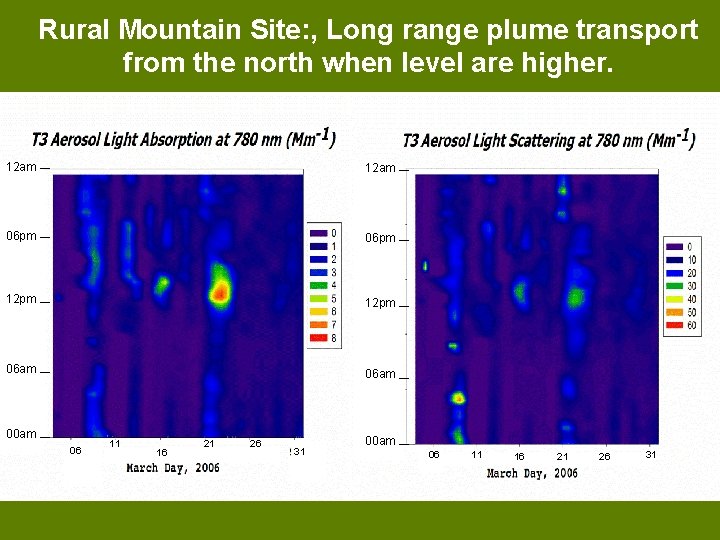
Rural Mountain Site: , Long range plume transport from the north when level are higher. 12 am 06 pm 12 pm 06 am 00 am 06 11 16 21 26 31 00 am 06 06 11 16 21 26 31
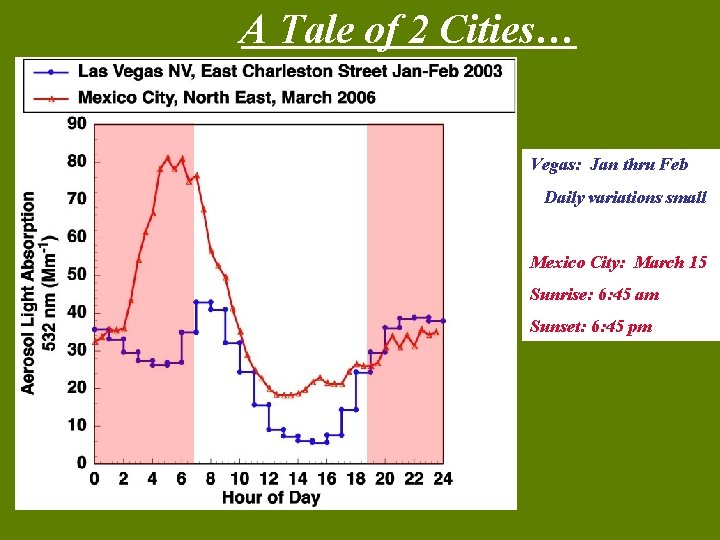
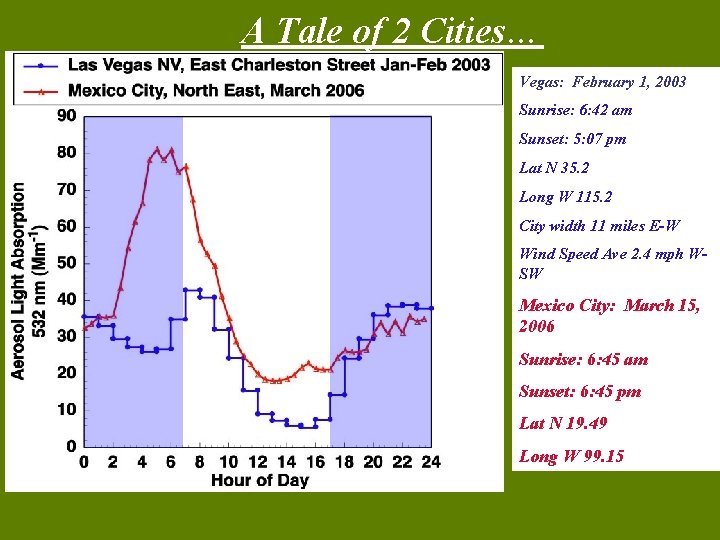
A Tale of 2 Cities… Vegas: Jan thru Feb Daily variations small Mexico City: March 15 Sunrise: 6: 45 am Sunset: 6: 45 pm
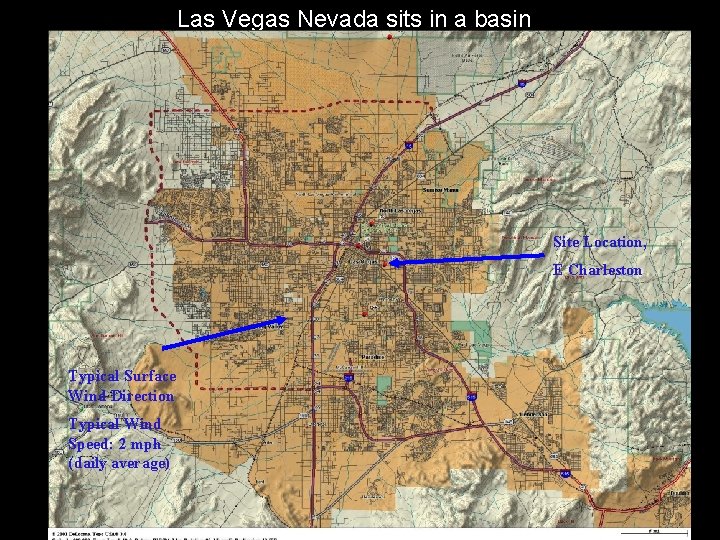
Las Vegas Nevada sits in a basin Site Location, E Charleston Typical Surface Wind Direction Typical Wind Speed: 2 mph (daily average)
A Tale of 2 Cities… Vegas: February 1, 2003 Sunrise: 6: 42 am Sunset: 5: 07 pm Lat N 35. 2 Long W 115. 2 City width 11 miles E-W Wind Speed Ave 2. 4 mph WSW Mexico City: March 15, 2006 Sunrise: 6: 45 am Sunset: 6: 45 pm Lat N 19. 49 Long W 99. 15
SUMMARY • Significant day to day variations of BC are observed due to meteorology in the Mexico City Basin. • Peak gaseous absorption is approx. 2 hrs later in the day than peak particle absorption. Peak 30 -minuteaverage aerosol absorption in Mexico City was 180 Mm-1. Heating effects on BL dynamics are likely. • Daily single scattering albedos vary between 0. 6 and 0. 85 at 532 nm at the T 0 site. Transportation dominates aerosol optics in the morning and secondary OC is important in the afternoon. Dust is also important at the T 1 site.
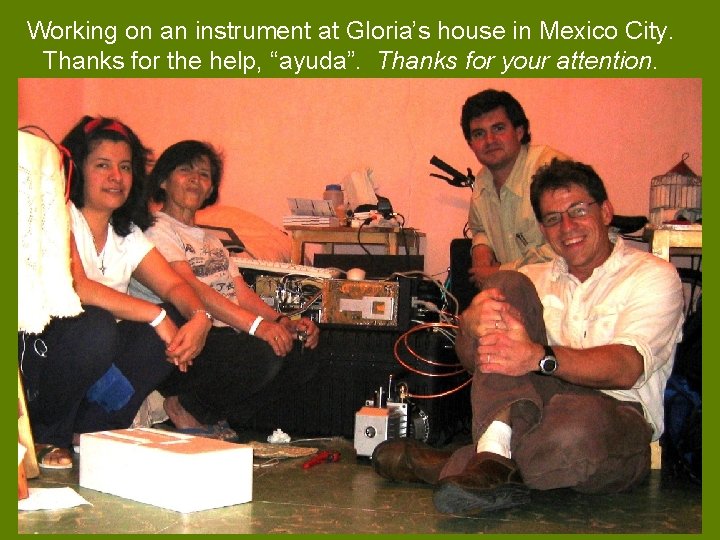
Working on an instrument at Gloria’s house in Mexico City. Thanks for the help, “ayuda”. Thanks for your attention.