
METROLOGY TO INCREASE TRACEABILITY QUALITY AND RELIABILITY OF
METROLOGY TO INCREASE TRACEABILITY, QUALITY AND RELIABILITY OF SAFETY MEASUREMENTS Intensity, cps 4. 2 e 5 4. 0 e 5 3. 8 e 5 3. 6 e 5 3. 4 e 5 3. 2 e 5 3. 0 e 5 2. 8 e 5 2. 6 e 5 2. 4 e 5 2. 2 e 5 2. 0 e 5 1. 8 e 5 1. 6 e 5 1. 4 e 5 1. 2 e 5 1. 0 e 5 8. 0 e 4 6. 0 e 4 4. 0 e 4 2. 0 e 4 17. 66 18. 05 0. 0 1. 0 2. 0 3. 0 4. 0 5. 0 6. 0 7. 0 8. 0 9. 0 10. 0 11. 0 12. 0 13. 0 14. 0 15. 0 16. 0 17. 0 18. 0 19. 0 20. 0 Time, min Antonio F. Logrieco Brussels, 20 October 2016
Overview � Metrology and food safety � Measurement tools to increase food safety: the mycotoxin issue � Infrastructures/associations/projects for promoting metrology in food
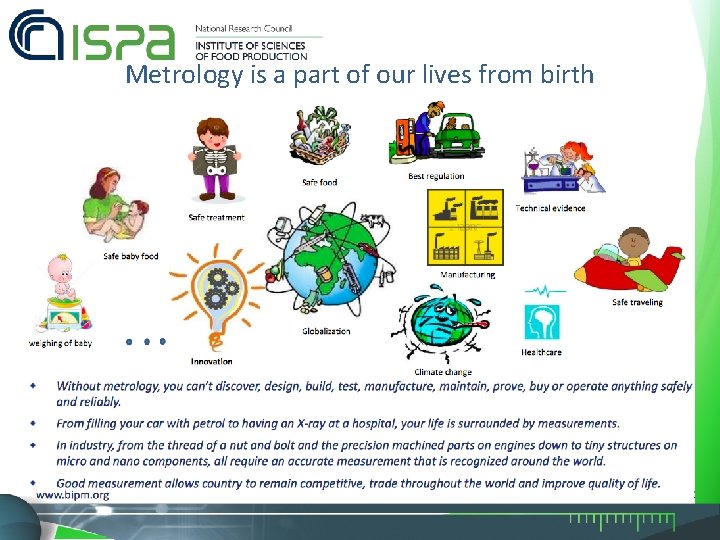
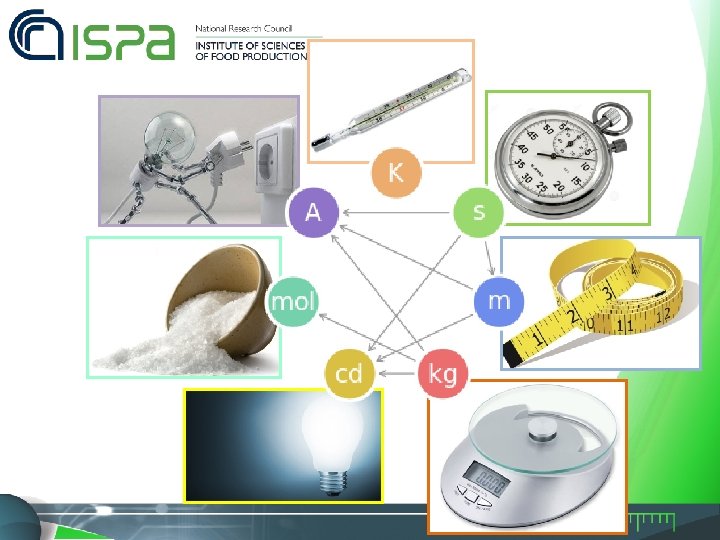
Metrology is a part of our lives from birth
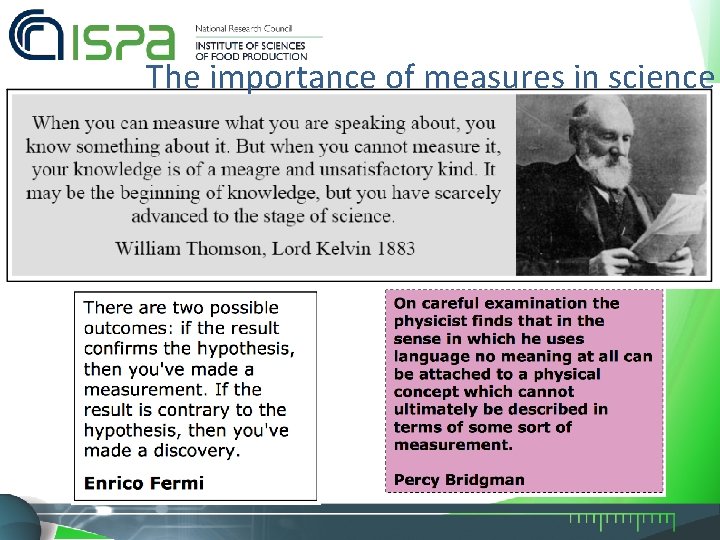
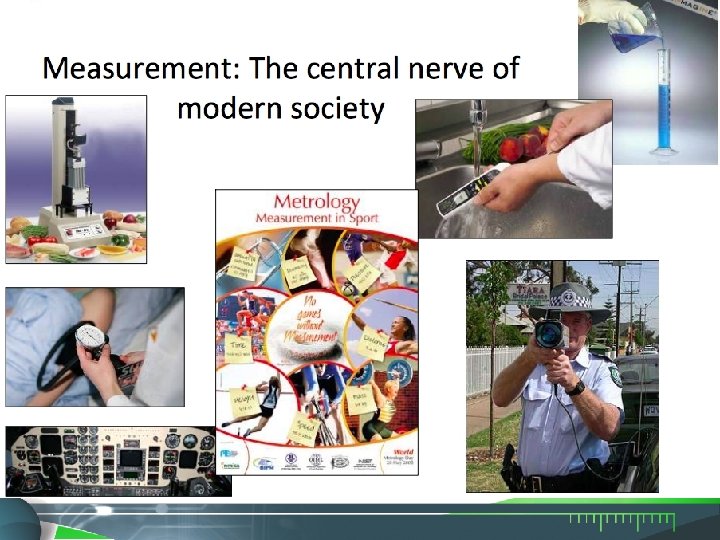
The importance of measures in science Measurement is fundamental
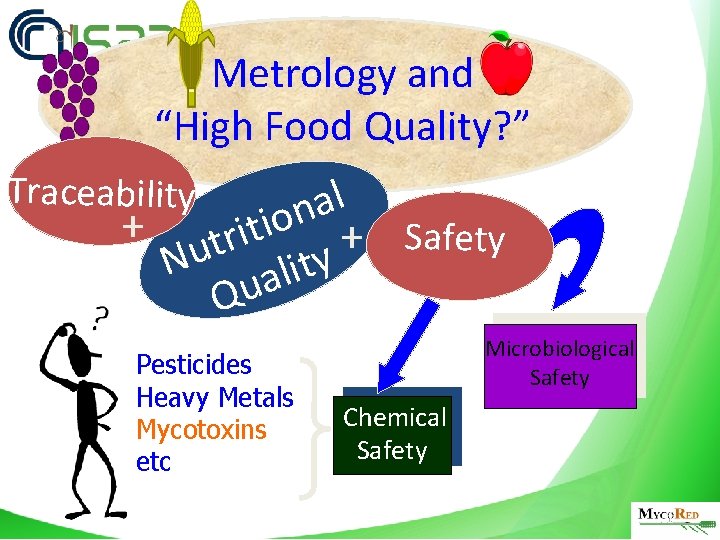
Metrology and “High Food Quality? ” Traceability l a + trition + Safety Nu ality Qu Pesticides Heavy Metals Mycotoxins etc Microbiological Safety Chemical Safety
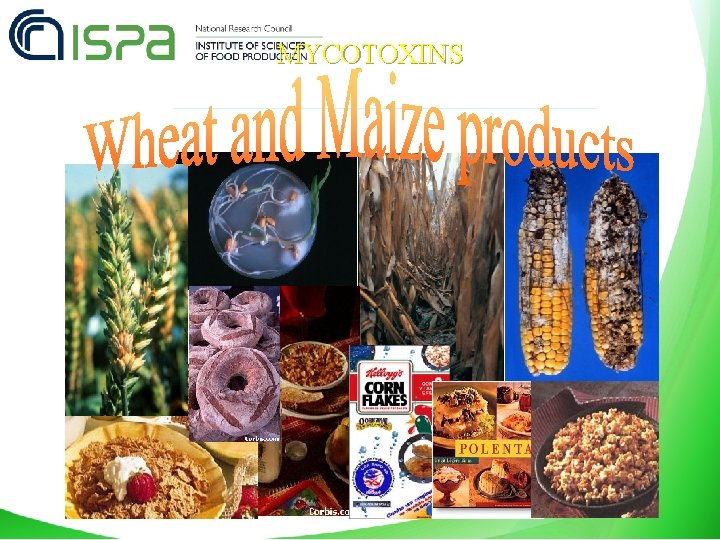
MYCOTOXINS
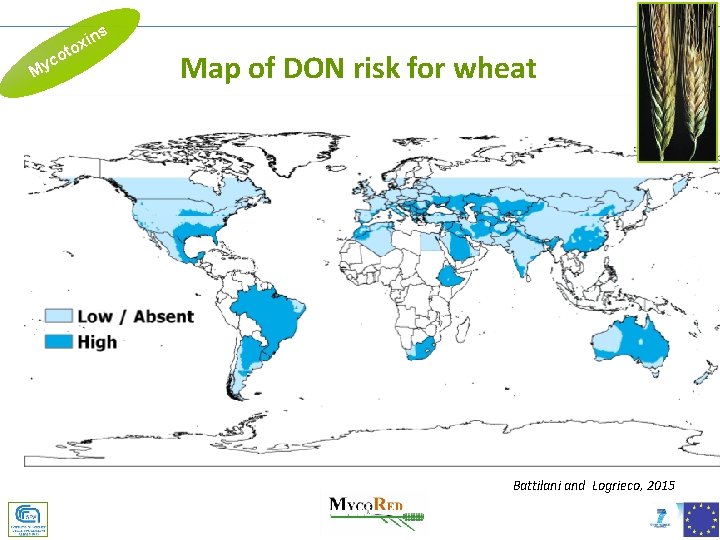
co y M ins x to Map of DON risk for wheat Battilani and Logrieco, 2015
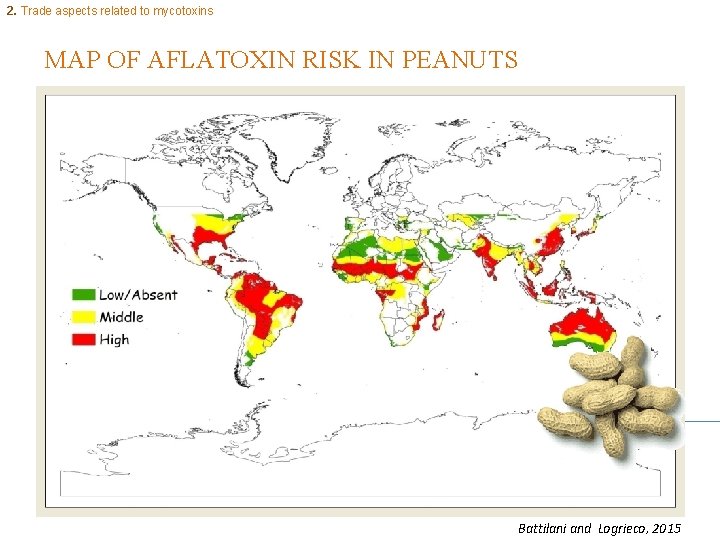
2. Trade aspects related to mycotoxins MAP OF AFLATOXIN RISK IN PEANUTS Battilani and Logrieco, 2015
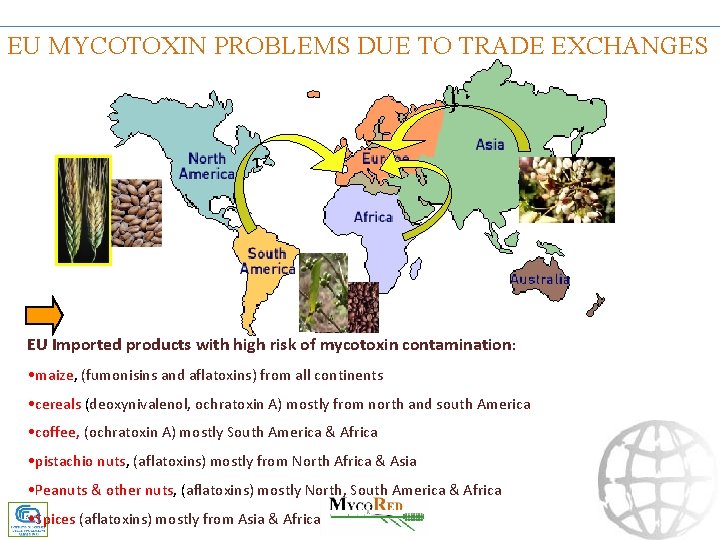
EU MYCOTOXIN PROBLEMS DUE TO TRADE EXCHANGES EU Imported products with high risk of mycotoxin contamination : • maize, (fumonisins and aflatoxins) from all continents • cereals (deoxynivalenol, ochratoxin A) mostly from north and south America • coffee, (ochratoxin A) mostly South America & Africa • pistachio nuts, (aflatoxins) mostly from North Africa & Asia • Peanuts & other nuts, (aflatoxins) mostly North, South America & Africa • Spices (aflatoxins) mostly from Asia & Africa
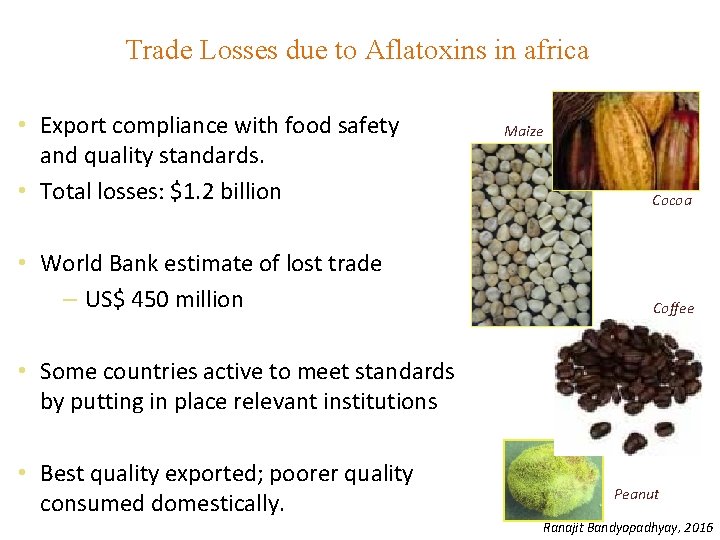
Trade Losses due to Aflatoxins in africa • Export compliance with food safety and quality standards. • Total losses: $1. 2 billion • World Bank estimate of lost trade – US$ 450 million Maize Cocoa Coffee • Some countries active to meet standards by putting in place relevant institutions • Best quality exported; poorer quality consumed domestically. Peanut Ranajit Bandyopadhyay, 2016
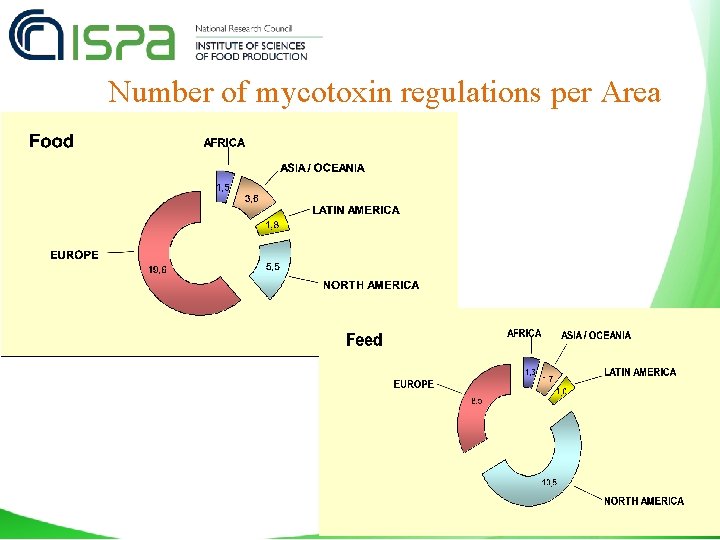
Number of mycotoxin regulations per Area
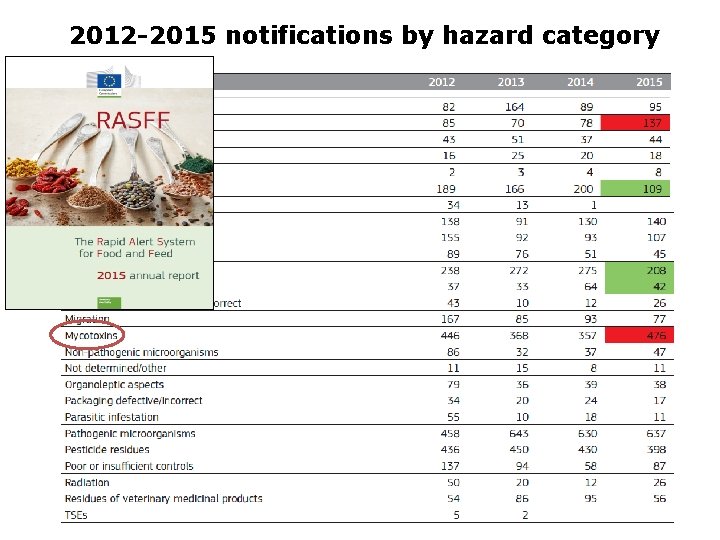
2012 -2015 notifications by hazard category
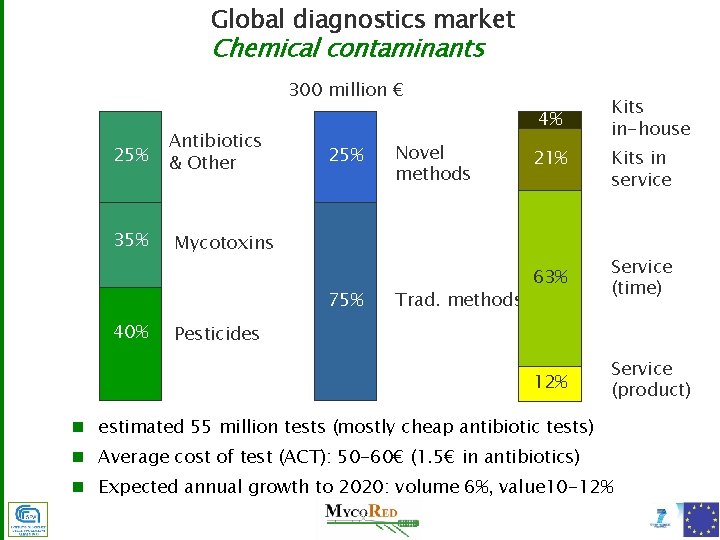
Global diagnostics market Chemical contaminants 300 million € 25% 35% Antibiotics & Other 4% 25% 21% Mycotoxins 75% 40% Novel methods Trad. methods Kits in-house Kits in service 63% Service (time) 12% Service (product) Pesticides n estimated 55 million tests (mostly cheap antibiotic tests) n Average cost of test (ACT): 50 -60€ (1. 5€ in antibiotics) n Expected annual growth to 2020: volume 6%, value 10 -12%
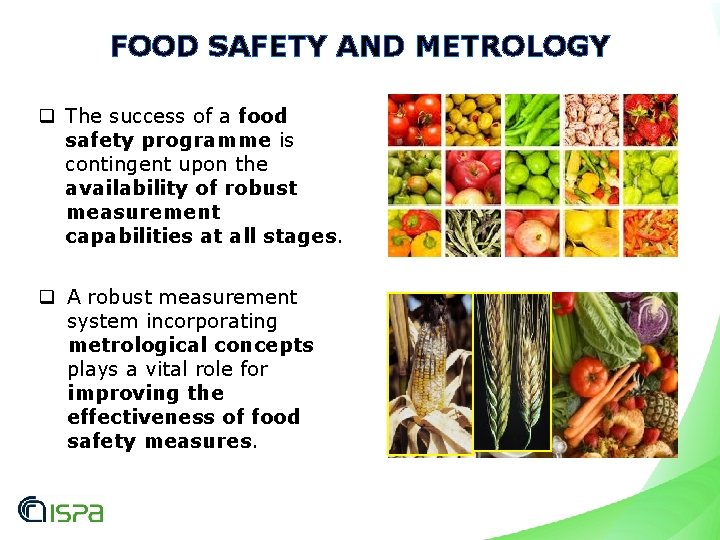
FOOD SAFETY AND METROLOGY q The success of a food safety programme is contingent upon the availability of robust measurement capabilities at all stages. q A robust measurement system incorporating metrological concepts plays a vital role for improving the effectiveness of food safety measures.
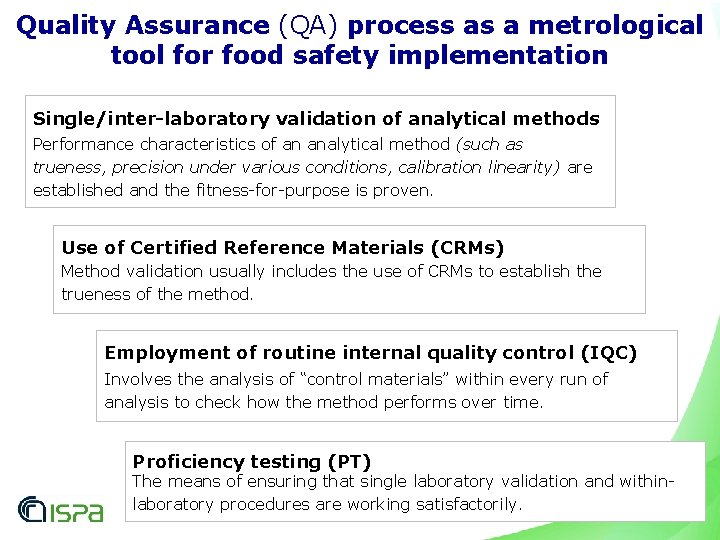
Quality Assurance (QA) process as a metrological tool for food safety implementation Single/inter-laboratory validation of analytical methods Performance characteristics of an analytical method (such as trueness, precision under various conditions, calibration linearity) are established and the fitness-for-purpose is proven. Use of Certified Reference Materials (CRMs) Method validation usually includes the use of CRMs to establish the trueness of the method. Employment of routine internal quality control (IQC) Involves the analysis of “control materials” within every run of analysis to check how the method performs over time. Proficiency testing (PT) The means of ensuring that single laboratory validation and withinlaboratory procedures are working satisfactorily.
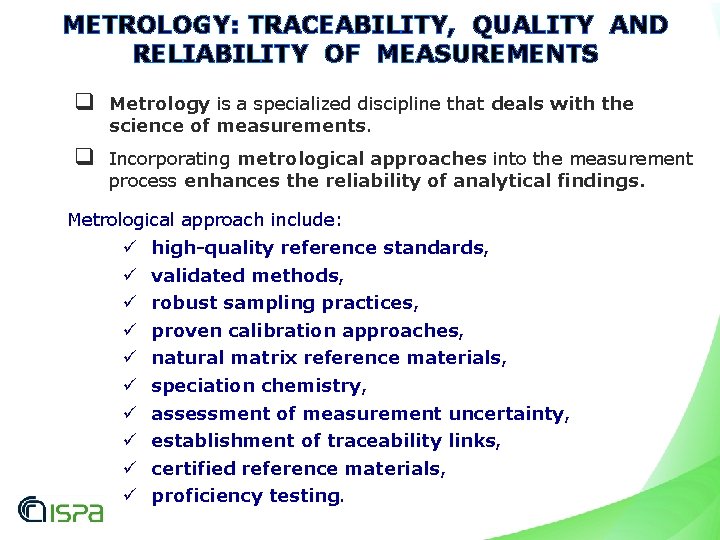
METROLOGY: TRACEABILITY, QUALITY AND RELIABILITY OF MEASUREMENTS q Metrology is a specialized discipline that deals with the science of measurements. q Incorporating metrological approaches into the measurement process enhances the reliability of analytical findings. Metrological approach include: ü ü ü ü ü high-quality reference standards, validated methods, robust sampling practices, proven calibration approaches, natural matrix reference materials, speciation chemistry, assessment of measurement uncertainty, establishment of traceability links, certified reference materials, proficiency testing.
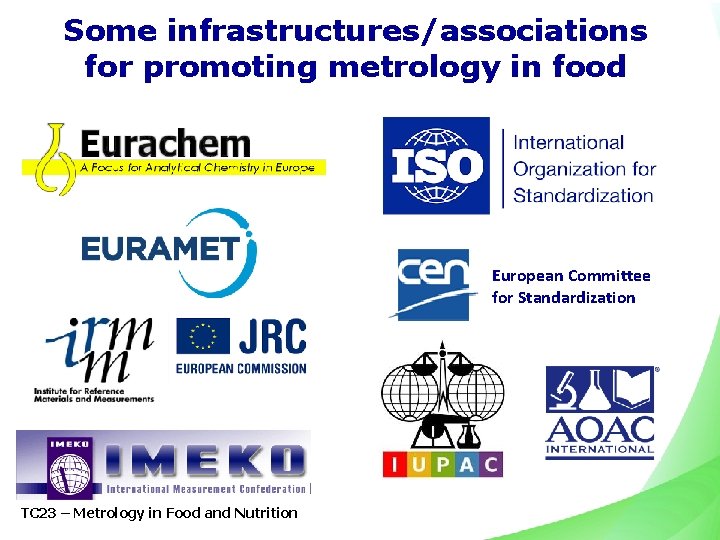
Some infrastructures/associations for promoting metrology in food European Committee for Standardization TC 23 – Metrology in Food and Nutrition
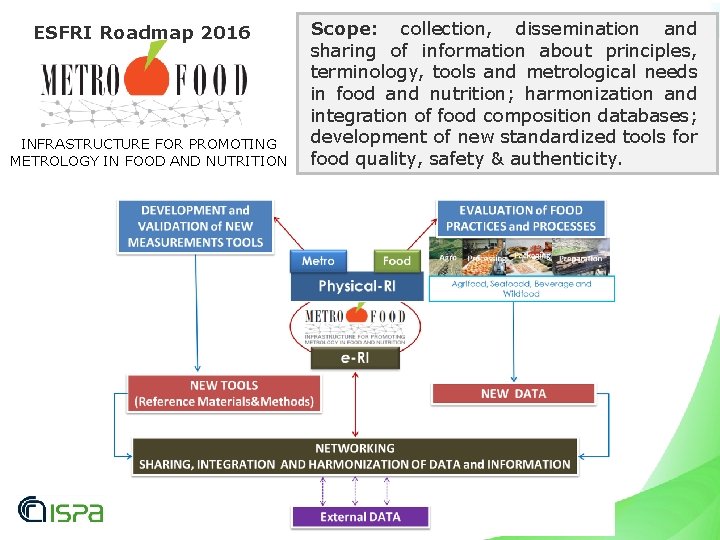
ESFRI Roadmap 2016 INFRASTRUCTURE FOR PROMOTING METROLOGY IN FOOD AND NUTRITION Scope: collection, dissemination and sharing of information about principles, terminology, tools and metrological needs in food and nutrition; harmonization and integration of food composition databases; development of new standardized tools for food quality, safety & authenticity.
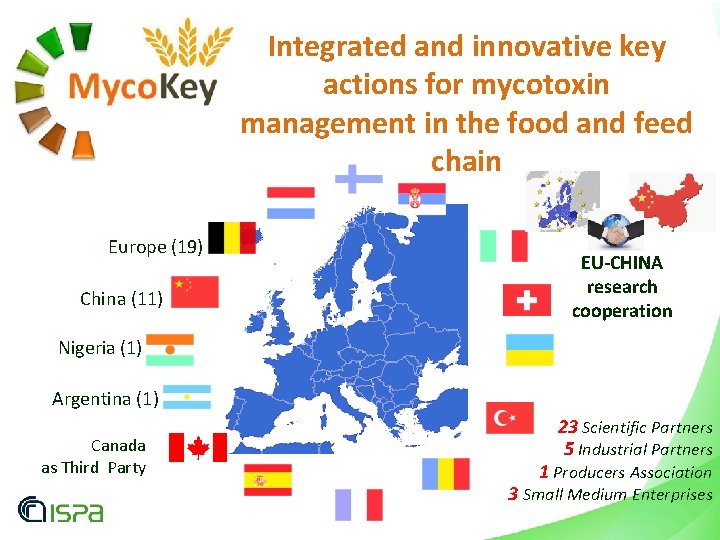
Integrated and innovative key actions for mycotoxin management in the food and feed chain Europe (19) China (11) EU-CHINA research cooperation Nigeria (1) Argentina (1) Canada as Third Party 23 Scientific Partners 5 Industrial Partners 1 Producers Association 3 Small Medium Enterprises

22 Thanks for your attention! Antonio F. Logrieco e- mail: antonio. logrieco@ispa. cnr. it
- Slides: 22