
Metric System Created by David L Bricker Math
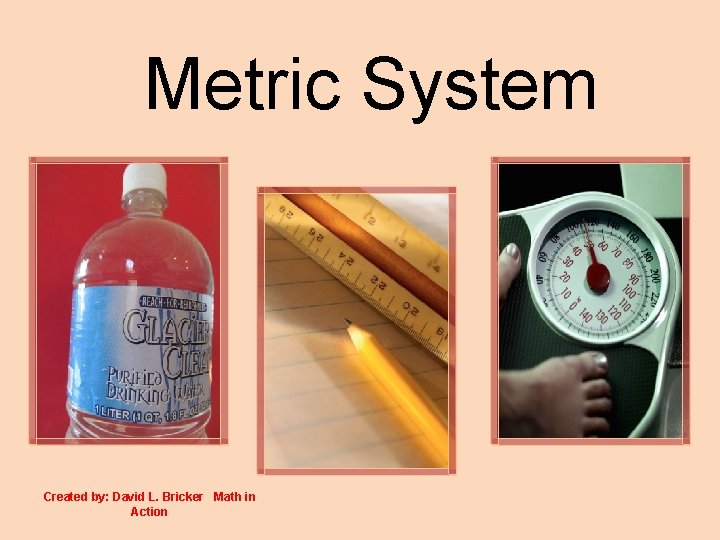
Metric System Created by: David L. Bricker Math in Action
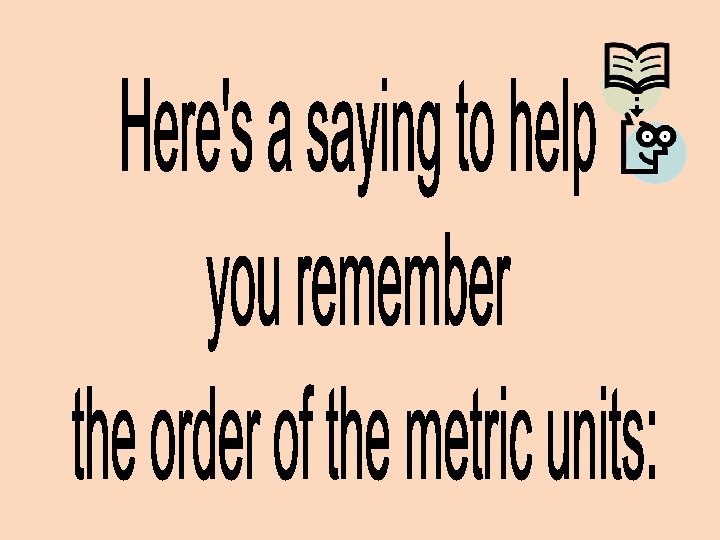

Millimeter Hectometer Kilometer Centimeter Decimeter Dekameter Meter

Kilo Hecto Deca Meter/Liter/Gram Deci Centi Milli
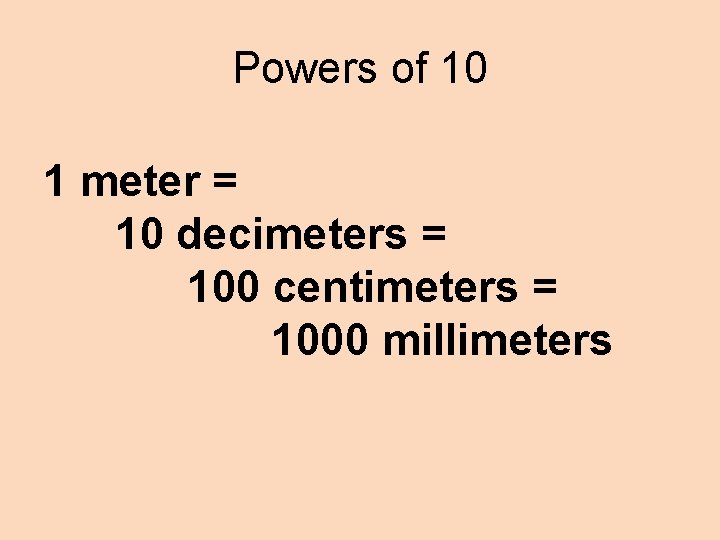
Powers of 10 1 meter = 10 decimeters = 100 centimeters = 1000 millimeters
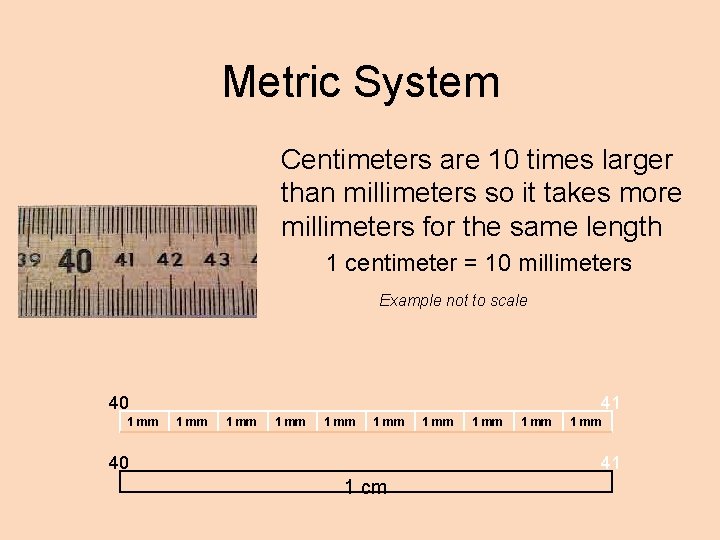
Metric System Centimeters are 10 times larger than millimeters so it takes more millimeters for the same length 1 centimeter = 10 millimeters Example not to scale 40 1 mm 41 1 mm 1 mm 40 1 mm 41 1 cm
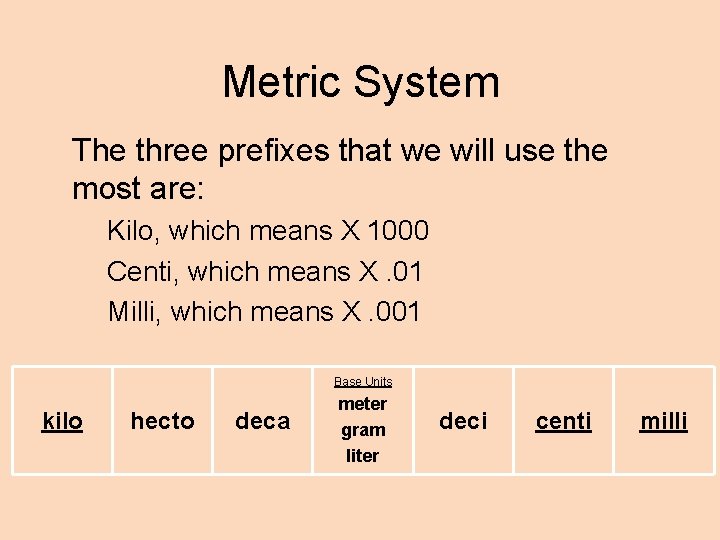
Metric System The three prefixes that we will use the most are: Kilo, which means X 1000 Centi, which means X. 01 Milli, which means X. 001 Base Units kilo hecto deca meter gram liter deci centi milli
Metric System The metric system is based on a base unit that corresponds to a certain kind of measurement Length = meter Volume = liter Weight (Mass) = gram Prefixes plus base units make up the metric system Example: Centi + liter = Centiliter = 1/100 of a liter Kilo + liter = Kiloliter = 1000 liters
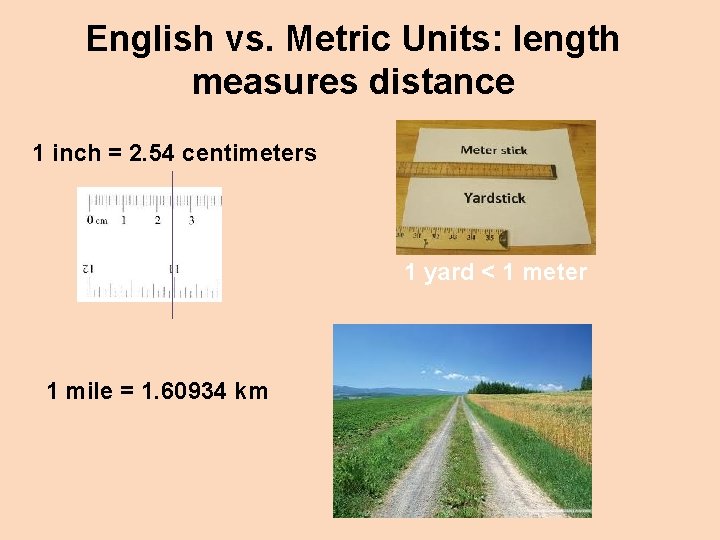
English vs. Metric Units: length measures distance 1 inch = 2. 54 centimeters 1 yard < 1 meter 1 mile = 1. 60934 km
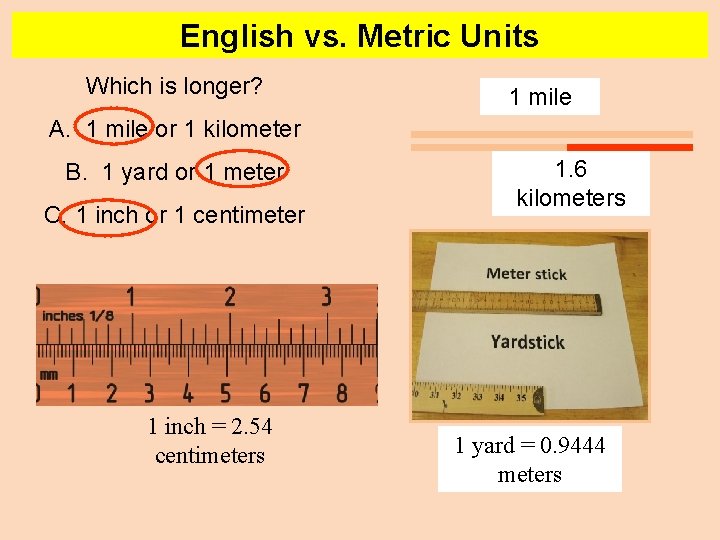
English vs. Metric Units Which is longer? 1 mile A. 1 mile or 1 kilometer B. 1 yard or 1 meter C. 1 inch or 1 centimeter 1 inch = 2. 54 centimeters 1. 6 kilometers 1 yard = 0. 9444 meters
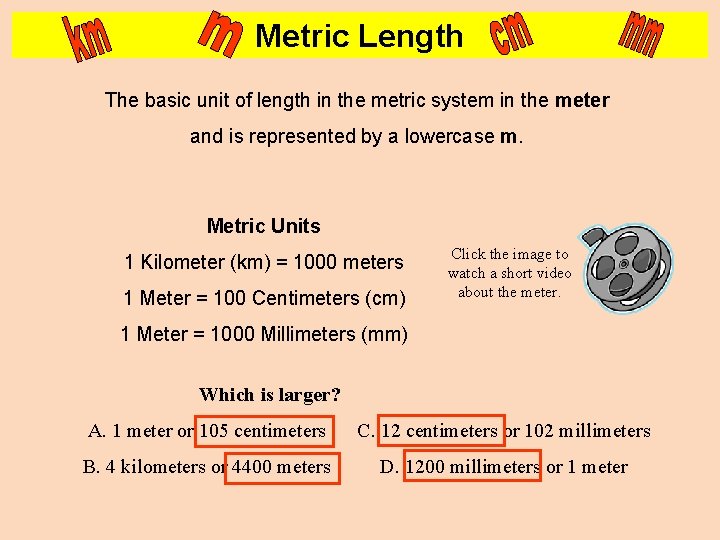
Metric Length The basic unit of length in the metric system in the meter and is represented by a lowercase m. Metric Units 1 Kilometer (km) = 1000 meters 1 Meter = 100 Centimeters (cm) Click the image to watch a short video about the meter. 1 Meter = 1000 Millimeters (mm) Which is larger? A. 1 meter or 105 centimeters C. 12 centimeters or 102 millimeters B. 4 kilometers or 4400 meters D. 1200 millimeters or 1 meter
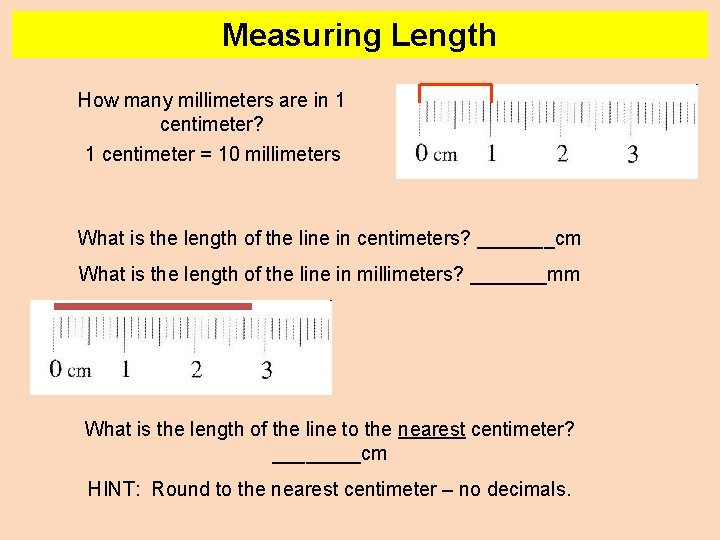
Measuring Length How many millimeters are in 1 centimeter? 1 centimeter = 10 millimeters What is the length of the line in centimeters? _______cm What is the length of the line in millimeters? _______mm What is the length of the line to the nearest centimeter? ____cm HINT: Round to the nearest centimeter – no decimals.

English vs. Metric Units: Mass/Weight measures heaviness 1 pound = 453. 6 grams 1 ounce of gold = 28, 349. 5 milligrams 220 pounds = 100 kilograms
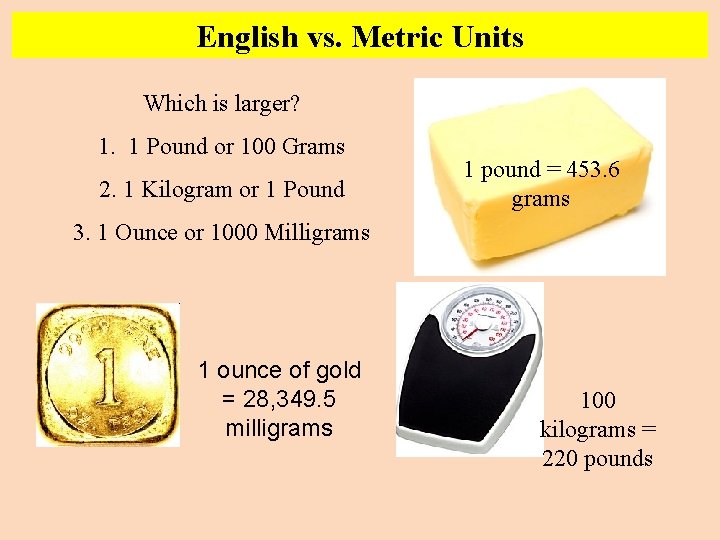
English vs. Metric Units Which is larger? 1. 1 Pound or 100 Grams 2. 1 Kilogram or 1 Pound 1 pound = 453. 6 grams 3. 1 Ounce or 1000 Milligrams 1 ounce of gold = 28, 349. 5 milligrams 100 kilograms = 220 pounds
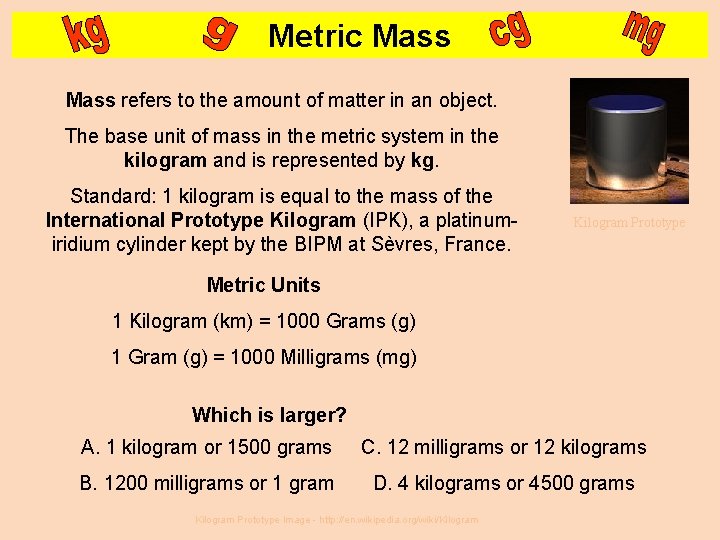
Metric Mass refers to the amount of matter in an object. The base unit of mass in the metric system in the kilogram and is represented by kg. Standard: 1 kilogram is equal to the mass of the International Prototype Kilogram (IPK), a platinumiridium cylinder kept by the BIPM at Sèvres, France. Kilogram Prototype Metric Units 1 Kilogram (km) = 1000 Grams (g) 1 Gram (g) = 1000 Milligrams (mg) Which is larger? A. 1 kilogram or 1500 grams C. 12 milligrams or 12 kilograms B. 1200 milligrams or 1 gram D. 4 kilograms or 4500 grams Kilogram Prototype Image - http: //en. wikipedia. org/wiki/Kilogram
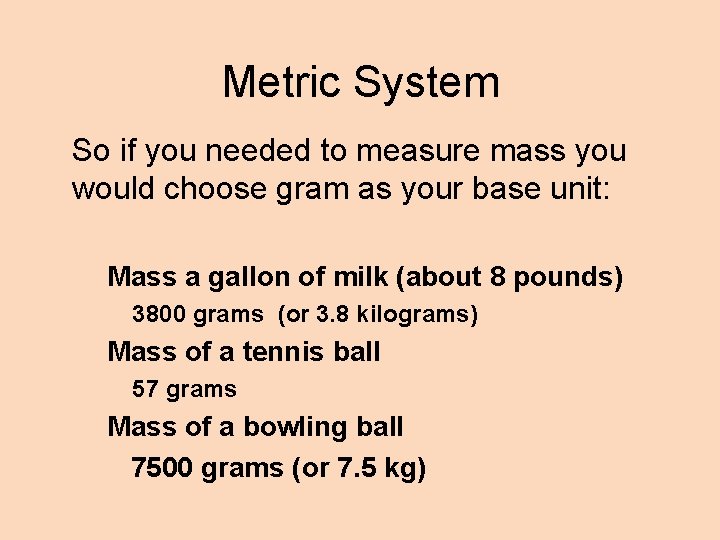
Metric System So if you needed to measure mass you would choose gram as your base unit: Mass a gallon of milk (about 8 pounds) 3800 grams (or 3. 8 kilograms) Mass of a tennis ball 57 grams Mass of a bowling ball 7500 grams (or 7. 5 kg)
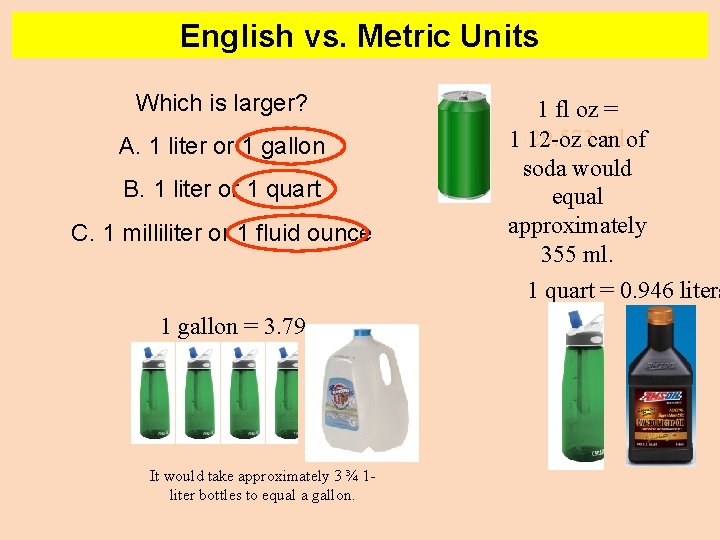
English vs. Metric Units Which is larger? A. 1 liter or 1 gallon B. 1 liter or 1 quart C. 1 milliliter or 1 fluid ounce 1 fl oz = 29. 573 can mlof 1 12 -oz soda would equal approximately 355 ml. 1 quart = 0. 946 liters 1 gallon = 3. 79 liters It would take approximately 3 ¾ 1 liter bottles to equal a gallon.
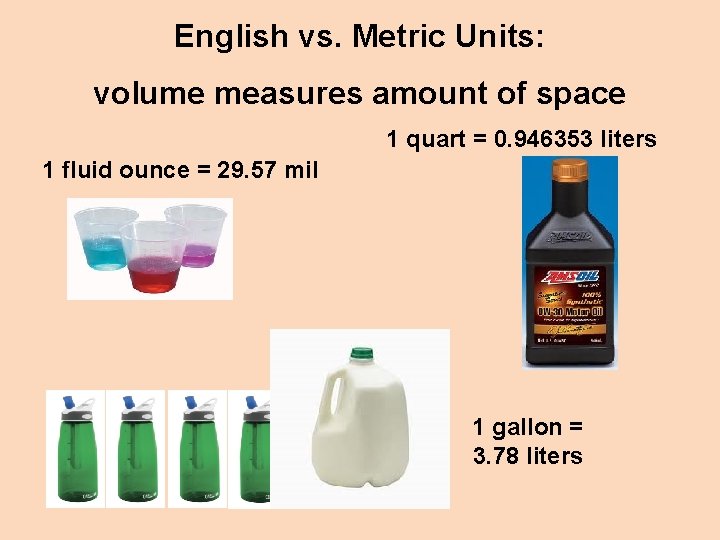
English vs. Metric Units: volume measures amount of space 1 quart = 0. 946353 liters 1 fluid ounce = 29. 57 mil 1 gallon = 3. 78 liters

Metric Volume is the amount of space an object takes up. The base unit of volume in the metric system in the liter and is represented by L or l. 1 liter (L) = 1000 milliliters (m. L) The metric system relates liquid and solid volume. One cubic centimeter equals 1 milliliter. Which is larger? A. 1 liter or 1500 milliliters B. 200 milliliters or 1. 2 liters C. 12 cm 3 or 1. 2 milliliters* Click the image to watch a short video about volume.
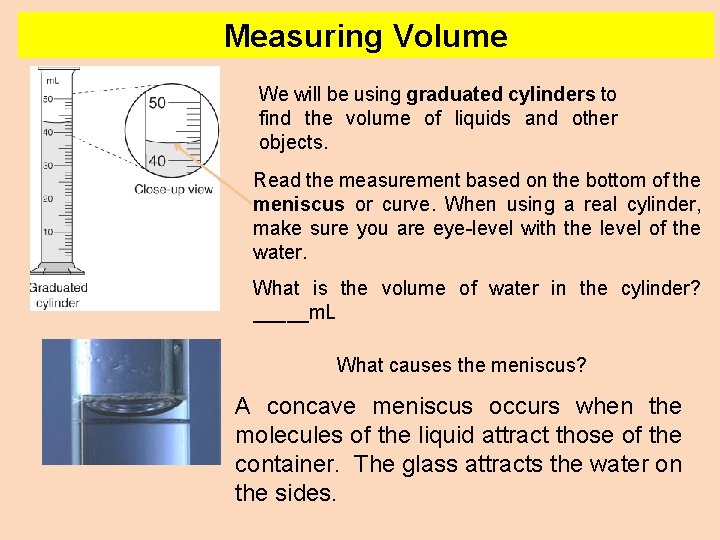
Measuring Volume We will be using graduated cylinders to find the volume of liquids and other objects. Read the measurement based on the bottom of the meniscus or curve. When using a real cylinder, make sure you are eye-level with the level of the water. What is the volume of water in the cylinder? _____m. L What causes the meniscus? A concave meniscus occurs when the molecules of the liquid attract those of the container. The glass attracts the water on the sides.
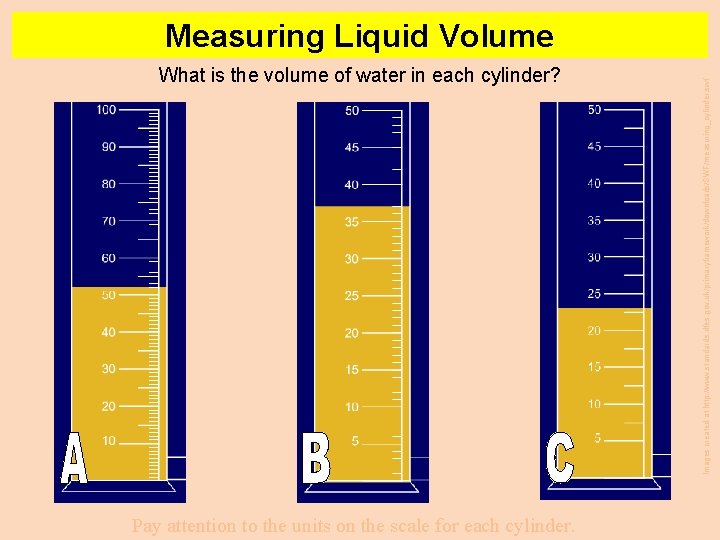
What is the volume of water in each cylinder? Pay attention to the units on the scale for each cylinder. Images created at http: //www. standards. dfes. gov. uk/primaryframework/downloads/SWF/measuring_cylinder. swf Measuring Liquid Volume
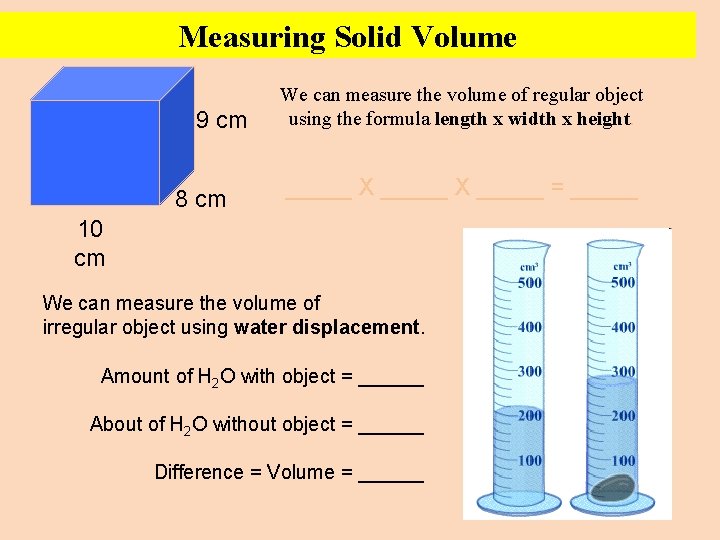
Measuring Solid Volume 9 cm 8 cm We can measure the volume of regular object using the formula length x width x height. _____ X _____ = _____ 10 cm We can measure the volume of irregular object using water displacement. Amount of H 2 O with object = ______ About of H 2 O without object = ______ Difference = Volume = ______
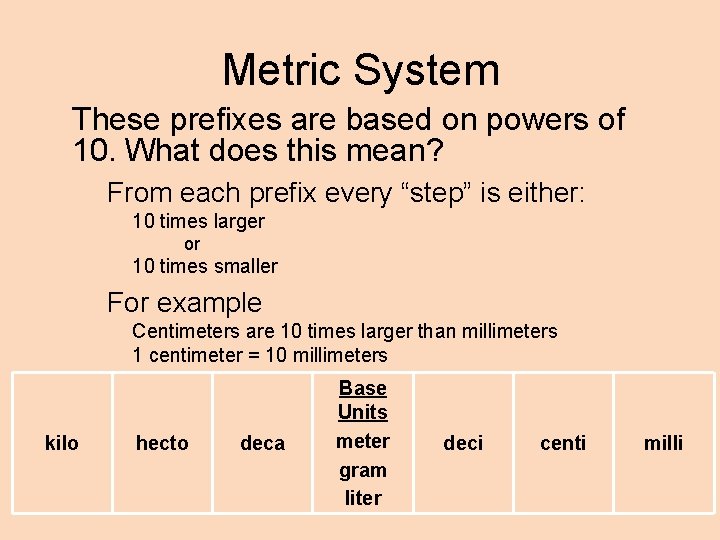
Metric System These prefixes are based on powers of 10. What does this mean? From each prefix every “step” is either: 10 times larger or 10 times smaller For example Centimeters are 10 times larger than millimeters 1 centimeter = 10 millimeters kilo hecto deca Base Units meter gram liter deci centi milli
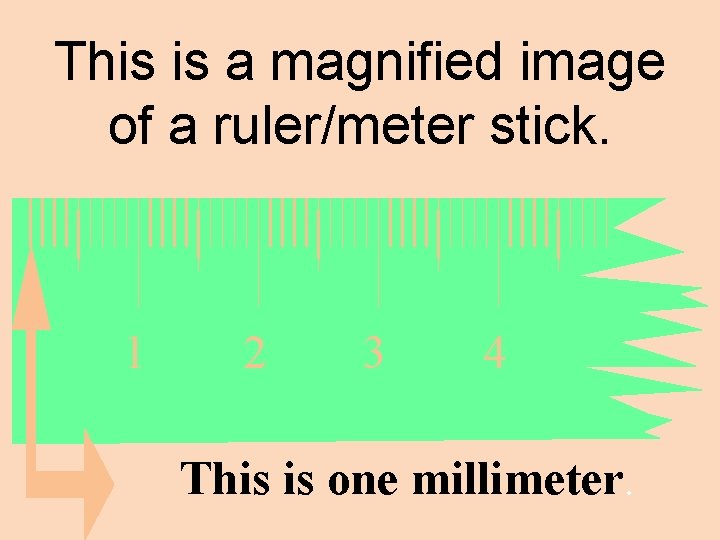
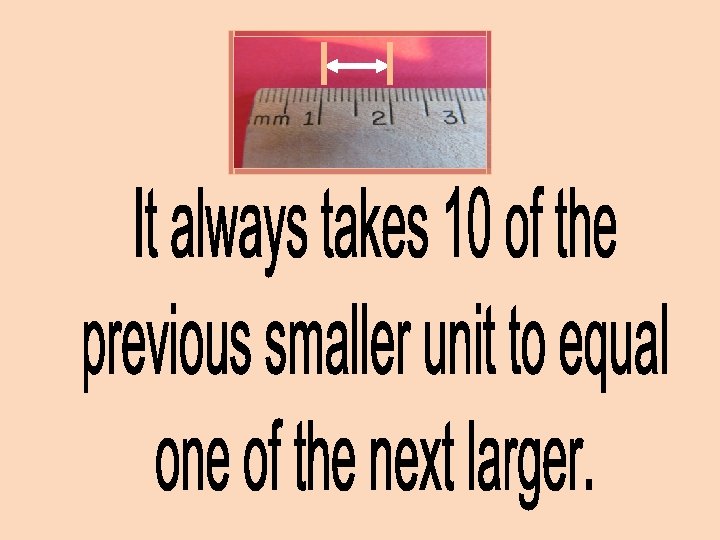
This is a magnified image of a ruler/meter stick. 1 2 3 4 This is one millimeter.
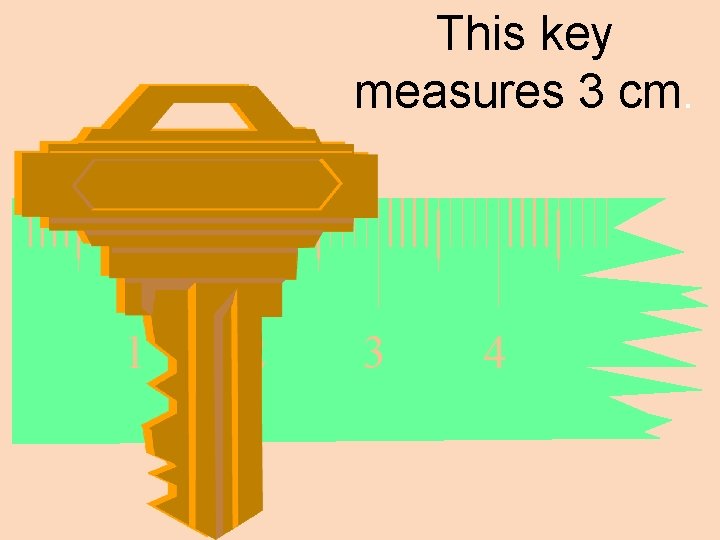
This key measures 3 cm. 1 2 3 4
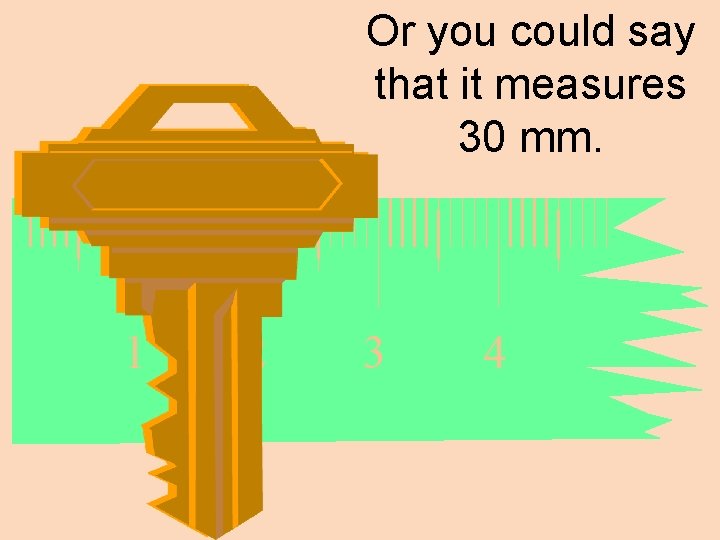
Or you could say that it measures 30 mm. 1 2 3 4
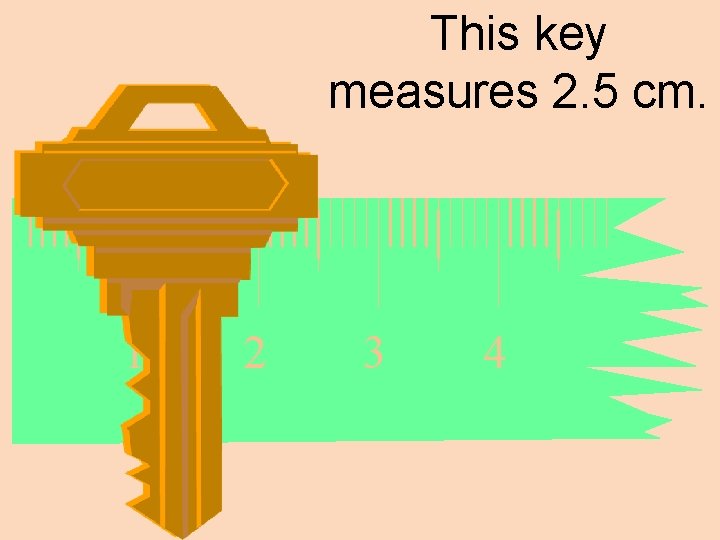
This key measures 2. 5 cm. 1 2 3 4
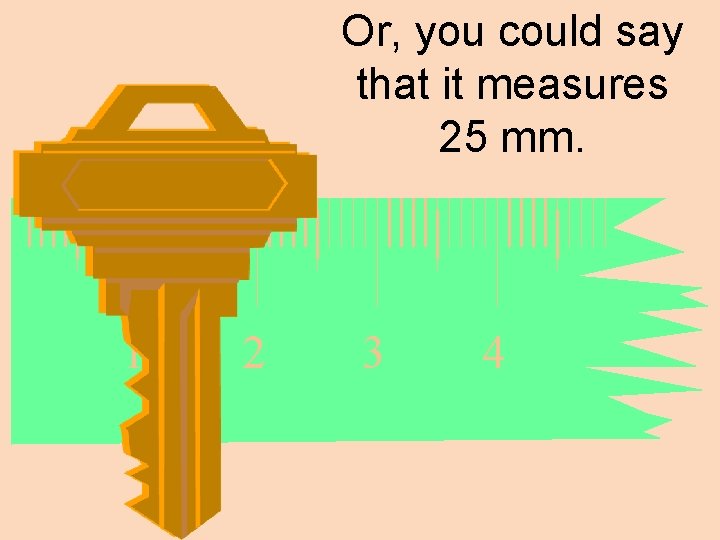
Or, you could say that it measures 25 mm. 1 2 3 4
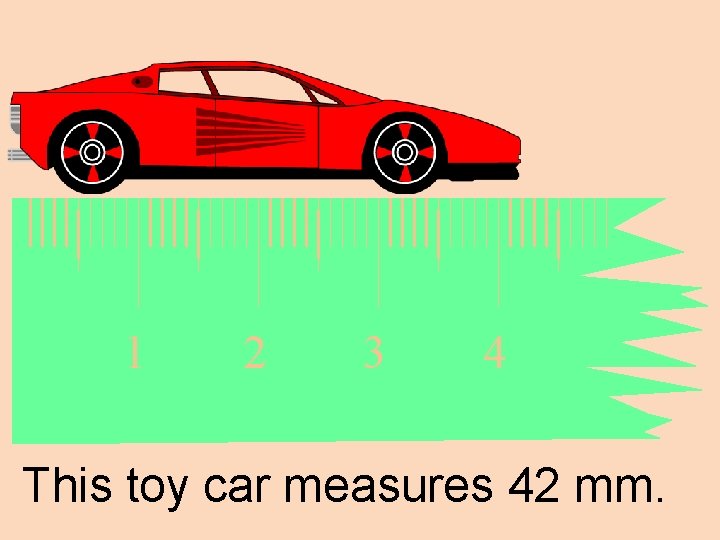
1 2 3 4 This toy car measures 42 mm.
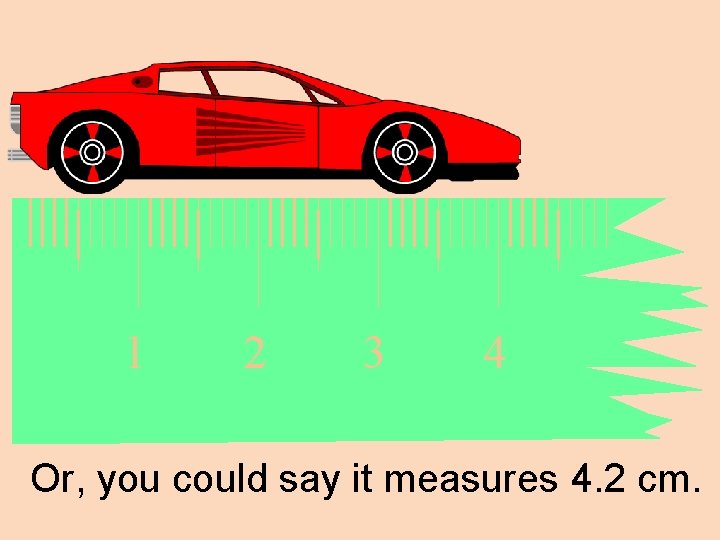
1 2 3 4 Or, you could say it measures 4. 2 cm.
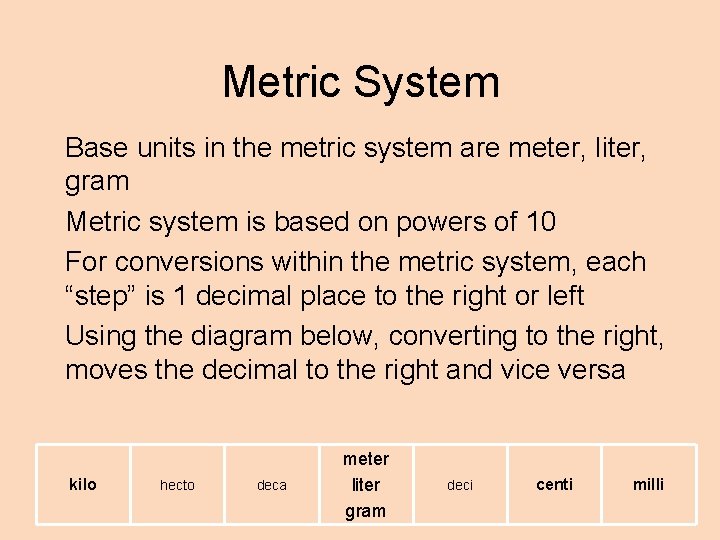
Metric System Base units in the metric system are meter, liter, gram Metric system is based on powers of 10 For conversions within the metric system, each “step” is 1 decimal place to the right or left Using the diagram below, converting to the right, moves the decimal to the right and vice versa kilo hecto deca meter liter gram deci centi milli
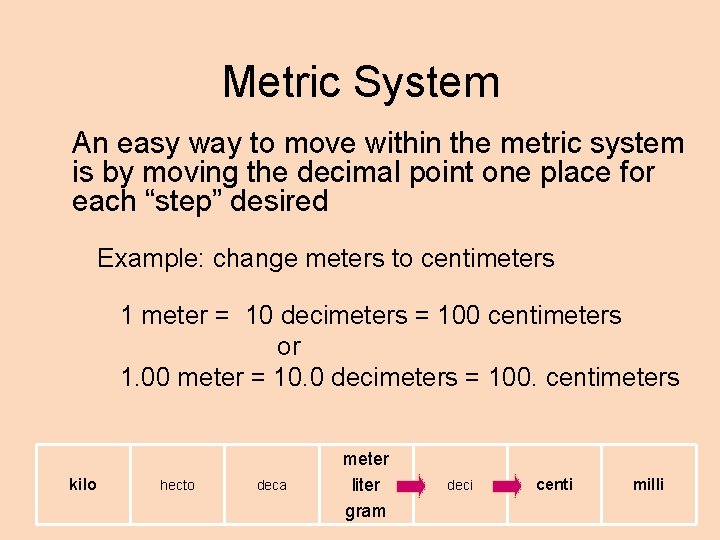
Metric System An easy way to move within the metric system is by moving the decimal point one place for each “step” desired Example: change meters to centimeters 1 meter = 10 decimeters = 100 centimeters or 1. 00 meter = 10. 0 decimeters = 100. centimeters kilo hecto deca meter liter gram deci centi milli
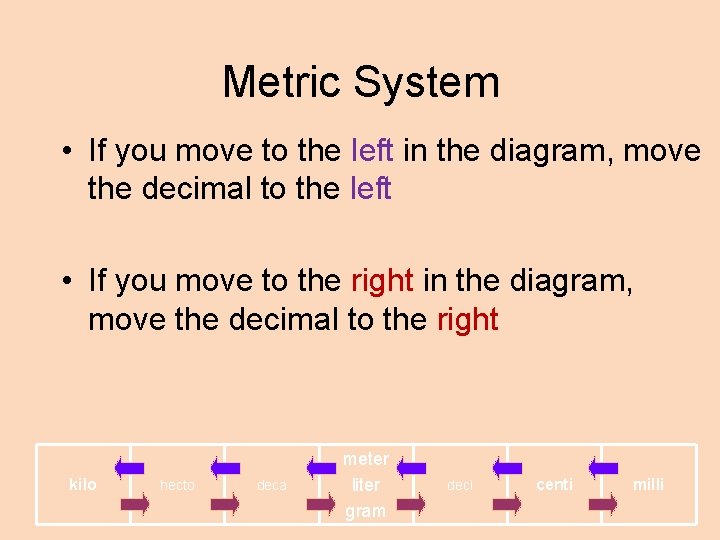
Metric System • If you move to the left in the diagram, move the decimal to the left • If you move to the right in the diagram, move the decimal to the right kilo hecto deca meter liter gram deci centi milli
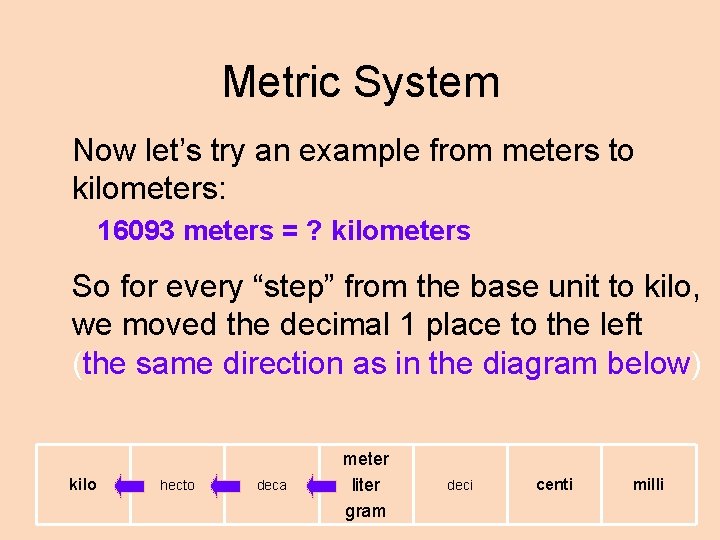
Metric System Now let’s try an example from meters to kilometers: 16093 meters = ? kilometers So for every “step” from the base unit to kilo, we moved the decimal 1 place to the left (the same direction as in the diagram below) kilo hecto deca meter liter gram deci centi milli
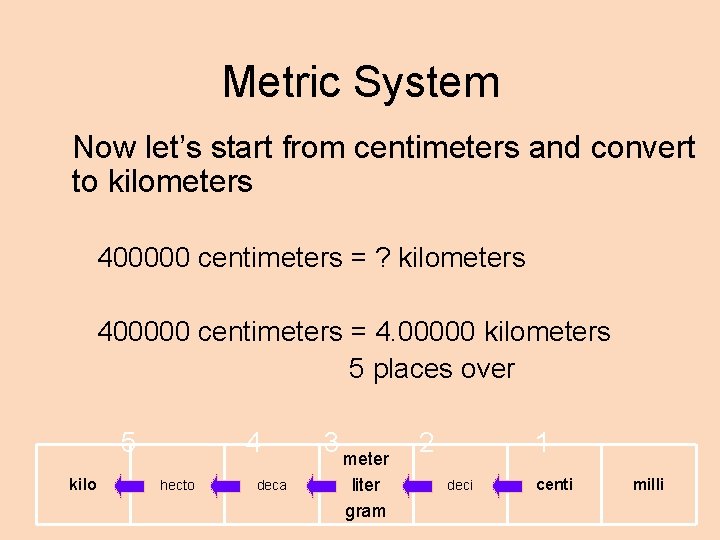
Metric System Now let’s start from centimeters and convert to kilometers 400000 centimeters = ? kilometers 400000 centimeters = 4. 00000 kilometers 5 places over 5 kilo 4 hecto deca 3 meter liter gram 2 1 deci centi milli
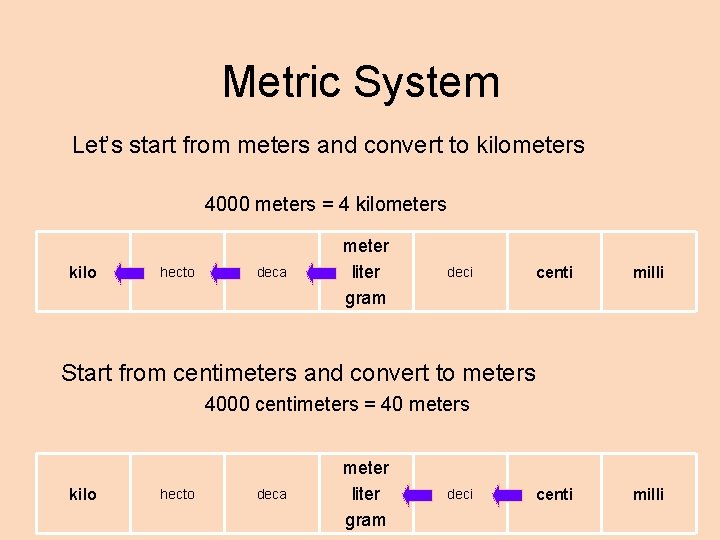
Metric System Let’s start from meters and convert to kilometers 4000 meters = 4 kilometers kilo hecto deca meter liter gram deci centi milli Start from centimeters and convert to meters 4000 centimeters = 40 meters kilo hecto deca meter liter gram deci
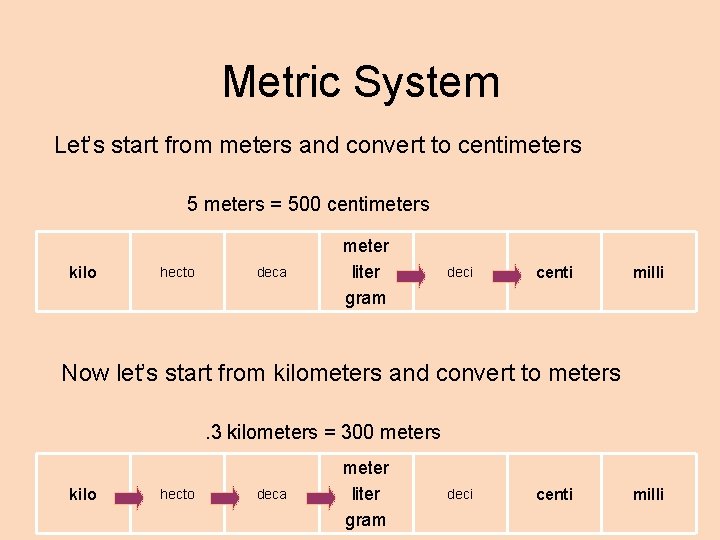
Metric System Let’s start from meters and convert to centimeters 5 meters = 500 centimeters kilo hecto deca meter liter gram deci centi milli Now let’s start from kilometers and convert to meters. 3 kilometers = 300 meters kilo hecto deca meter liter gram deci centi milli
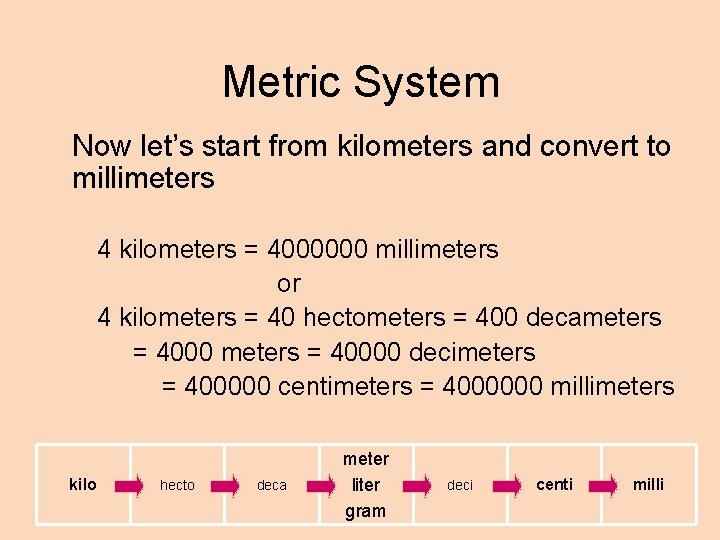
Metric System Now let’s start from kilometers and convert to millimeters 4 kilometers = 4000000 millimeters or 4 kilometers = 40 hectometers = 400 decameters = 40000 decimeters = 400000 centimeters = 4000000 millimeters kilo hecto deca meter liter gram deci centi milli
THE END
- Slides: 40