
METODI DI CLONAGGIO Polymerase Incomplete Primer Extension PIPE




- Slides: 32
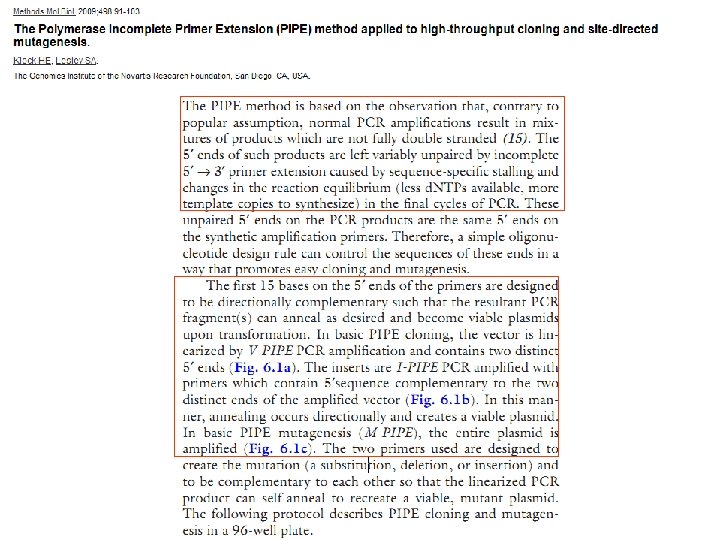
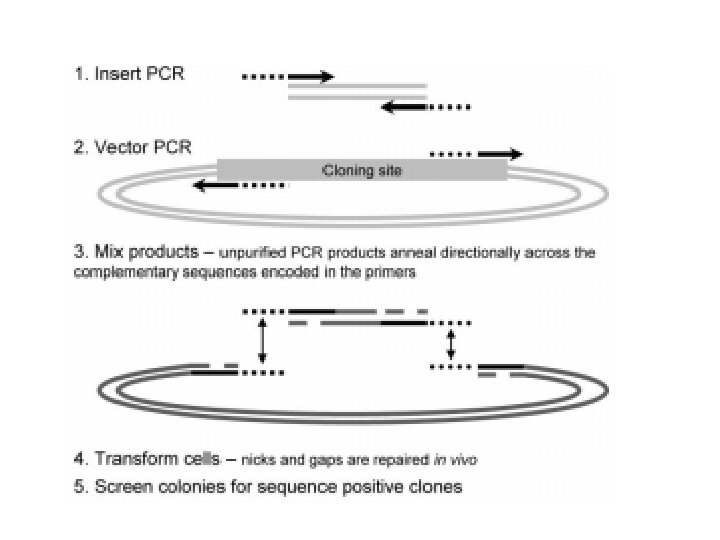
METODI DI CLONAGGIO: Polymerase Incomplete Primer Extension (PIPE) Method Non richiede digestioni con enzimi di restrizione Non necessita reazioni di ligasi Veloce Utilizzabile per clonaggio di frammenti di DNA in plasmidi e per mutagenesi
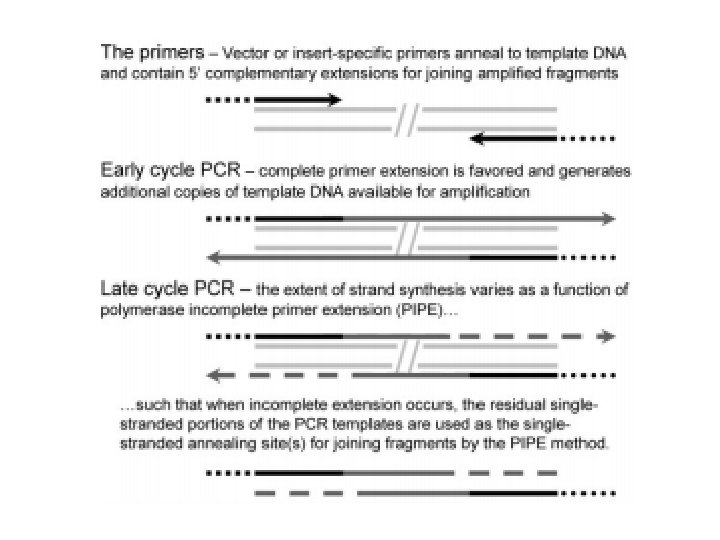
METODI DI CLONAGGIO: Polymerase Incomplete Primer Extension (PIPE) Protocollo: • V-PIPE PCR: amplificazione del vettore • I-PIPE PCR: amplificazione dell’inserto • Mix prodotti di PCR V-PIPE e I-PIPE • Trasformazione di cellule competenti Gene ccd. B is lethal to most strains of E. coli. 'Empty' destination vectors are therefore selected against upon transformation of E. coli cells with the recombination reaction
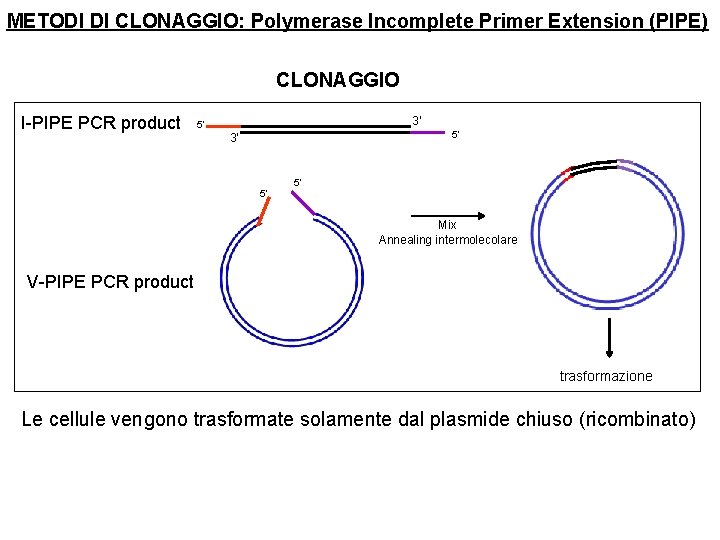
METODI DI CLONAGGIO: Polymerase Incomplete Primer Extension (PIPE) CLONAGGIO I-PIPE PCR product 3’ 5’ 5’ Mix Annealing intermolecolare V-PIPE PCR product trasformazione Le cellule vengono trasformate solamente dal plasmide chiuso (ricombinato)
METODI DI CLONAGGIO: Polymerase Incomplete Primer Extension (PIPE) MUTAGENESI
METODI DI CLONAGGIO: Polymerase Incomplete Primer Extension (PIPE) MUTAGENESI
Gateway® Cloning Technology This cloning technology is based on the nature of site-specific recombination: the integrative and excisive recombination reactions between chromosomes of Bacteriophage lambda and E. coli bacterium. These biochemical reaction processes, performed in vitro, are the basis of the Gateway® Cloning Technology.
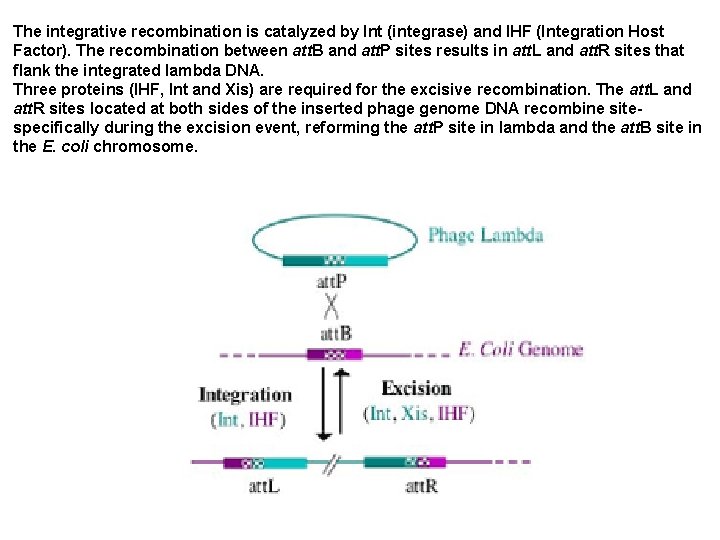
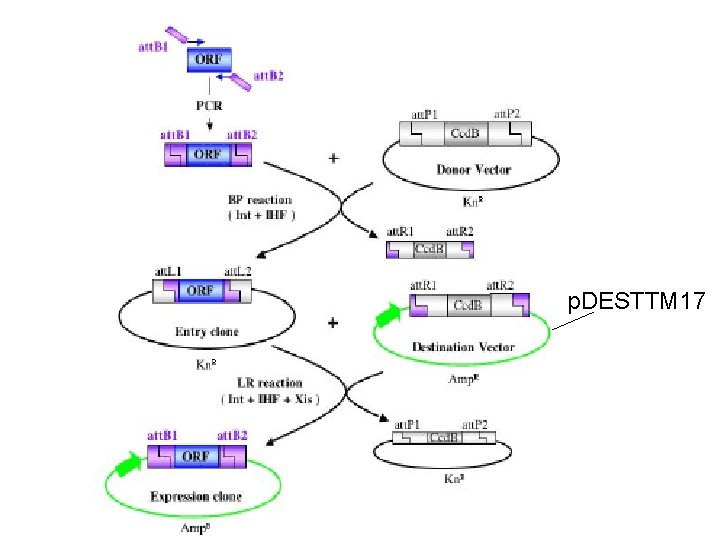
The integrative recombination is catalyzed by Int (integrase) and IHF (Integration Host Factor). The recombination between att. B and att. P sites results in att. L and att. R sites that flank the integrated lambda DNA. Three proteins (IHF, Int and Xis) are required for the excisive recombination. The att. L and att. R sites located at both sides of the inserted phage genome DNA recombine sitespecifically during the excision event, reforming the att. P site in lambda and the att. B site in the E. coli chromosome.
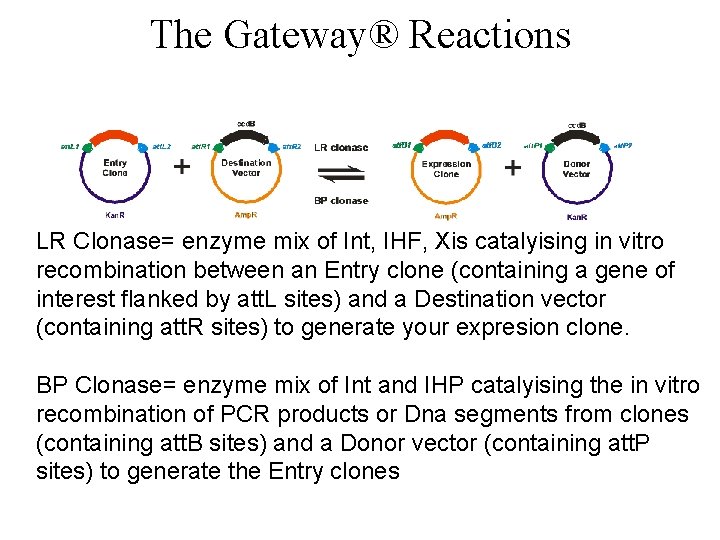
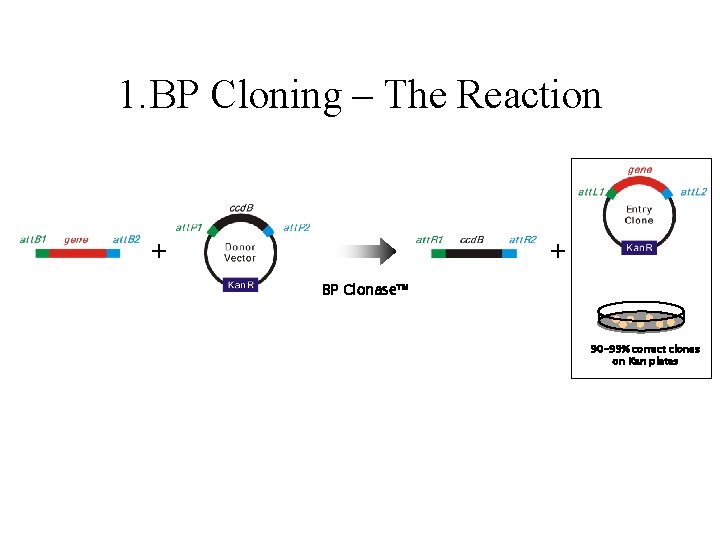
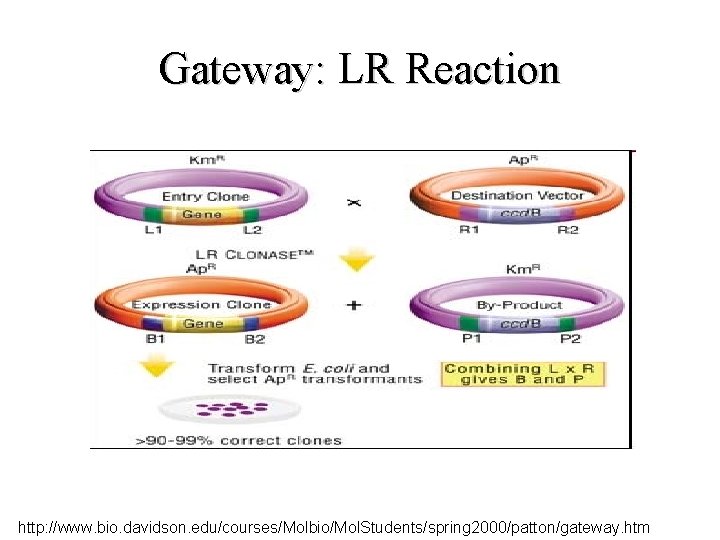
The Gateway® Reactions LR Clonase= enzyme mix of Int, IHF, Xis catalyising in vitro recombination between an Entry clone (containing a gene of interest flanked by att. L sites) and a Destination vector (containing att. R sites) to generate your expresion clone. BP Clonase= enzyme mix of Int and IHP catalyising the in vitro recombination of PCR products or Dna segments from clones (containing att. B sites) and a Donor vector (containing att. P sites) to generate the Entry clones
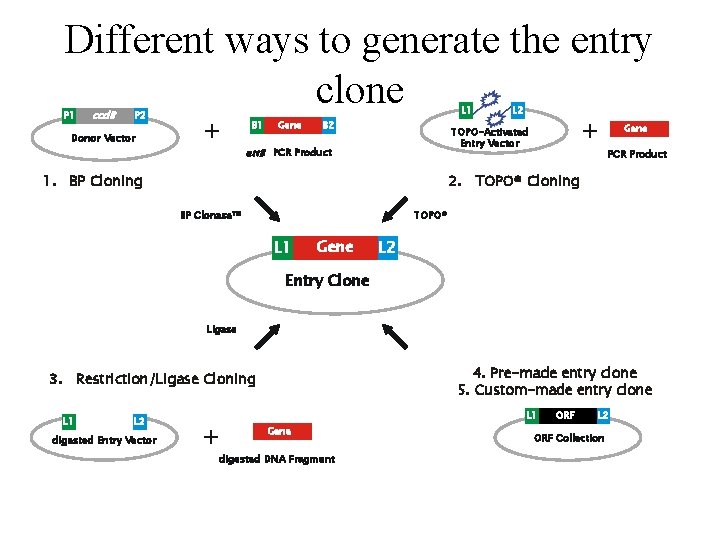
Different ways to generate the entry clone P 1 ccd. B P 2 Donor Vector + B 1 Gene L 1 B 2 L 2 + TOPO-Activated Entry Vector att. B PCR Product 1. BP Cloning Gene PCR Product 2. TOPO® Cloning BP Clonase™ TOPO® L 1 Gene L 2 Entry Clone Ligase 4. Pre-made entry clone 5. Custom-made entry clone 3. Restriction/Ligase Cloning L 1 L 2 digested Entry Vector + L 1 B 1 Gene digested DNA Fragment ORF L 2 ORF Collection
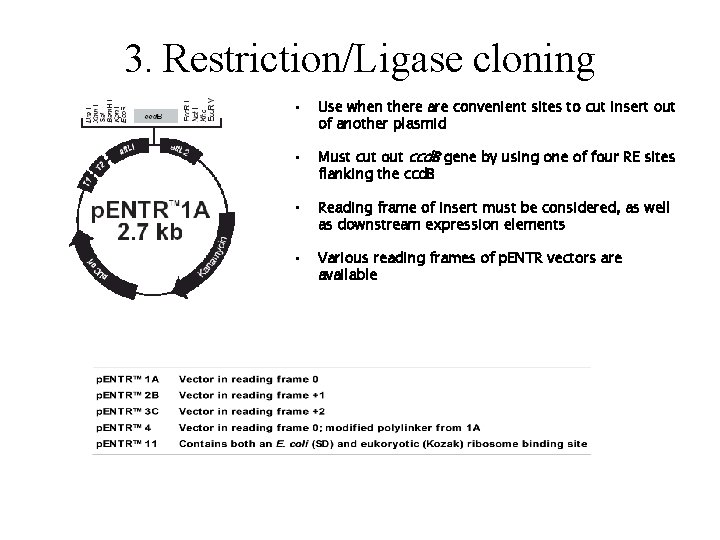
3. Restriction/Ligase cloning • Use when there are convenient sites to cut insert out of another plasmid • Must cut out ccd. B gene by using one of four RE sites flanking the ccd. B • Reading frame of insert must be considered, as well as downstream expression elements • Various reading frames of p. ENTR vectors are available
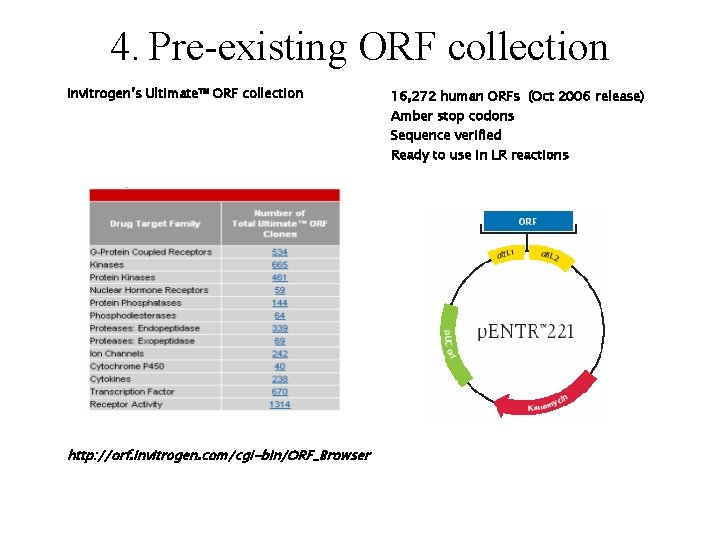
4. Pre-existing ORF collection Invitrogen’s Ultimate™ ORF collection 16, 272 human ORFs (Oct 2006 release) Amber stop codons Sequence verified Ready to use in LR reactions http: //orf. invitrogen. com/cgi-bin/ORF_Browser
1. BP Cloning – The Reaction + + BP Clonase™ 90 -99% correct clones on Kan plates
p. DESTTM 17
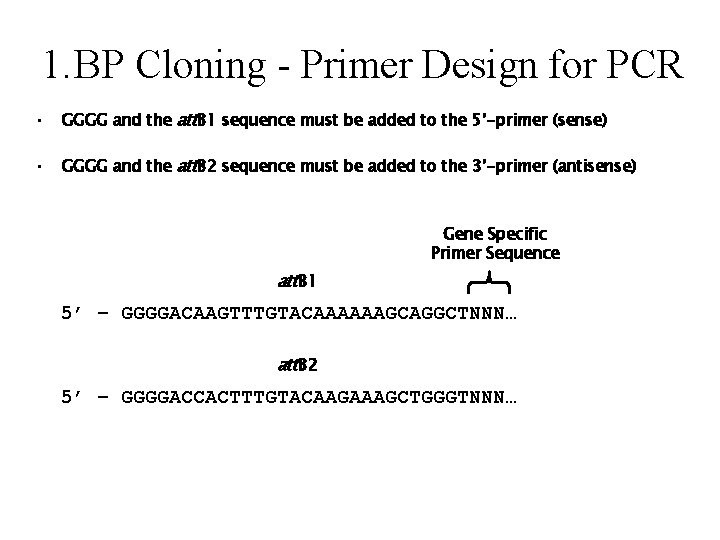
1. BP Cloning - Primer Design for PCR • GGGG and the att. B 1 sequence must be added to the 5’-primer (sense) • GGGG and the att. B 2 sequence must be added to the 3’-primer (antisense) Gene Specific Primer Sequence att. B 1 5’ – GGGGACAAGTTTGTACAAAAAAGCAGGCTNNN… att. B 2 5’ – GGGGACCACTTTGTACAAGAAAGCTGGGTNNN…
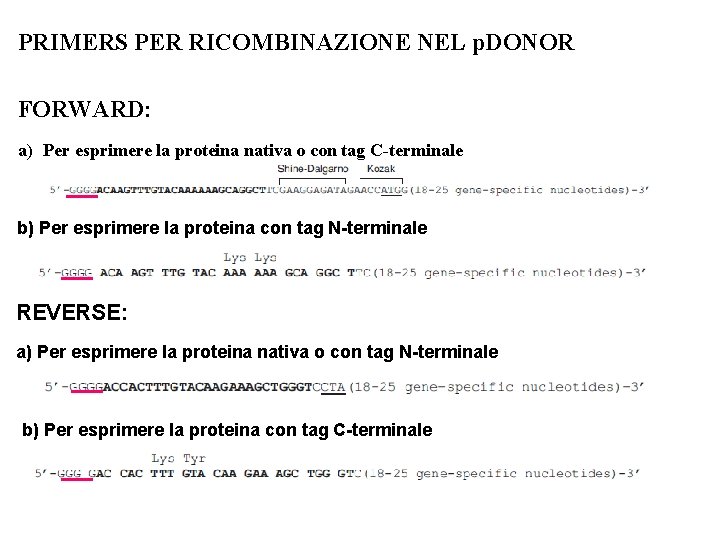
PRIMERS PER RICOMBINAZIONE NEL p. DONOR FORWARD: a) Per esprimere la proteina nativa o con tag C-terminale b) Per esprimere la proteina con tag N-terminale REVERSE: a) Per esprimere la proteina nativa o con tag N-terminale b) Per esprimere la proteina con tag C-terminale
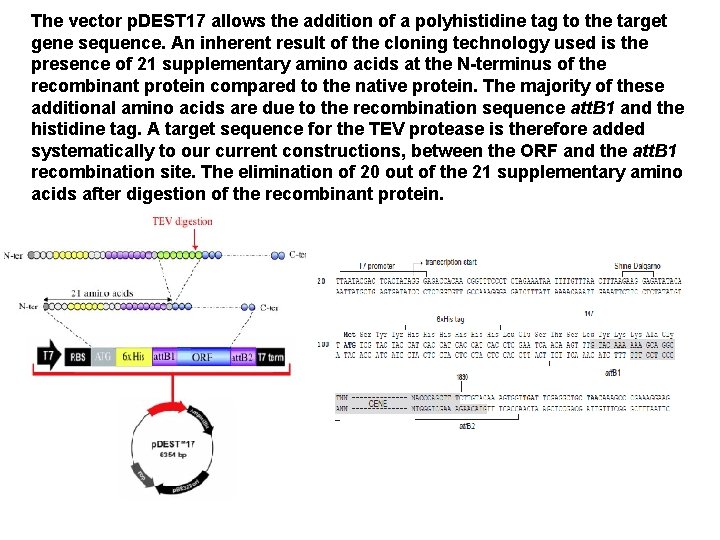
The vector p. DEST 17 allows the addition of a polyhistidine tag to the target gene sequence. An inherent result of the cloning technology used is the presence of 21 supplementary amino acids at the N-terminus of the recombinant protein compared to the native protein. The majority of these additional amino acids are due to the recombination sequence att. B 1 and the histidine tag. A target sequence for the TEV protease is therefore added systematically to our current constructions, between the ORF and the att. B 1 recombination site. The elimination of 20 out of the 21 supplementary amino acids after digestion of the recombinant protein.
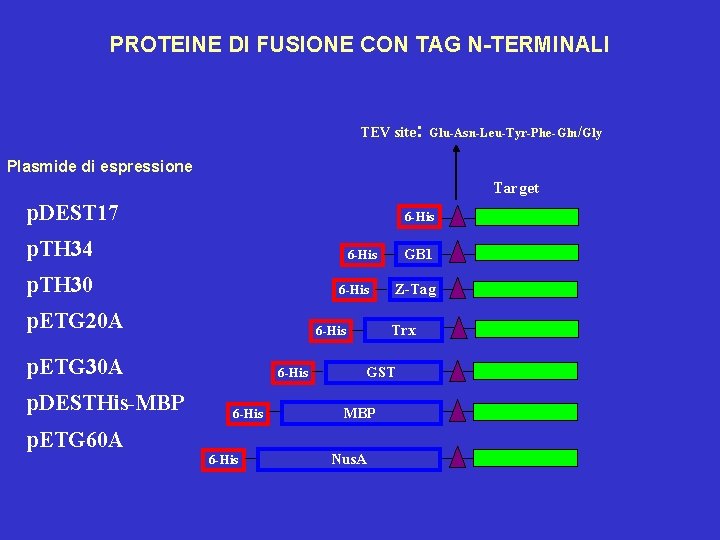
PROTEINE DI FUSIONE CON TAG N-TERMINALI TEV site: Glu-Asn-Leu-Tyr-Phe-Gln/Gly Plasmide di espressione Target p. DEST 17 6 -His p. TH 34 p. TH 30 6 -His p. ETG 20 A 6 -His p. ETG 60 A 6 -His Z-Tag Trx 6 -His p. ETG 30 A p. DESTHis-MBP GB 1 6 -His GST MBP Nus. A
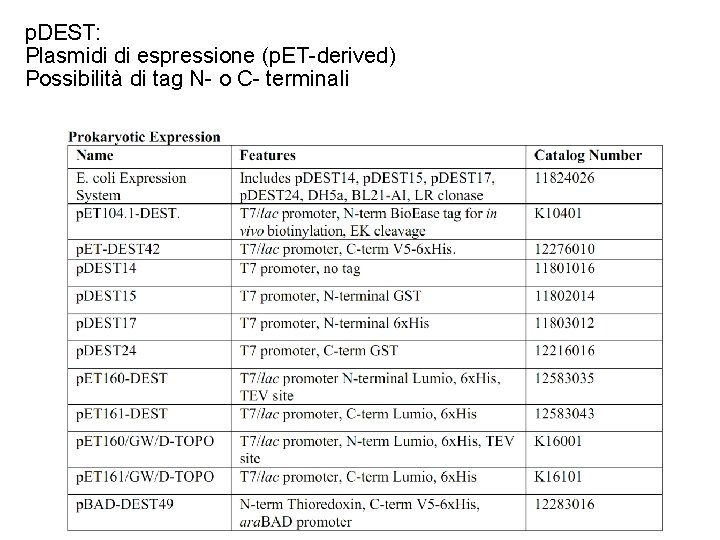
p. DEST: Plasmidi di espressione (p. ET-derived) Possibilità di tag N- o C- terminali
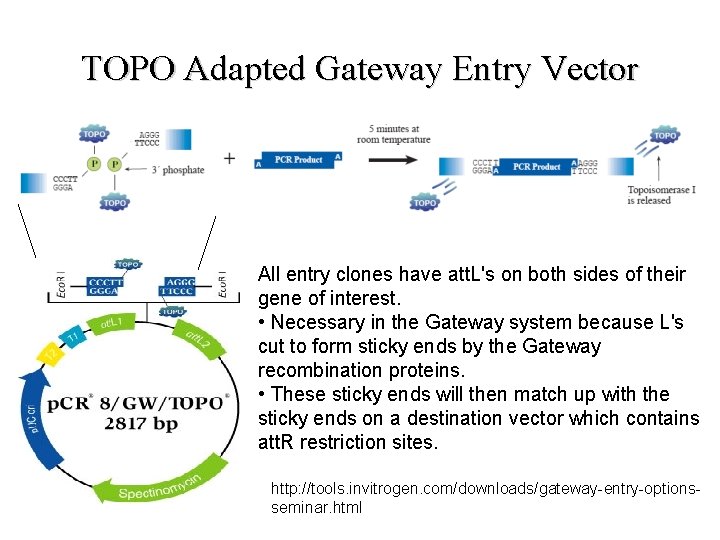
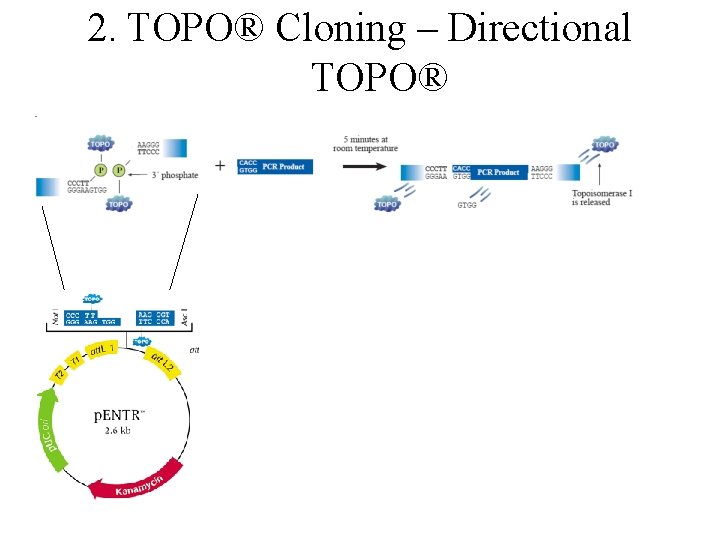
TOPO Adapted Gateway Entry Vector All entry clones have att. L's on both sides of their gene of interest. • Necessary in the Gateway system because L's cut to form sticky ends by the Gateway recombination proteins. • These sticky ends will then match up with the sticky ends on a destination vector which contains att. R restriction sites. http: //tools. invitrogen. com/downloads/gateway-entry-optionsseminar. html
2. TOPO® Cloning – Directional TOPO®
METODI DI CLONAGGIO: TOPO CLONING___________ Mappa e sequenza del polilynker del plasmide p. ENTR/SD/D-TOPO
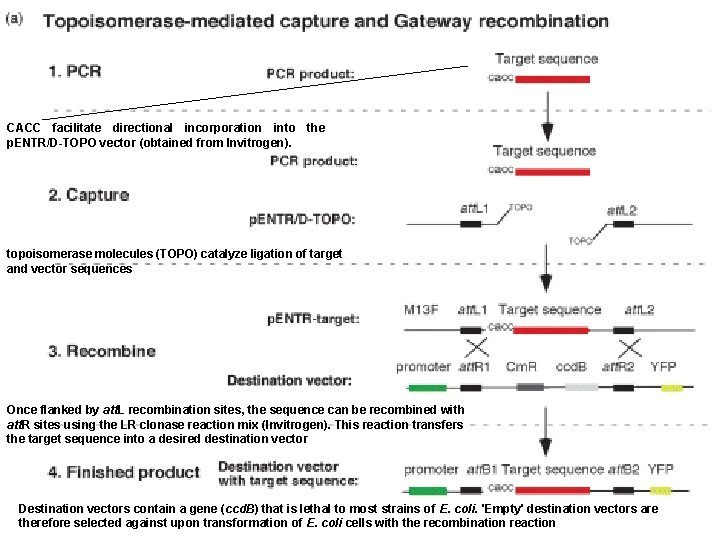
CACC facilitate directional incorporation into the p. ENTR/D-TOPO vector (obtained from Invitrogen). topoisomerase molecules (TOPO) catalyze ligation of target and vector sequences Once flanked by att. L recombination sites, the sequence can be recombined with att. R sites using the LR clonase reaction mix (Invitrogen). This reaction transfers the target sequence into a desired destination vector Destination vectors contain a gene (ccd. B) that is lethal to most strains of E. coli. 'Empty' destination vectors are therefore selected against upon transformation of E. coli cells with the recombination reaction
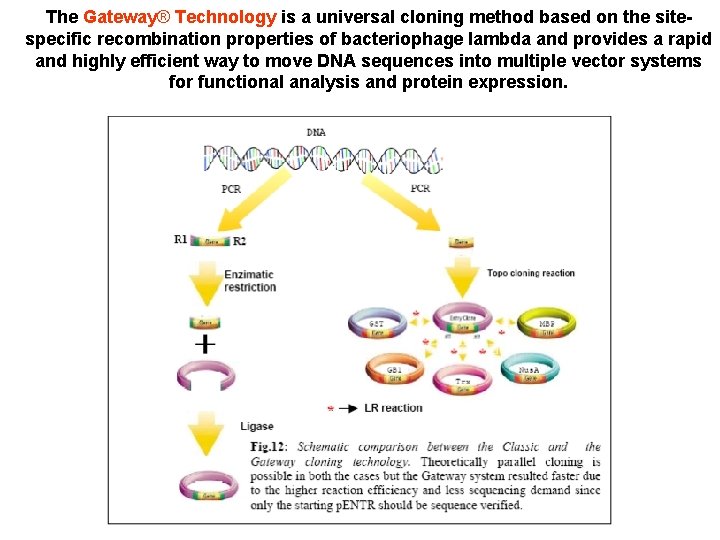
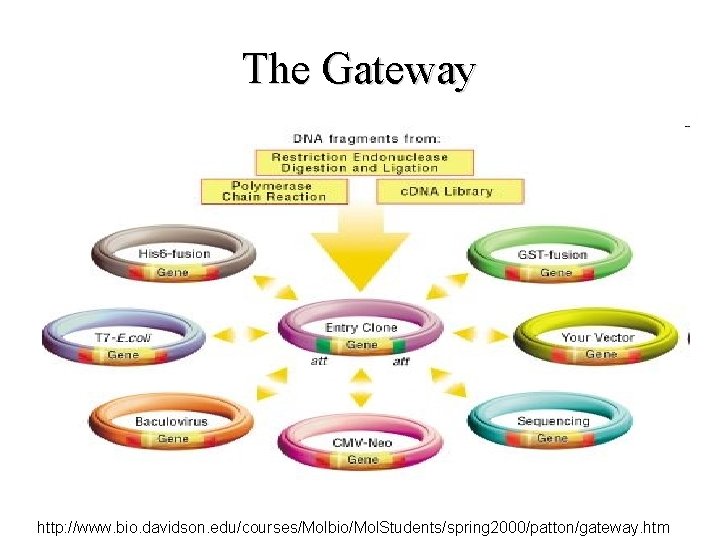
The Gateway® Technology is a universal cloning method based on the sitespecific recombination properties of bacteriophage lambda and provides a rapid and highly efficient way to move DNA sequences into multiple vector systems for functional analysis and protein expression.
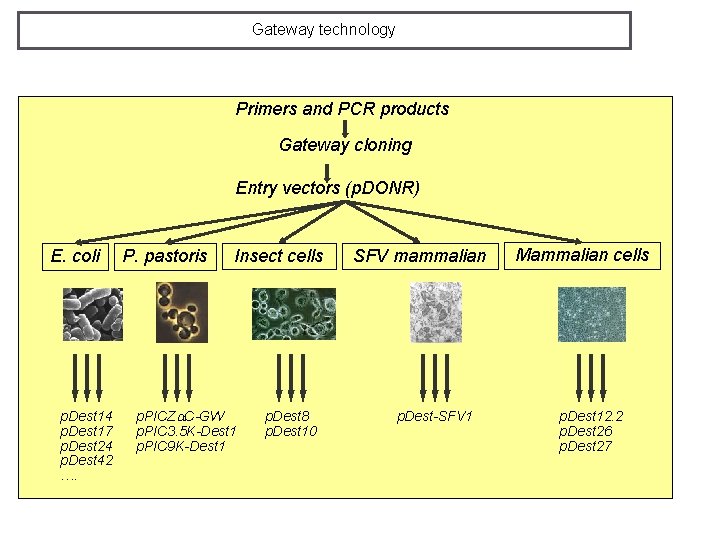
Gateway technology Primers and PCR products Gateway cloning Entry vectors (p. DONR) E. coli p. Dest 14 p. Dest 17 p. Dest 24 p. Dest 42 …. P. pastoris Insect cells p. PICZa. C-GW p. PIC 3. 5 K-Dest 1 p. PIC 9 K-Dest 1 p. Dest 8 p. Dest 10 SFV mammalian p. Dest-SFV 1 Mammalian cells p. Dest 12. 2 p. Dest 26 p. Dest 27
Gateway: LR Reaction http: //www. bio. davidson. edu/courses/Molbio/Mol. Students/spring 2000/patton/gateway. htm
The Gateway http: //www. bio. davidson. edu/courses/Molbio/Mol. Students/spring 2000/patton/gateway. htm
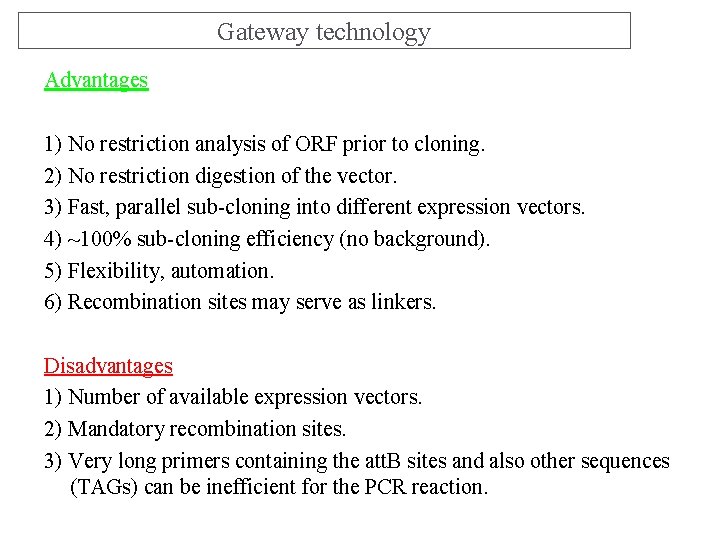
Gateway technology Advantages 1) No restriction analysis of ORF prior to cloning. 2) No restriction digestion of the vector. 3) Fast, parallel sub-cloning into different expression vectors. 4) ~100% sub-cloning efficiency (no background). 5) Flexibility, automation. 6) Recombination sites may serve as linkers. Disadvantages 1) Number of available expression vectors. 2) Mandatory recombination sites. 3) Very long primers containing the att. B sites and also other sequences (TAGs) can be inefficient for the PCR reaction.
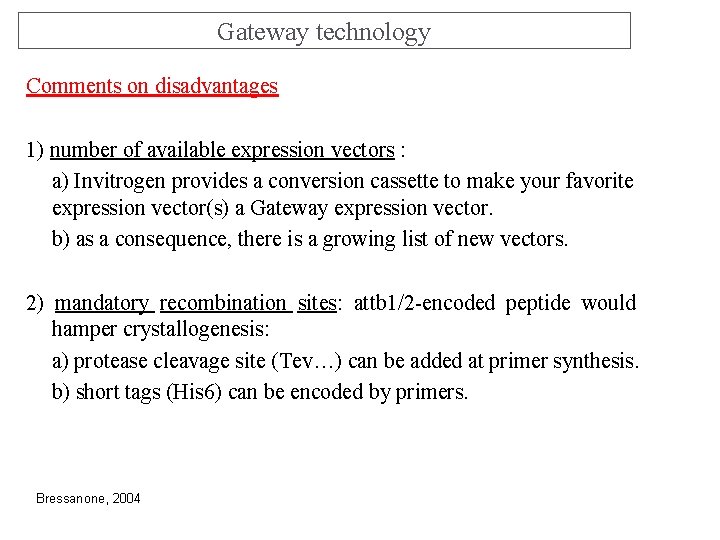
Gateway technology Comments on disadvantages 1) number of available expression vectors : a) Invitrogen provides a conversion cassette to make your favorite expression vector(s) a Gateway expression vector. b) as a consequence, there is a growing list of new vectors. 2) mandatory recombination sites: attb 1/2 -encoded peptide would hamper crystallogenesis: a) protease cleavage site (Tev…) can be added at primer synthesis. b) short tags (His 6) can be encoded by primers. Bressanone, 2004