
Metode Penelitian Pertemuan 5 Elements of Research Design


- Slides: 14
Metode Penelitian Pertemuan 5
Elements of Research Design
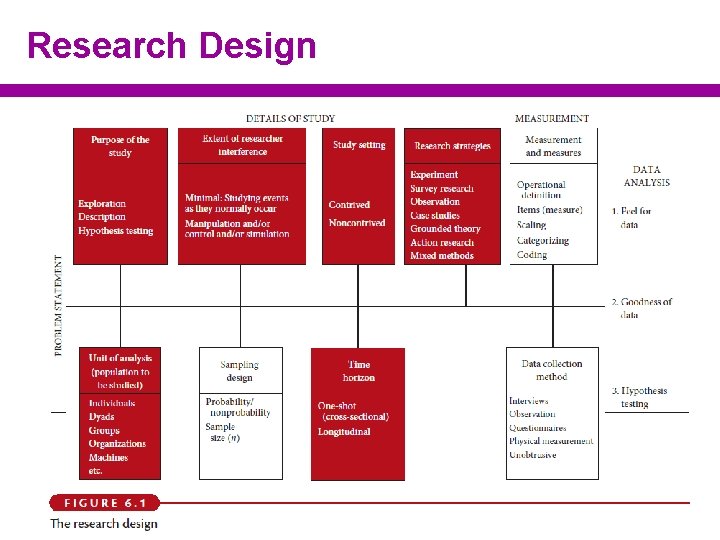
Research Design
Purpose of the Study • Exploratory • Descriptive • Causal
Purpose of the Study • Exploratory study: – is undertaken when not much is known about the situation at hand, or no information is available on how similar problems or research issues have been solved in the past. • Example: – A service provider wants to know why his customers are switching to other service providers?
Purpose of the Study • Descriptive study: – is undertaken in order to ascertain and be able to describe the characteristics of the variables of interest in a situation. • Example: – A bank manager wants to have a profile of the individuals who have loan payments outstanding for 6 months and more. It would include details of their average age, earnings, nature of occupation, fulltime/part-time employment status, and the like. This might help him to elicit further information or decide right away on the types of individuals who should be made ineligible for loans in the future.
Purpose of the Study • Causal study: – Delineating one or more factors that are causing the problem. • Example: – A marketing manager wants to know if the sales of the company will increase if he increases the advertising budget.
Extent of Researcher Interference • Minimal interference • Moderate interference • Excessive interference
Study Setting • Contrived: artificial setting • Non-contrived: the natural environment where work proceeds normally
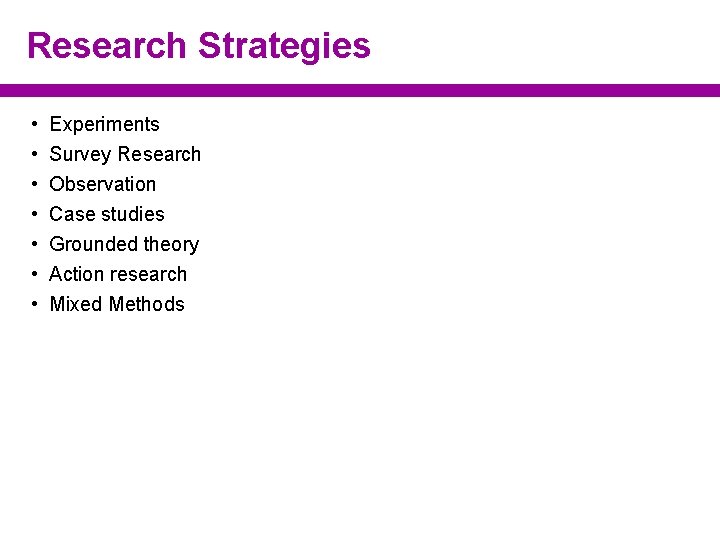
Research Strategies • • Experiments Survey Research Observation Case studies Grounded theory Action research Mixed Methods
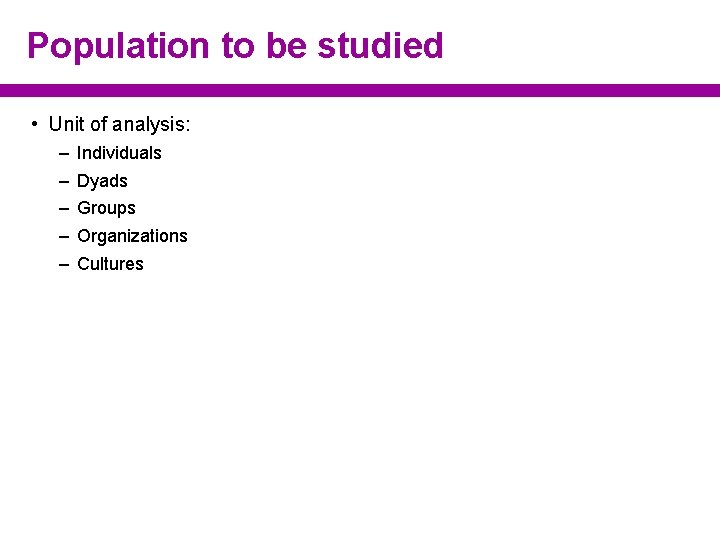
Population to be studied • Unit of analysis: – – – Individuals Dyads Groups Organizations Cultures
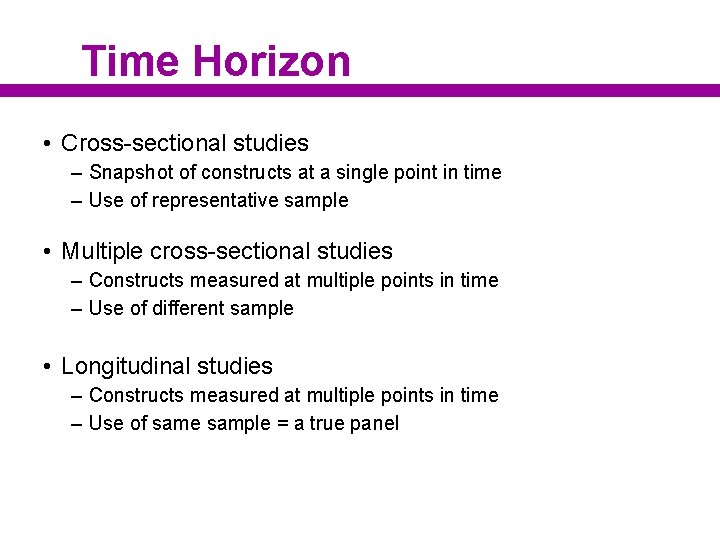
Time Horizon • Cross-sectional studies – Snapshot of constructs at a single point in time – Use of representative sample • Multiple cross-sectional studies – Constructs measured at multiple points in time – Use of different sample • Longitudinal studies – Constructs measured at multiple points in time – Use of same sample = a true panel
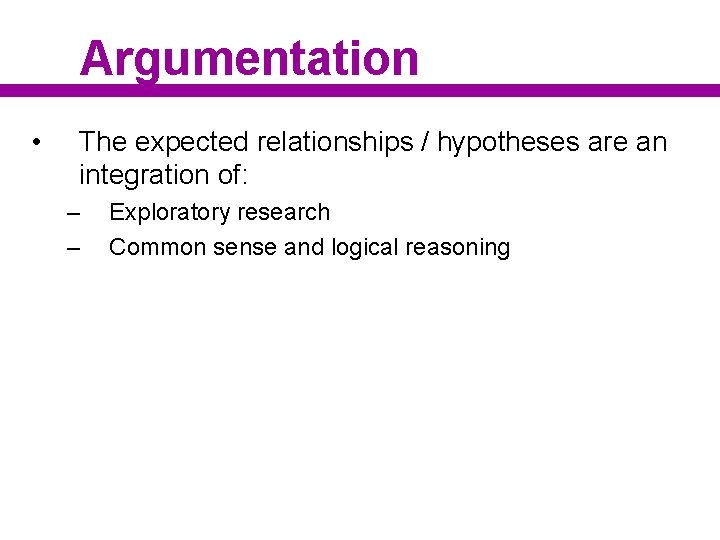
Argumentation • The expected relationships / hypotheses are an integration of: – – Exploratory research Common sense and logical reasoning
TERIMA KASIH Dwi Martani - 081318227080 martani@ui. ac. id atau dwimartani@yahoo. com http: //staff. blog. ui. ac. id/martani/ 14