
Methods of Training Learning Objectives 1 Know and
Methods of Training

Learning Objectives 1. Know and understand the various training methods 2. Evaluate each training method 3. Understand how they are part of physical activity and a balanced healthy lifestyle.
Methods of Training
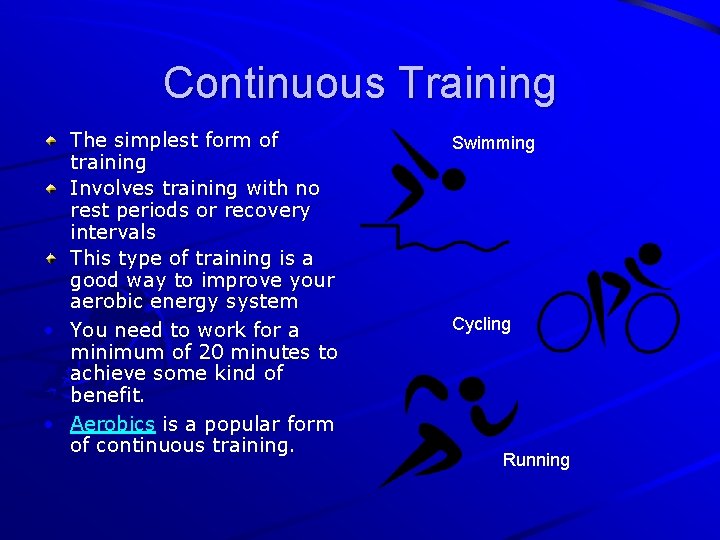
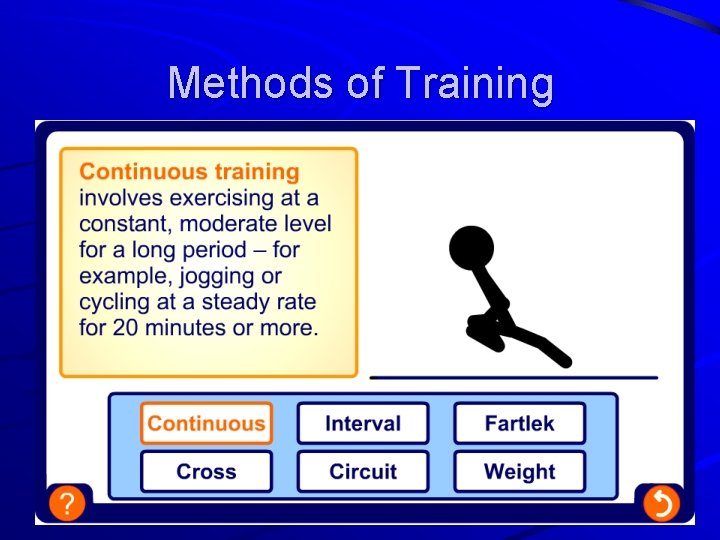
Continuous Training The simplest form of training Involves training with no rest periods or recovery intervals This type of training is a good way to improve your aerobic energy system • You need to work for a minimum of 20 minutes to achieve some kind of benefit. • Aerobics is a popular form of continuous training. Swimming Cycling Running

Continuous Training Advantages Continuous training depletes your carbohydrate stores As the body needs an energy supply to keep working, it is forced into using fat supplies This means that continuous training is a good way to burn fat and lose weight Disadvantages The main drawback of continuous training is that it does not improve speed or agility. This means it is not ideal for games players who need to be able to change pace. Continuous training can also be tedious (boring)
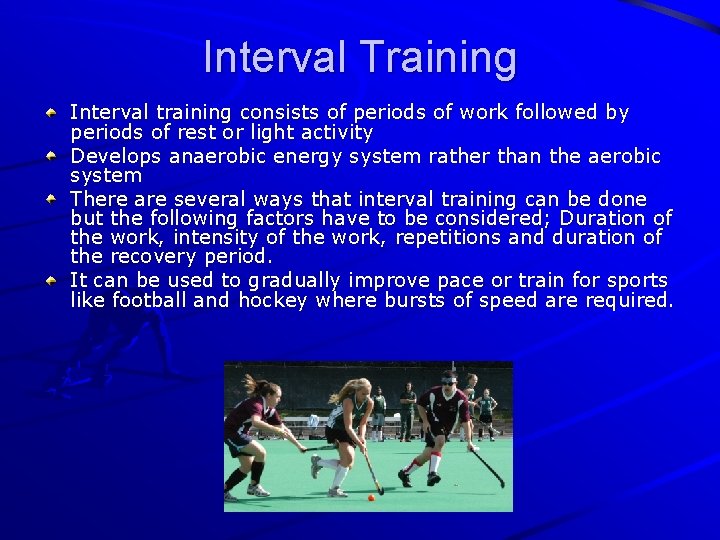
Interval Training Interval training consists of periods of work followed by periods of rest or light activity Develops anaerobic energy system rather than the aerobic system There are several ways that interval training can be done but the following factors have to be considered; Duration of the work, intensity of the work, repetitions and duration of the recovery period. It can be used to gradually improve pace or train for sports like football and hockey where bursts of speed are required.
Interval Training Interval training should be planned carefully. The duration, intensity of the exercise and the length of the rest periods must be calculated to suit the performer’s level of fitness. Row for 1 minute at 30 strokes per minute, then 2 minutes at 18 strokes per minute. One set = 5 repetitions of the above pattern. Complete 3 sets as shown above with 5 minute rests between each set.
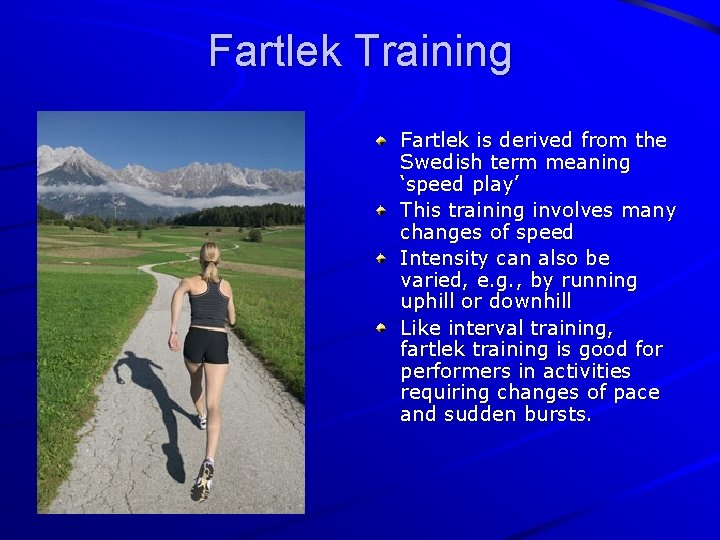
Fartlek Training Fartlek is derived from the Swedish term meaning ‘speed play’ This training involves many changes of speed Intensity can also be varied, e. g. , by running uphill or downhill Like interval training, fartlek training is good for performers in activities requiring changes of pace and sudden bursts.
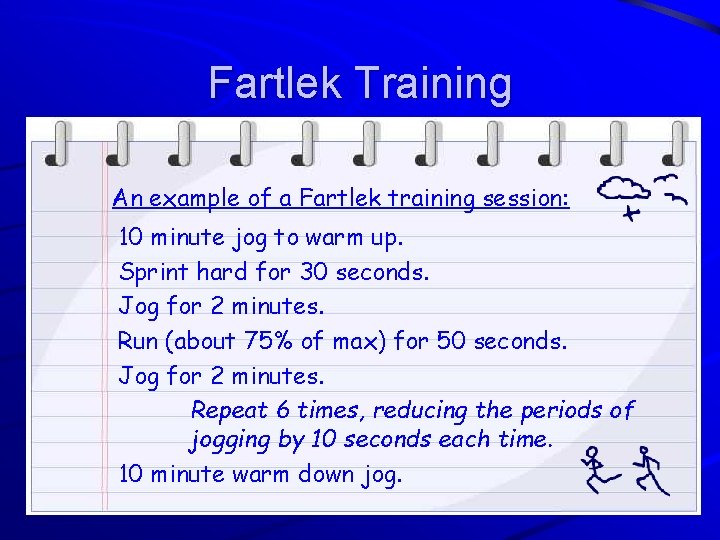
Fartlek Training An example of a Fartlek training session: 10 minute jog to warm up. Sprint hard for 30 seconds. Jog for 2 minutes. Run (about 75% of max) for 50 seconds. Jog for 2 minutes. Repeat 6 times, reducing the periods of jogging by 10 seconds each time. 10 minute warm down jog.
Fartlek Training Advantages Used to improve both the aerobic and anaerobic systems by mixing moderate activity with bursts of speed It can be varied to suit the fitness level of each individual performer and the available time they have to train This type of training can be used to avoid boredom in sports like running and cycling which can be monotonous. • Disadvantages • As the performer decides on the intensity of work, it can be hard for coaches to tell if performers are working as hard as they should be • This type of training is dependent on the local area, terrain and facilities.
Continuous, Interval and Fartlek
Circuit Training In a circuit, you undertake a sequence of exercises Each exercise is performed at a station There are usually between 8 and 15 of these stations in a circuit Performers spend a set amount of time at each station in turn, e. g. , 1 or 2 minutes at each Alternatively, you can do a set number of repetitions or exercises for each activity.
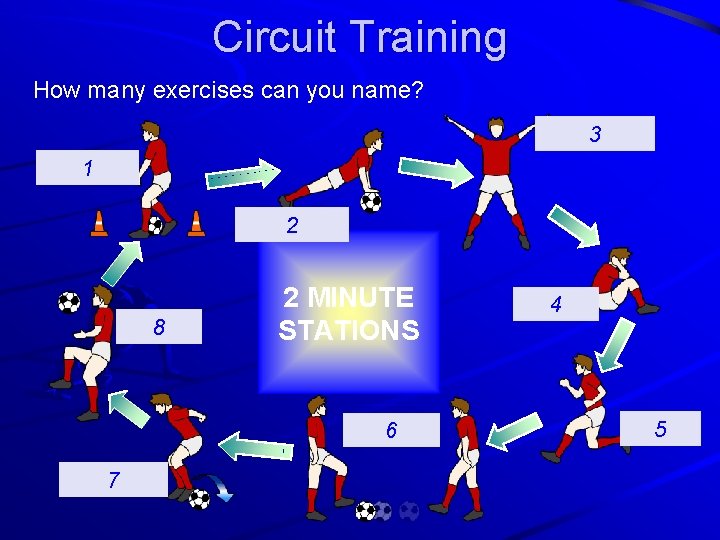
Circuit Training How many exercises can you name? 3 1 2 8 2 MINUTE STATIONS 6 7 4 5
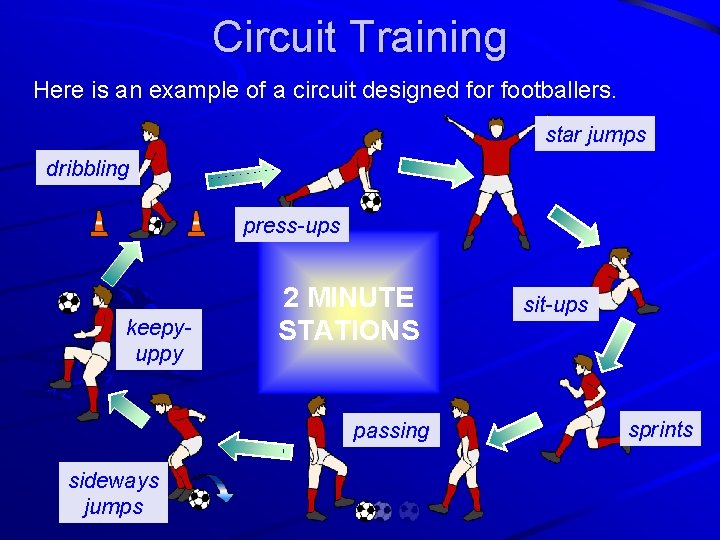
Circuit Training Here is an example of a circuit designed for footballers. star jumps dribbling press-ups keepyuppy 2 MINUTE STATIONS passing sideways jumps sit-ups sprints
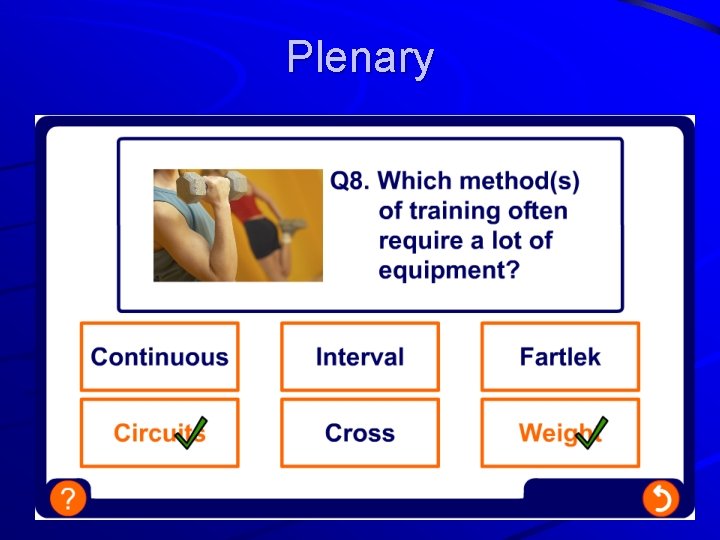
Circuit Training • • Advantages The stations can suit a particular activity or fitness goal You can target specific muscle groups You can include skillbased activities You can alternate muscle groups between each station to delay muscle fatigue. Disadvantages • Only improves fitness at a basic level • Skills could be performed incorrectly • Circuit training can take time to arrange and often requires a lot of equipment.
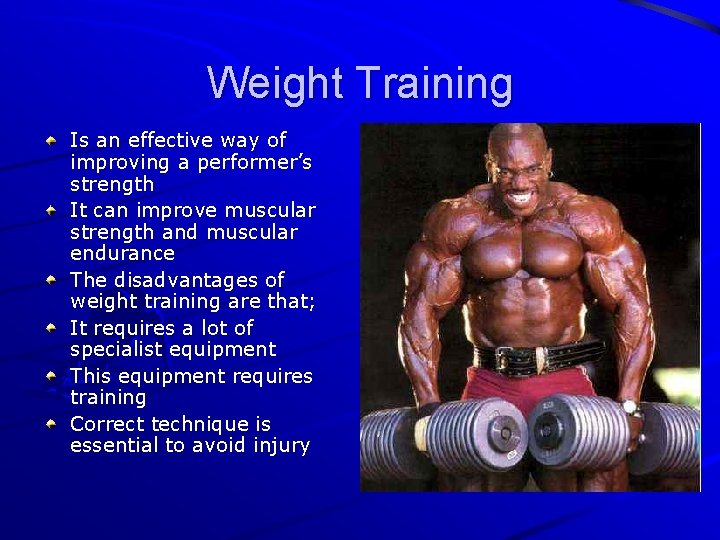
Weight Training Is an effective way of improving a performer’s strength It can improve muscular strength and muscular endurance The disadvantages of weight training are that; It requires a lot of specialist equipment This equipment requires training Correct technique is essential to avoid injury
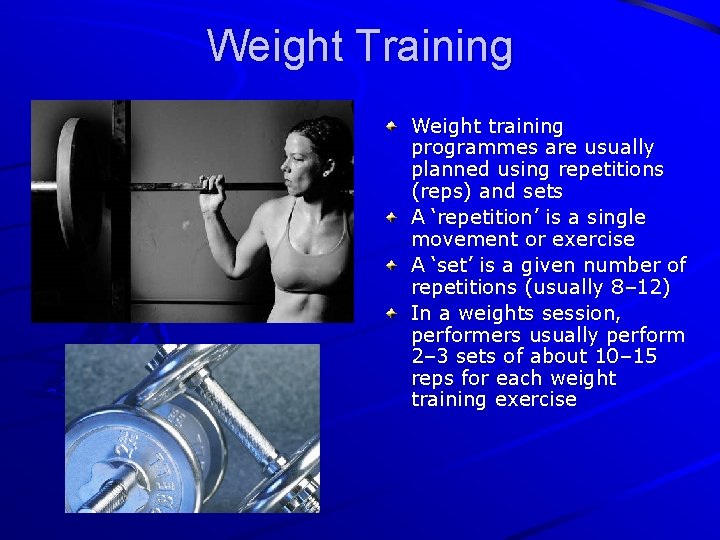
Weight Training Weight training programmes are usually planned using repetitions (reps) and sets A ‘repetition’ is a single movement or exercise A ‘set’ is a given number of repetitions (usually 8– 12) In a weights session, performers usually perform 2– 3 sets of about 10– 15 reps for each weight training exercise
Plenary
- Slides: 19