
Methods of predator pest control Copyright University of
- Slides: 10
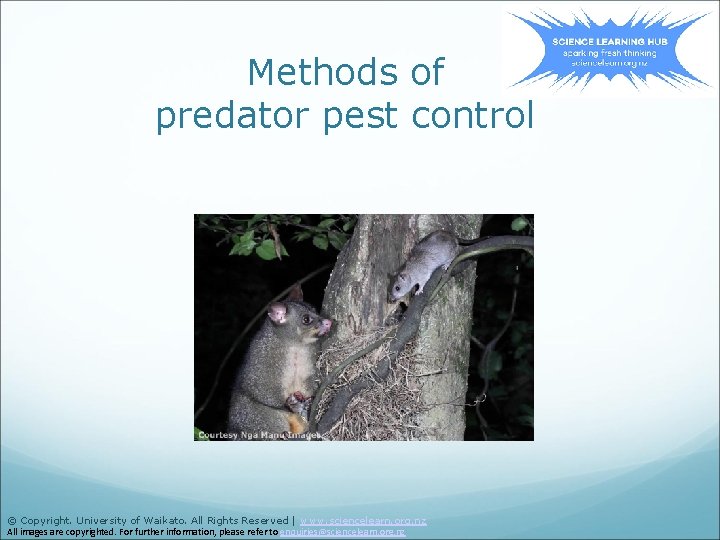
Methods of predator pest control © Copyright. University of Waikato. All Rights Reserved | www. sciencelearn. org. nz All images are copyrighted. For further information, please refer to enquiries@sciencelearn. org. nz
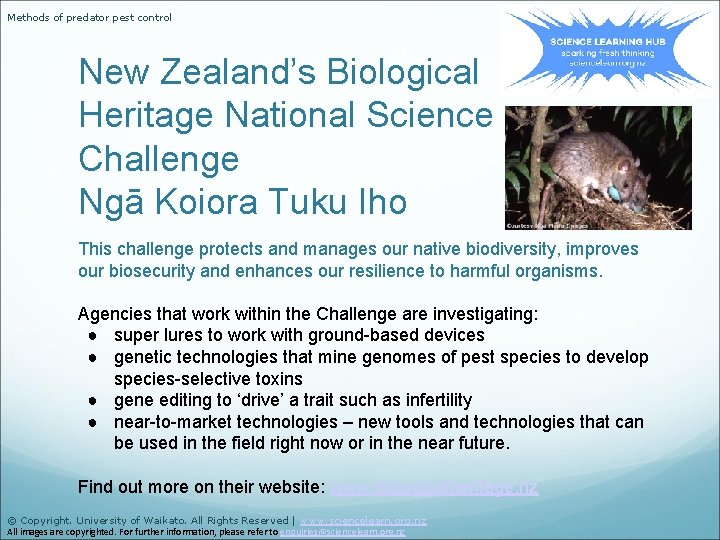
Methods of predator pest control New Zealand’s Biological Heritage National Science Challenge Ngā Koiora Tuku Iho This challenge protects and manages our native biodiversity, improves our biosecurity and enhances our resilience to harmful organisms. Agencies that work within the Challenge are investigating: ● super lures to work with ground-based devices ● genetic technologies that mine genomes of pest species to develop species-selective toxins ● gene editing to ‘drive’ a trait such as infertility ● near-to-market technologies – new tools and technologies that can be used in the field right now or in the near future. Find out more on their website: www. biologicalheritage. nz © Copyright. University of Waikato. All Rights Reserved | www. sciencelearn. org. nz All images are copyrighted. For further information, please refer to enquiries@sciencelearn. org. nz
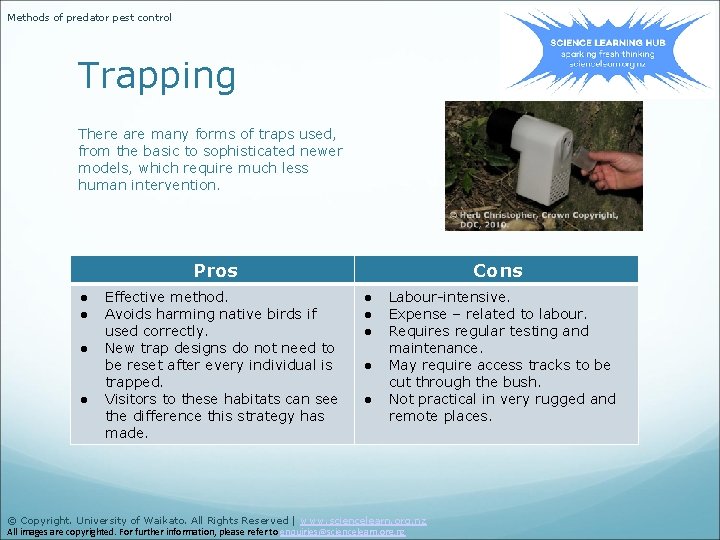
Methods of predator pest control Trapping There are many forms of traps used, from the basic to sophisticated newer models, which require much less human intervention. Pros ● ● Effective method. Avoids harming native birds if used correctly. New trap designs do not need to be reset after every individual is trapped. Visitors to these habitats can see the difference this strategy has made. Cons ● ● ● Labour-intensive. Expense – related to labour. Requires regular testing and maintenance. May require access tracks to be cut through the bush. Not practical in very rugged and remote places. © Copyright. University of Waikato. All Rights Reserved | www. sciencelearn. org. nz All images are copyrighted. For further information, please refer to enquiries@sciencelearn. org. nz
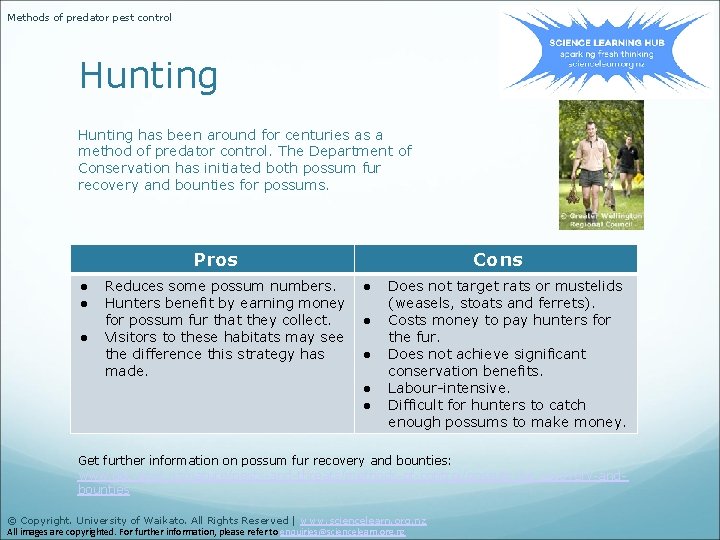
Methods of predator pest control Hunting has been around for centuries as a method of predator control. The Department of Conservation has initiated both possum fur recovery and bounties for possums. Pros ● ● ● Reduces some possum numbers. Hunters benefit by earning money for possum fur that they collect. Visitors to these habitats may see the difference this strategy has made. Cons ● ● ● Does not target rats or mustelids (weasels, stoats and ferrets). Costs money to pay hunters for the fur. Does not achieve significant conservation benefits. Labour-intensive. Difficult for hunters to catch enough possums to make money. Get further information on possum fur recovery and bounties: www. doc. govt. nz/nature/pests-and-threats/methods-of-control/possum-fur-recovery-andbounties © Copyright. University of Waikato. All Rights Reserved | www. sciencelearn. org. nz All images are copyrighted. For further information, please refer to enquiries@sciencelearn. org. nz
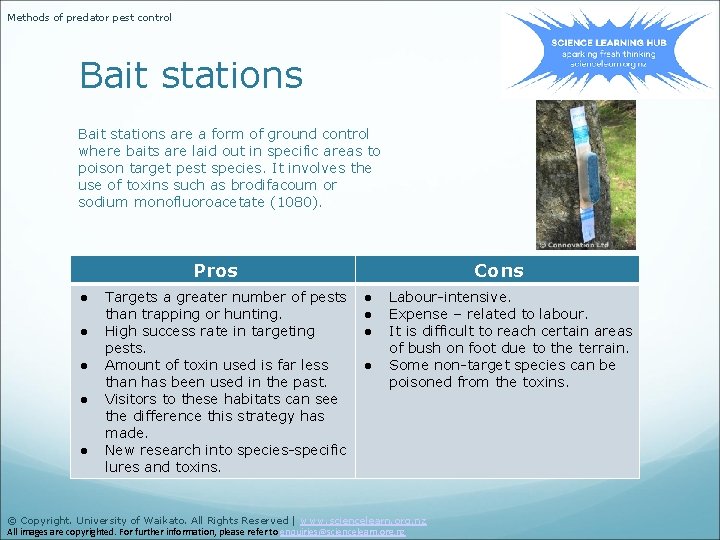
Methods of predator pest control Bait stations are a form of ground control where baits are laid out in specific areas to poison target pest species. It involves the use of toxins such as brodifacoum or sodium monofluoroacetate (1080). Pros ● ● ● Targets a greater number of pests than trapping or hunting. High success rate in targeting pests. Amount of toxin used is far less than has been used in the past. Visitors to these habitats can see the difference this strategy has made. New research into species-specific lures and toxins. Cons ● ● Labour-intensive. Expense – related to labour. It is difficult to reach certain areas of bush on foot due to the terrain. Some non-target species can be poisoned from the toxins. © Copyright. University of Waikato. All Rights Reserved | www. sciencelearn. org. nz All images are copyrighted. For further information, please refer to enquiries@sciencelearn. org. nz
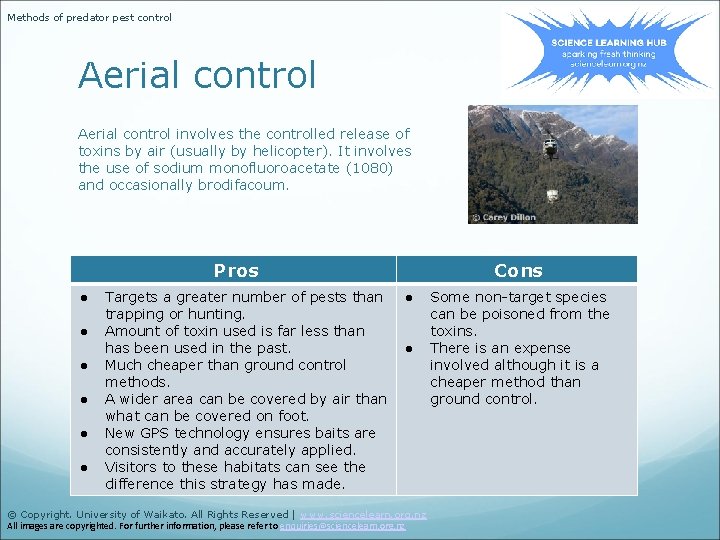
Methods of predator pest control Aerial control involves the controlled release of toxins by air (usually by helicopter). It involves the use of sodium monofluoroacetate (1080) and occasionally brodifacoum. Pros ● ● ● Targets a greater number of pests than trapping or hunting. Amount of toxin used is far less than has been used in the past. Much cheaper than ground control methods. A wider area can be covered by air than what can be covered on foot. New GPS technology ensures baits are consistently and accurately applied. Visitors to these habitats can see the difference this strategy has made. Cons ● ● © Copyright. University of Waikato. All Rights Reserved | www. sciencelearn. org. nz All images are copyrighted. For further information, please refer to enquiries@sciencelearn. org. nz Some non-target species can be poisoned from the toxins. There is an expense involved although it is a cheaper method than ground control.
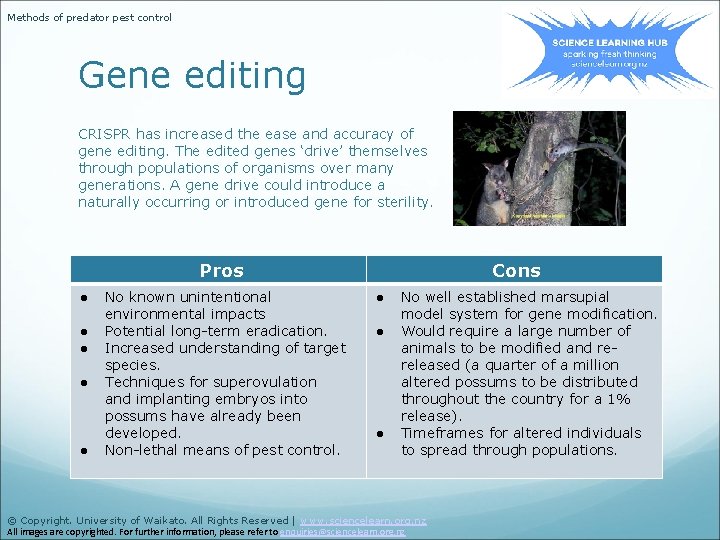
Methods of predator pest control Gene editing CRISPR has increased the ease and accuracy of gene editing. The edited genes ‘drive’ themselves through populations of organisms over many generations. A gene drive could introduce a naturally occurring or introduced gene for sterility. Pros ● ● ● No known unintentional environmental impacts Potential long-term eradication. Increased understanding of target species. Techniques for superovulation and implanting embryos into possums have already been developed. Non-lethal means of pest control. Cons ● ● ● No well established marsupial model system for gene modification. Would require a large number of animals to be modified and rereleased (a quarter of a million altered possums to be distributed throughout the country for a 1% release). Timeframes for altered individuals to spread through populations. © Copyright. University of Waikato. All Rights Reserved | www. sciencelearn. org. nz All images are copyrighted. For further information, please refer to enquiries@sciencelearn. org. nz
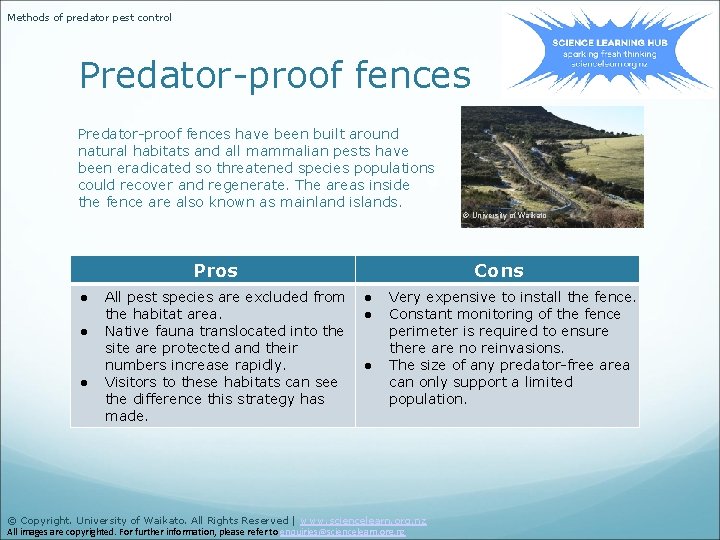
Methods of predator pest control Predator-proof fences have been built around natural habitats and all mammalian pests have been eradicated so threatened species populations could recover and regenerate. The areas inside the fence are also known as mainland islands. © University of Waikato Pros ● ● ● All pest species are excluded from the habitat area. Native fauna translocated into the site are protected and their numbers increase rapidly. Visitors to these habitats can see the difference this strategy has made. Cons ● ● ● Very expensive to install the fence. Constant monitoring of the fence perimeter is required to ensure there are no reinvasions. The size of any predator-free area can only support a limited population. © Copyright. University of Waikato. All Rights Reserved | www. sciencelearn. org. nz All images are copyrighted. For further information, please refer to enquiries@sciencelearn. org. nz
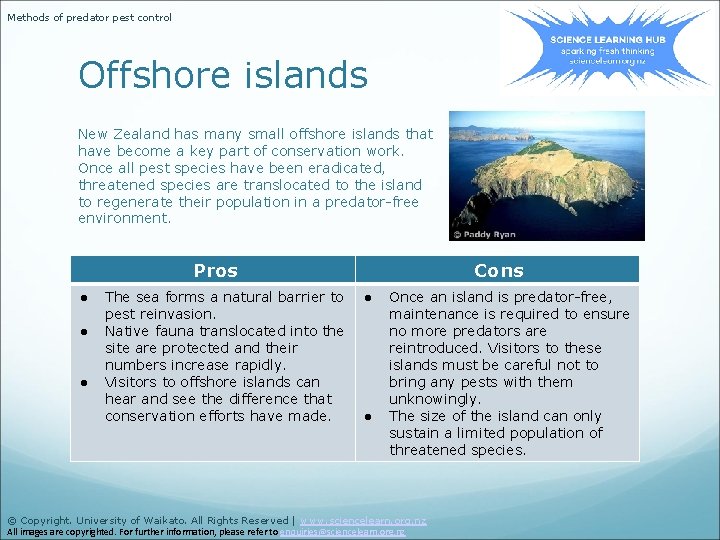
Methods of predator pest control Offshore islands New Zealand has many small offshore islands that have become a key part of conservation work. Once all pest species have been eradicated, threatened species are translocated to the island to regenerate their population in a predator-free environment. Pros ● ● ● The sea forms a natural barrier to pest reinvasion. Native fauna translocated into the site are protected and their numbers increase rapidly. Visitors to offshore islands can hear and see the difference that conservation efforts have made. Cons ● ● Once an island is predator-free, maintenance is required to ensure no more predators are reintroduced. Visitors to these islands must be careful not to bring any pests with them unknowingly. The size of the island can only sustain a limited population of threatened species. © Copyright. University of Waikato. All Rights Reserved | www. sciencelearn. org. nz All images are copyrighted. For further information, please refer to enquiries@sciencelearn. org. nz
Methods of predator pest control The Science Learning Hub would like to thank the following for the use of their images for this activity Courtesy Of Ngā Manu Images Possum with rat Department of Conservation Self-setting trap Greater Wellington Regional Council Possum hunters Connovation Possum bait Carey Dillon Helicopter 1080 drop Paddy Ryanwww. ryanphotographic. com Stephens Island aerial University of Waikato Predator-proof fence © Copyright. University of Waikato. All Rights Reserved | www. sciencelearn. org. nz All images are copyrighted. For further information, please refer to enquiries@sciencelearn. org. nz