
Methods of Immobilization of microbial cells The methods
• Methods of Immobilization of microbial cells : The methods for cell immobilization include : 1. Adsorption 2. Covalent Bonding 3. Cross-linking 4. Copolymerization 5. Entrapment 6. Micro-encapsulation

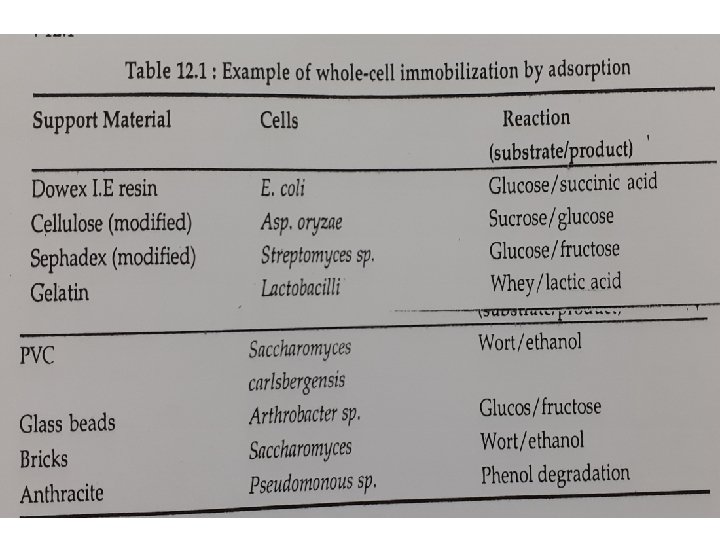
1. Adsorption : - A suitable adsorbents showing high affinity towards biocatalyst causing minimal denaturation are employed. - Mechanism of adsorption is an electronic interaction between the charged support and charged cell. - This depends on chemical nature of cell wall, provide ionic sites for attachment to a charged support.
Carrier and biocatalysts are held to gether through van-der-waals bonding forces, ionogenic bonds or H- bridges. - Many organic of synthetic or biological origin have been used as support materials. - Important factor is the bonding strength to the surface properties of the adsorbents and cells – Binding is generally not too strong. -
• Advantages : - Simple for biocatalyst preparation. - Avoiding toxic chemicals or nonphysiological condition possible. - Physiological property of surface adherence of a number of cell avoiding systems favours such application. • Disadvantages : - Weak bonding and less stable
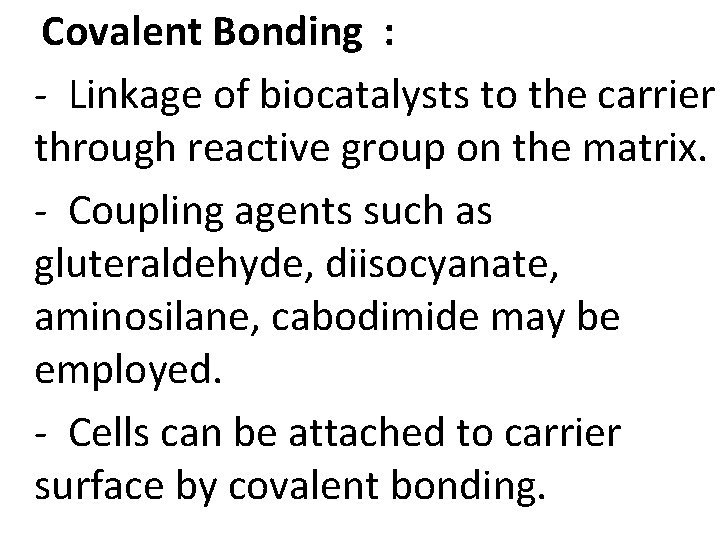
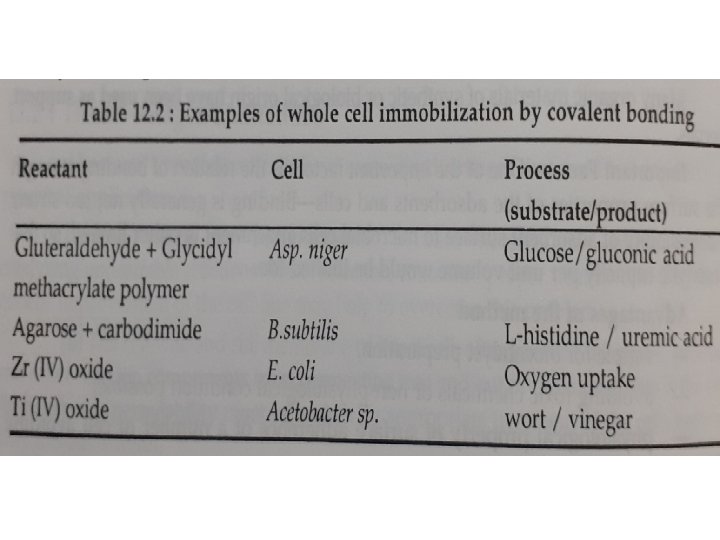
Covalent Bonding : - Linkage of biocatalysts to the carrier through reactive group on the matrix. - Coupling agents such as gluteraldehyde, diisocyanate, aminosilane, cabodimide may be employed. - Cells can be attached to carrier surface by covalent bonding.
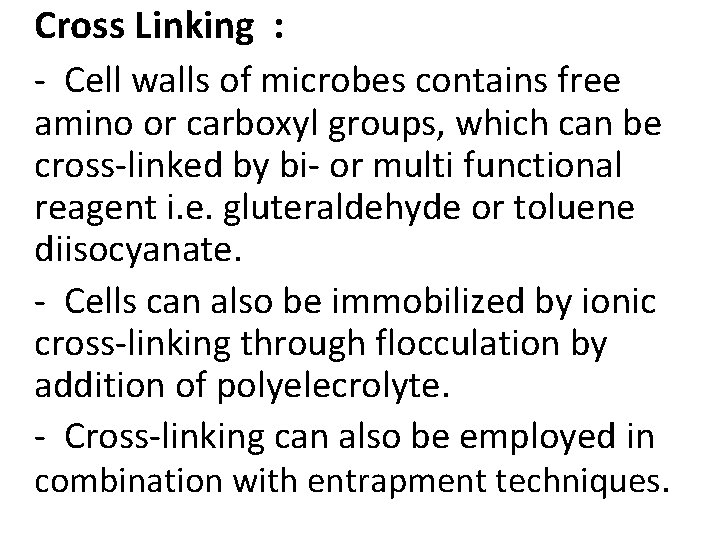
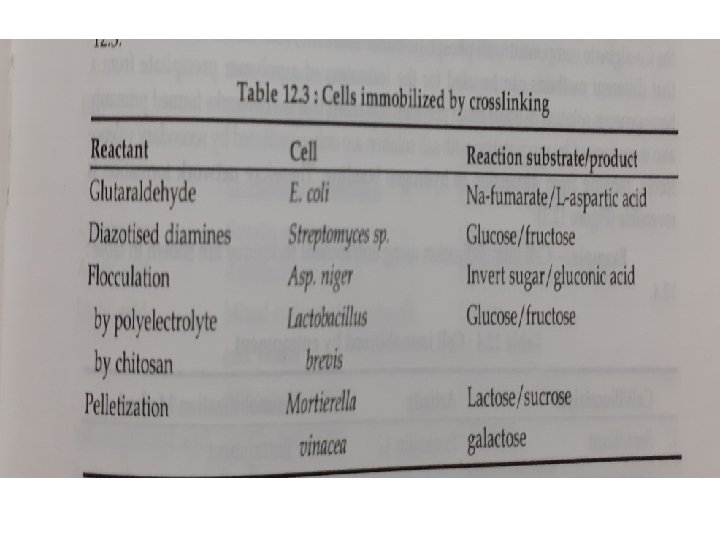
Cross Linking : - Cell walls of microbes contains free amino or carboxyl groups, which can be cross-linked by bi- or multi functional reagent i. e. gluteraldehyde or toluene diisocyanate. - Cells can also be immobilized by ionic cross-linking through flocculation by addition of polyelecrolyte. - Cross-linking can also be employed in combination with entrapment techniques.
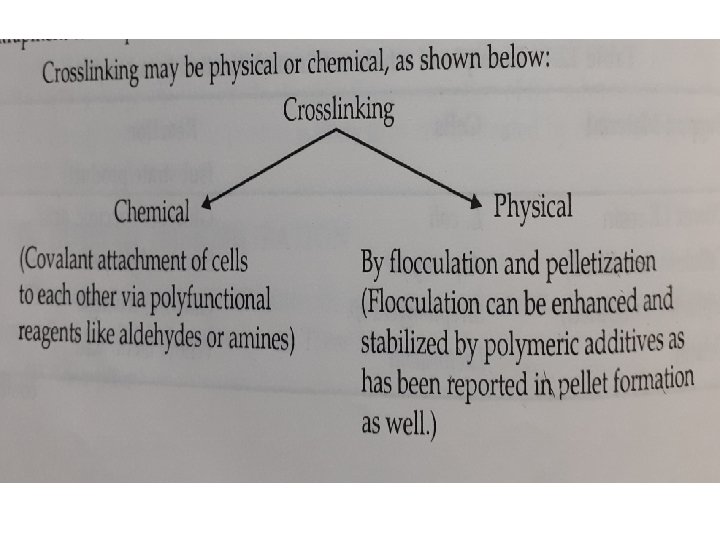
• Disadvantages : - Toxicity of chemicals limits the applicability of these methods. • Advantages : - It leads to high cell concentration per unit volume of reactor. Examples of cell immobilization by cross linking are listed in table :
Copolymerization : - It is the extension of cross linking. - An inert ‘Spacer’ such as gelatin, albumin, or polyethyleneimine is added to the cell suspension before cross linking with glutaraldehyde. - This results in biocatalyst with cells entrapped in a covalent network.
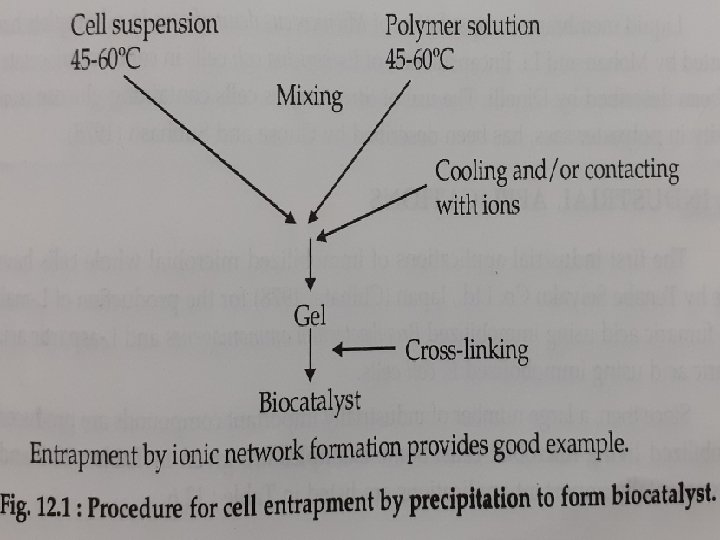
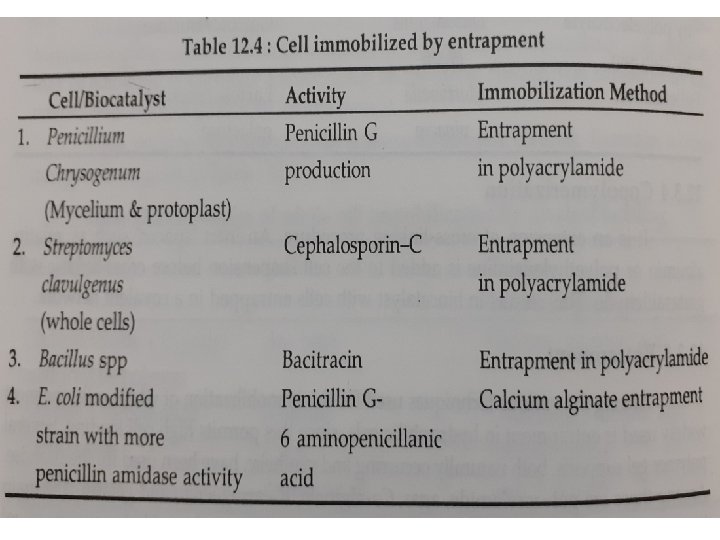
Entrapment : - Most widely used method for the immobilization of whole cells. - Several polymer hydrophilic gels such as polyacrylamide, agar, Caalginate, K-carrageenan and gelatin are used. - Limitation with gel carrier is that of diffusional restrictions. - High porosity of gel is desirable.
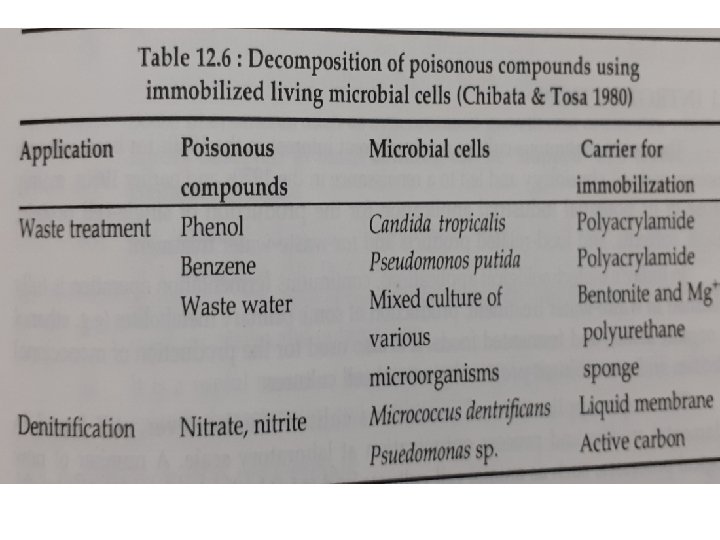
Microencapsulation : - Liquid membrane encapsulation of Micrococcus denitrificans in oil droplets has been reported by Mohan and Li. - Encapsulation of E. coli in cellulose triacetate fibers has been described by Dinelli. - Streptomyces cells containing glucose isomerase activity in polyester sacs has been described by Ghose and Subhash (1978).
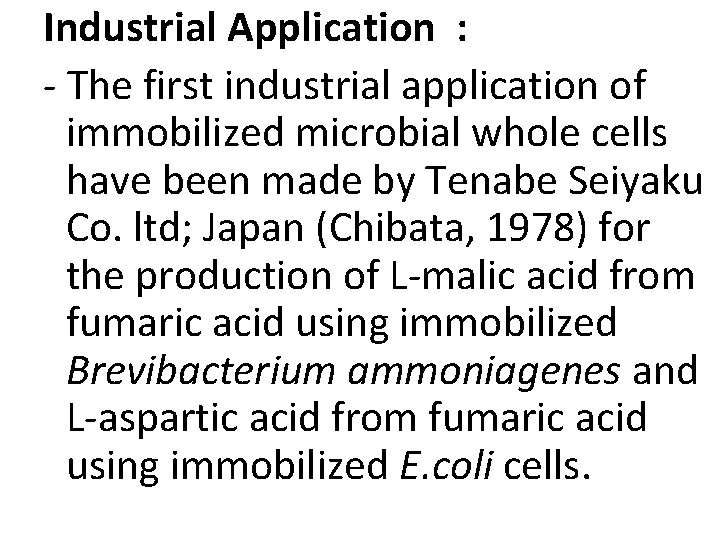
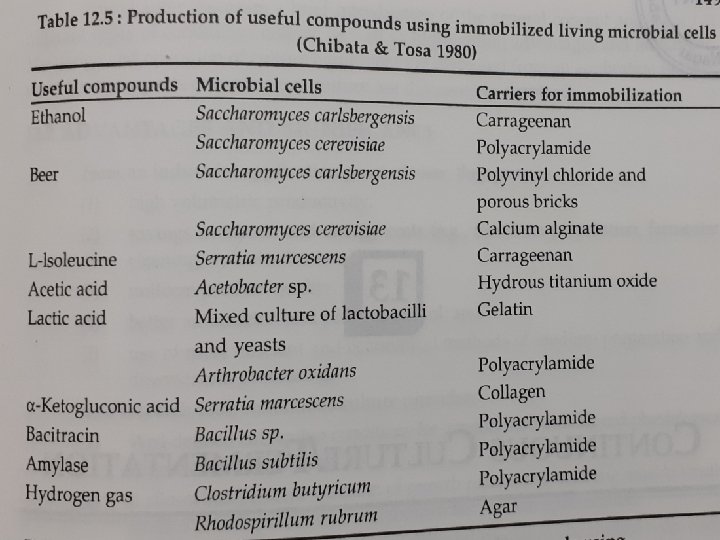
Industrial Application : - The first industrial application of immobilized microbial whole cells have been made by Tenabe Seiyaku Co. ltd; Japan (Chibata, 1978) for the production of L-malic acid from fumaric acid using immobilized Brevibacterium ammoniagenes and L-aspartic acid from fumaric acid using immobilized E. coli cells.
- Slides: 20