
Methods in Protein Chemistry Yong Chen SIBCB Ensemble
Methods in Protein Chemistry Yong Chen SIBCB
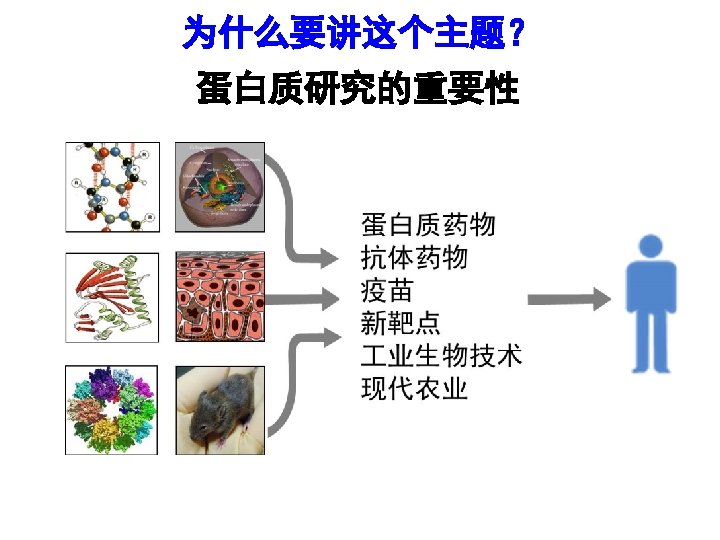
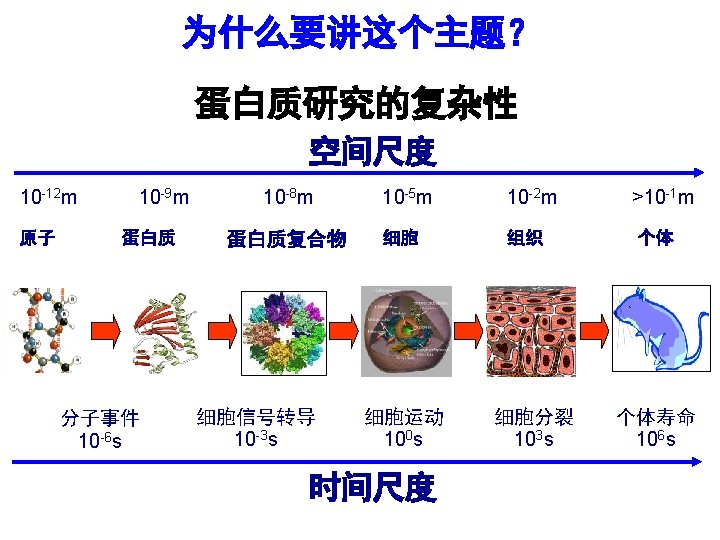
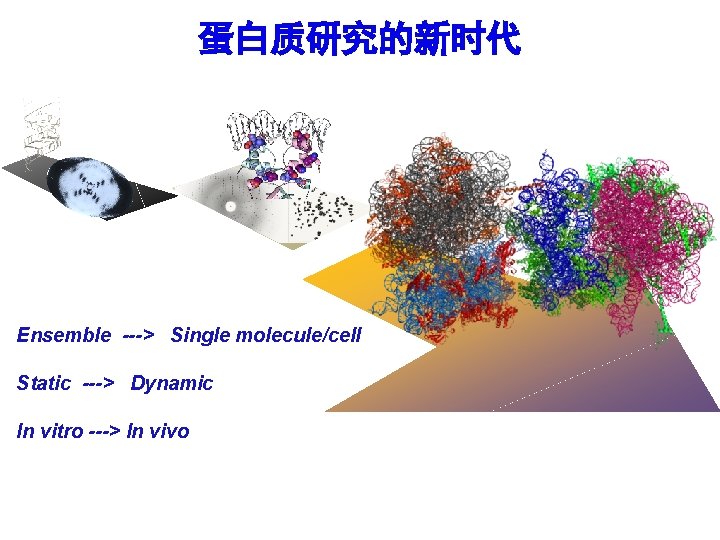
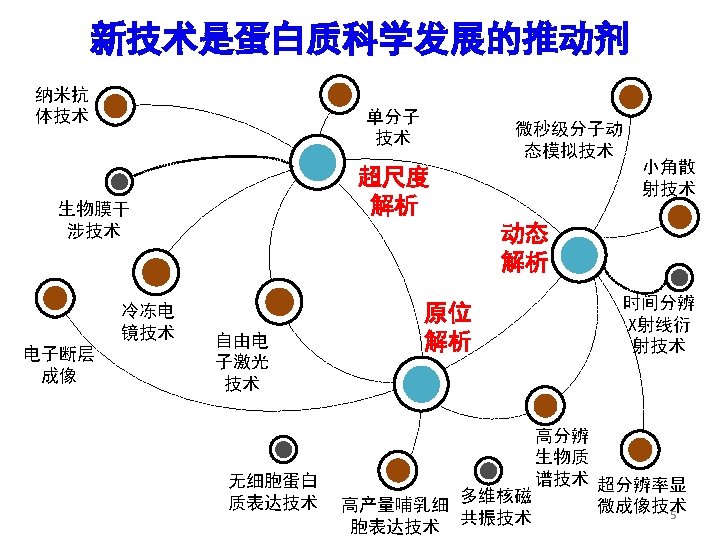
蛋白质研究的新时代 Ensemble ---> Single molecule/cell Static ---> Dynamic In vitro ---> In vivo
Contents • Introduction of protein science • Principle and methods for protein characterization • Principle and methods for protein purification • Principle and methods for detection of protein-mediated interactions • Principle and methods for structural determination of proteins
Contents • Introduction of protein • Principle and methods for protein characterization • Principle and methods for protein purification • Principle and methods for detection of protein-mediated interactions • Principle and methods for structural determination of proteins
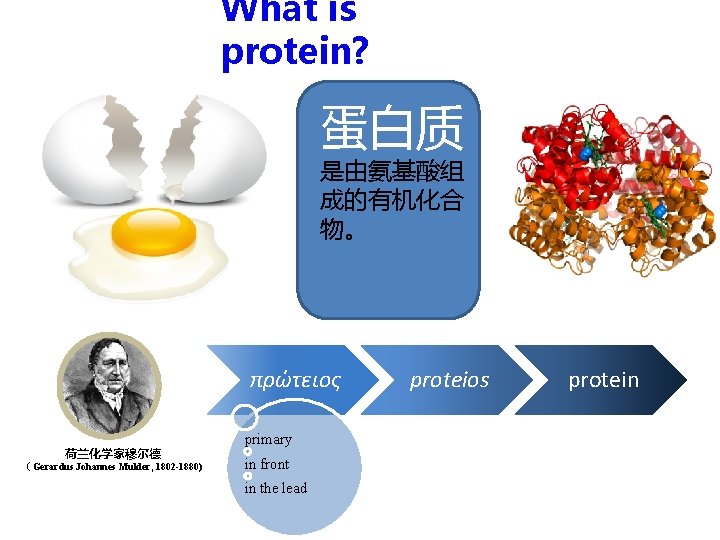
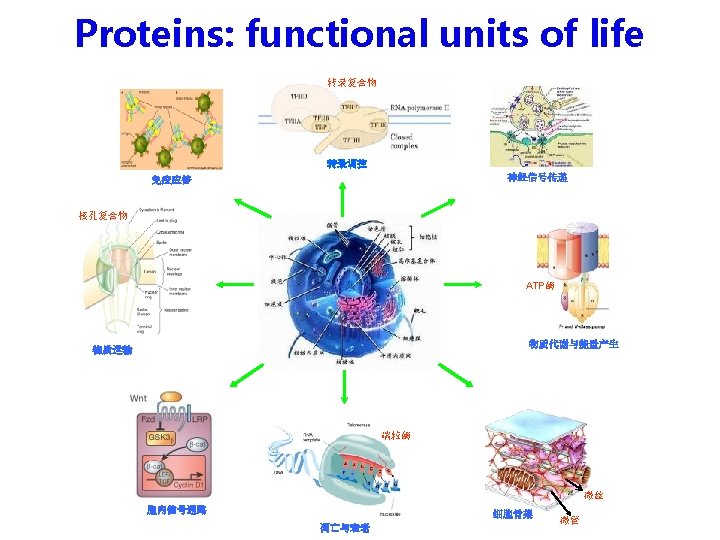
What is protein? 蛋白质 是由氨基酸组 成的有机化合 物。 πρώτειος 荷兰化学家穆尔德 (Gerardus Johannes Mulder, 1802 -1880) primary in front in the lead proteios protein
Basics of protein composition and structures 10
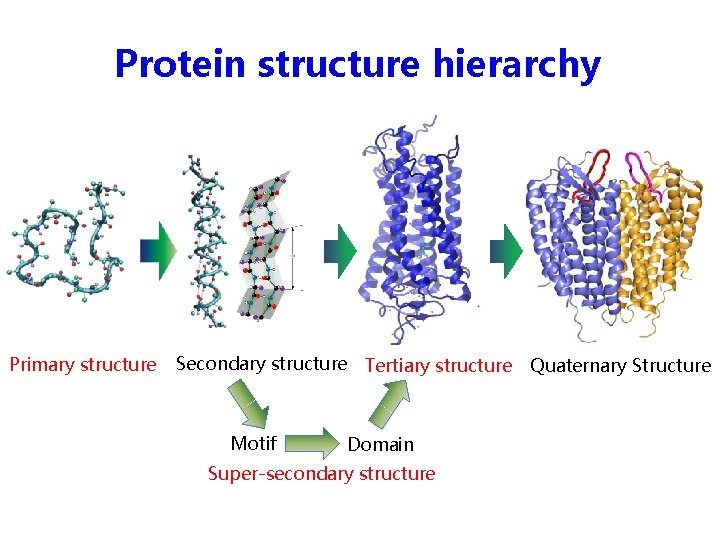
Protein structure hierarchy Primary structure Secondary structure Tertiary structure Quaternary Structure Motif Domain Super-secondary structure
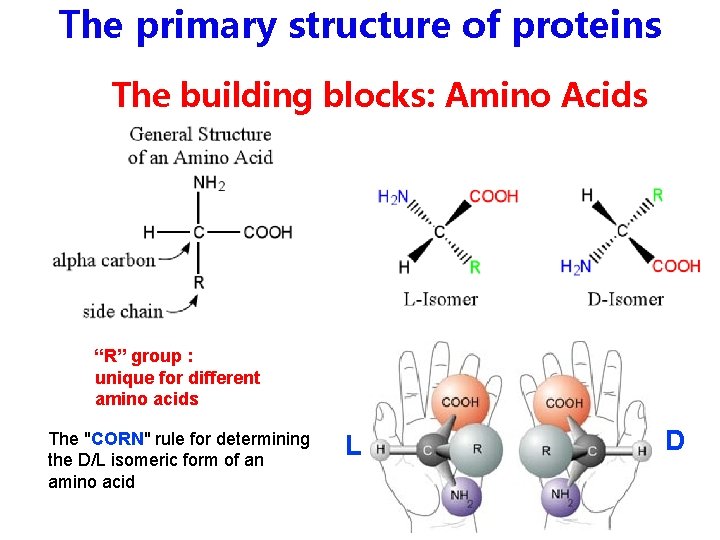
The primary structure of proteins The building blocks: Amino Acids “R” group : unique for different amino acids The "CORN" rule for determining the D/L isomeric form of an amino acid L D
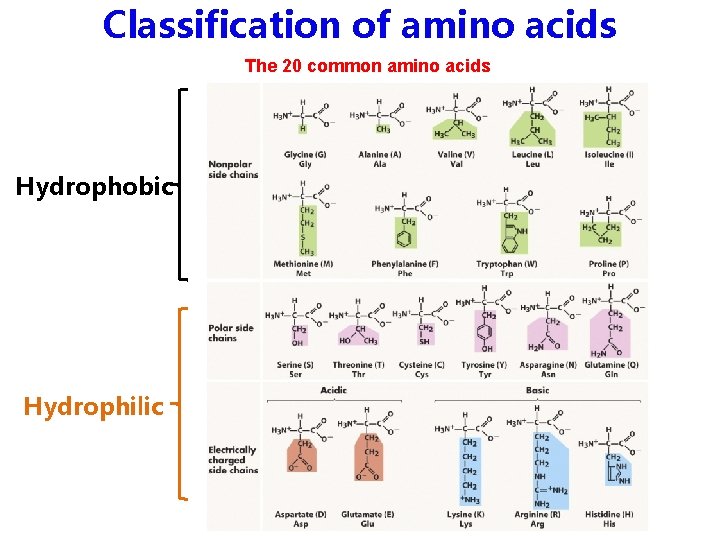
Classification of amino acids The 20 common amino acids Hydrophobic Hydrophilic
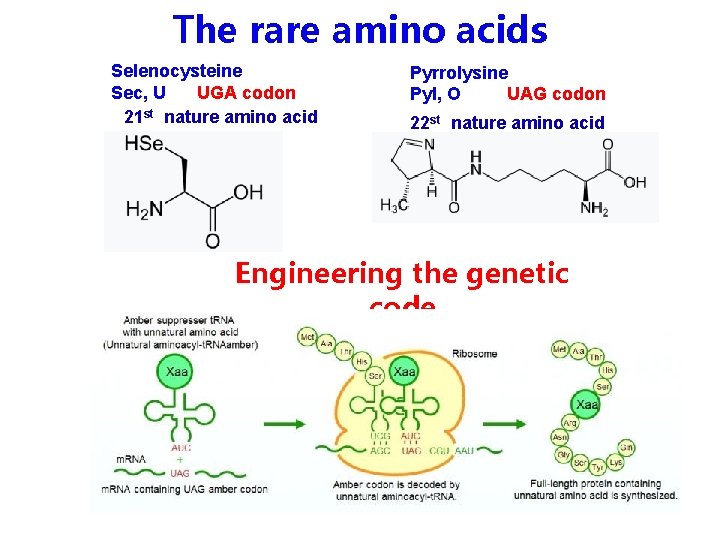
The rare amino acids Selenocysteine Sec, U UGA codon 21 st nature amino acid Pyrrolysine Pyl, O UAG codon 22 st nature amino acid Engineering the genetic code
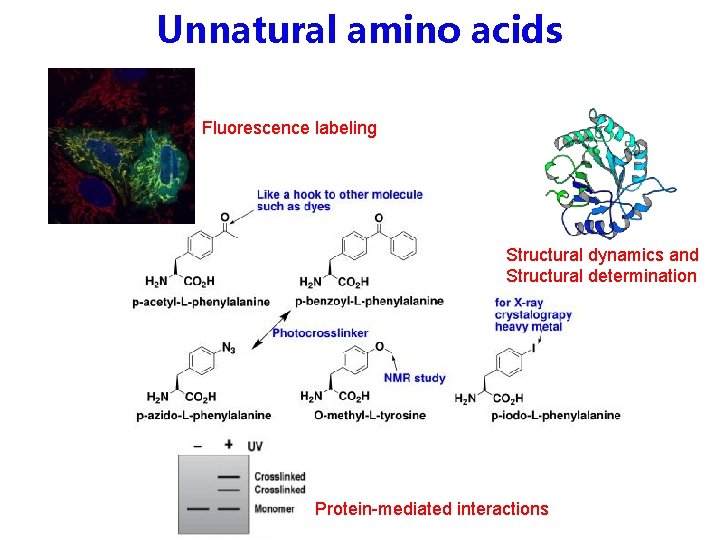
Unnatural amino acids Fluorescence labeling Structural dynamics and Structural determination Protein-mediated interactions
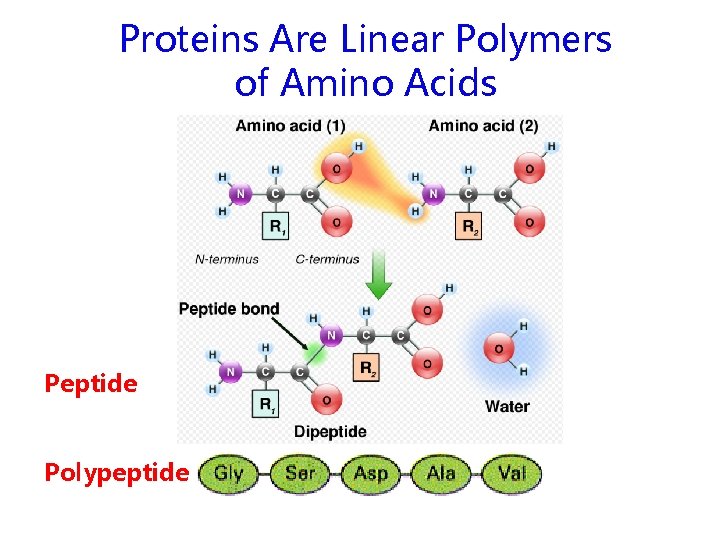
Proteins Are Linear Polymers of Amino Acids Peptide Polypeptide
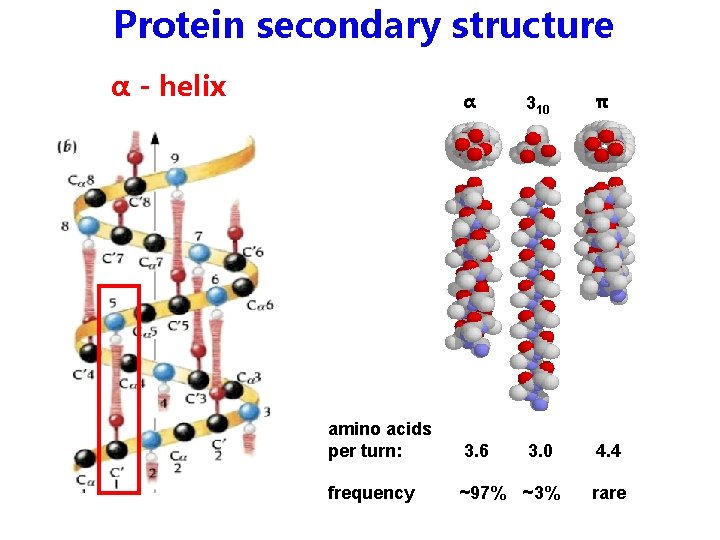
Protein secondary structure α - helix α 310 π amino acids per turn: 3. 6 3. 0 4. 4 frequency ~97% ~3% rare
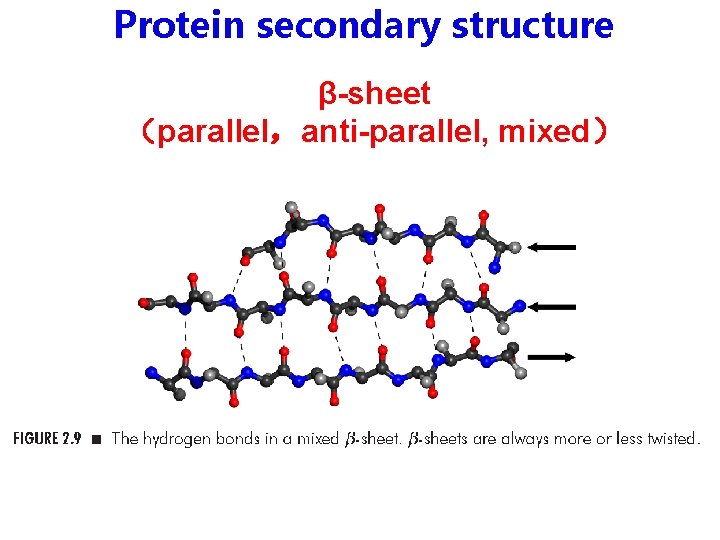
Protein secondary structure β-sheet (parallel,anti-parallel, mixed)
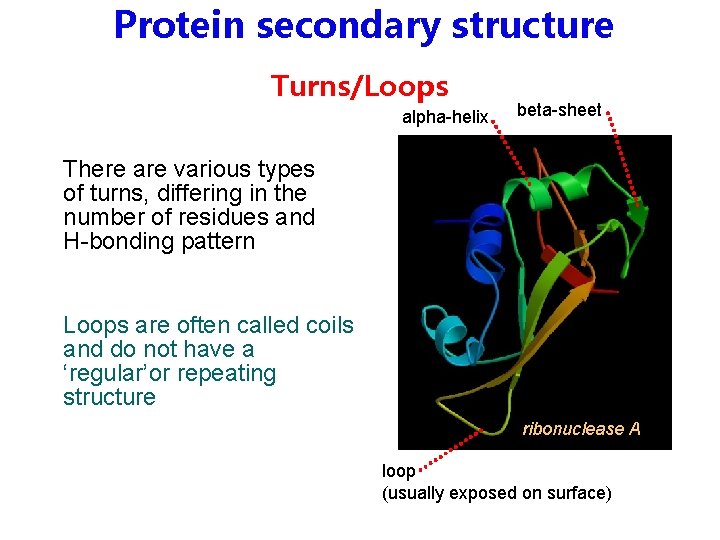
Protein secondary structure Turns/Loops alpha-helix beta-sheet There are various types of turns, differing in the number of residues and H-bonding pattern Loops are often called coils and do not have a ‘regular’or repeating structure ribonuclease A loop (usually exposed on surface)
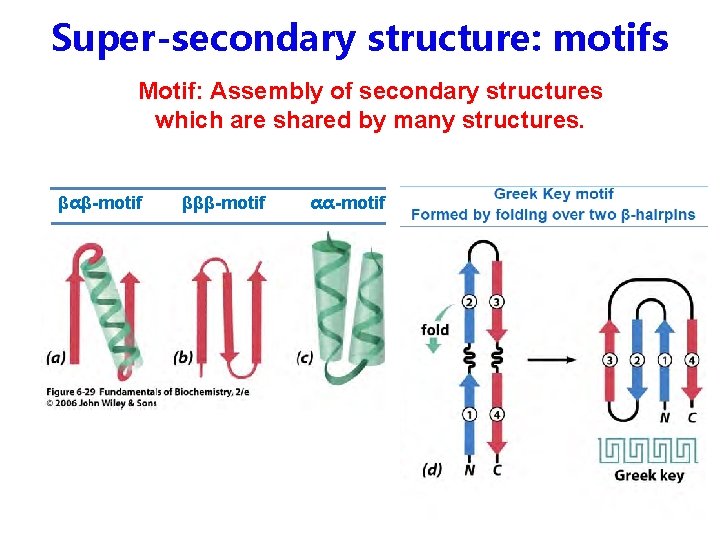
Super-secondary structure: motifs Motif: Assembly of secondary structures which are shared by many structures. βαβ-motif βββ-motif αα-motif
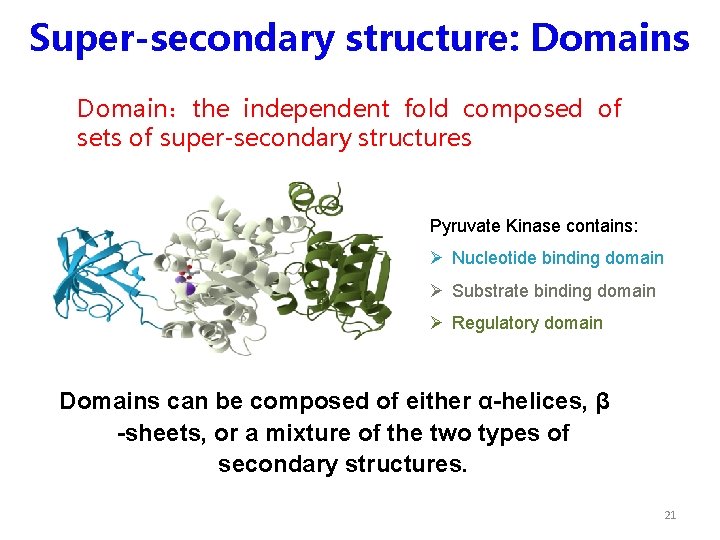
Super-secondary structure: Domains Domain:the independent fold composed of sets of super-secondary structures Pyruvate Kinase contains: Ø Nucleotide binding domain Ø Substrate binding domain Ø Regulatory domain Domains can be composed of either α-helices, β -sheets, or a mixture of the two types of secondary structures. 21
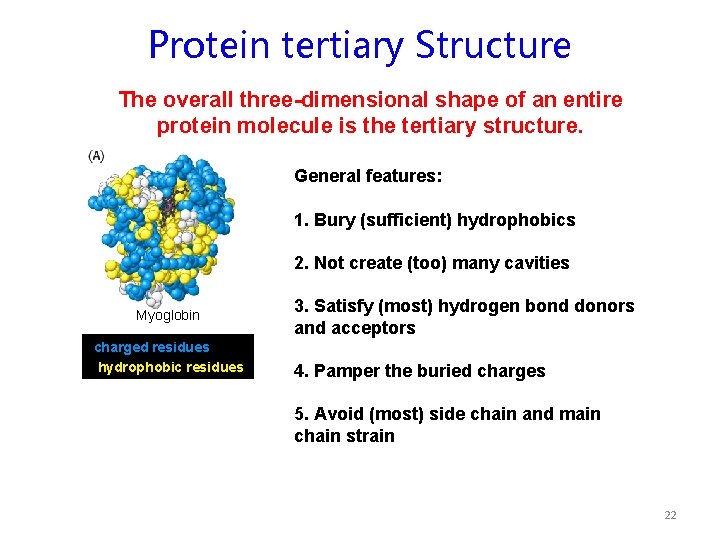
Protein tertiary Structure The overall three-dimensional shape of an entire protein molecule is the tertiary structure. General features: 1. Bury (sufficient) hydrophobics 2. Not create (too) many cavities Myoglobin charged residues hydrophobic residues 3. Satisfy (most) hydrogen bond donors and acceptors 4. Pamper the buried charges 5. Avoid (most) side chain and main chain strain 22
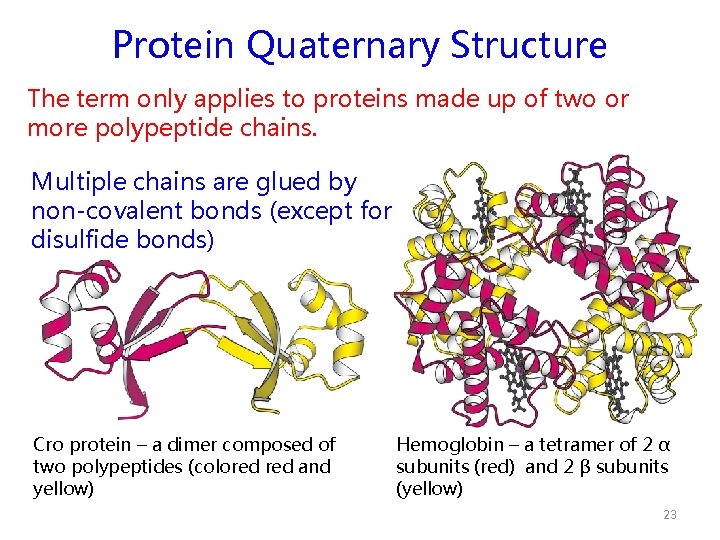
Protein Quaternary Structure The term only applies to proteins made up of two or more polypeptide chains. Multiple chains are glued by non-covalent bonds (except for disulfide bonds) Cro protein – a dimer composed of two polypeptides (colored and yellow) Hemoglobin – a tetramer of 2 α subunits (red) and 2 β subunits (yellow) 23
Contents • Introduction of protein • Principle and methods for protein characterization • Principle and methods for protein purification • Principle and methods for detection of protein-mediated interactions • Principle and methods for structural determination of proteins
Principle and methods for protein characterization Yong Chen SIBCB
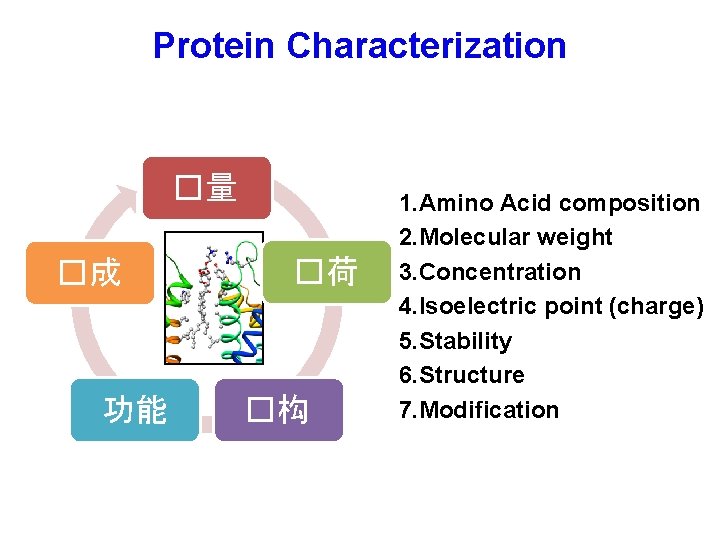
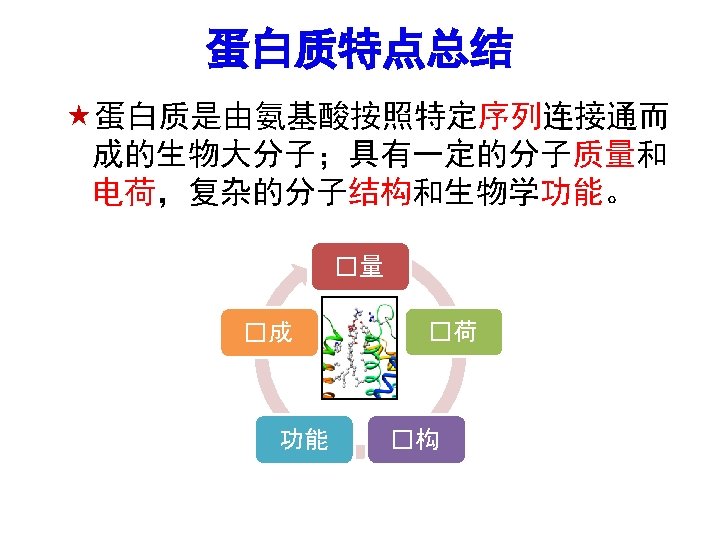
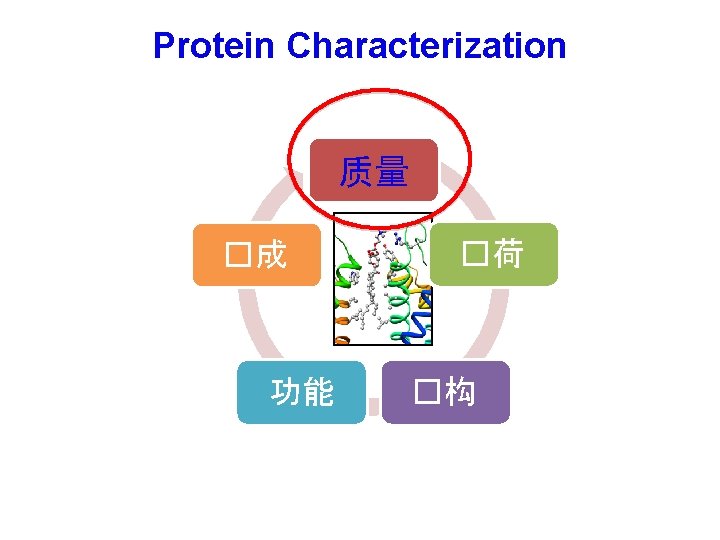
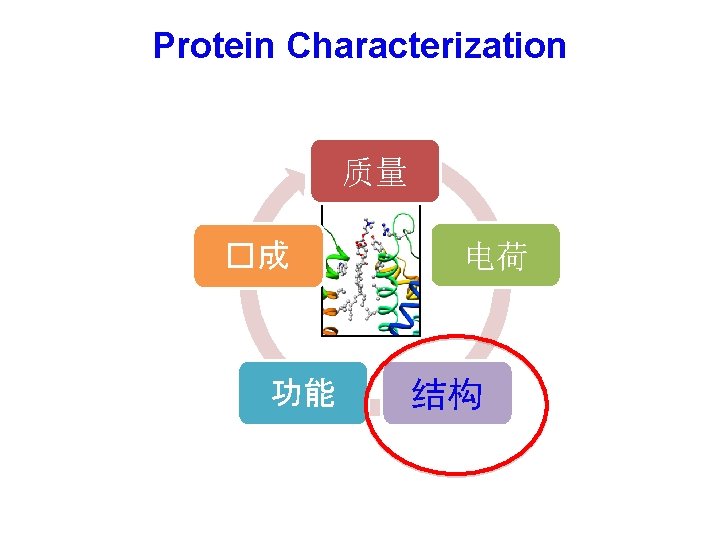
Protein Characterization �量 �成 功能 �荷 �构 1. Amino Acid composition 2. Molecular weight 3. Concentration 4. Isoelectric point (charge) 5. Stability 6. Structure 7. Modification
Protein Characterization 质量 组成 功能 �荷 �构
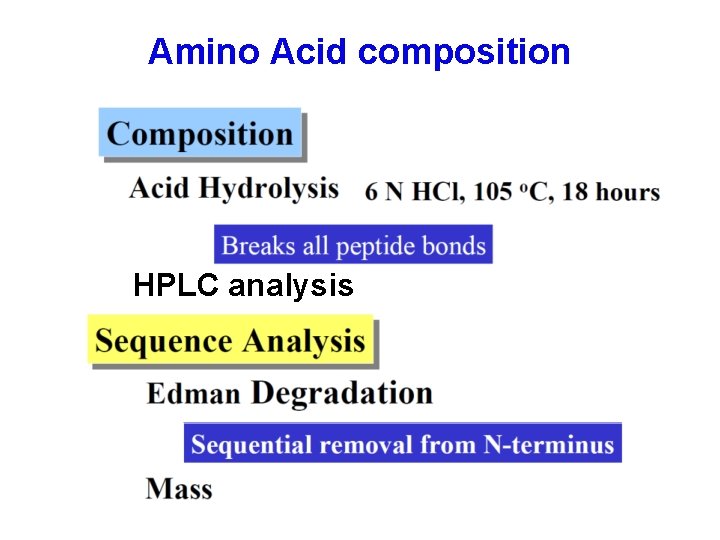
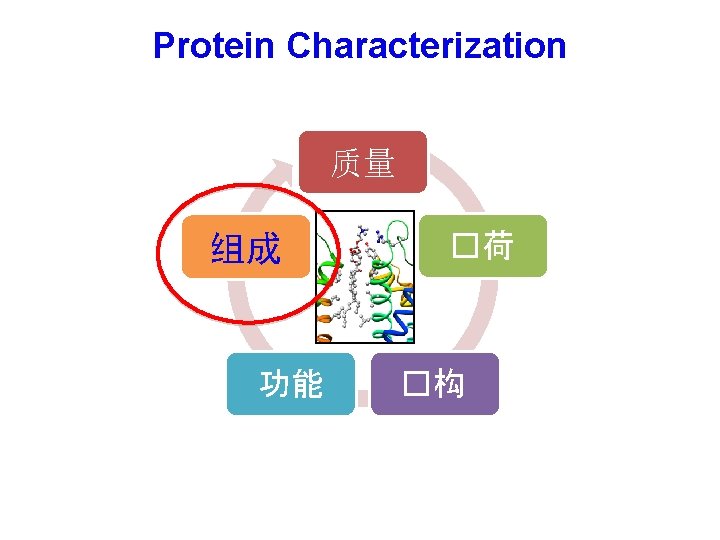
Amino Acid composition HPLC analysis
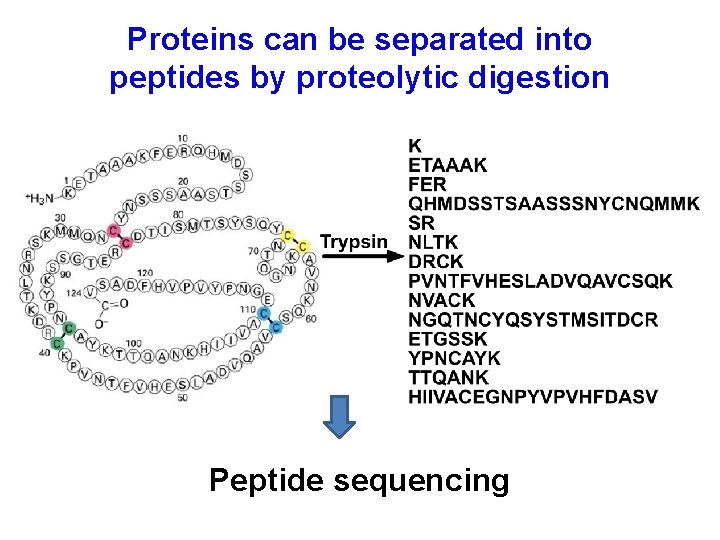
Proteins can be separated into peptides by proteolytic digestion Peptide sequencing
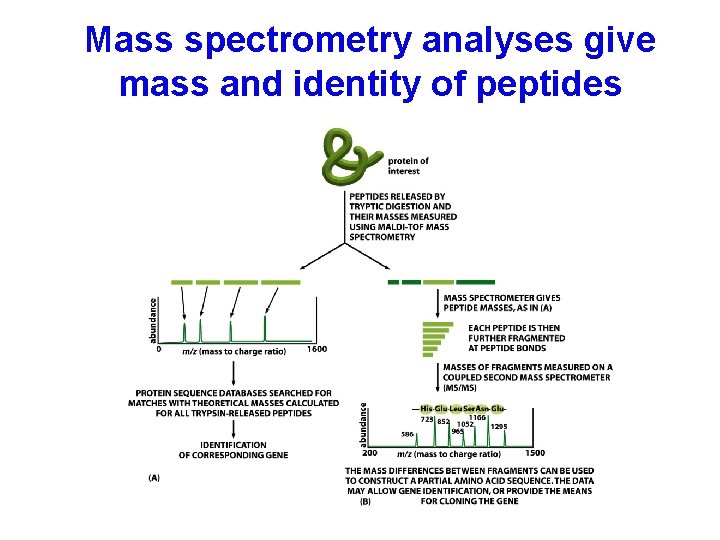
Mass spectrometry analyses give mass and identity of peptides
Protein Characterization 质量 �成 功能 �荷 �构
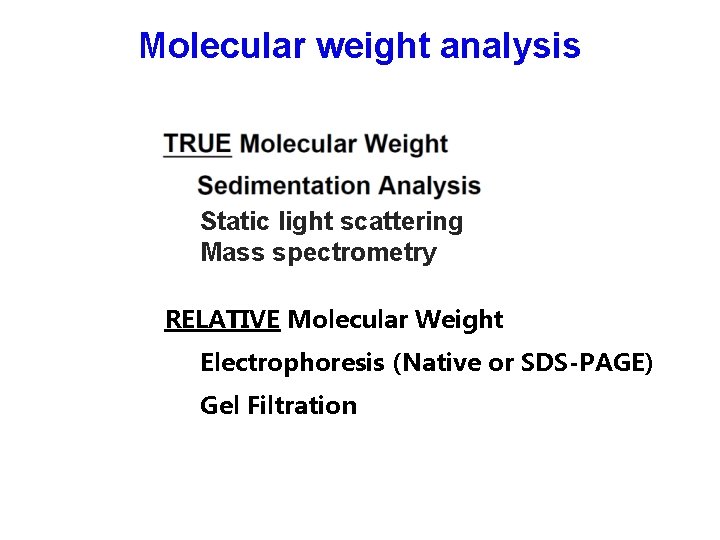
Molecular weight analysis Static light scattering Mass spectrometry RELATIVE Molecular Weight Electrophoresis (Native or SDS-PAGE) Gel Filtration
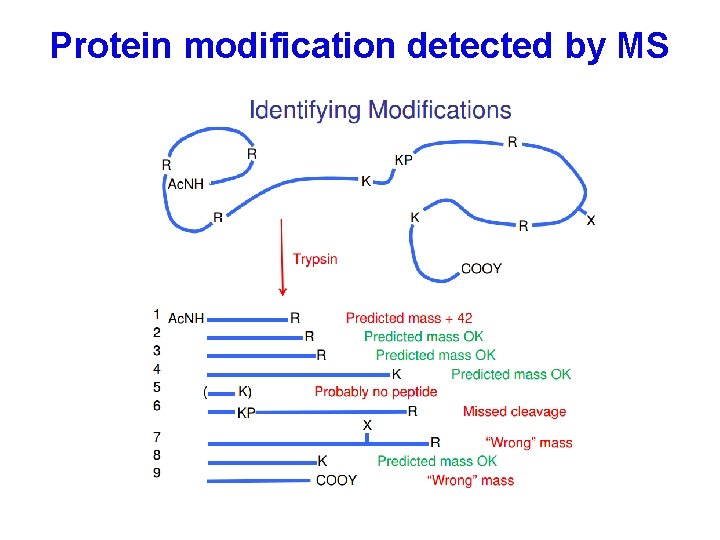
Protein modification detected by MS
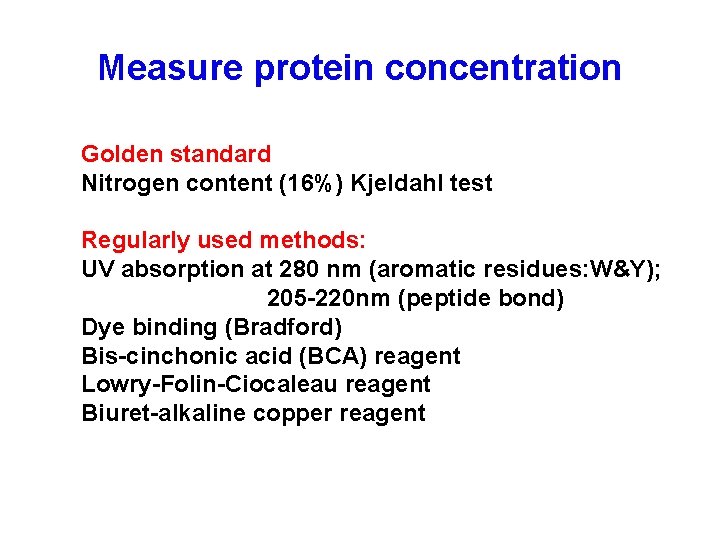
Measure protein concentration Golden standard Nitrogen content (16%) Kjeldahl test Regularly used methods: UV absorption at 280 nm (aromatic residues: W&Y); 205 -220 nm (peptide bond) Dye binding (Bradford) Bis-cinchonic acid (BCA) reagent Lowry-Folin-Ciocaleau reagent Biuret-alkaline copper reagent
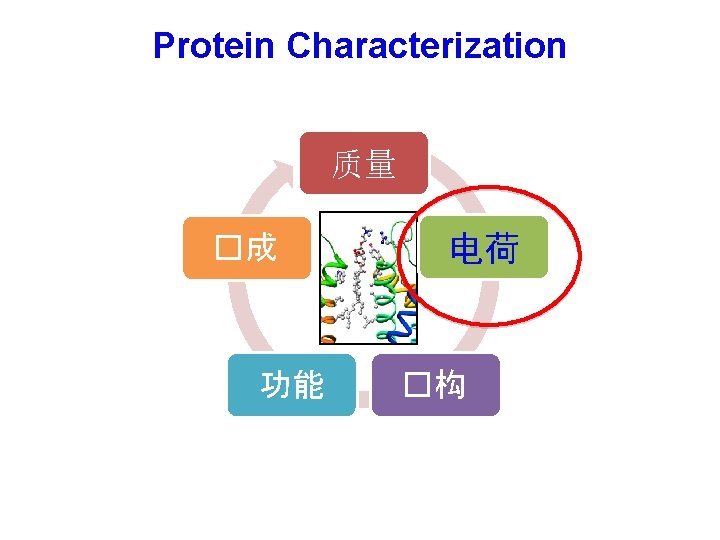
Protein Characterization 质量 �成 功能 电荷 �构
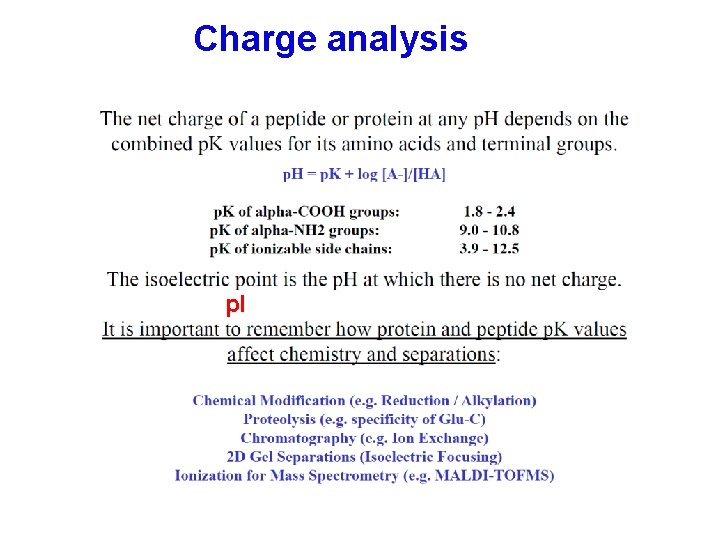
Charge analysis p. I
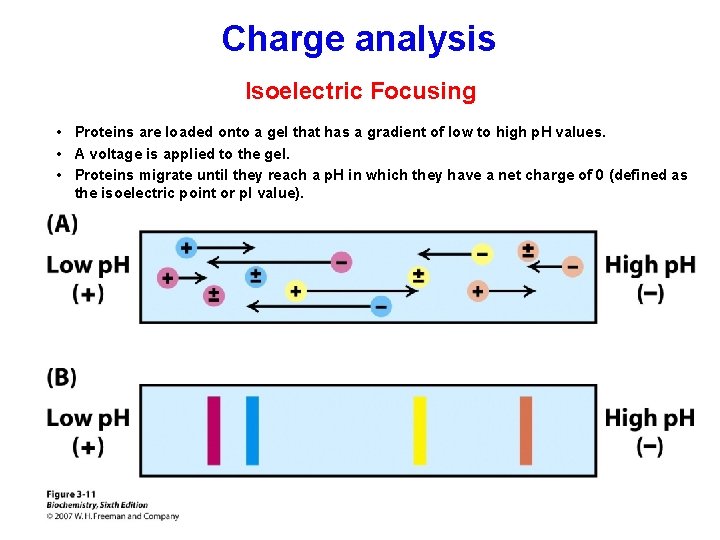
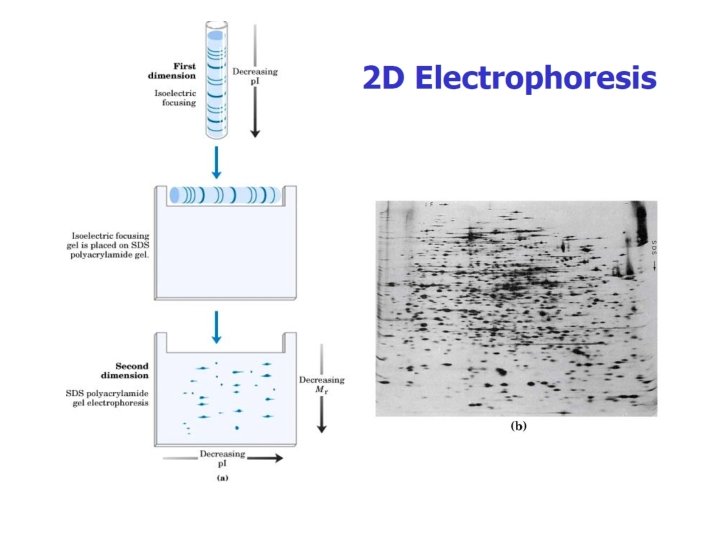
Charge analysis Isoelectric Focusing • Proteins are loaded onto a gel that has a gradient of low to high p. H values. • A voltage is applied to the gel. • Proteins migrate until they reach a p. H in which they have a net charge of 0 (defined as the isoelectric point or p. I value).
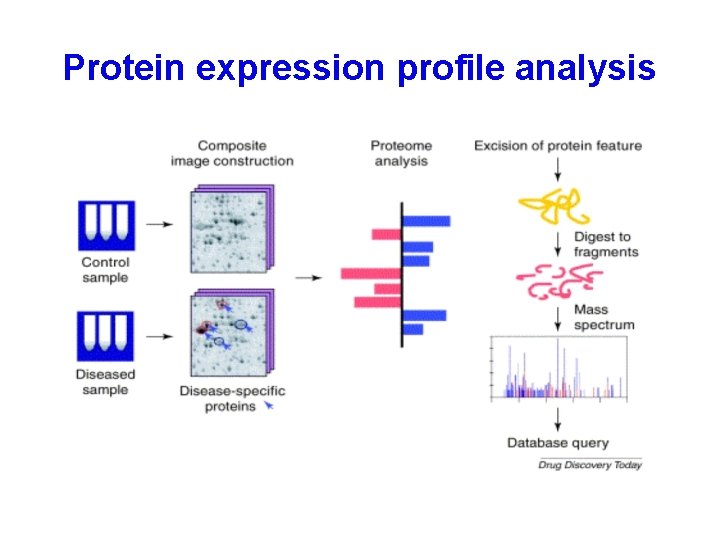
Protein expression profile analysis
Protein Characterization 质量 �成 功能 电荷 结构
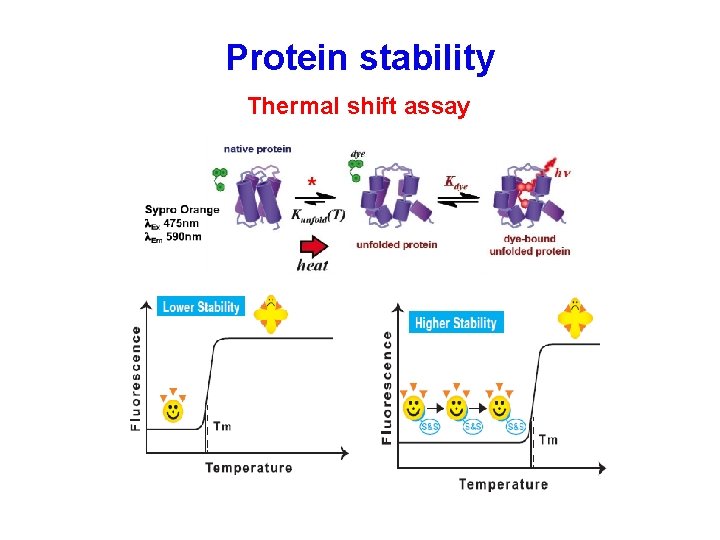
Protein stability Thermal shift assay
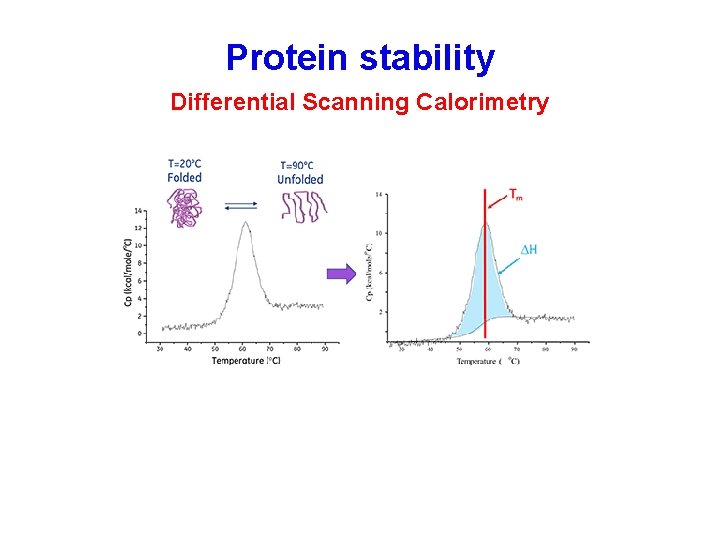
Protein stability Differential Scanning Calorimetry
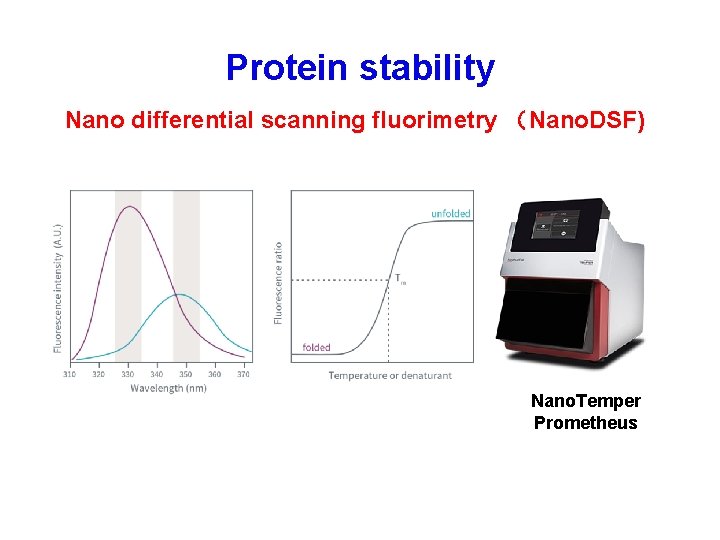
Protein stability Nano differential scanning fluorimetry (Nano. DSF) Nano. Temper Prometheus
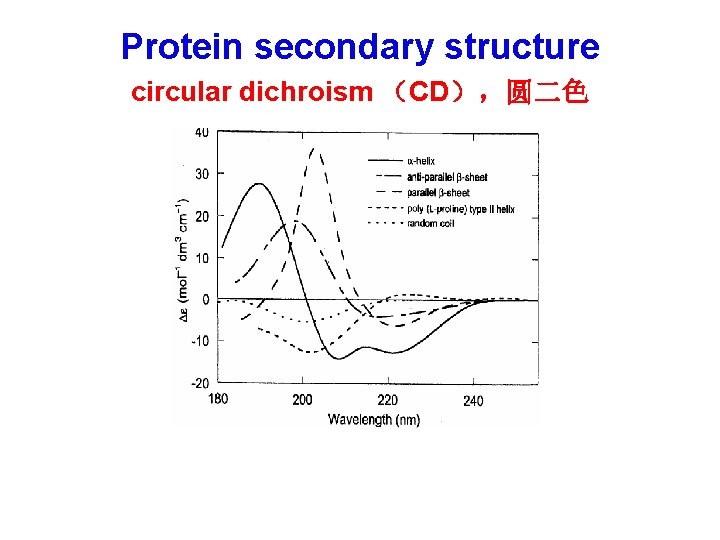
Protein secondary structure circular dichroism (CD),圆二色
Structural analysis Main techniques in Structural Biology • X-ray macromolecular crystallography • Solution nuclear magnetic resonance (NMR) • Electron cryomicroscopy (Cryo-EM) • Theoretical modeling • Others: small angle X-ray scattering, electron diffraction, mass spectrometry etc.
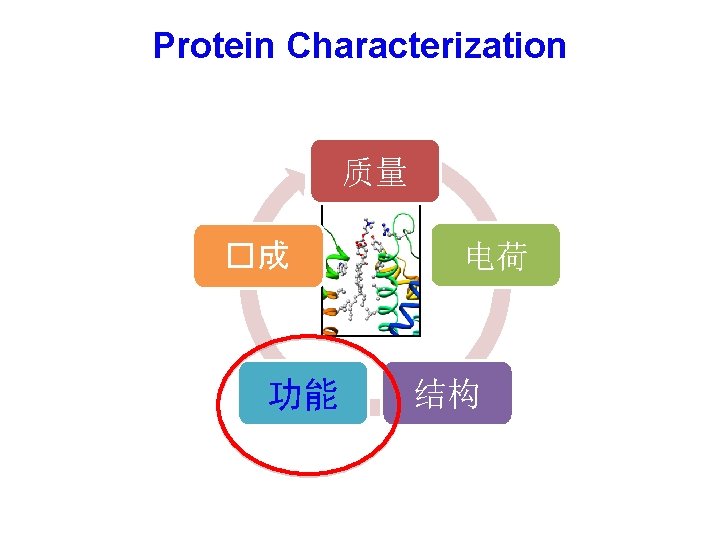
Protein Characterization 质量 �成 功能 电荷 结构
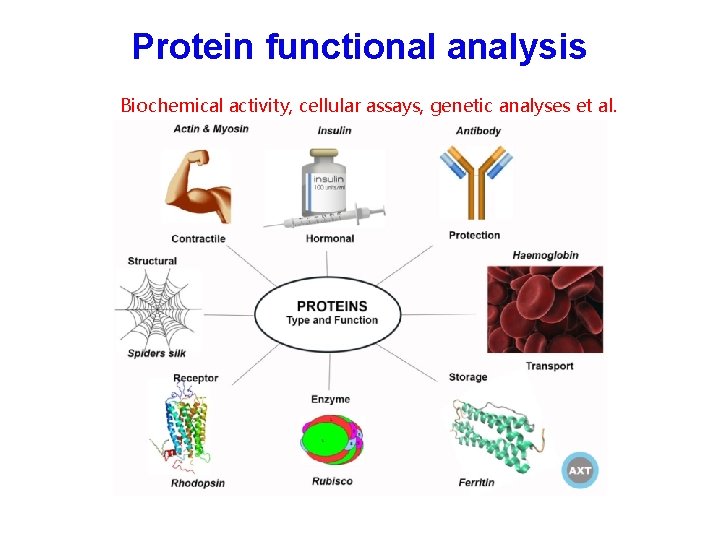
Protein functional analysis Biochemical activity, cellular assays, genetic analyses et al.
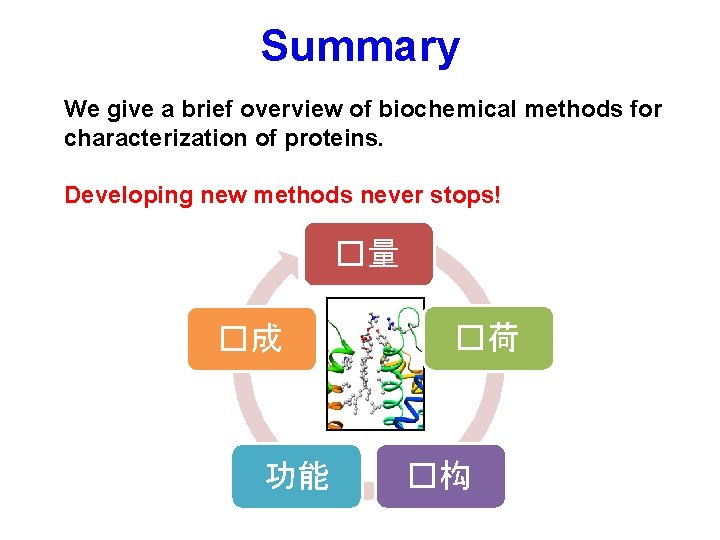
Summary We give a brief overview of biochemical methods for characterization of proteins. Developing new methods never stops! �量 �成 功能 �荷 �构
- Slides: 49