
Methods in Cultural Anthropology ANTHROPOLOGICAL RESEARCH Todays Topics




- Slides: 13
Methods in Cultural Anthropology ANTHROPOLOGICAL RESEARCH
Today’s Topics Research Design Stages of Research Methodologies Data collection Problems with Fieldwork Ethics
What We Will Learn How do cultural anthropologists conduct fieldwork? What types of data-gathering techniques do cultural anthropologists use? What are some of the problems faced by cultural anthropologists that make fieldwork somewhat less than romantic? What ethical dilemmas do applied anthropologists face when conducting fieldwork?
Research Methodologies As the fields and subfields of anthropology are highly varied as to their appropriate subject matter and associated research questions, there is no uniform set of techniques or approaches that are applicable across the entire discipline. What is universal to the entire discipline are the steps that every investigator must take in order to set up and carry out a program of research.
Stages of Field Research Selecting a research problem Literature Review “Fishing Trip” (exploratory trip into the field) Formulating a research design Obtaining Permits Obtaining Funding Fieldwork Collecting the data Data Processing & Analysis Publication
Research Designs What it contains: A Statement of the problem An Exposition of the research methodology A Budget Who will demand to see a research design? Government officials – poss. multiple levels. Funding Sources
Data Collection The prevailing method of data gathering has been participant observation since the 1920’s. The length of time an anthropologist must devote to gathering data varies, but is generally on the order of 2 years. The first six months is devoted to language acquisition.
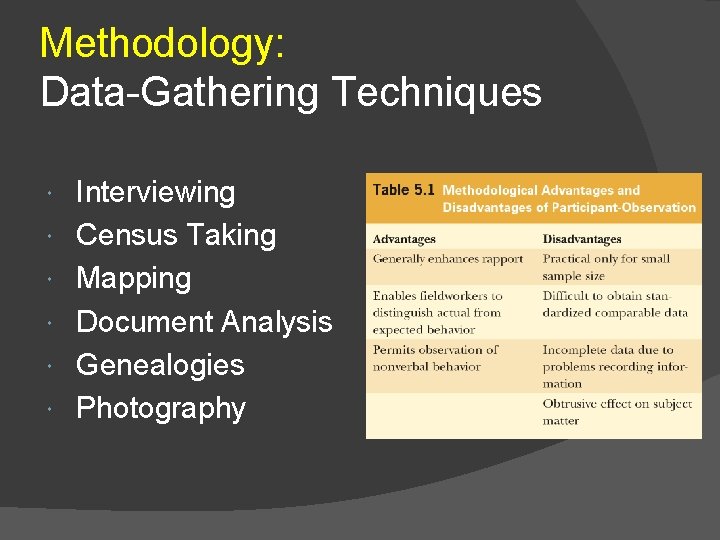
Methodology: Data-Gathering Techniques Interviewing Census Taking Mapping Document Analysis Genealogies Photography
Types of Data § § Qualitative data – people’s words, actions, records, and accounts Quantitative data – data that are counted and interpreted through statistical analysis.
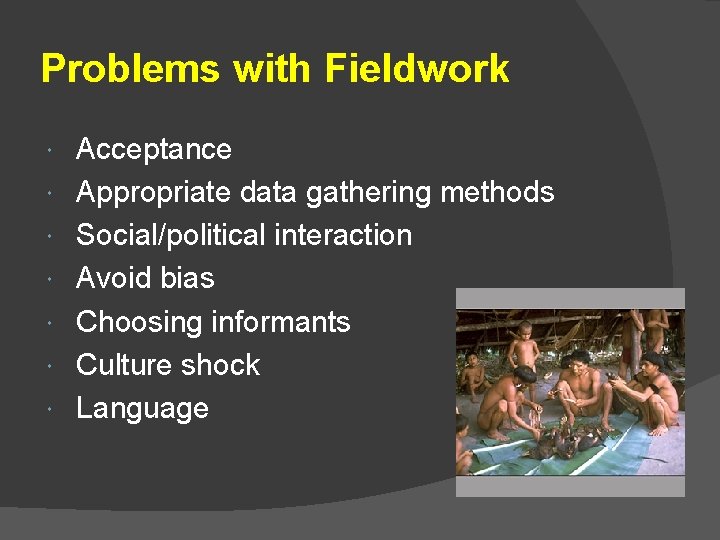
Problems with Fieldwork Acceptance Appropriate data gathering methods Social/political interaction Avoid bias Choosing informants Culture shock Language
Causes of Culture Shock Language incompetency. Tendency to work solo. Feeling a loss of familiar surroundings and accustomed ways of doing things (“mechanical differences”). Inadequacy at or ignorance of ways of living in new environment. Realization that ones’ values are not acceptable in the new setting, and that one’s views will always constitute the minority view.
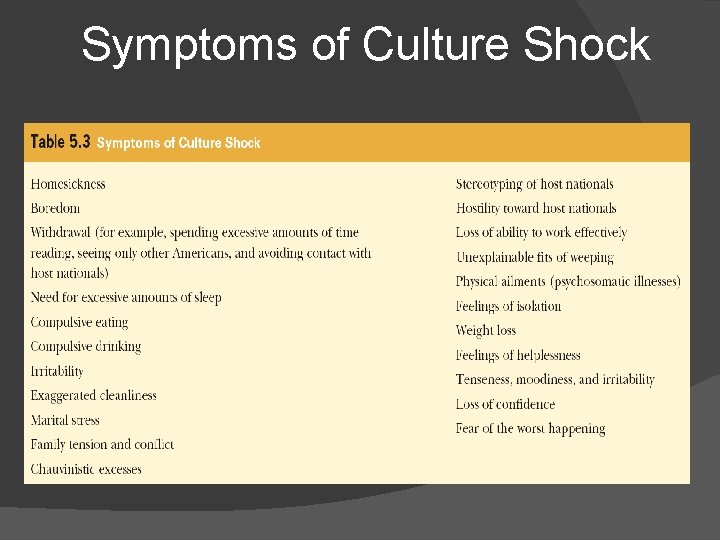
Symptoms of Culture Shock
Ethics and Anthropology Areas of responsibility for anthropologists: The people under study The public The discipline Students Sponsors One’s own and the host governments AAA Code of Ethics