
Methods for Measuring Particle Size and Size Distributions

Methods for Measuring Particle Size and Size Distributions Peter H. Mc. Murry Department of Mechanical Engineering University of Minnesota

Measures of Particle Size Light Scattering: Electrical Mobility: Aerodynamic size: Mass: f (n, “size”, shape) g ( “size”, shape) h (r, “size”, shape) I (r, “size”) where n = complex refractive index r = particle density “size”= a measure of geometric size (e. g. , diameter of sphere)

Measurement of Particle Size Light Scattering: Optical Particle Counter (OPC) Electrical Mobility: Mobility Classifier + Condensation Particle Counter (SMPS) Aerodynamic size: Aerodynamic Particle Sizer Mass: Aerosol Particle Mass Analyzer + Concensation Particle Counter
An Instrument System for Measuring Size Distributions (3 nm - 10 µm) (Used by UMN at St. Louis Supersite)
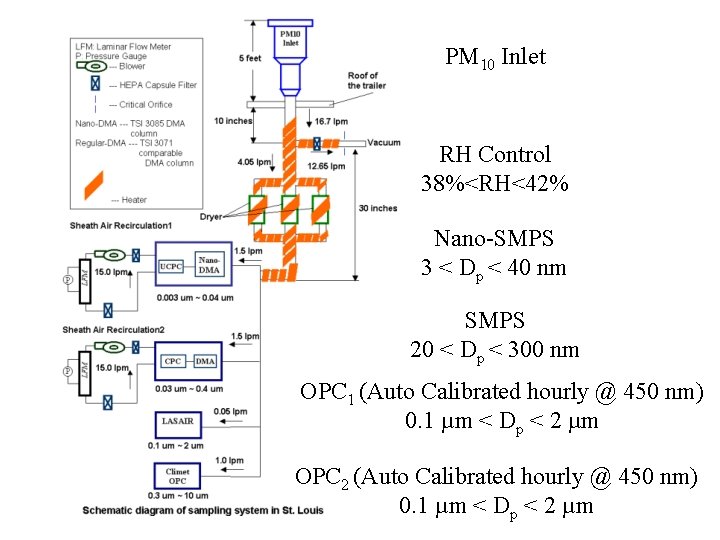
PM 10 Inlet RH Control 38%<RH<42% Nano-SMPS 3 < Dp < 40 nm SMPS 20 < Dp < 300 nm OPC 1 (Auto Calibrated hourly @ 450 nm) 0. 1 µm < Dp < 2 µm OPC 2 (Auto Calibrated hourly @ 450 nm) 0. 1 µm < Dp < 2 µm
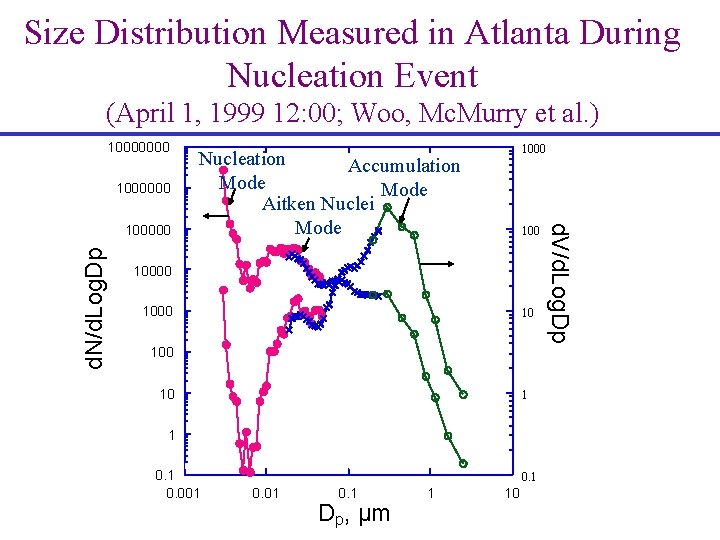
Size Distribution Measured in Atlanta During Nucleation Event (April 1, 1999 12: 00; Woo, Mc. Murry et al. ) 10000000 1000000 d. N/d. Log. Dp 10000 10 100 10 1 1 0. 001 0. 1 Dp, µm 1 10 d. V/d. Log. Dp 100000 1000 Nucleation Accumulation Mode Aitken Nuclei Mode
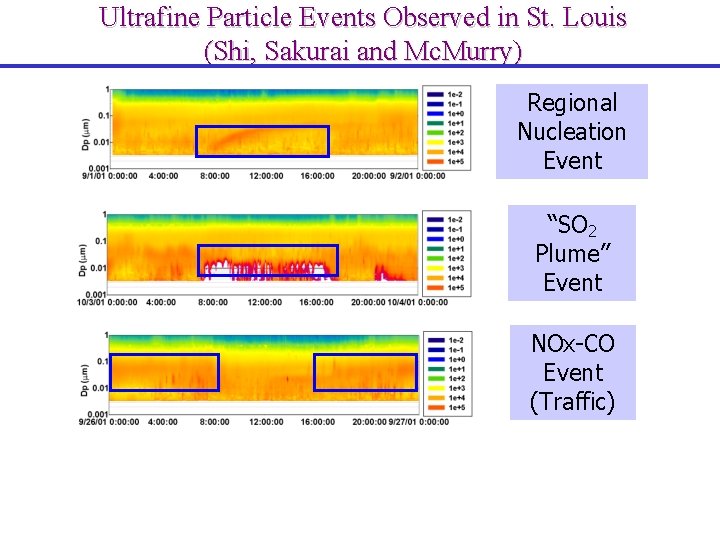
Ultrafine Particle Events Observed in St. Louis (Shi, Sakurai and Mc. Murry) Regional Nucleation Event “SO 2 Plume” Event NOx-CO Event (Traffic)
We can do good job (90% data recovery) of measuring size distributions routinely, remotely and continuously (5 minute resolution) However “Size” is not always a well defined parameter, and external mixing further complicates our ability to relate one measure of size to another
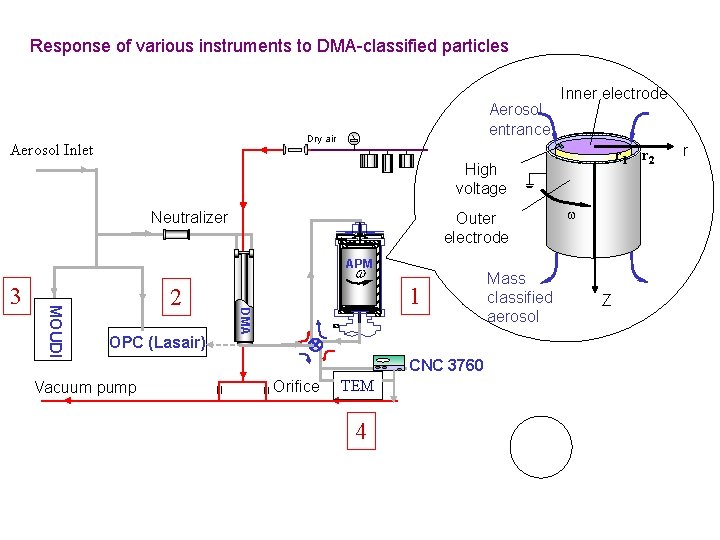
Response of various instruments to DMA-classified particles Aerosol entrance Dry air Aerosol Inlet Inner electrode r 1 r 2 High voltage Neutralizer Outer electrode APM w 2 OPC (Lasair) Vacuum pump 1 DMA MOUDI 3 CNC 3760 Orifice TEM 4 Mass classified aerosol w Z r
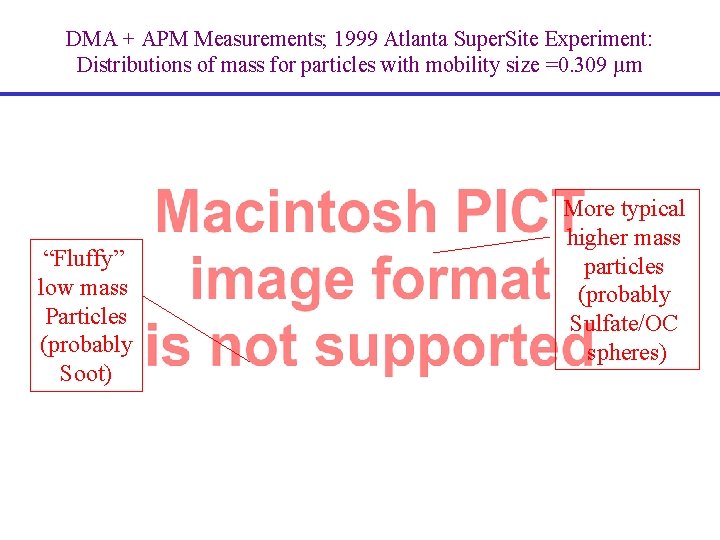
DMA + APM Measurements; 1999 Atlanta Super. Site Experiment: Distributions of mass for particles with mobility size =0. 309 µm “Fluffy” low mass Particles (probably Soot) More typical higher mass particles (probably Sulfate/OC spheres)
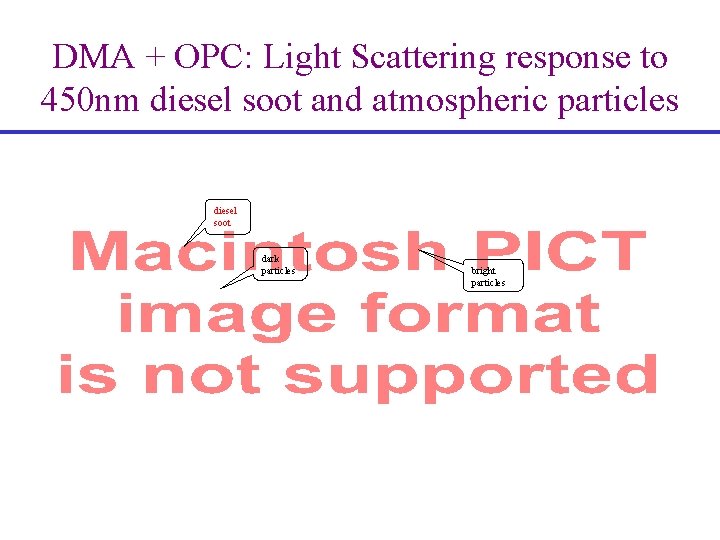
DMA + OPC: Light Scattering response to 450 nm diesel soot and atmospheric particles diesel soot dark particles bright particles
Relationship between mobility, optical equivalent and aerodynamic diameters For Diesel Exhaust Particles 1. Relationship between aerodynamic and mobility diameters 2. Relationship between optical equivalent and mobility diameters A PMS Model 1002 Lasair OPC calibrated with DOS spheres measured the optical equivalent size of DMAclassified diesel exhaust particles
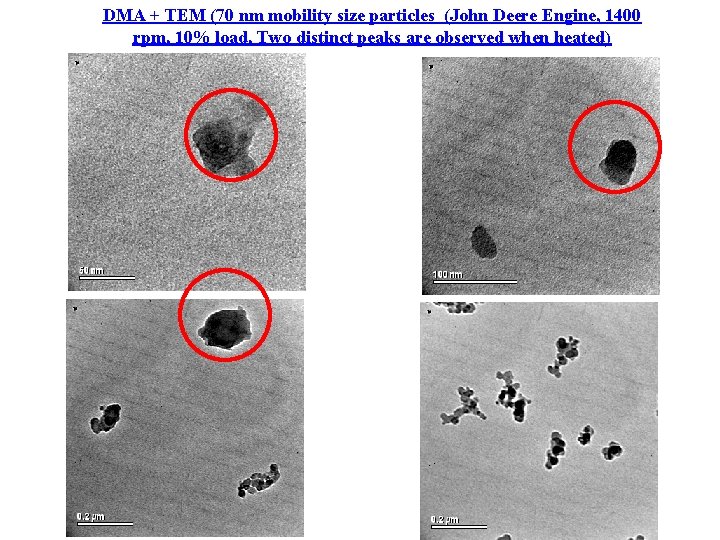
DMA + TEM (70 nm mobility size particles (John Deere Engine, 1400 rpm, 10% load, Two distinct peaks are observed when heated)
TDMA Particle Growth Measurements 5 - 85% RH Dp(5%) =. 05, . 1, . 2, . 3, . 4 mm • Ratio of total water volume to dry particle volume: (Volume addivity assumed) Dp (RH)
Separation of “More” and “Less” Hygroscopic Particles by TDMA
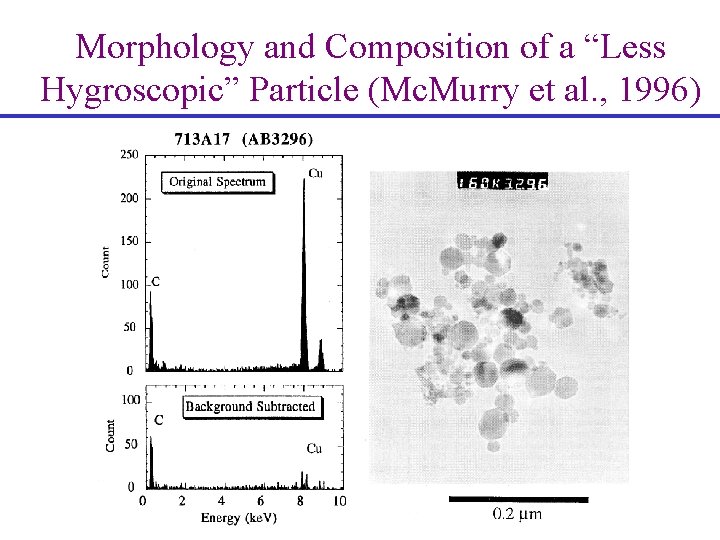
Morphology and Composition of a “Less Hygroscopic” Particle (Mc. Murry et al. , 1996)
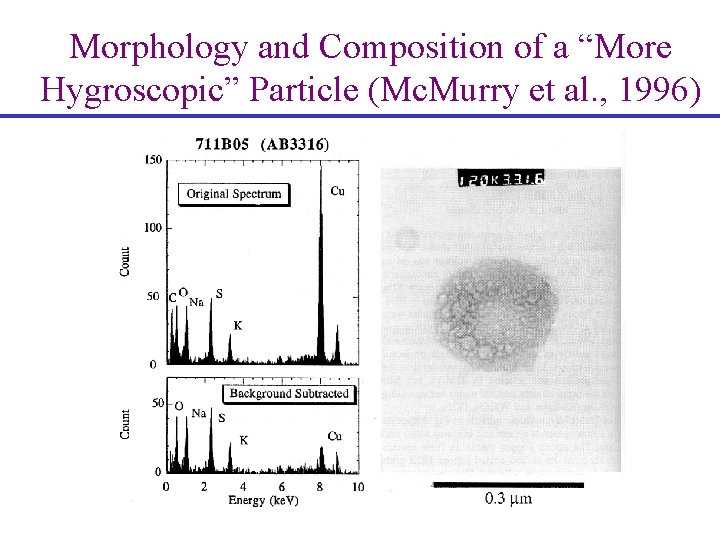
Morphology and Composition of a “More Hygroscopic” Particle (Mc. Murry et al. , 1996)
DAWN-A MALS Instrument
Laboratory Measurements (DMA + MALS)
0. 5 µm Nonspherical Fractions Dry: RH = 4 -10% Wet: RH = 44 -76%
Atmospheric Measurements (DMA + MALS) Wet 0. 5 µm Dry 0. 5 µm
Model vs. Measured Refractive Index 0. 3 µm (DMA + MALS)

Lecture Outline • Physical Characteristics – Improved measurements of size distributions – Particle nucleation and growth – Particle Properties: • Mixing characteristics • Hygroscopicity, Density, Refractive Index • Chemical Characteristics – Real-time measurements – Single particle mass spectrometry

Physical Characteristics
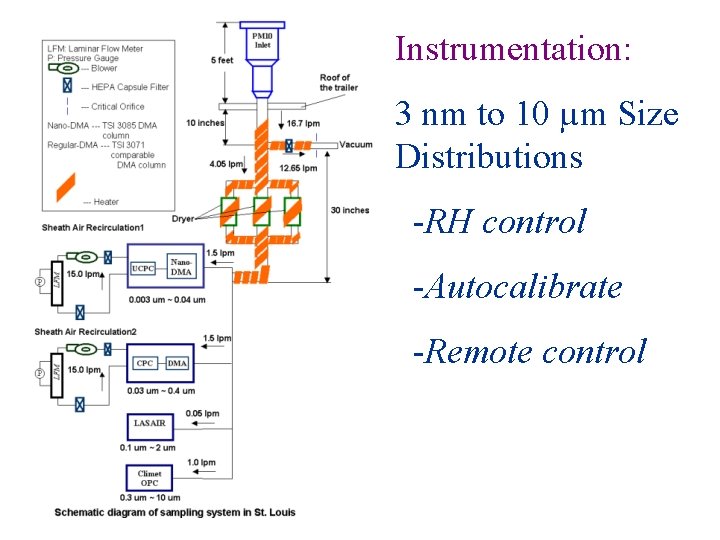
Instrumentation: 3 nm to 10 µm Size Distributions -RH control -Autocalibrate -Remote control

Nucleation and Growth
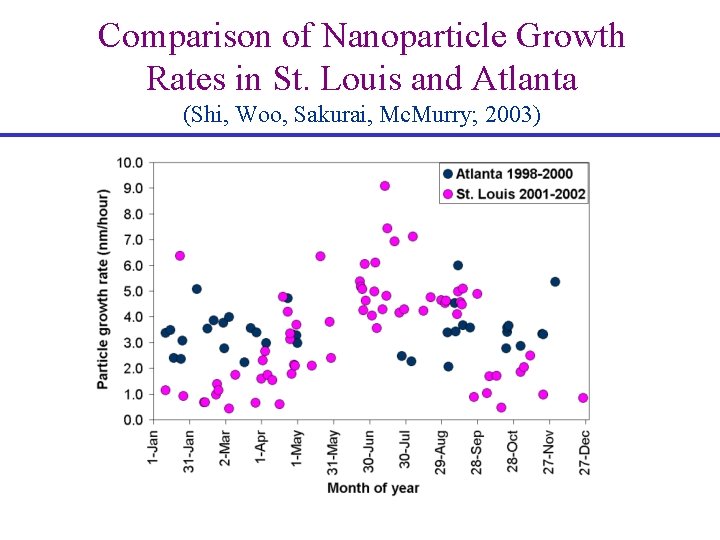
Comparison of Nanoparticle Growth Rates in St. Louis and Atlanta (Shi, Woo, Sakurai, Mc. Murry; 2003)

Mixing Characteristics and Hygroscopic Properties
Physical Properties Density and Refractive Index
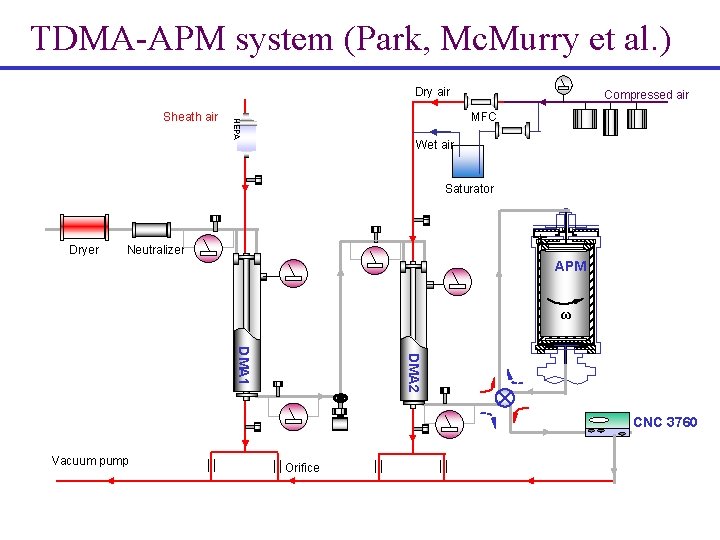
TDMA-APM system (Park, Mc. Murry et al. ) Dry air MFC HEPA Sheath air Compressed air Wet air Saturator Dryer Neutralizer APM ω DMA 2 DMA 1 CNC 3760 Vacuum pump Orifice

Multiangle Light Scattering (MALS) (Dick & Mc. Murry, 1998)
Application of MALS to Atmospheric Particles (Dick & Mc. Murry, 1998) Wet 0. 5 µm Dry 0. 5 µm
Model vs. Measured Refractive Index: Application of MALS to 0. 3 µm Particles (Dick & Mc. Murry, 1998)

Chemical Characteristics: New Insights from Real-Time Measurements
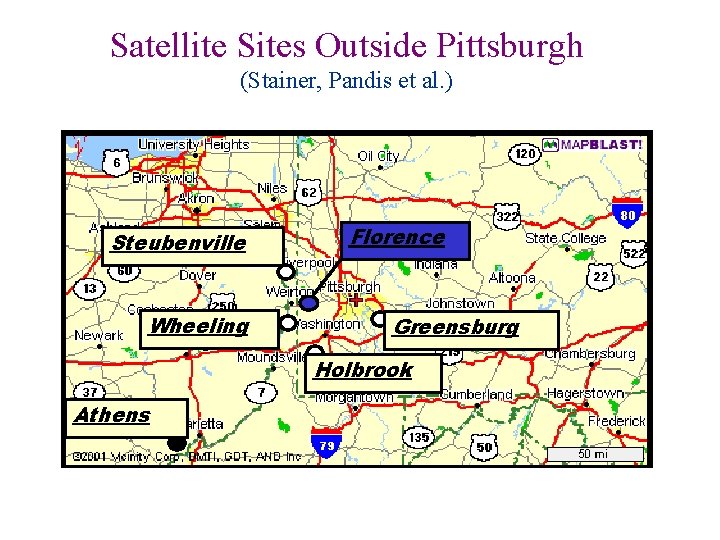
Satellite Sites Outside Pittsburgh (Stainer, Pandis et al. ) Steubenville Wheeling Florence Greensburg Holbrook Athens
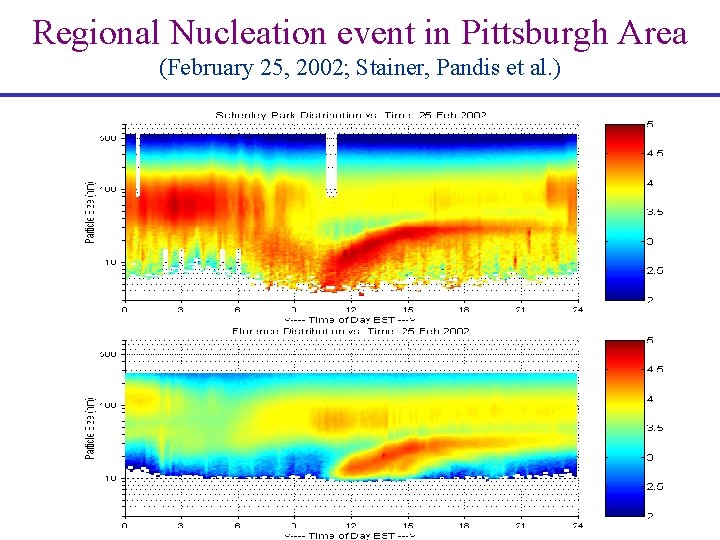
Regional Nucleation event in Pittsburgh Area (February 25, 2002; Stainer, Pandis et al. )
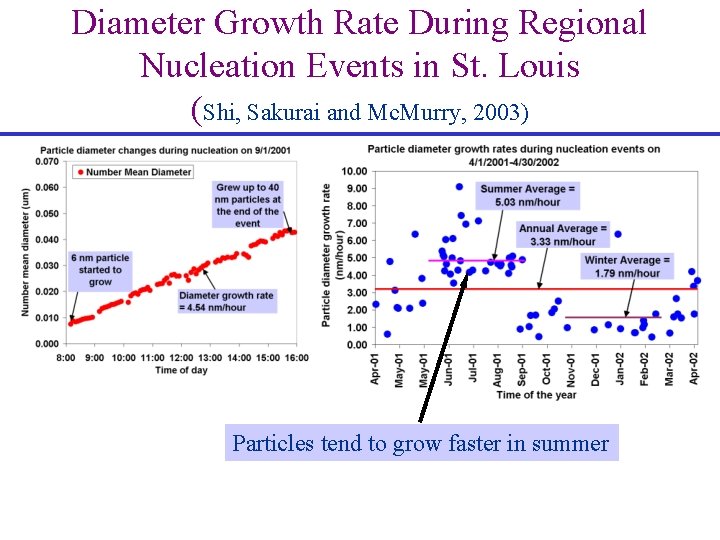
Diameter Growth Rate During Regional Nucleation Events in St. Louis (Shi, Sakurai and Mc. Murry, 2003) Particles tend to grow faster in summer
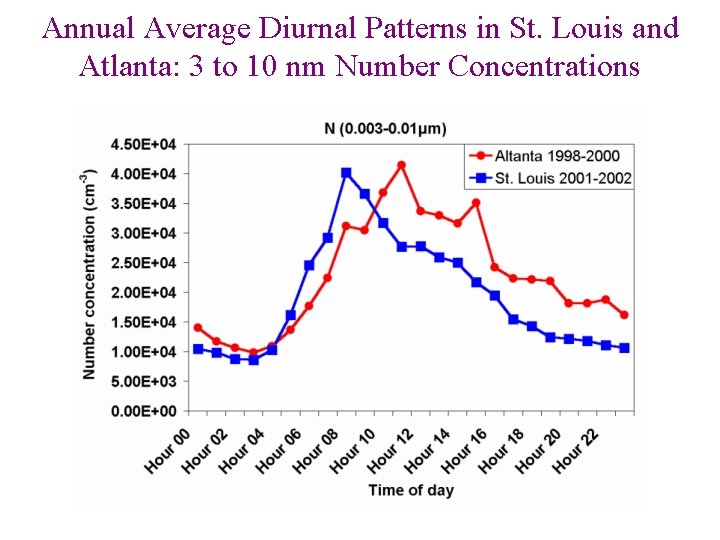
Annual Average Diurnal Patterns in St. Louis and Atlanta: 3 to 10 nm Number Concentrations
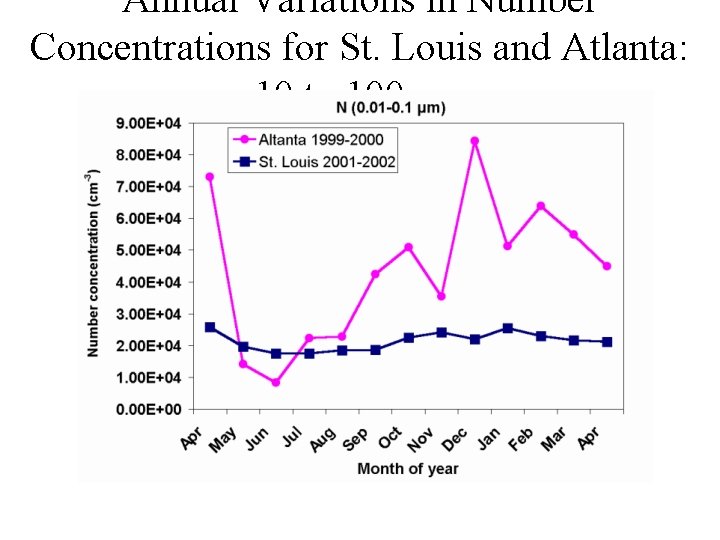
Annual Variations in Number Concentrations for St. Louis and Atlanta: 10 to 100 nm

Particle Mass Measurement with the Aerosol Particle Mass Analyzer (APM; Ehara et al. , 1996) w High Voltage r q. E mw 2 r
Particles of a Given Mobility Size can have Several Distinct Masses (Effective Densities) (Atlanta ambient aerosols; Mc. Murry et al. , 2002)
Effective Densities of Diesel Exhaust Particles (Park, Mc. Murry et al. , 2002)

“Excess” Water vs. Organic Mass (Dick & Mc. Murry, 1998)
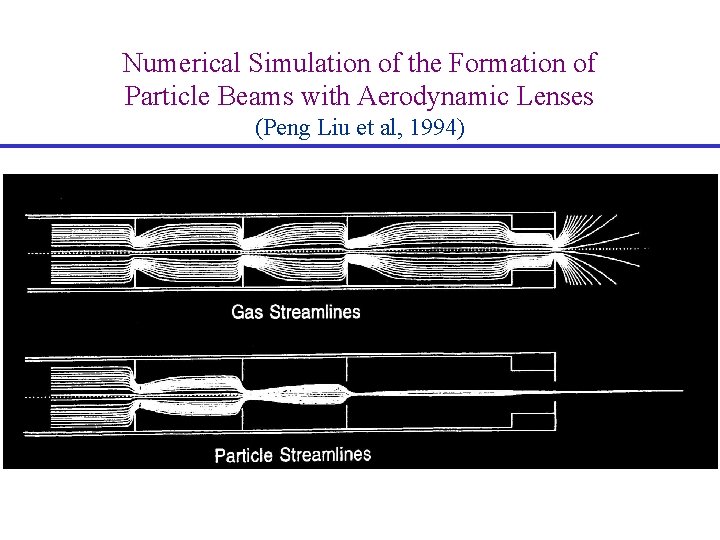
Numerical Simulation of the Formation of Particle Beams with Aerodynamic Lenses (Peng Liu et al, 1994)
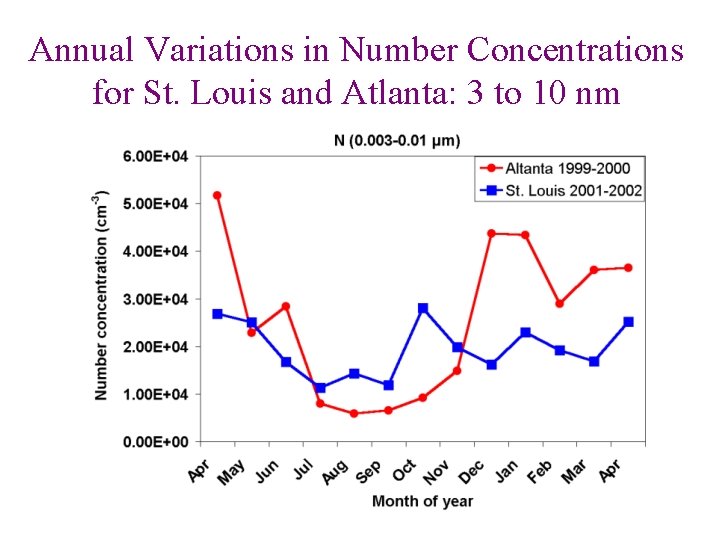
Annual Variations in Number Concentrations for St. Louis and Atlanta: 3 to 10 nm
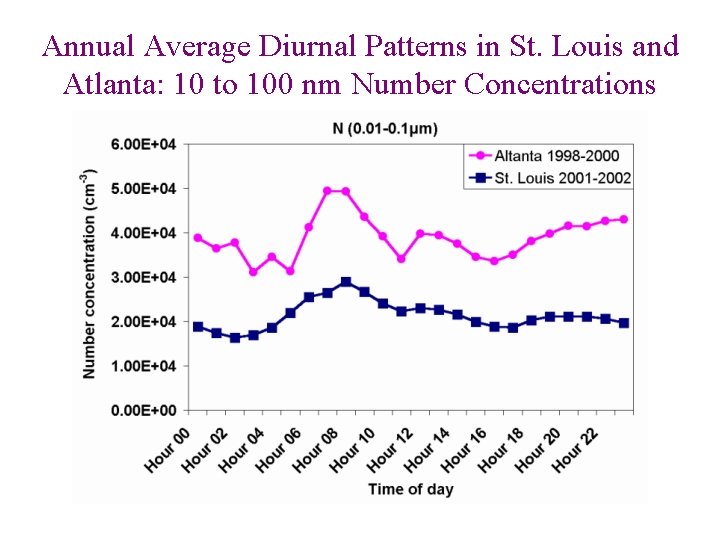
Annual Average Diurnal Patterns in St. Louis and Atlanta: 10 to 100 nm Number Concentrations
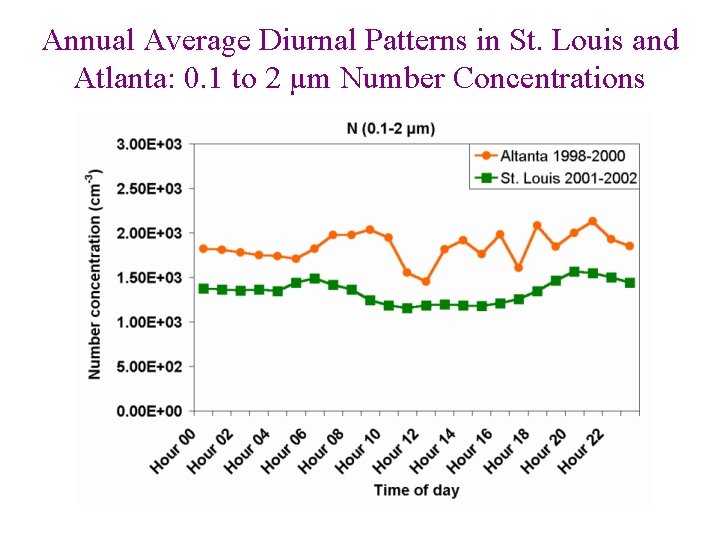
Annual Average Diurnal Patterns in St. Louis and Atlanta: 0. 1 to 2 µm Number Concentrations
- Slides: 48