
Meter Technician Calibration Procedures 2017 Meter Technician Training
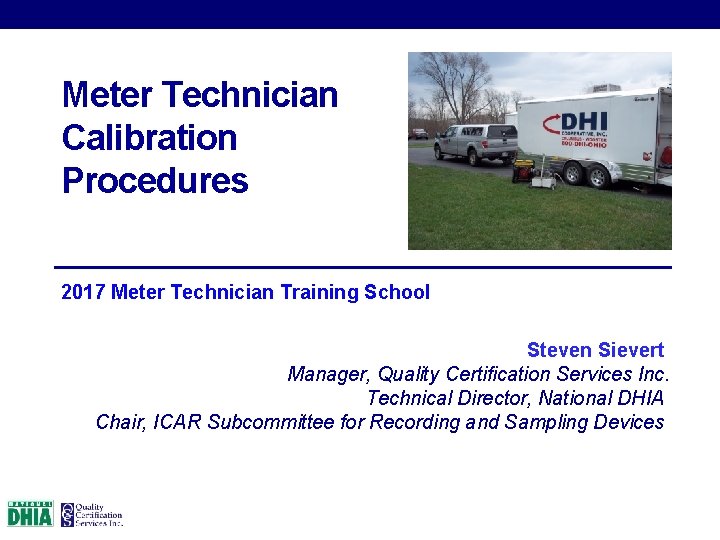
Meter Technician Calibration Procedures 2017 Meter Technician Training School Steven Sievert Manager, Quality Certification Services Inc. Technical Director, National DHIA Chair, ICAR Subcommittee for Recording and Sampling Devices
Topics to Cover… • Principles of Operation • Calibration Procedures • Troubleshooting • Meter Center Design 2
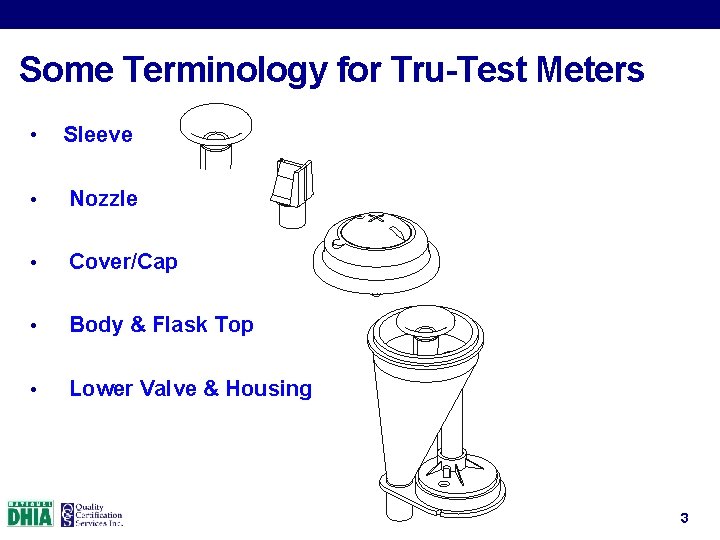
Some Terminology for Tru-Test Meters • Sleeve • Nozzle • Cover/Cap • Body & Flask Top • Lower Valve & Housing 3
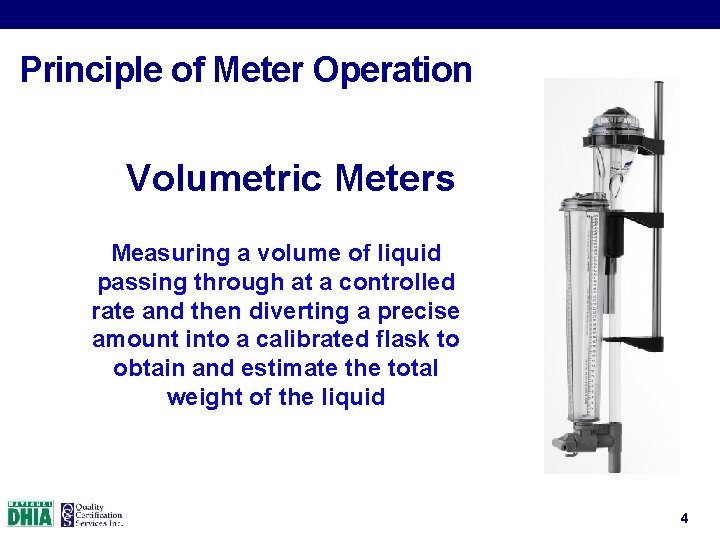
Principle of Meter Operation Volumetric Meters Measuring a volume of liquid passing through at a controlled rate and then diverting a precise amount into a calibrated flask to obtain and estimate the total weight of the liquid 4
Important Facts The Meter takes a representative proportion of the total milk flow • Measuring pounds of milk The subsample must represent the entire milking letdown • For accurate components analysis • This can be achieved either • by mixing the collected milk – Pull-Out, Ezi-Test, Farmer, Econo-Valve • by taking a small amount of the milk as it flows by during the emptying process – Auto Sampler 5
Vacuum Drop There are five main things which affect vacuum drop: • The type and model of meter • The air admission rate • The flow rate (diameter and length) • The length of extra tubing added to the system to connect the meters • The mounting position of the meter - high or low 6
Standard Flow Water Test • Requires Air Admission Inlet • Hole from a #60 drill bit • After the in-line water restrictor • 24”- 36” from the meter inlet • Water Restrictor has 1/8” Opening • Flow Rate = 8 lbs/minute (4: 34) 7

Standard Flow Water Test - Options Closed Jar-to-Jar System 8
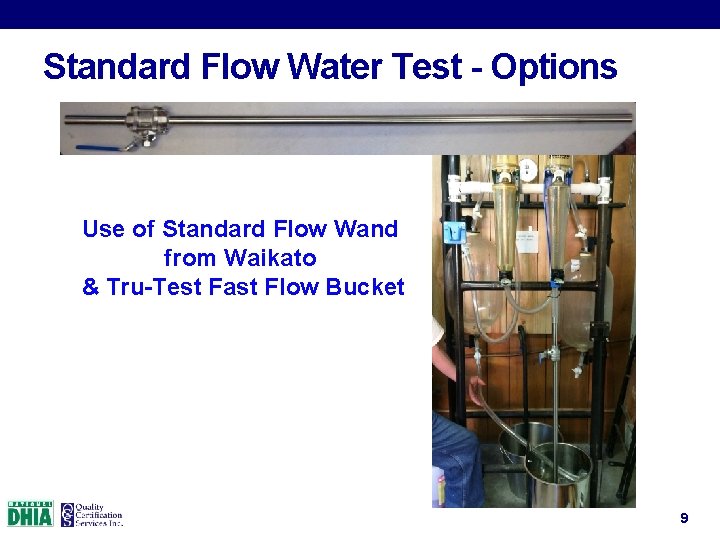
Standard Flow Water Test - Options Use of Standard Flow Wand from Waikato & Tru-Test Fast Flow Bucket 9
Dual Meter Water Test • Same set up at Standard Flow Water Test • Second Meter can be connected in series • 24”- 36” hose from outlet of meter 1 to inlet of meter 2 • No second air admission inlet is needed • Flow Rate = 8 lbs/minute (4: 34) 10
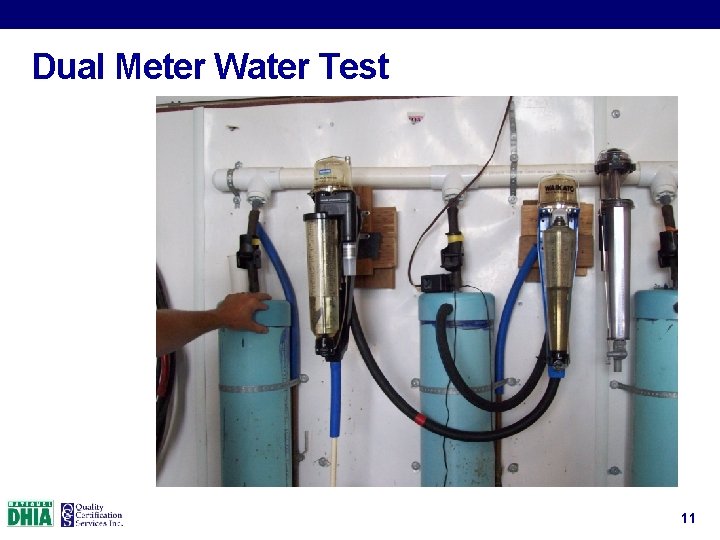
Dual Meter Water Test 11
Fast Flow Water Test • 63” From Bottom of Pail (restrictor) to Top of Meter Flask • Use a Pre-Cut Stick to Quickly Verify • Use a Marker or Tape to Mark Off 63” • Water Needs a Straight Run to the Meter • Wide Bore Meters = 58 -65 Seconds • Standard Bore Meters = 65 -68 Seconds 12
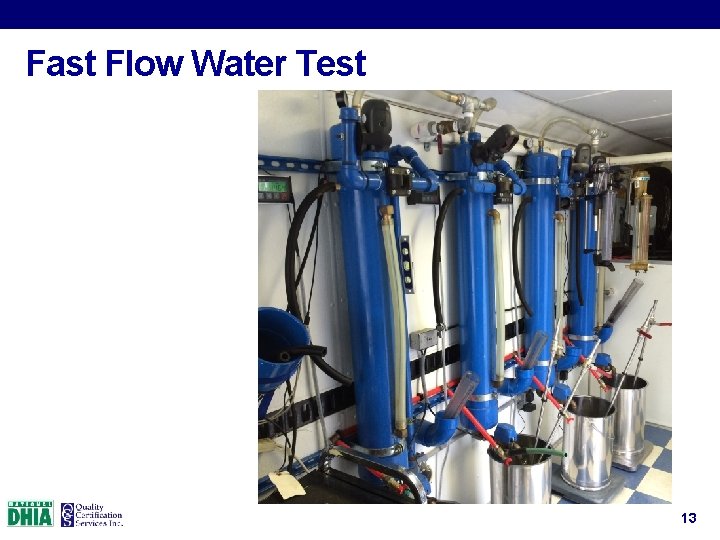
Fast Flow Water Test 13
Getting Started • Inspect Meter • Mount Meter on Rig • Verify Correct Height • Fast Flow = 63” to Top of Flask • Hose is Straight as Possible • Verify Water Volume • 16 Liters / 16 kg / 35. 3 lbs • Verify Vacuum Level - 15” hg 14
Meter Installation • The Meter should be mounted within ± 5 degrees of vertical • Take-offs - install Meters between the sensor & milk line to maintain vacuum for agitation and sampling • Air Bleed - must introduce air into the line, usually at the claw 15
Clean Equipment • Meter Rig • Are Hoses in Good Condition? • Is Water Changed Regularly? • Field Techs Are Supposed to Keep Meters Clean! • Vacuum Pump Maintenance • “If I adjust it, it could break” • “What Oil? ? ” 16
While You Run • Check for: • Air Leaks • Blockages / Flow Restrictions • Abnormal Performance • Remove Old Calibration Tag 17
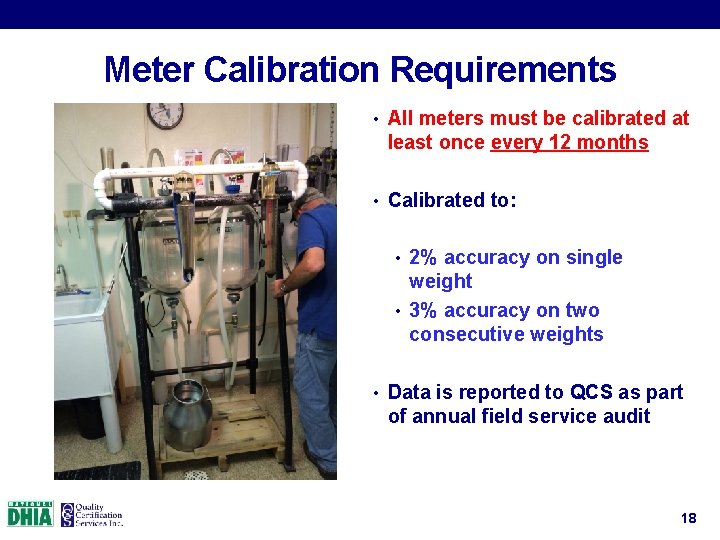
Meter Calibration Requirements • All meters must be calibrated at least once every 12 months • Calibrated to: • 2% accuracy on single weight • 3% accuracy on two consecutive weights • Data is reported to QCS as part of annual field service audit 18
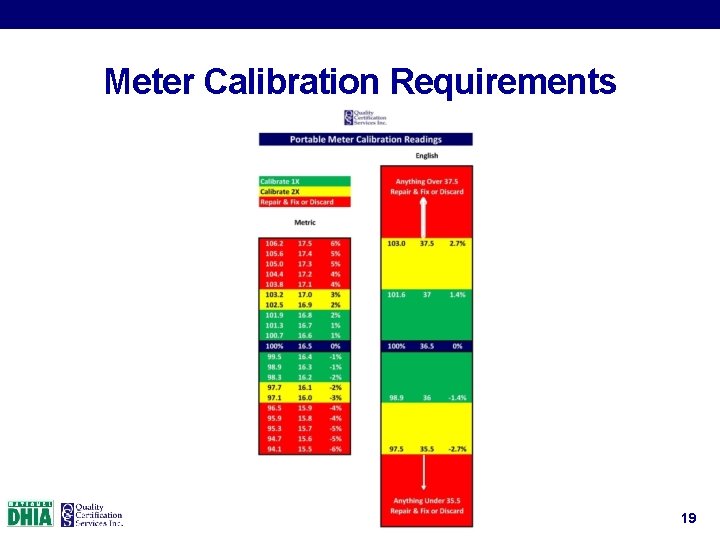
Meter Calibration Requirements 19
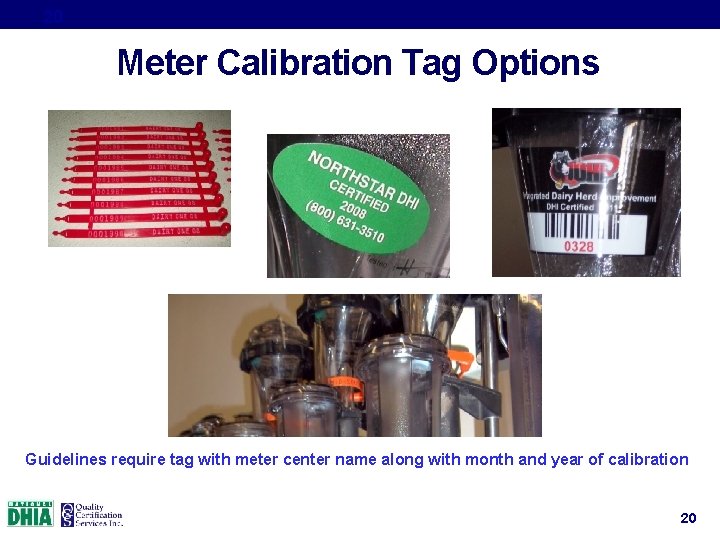
20 Meter Calibration Tag Options Guidelines require tag with meter center name along with month and year of calibration 20
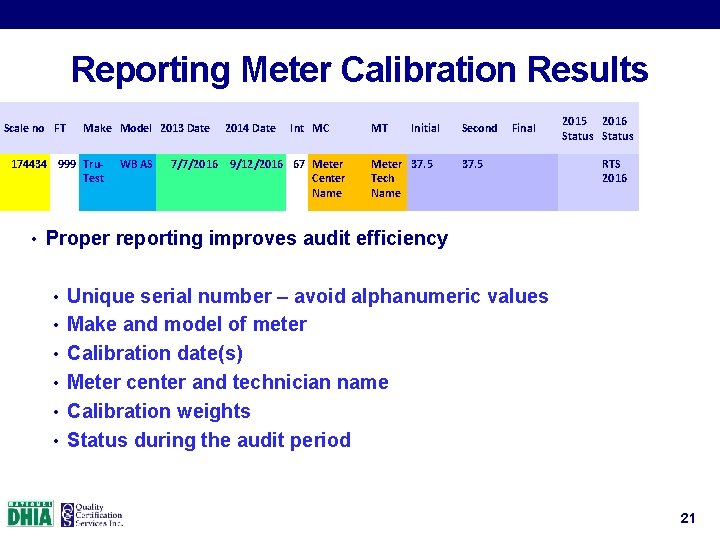
Reporting Meter Calibration Results Scale no FT Make Model 2013 Date 174434 999 Tru. Test WB AS 7/7/2016 2014 Date Int MC 9/12/2016 67 Meter Center Name MT Initial Meter 37. 5 Tech Name Second Final 37. 5 2016 Status RTS 2016 • Proper reporting improves audit efficiency • Unique serial number – avoid alphanumeric values • Make and model of meter • Calibration date(s) • Meter center and technician name • Calibration weights • Status during the audit period 21
Reporting Meter Calibration Results • Suggested Status Codes for Meter Calibration Worksheets • Active • New (+ year) – meter new from the box • Return (+ year) – repaired meter or returned to active status • Storage – calibrated meter not in active use (backup) • Out (+ year) – meter taken out of service • Perm Out or POS – broken meter (body) that cannot be repaired 22
Periodic and Annual Maintenance • Milk meters should be periodically checked and maintained • Disassemble and clean the sample valve and meter body. Info Sheets and brushes are available for this procedure. • Wash all parts in very hot water with a proper dairy detergent. • Rinse all parts in clean water after the hot detergent wash. 23
Periodic and Annual Maintenance • Inspect all rubber parts for cracks and wear in order to minimize build up of bacteria “grunge” and to assure proper sealing of gaskets and O-rings. • Use a safety pin or “pick” to remove the o-rings so that the plastic grooves are not scratched or damaged. • Water test to ensure that the meter is in proper calibration. 24
Several Runs Later…. • If You Can’t Check the Water Before Each Run, Then…… • Now is a Good Time to Verify Water Level • How clean is the test water? • You Know What to Do!!! • Is Vacuum Gauge Holding at 15” hg? 25
Maintaining Water Volume • Electronic scale is best • Etch or tape a mark on the float pail or jar • If it is a float pail - is the float working? • Float Should Move Freely • Most Floats are in Disrepair 26
Cleaning • Most dairy detergents can be used at the strengths recommended by the manufacturer Avoid contact with: • Direct Sunlight • Petrochemicals & Hydrocarbons such as fly spray, brake or hydraulic fluid, WD 40, lubricants, super glue, alcohols, and fuels These chemicals attack polysulfone plastics that make up the key meter components 27
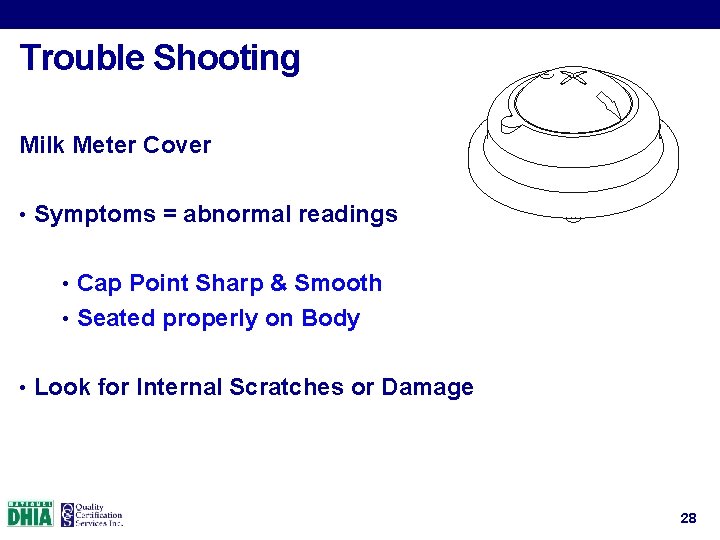
Trouble Shooting Milk Meter Cover • Symptoms = abnormal readings • Cap Point Sharp & Smooth • Seated properly on Body • Look for Internal Scratches or Damage 28
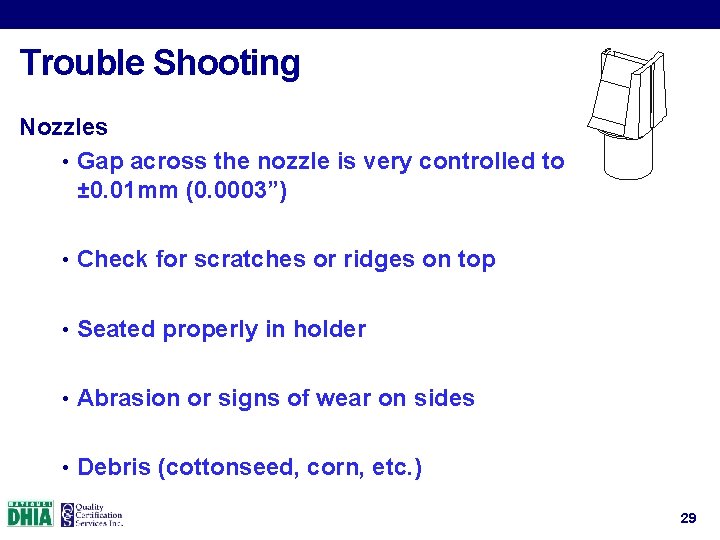
Trouble Shooting Nozzles • Gap across the nozzle is very controlled to ± 0. 01 mm (0. 0003”) • Check for scratches or ridges on top • Seated properly in holder • Abrasion or signs of wear on sides • Debris (cottonseed, corn, etc. ) 29
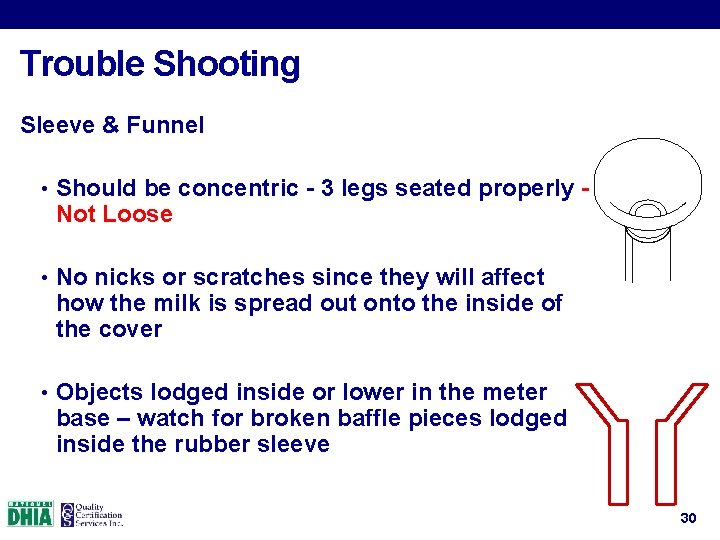
Trouble Shooting Sleeve & Funnel • Should be concentric - 3 legs seated properly - Not Loose • No nicks or scratches since they will affect how the milk is spread out onto the inside of the cover • Objects lodged inside or lower in the meter base – watch for broken baffle pieces lodged inside the rubber sleeve 30
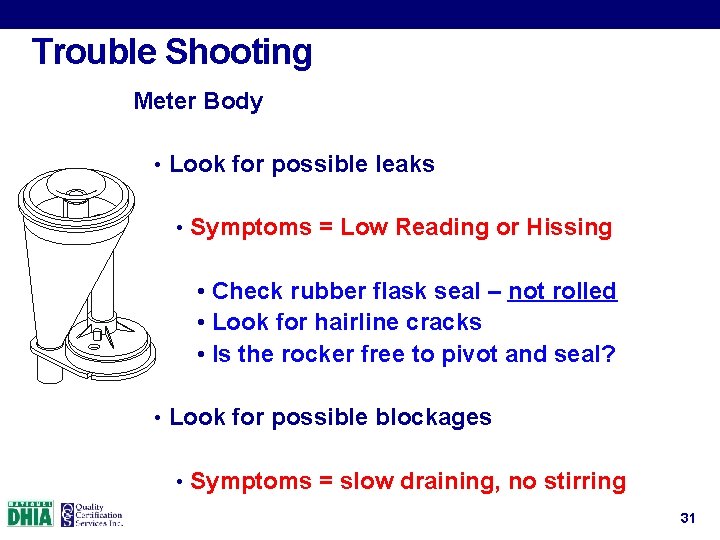
Trouble Shooting Meter Body • Look for possible leaks • Symptoms = Low Reading or Hissing • Check rubber flask seal – not rolled • Look for hairline cracks • Is the rocker free to pivot and seal? • Look for possible blockages • Symptoms = slow draining, no stirring 31
Trouble Shooting Cracks in Body or T-piece • Generally caused by one of four factors • Being dropped during loading/unloading • Chemical or alcohol attack • Improper disassembly or handling • Hoses put on too far (3/4” is plenty) • Parts that have been molded in or glued in during the assembly process are annealed to reduce the stresses 32
Trouble Shooting Milking Equipment Problems • Areas to check: • Air admission hole in claw must be open • Adequate vacuum pump capacity/setting • Condition of gaskets & O-rings - air leaks? • Proper installation height of meters • Length of hoses used to connect meters 33
Worker Friendly Meter Center • Is Your workspace really a workspace? • Dedicated work area for meter repairs • Adequate lighting and ventilation • Arrange your area for efficiency • Parts within reach • Tools nearby and tools you need • Workbench close to calibration rig and parts 34
Clean Work Area Makes a Difference • Are you stepping over things? • Floors clutter free? • Meters stored to prevent damage? • Are things put away when you’re done? • Are you moving yesterday’s work out of the way so you can work today? • Are floors clean dry / non-slip? 35
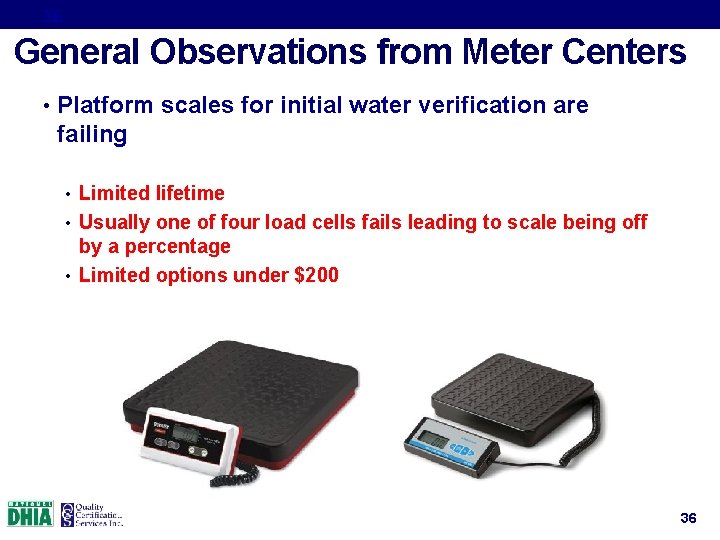
36 General Observations from Meter Centers • Platform scales for initial water verification are failing Limited lifetime • Usually one of four load cells fails leading to scale being off by a percentage • Limited options under $200 • 36
37 General Observations from Meter Centers • Still observing unapproved meter modification in some affiliates • Modification of parts so the meter samples faster resulting in inaccurate samples • Removal of ball in valve of the Tru-Test Ezi-Test meter • Cutting the tap of the Waikato MK V meter • Modification of the sampler in the Tru-Test Auto Sampler meter 37
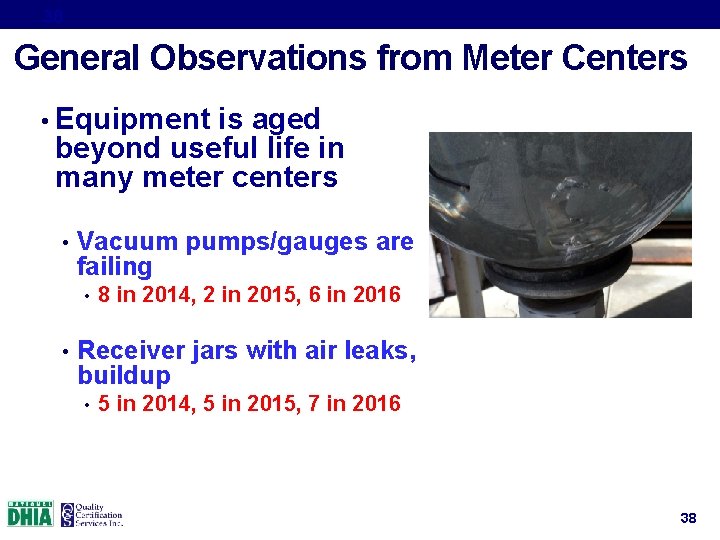
38 General Observations from Meter Centers • Equipment is aged beyond useful life in many meter centers • Vacuum pumps/gauges are failing • • 8 in 2014, 2 in 2015, 6 in 2016 Receiver jars with air leaks, buildup • 5 in 2014, 5 in 2015, 7 in 2016 38
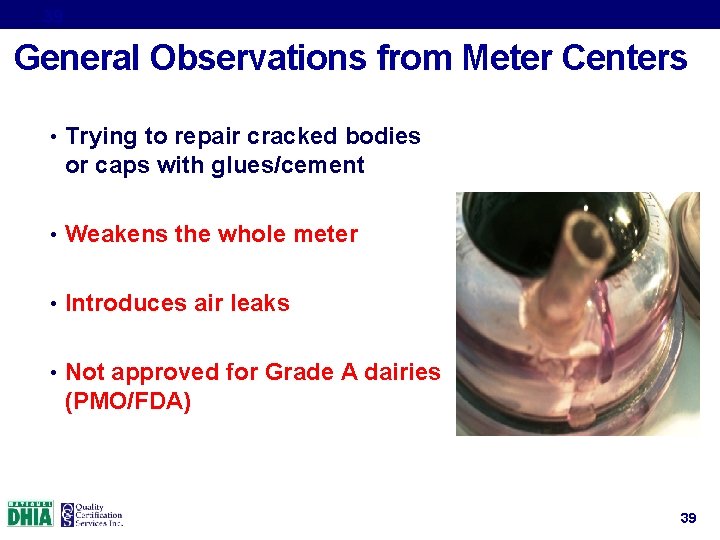
39 General Observations from Meter Centers • Trying to repair cracked bodies or caps with glues/cement • Weakens the whole meter • Introduces air leaks • Not approved for Grade A dairies (PMO/FDA) 39
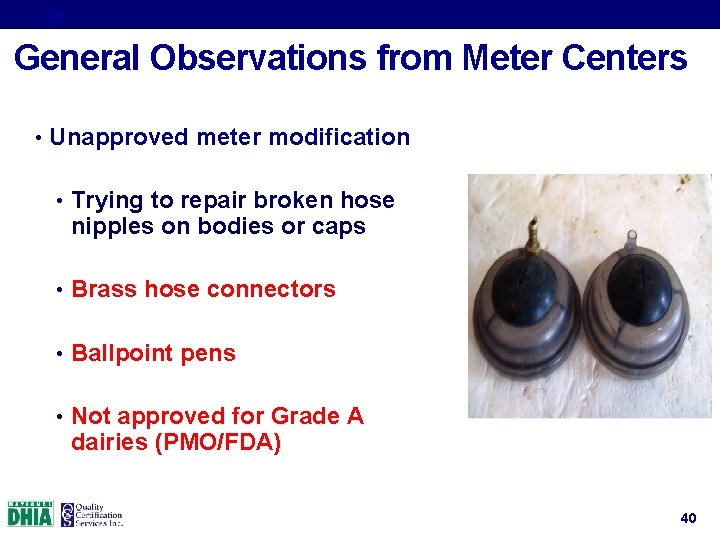
40 General Observations from Meter Centers • Unapproved meter modification • Trying to repair broken hose nipples on bodies or caps • Brass hose connectors • Ballpoint pens • Not approved for Grade A dairies (PMO/FDA) 40
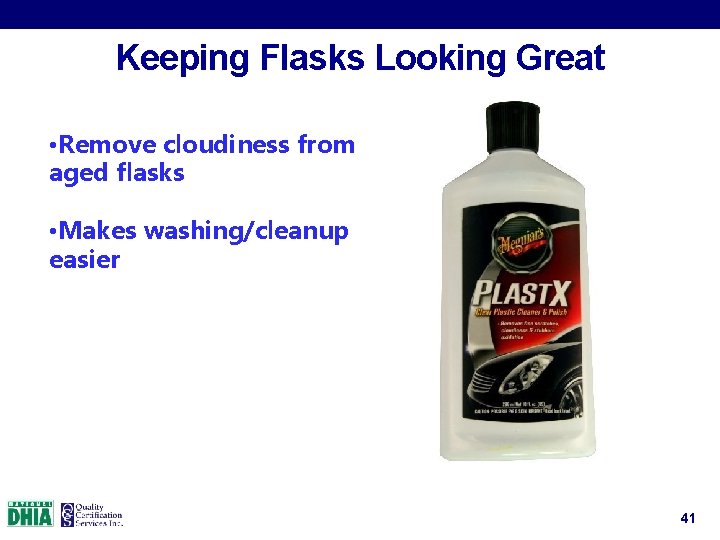
Keeping Flasks Looking Great • Remove cloudiness from aged flasks • Makes washing/cleanup easier 41
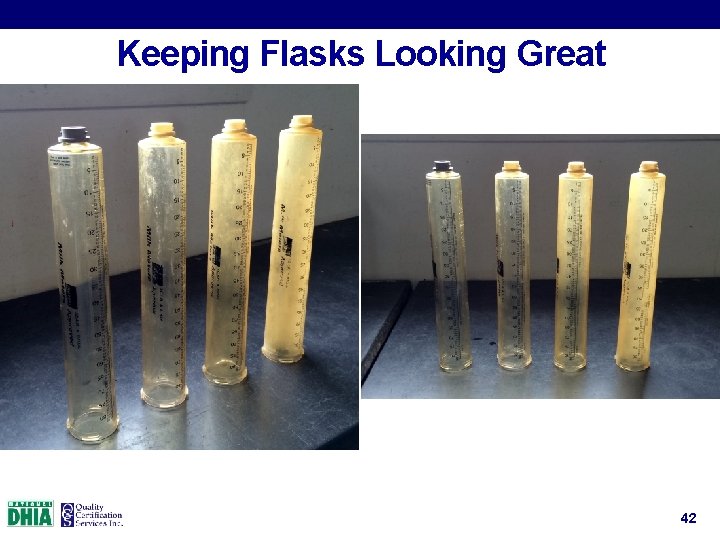
Keeping Flasks Looking Great 42
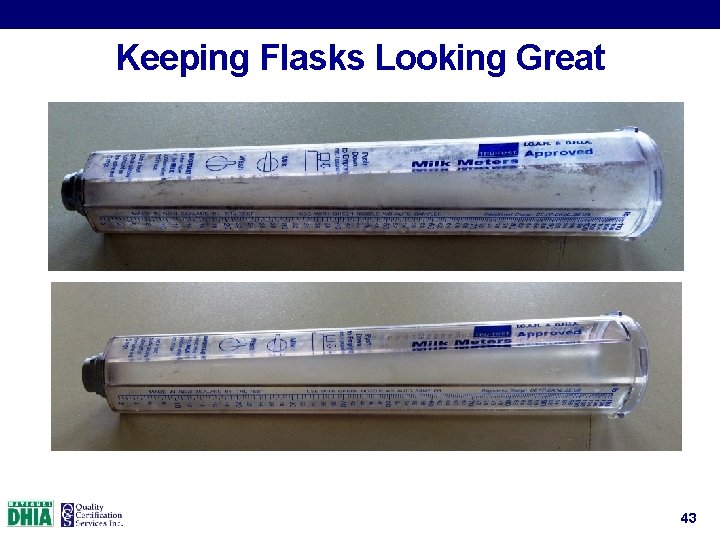
Keeping Flasks Looking Great 43
Organized Inventory • Labeled Parts • Do You Really Know What’s What? • How Many “Mystery” Parts Do You Have? • Parts in Compartments/Bins • Organization = Efficiency • Efficiency = Speed 44
Meter Technician’s Job Responsibilities • Verification • Repair and Calibration • Responsible • For the Very Foundation of the DHI Industry • Be Proud of Your Job and Take Your Responsibilities Seriously 45
Resources Available On-Line QCS website is your source… • • • Current auditing guidelines List of certified meter centers List of certified meter technicians List of approved meters and scales Links to manufacturers www. quality-certification. com 46
Quality Certification Services Inc. • Performance & Quality Standards • Compliance Auditing of Providers • Education, Training, & Development A simple, yet vital mission…. Providing a reliable source of information to people interested in the U. S. dairy records industry. 47
- Slides: 47