
Meteorite composition Major groupings Stony meteorites Chondrites Achondrites



- Slides: 24
Meteorite composition • Major groupings: – Stony meteorites • Chondrites • Achondrites – Iron meteorites • Octahedrites, hexahedrites, ataxites – Stony-iron meteorites • Pallasites • Mesosiderites
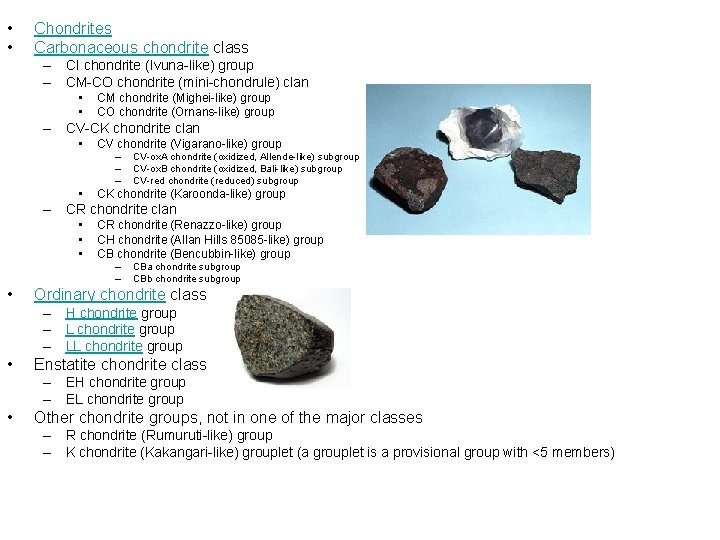
• • Chondrites Carbonaceous chondrite class – CI chondrite (Ivuna-like) group – CM-CO chondrite (mini-chondrule) clan • • CM chondrite (Mighei-like) group CO chondrite (Ornans-like) group – CV-CK chondrite clan • CV chondrite (Vigarano-like) group – – – • CV-ox. A chondrite (oxidized, Allende-like) subgroup CV-ox. B chondrite (oxidized, Bali-like) subgroup CV-red chondrite (reduced) subgroup CK chondrite (Karoonda-like) group – CR chondrite clan • • • CR chondrite (Renazzo-like) group CH chondrite (Allan Hills 85085 -like) group CB chondrite (Bencubbin-like) group – – • CBa chondrite subgroup CBb chondrite subgroup Ordinary chondrite class – H chondrite group – LL chondrite group • Enstatite chondrite class – EH chondrite group – EL chondrite group • Other chondrite groups, not in one of the major classes – R chondrite (Rumuruti-like) group – K chondrite (Kakangari-like) grouplet (a grouplet is a provisional group with <5 members)
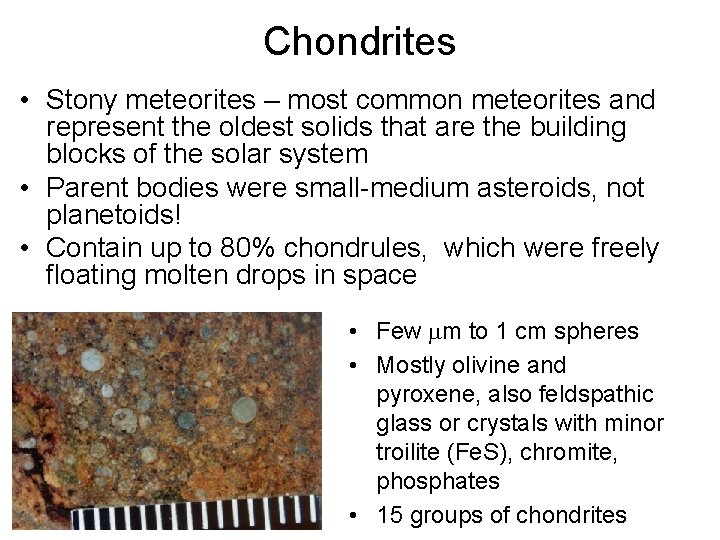
Chondrites • Stony meteorites – most common meteorites and represent the oldest solids that are the building blocks of the solar system • Parent bodies were small-medium asteroids, not planetoids! • Contain up to 80% chondrules, which were freely floating molten drops in space • Few mm to 1 cm spheres • Mostly olivine and pyroxene, also feldspathic glass or crystals with minor troilite (Fe. S), chromite, phosphates • 15 groups of chondrites
Chondrite groups • Ordinary – make up 80% of the meteorites and 90% of chondritic meteorites, abundant chondrules, variable Fe-Ni lead to H, L, and LL chondrites • Carbonaceous chondrites –less the 5% of chondritic meteorites, few chondrules, more lithophile elements (Ca, Mg, K, Cr, Al, Cl, …), high levels of water and organic compounds - many types based on characteristic specimen • Enstatite Chondrites – 2% of chondritic meteorites, very chemically reduced – enstatite-rich chondrules and abundant metal and sulfide minerals
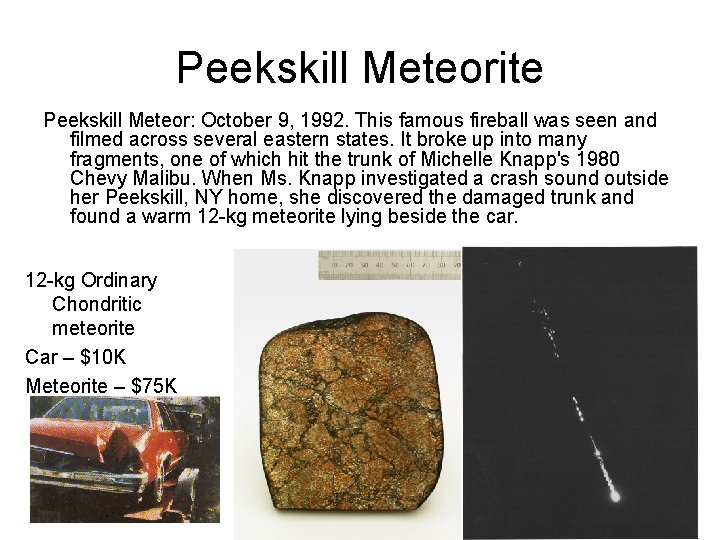
Peekskill Meteorite Peekskill Meteor: October 9, 1992. This famous fireball was seen and filmed across several eastern states. It broke up into many fragments, one of which hit the trunk of Michelle Knapp's 1980 Chevy Malibu. When Ms. Knapp investigated a crash sound outside her Peekskill, NY home, she discovered the damaged trunk and found a warm 12 -kg meteorite lying beside the car. 12 -kg Ordinary Chondritic meteorite Car – $10 K Meteorite – $75 K
Achondrites • Stony meteorite similar to terrestrial basalts or plutonic rocks, represent 8% of meteorites grouped on the basis of Fe/Mn and 17 O/18 O ratios characteristic of the parent body • 2/3 of these meteorites are HED type, originating from one asteroid, Vesta 4 - there is a large impact crater observed on this asteroid • Also includes Martian and lunar meteorites The Johnstown Diogenite. Lunar Meteorite Allan Hills 81005
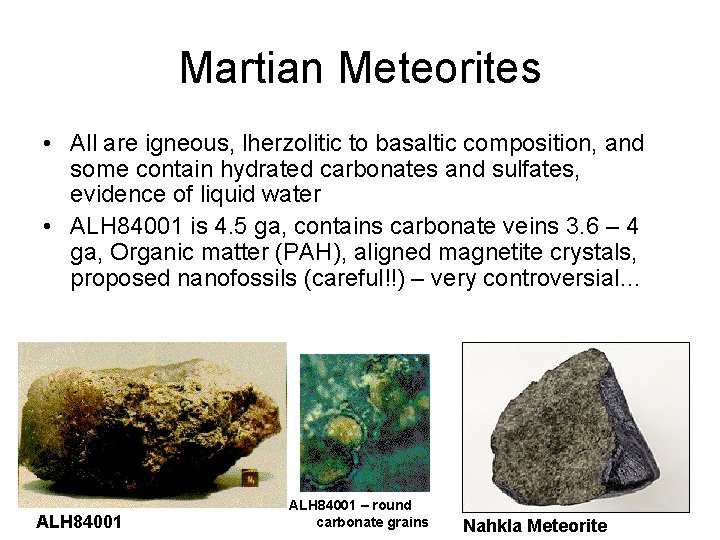
Martian Meteorites • All are igneous, lherzolitic to basaltic composition, and some contain hydrated carbonates and sulfates, evidence of liquid water • ALH 84001 is 4. 5 ga, contains carbonate veins 3. 6 – 4 ga, Organic matter (PAH), aligned magnetite crystals, proposed nanofossils (careful!!) – very controversial… ALH 84001 – round carbonate grains Nahkla Meteorite
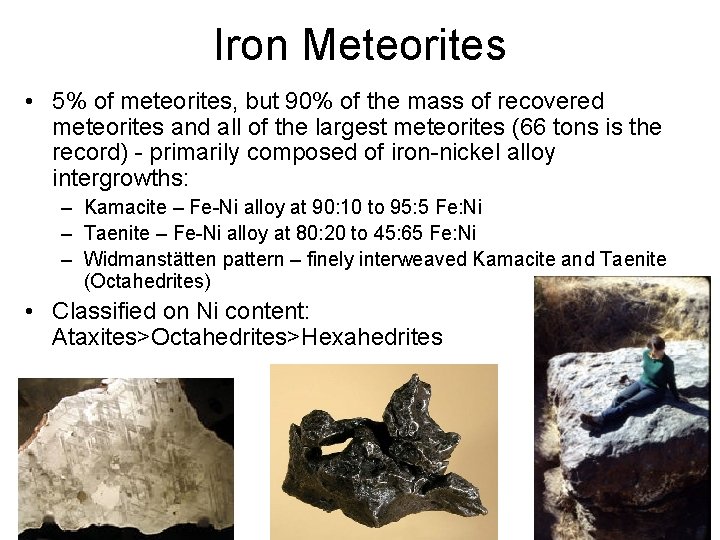
Iron Meteorites • 5% of meteorites, but 90% of the mass of recovered meteorites and all of the largest meteorites (66 tons is the record) - primarily composed of iron-nickel alloy intergrowths: – Kamacite – Fe-Ni alloy at 90: 10 to 95: 5 Fe: Ni – Taenite – Fe-Ni alloy at 80: 20 to 45: 65 Fe: Ni – Widmanstätten pattern – finely interweaved Kamacite and Taenite (Octahedrites) • Classified on Ni content: Ataxites>Octahedrites>Hexahedrites
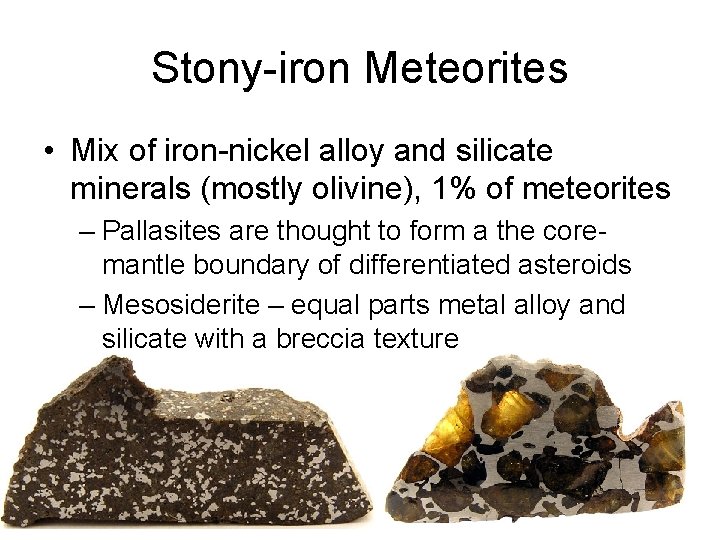
Stony-iron Meteorites • Mix of iron-nickel alloy and silicate minerals (mostly olivine), 1% of meteorites – Pallasites are thought to form a the coremantle boundary of differentiated asteroids – Mesosiderite – equal parts metal alloy and silicate with a breccia texture
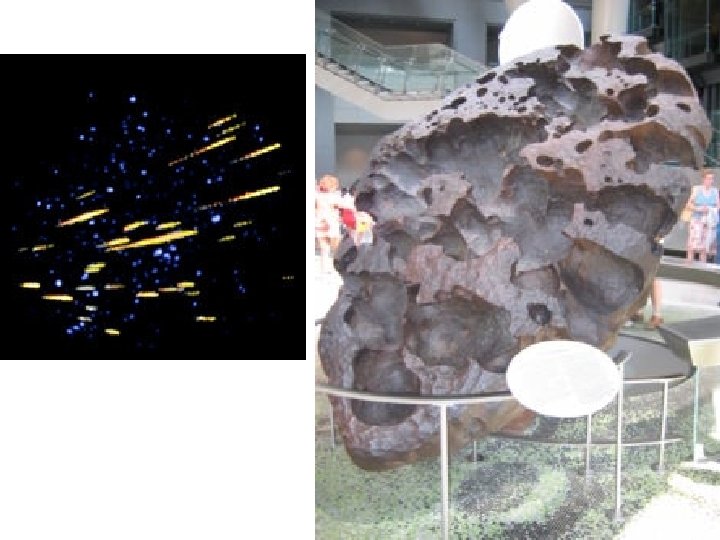
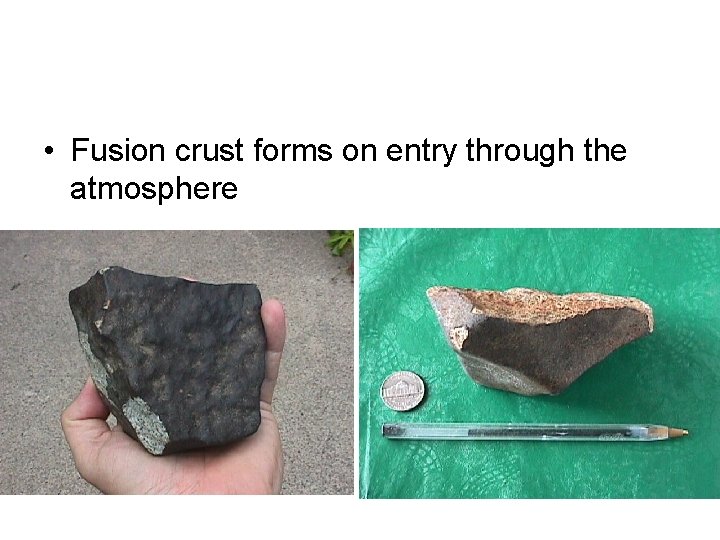
Identifying a meteorite • Fusion crust – dull black to dark brown, often soft, can be weathered to red (but can flake off) • Density – generally dense • Chondrules are specifically meteoritic • Never porous, but can be ‘dimpled’ with surface depressions • 99% of meteorites are magnetic • Unusually high Ni content
• Fusion crust forms on entry through the atmosphere
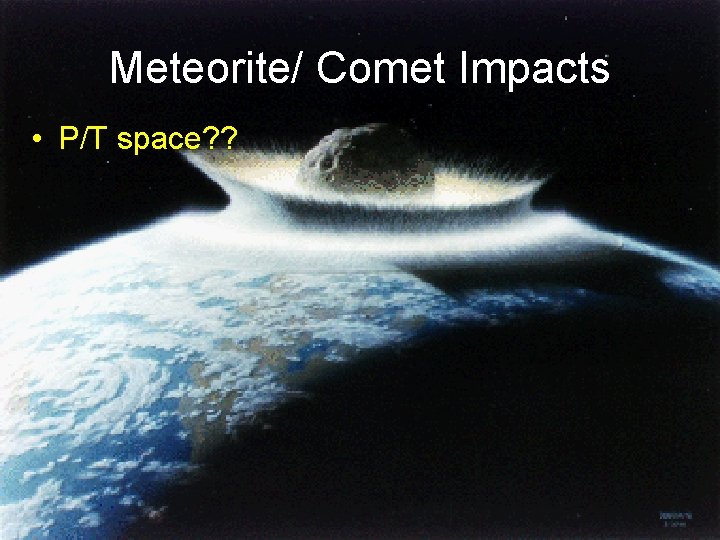
Meteorite/ Comet Impacts • P/T space? ?
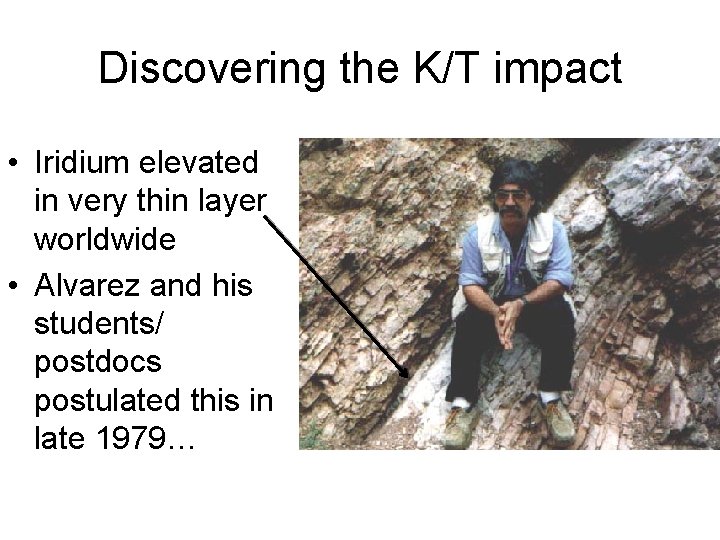
Discovering the K/T impact • Iridium elevated in very thin layer worldwide • Alvarez and his students/ postdocs postulated this in late 1979…
Chicxulub, Yucatan Peninsula, Mexico • K/T event at 64. 98 ma, formed from a 6 -12 mile diameter asteroid impact (50 megaton blast)
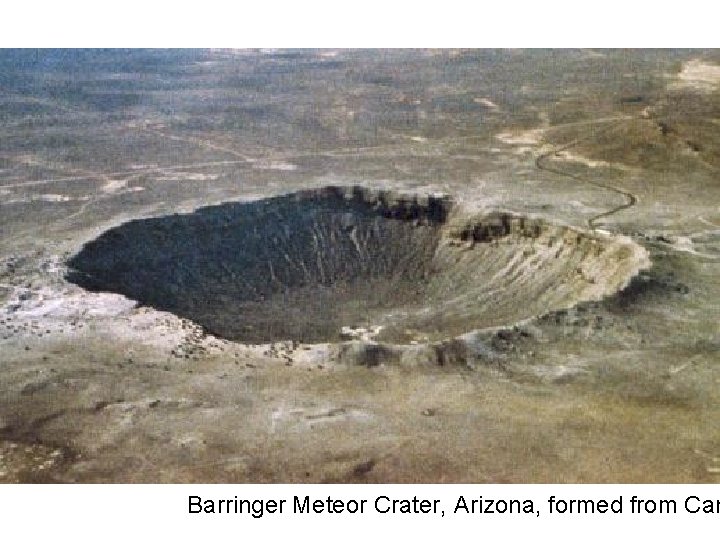
Barringer Meteor Crater, Arizona, formed from Can
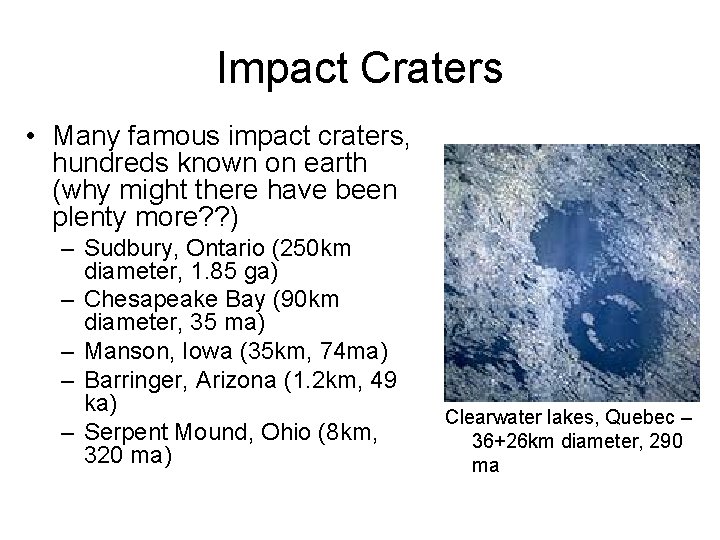
Impact Craters • Many famous impact craters, hundreds known on earth (why might there have been plenty more? ? ) – Sudbury, Ontario (250 km diameter, 1. 85 ga) – Chesapeake Bay (90 km diameter, 35 ma) – Manson, Iowa (35 km, 74 ma) – Barringer, Arizona (1. 2 km, 49 ka) – Serpent Mound, Ohio (8 km, 320 ma) Clearwater lakes, Quebec – 36+26 km diameter, 290 ma
Megatsunamis • Meteorite impact in the ocean displaces huge quantities of water instantly • The Chixculub crater impact generated a megatsunami 150 -300 feet high
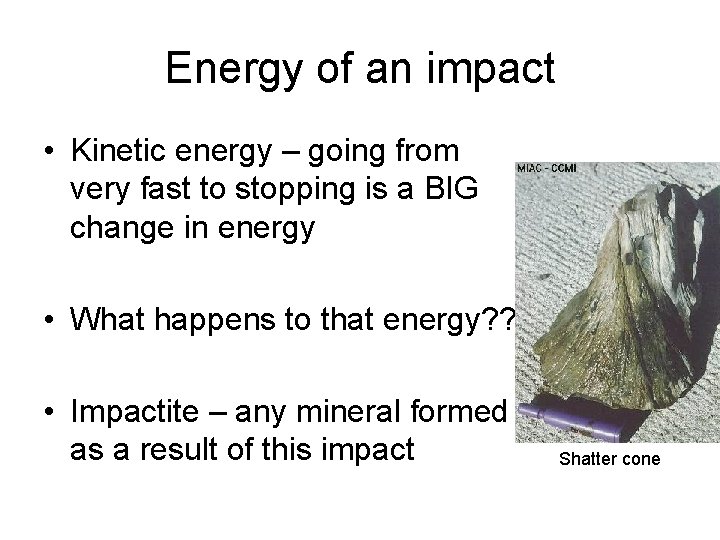
Energy of an impact • Kinetic energy – going from very fast to stopping is a BIG change in energy • What happens to that energy? ? • Impactite – any mineral formed as a result of this impact Shatter cone
Materials indicating Meteorite Impacts • Tektites • Glass formed from impact
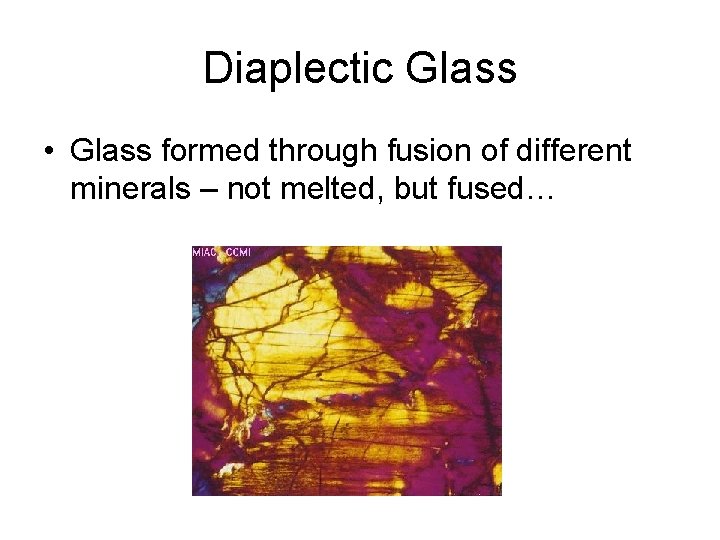
Diaplectic Glass • Glass formed through fusion of different minerals – not melted, but fused…
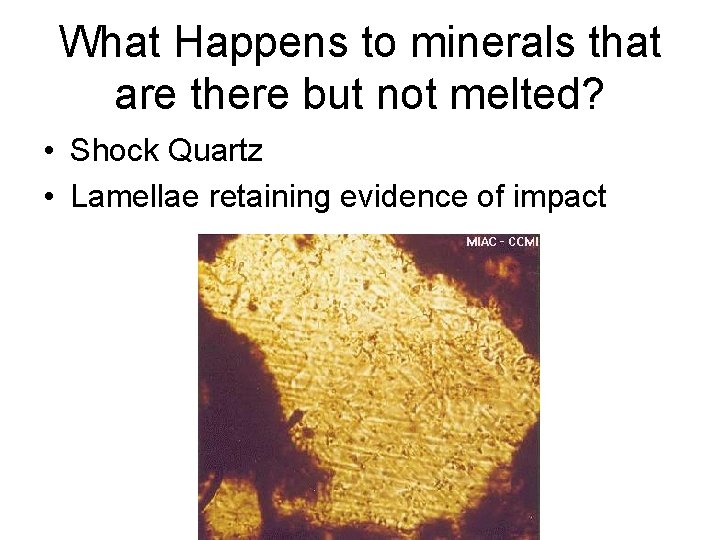
What Happens to minerals that are there but not melted? • Shock Quartz • Lamellae retaining evidence of impact
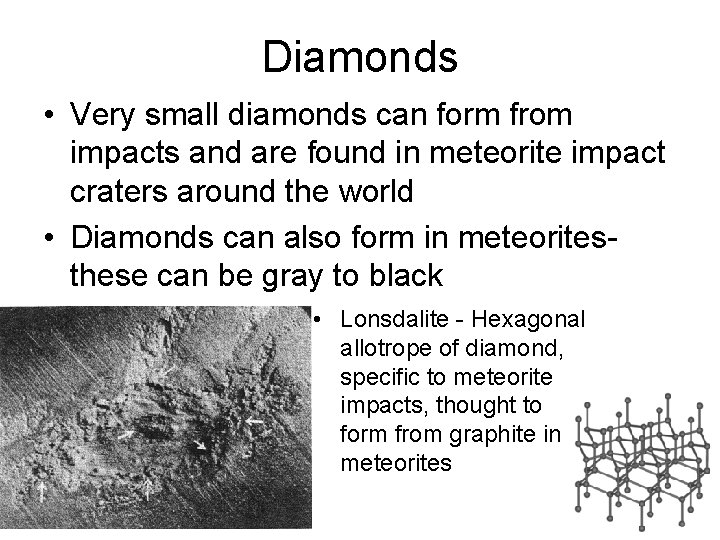
Diamonds • Very small diamonds can form from impacts and are found in meteorite impact craters around the world • Diamonds can also form in meteoritesthese can be gray to black • Lonsdalite - Hexagonal allotrope of diamond, specific to meteorite impacts, thought to form from graphite in meteorites
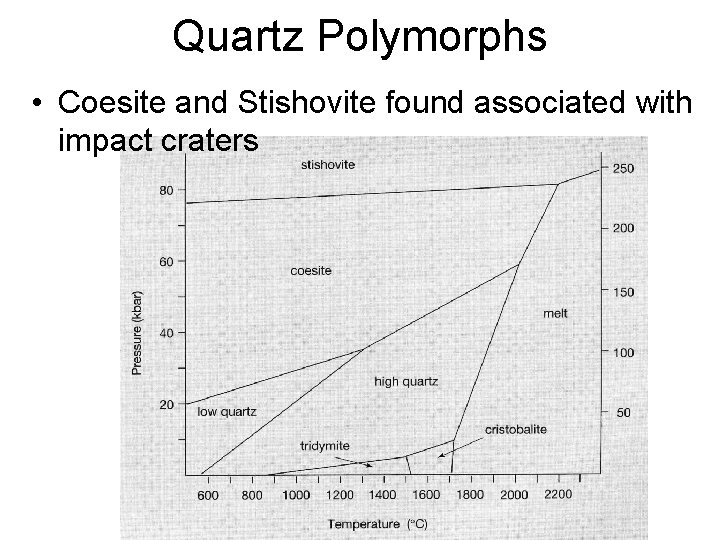
Quartz Polymorphs • Coesite and Stishovite found associated with impact craters