
Metaomic functional profiling with Short BRED Curtis Huttenhower
Meta’omic functional profiling with Short. BRED Curtis Huttenhower 09 -19 -15 Harvard School of Public Health Department of Biostatistics U. Oregon
The two big questions… Who is there? (taxonomic profiling) What are they doing? (functional profiling) 2
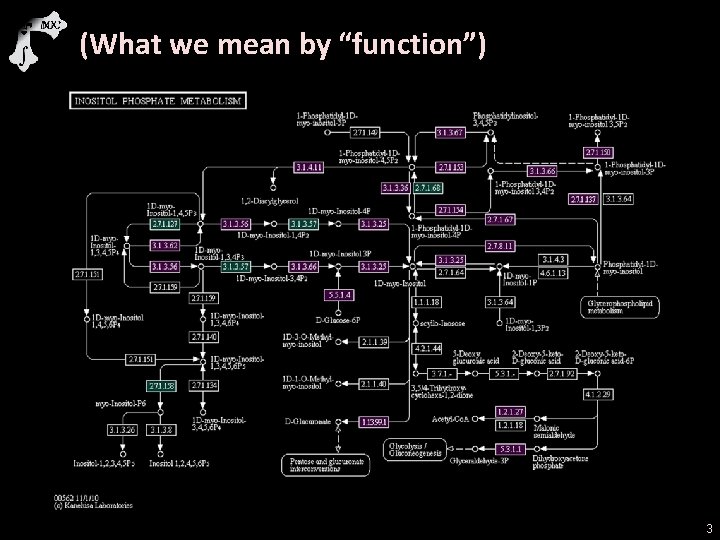
(What we mean by “function”) 3
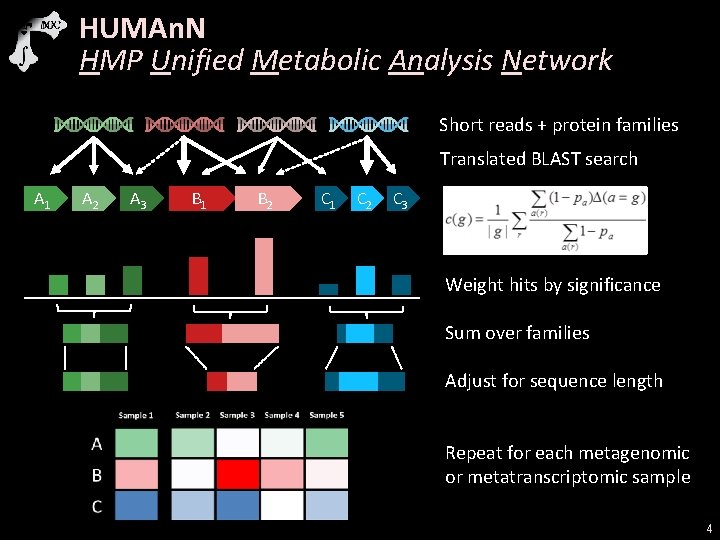
HUMAn. N HMP Unified Metabolic Analysis Network Short reads + protein families Translated BLAST search A 1 A 2 A 3 B 1 B 2 C 1 C 2 C 3 Weight hits by significance Sum over families Adjust for sequence length Repeat for each metagenomic or metatranscriptomic sample 4
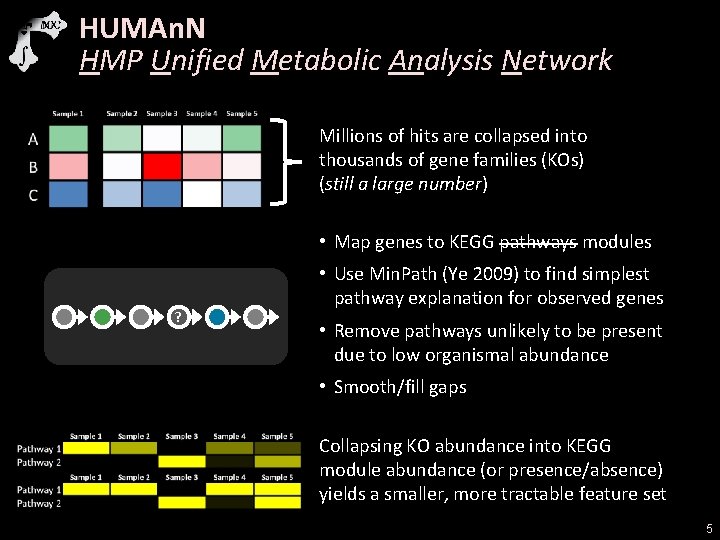
HUMAn. N HMP Unified Metabolic Analysis Network Millions of hits are collapsed into thousands of gene families (KOs) (still a large number) • Map genes to KEGG pathways modules ? • Use Min. Path (Ye 2009) to find simplest pathway explanation for observed genes • Remove pathways unlikely to be present due to low organismal abundance • Smooth/fill gaps Collapsing KO abundance into KEGG module abundance (or presence/absence) yields a smaller, more tractable feature set 5
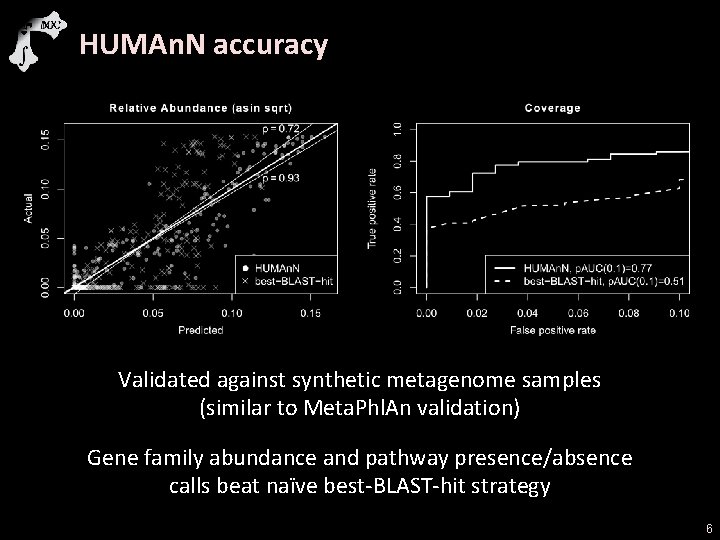
HUMAn. N accuracy Validated against synthetic metagenome samples (similar to Meta. Phl. An validation) Gene family abundance and pathway presence/absence calls beat naïve best-BLAST-hit strategy 6
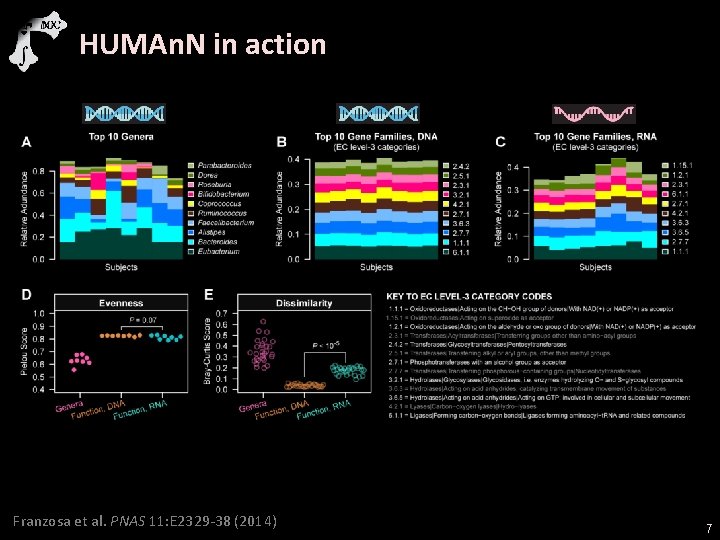
HUMAn. N in action Franzosa et al. PNAS 11: E 2329 -38 (2014) 7
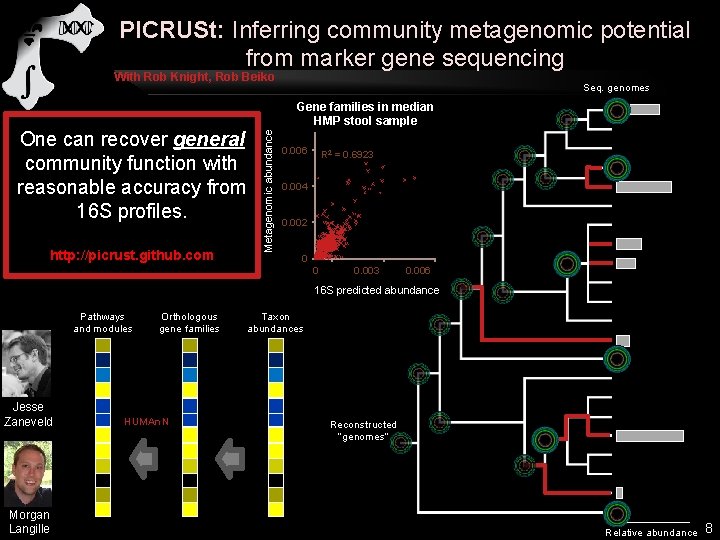
PICRUSt: Inferring community metagenomic potential from marker gene sequencing With Rob Knight, Rob Beiko Seq. genomes One can recover general community function with reasonable accuracy from 16 S profiles. http: //picrust. github. com Metagenomic abundance Gene families in median HMP stool sample 0. 006 R 2 = 0. 6923 0. 004 0. 002 0 0 0. 003 0. 006 16 S predicted abundance Pathways and modules Jesse Zaneveld Morgan Langille Orthologous gene families HUMAn. N Taxon abundances Reconstructed “genomes” Relative abundance 8
What’s there: Short. BRED Jim Kaminski • Short. BRED is a tool for quantifying protein families in metagenomes – Short Better REad Dataset • Inputs: – FASTA file of proteins of interest – Large reference database of protein sequences (FASTA or blastdb) – Metagenomes (FASTA/FASTQ nucleotide files) • Outputs: – Short, unique markers for protein families of interest (FASTA) – Relative abundances of protein families of interest in each metagenome (text file, RPKM) • Compared to BLAST (or HUMAn. N), this is: – Faster – More specific 9
What’s there: Short. BRED algorithm • Cluster proteins of interest into families – Record consensus sequences • Identify and common areas among proteins – Compared against each other – Compared against reference database – Remove all of these • Remaining subseqs. uniquely ID a family – Record these as markers for that family 10
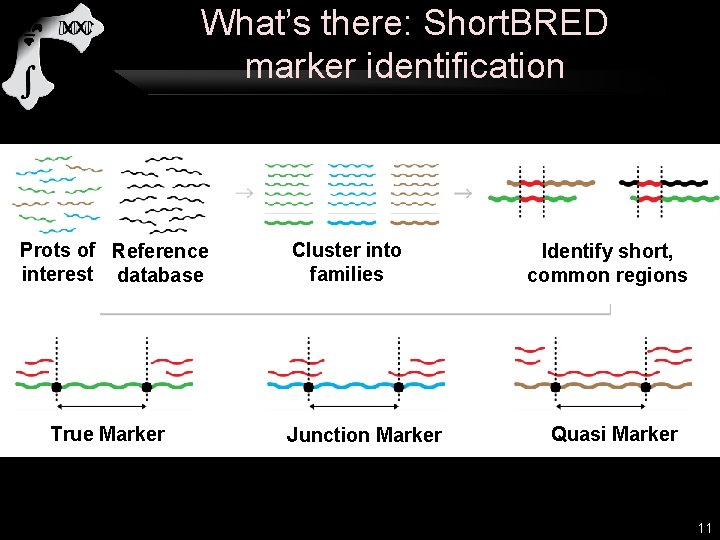
What’s there: Short. BRED marker identification Prots of Reference interest database True Marker Cluster into families Junction Marker Identify short, common regions Quasi Marker 11
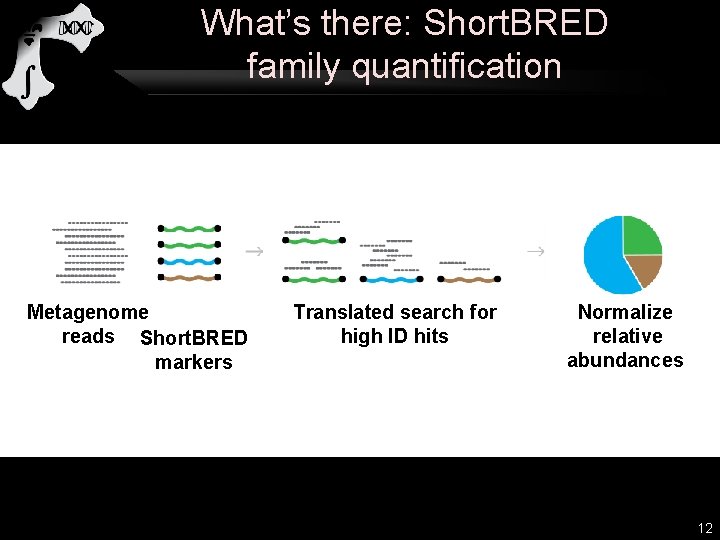
What’s there: Short. BRED family quantification Metagenome reads Short. BRED markers Translated search for high ID hits Normalize relative abundances 12
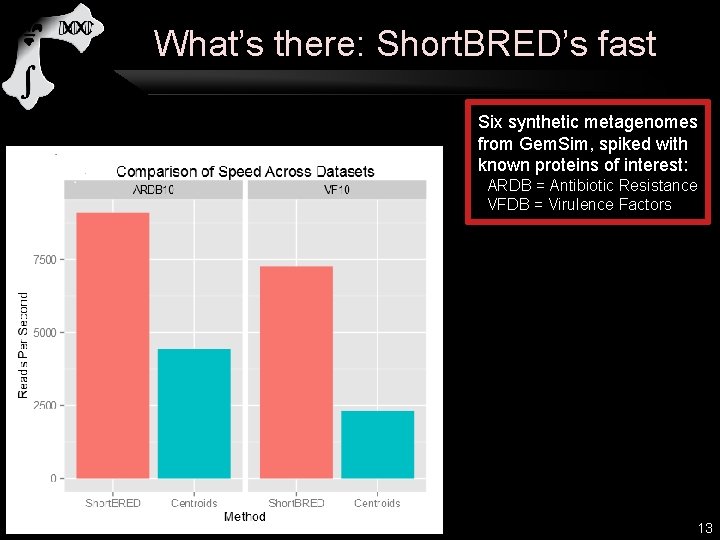
What’s there: Short. BRED’s fast Six synthetic metagenomes from Gem. Sim, spiked with known proteins of interest: ARDB = Antibiotic Resistance VFDB = Virulence Factors 13
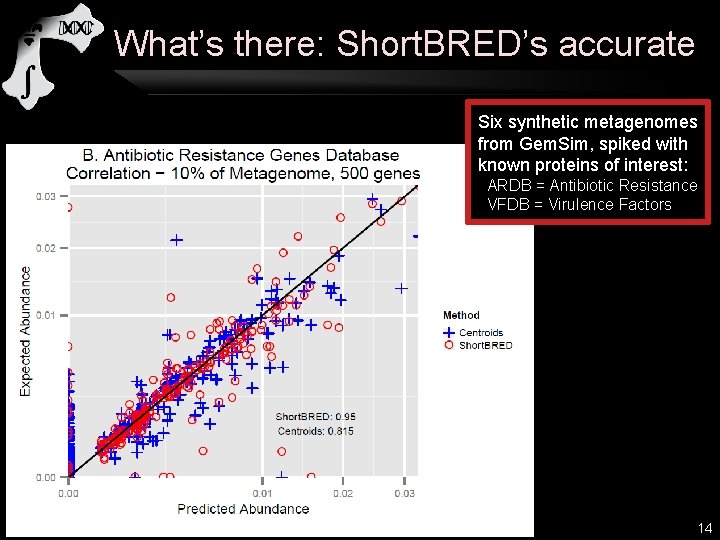
What’s there: Short. BRED’s accurate Six synthetic metagenomes from Gem. Sim, spiked with known proteins of interest: ARDB = Antibiotic Resistance VFDB = Virulence Factors 14
Setup notes reminder • Slides with green titles or text include instructions not needed today, but useful for your own analyses • Keep an eye out for red warnings of particular importance • Command lines and program/file names appear in a monospaced font. • Commands you should specifically copy/paste are in monospaced bold blue. 15
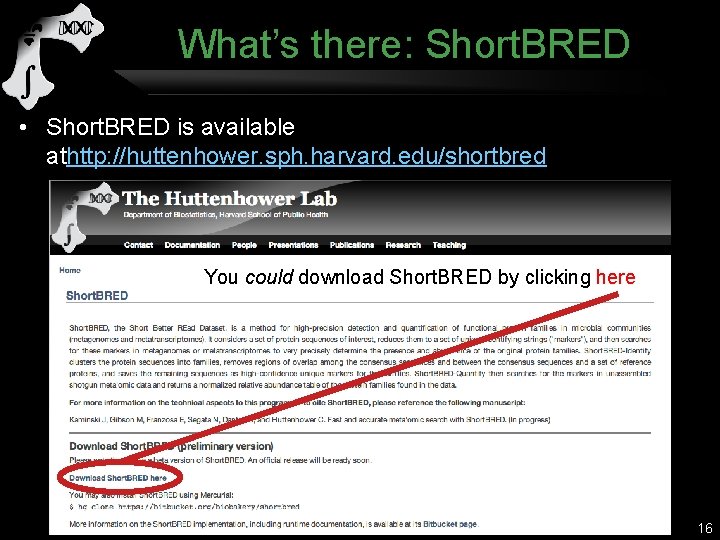
What’s there: Short. BRED • Short. BRED is available athttp: //huttenhower. sph. harvard. edu/shortbred You could download Short. BRED by clicking here 16
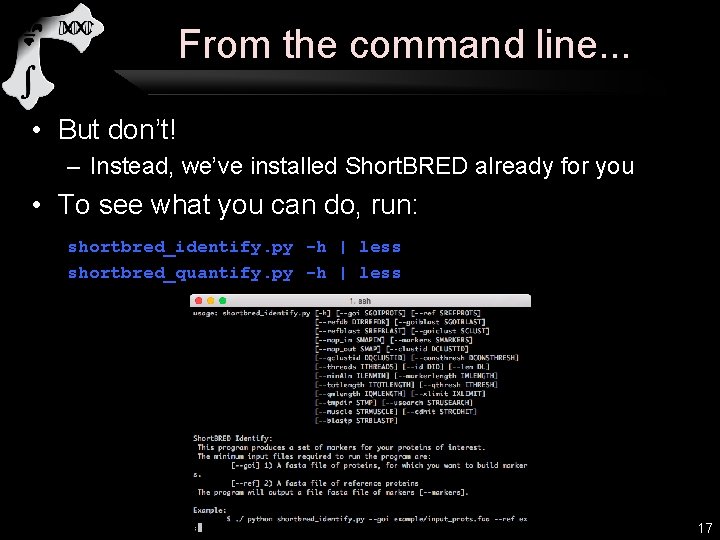
From the command line. . . • But don’t! – Instead, we’ve installed Short. BRED already for you • To see what you can do, run: shortbred_identify. py -h | less shortbred_quantify. py -h | less 17
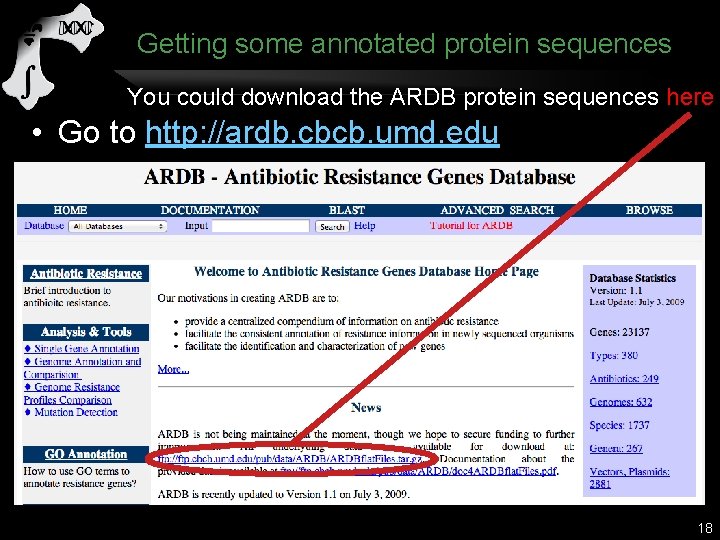
Getting some annotated protein sequences You could download the ARDB protein sequences here • Go to http: //ardb. cbcb. umd. edu 18
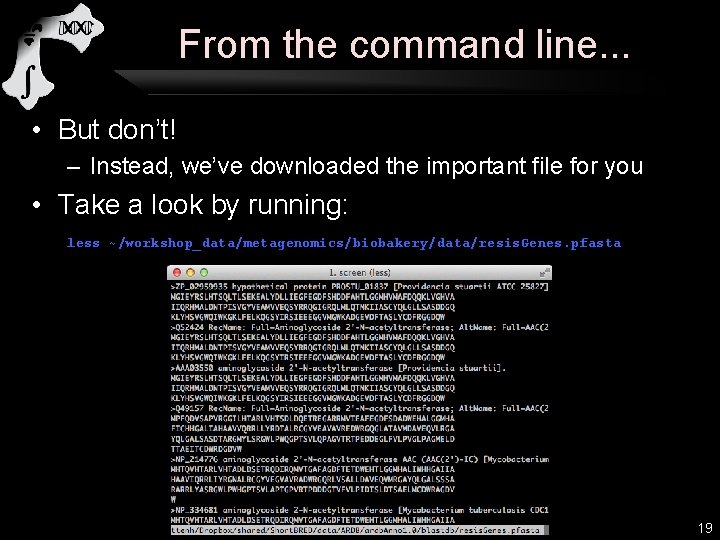
From the command line. . . • But don’t! – Instead, we’ve downloaded the important file for you • Take a look by running: less ~/workshop_data/metagenomics/biobakery/data/resis. Genes. pfasta 19
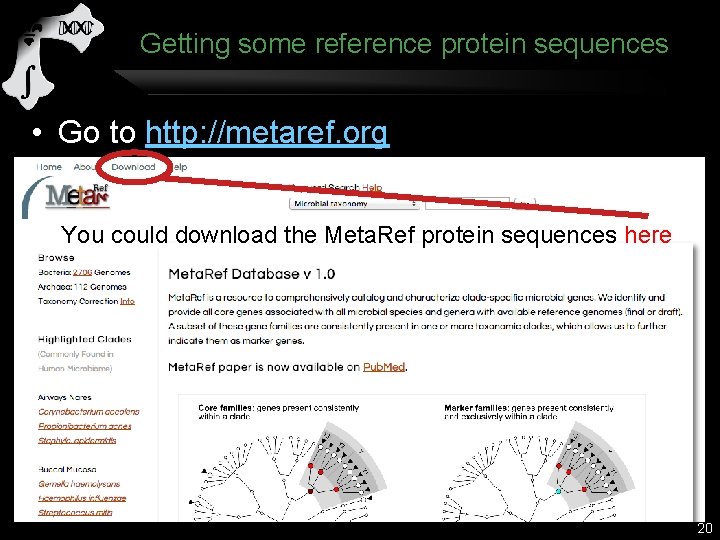
Getting some reference protein sequences • Go to http: //metaref. org You could download the Meta. Ref protein sequences here 20
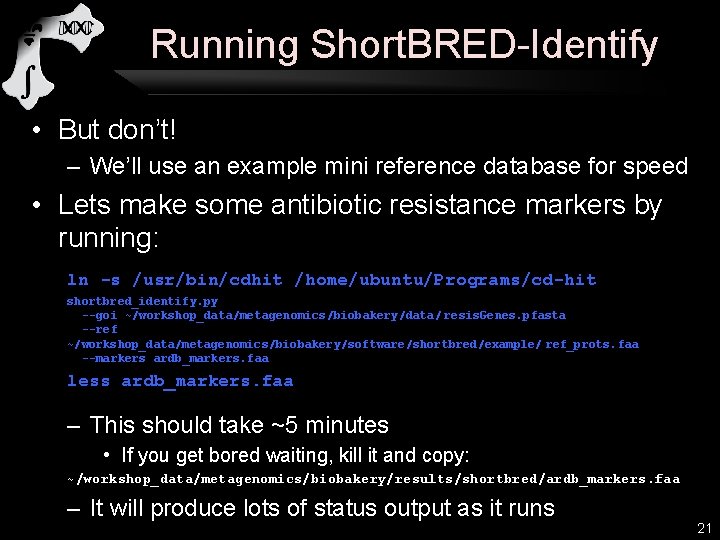
Running Short. BRED-Identify • But don’t! – We’ll use an example mini reference database for speed • Lets make some antibiotic resistance markers by running: ln -s /usr/bin/cdhit /home/ubuntu/Programs/cd-hit shortbred_identify. py --goi ~/workshop_data/metagenomics/biobakery/data/ resis. Genes. pfasta --ref ~/workshop_data/metagenomics/biobakery/software/shortbred/example/ ref_prots. faa --markers ardb_markers. faa less ardb_markers. faa – This should take ~5 minutes • If you get bored waiting, kill it and copy: ~/workshop_data/metagenomics/biobakery/results/shortbred/ardb_markers. faa – It will produce lots of status output as it runs 21
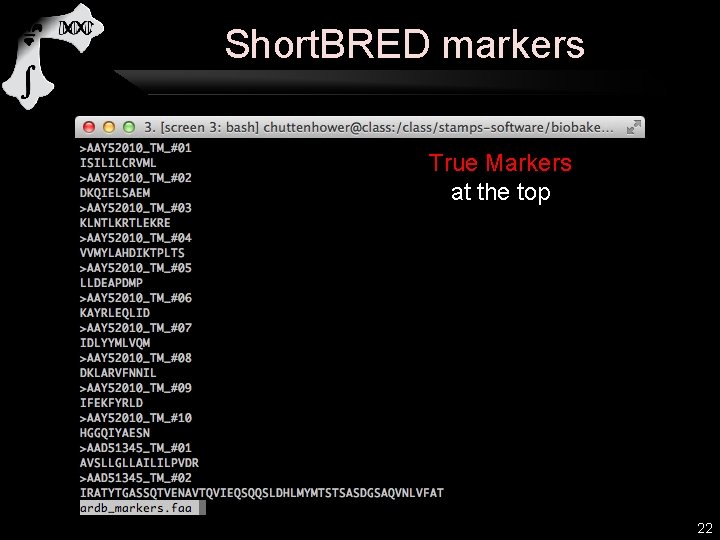
Short. BRED markers True Markers at the top 22
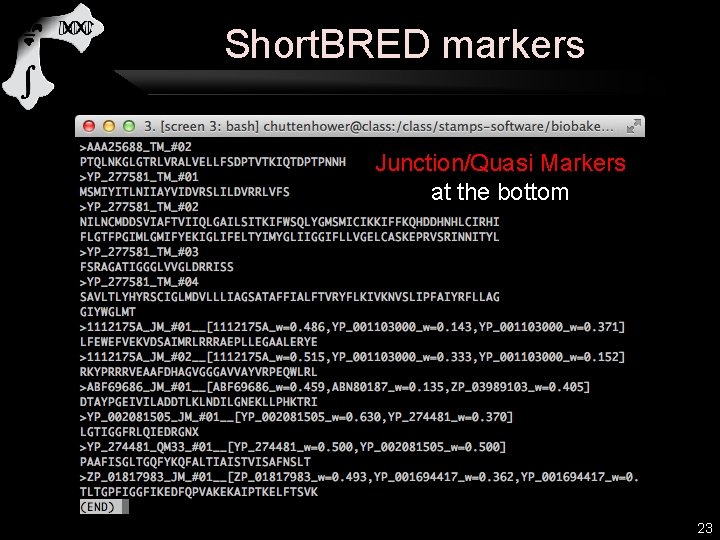
Short. BRED markers Junction/Quasi Markers at the bottom 23
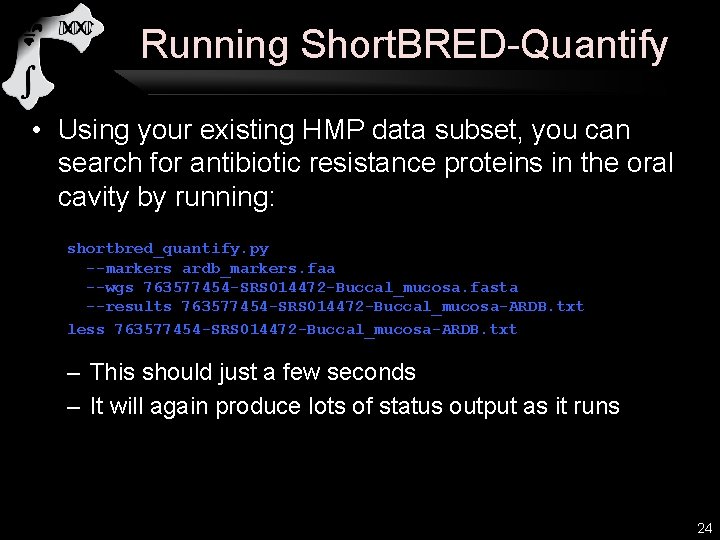
Running Short. BRED-Quantify • Using your existing HMP data subset, you can search for antibiotic resistance proteins in the oral cavity by running: shortbred_quantify. py --markers ardb_markers. faa --wgs 763577454 -SRS 014472 -Buccal_mucosa. fasta --results 763577454 -SRS 014472 -Buccal_mucosa-ARDB. txt less 763577454 -SRS 014472 -Buccal_mucosa-ARDB. txt – This should just a few seconds – It will again produce lots of status output as it runs 24
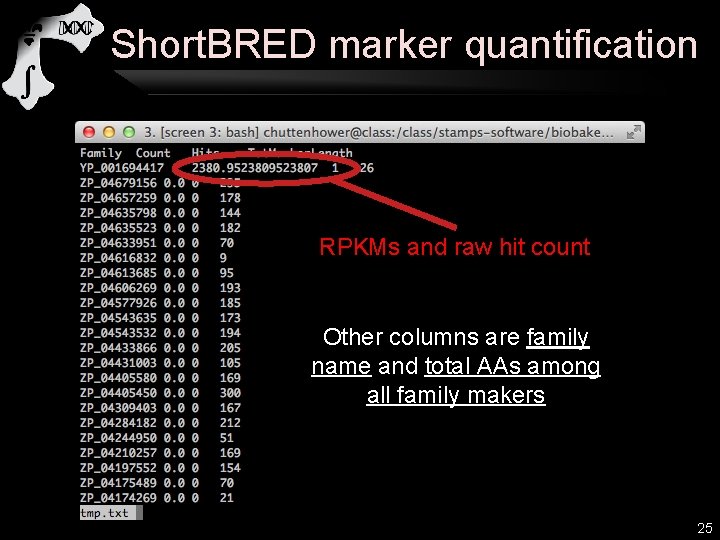
Short. BRED marker quantification RPKMs and raw hit count Other columns are family name and total AAs among all family makers 25
AR proteins in the human gut • That’s boring! Let’s get some real data • scp the file to your own computer (optional): ~/workshop_data/metagenomics/biobakery/data/shortbred_ardb_hmp_t 2 d. tsv • This is the result of running: – Short. BRED-Identify on the real ARDB + reference – Short. BRED-Quantify on the real HMP + T 2 D data (Qin Nature 2014) – Summing each sample’s RPKMs for families in each ARDB resistance class 26
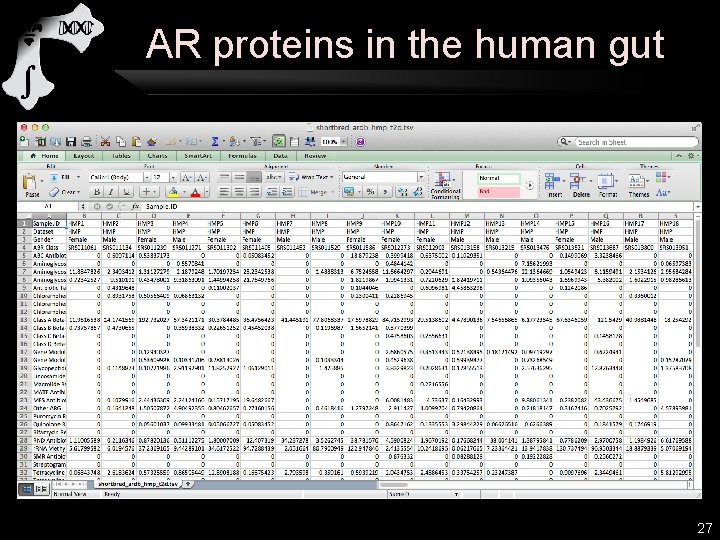
AR proteins in the human gut 27
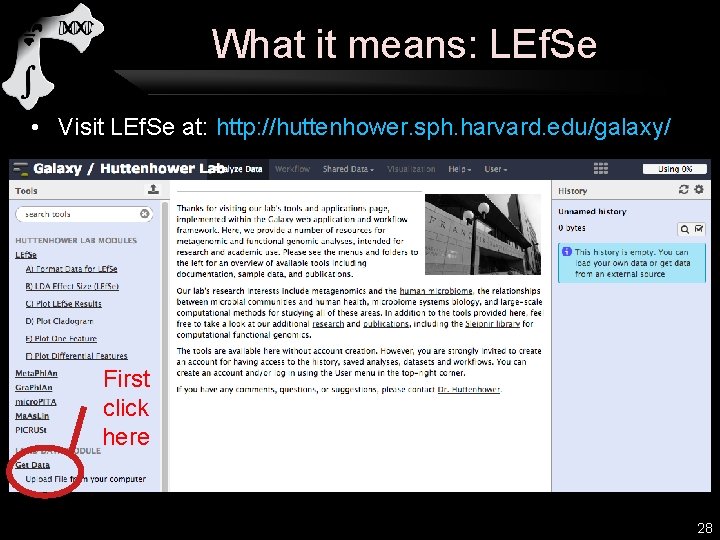
What it means: LEf. Se • Visit LEf. Se at: http: //huttenhower. sph. harvard. edu/galaxy/ First click here 28
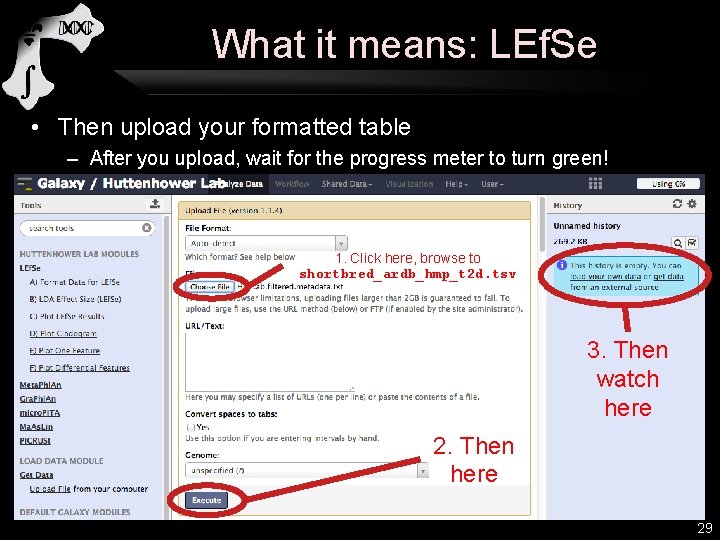
What it means: LEf. Se • Then upload your formatted table – After you upload, wait for the progress meter to turn green! 1. Click here, browse to shortbred_ardb_hmp_t 2 d. tsv 3. Then watch here 2. Then here 29
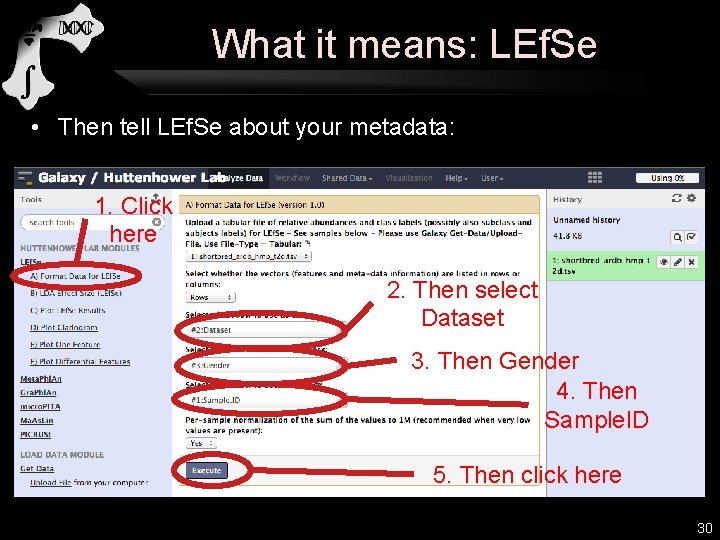
What it means: LEf. Se • Then tell LEf. Se about your metadata: 1. Click here 2. Then select Dataset 3. Then Gender 4. Then Sample. ID 5. Then click here 30
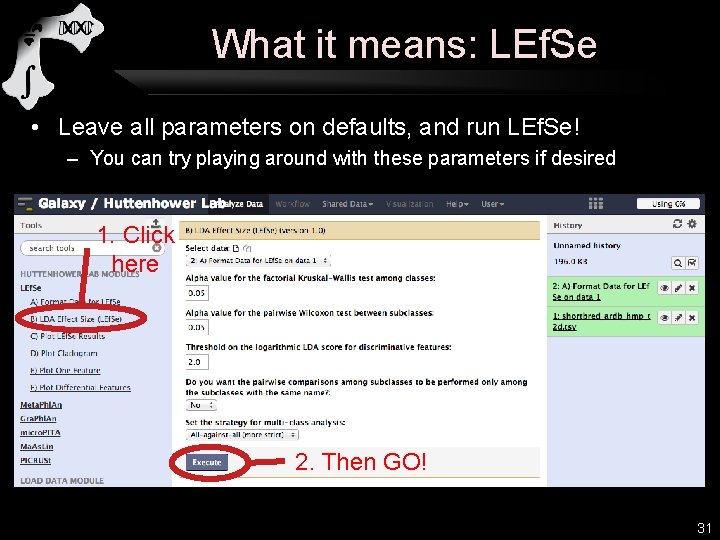
What it means: LEf. Se • Leave all parameters on defaults, and run LEf. Se! – You can try playing around with these parameters if desired 1. Click here 2. Then GO! 31
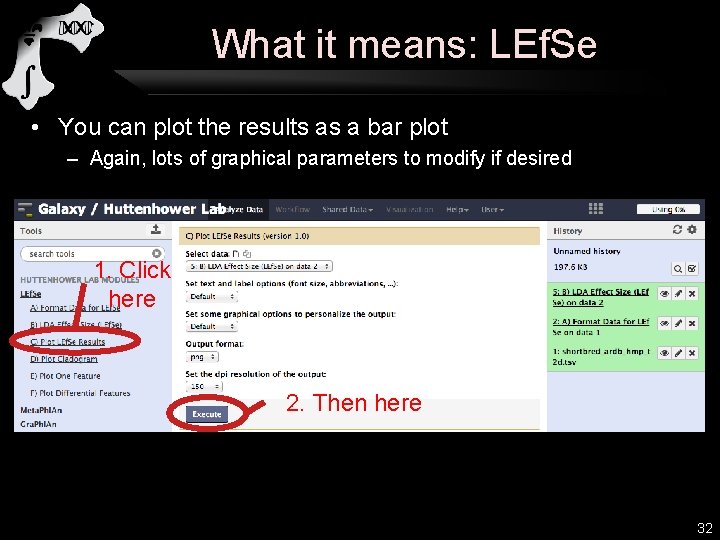
What it means: LEf. Se • You can plot the results as a bar plot – Again, lots of graphical parameters to modify if desired 1. Click here 2. Then here 32
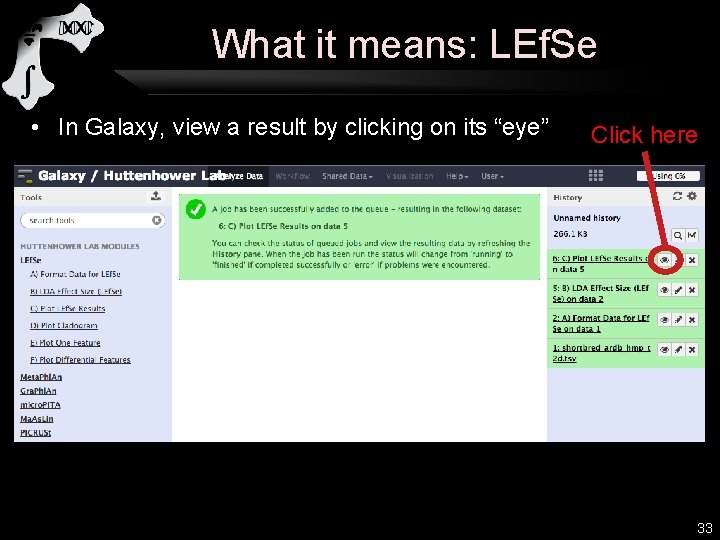
What it means: LEf. Se • In Galaxy, view a result by clicking on its “eye” Click here 33
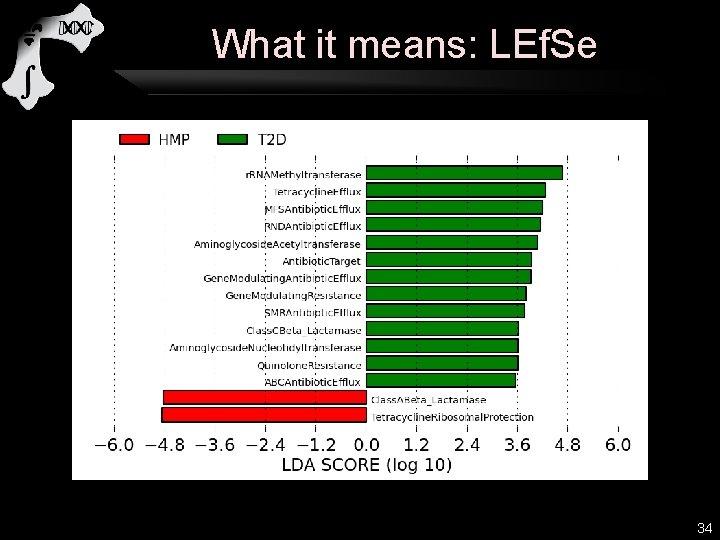
What it means: LEf. Se 34
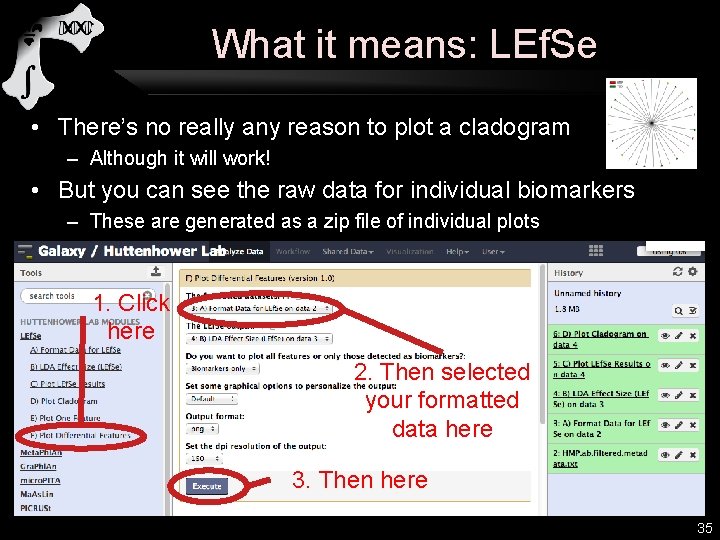
What it means: LEf. Se • There’s no really any reason to plot a cladogram – Although it will work! • But you can see the raw data for individual biomarkers – These are generated as a zip file of individual plots 1. Click here 2. Then selected your formatted data here 3. Then here 35
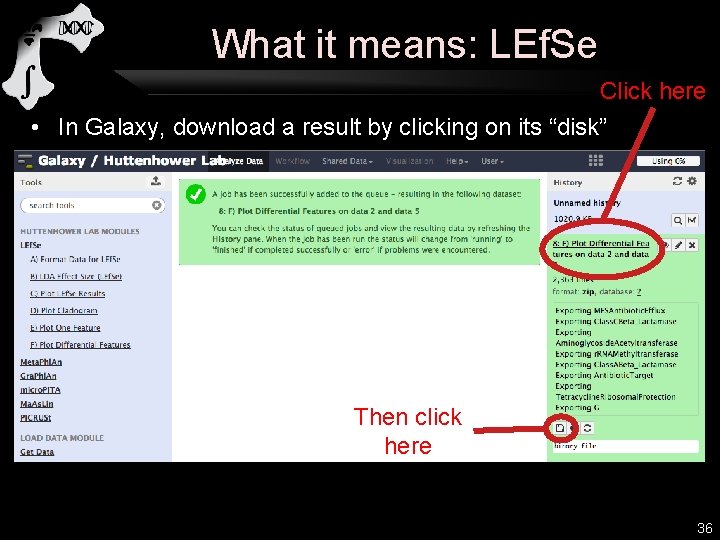
What it means: LEf. Se Click here • In Galaxy, download a result by clicking on its “disk” Then click here 36
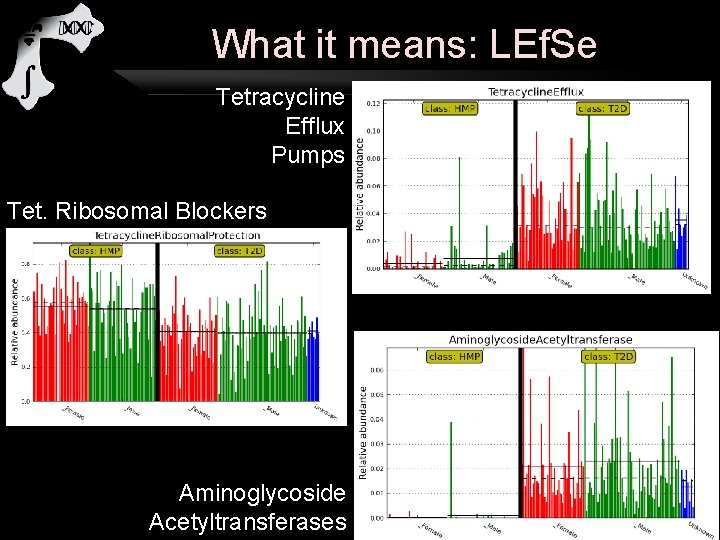
What it means: LEf. Se Tetracycline Efflux Pumps Tet. Ribosomal Blockers Aminoglycoside Acetyltransferases 37
Summary • HUMAn. N – Quality-controlled metagenomic reads in – Tab-delimited gene, module, and pathway relative abundances out • Short. BRED – Raw metagenomic reads, Proteins of interest, and Protein reference database in – Tab-delimited gene family rel. abundances out 38
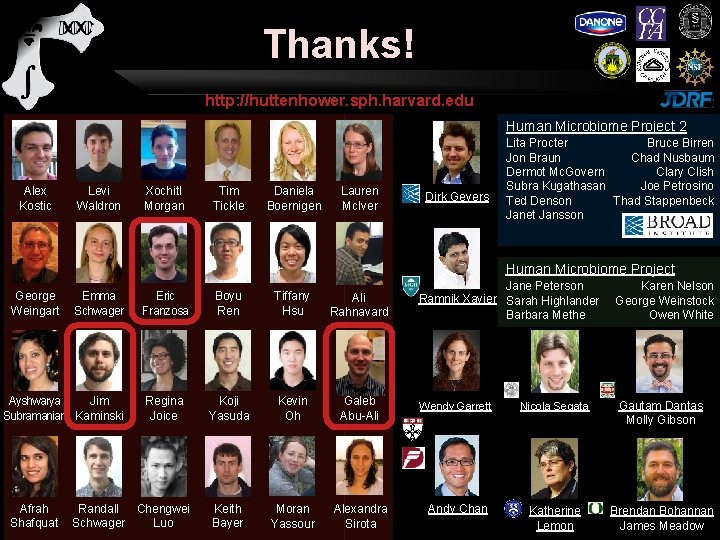
Thanks! http: //huttenhower. sph. harvard. edu Human Microbiome Project 2 Alex Kostic Levi Waldron Xochitl Morgan Tim Tickle Daniela Boernigen Lauren Mc. Iver Dirk Gevers Lita Procter Bruce Birren Jon Braun Chad Nusbaum Dermot Mc. Govern Clary Clish Subra Kugathasan Joe Petrosino Ted Denson Thad Stappenbeck Janet Jansson Human Microbiome Project George Weingart Emma Schwager Ayshwarya Jim Subramanian Kaminski Afrah Shafquat Eric Franzosa Boyu Ren Tiffany Hsu Ali Rahnavard Regina Joice Koji Yasuda Kevin Oh Galeb Abu-Ali Keith Bayer Moran Yassour Alexandra Sirota Randall Chengwei Schwager Luo Jane Peterson Ramnik Xavier Sarah Highlander Barbara Methe Karen Nelson George Weinstock Owen White Wendy Garrett Nicola Segata Gautam Dantas Molly Gibson Andy Chan Katherine Lemon Brendan Bohannan James Meadow

- Slides: 41