
METAMORPHISM NEW ROCKS FROM OLD Objectives Explain how
METAMORPHISM: NEW ROCKS FROM OLD
Objectives • Explain how metamorphism differs from diagenesis and lithification. • Define the grade of metamorphism. • Define foliation. • Describe and identify the common metamorphic products of shale and basalt. • Identify several common metamorphic rocks. • Describe contact, burial, and regional metamorphism.
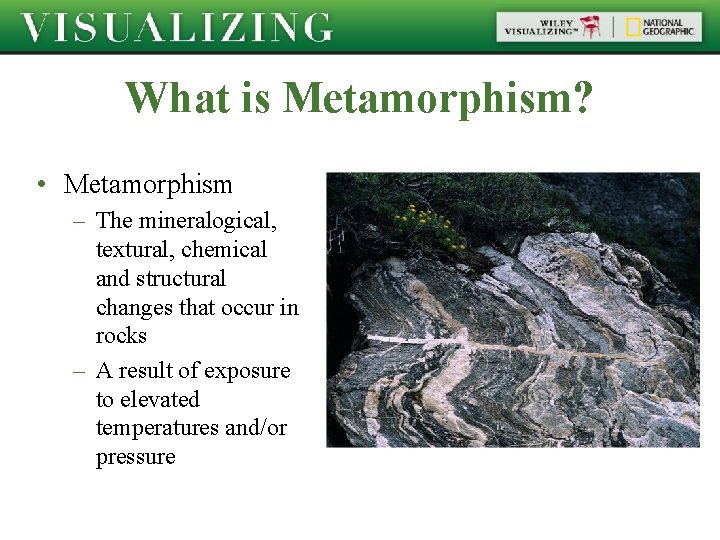
What is Metamorphism? • Metamorphism – The mineralogical, textural, chemical and structural changes that occur in rocks – A result of exposure to elevated temperatures and/or pressure
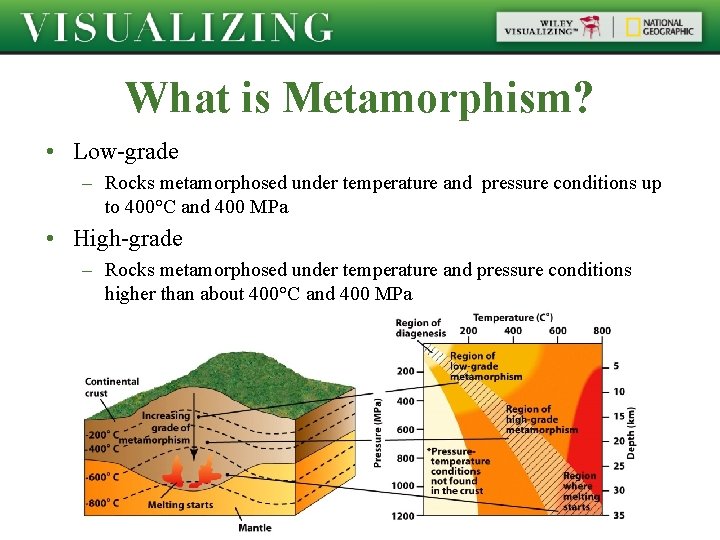
What is Metamorphism? • Low-grade – Rocks metamorphosed under temperature and pressure conditions up to 400°C and 400 MPa • High-grade – Rocks metamorphosed under temperature and pressure conditions higher than about 400°C and 400 MPa
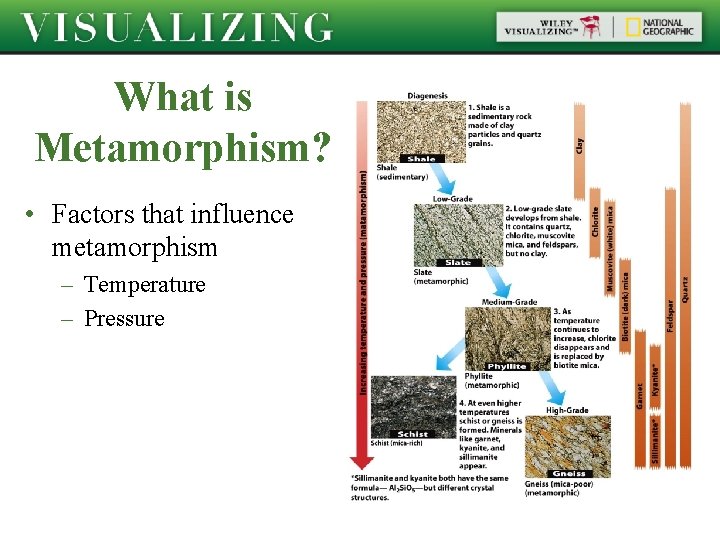
What is Metamorphism? • Factors that influence metamorphism – Temperature – Pressure
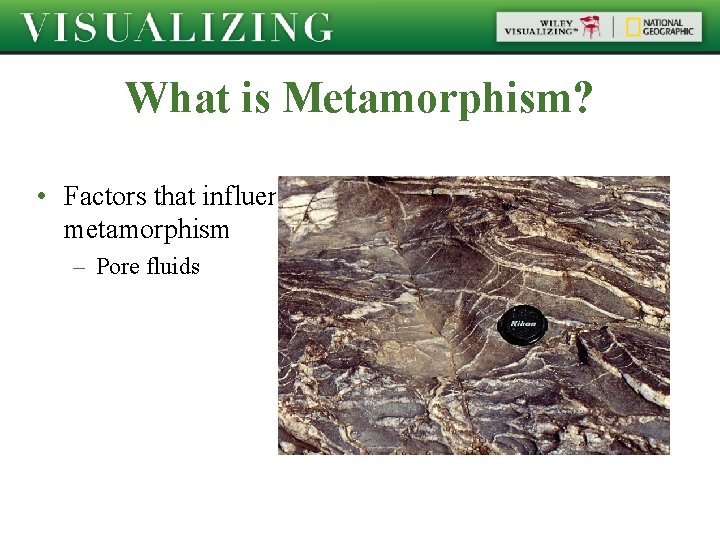
What is Metamorphism? • Factors that influence metamorphism – Pore fluids
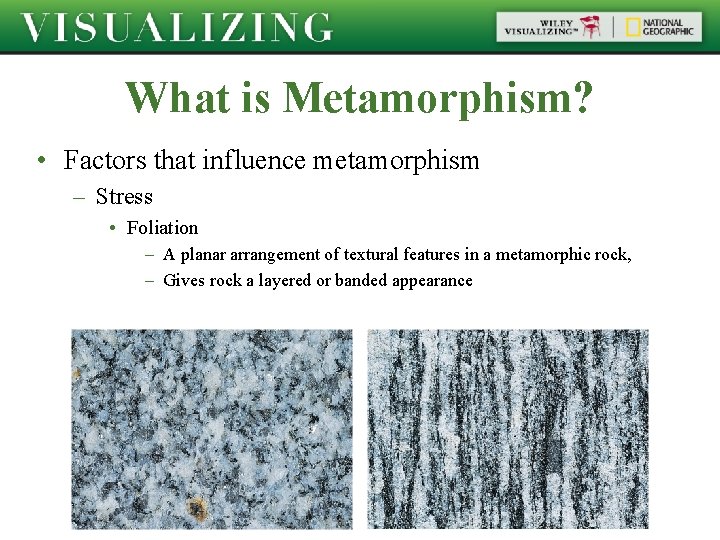
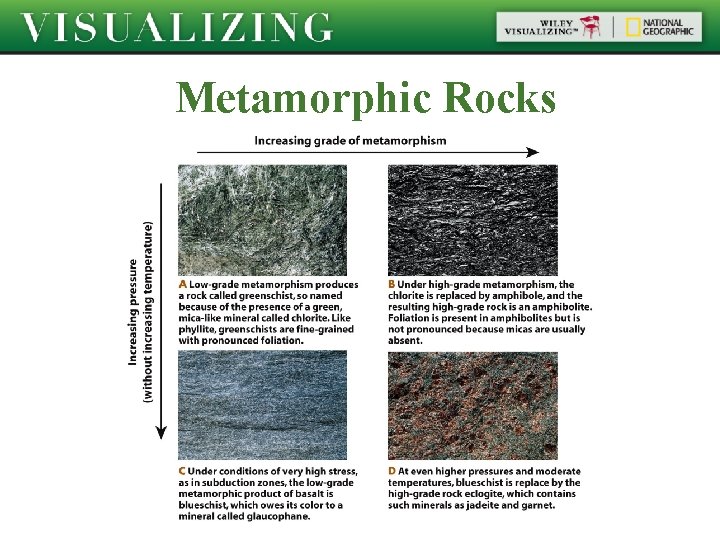
What is Metamorphism? • Factors that influence metamorphism – Stress • Foliation – A planar arrangement of textural features in a metamorphic rock, – Gives rock a layered or banded appearance
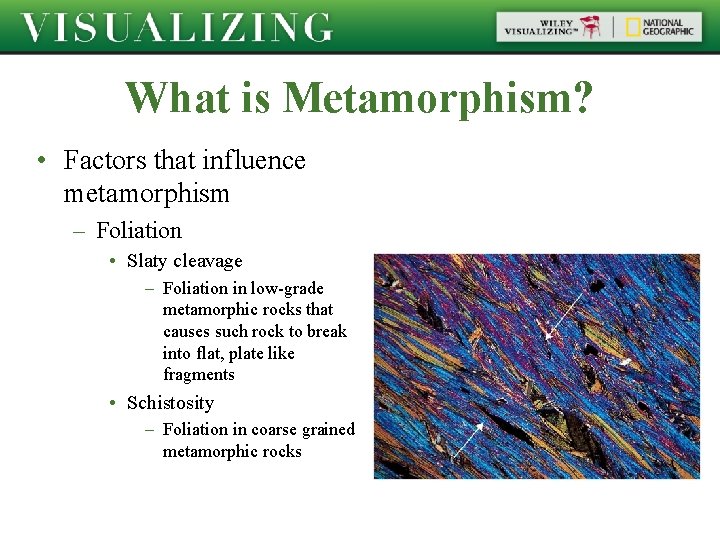
What is Metamorphism? • Factors that influence metamorphism – Foliation • Slaty cleavage – Foliation in low-grade metamorphic rocks that causes such rock to break into flat, plate like fragments • Schistosity – Foliation in coarse grained metamorphic rocks
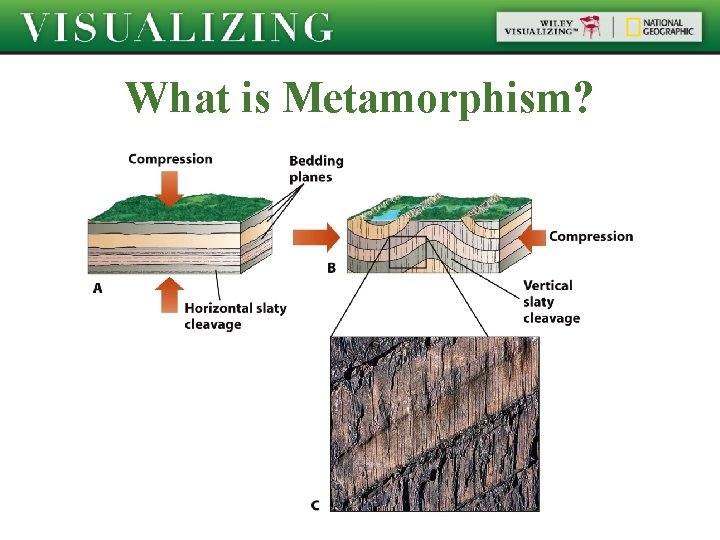
What is Metamorphism?
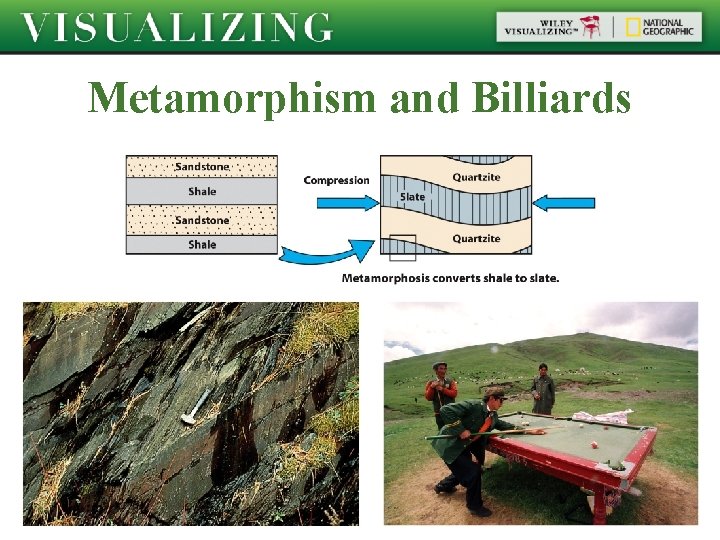
Metamorphism and Billiards
What is Metamorphism? • Factors that influence metamorphism – Duration – Rate of metamorphism
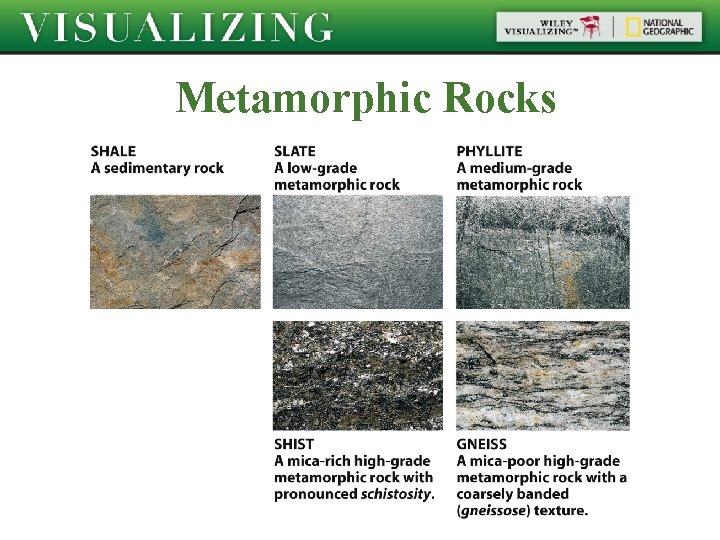
Metamorphic Rocks • Rocks with foliation – Slate • A very fine grained metamorphic rock with slaty cleavage; the metamorphic product of shale – Phyllite • A fine grained metamorphic rock with pronounced foliation, produced by further metamorphism of slate
Metamorphic Rocks
Metamorphic Rocks
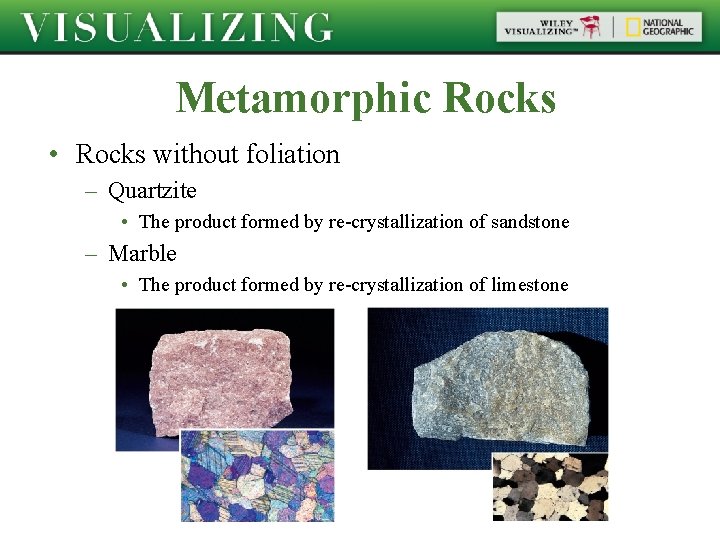
Metamorphic Rocks • Rocks without foliation – Quartzite • The product formed by re-crystallization of sandstone – Marble • The product formed by re-crystallization of limestone
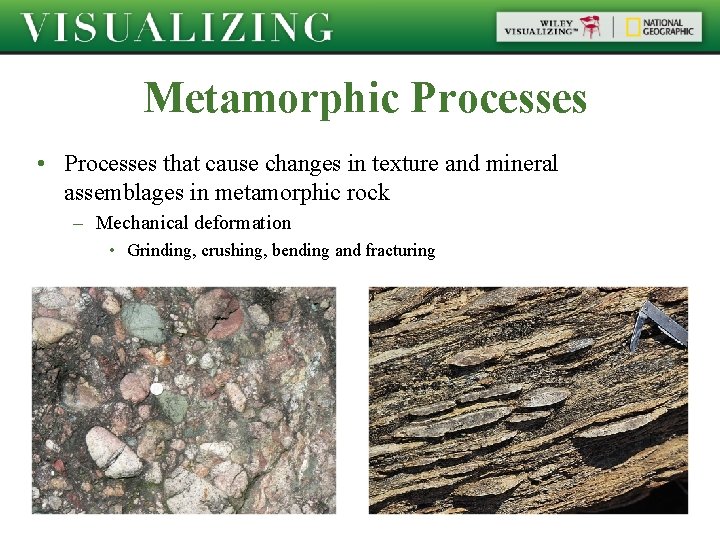
Metamorphic Processes • Processes that cause changes in texture and mineral assemblages in metamorphic rock – Mechanical deformation • Grinding, crushing, bending and fracturing
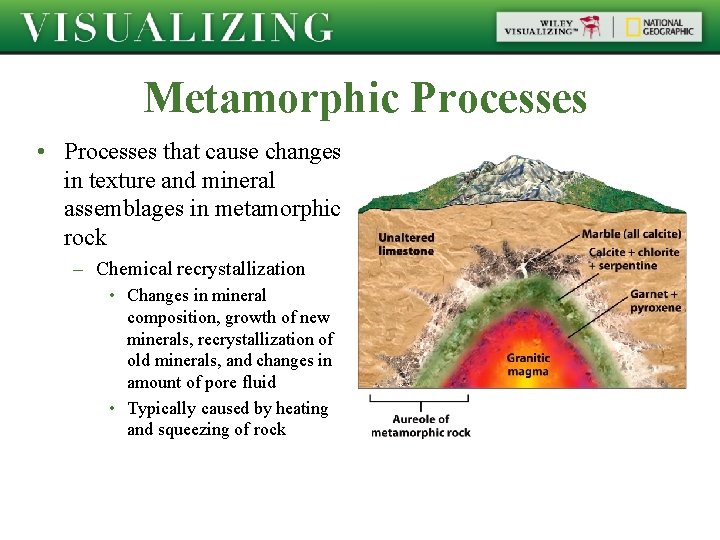
Metamorphic Processes • Processes that cause changes in texture and mineral assemblages in metamorphic rock – Chemical recrystallization • Changes in mineral composition, growth of new minerals, recrystallization of old minerals, and changes in amount of pore fluid • Typically caused by heating and squeezing of rock
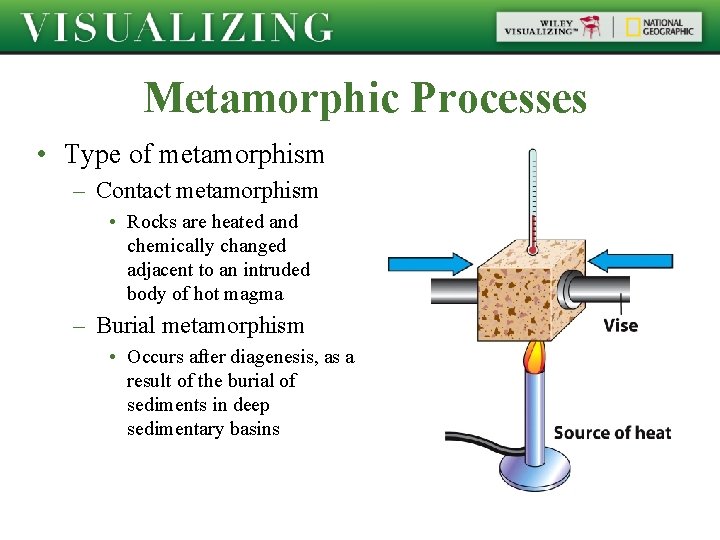
Metamorphic Processes • Type of metamorphism – Contact metamorphism • Rocks are heated and chemically changed adjacent to an intruded body of hot magma – Burial metamorphism • Occurs after diagenesis, as a result of the burial of sediments in deep sedimentary basins
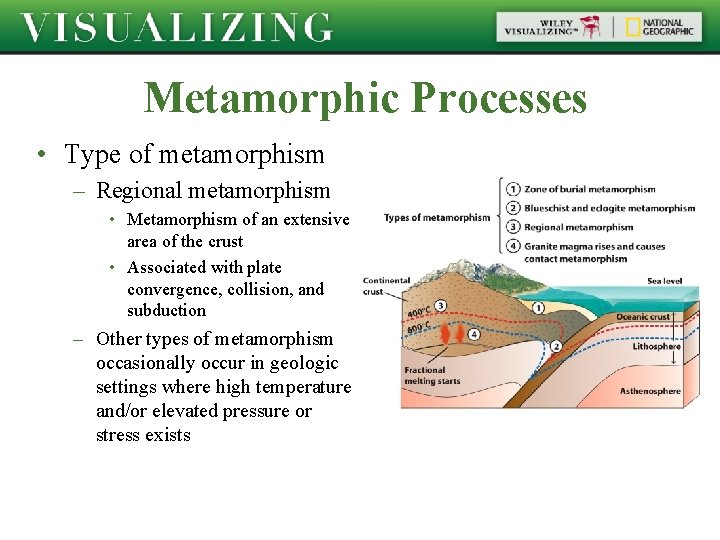
Metamorphic Processes • Type of metamorphism – Regional metamorphism • Metamorphism of an extensive area of the crust • Associated with plate convergence, collision, and subduction – Other types of metamorphism occasionally occur in geologic settings where high temperature and/or elevated pressure or stress exists
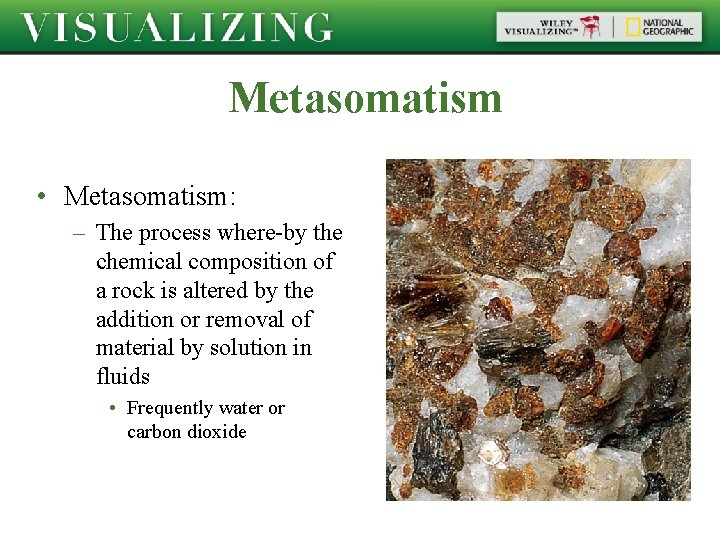
Metasomatism • Metasomatism: – The process where-by the chemical composition of a rock is altered by the addition or removal of material by solution in fluids • Frequently water or carbon dioxide
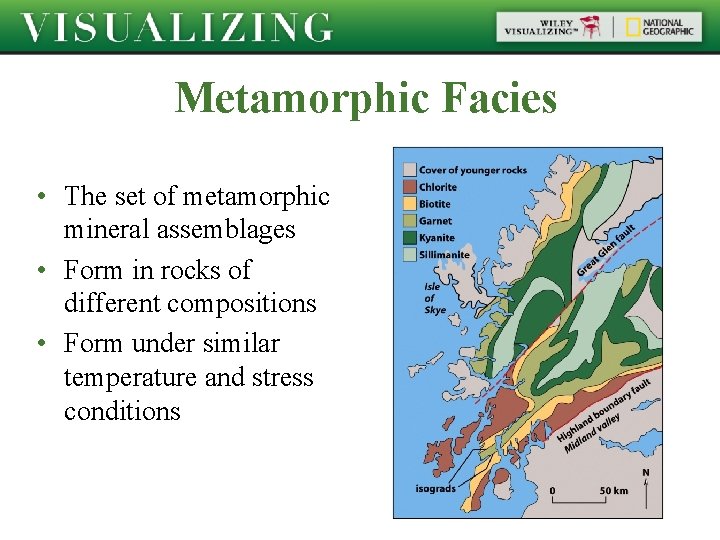
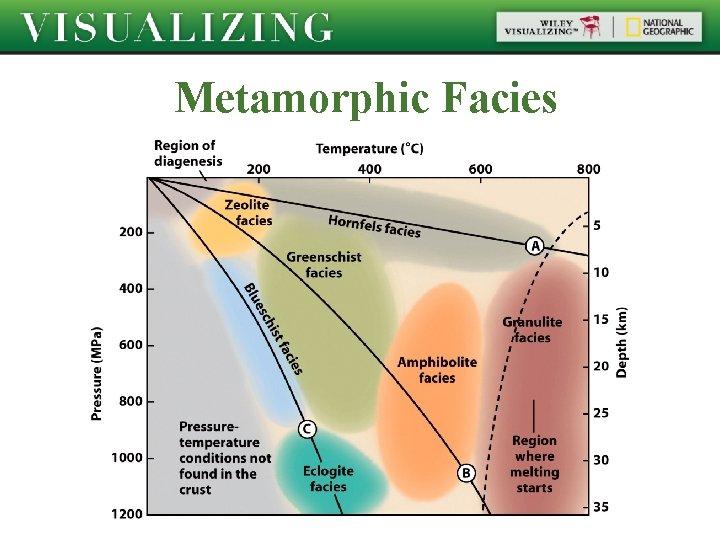
Metamorphic Facies • The set of metamorphic mineral assemblages • Form in rocks of different compositions • Form under similar temperature and stress conditions
Metamorphic Facies
Critical Thinking • Compare the concept of metamorphic facies to that of sedimentary facies. In what ways are they similar? In what ways are they different? • Museum curators obviously can’t shave off pieces from valuable art. How do you think they manage to identify the rocks and minerals? • Briefly explain how pressure and temperature might change over time in rocks being subjected to contact, burial, and subduction-related regional metamorphism.
- Slides: 23