
Metamorphic Rocks What are metamorphic rocks and how
- Slides: 11
Metamorphic Rocks What are metamorphic rocks and how do we describe them?
Metamorphic Rocks- rocks that have been changed due to temperature and pressure increases Parent Rock- preexisting rock from which metamorphic rocks are formed n Metamorphic rocks can be formed from changes in igneous, sedimentary, or other metamorphic rocks
Metamorphic Rock Formation 1. Heat n n Most minerals expand when heated which causes the atoms to move apart If it is heated enough, all of the bonds break, and the mineral melts (forming magma) Some atoms break loose, move around and join with other atoms to form new minerals in the rock Resulting in a change to both chemical composition and structure of the rock
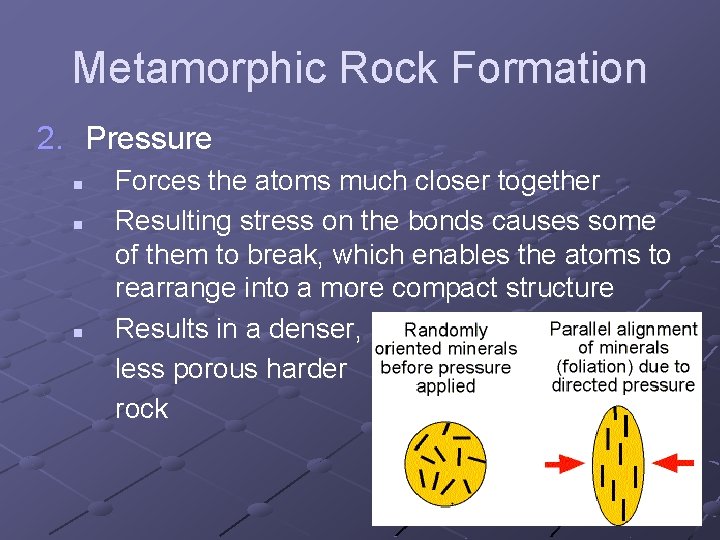
Metamorphic Rock Formation 2. Pressure n n n Forces the atoms much closer together Resulting stress on the bonds causes some of them to break, which enables the atoms to rearrange into a more compact structure Results in a denser, less porous harder rock
Metamorphic Rock Formation 3. Chemical Activity n n A rock can also be changed when solutions rich in dissolved ions move through it As solutions move through surrounding rock, they interact with minerals in the rock to form new minerals
Types of Metamorphism 1. Regional Metamorphism- process in which metamorphic rocks are formed over large areas due to an increase in temperature and pressure n n Most metamorphic rocks are formed regionally Generally occur along plate boundaries where we find mountains
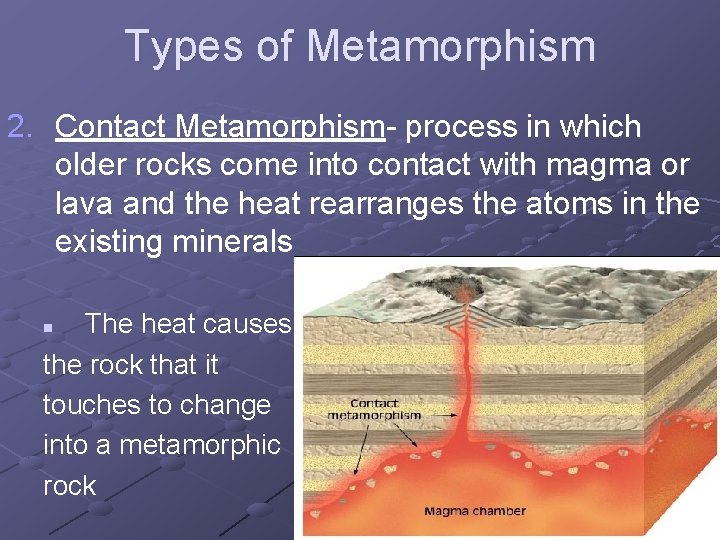
Types of Metamorphism 2. Contact Metamorphism- process in which older rocks come into contact with magma or lava and the heat rearranges the atoms in the existing minerals The heat causes the rock that it touches to change into a metamorphic rock n
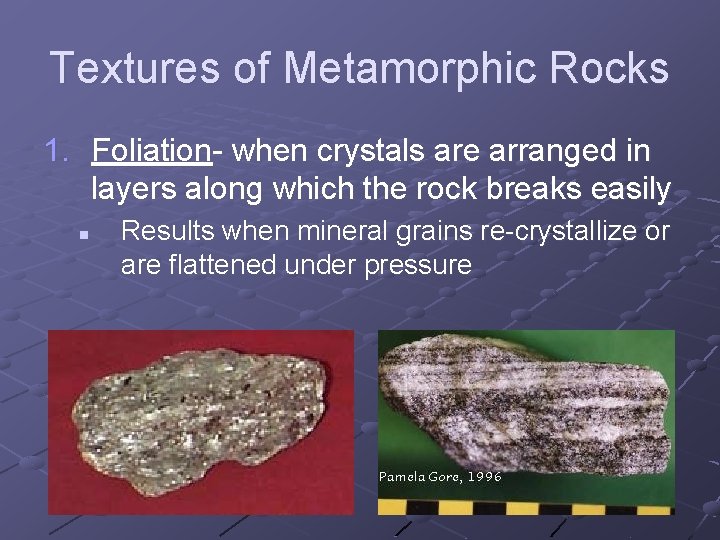
Textures of Metamorphic Rocks 1. Foliation- when crystals are arranged in layers along which the rock breaks easily n Results when mineral grains re-crystallize or are flattened under pressure
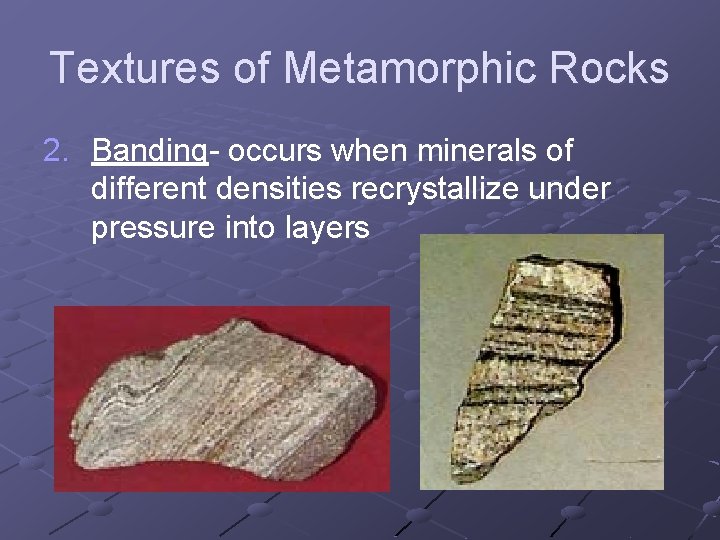
Textures of Metamorphic Rocks 2. Banding- occurs when minerals of different densities recrystallize under pressure into layers
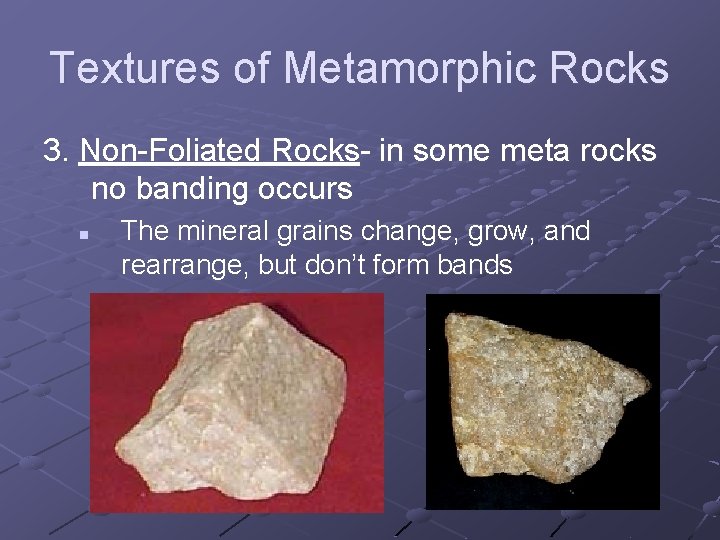
Textures of Metamorphic Rocks 3. Non-Foliated Rocks- in some meta rocks no banding occurs n The mineral grains change, grow, and rearrange, but don’t form bands
Classification Metamorphic rocks are classified according to: 1. 2. 3. 4. Mineral Composition Texture- foliation, non-foliated, or banding Type of Metamorphism Grain Size