
Metamorphic Rocks Metamorphic rock is the transformation of

- Slides: 23
Metamorphic Rocks Metamorphic rock is the transformation of an existing rock type, the protolith, in a process called metamorphism, which means "change in form". The protolith is subjected to heat and pressure (temperatures greater than 150 to 200 °C and pressures of 1500 bars) causing profound physical and/or chemical change. The protolith may be sedimentary rock, igneous rock or another older metamorphic rock. Metamorphic rocks make up a large part of the Earth's crust and are classified by texture and by chemical and mineral assemblage (metamorphic facies).
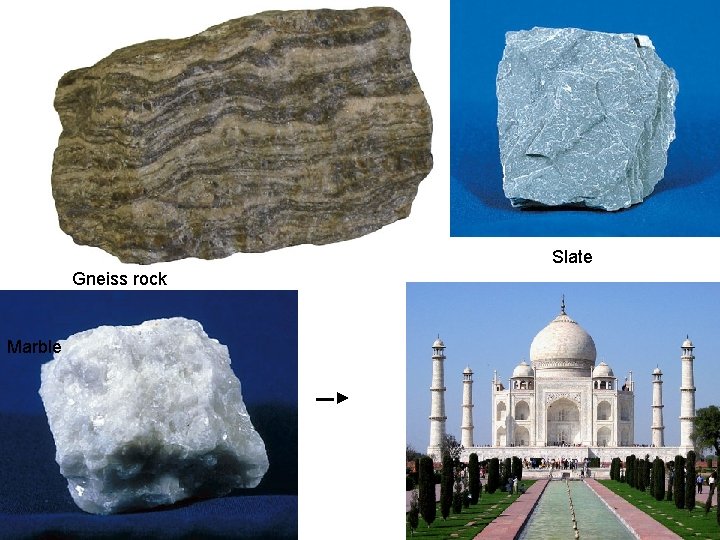
Metamorphic rocks may be formed simply by being deep beneath the Earth's surface, subjected to high temperatures and the great pressure of the rock layers above it. They can form from tectonic processes such as continental collisions, which cause horizontal pressure, friction and distortion. They are also formed when rock is heated up by the intrusion of hot molten rock called magma from the Earth's interior. The study of metamorphic rocks (now exposed at the Earth's surface following erosion and uplift) provides information about the temperatures and pressures that occur at great depths within the Earth's crust. Some examples of metamorphic rocks are gneiss, slate, marble, schist, and quartzite.
Slate Gneiss rock Marble ▬►
Heat and Metamorphism Heat is an important agent in the metamorphic modification of rock. Rocks begin to change chemically at temperatures above 200° Celsius. At these temperatures, the crystalline structure of the minerals in the rock are broken down and transformed using different combinations of the available elements and compounds. As a result, new minerals are created. The metamorphic process stops when the temperatures become high enough (600 to 1200° Celsius) to cause complete melting of the rock. If rocks are heated to the point where they become magma, the magma when cooled creates new igneous rocks. Thus, metamorphism only refers to the alteration of rock that takes place before complete melting occurs.
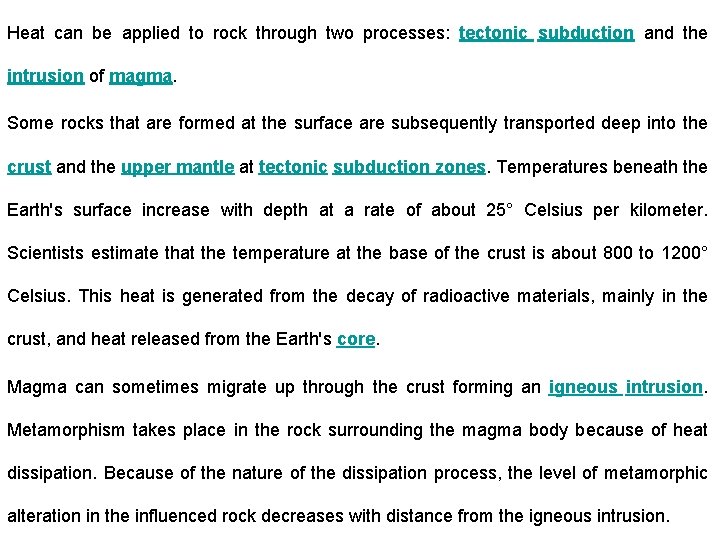
Heat can be applied to rock through two processes: tectonic subduction and the intrusion of magma. Some rocks that are formed at the surface are subsequently transported deep into the crust and the upper mantle at tectonic subduction zones. Temperatures beneath the Earth's surface increase with depth at a rate of about 25° Celsius per kilometer. Scientists estimate that the temperature at the base of the crust is about 800 to 1200° Celsius. This heat is generated from the decay of radioactive materials, mainly in the crust, and heat released from the Earth's core. Magma can sometimes migrate up through the crust forming an igneous intrusion. Metamorphism takes place in the rock surrounding the magma body because of heat dissipation. Because of the nature of the dissipation process, the level of metamorphic alteration in the influenced rock decreases with distance from the igneous intrusion.
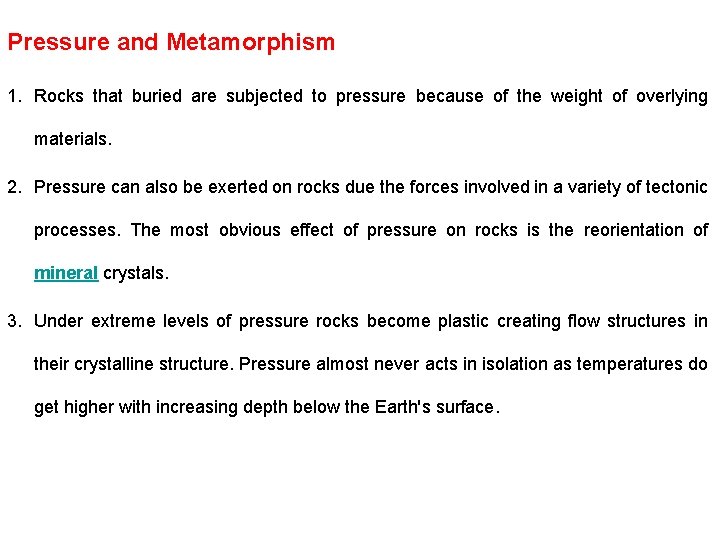
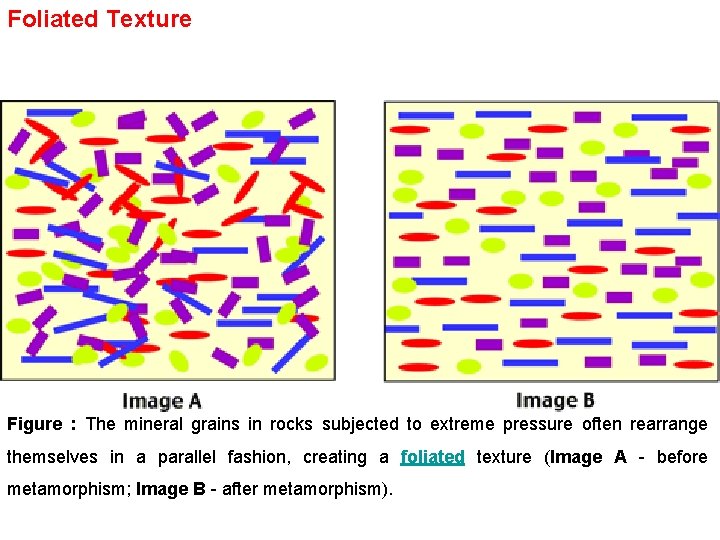
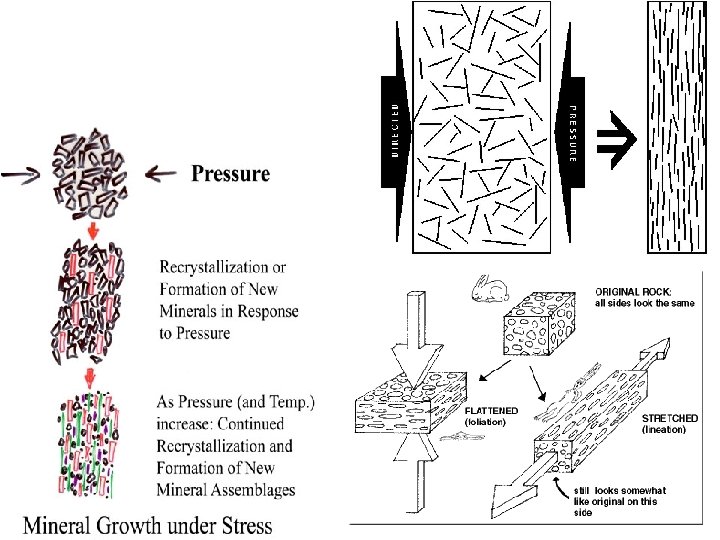
Pressure and Metamorphism 1. Rocks that buried are subjected to pressure because of the weight of overlying materials. 2. Pressure can also be exerted on rocks due the forces involved in a variety of tectonic processes. The most obvious effect of pressure on rocks is the reorientation of mineral crystals. 3. Under extreme levels of pressure rocks become plastic creating flow structures in their crystalline structure. Pressure almost never acts in isolation as temperatures do get higher with increasing depth below the Earth's surface.
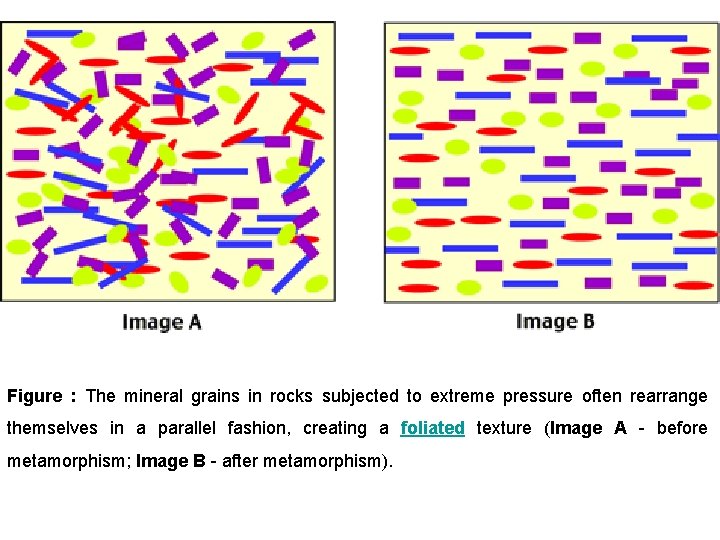
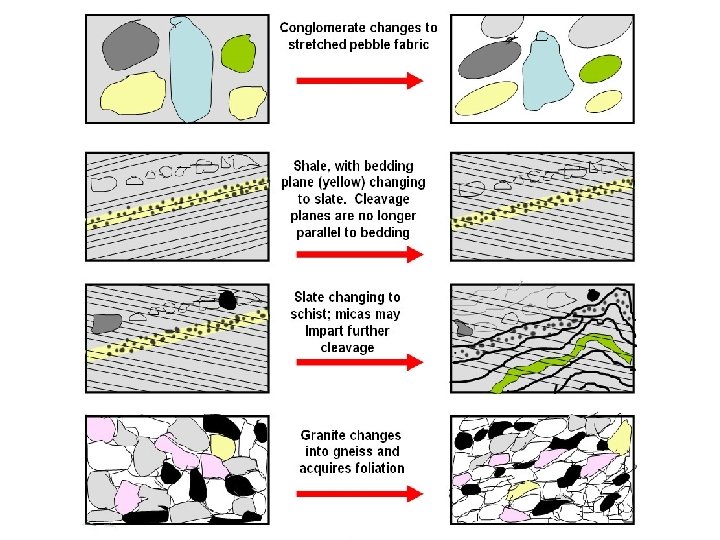
Figure : The mineral grains in rocks subjected to extreme pressure often rearrange themselves in a parallel fashion, creating a foliated texture (Image A - before metamorphism; Image B - after metamorphism).
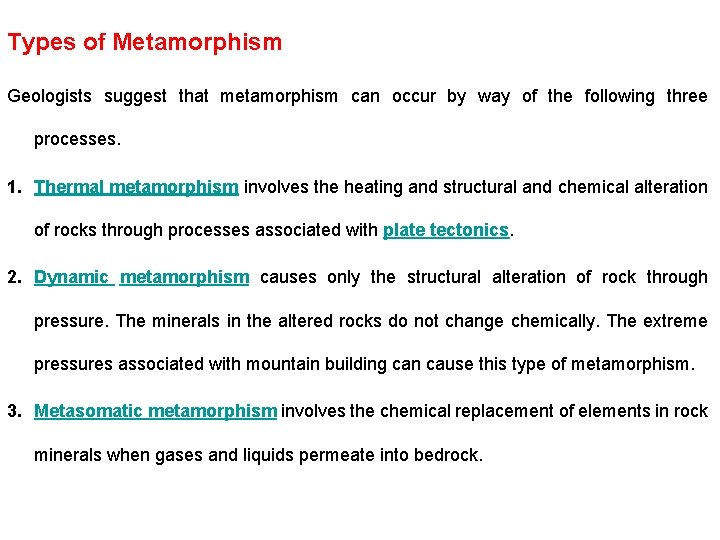
Types of Metamorphism Geologists suggest that metamorphism can occur by way of the following three processes. 1. Thermal metamorphism involves the heating and structural and chemical alteration of rocks through processes associated with plate tectonics. 2. Dynamic metamorphism causes only the structural alteration of rock through pressure. The minerals in the altered rocks do not change chemically. The extreme pressures associated with mountain building can cause this type of metamorphism. 3. Metasomatic metamorphism involves the chemical replacement of elements in rock minerals when gases and liquids permeate into bedrock.
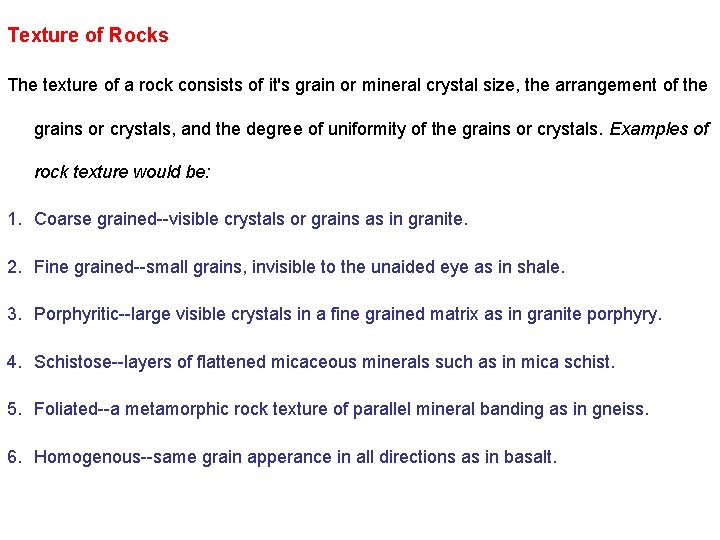
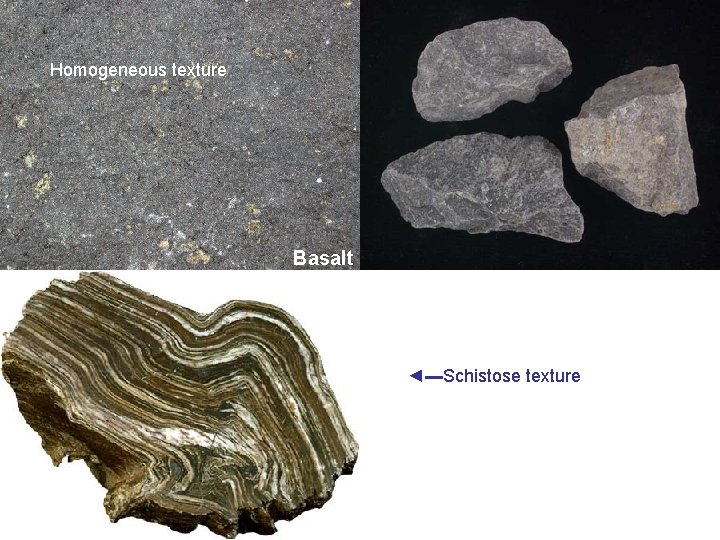
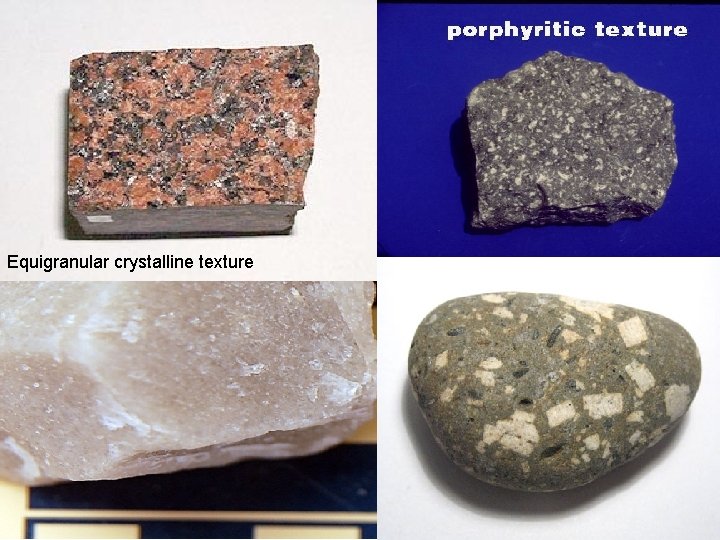
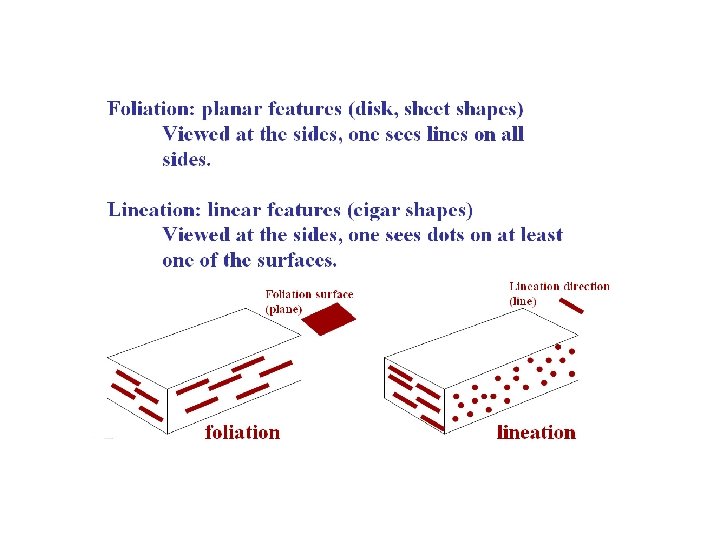
Texture of Rocks The texture of a rock consists of it's grain or mineral crystal size, the arrangement of the grains or crystals, and the degree of uniformity of the grains or crystals. Examples of rock texture would be: 1. Coarse grained--visible crystals or grains as in granite. 2. Fine grained--small grains, invisible to the unaided eye as in shale. 3. Porphyritic--large visible crystals in a fine grained matrix as in granite porphyry. 4. Schistose--layers of flattened micaceous minerals such as in mica schist. 5. Foliated--a metamorphic rock texture of parallel mineral banding as in gneiss. 6. Homogenous--same grain apperance in all directions as in basalt.
Foliated Texture Figure : The mineral grains in rocks subjected to extreme pressure often rearrange themselves in a parallel fashion, creating a foliated texture (Image A - before metamorphism; Image B - after metamorphism).
Homogeneous texture Basalt ◄▬Schistose texture
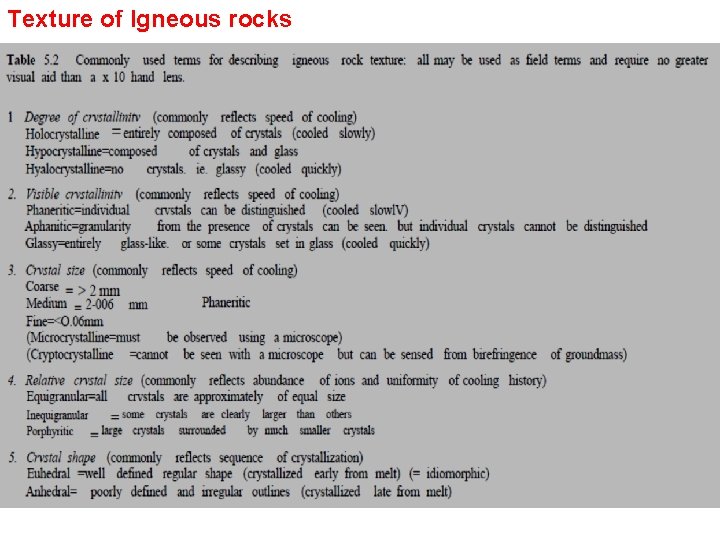
Texture of Igneous rocks
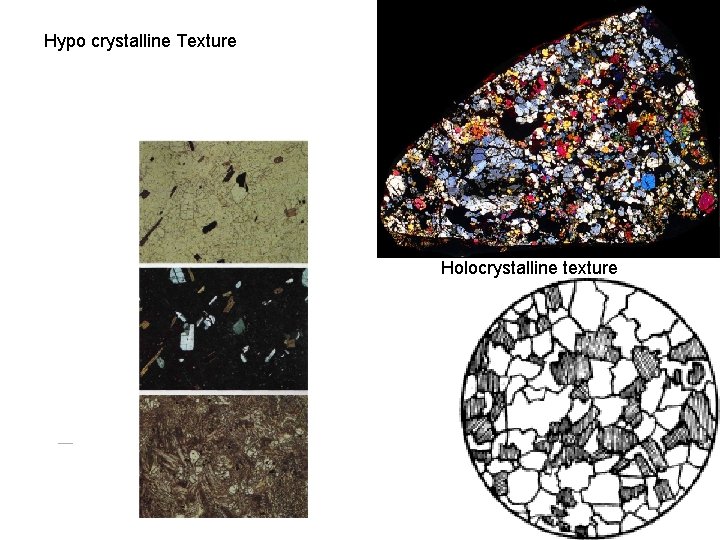
Hypo crystalline Texture Holocrystalline texture
Equigranular crystalline texture
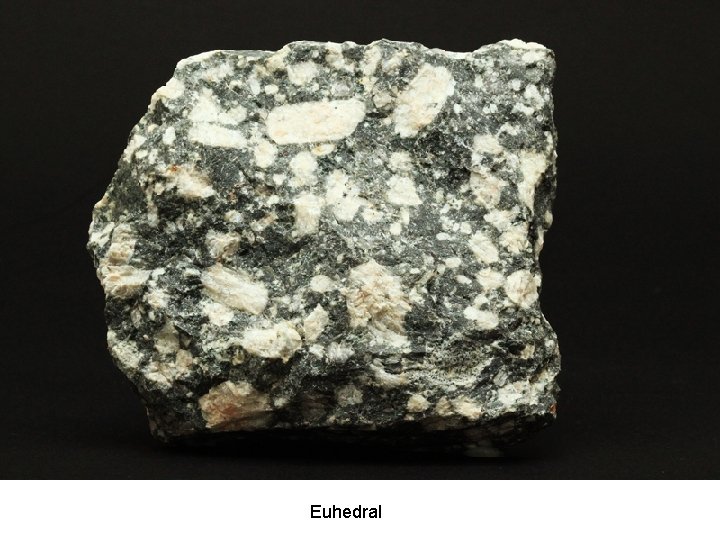
Euhedral
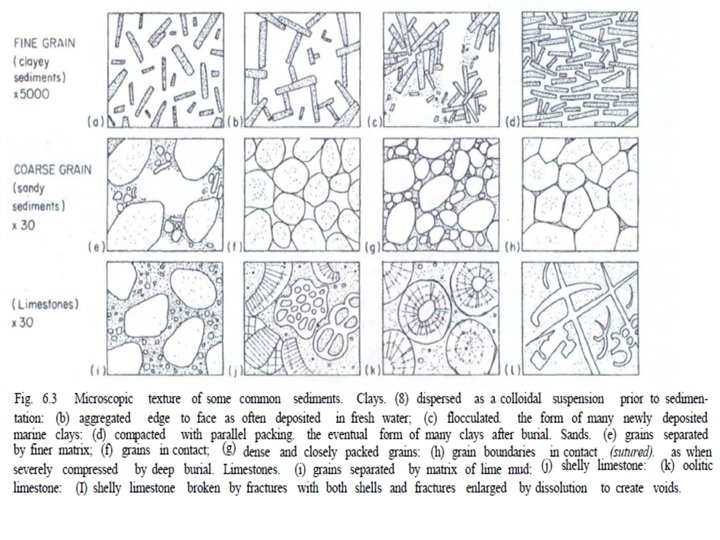
Texture of Sedimentary Rocks
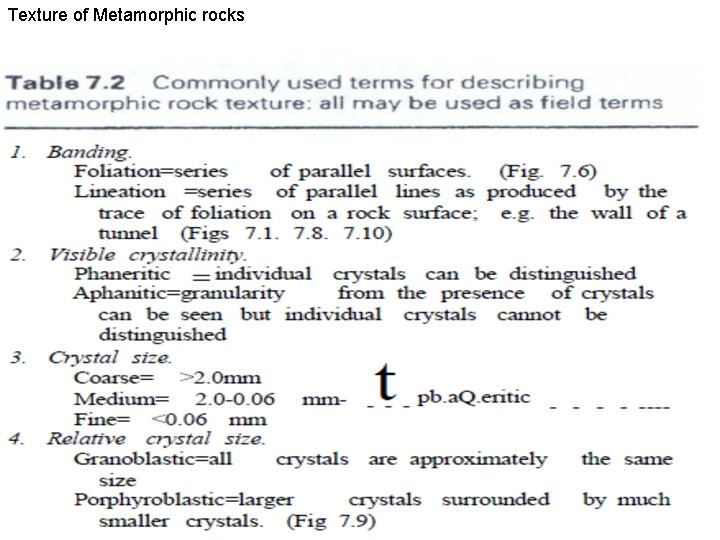
Texture of Metamorphic rocks