
Metamorphic Rocks Formation and Characteristics Metamorphic Rocks Meta

- Slides: 12
Metamorphic Rocks Formation and Characteristics
Metamorphic Rocks �“Meta” means change (Greek) �“Morph” means form (Greek) �A rock that has been changed from its original form (parent rock) by heat, pressure, and fluid activity into a new form (daughter rock).
Types of Metamorphism �Contact – caused by proximity to igneous activity. Heat causes minerals to recrystallize but not melt. �Dynamic – associated with faults and earthquake zones �Regional – Caused by tremendous pressures associated with plate tectonics. Deep burial.
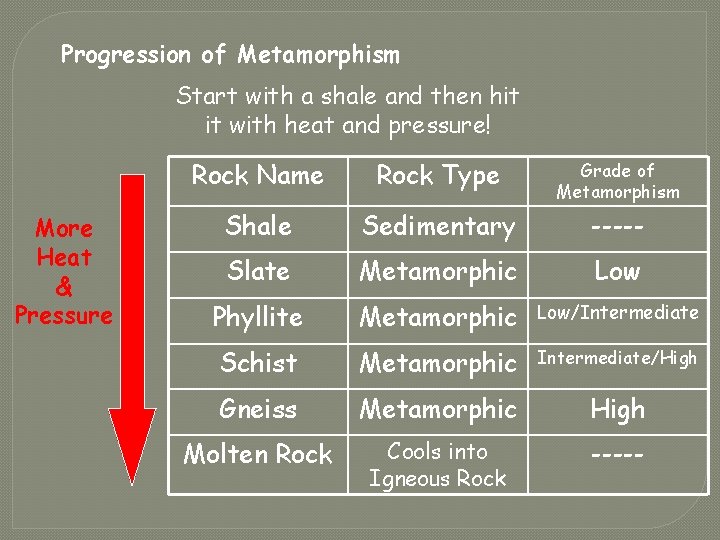
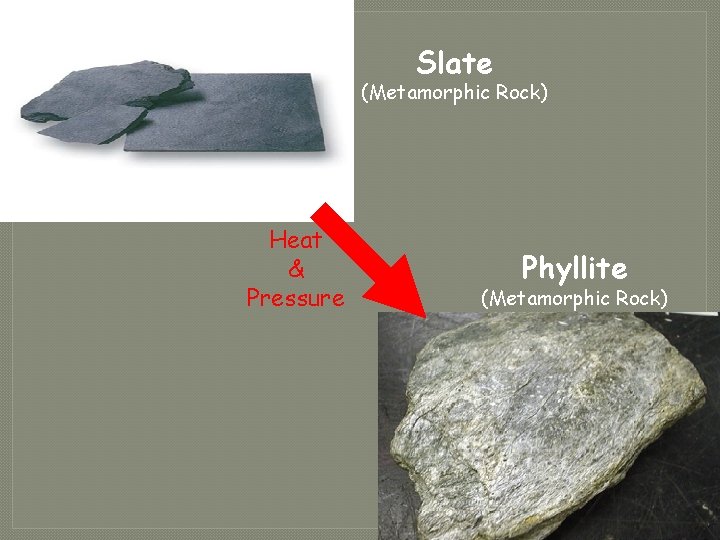
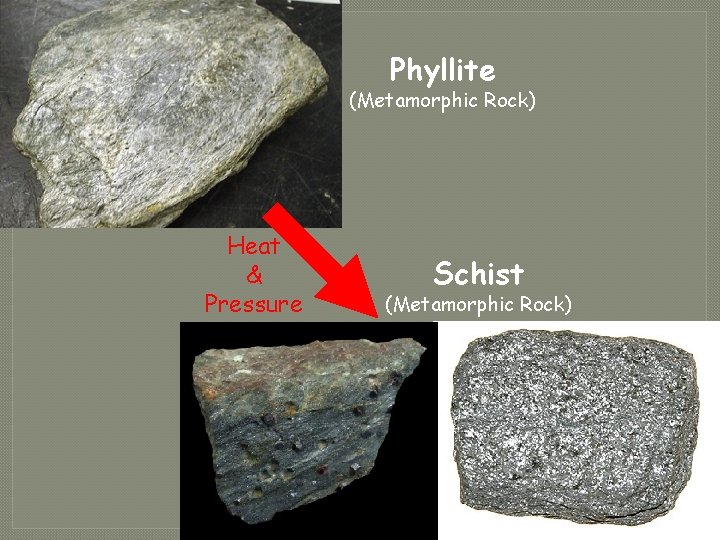
Progression of Metamorphism Start with a shale and then hit it with heat and pressure! More Heat & Pressure Rock Name Rock Type Grade of Metamorphism Shale Sedimentary ----- Slate Metamorphic Low Phyllite Metamorphic Low/Intermediate Schist Metamorphic Intermediate/High Gneiss Metamorphic High Molten Rock Cools into Igneous Rock -----
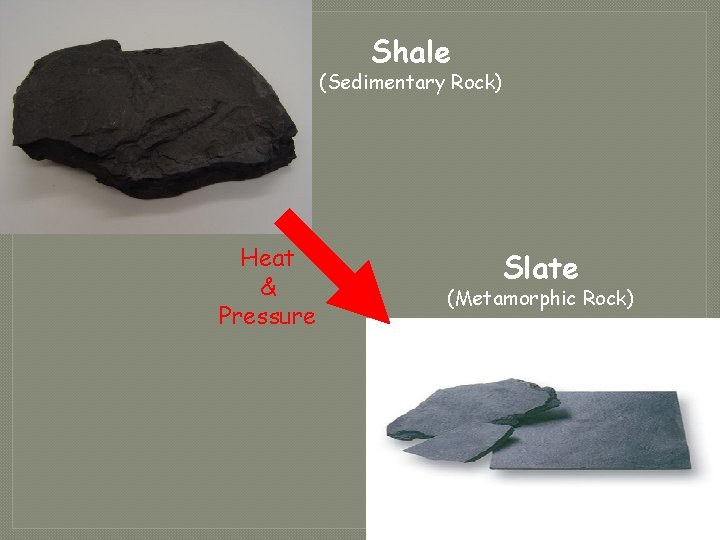
Shale (Sedimentary Rock) Heat & Pressure Slate (Metamorphic Rock)
Slate (Metamorphic Rock) Heat & Pressure Phyllite (Metamorphic Rock)
Phyllite (Metamorphic Rock) Heat & Pressure Schist (Metamorphic Rock)
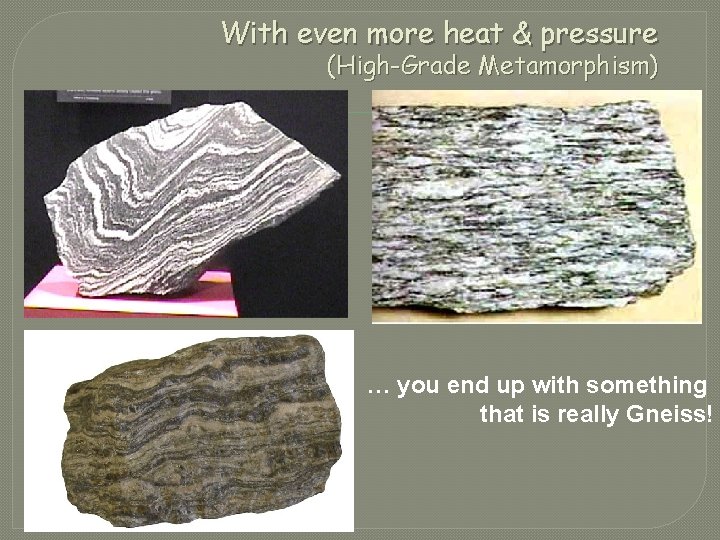
With even more heat & pressure (High-Grade Metamorphism) … you end up with something that is really Gneiss!
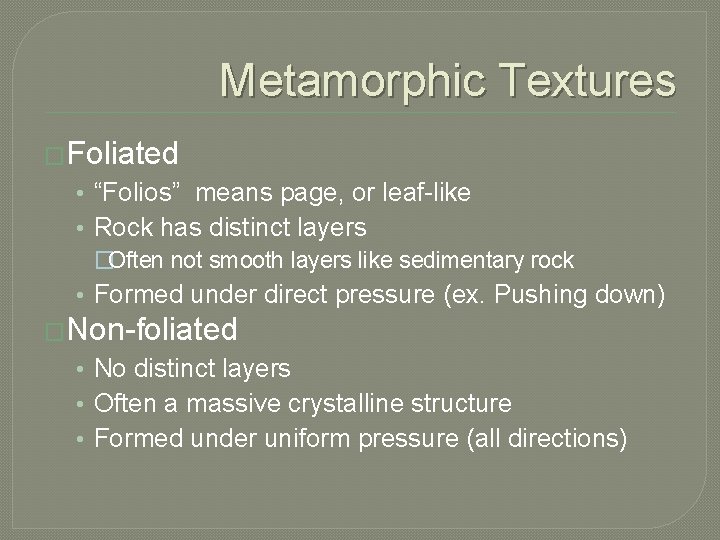
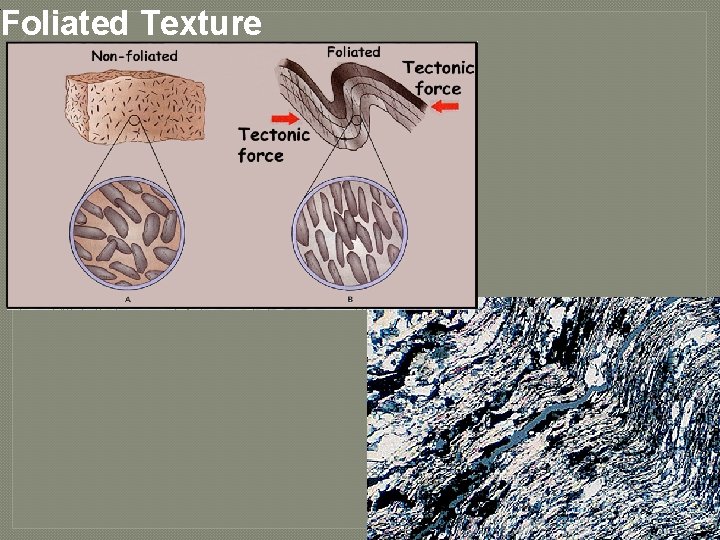
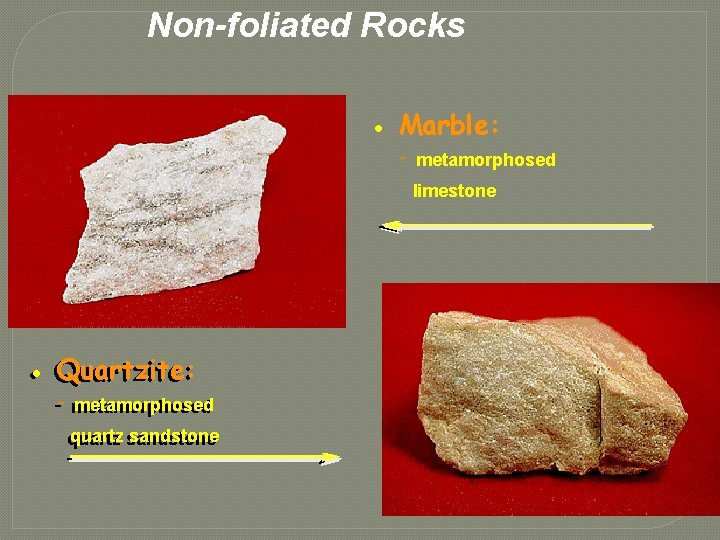
Metamorphic Textures �Foliated • “Folios” means page, or leaf-like • Rock has distinct layers �Often not smooth layers like sedimentary rock • Formed under direct pressure (ex. Pushing down) �Non-foliated • No distinct layers • Often a massive crystalline structure • Formed under uniform pressure (all directions)
Foliated Texture
Non-foliated Rocks • Marble: - metamorphosed limestone Quartzite: • • Quartzite: -- metamorphosed quartz sandstone quartz
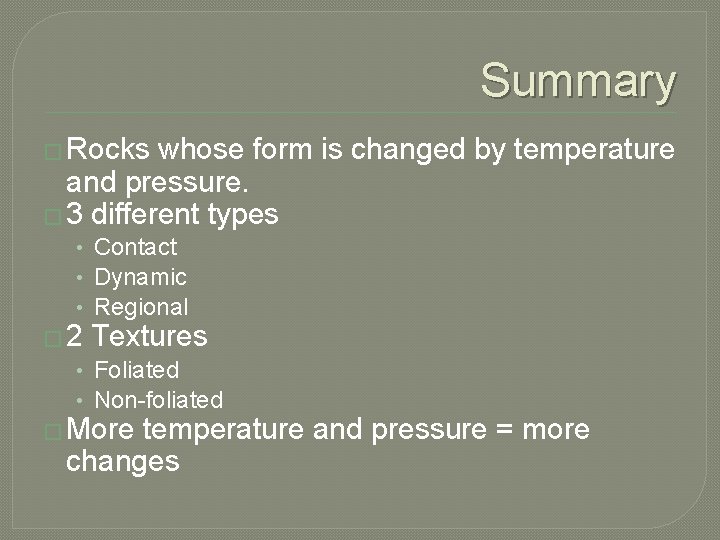
Summary � Rocks whose form is changed by temperature and pressure. � 3 different types • Contact • Dynamic • Regional � 2 Textures • Foliated • Non-foliated � More temperature changes and pressure = more