
metamorphic rocks ESRT page 7 Write what is

- Slides: 16
metamorphic rocks ESRT page 7 Write what is in BLUE
Key ideas • Formed when existing rocks are changed by HEAT & PRESSURE, forming new, larger, denser crystalline structures • The new rocks resemble the “parent” rock • Parent rock: Preexisting rock • Recrystallization: A process in which rocks undergo change without truly melting
More Key Ideas • IMPORTANT- THE ORIGINAL ROCK CANNOT MELT WHEN IT BECOMES METAMORPHIC! (If it melts, it’s igneous!) • Metamorphism
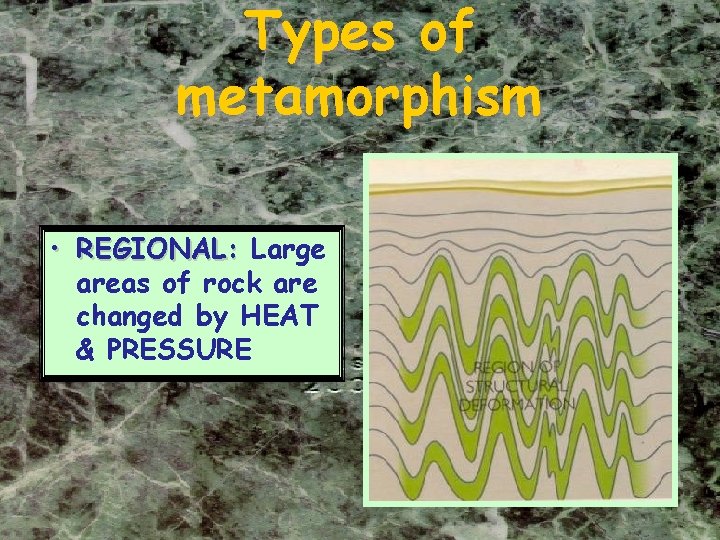
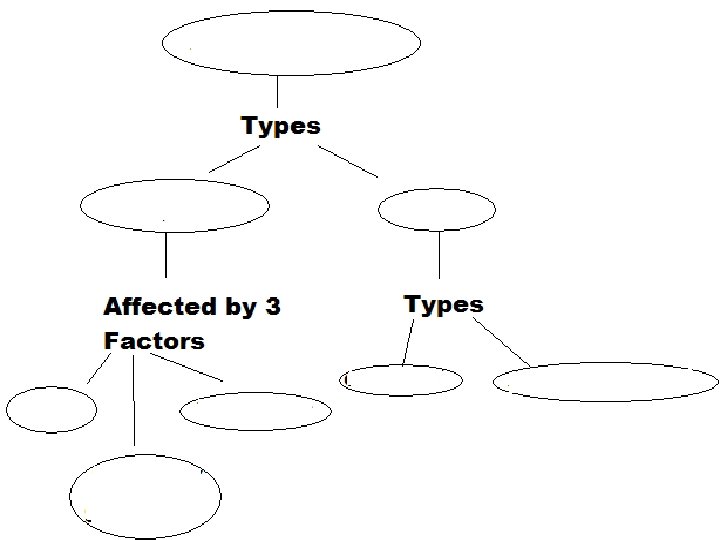
Types of metamorphism • REGIONAL: Large areas of rock are changed by HEAT & PRESSURE
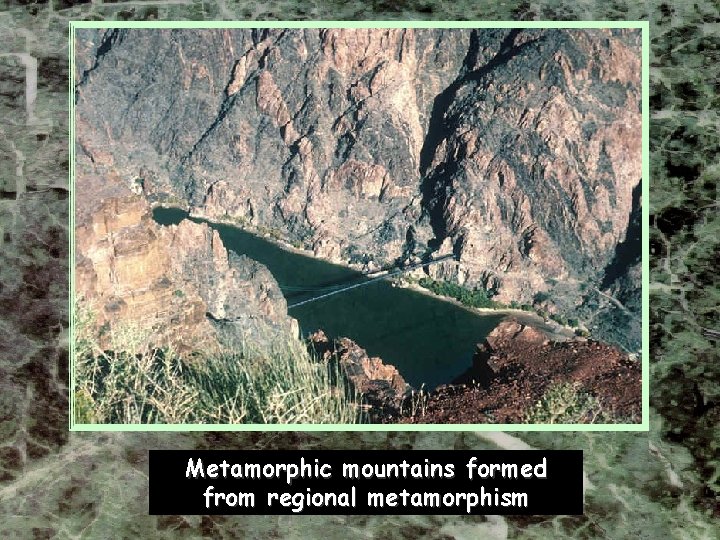
Metamorphic mountains formed from regional metamorphism
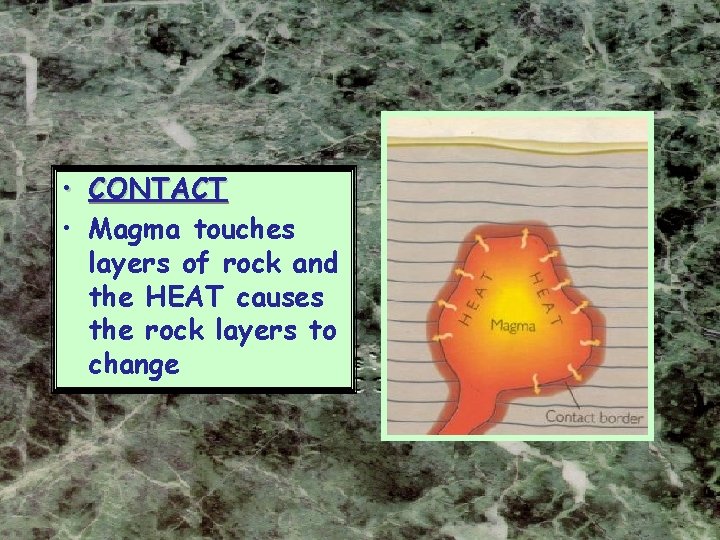
• CONTACT • Magma touches layers of rock and the HEAT causes the rock layers to change
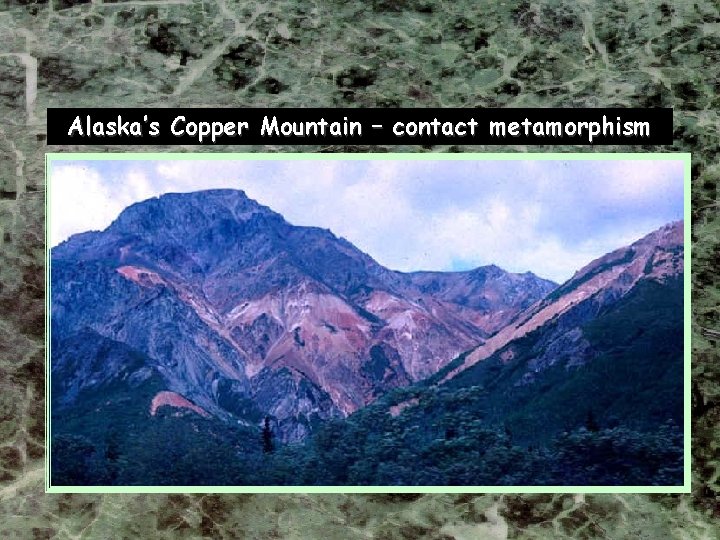
Alaska’s Copper Mountain – contact metamorphism
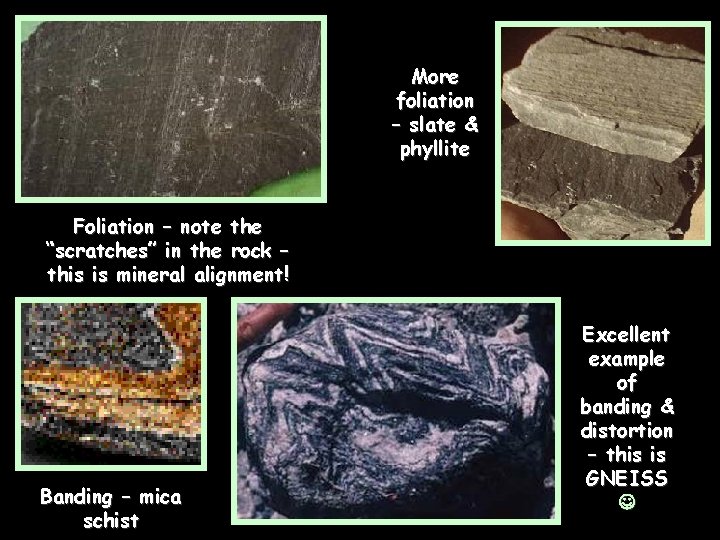
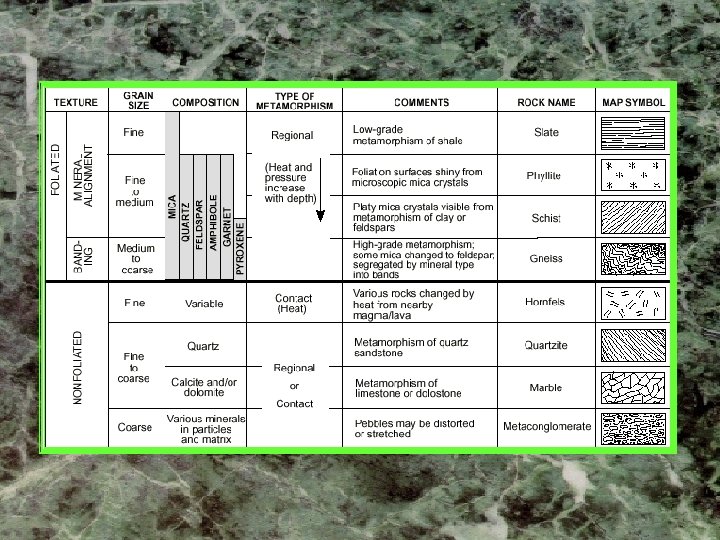
Identifying characteristics • FOLIATION – mineral alignment – the minerals in the rock are layered, which facilitates breakage along flat planes • BANDING – alternating layers of different colored minerals – These bands are usually distorted from the heat & pressure
More foliation – slate & phyllite Foliation – note the “scratches” in the rock – this is mineral alignment! Banding – mica schist Excellent example of banding & distortion – this is GNEISS
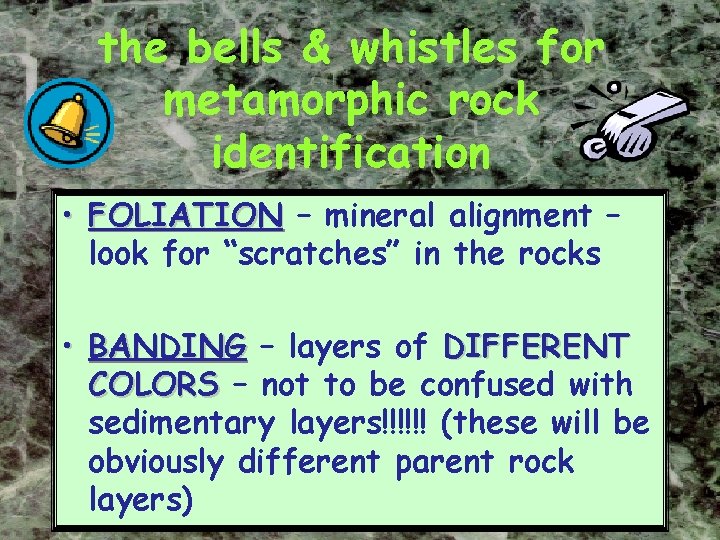
the bells & whistles for metamorphic rock identification • FOLIATION – mineral alignment – look for “scratches” in the rocks • BANDING – layers of DIFFERENT COLORS – not to be confused with sedimentary layers!!!!!! (these will be obviously different parent rock layers)
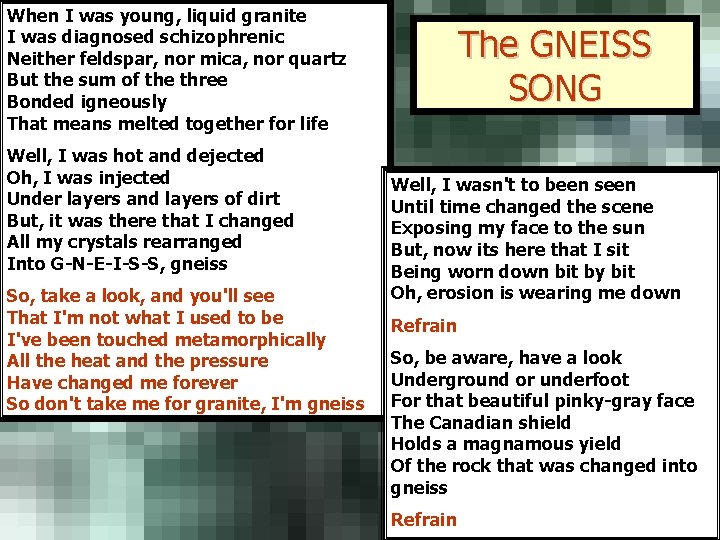
When I was young, liquid granite I was diagnosed schizophrenic Neither feldspar, nor mica, nor quartz But the sum of the three Bonded igneously That means melted together for life Well, I was hot and dejected Oh, I was injected Under layers and layers of dirt But, it was there that I changed All my crystals rearranged Into G-N-E-I-S-S, gneiss So, take a look, and you'll see That I'm not what I used to be I've been touched metamorphically All the heat and the pressure Have changed me forever So don't take me for granite, I'm gneiss The GNEISS SONG Well, I wasn't to been seen Until time changed the scene Exposing my face to the sun But, now its here that I sit Being worn down bit by bit Oh, erosion is wearing me down Refrain So, be aware, have a look Underground or underfoot For that beautiful pinky-gray face The Canadian shield Holds a magnamous yield Of the rock that was changed into gneiss Refrain
Okay… Let’s sum up!
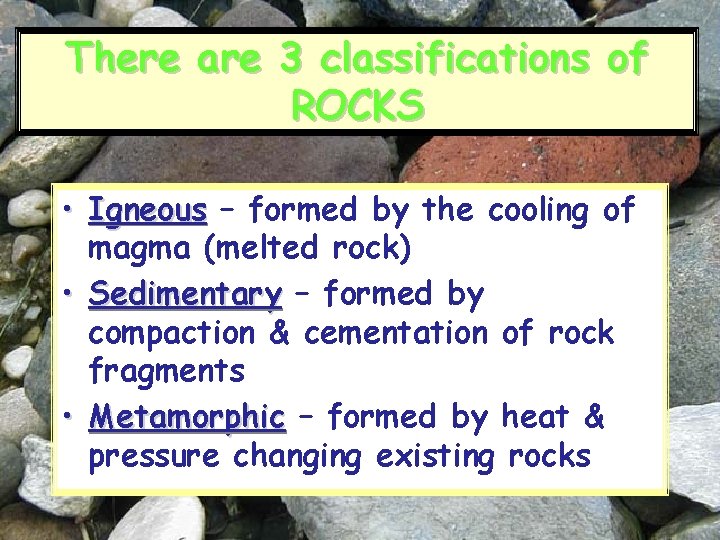
There are 3 classifications of ROCKS • Igneous – formed by the cooling of magma (melted rock) • Sedimentary – formed by compaction & cementation of rock fragments • Metamorphic – formed by heat & pressure changing existing rocks
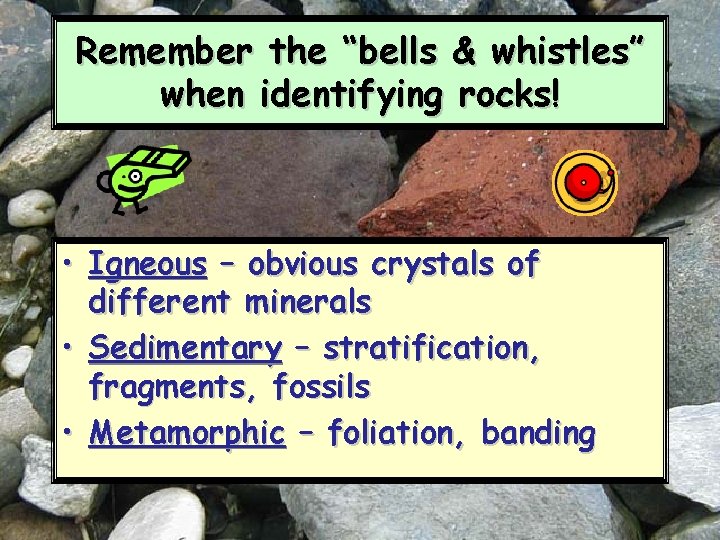
Remember the “bells & whistles” when identifying rocks! • Igneous – obvious crystals of different minerals • Sedimentary – stratification, fragments, fossils • Metamorphic – foliation, banding