
Metamorphic Rock Classification Metamorphic Rock Textures Textural Responses


- Slides: 85
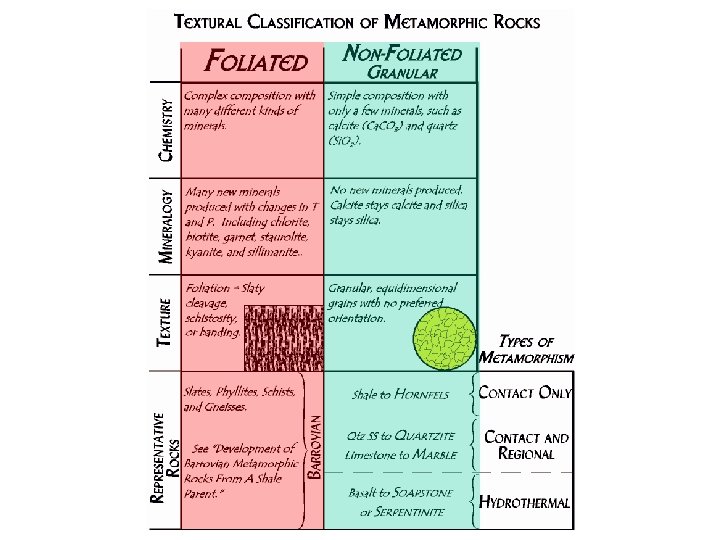
Metamorphic Rock Classification Metamorphic Rock Textures
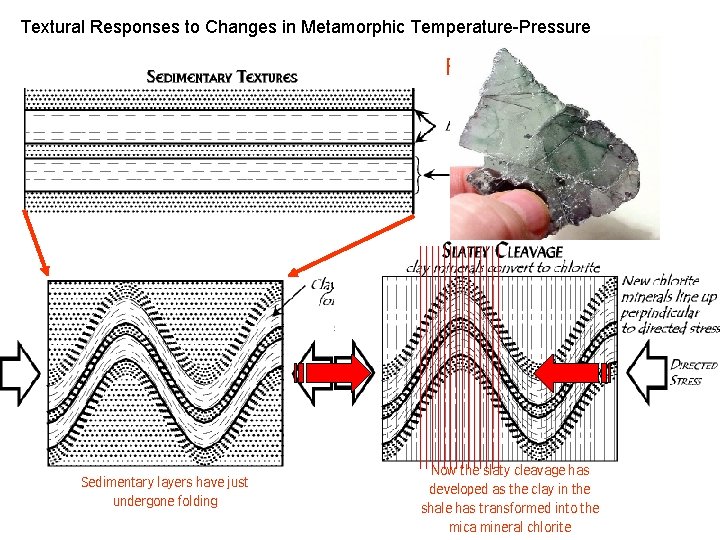
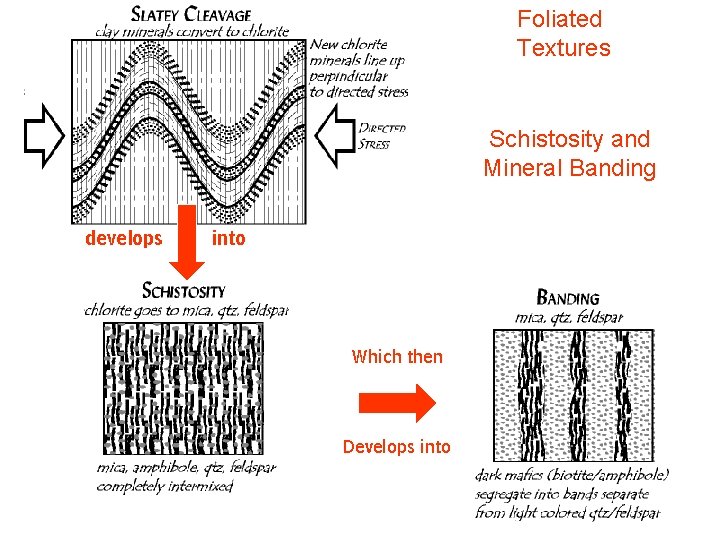
Textural Responses to Changes in Metamorphic Temperature-Pressure Foliated Textures Slaty Cleavage Sedimentary layers have just undergone folding Now the slaty cleavage has developed as the clay in the shale has transformed into the mica mineral chlorite
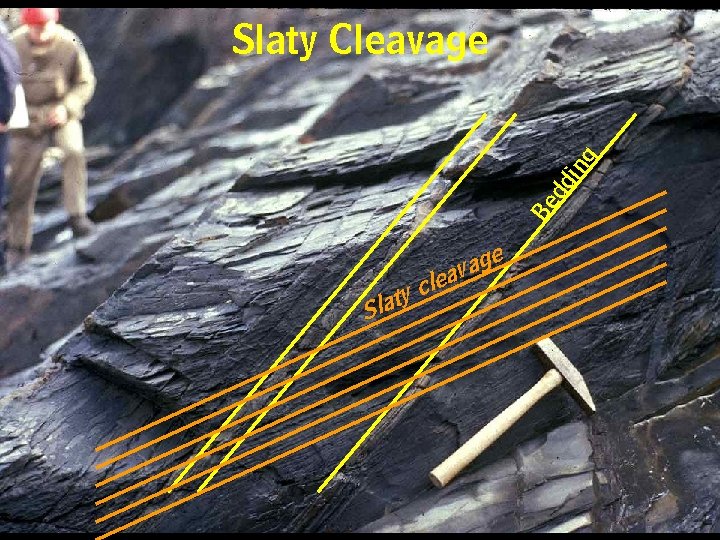
Be dd in g Slaty Cleavage l ge a v ea S c y t la
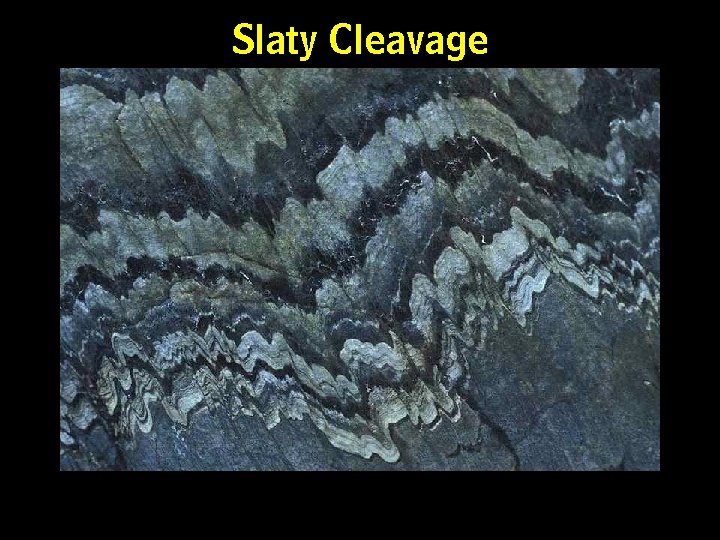
Slaty Cleavage
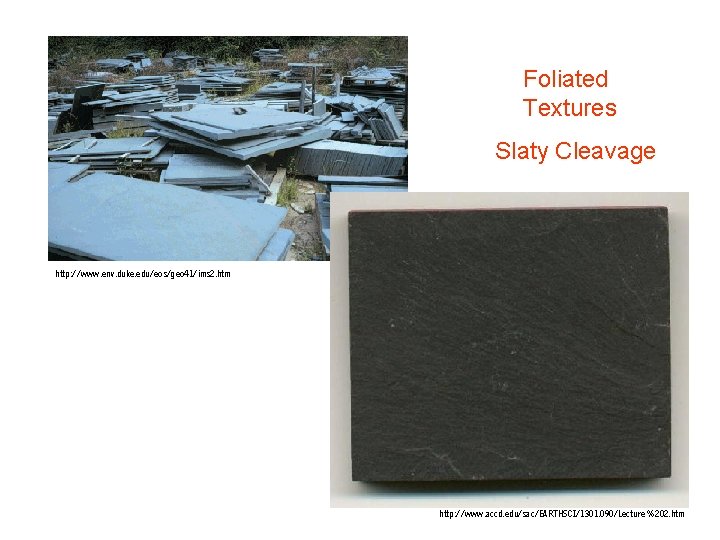
Foliated Textures Slaty Cleavage http: //www. env. duke. edu/eos/geo 41/ims 2. htm http: //www. accd. edu/sac/EARTHSCI/1301. 090/Lecture %202. htm
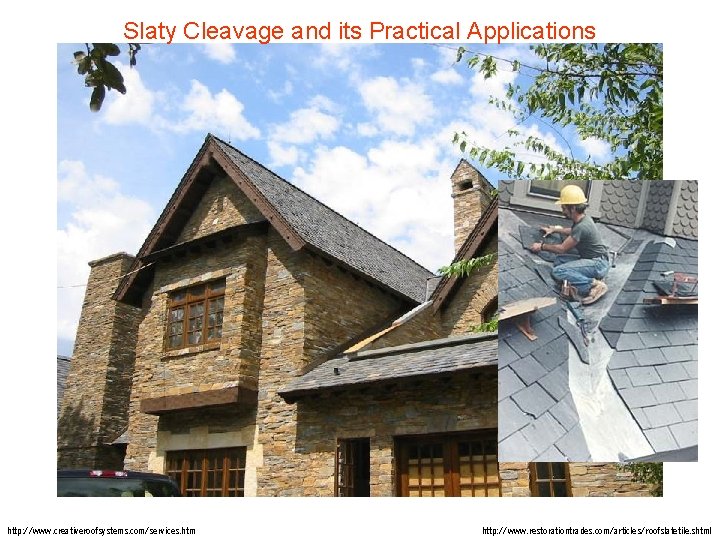
Slaty Cleavage and its Practical Applications http: //www. creativeroofsystems. com/services. htm http: //www. restorationtrades. com/articles/roofslatetile. shtml
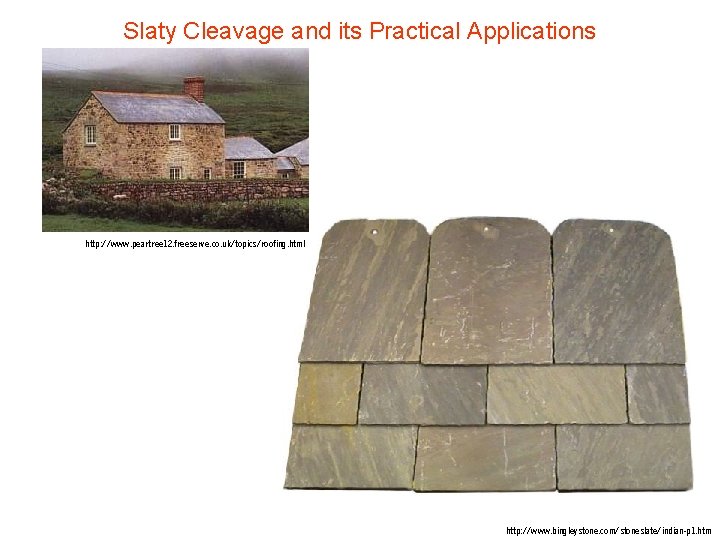
Slaty Cleavage and its Practical Applications http: //www. peartree 12. freeserve. co. uk/topics/roofing. html http: //www. bingleystone. com/stoneslate/indian-p 1. htm
Foliated Textures Schistosity and Mineral Banding develops into Which then Develops into
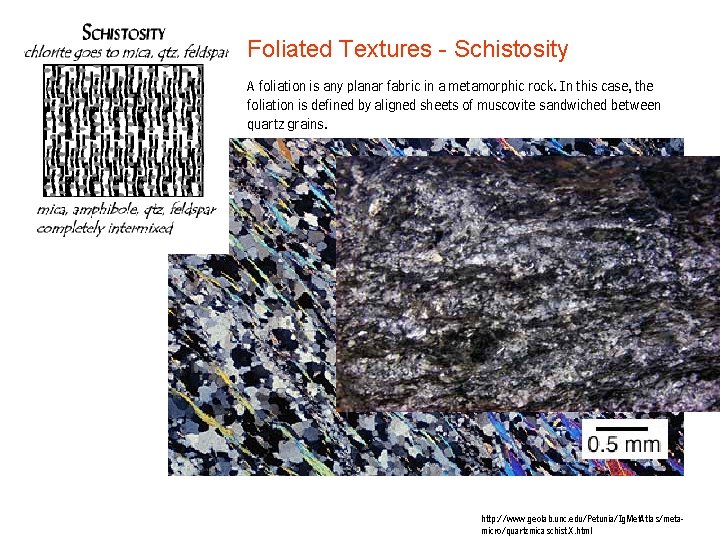
Foliated Textures - Schistosity A foliation is any planar fabric in a metamorphic rock. In this case, the foliation is defined by aligned sheets of muscovite sandwiched between quartz grains. http: //www. geolab. unc. edu/Petunia/Ig. Met. Atlas/metamicro/quartzmicaschist. X. html
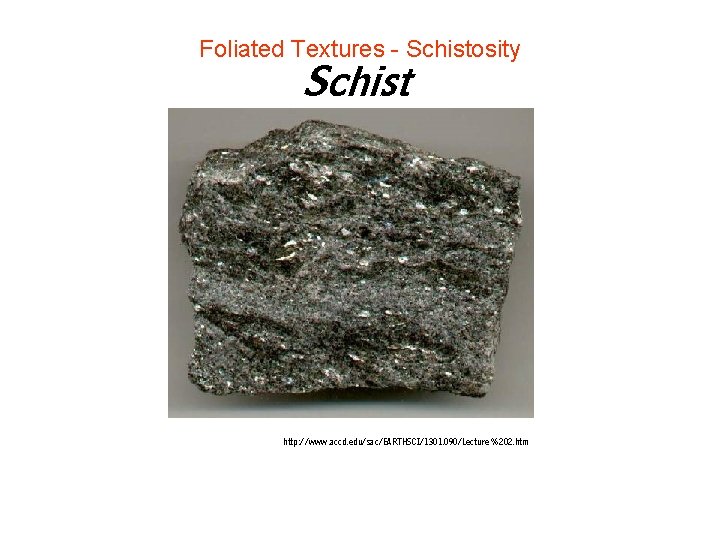
Foliated Textures - Schistosity Schist http: //www. accd. edu/sac/EARTHSCI/1301. 090/Lecture %202. htm
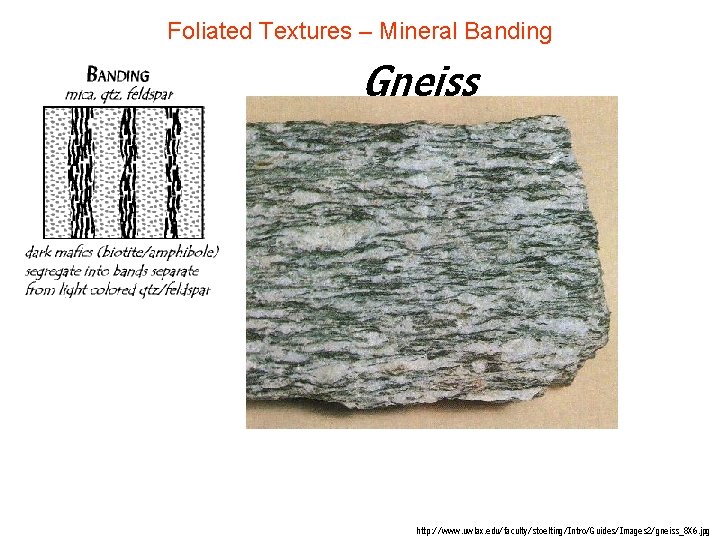
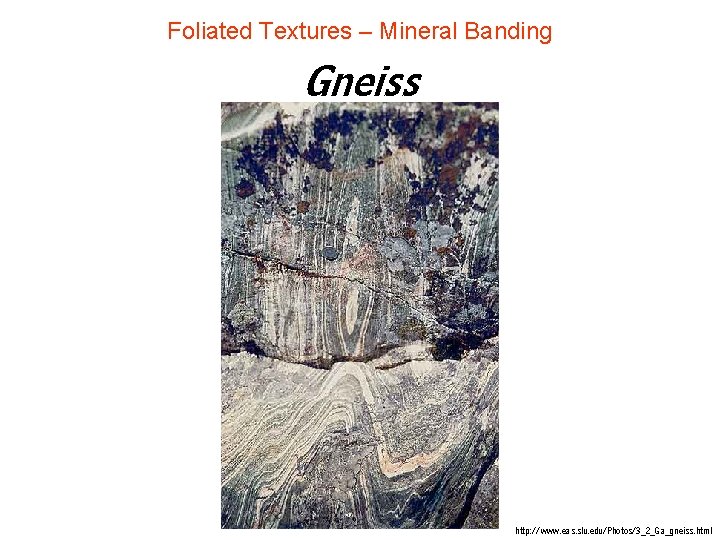
Foliated Textures – Mineral Banding Gneiss http: //www. uwlax. edu/faculty/stoelting/Intro/Guides/Images 2/gneiss_8 X 6. jpg
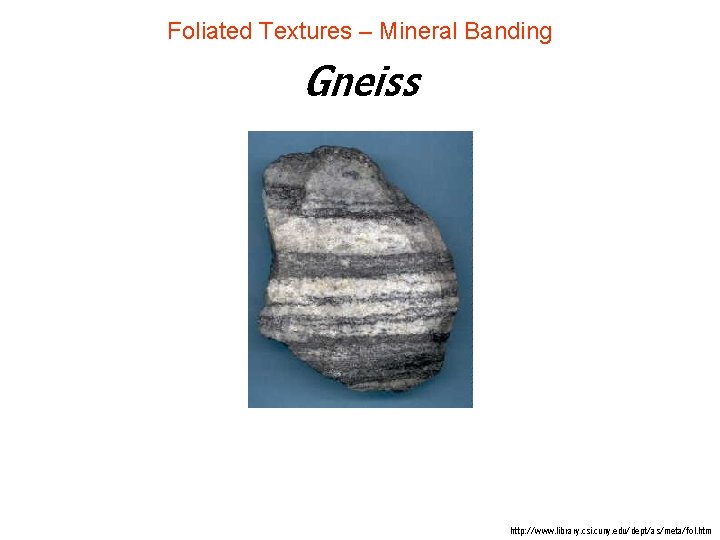
Foliated Textures – Mineral Banding Gneiss http: //www. library. csi. cuny. edu/dept/as/meta/fol. htm
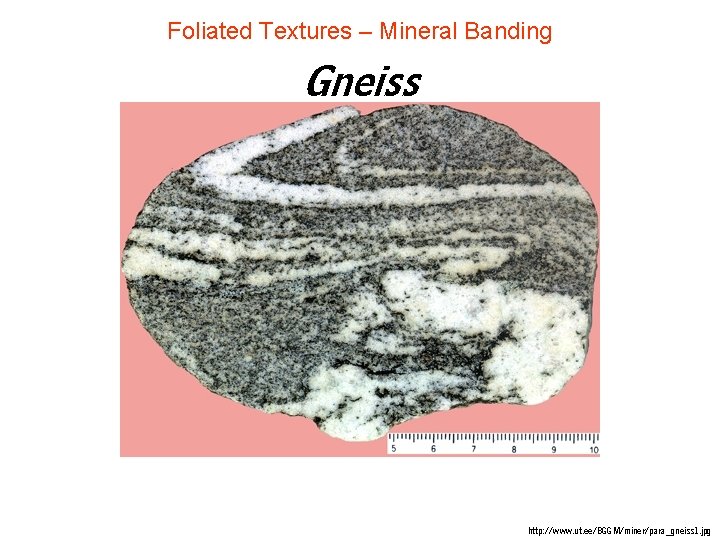
Foliated Textures – Mineral Banding Gneiss http: //www. ut. ee/BGGM/miner/para_gneiss 1. jpg
Foliated Textures – Mineral Banding Gneiss http: //www. eas. slu. edu/Photos/3_2_Ga_gneiss. html
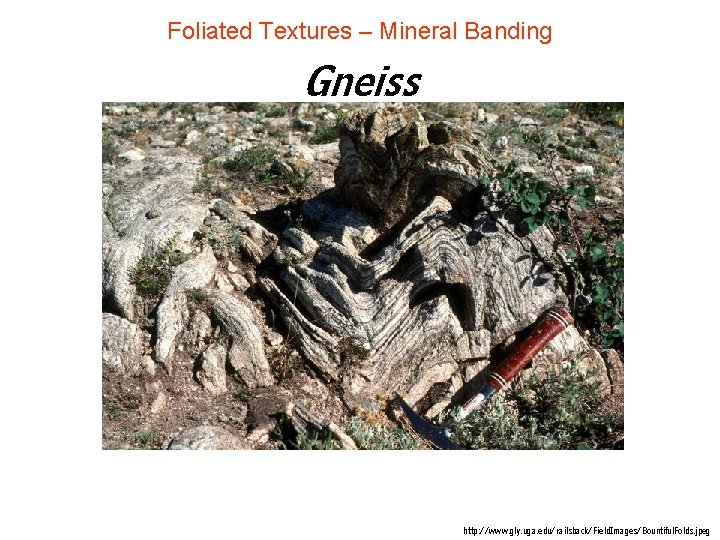
Foliated Textures – Mineral Banding Gneiss http: //www. gly. uga. edu/railsback/Field. Images/Bountiful. Folds. jpeg
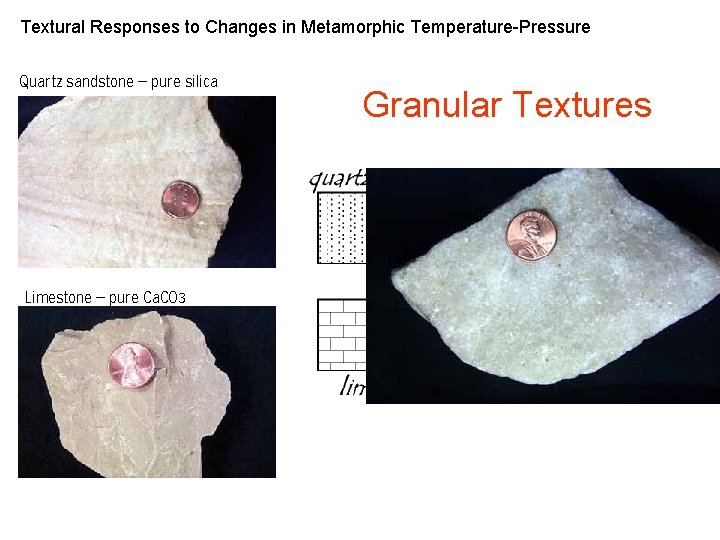
Textural Responses to Changes in Metamorphic Temperature-Pressure Quartz sandstone – pure silica Limestone – pure Ca. CO 3 Granular Textures
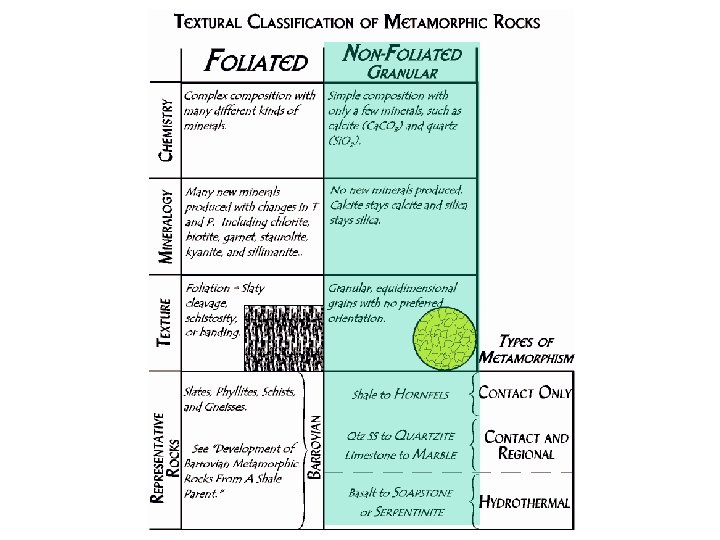
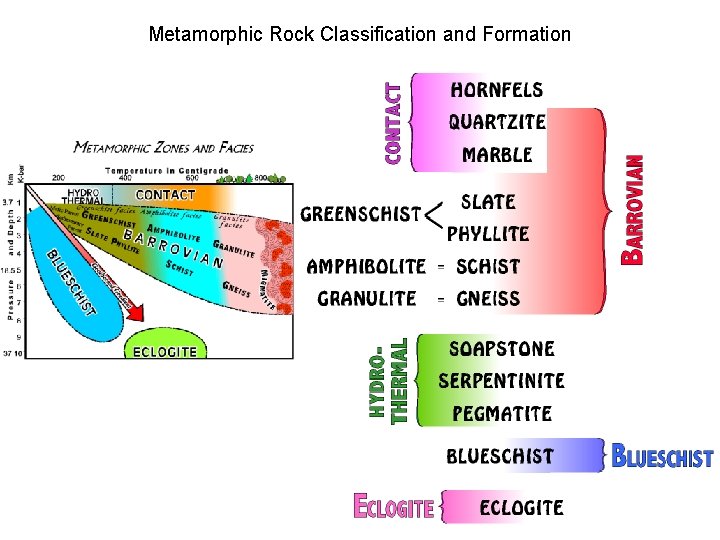
Metamorphic Rock Classification and Formation
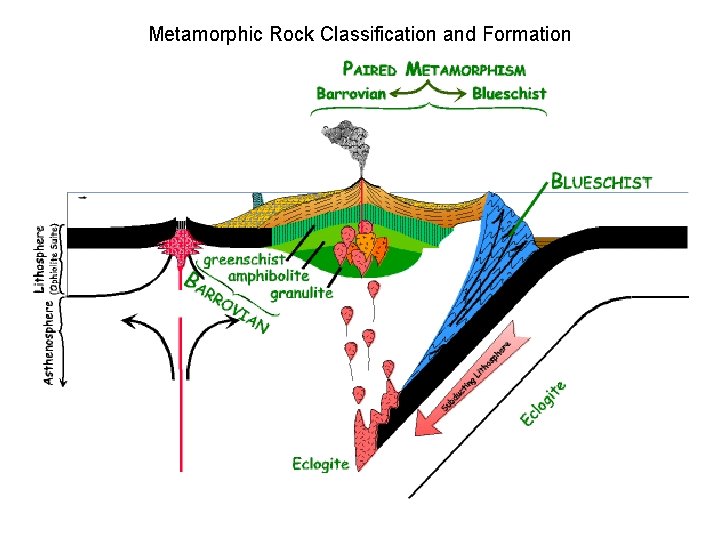
Metamorphic Rock Classification and Formation
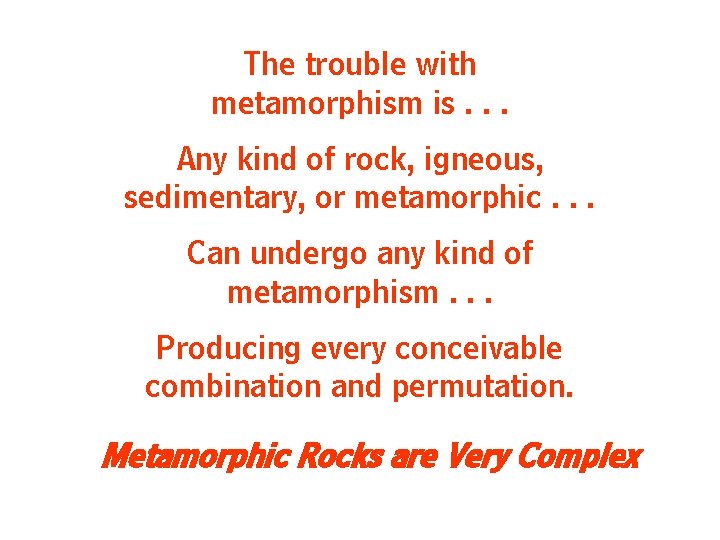
The trouble with metamorphism is. . . Any kind of rock, igneous, sedimentary, or metamorphic. . . Can undergo any kind of metamorphism. . . Producing every conceivable combination and permutation. Metamorphic Rocks are Very Complex
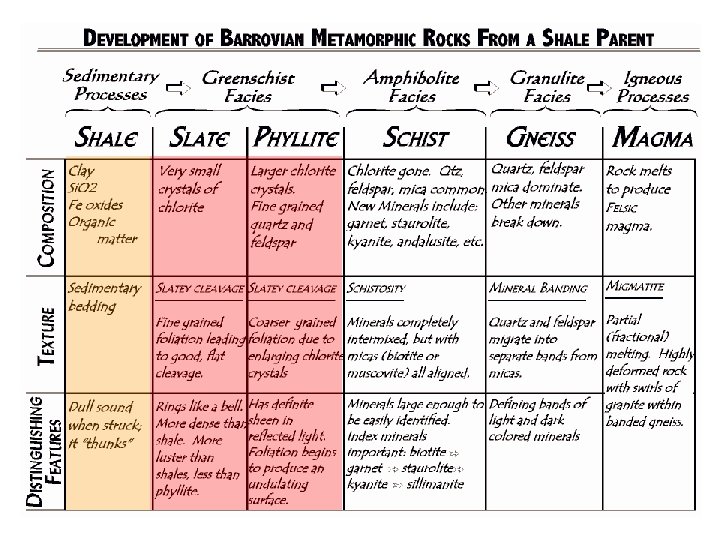
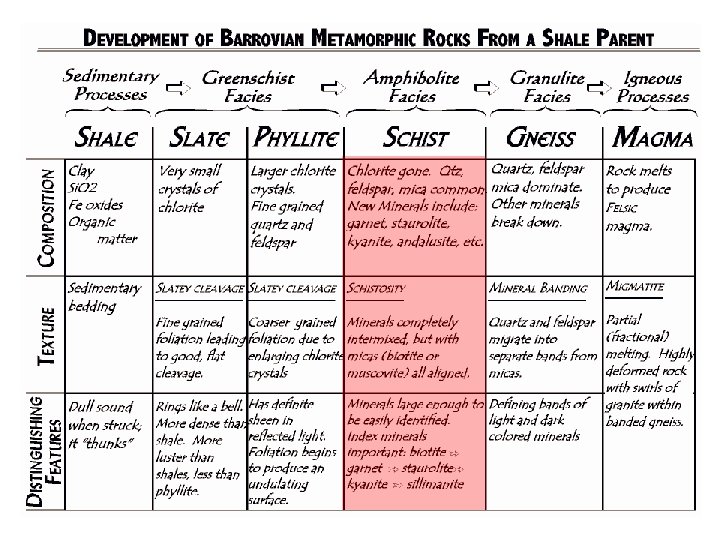
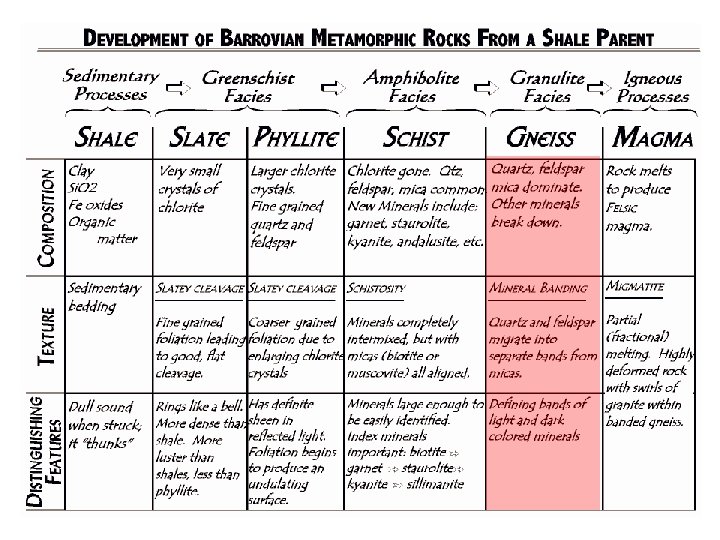
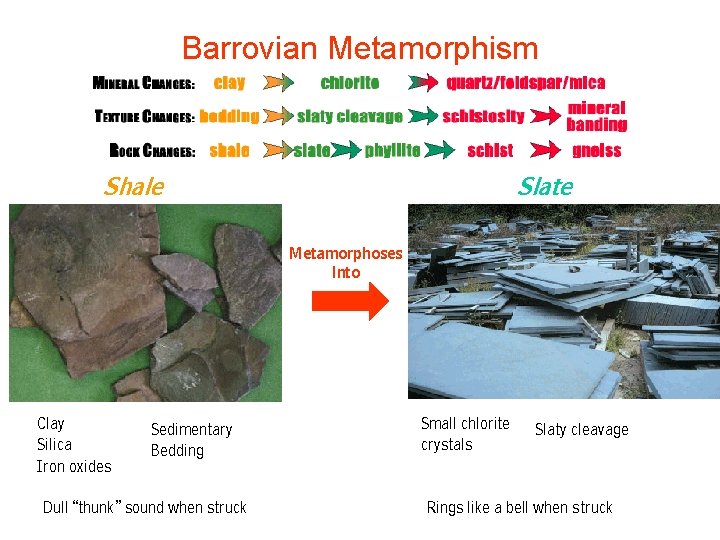
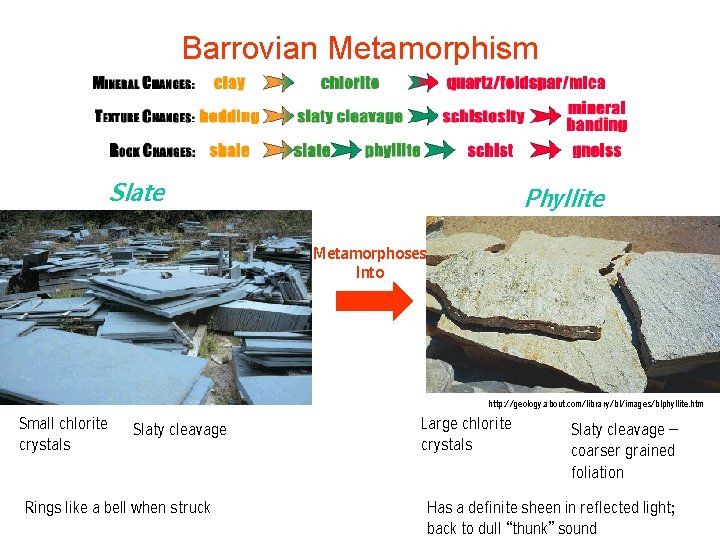
Barrovian Metamorphism Shale Slate Metamorphoses Into Clay Silica Iron oxides Sedimentary Bedding Dull “thunk” sound when struck Small chlorite crystals Slaty cleavage Rings like a bell when struck
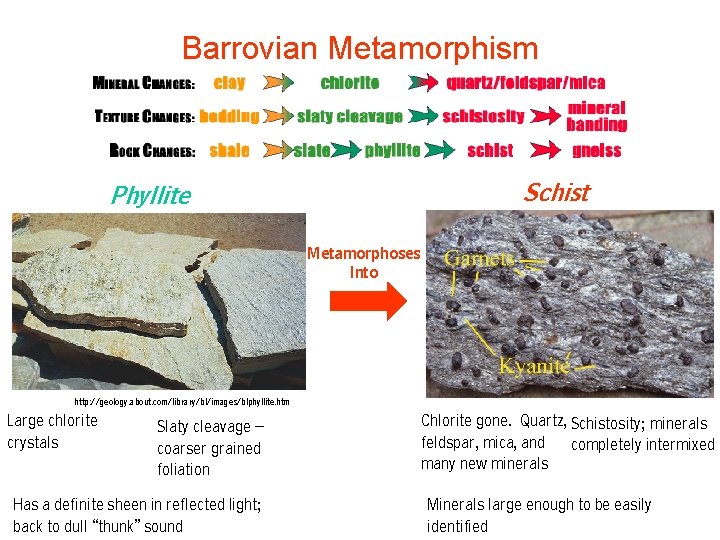
Barrovian Metamorphism Slate Phyllite Metamorphoses Into http: //geology. about. com/library/bl/images/blphyllite. htm Small chlorite crystals Slaty cleavage Rings like a bell when struck Large chlorite crystals Slaty cleavage – coarser grained foliation Has a definite sheen in reflected light; back to dull “thunk” sound
Barrovian Metamorphism Schist Phyllite Metamorphoses Into http: //geology. about. com/library/bl/images/blphyllite. htm Large chlorite crystals Slaty cleavage – coarser grained foliation Has a definite sheen in reflected light; back to dull “thunk” sound Chlorite gone. Quartz, Schistosity; minerals feldspar, mica, and completely intermixed many new minerals Minerals large enough to be easily identified
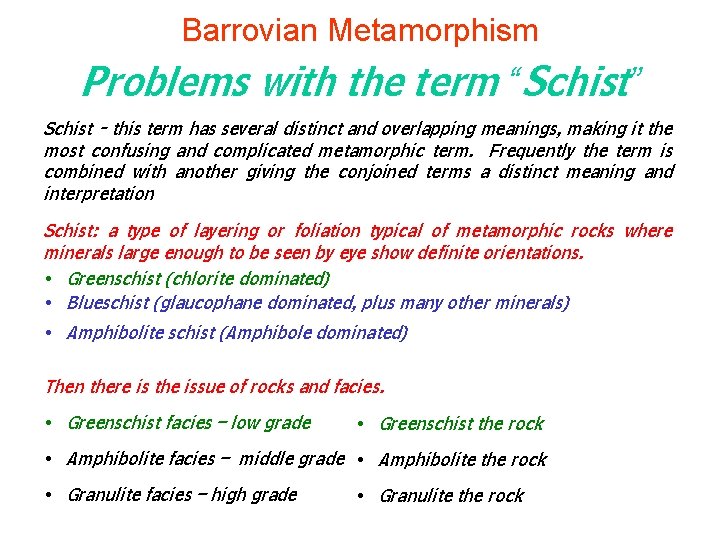
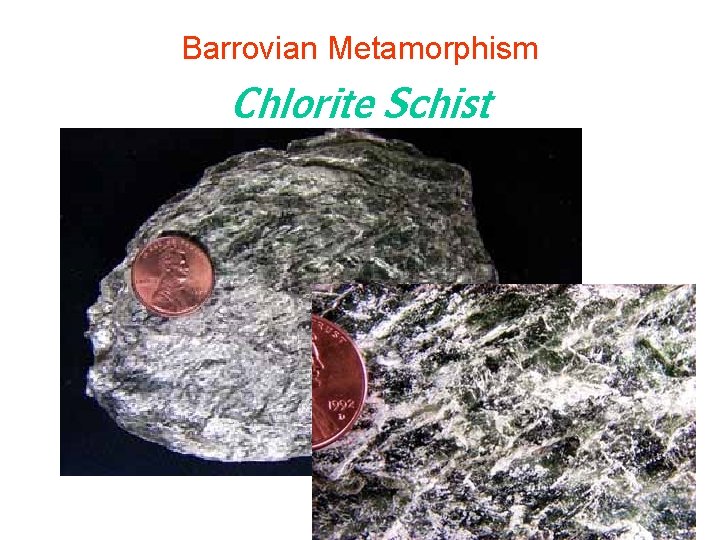
Barrovian Metamorphism Problems with the term “Schist” Schist - this term has several distinct and overlapping meanings, making it the most confusing and complicated metamorphic term. Frequently the term is combined with another giving the conjoined terms a distinct meaning and interpretation Schist: a type of layering or foliation typical of metamorphic rocks where minerals large enough to be seen by eye show definite orientations. • Greenschist (chlorite dominated) • Blueschist (glaucophane dominated, plus many other minerals) • Amphibolite schist (Amphibole dominated) Then there is the issue of rocks and facies. • Greenschist facies – low grade • Greenschist the rock • Amphibolite facies – middle grade • Amphibolite the rock • Granulite facies – high grade • Granulite the rock
Barrovian Metamorphism Chlorite Schist
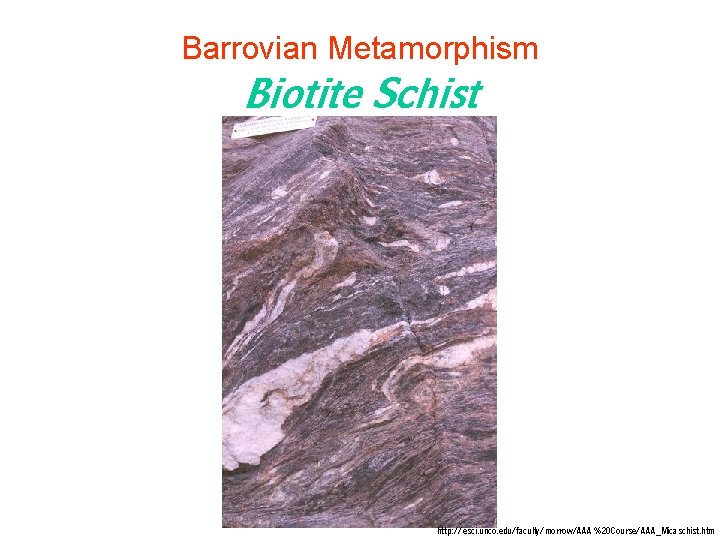
Barrovian Metamorphism Biotite Schist http: //esci. unco. edu/faculty/morrow/AAA%20 Course/AAA_Micaschist. htm
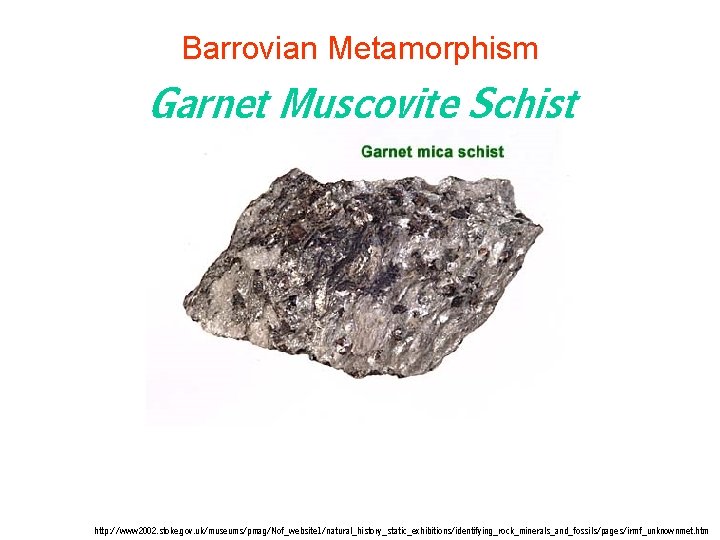
Barrovian Metamorphism Garnet Muscovite Schist http: //www 2002. stoke. gov. uk/museums/pmag/Nof_website 1/natural_history_static_exhibitions/identifying_rock_minerals_and_fossils/pages/irmf_unknownmet. htm
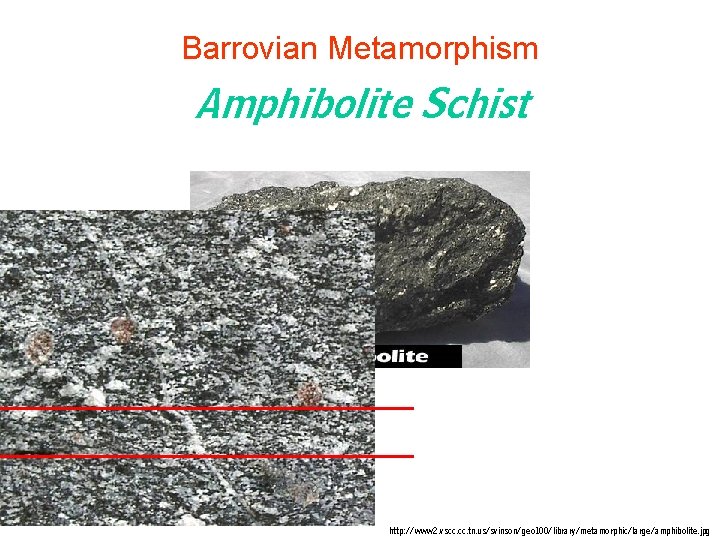
Barrovian Metamorphism Amphibolite Schist http: //www 2. vscc. tn. us/svinson/geo 100/library/metamorphic/large/amphibolite. jpg
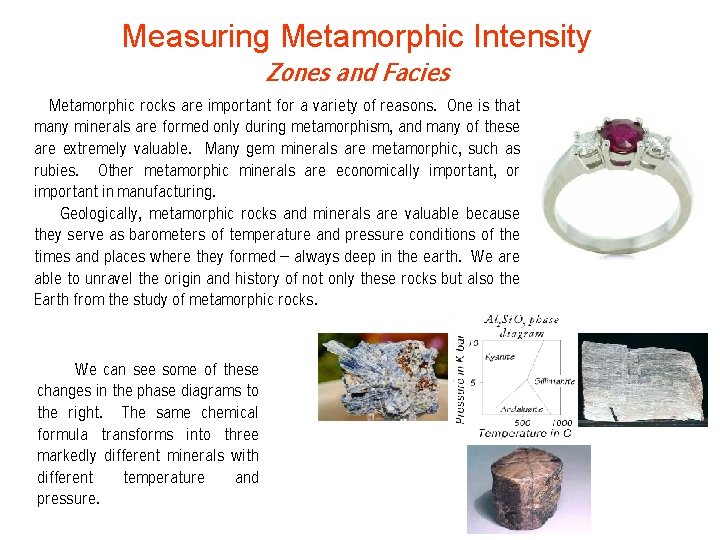
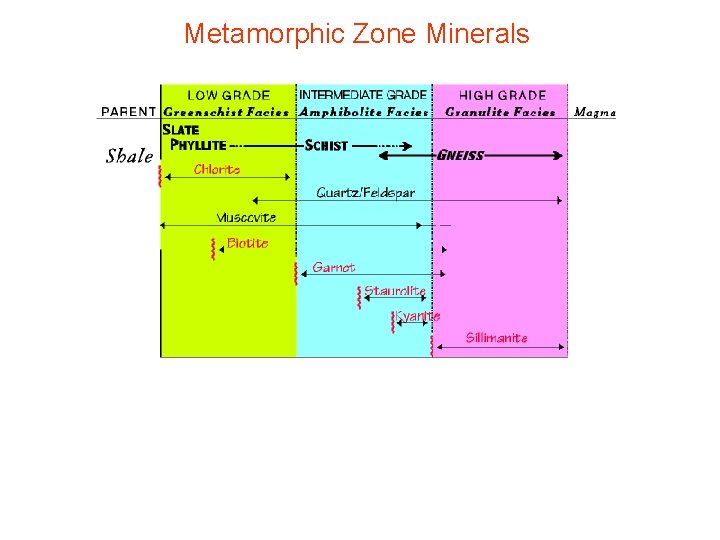
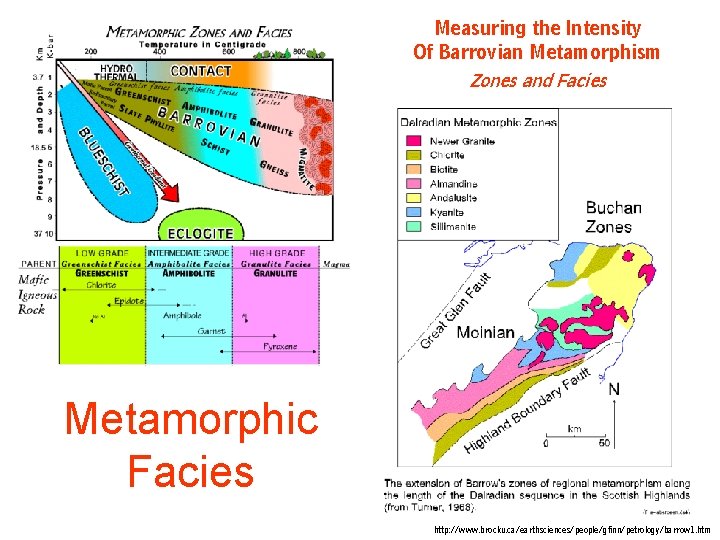
Measuring Metamorphic Intensity Zones and Facies Metamorphic rocks are important for a variety of reasons. One is that many minerals are formed only during metamorphism, and many of these are extremely valuable. Many gem minerals are metamorphic, such as rubies. Other metamorphic minerals are economically important, or important in manufacturing. Geologically, metamorphic rocks and minerals are valuable because they serve as barometers of temperature and pressure conditions of the times and places where they formed – always deep in the earth. We are able to unravel the origin and history of not only these rocks but also the Earth from the study of metamorphic rocks. We can see some of these changes in the phase diagrams to the right. The same chemical formula transforms into three markedly different minerals with different temperature and pressure.
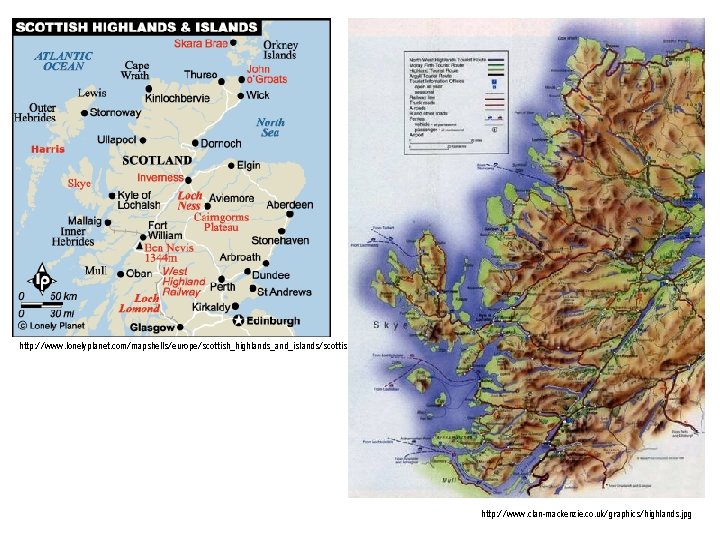
http: //www. lonelyplanet. com/mapshells/europe/scottish_highlands_and_islands. htm http: //www. clan-mackenzie. co. uk/graphics/highlands. jpg
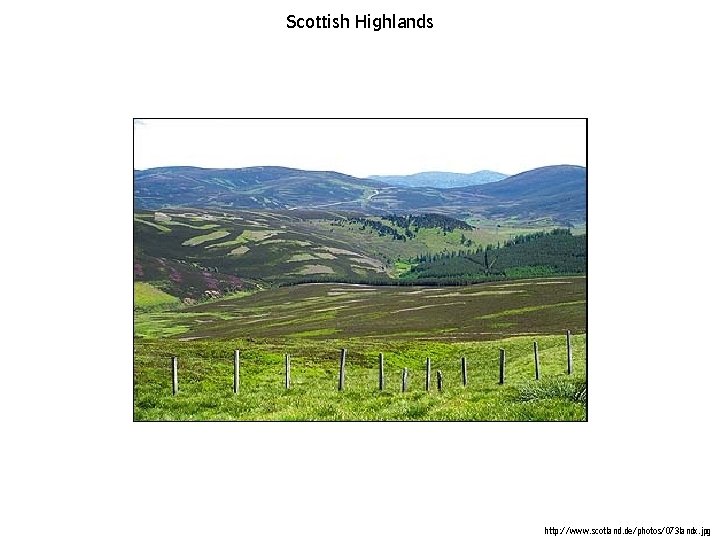
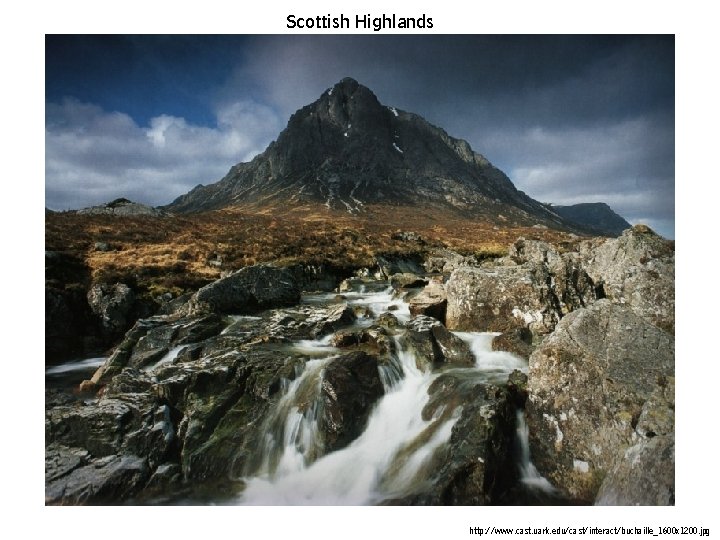
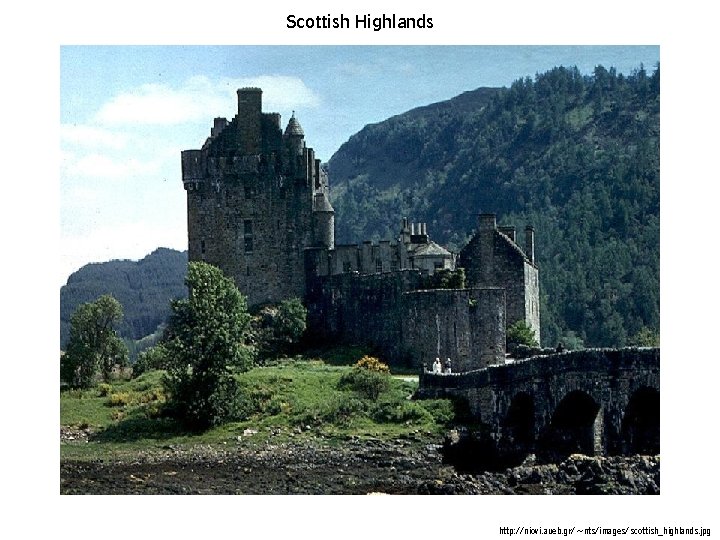
Scottish Highlands http: //www. scotland. de/photos/073 landx. jpg
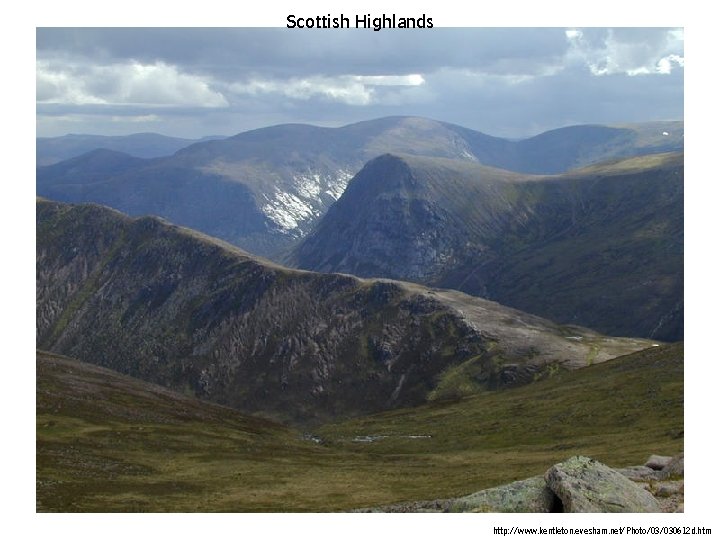
Scottish Highlands http: //www. kentleton. evesham. net/Photo/03/030612 d. htm
Scottish Highlands http: //www. cast. uark. edu/cast/interact/buchaille_1600 x 1200. jpg
Scottish Highlands http: //niovi. aueb. gr/~nts/images/scottish_highlands. jpg
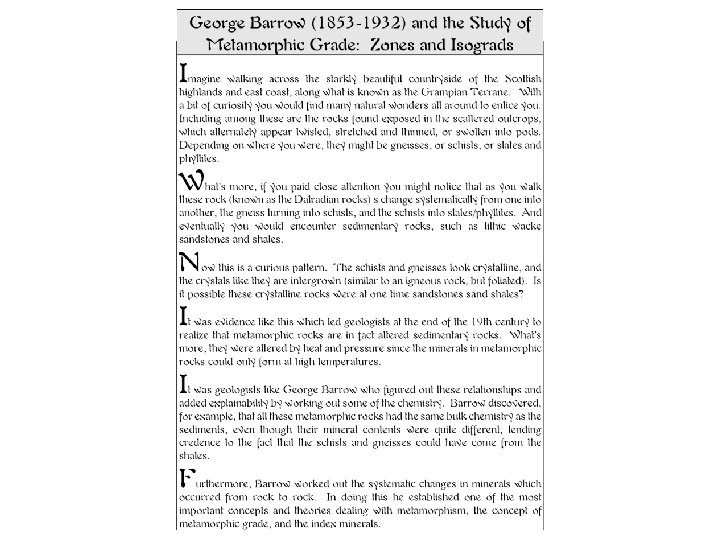
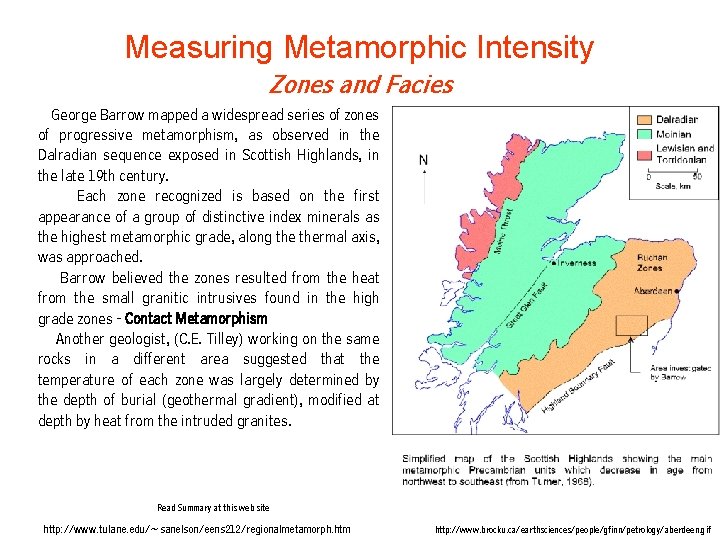
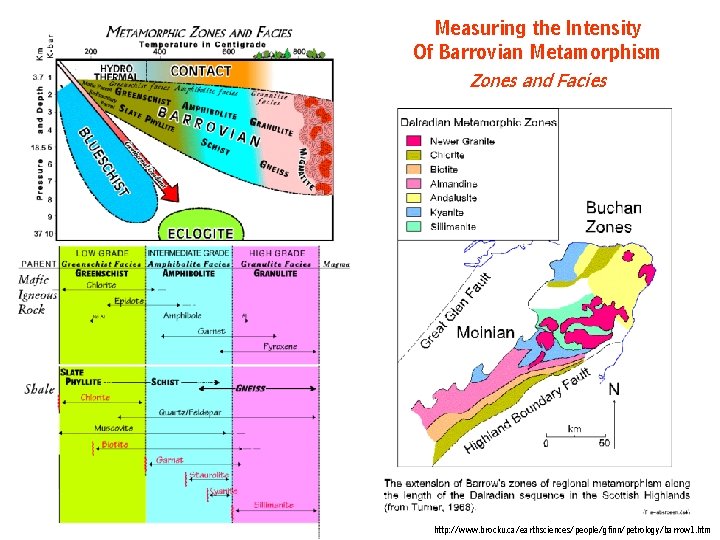
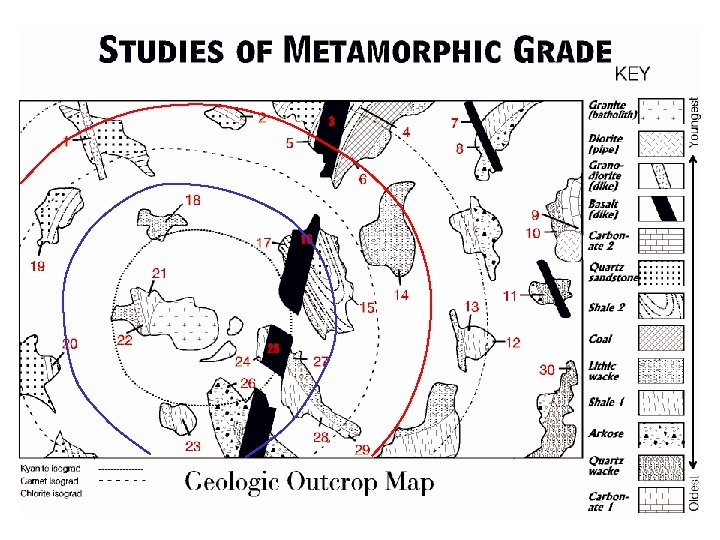
Measuring Metamorphic Intensity Zones and Facies George Barrow mapped a widespread series of zones of progressive metamorphism, as observed in the Dalradian sequence exposed in Scottish Highlands, in the late 19 th century. Each zone recognized is based on the first appearance of a group of distinctive index minerals as the highest metamorphic grade, along thermal axis, was approached. Barrow believed the zones resulted from the heat from the small granitic intrusives found in the high grade zones - Contact Metamorphism Another geologist, (C. E. Tilley) working on the same rocks in a different area suggested that the temperature of each zone was largely determined by the depth of burial (geothermal gradient), modified at depth by heat from the intruded granites. Read Summary at this web site http: //www. tulane. edu/~sanelson/eens 212/regionalmetamorph. htm http: //www. brocku. ca/earthsciences/people/gfinn/petrology/aberdeen. gif
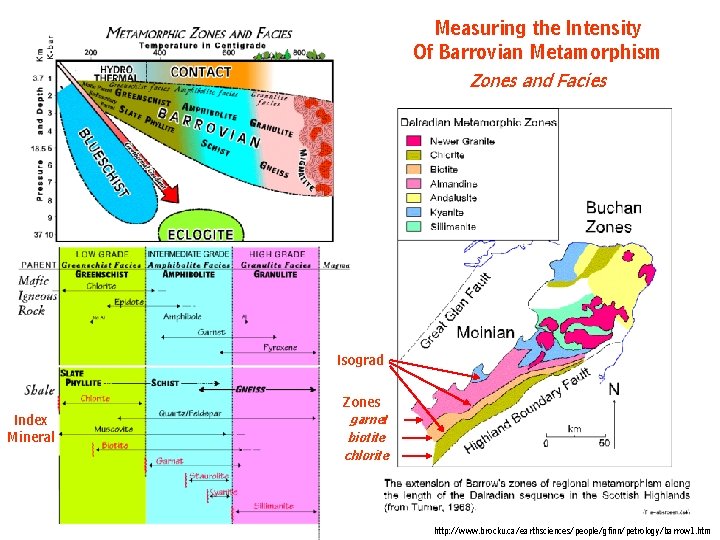
Measuring the Intensity Of Barrovian Metamorphism Zones and Facies Isograd Index Mineral Zones garnet biotite chlorite http: //www. brocku. ca/earthsciences/people/gfinn/petrology/barrow 1. htm
Metamorphic Zone Minerals
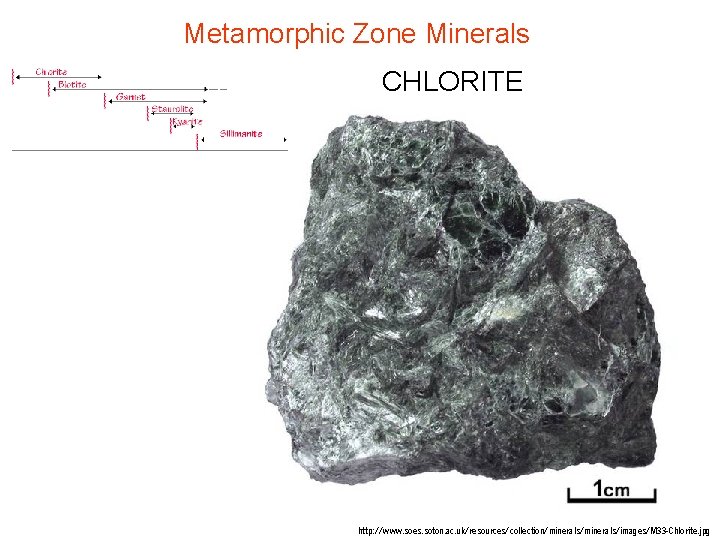
Metamorphic Zone Minerals CHLORITE http: //www. soes. soton. ac. uk/resources/collection/minerals/images/M 33 -Chlorite. jpg
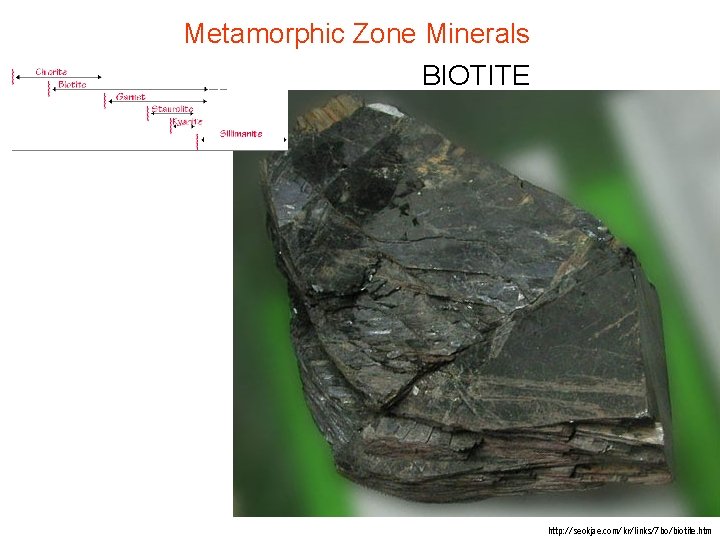
Metamorphic Zone Minerals BIOTITE http: //seokjae. com/kr/links/7 bo/biotite. htm
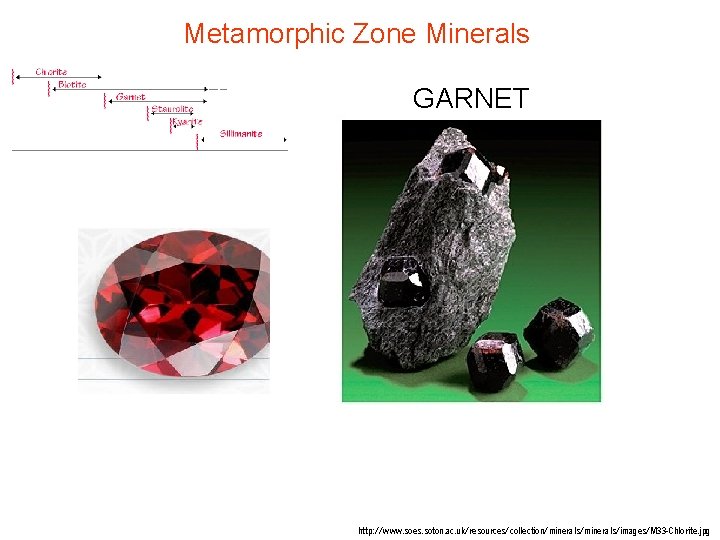
Metamorphic Zone Minerals GARNET http: //www. soes. soton. ac. uk/resources/collection/minerals/images/M 33 -Chlorite. jpg
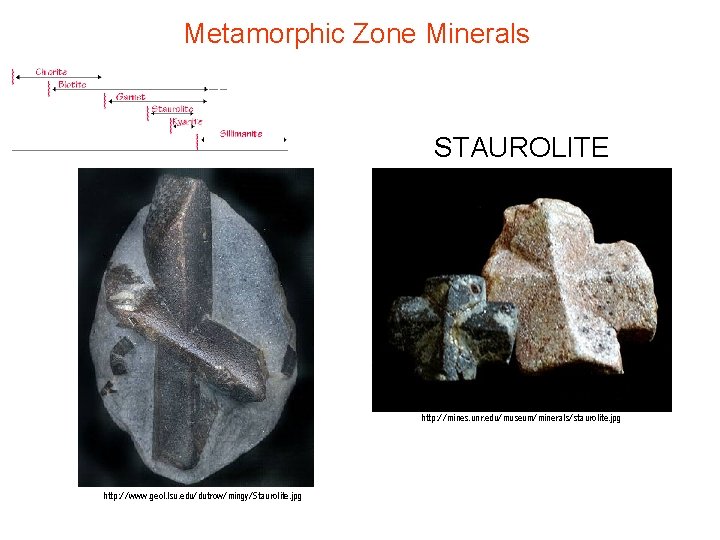
Metamorphic Zone Minerals STAUROLITE http: //mines. unr. edu/museum/minerals/staurolite. jpg http: //www. geol. lsu. edu/dutrow/mingy/Staurolite. jpg
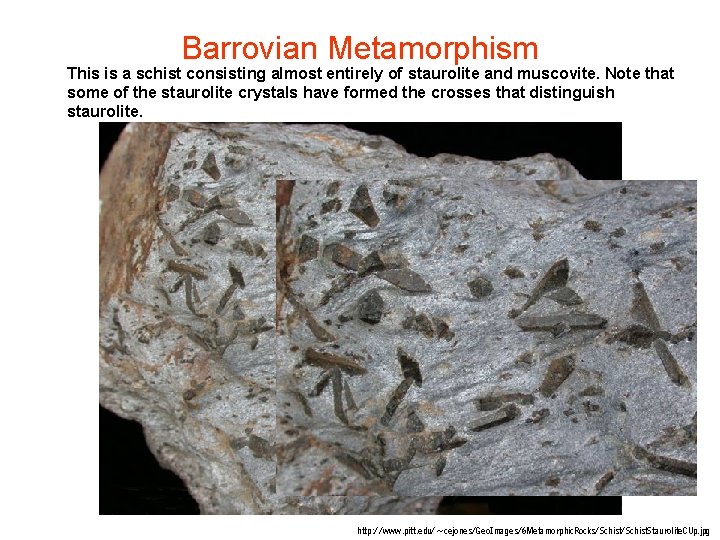
Barrovian Metamorphism This is a schist consisting almost entirely of staurolite and muscovite. Note that some of the staurolite crystals have formed the crosses that distinguish staurolite. http: //www. pitt. edu/~cejones/Geo. Images/6 Metamorphic. Rocks/Schist. Staurolite. CUp. jpg
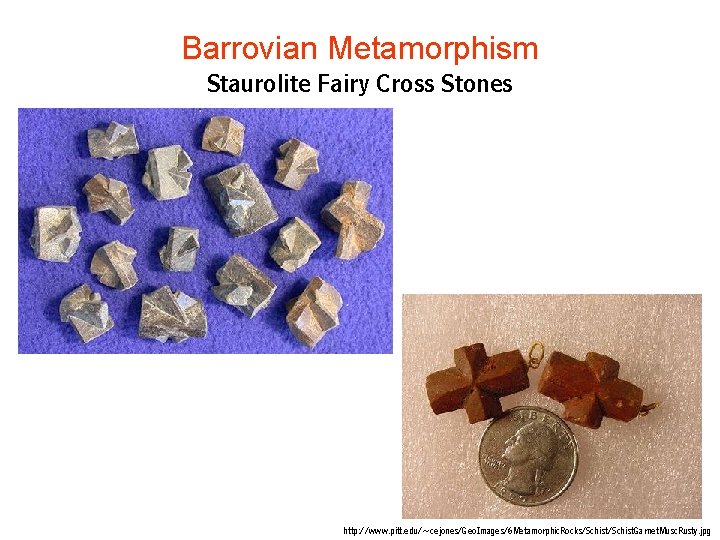
Barrovian Metamorphism Staurolite Fairy Cross Stones http: //www. pitt. edu/~cejones/Geo. Images/6 Metamorphic. Rocks/Schist. Garnet. Musc. Rusty. jpg
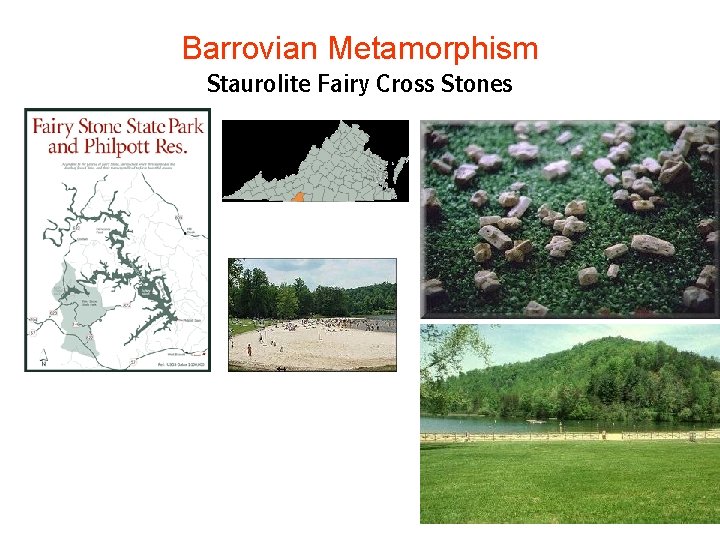
Barrovian Metamorphism Staurolite Fairy Cross Stones
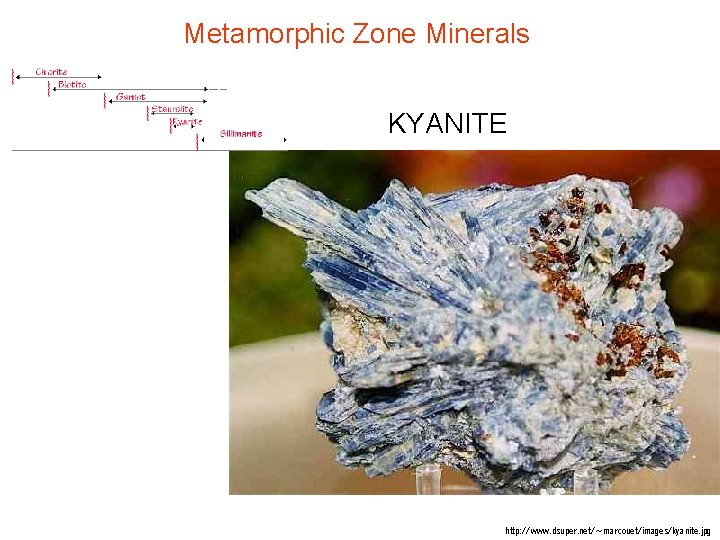
Metamorphic Zone Minerals KYANITE http: //www. dsuper. net/~marcouet/images/kyanite. jpg
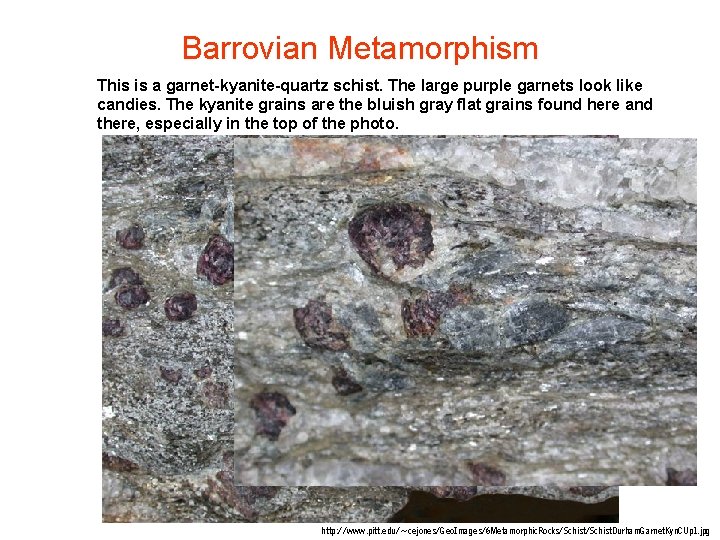
Barrovian Metamorphism This is a garnet-kyanite-quartz schist. The large purple garnets look like candies. The kyanite grains are the bluish gray flat grains found here and there, especially in the top of the photo. http: //www. pitt. edu/~cejones/Geo. Images/6 Metamorphic. Rocks/Schist. Durham. Garnet. Kyn. CUp 1. jpg
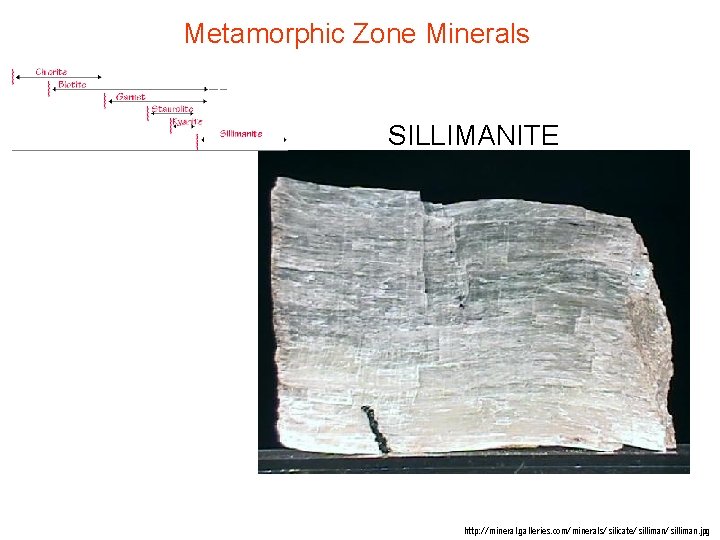
Metamorphic Zone Minerals SILLIMANITE http: //mineral. galleries. com/minerals/silicate/silliman. jpg
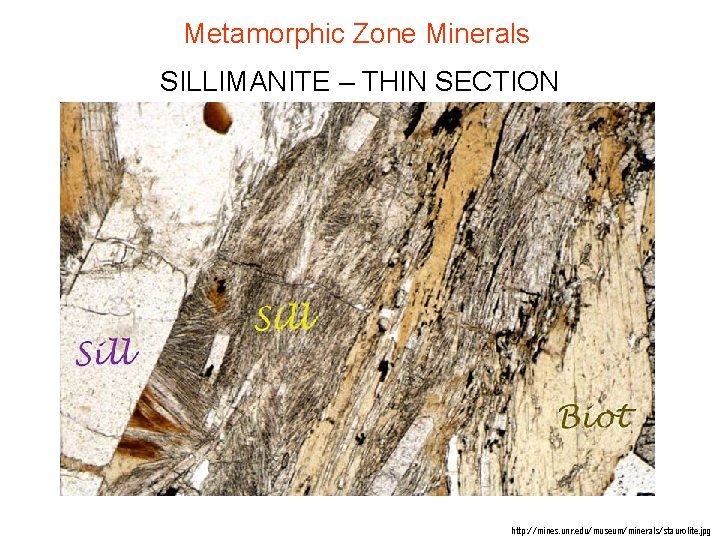
Metamorphic Zone Minerals SILLIMANITE – THIN SECTION http: //mines. unr. edu/museum/minerals/staurolite. jpg
Measuring the Intensity Of Barrovian Metamorphism Zones and Facies Metamorphic Facies http: //www. brocku. ca/earthsciences/people/gfinn/petrology/barrow 1. htm
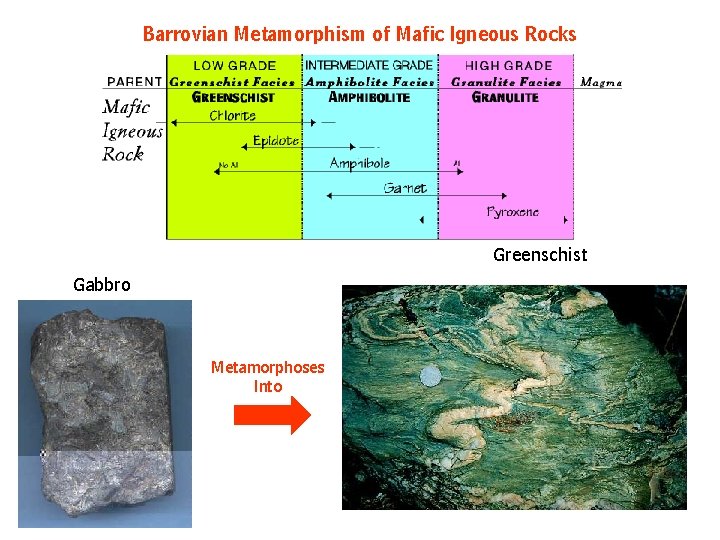
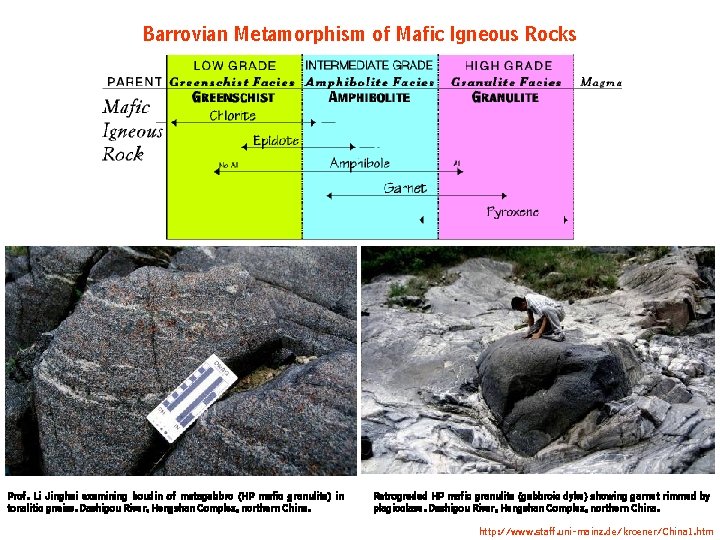
Barrovian Metamorphism of Mafic Igneous Rocks Greenschist Gabbro Metamorphoses Into
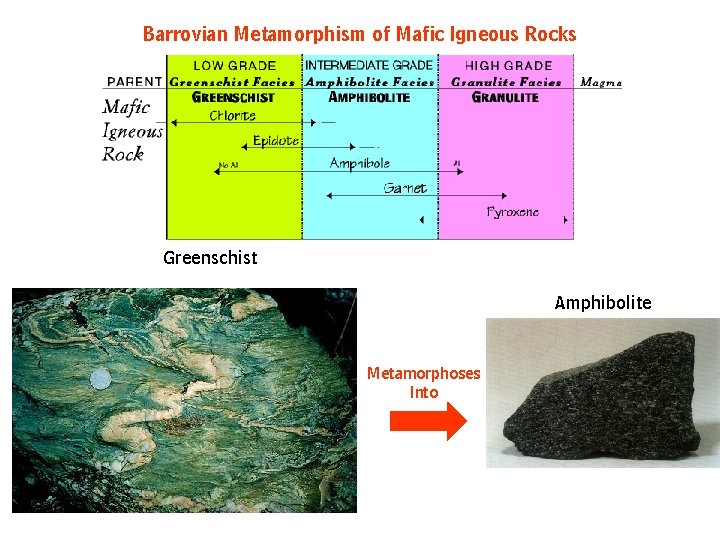
Barrovian Metamorphism of Mafic Igneous Rocks Greenschist Amphibolite Metamorphoses Into
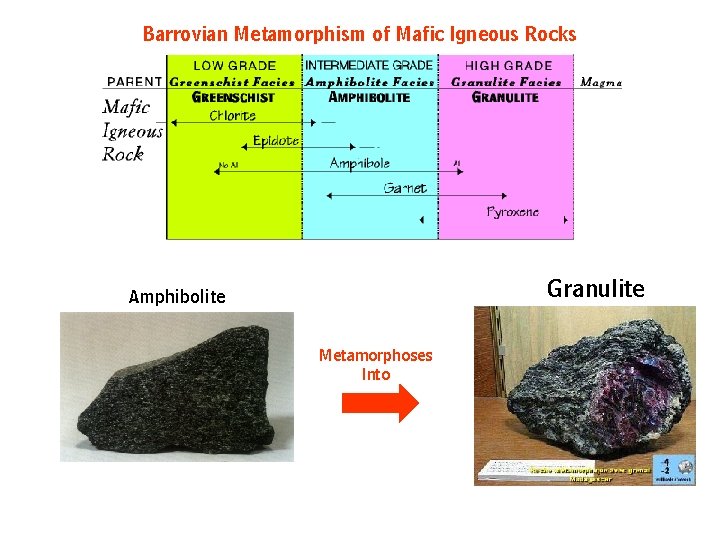
Barrovian Metamorphism of Mafic Igneous Rocks Granulite Amphibolite Metamorphoses Into
Barrovian Metamorphism of Mafic Igneous Rocks Prof. Li Jinghai examining boudin of metagabbro (HP mafic granulite) in tonalitic gneiss. Dashigou River, Hengshan Complex, northern China. Retrograded HP mafic granulite (gabbroic dyke) showing garnet rimmed by plagioclase. Dashigou River, Hengshan Complex, northern China. http: //www. staff. uni-mainz. de/kroener/China 1. htm
Measuring the Intensity Of Barrovian Metamorphism Zones and Facies http: //www. brocku. ca/earthsciences/people/gfinn/petrology/barrow 1. htm
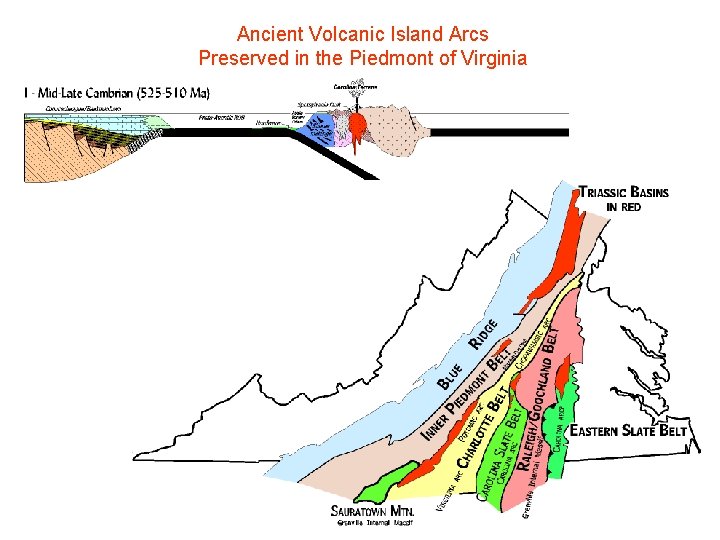
Ancient Volcanic Island Arcs Preserved in the Piedmont of Virginia
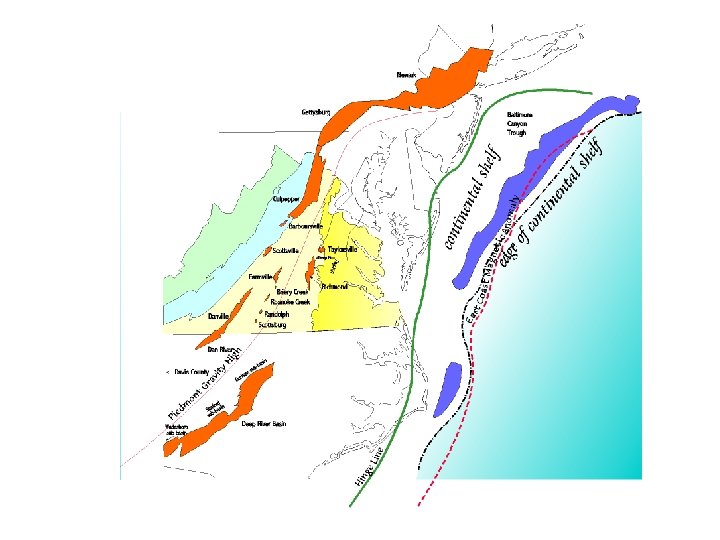
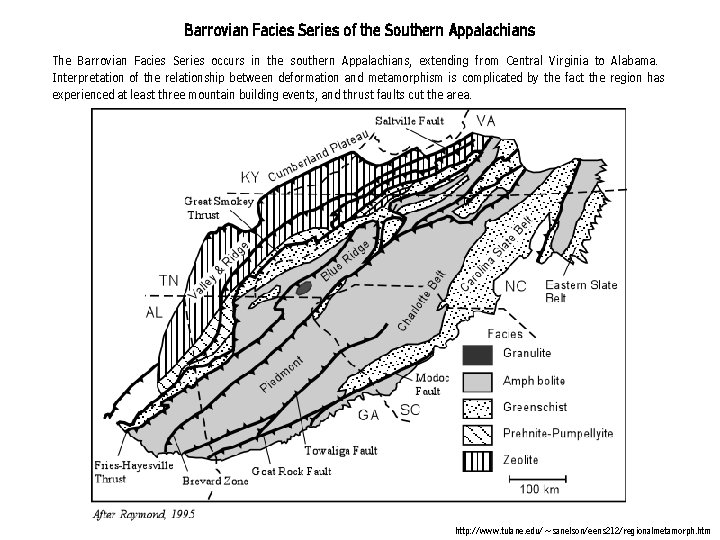
Barrovian Facies Series of the Southern Appalachians The Barrovian Facies Series occurs in the southern Appalachians, extending from Central Virginia to Alabama. Interpretation of the relationship between deformation and metamorphism is complicated by the fact the region has experienced at least three mountain building events, and thrust faults cut the area. http: //www. tulane. edu/~sanelson/eens 212/regionalmetamorph. htm
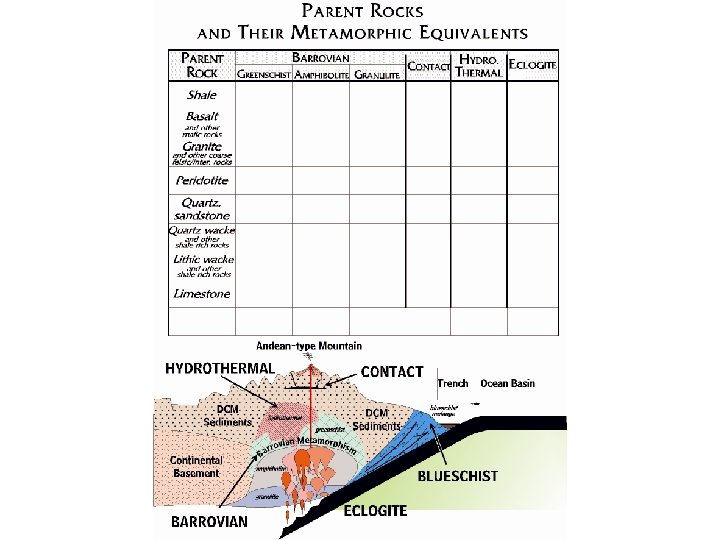
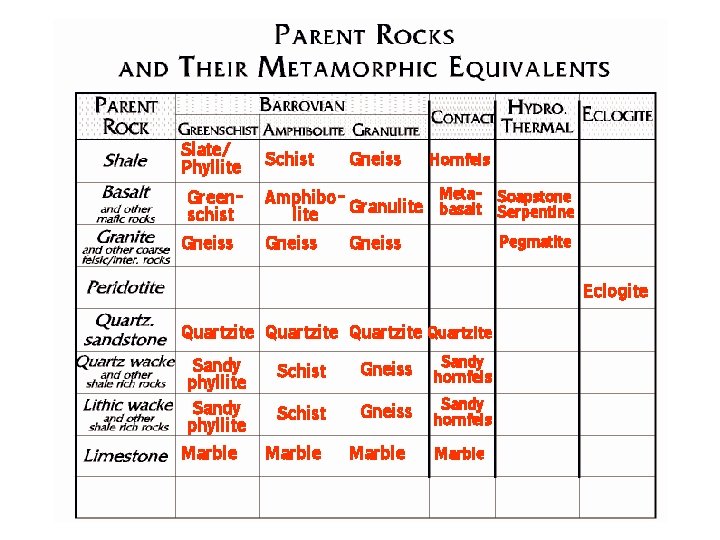
Slate/ Phyllite Greenschist Gneiss Schist Gneiss Hornfels Meta- Soapstone Amphibo. Granulite basalt Serpentine lite Gneiss Pegmatite Gneiss Eclogite Quartzite Sandy phyllite Marble Schist Gneiss Sandy hornfels Marble
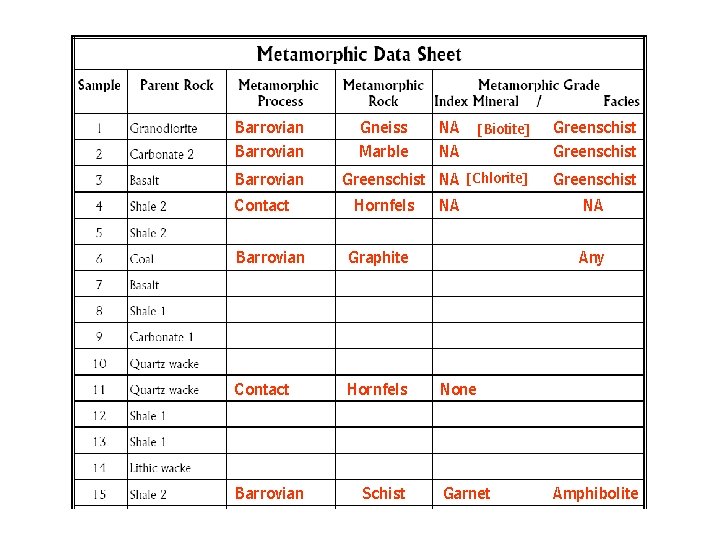
Barrovian Gneiss NA Barrovian Marble NA Barrovian Contact Greenschist NA [Chlorite] Hornfels Barrovian Graphite Contact Hornfels Barrovian [Biotite] Schist NA Greenschist NA Any None Garnet Amphibolite
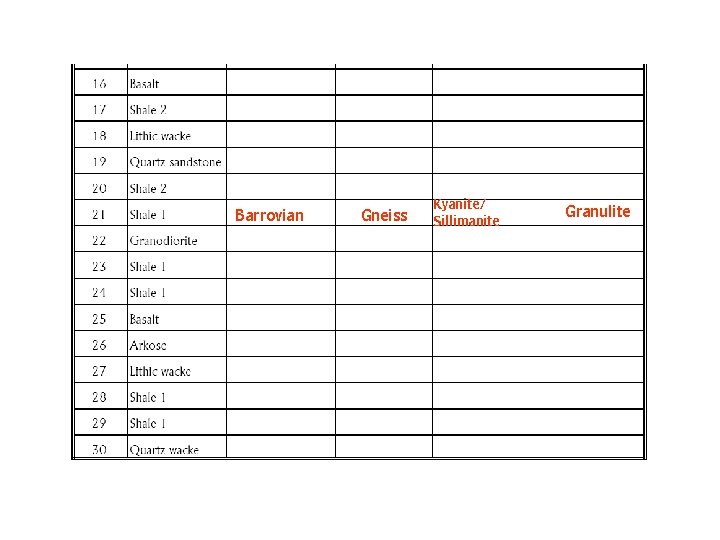
Barrovian Gneiss Kyanite/ Sillimanite Granulite
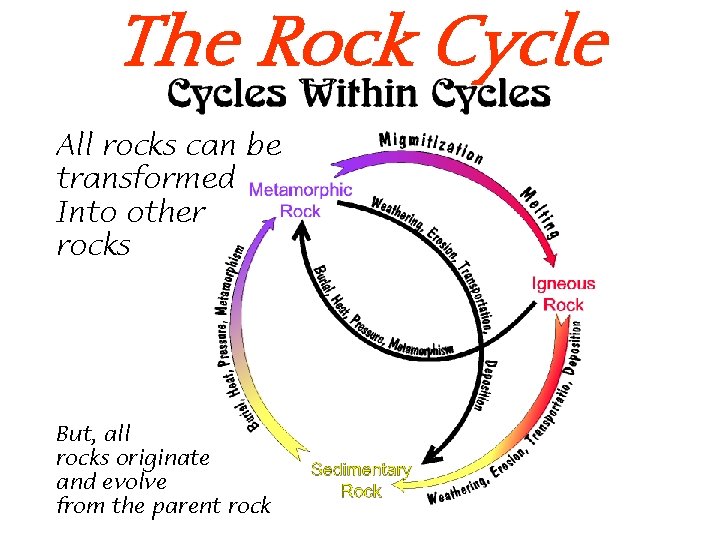
The Rock Cycle All rocks can be transformed Into other rocks But, all rocks originate and evolve from the parent rock
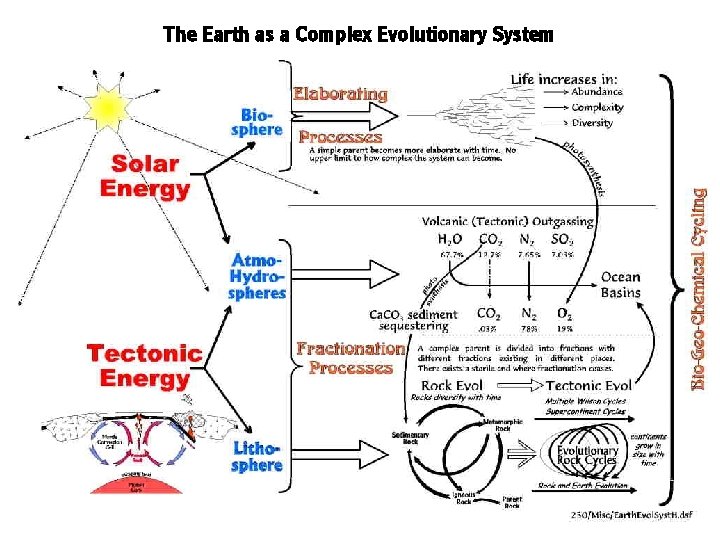
The Earth as a Complex Evolutionary System
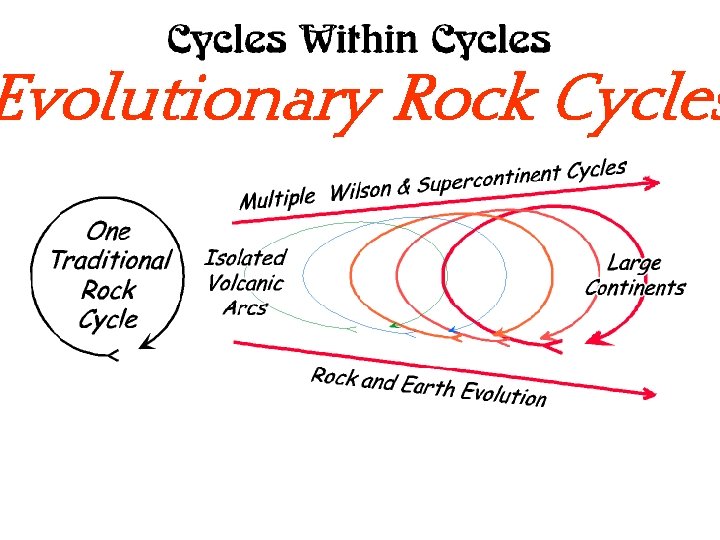
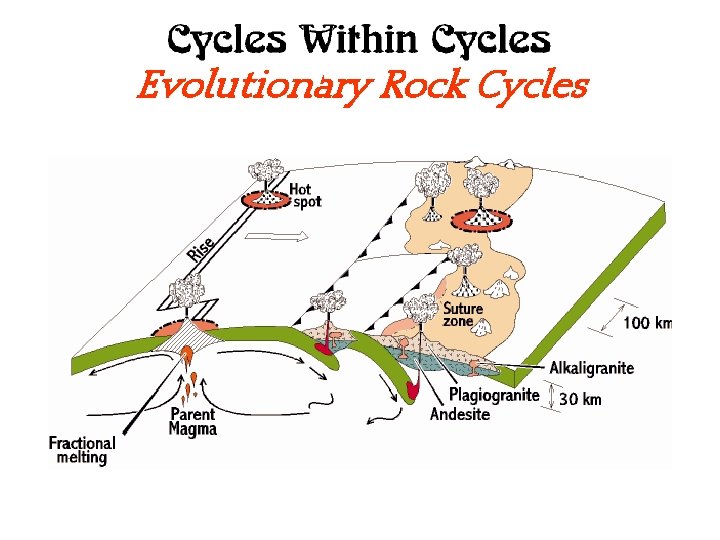
Evolutionary Rock Cycles
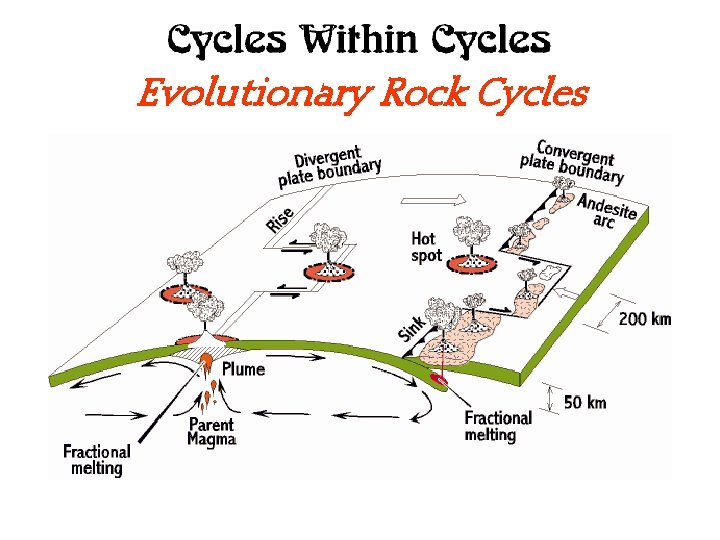
Evolutionary Rock Cycles
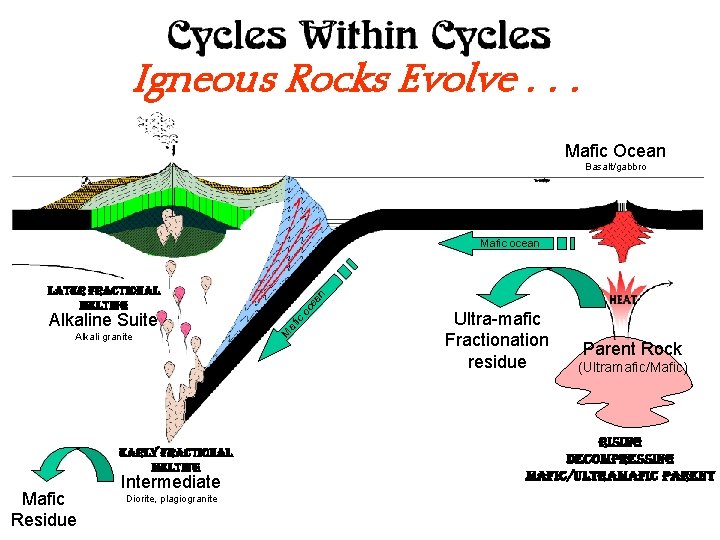
Igneous Rocks Evolve. . . Mafic Ocean Basalt/gabbro Mafic ocean early fractional melting Mafic Residue Intermediate Diorite, plagiogranite oc ic af Alkali granite M Alkaline Suite ea n later fractional melting Ultra-mafic Fractionation residue Parent Rock (Ultramafic/Mafic) rising Decompressing mafic/ultramafic parent
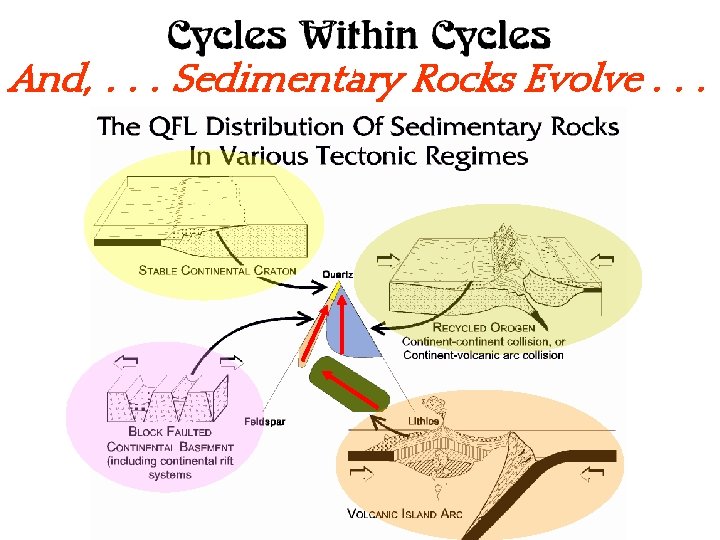
And, . . . Sedimentary Rocks Evolve. . .
And, . . . Metamorphic Rocks Evolve. . .
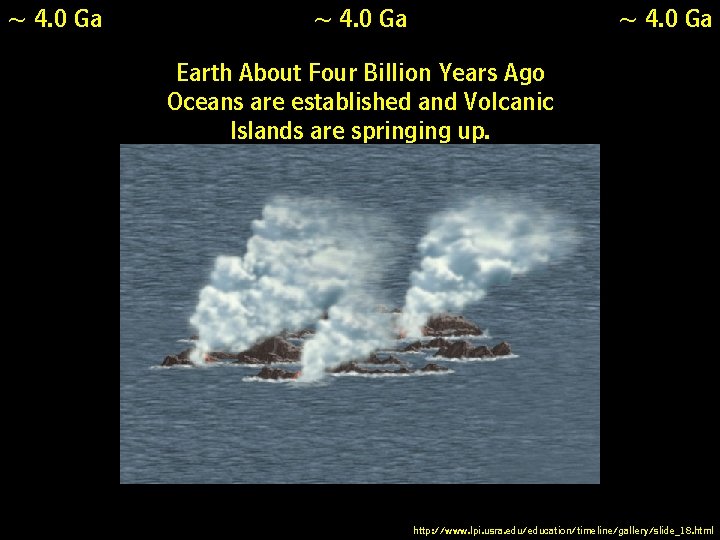
~ 4. 0 Ga Earth About Four Billion Years Ago Oceans are established and Volcanic Islands are springing up. http: //www. lpi. usra. edu/education/timeline/gallery/slide_18. html
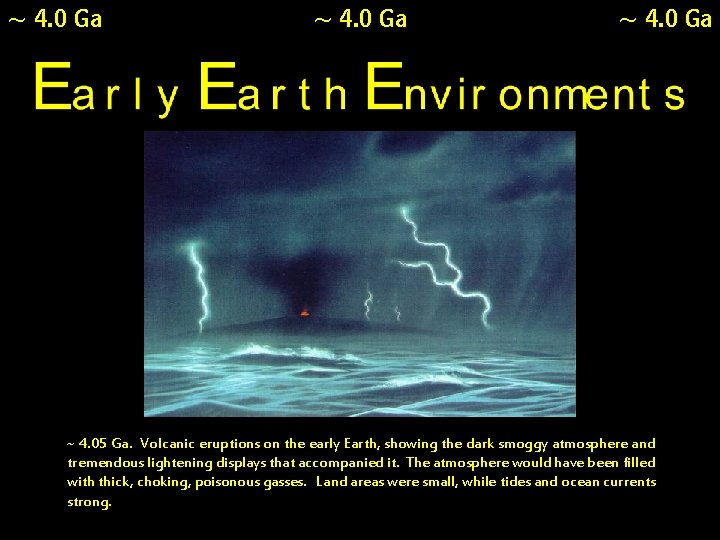
~ 4. 0 Ga ~ 4. 05 Ga. Volcanic eruptions on the early Earth, showing the dark smoggy atmosphere and tremendous lightening displays that accompanied it. The atmosphere would have been filled with thick, choking, poisonous gasses. Land areas were small, while tides and ocean currents strong.
Evolutionary Rock Cycles
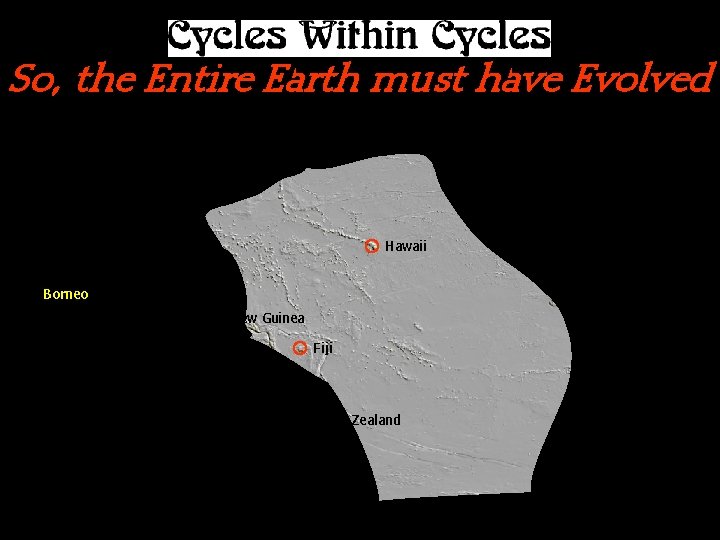
So, the Entire Earth must have Evolved Hawaii Borneo New Guinea Fiji New Zealand http: //ace. acadiau. ca/science/geol/rraeside/quizzes/worldmap 3 p. htm
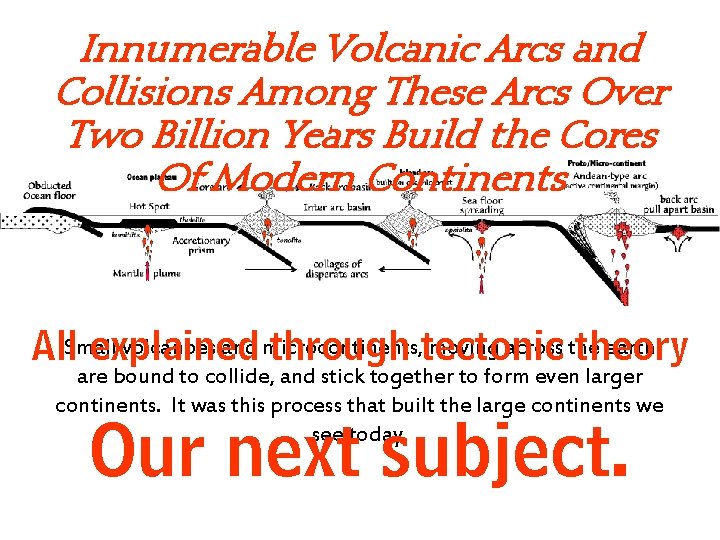
Innumerable Volcanic Arcs and Collisions Among These Arcs Over Two Billion Years Build the Cores Of Modern Continents volcanoes and microcontinents, moving across the earth All. Small explained through tectonic theory are bound to collide, and stick together to form even larger continents. It was this process that built the large continents we see today. Our next subject.