
Metamorphic Exploration of an Unsupervised Clustering Program Sen



- Slides: 29
Metamorphic Exploration of an Unsupervised Clustering Program Sen Yang, Dave Towey School of Computer Science, University of Nottingham Ningbo China, Zhejiang, People’s Republic of China dave. towey@nottingham. edu. cn Zhi Quan Zhou Institute of Cybersecurity and Cryptology, University of Wollongong, NSW 2522, Australia
Acknowledgements • UNNC Fo. SE • UNNC IDIC • … and others • Thank you to Sen for drafting the PPTs
UNNC China UK Malaysia
UNNC • University of Nottingham Ningbo China • First Sino-foreign University • Established in 2004 • English Medium of Instruction (EMI) • About 8, 000 students • ~10% international • More than 750 staff (academic and professional) • From more than 70 countries and regions around the world • “An innovation, and centre for innovation”
Background I • The oracle problem makes it difficult to test Machine Learning (ML) software • There also many (potential) ML users who are not expert, due to ML’s popularity • Most related research is about supervised ML
Background II • Evaluating the quality of clustering algorithms can be challenging • No label for validation • Users’ subjective expectations matter a lot • MT can alleviate the oracle problem
Background III • ML has been applied in numerous industrial domains, including: • Medical, Economy, Automated driving, Decision making, … Supervised ML (Classification problem) • ML algorithm Unsupervised ML (Clustering problem)
Metamorphic Testing • The idea: • It is possible to identify relationships amongst multiple inputs and outputs for a software under test (SUT), even if we don’t know the correctness of individual outputs • Metamorphic Relations (MRs) are the necessary properties of the SUT
Metamorphic Exploration • Recently, MRs have been applied to enhance system understanding and use • These “MRs” need not be necessary properties for software correctness • They can be hypothesized by the users • Call them “Hypothesized MRs” (HMRs)
Our Study • A case study of metamorphic exploration using a clustering program • Weka, one of the most popular data science platforms for ML and data mining • K-means Clustering Algorithm
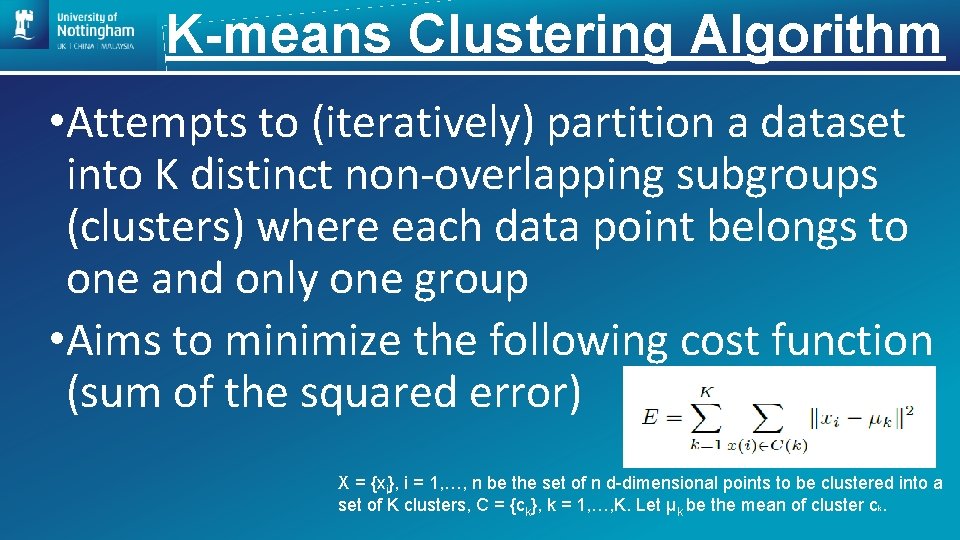
K-means Clustering Algorithm • Attempts to (iteratively) partition a dataset into K distinct non-overlapping subgroups (clusters) where each data point belongs to one and only one group • Aims to minimize the following cost function (sum of the squared error) X = {xi}, i = 1, …, n be the set of n d-dimensional points to be clustered into a set of K clusters, C = {ck}, k = 1, …, K. Let μk be the mean of cluster ck.
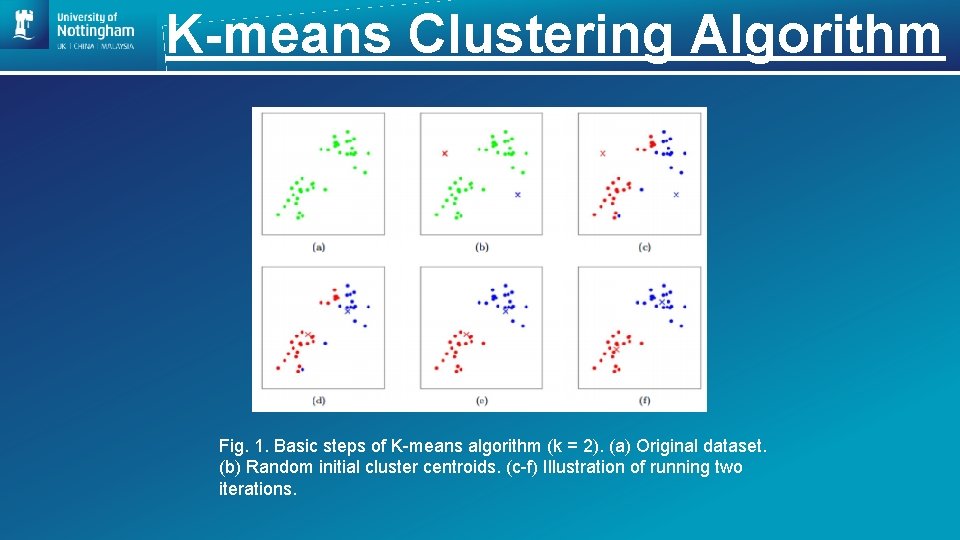
K-means Clustering Algorithm Fig. 1. Basic steps of K-means algorithm (k = 2). (a) Original dataset. (b) Random initial cluster centroids. (c-f) Illustration of running two iterations.
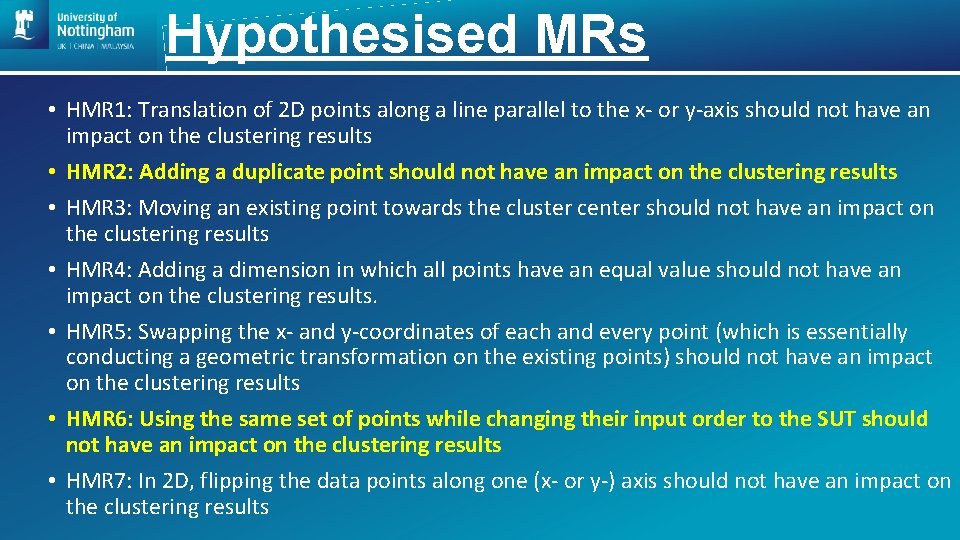
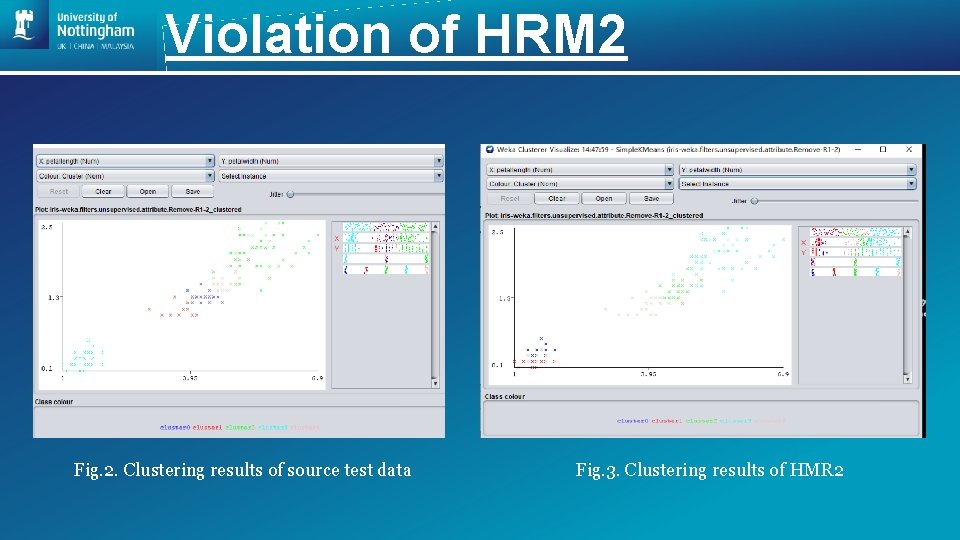
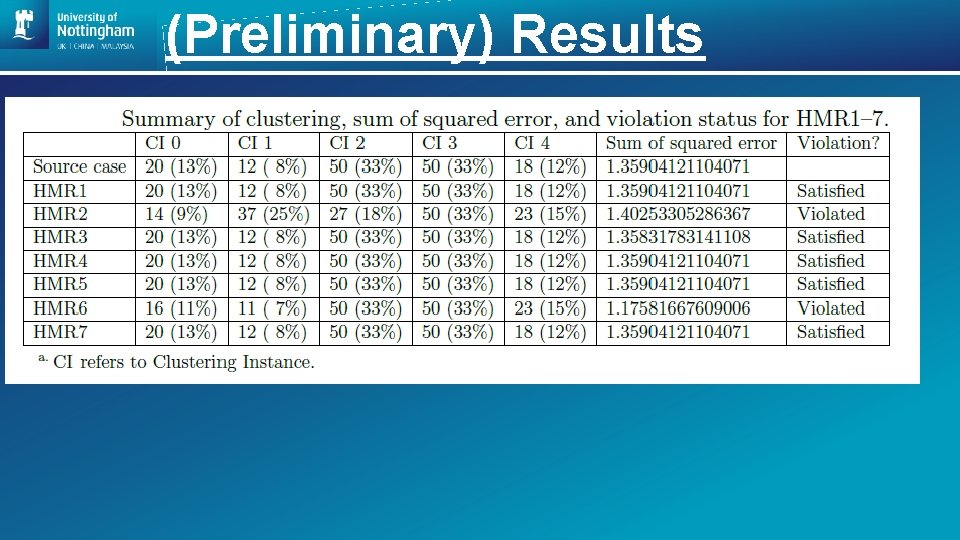
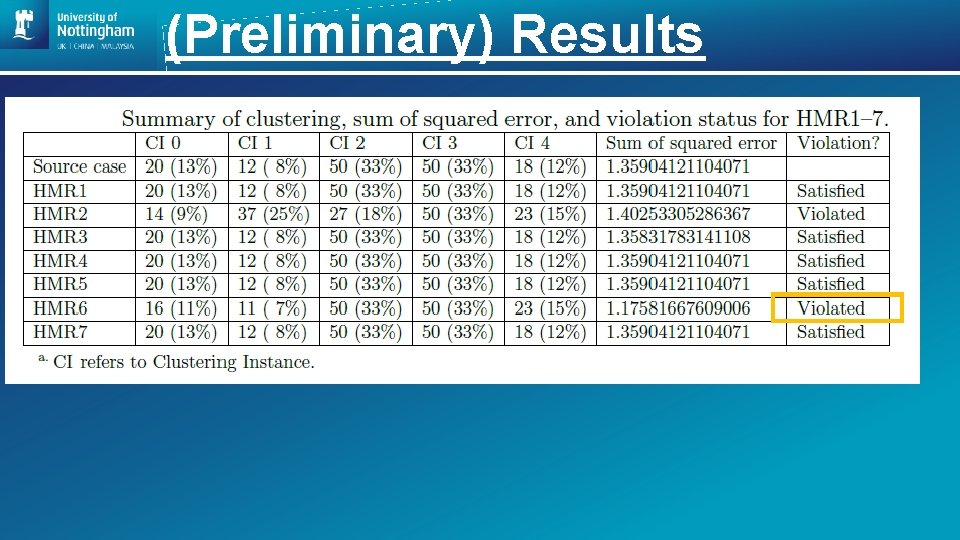
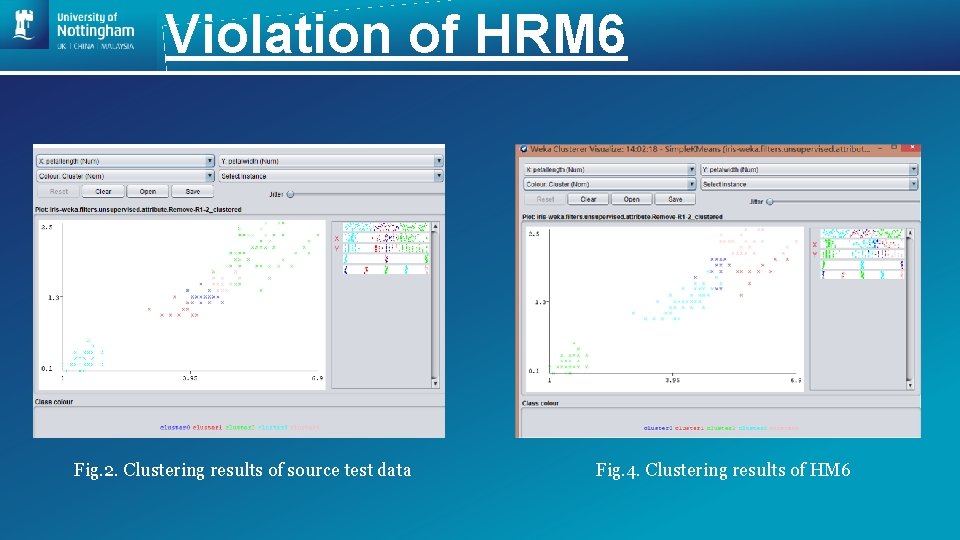
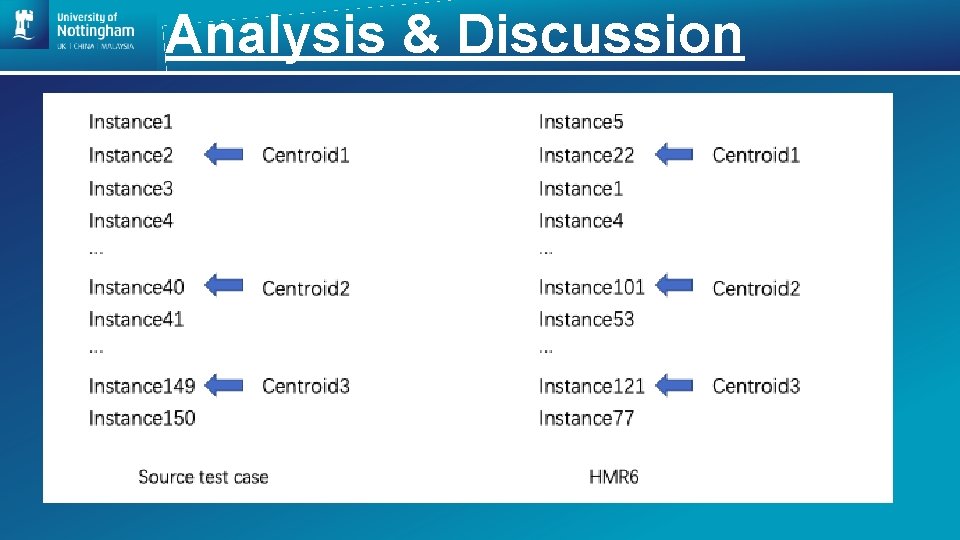
Hypothesised MRs • HMR 1: Translation of 2 D points along a line parallel to the x- or y-axis should not have an impact on the clustering results • HMR 2: Adding a duplicate point should not have an impact on the clustering results • HMR 3: Moving an existing point towards the cluster center should not have an impact on the clustering results • HMR 4: Adding a dimension in which all points have an equal value should not have an impact on the clustering results. • HMR 5: Swapping the x- and y-coordinates of each and every point (which is essentially conducting a geometric transformation on the existing points) should not have an impact on the clustering results • HMR 6: Using the same set of points while changing their input order to the SUT should not have an impact on the clustering results • HMR 7: In 2 D, flipping the data points along one (x- or y-) axis should not have an impact on the clustering results
Hypothesised MRs • HMR 1: Translation of 2 D points along a line parallel to the x- or y-axis should not have an impact on the clustering results • HMR 2: Adding a duplicate point should not have an impact on the clustering results • HMR 3: Moving an existing point towards the cluster center should not have an impact on the clustering results • HMR 4: Adding a dimension in which all points have an equal value should not have an impact on the clustering results. • HMR 5: Swapping the x- and y-coordinates of each and every point (which is essentially conducting a geometric transformation on the existing points) should not have an impact on the clustering results • HMR 6: Using the same set of points while changing their input order to the SUT should not have an impact on the clustering results • HMR 7: In 2 D, flipping the data points along one (x- or y-) axis should not have an impact on the clustering results
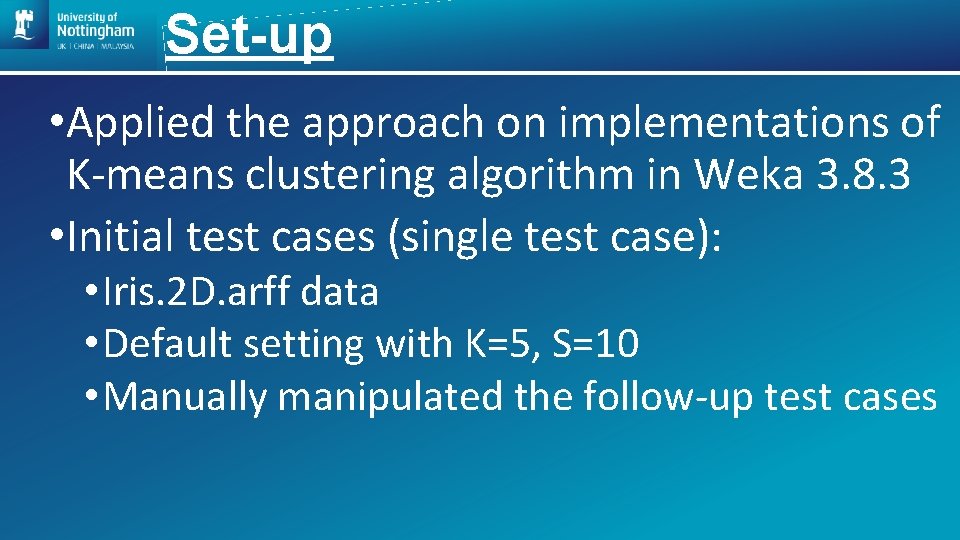
Set-up • Applied the approach on implementations of K-means clustering algorithm in Weka 3. 8. 3 • Initial test cases (single test case): • Iris. 2 D. arff data • Default setting with K=5, S=10 • Manually manipulated the follow-up test cases
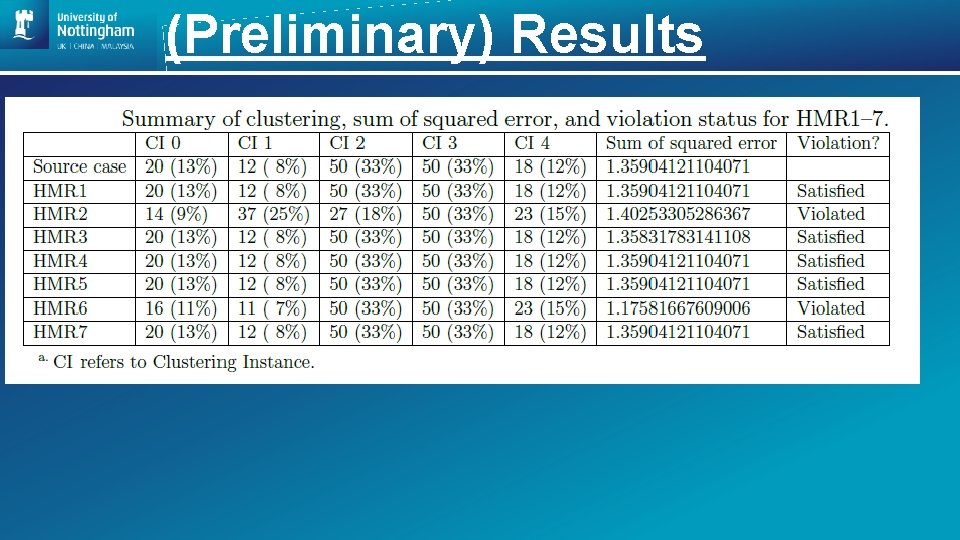
(Preliminary) Results
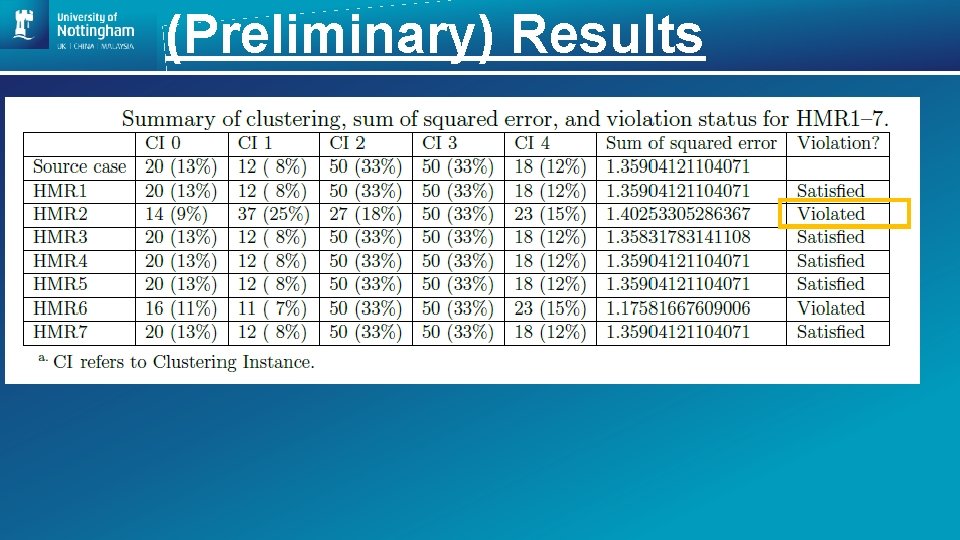
(Preliminary) Results
Violation of HRM 2 Fig. 2. Clustering results of source test data Fig. 3. Clustering results of HMR 2
(Preliminary) Results
(Preliminary) Results
Violation of HRM 6 Fig. 2. Clustering results of source test data Fig. 4. Clustering results of HM 6
Analysis & Discussion • Adding a new data point leads to a new round of calculation of the Euclidean distance when re-locating the new cluster centroids • This will also influence the selection of initial cluster center points • Changing of the data entry order will have impact on the clustering results
Analysis & Discussion • This reflects a characteristic of the K-means clustering algorithm itself, and is not a defect in the implementation • K-means algorithm is sensitive to the selection of initial clustering centroid
Analysis & Discussion
Recommendation • If the user needs to add new data containing some duplicates to the original dataset, then it is better to choose a hierarchical clustering algorithm, to keep a stable clustering performance • If we want to re-generate an earlier test result, we should keep the original order of the data points when they are entered into the system
Sen’s Conclusion • Compared with the understanding of the SUT before the experiment, now have gained new knowledge and understanding of the system • ME can be used to help users explore the system • ME can be used to guide users to better use the algorithm
Discussion & Future Work • Opportunity to embrace ME as a step towards MT • Undergraduate curricula, and elsewhere • Metamorphic Exploration (Journal First): • Thursday 30 May 15: 10, Van-Horne
Thank you!
Q&A