
Metalwork Tapping Tapping Materials Tapping can be carried

Metalwork Tapping
Tapping Materials Tapping can be carried out in a wide range of materials including: n Metal n Wood n Plastic n Ceramic
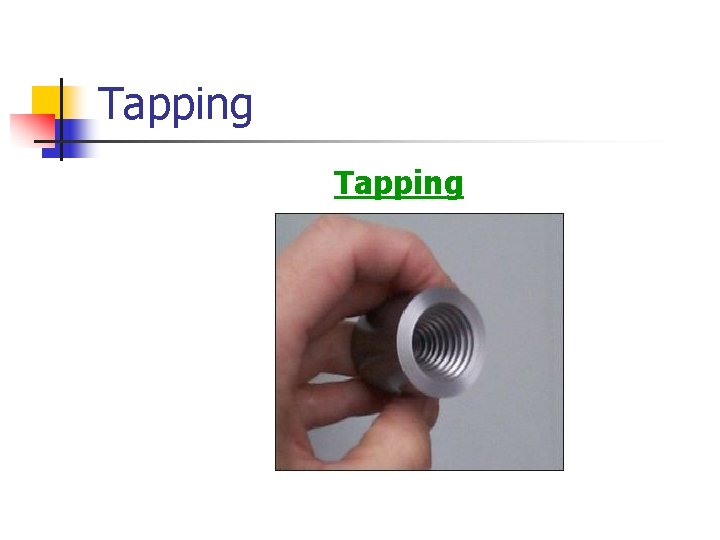
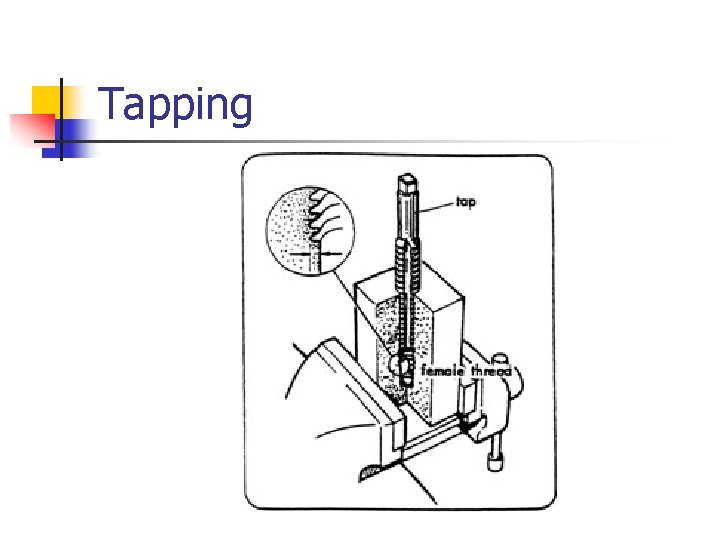
Tapping The tapping process involves the creation by cutting of a thread on the inside of a hole in a piece of material which acts like a nut. This thread will allow a screw or bolt of the correct size to be passed through it.
Tapping
Tapping This thread will allow a screw or bolt of the correct size to be passed through it.
Tapping For tapping to be carried out correctly a tapping sized hole must be drilled which must be smaller than the tap to be used. The drill size can be obtained from a table.
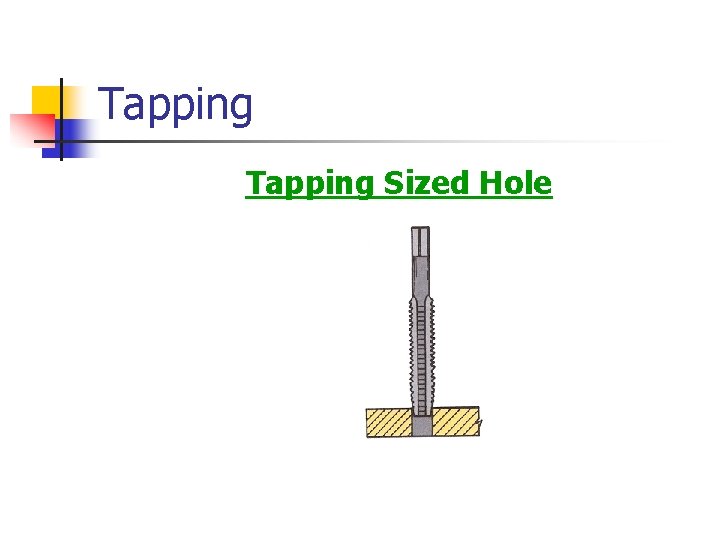
Tapping Sized Hole
Tapping Taps A tap is used to create the internal thread achieved in the tapping process. It is similar to a screw but it has flutes running down its sides.
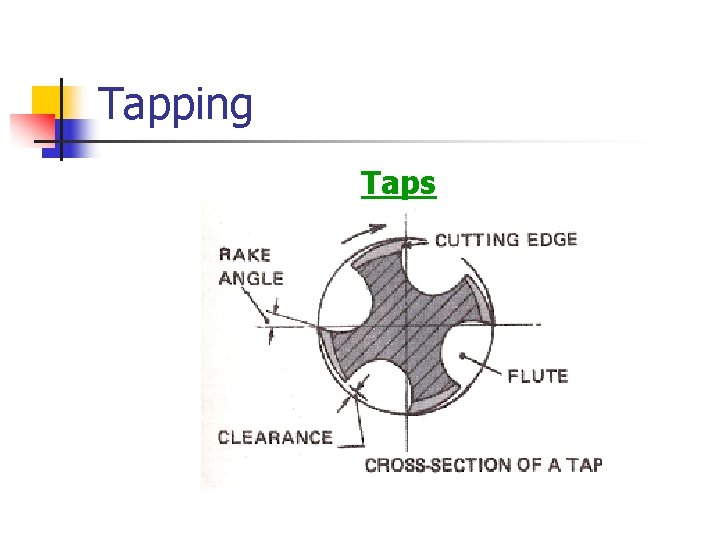
Tapping Taps
Tapping Taps These flutes serve 3 purposes: 1. They carry out the cutting during tapping 2. They allow the chips of metal cut during tapping to leave the cutting area 3. They allow cutting fluid to reach the cutting edges
Tapping Taps are made from high speed steel. They are hard and brittle and must be used with care to avoid breaking them. The ends of the taps are square to allow them to be held during tapping.
Tapping Taps There are 3 kinds of taps used each with its own specific purpose: n Taper Tap n Second (Intermediate) Tap n Plug Tap

Tapping Types of Tap
Tapping Taper Tap This particular is used first in the tapping process and is tapered over its first 8 to 10 threads. This allows it to fit into the tapping sized hole, to align itself and gradually to begin the tapping process.
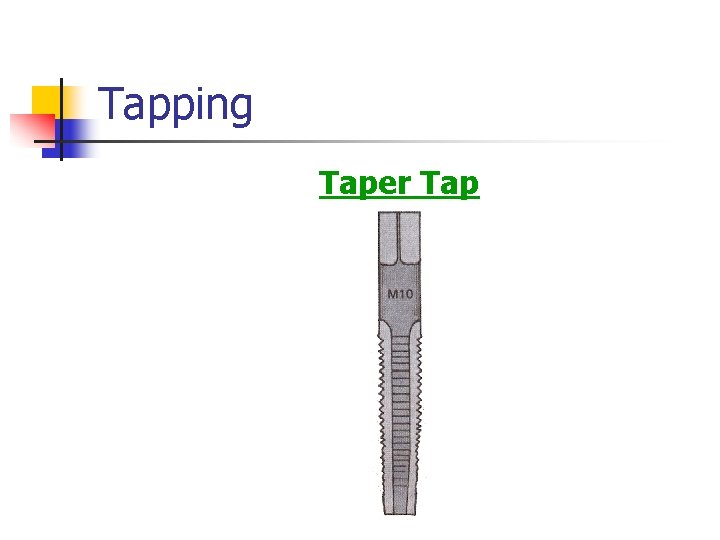
Tapping Taper Tap
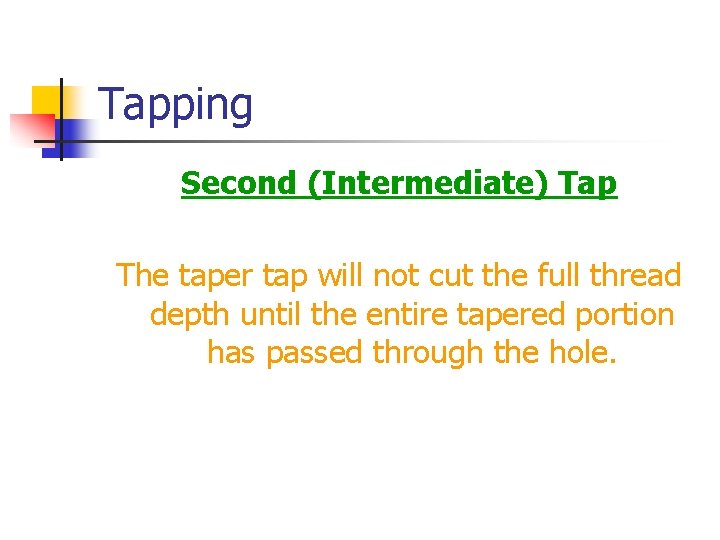
Tapping Second (Intermediate) Tap The taper tap will not cut the full thread depth until the entire tapered portion has passed through the hole.
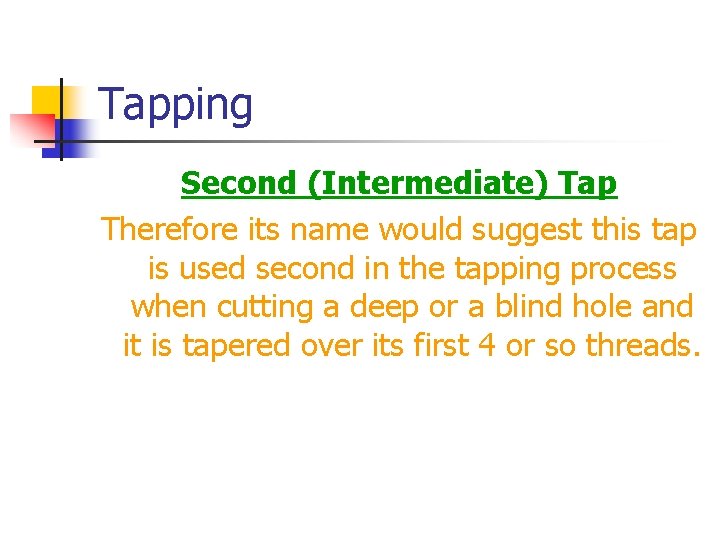
Tapping Second (Intermediate) Tap Therefore its name would suggest this tap is used second in the tapping process when cutting a deep or a blind hole and it is tapered over its first 4 or so threads.
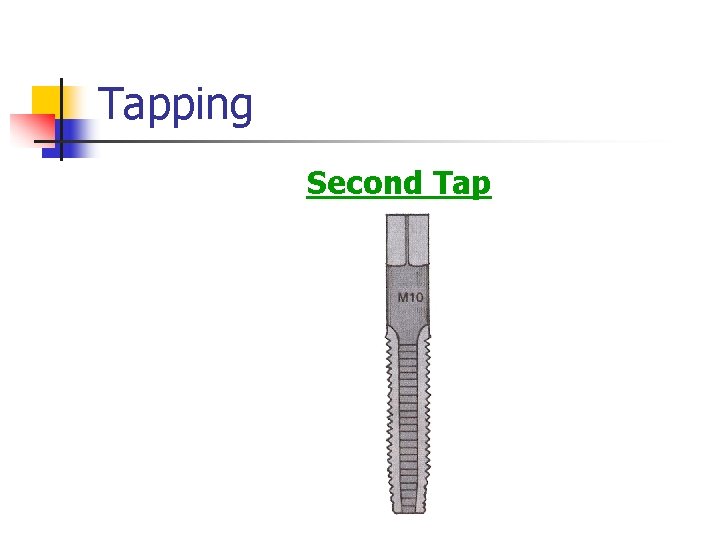
Tapping Second Tap
Tapping Plug Tap This tap has only a short taper over its first 2 threads. It is used for finishing a thread at the bottom of a deep or a blind hole. It would extremely difficult to start the tapping processes using a plug tap.
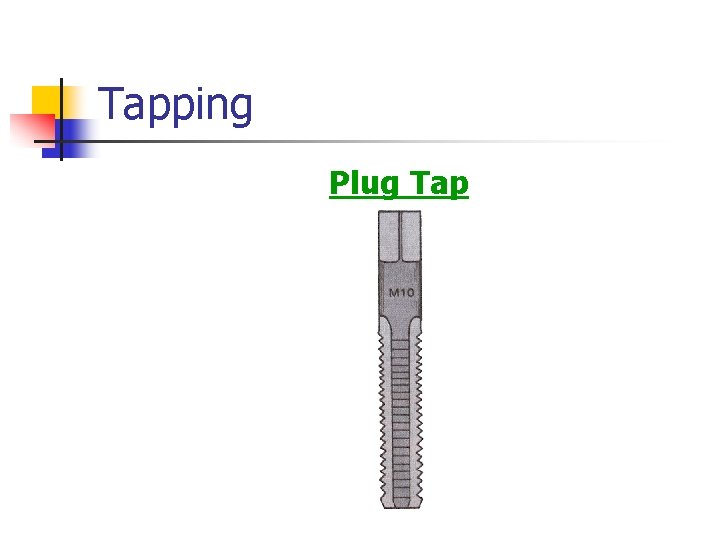
Tapping Plug Tap
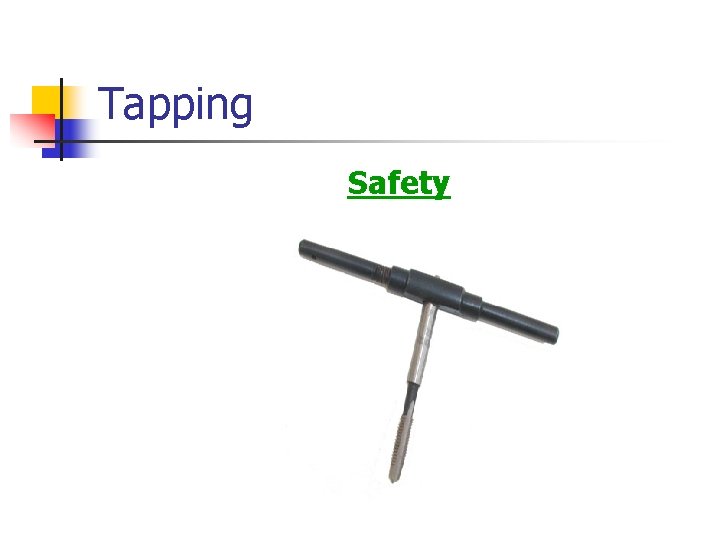
Tapping Wrench The tapping wrench is used to hold and rotate the tap during tapping.
Tapping Wrench There are 2 types of tapping wrench available: n An adjustable tapping wrench n A chuck type tapping wrench

Tapping Adjustable Tapping Wrench
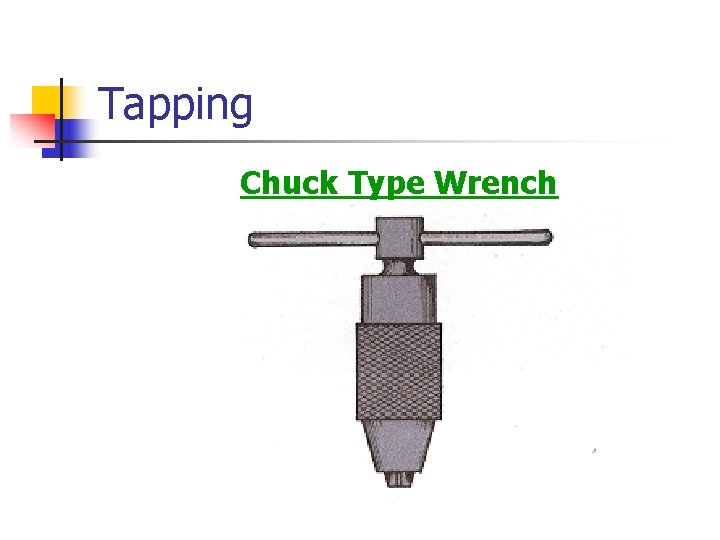
Tapping Chuck Type Wrench

Tapping Procedure The following procedure should be followed if tapping is to be carried out successfully:

Tapping 1. To begin the correct sized tapping sized hole must be drilled. 2. The correct taper tap is gripped in the tapping wrench and entered into the hole.

Tapping Hello

Tapping 3. A slight downward pressure should now be applied. 4. Care should be taken to ensure the tap is held square and in line with the centre axis of the hole, this can be done using a try square.

Tapping Hello
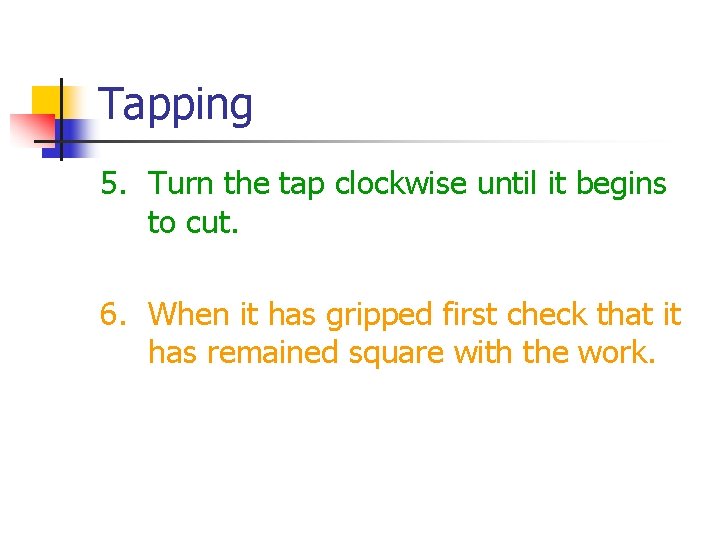
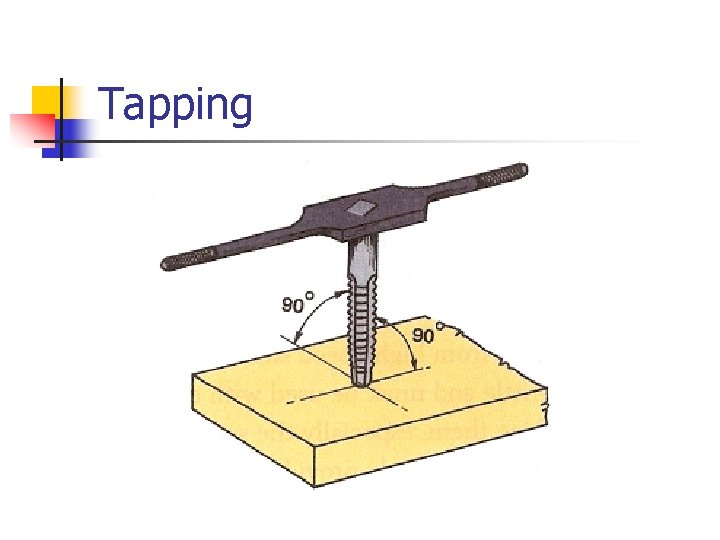
Tapping 5. Turn the tap clockwise until it begins to cut. 6. When it has gripped first check that it has remained square with the work.
Tapping Hello

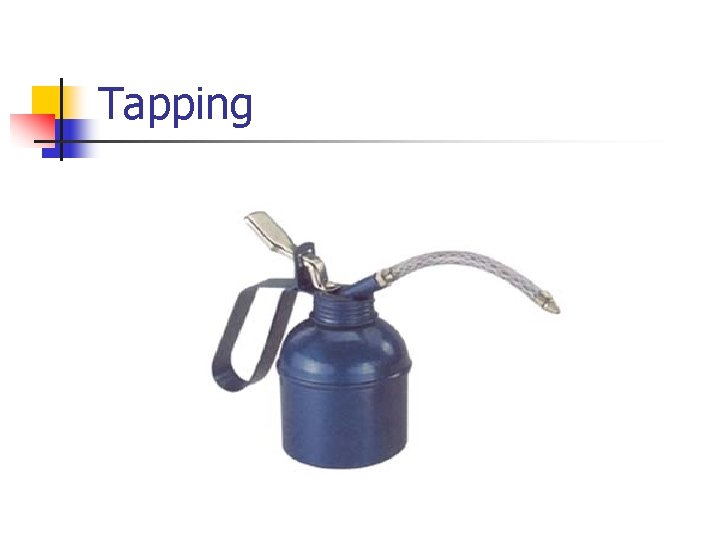
Tapping 7. Apply cutting fluid if necessary. 8. Continue rotating the tap clockwise for about half a revolution.
Tapping hello
Tapping 9. Reverse it about a quarter of a revolution to break off the chips that have been cut. 10. Continue this process screwing the tap into the hole.
Tapping hello
Tapping If the hole being tapped passes all the way through the material and the material is thin the thread can be completed with the taper tap.
Tapping If the material is thick the second tap must be used after the taper tap and depending on the depth of the hole the plug tap may also be required.
Tapping a Blind Hole It is impossible for a taper tap to thread to the bottom of a blind hole because of the taper over its first 8 to 10 threads.
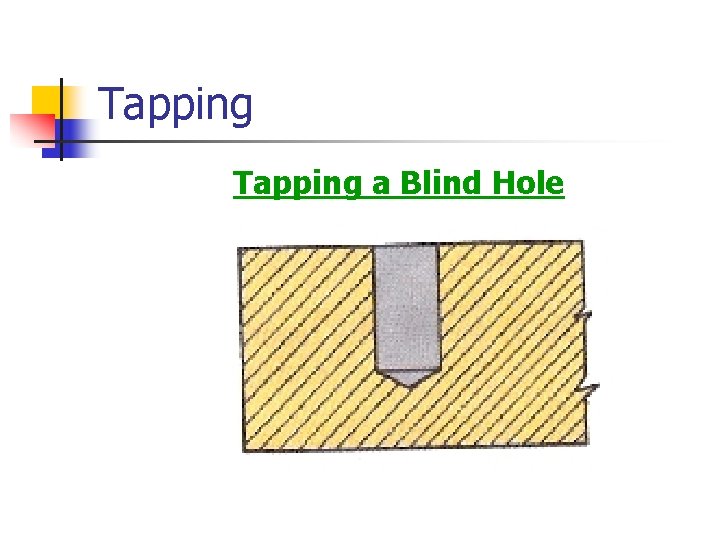
Tapping a Blind Hole
Tapping a Blind Hole As a result the second and plug taps must be used in order to create a thread to the very bottom of the hole.
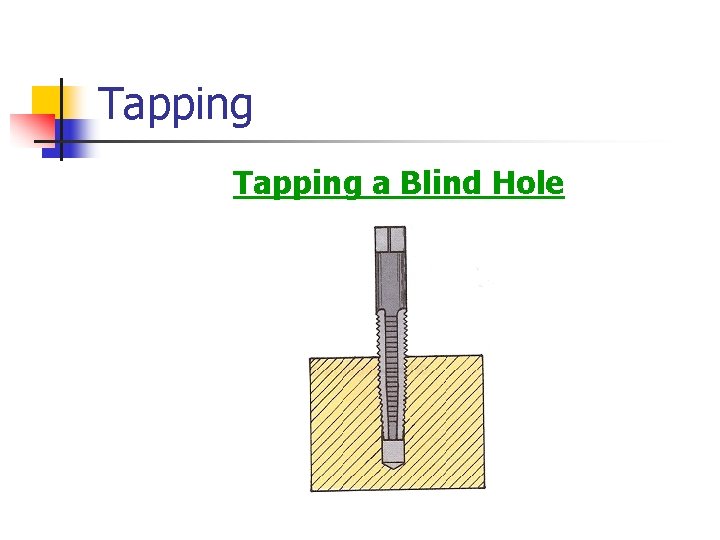
Tapping a Blind Hole
Tapping a Blind Hole The procedure to be followed when tapping a blind hole is the same as the one applied when tapping using a taper tap except the tap must be with drawn completely at regular intervals to remove swarf from the hole and the flutes of the tap.
Tapping a Blind Hole Care must be taken to avoid forcing the tap against the bottom of the hole as this could cause it to break due to its brittleness leaving it firmly lodged in the bottom of the hole.
Tapping a Blind Hole If the blind hole is shallow it may not be possible to begin the thread using the taper tap, the hole should therefore be drilled deeper than the depth required if possible.
Tapping Great care should be taken when tapping, lubricant should be used and a proper tapping technique should be developed. This will help to ensure a longer life for the tap.
Tapping Safety n n Always ensure that the material being tapped is always held square and securely in the vice. Make sure that the correct tap is being used for the type of hole being tapped.
Tapping Safety n n Always have the tap held tightly in the tapping wrench when carrying out the process. Carefully select the correct sized hole to be drilled for the sized of tap that will be used.
Tapping Safety
Tapping Safety When drilling tapping sized holes always remember the safety rules which apply to drilling: n n n Never put hands near moving parts. No loose clothing or long hair.
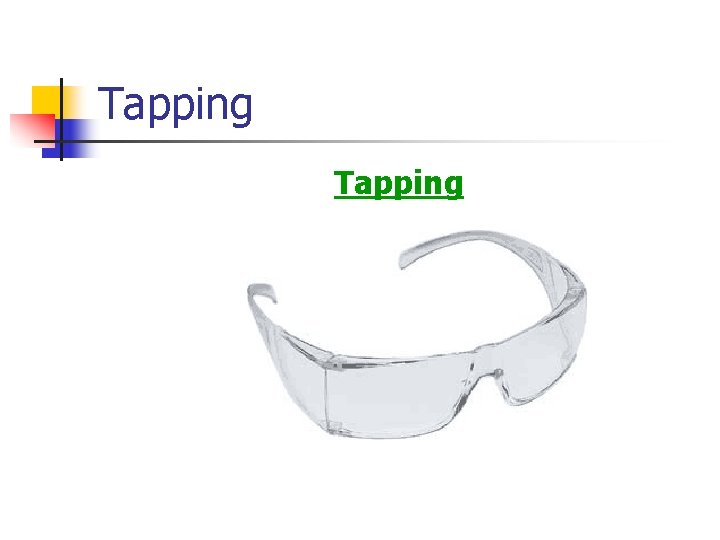
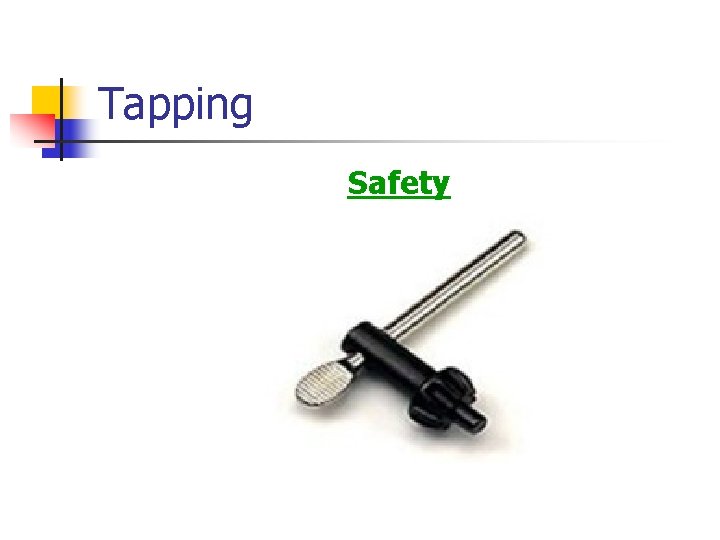
Tapping Safety n Make that the drill bit and work are held securely. n Always wear eye protection. n Do not leave the key in the chuck.
Tapping
Tapping Safety
- Slides: 52