
METALS TRANSITION METALS The elements in Groups 3

- Slides: 11
METALS
TRANSITION METALS • The elements in Groups 3 through 12 are called the transition metals. • The transition metals include most of the familiar metals, such as iron, copper, nickel, silver, and gold. • Most of the transition metals are hard and shiny. • All of the transition metals are good conductors of electricity. • Many of these metals form colorful compounds.
• The transition metals are less reactive than the metals in Groups 1 and 2. • This lack of reactivity is the reason ancient gold coins and jewelry are as beautiful and detailed today as they were thousands of years ago. • Even when iron reacts with air and water, forming rust, it sometimes takes many years to react completely. • Some transition metals are important to your health. • For example, you would not survive without iron. • It forms the core of a large molecule called hemoglobin, which carries oxygen in your bloodstream.
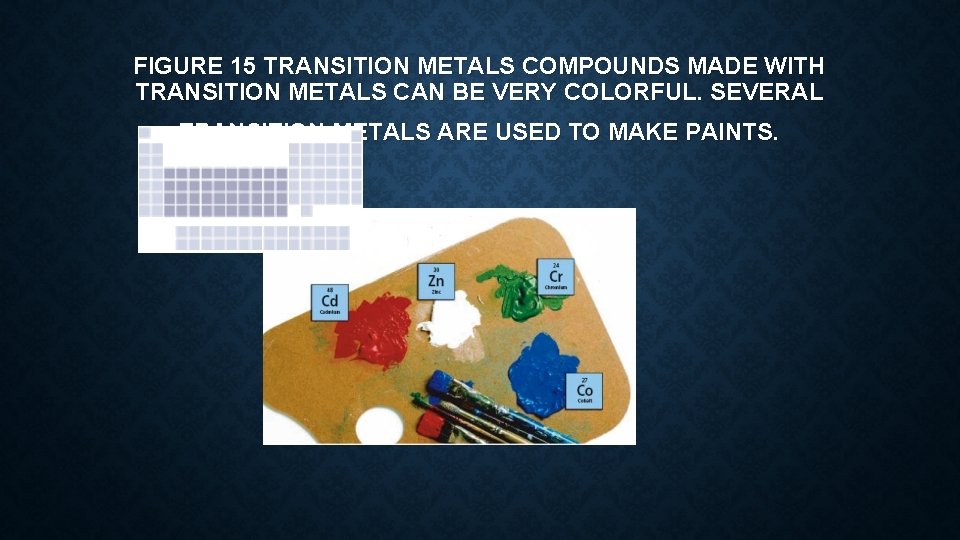
FIGURE 15 TRANSITION METALS COMPOUNDS MADE WITH TRANSITION METALS CAN BE VERY COLORFUL. SEVERAL TRANSITION METALS ARE USED TO MAKE PAINTS.
METALS IN MIXED GROUPS • Only some of the elements in Groups 13 through 15 of the periodic table are metals. • These metals are not nearly as reactive as those on the left side of the table. • The most familiar of these metals are aluminum, tin, and lead. • Aluminum is the lightweight metal used in beverage cans and airplane bodies. • A thin coating of tin protects steel from corrosion in some cans of food. • Lead was once used in paints and water pipes. • But lead is poisonous, so it is no longer used for these purposes. • Now, its most common uses are in automobile batteries and weights for balancing tires.
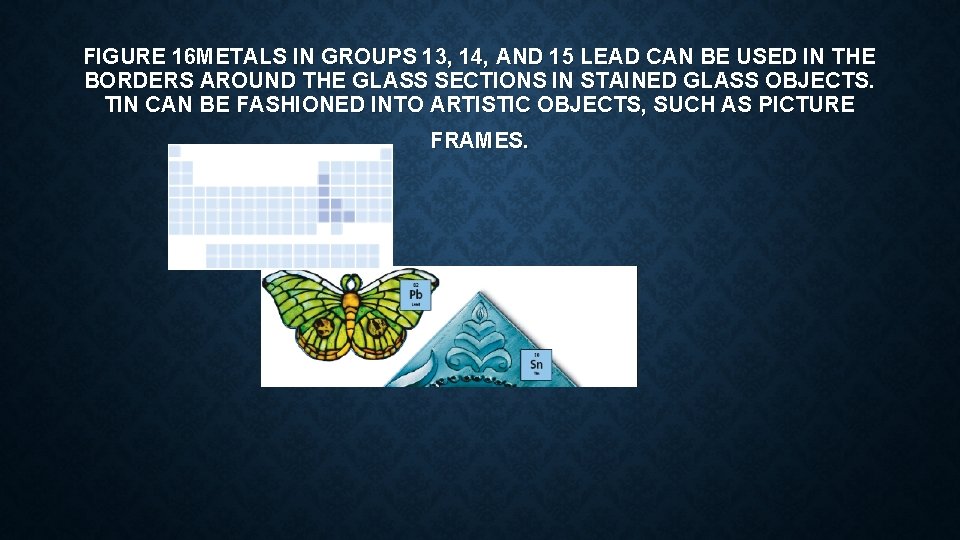
FIGURE 16 METALS IN GROUPS 13, 14, AND 15 LEAD CAN BE USED IN THE BORDERS AROUND THE GLASS SECTIONS IN STAINED GLASS OBJECTS. TIN CAN BE FASHIONED INTO ARTISTIC OBJECTS, SUCH AS PICTURE FRAMES.
LANTHANIDES • Two rows of elements are placed below the main part of the periodic table. • This makes the table more compact. • The elements in the top row are called the lanthanides (lan thuh nydz). • Lanthanides are soft, malleable, shiny metals with high conductivity. • They are mixed with more common metals to make alloys. • An alloy is a mixture of a metal with at least one other element, usually another metal. • Different lanthanides are usually found together in nature. • They are difficult to separate from one another because they all share very similar properties.
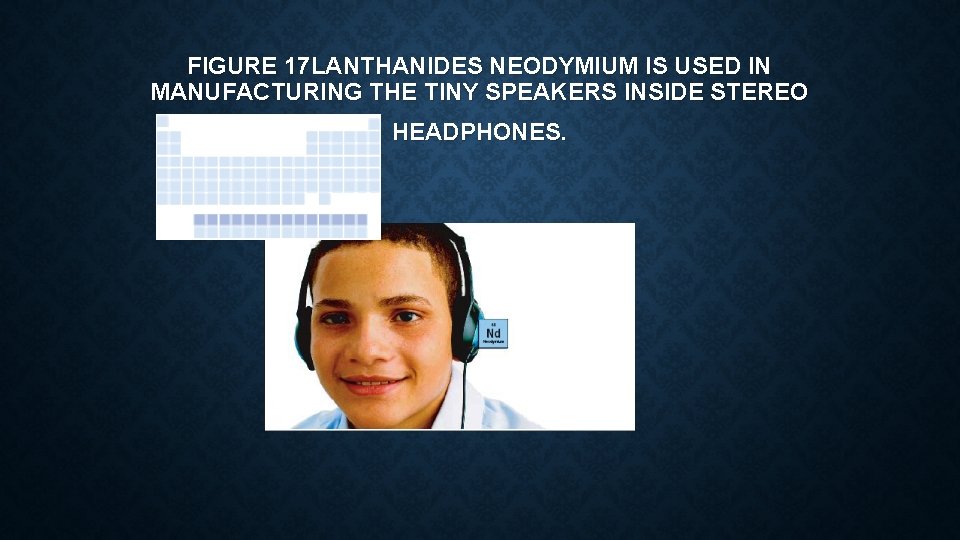
FIGURE 17 LANTHANIDES NEODYMIUM IS USED IN MANUFACTURING THE TINY SPEAKERS INSIDE STEREO HEADPHONES.
ACTINIDES • The elements below the lanthanides are called actinides • • • (ak tuh nydz). Of the actinides, only thorium (Th) and uranium (U) occur naturally on Earth. Uranium is used to produce energy in nuclear power plants. All of the elements after uranium in the periodic table were created artificially in laboratories. The nuclei of these elements are very unstable, meaning that they break apart very quickly into smaller nuclei. In fact, many of these elements are so unstable that they last for only a fraction of a second after they are made.
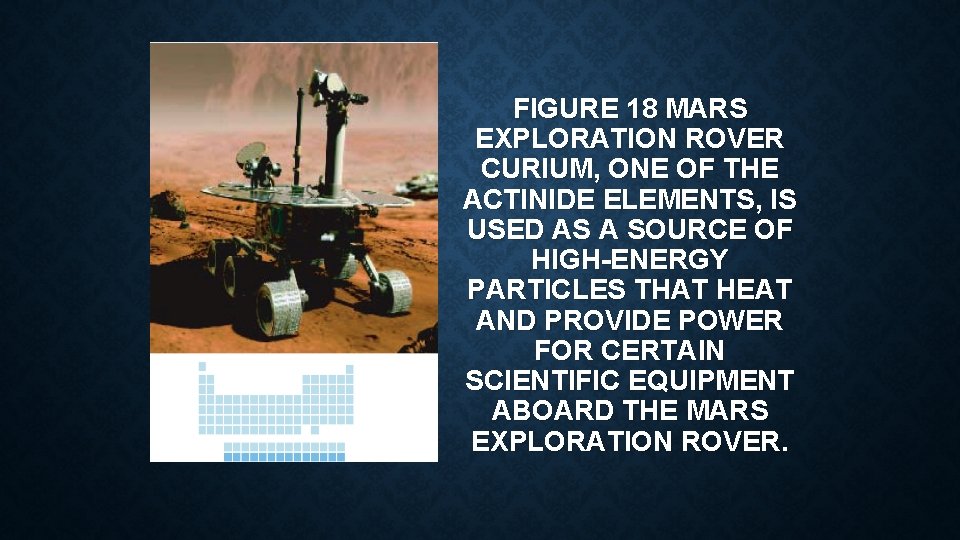
FIGURE 18 MARS EXPLORATION ROVER CURIUM, ONE OF THE ACTINIDE ELEMENTS, IS USED AS A SOURCE OF HIGH-ENERGY PARTICLES THAT HEAT AND PROVIDE POWER FOR CERTAIN SCIENTIFIC EQUIPMENT ABOARD THE MARS EXPLORATION ROVER.
READING CHECKPOINT • The elements that follow uranium are described as synthetic elements because they are • called such exotic names. • the heaviest elements. • not found in nature. • very poorly made.