
METALLIC POISONS Part II PROF DR MANAL HASSAN

- Slides: 14
METALLIC POISONS Part II PROF. DR. MANAL HASSAN
ACUTE ARSENIC POISONING Sources and forms: Pesticides, rodenticides, wood preservatives Arsine gas (As. H 3) is a by product of the action of acids on arsenic. Toxicokinetics: Absorption: inhalation, ingestion, and dermal. Metabolism: binding to sulfhydryl groups activity. Arsine depletes erythrocyte glutathione Excretion: is mainly renal. inhibition of enzyme heamolysis
Clinical Manifestations Acute ingestion of arsenic: GI symptoms : Vomiting, severe abdominal pain profuse diarrhea (rice watery diarrhea) A garlic odor of the breath and feces hypotension toxic encephalopathy with seizures and coma. A peripheral neuropathy that is more sensory than motor
inhaled arsine gas : short ness of breath abdominal pain hemolytic anemia hyperkalemia Hemoglobinuria & Renal failure
Investigations: Routine: Complete blood count. Kidney function tests Liver function tests. Chest X ray. ECG. Abdominal films : as arsenic is radiopaque. Toxicological: a) Blood arsenic levels b) Urine levels are more accurate. c) Hair levels of arsenic may be confusing because of external contamination of the hair.
Treatment: 1 Removal of the patient from further exposure. 2 Care of respiration. 3 Care of circulation : hypotension cardiac arrhythmias 4 Gastric lavage : is recommended. 5 Chelation therapy: a) BAL : 2. 5 5. 0 mg/kg/dose IM every 4 6 h for 48 hours, then every l 2 24 h for 10 days. b) Penicillamine : 20 mg/kg/day up to 1 g for 5 days.
Treatment: Arsine gas exposure: exchange transfusion Alkalization of urine with sodium carbonate to protect the kidneys.
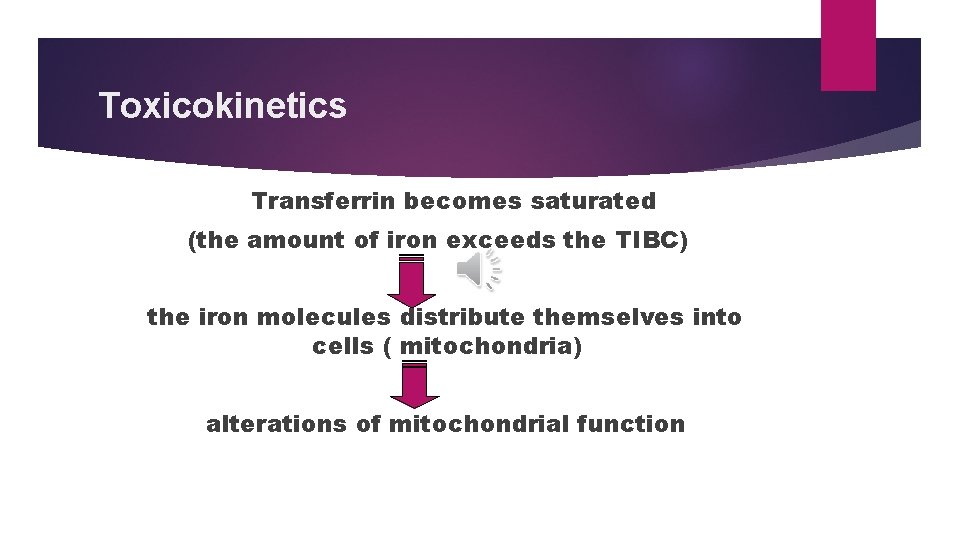
ACUTE IRON POISONING Pharmacokinetics : Absorption: in a soluble state (ferrous form) Oxidized couples to transferrin (total iron binding capacity) (TIBC). ferric state
Toxicokinetics Transferrin becomes saturated (the amount of iron exceeds the TIBC) the iron molecules distribute themselves into cells ( mitochondria) alterations of mitochondrial function
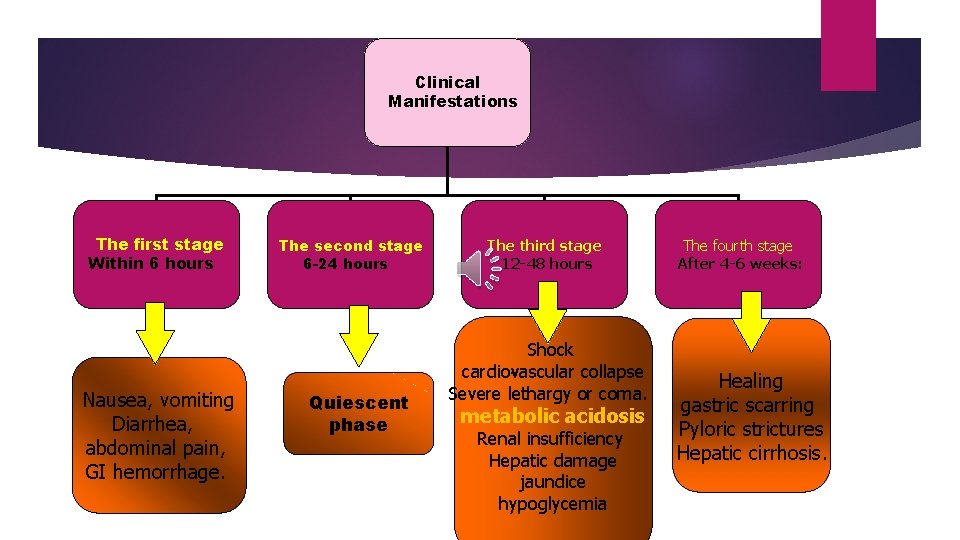
Clinical Manifestations The first stage Within 6 hours Nausea, vomiting Diarrhea, abdominal pain, GI hemorrhage. The second stage 6 24 hours Quiescent phase The third stage 12 -48 hours Shock cardio vascular collapse Severe lethargy or coma. metabolic acidosis Renal insufficiency Hepatic damage jaundice hypoglycemia The fourth stage After 4 -6 weeks: Healing gastric scarring Pyloric strictures Hepatic cirrhosis.
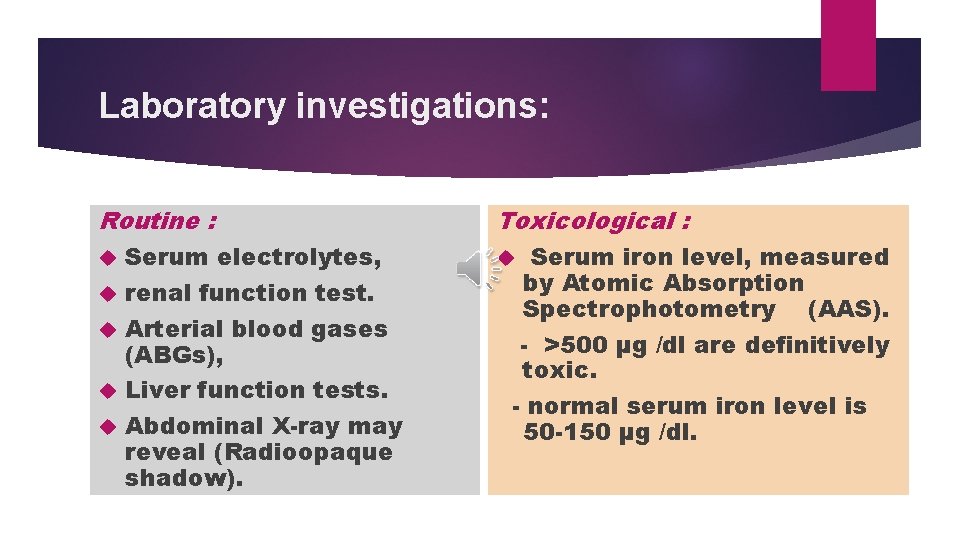
Laboratory investigations: Routine : Serum electrolytes, renal function test. Arterial blood gases (ABGs), Liver function tests. Abdominal X ray may reveal (Radioopaque shadow). Toxicological : Serum iron level, measured by Atomic Absorption Spectrophotometry (AAS). >500 µg /dl are definitively toxic. normal serum iron level is 50 150 µg /dl.
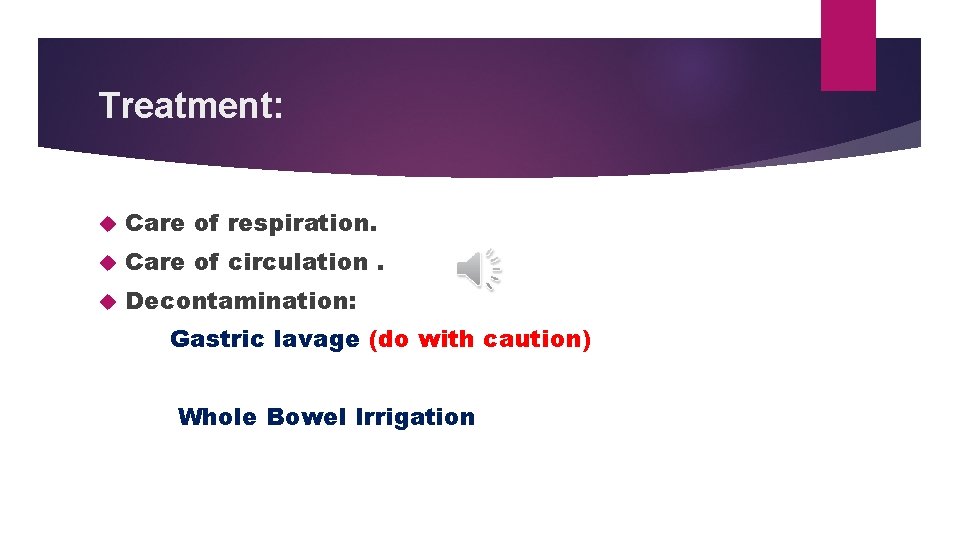
Treatment: Care of respiration. Care of circulation. Decontamination: Gastric lavage (do with caution) Whole Bowel Irrigation
Physiological antidote: Deferoxamine (Desferal): it binds the free circulating elemental iron. Dose: (parenteral) In mild cases, the dose is 90 mg/kg IM up to a maximum of 1 g in children or 2 g in adults. In severe cases, the patient requires the use of intravenous infusion. The recommended dose is 15 mg/kg/hr with the maximum daily dose up to 6 gs total.
Thank you