
METAETHICS A CRASH COURSE FIELDS OF ETHICS Applied

- Slides: 29
METAETHICS: A CRASH COURSE
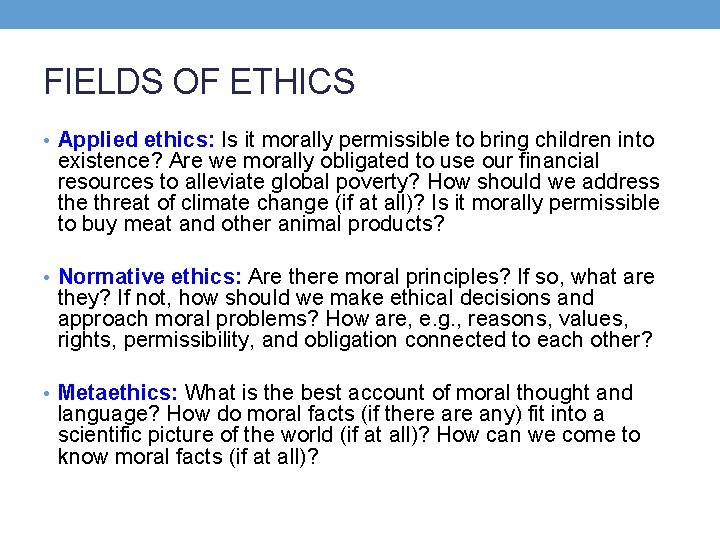
FIELDS OF ETHICS • Applied ethics: Is it morally permissible to bring children into existence? Are we morally obligated to use our financial resources to alleviate global poverty? How should we address the threat of climate change (if at all)? Is it morally permissible to buy meat and other animal products? • Normative ethics: Are there moral principles? If so, what are they? If not, how should we make ethical decisions and approach moral problems? How are, e. g. , reasons, values, rights, permissibility, and obligation connected to each other? • Metaethics: What is the best account of moral thought and language? How do moral facts (if there any) fit into a scientific picture of the world (if at all)? How can we come to know moral facts (if at all)?
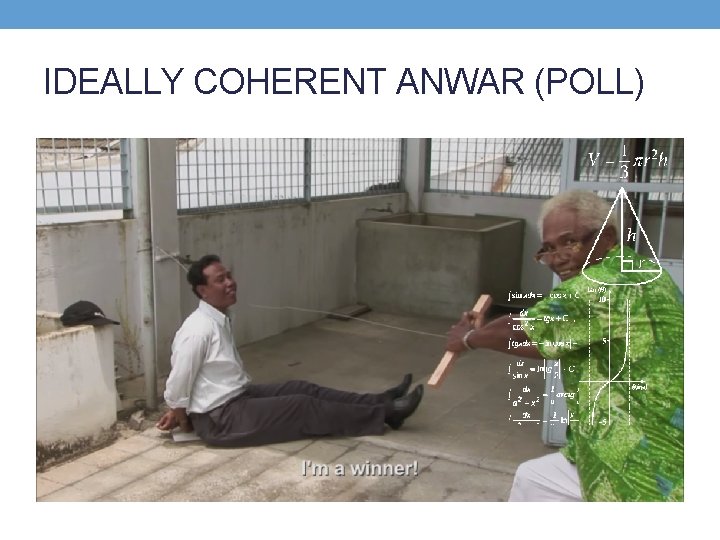
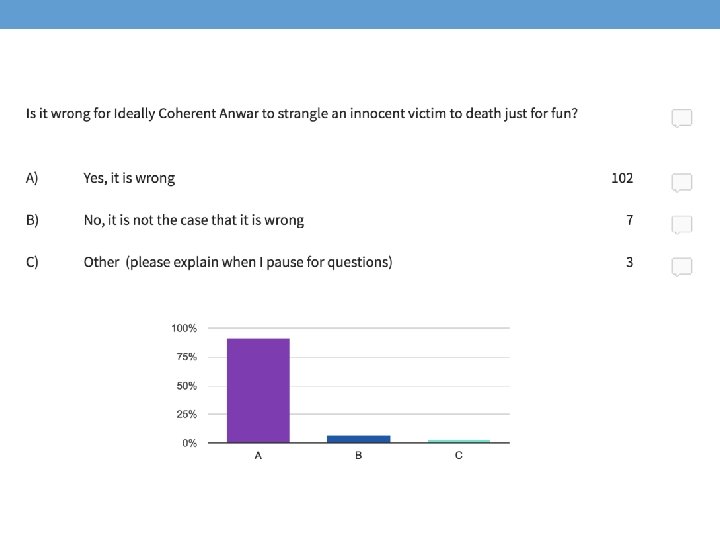
IDEALLY COHERENT ANWAR (POLL)
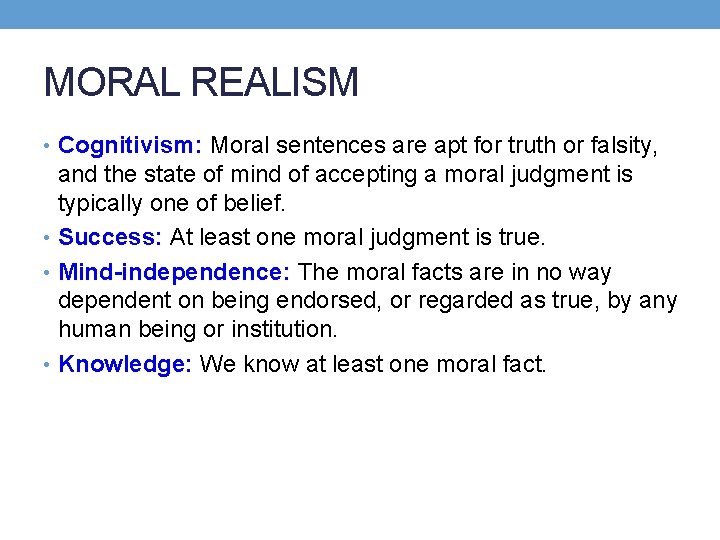
MORAL REALISM • Cognitivism: Moral sentences are apt for truth or falsity, and the state of mind of accepting a moral judgment is typically one of belief. • Success: At least one moral judgment is true. • Mind-independence: The moral facts are in no way dependent on being endorsed, or regarded as true, by any human being or institution. • Knowledge: We know at least one moral fact.
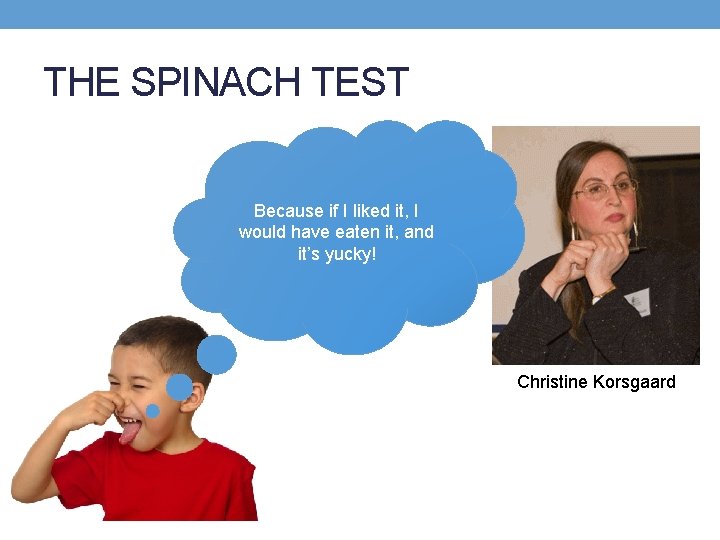
THE SPINACH TEST Because if I liked it, I would have eaten it, and it’s yucky! Christine Korsgaard
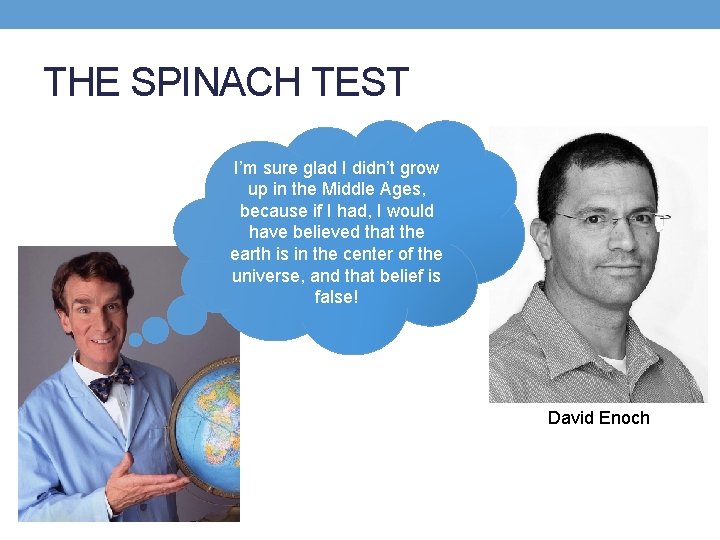
THE SPINACH TEST I’m sure glad I didn’t grow up in the Middle Ages, because if I had, I would have believed that the earth is in the center of the universe, and that belief is false! David Enoch
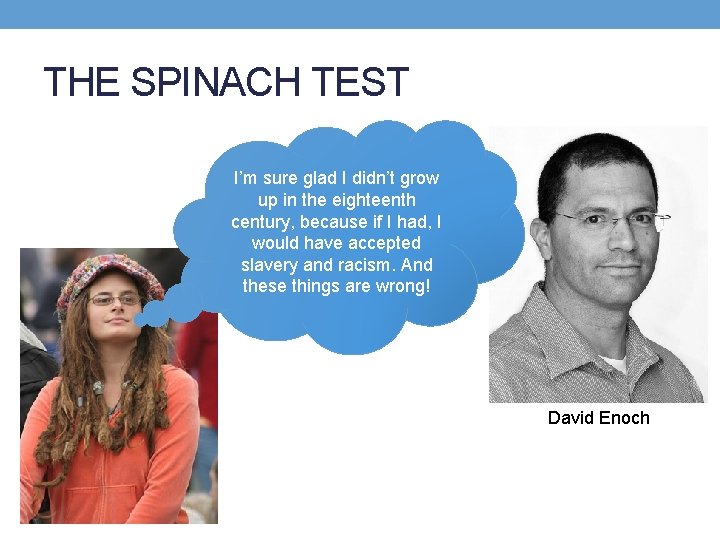
THE SPINACH TEST I’m sure glad I didn’t grow up in the eighteenth century, because if I had, I would have accepted slavery and racism. And these things are wrong! David Enoch
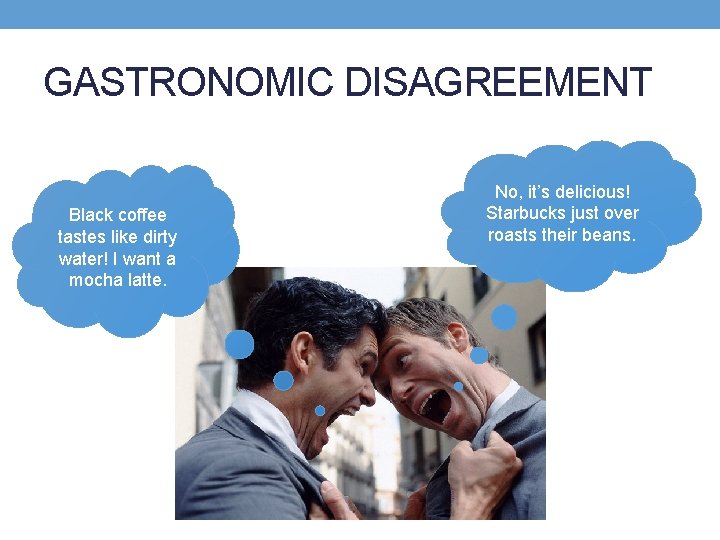
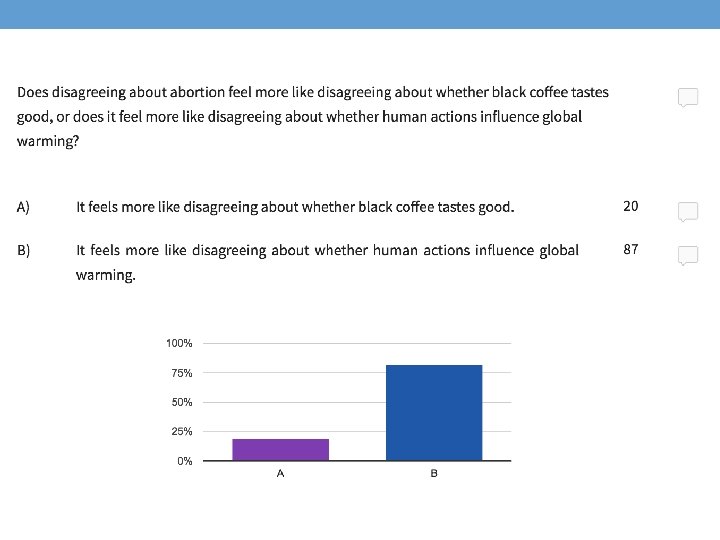
GASTRONOMIC DISAGREEMENT Black coffee tastes like dirty water! I want a mocha latte. No, it’s delicious! Starbucks just over roasts their beans.
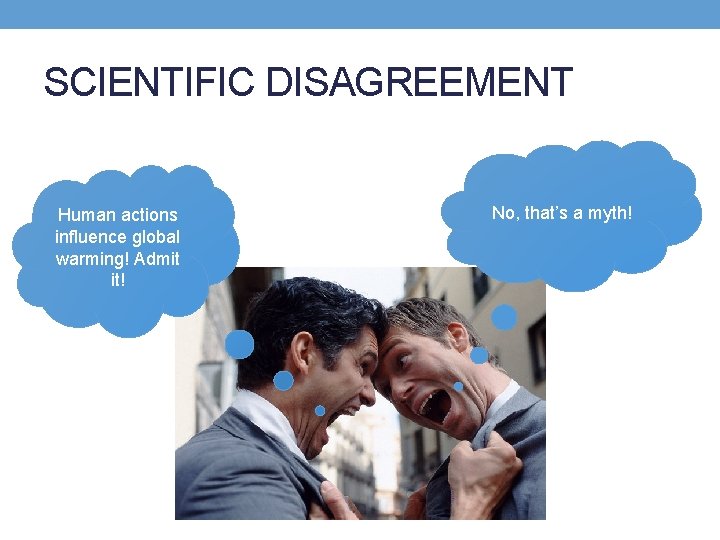
SCIENTIFIC DISAGREEMENT Human actions influence global warming! Admit it! No, that’s a myth!
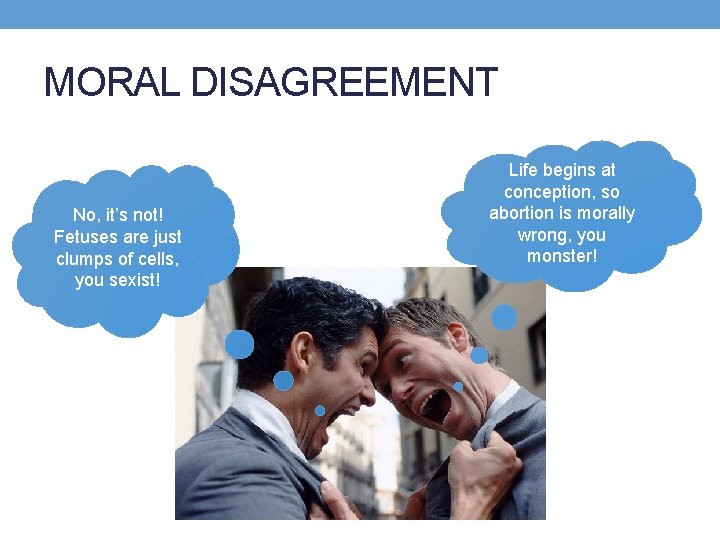
MORAL DISAGREEMENT No, it’s not! Fetuses are just clumps of cells, you sexist! Life begins at conception, so abortion is morally wrong, you monster!
WHAT’S AT ISSUE? • “I suggest that we care about the objectivity of morality for roughly the reasons specified in the previous section. . We want morality’s objectivity to vindicate the phenomenology of deliberation and disagreement. . We want morality’s objectivity to explain why the moral analogue of the spinach test isn’t funny. . Very well, then, in what sense must morality be objective[? ] The answer, it seems to me, is that a subject matter is objective if the truths or facts in it exist independently of what we think or feel about them” (198). David Enoch
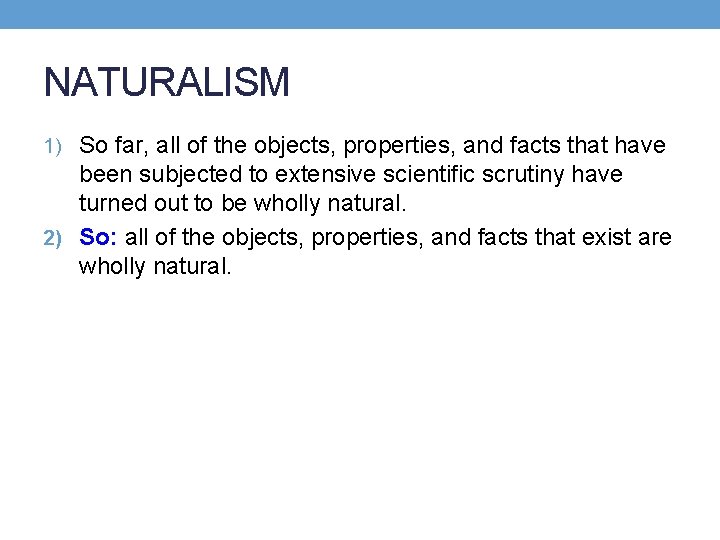
NATURALISM 1) So far, all of the objects, properties, and facts that have been subjected to extensive scientific scrutiny have turned out to be wholly natural. 2) So: all of the objects, properties, and facts that exist are wholly natural.
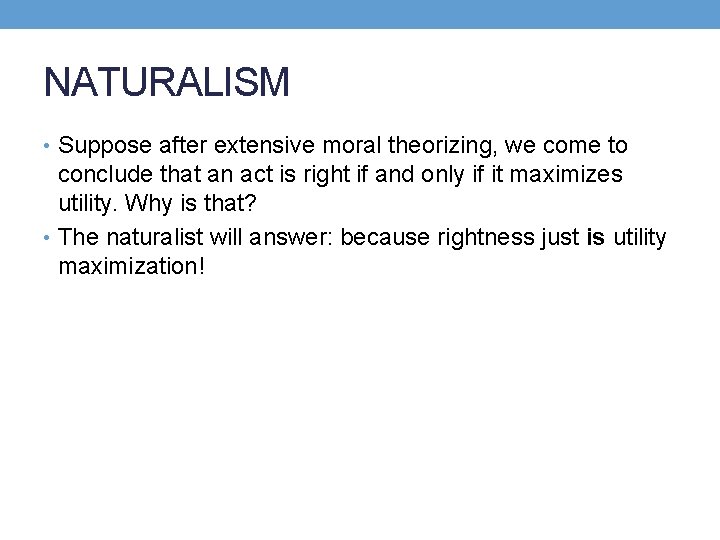
NATURALISM • Suppose after extensive moral theorizing, we come to conclude that an act is right if and only if it maximizes utility. Why is that? • The naturalist will answer: because rightness just is utility maximization!
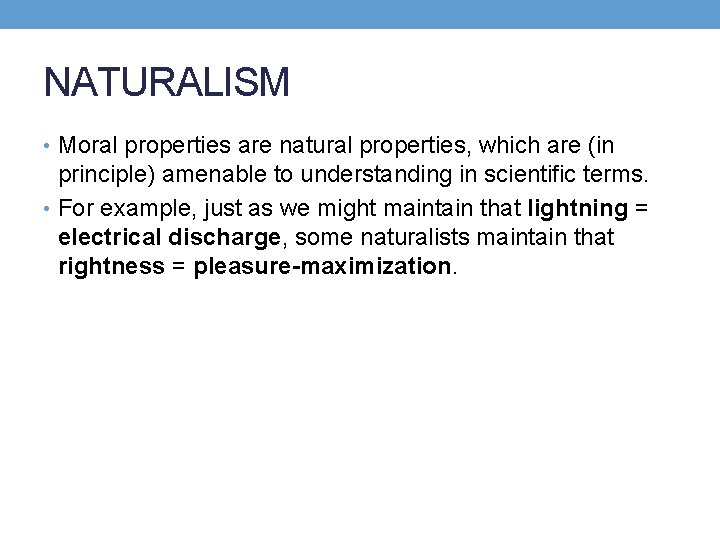
NATURALISM • Moral properties are natural properties, which are (in principle) amenable to understanding in scientific terms. • For example, just as we might maintain that lightning = electrical discharge, some naturalists maintain that rightness = pleasure-maximization.
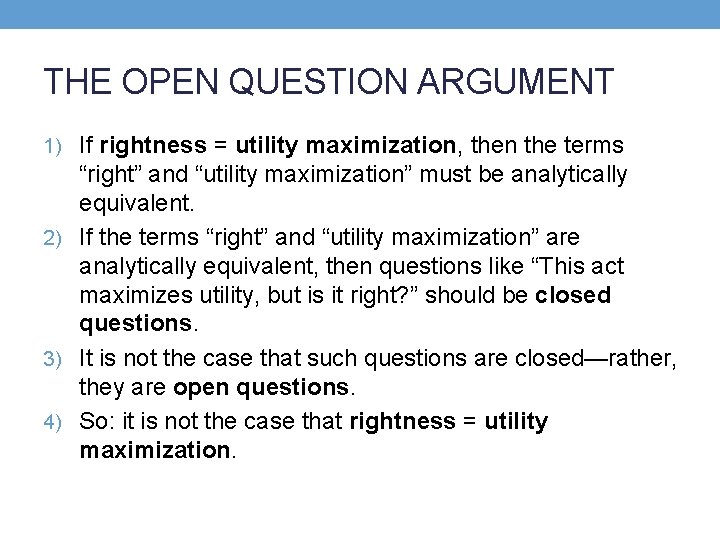
THE OPEN QUESTION ARGUMENT 1) If rightness = utility maximization, then the terms “right” and “utility maximization” must be analytically equivalent. 2) If the terms “right” and “utility maximization” are analytically equivalent, then questions like “This act maximizes utility, but is it right? ” should be closed questions. 3) It is not the case that such questions are closed—rather, they are open questions. 4) So: it is not the case that rightness = utility maximization.
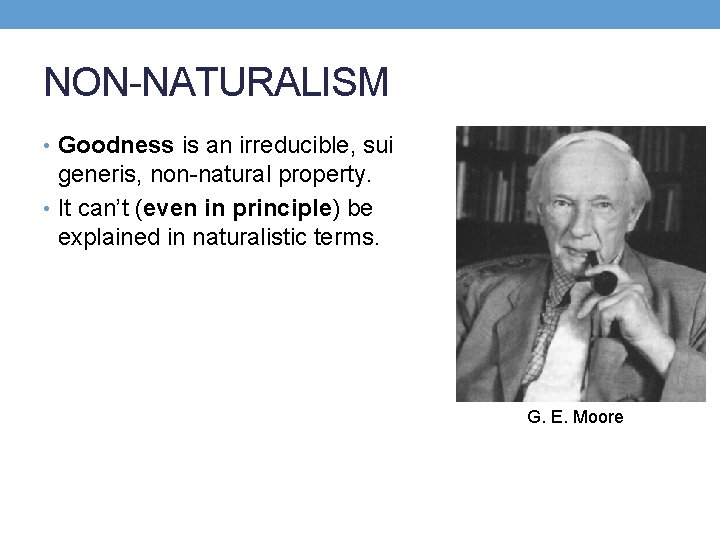
NON-NATURALISM • Goodness is an irreducible, sui generis, non-natural property. • It can’t (even in principle) be explained in naturalistic terms. G. E. Moore
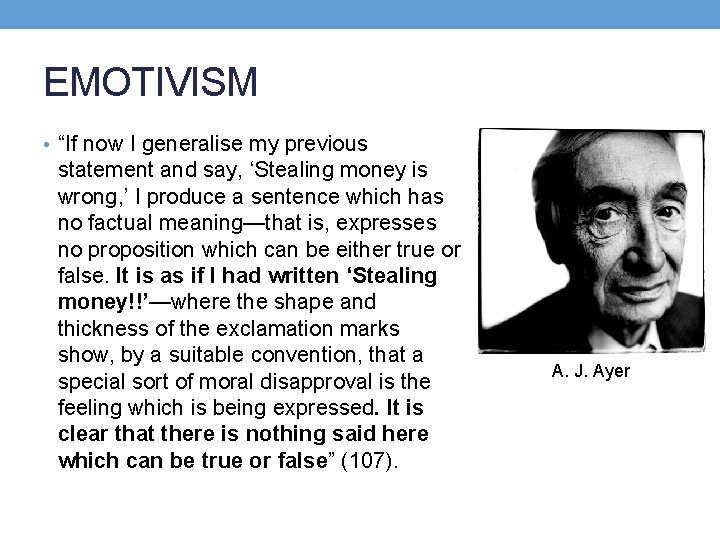
EMOTIVISM • “If now I generalise my previous statement and say, ‘Stealing money is wrong, ’ I produce a sentence which has no factual meaning—that is, expresses no proposition which can be either true or false. It is as if I had written ‘Stealing money!!’—where the shape and thickness of the exclamation marks show, by a suitable convention, that a special sort of moral disapproval is the feeling which is being expressed. It is clear that there is nothing said here which can be true or false” (107). A. J. Ayer
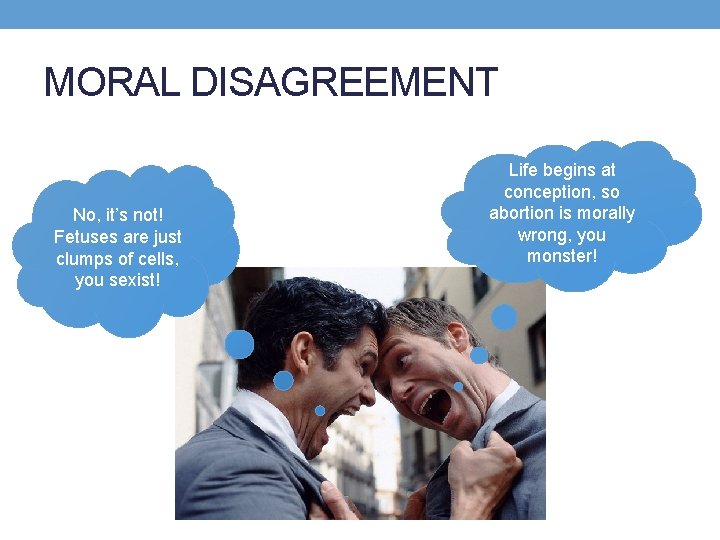
MORAL DISAGREEMENT No, it’s not! Fetuses are just clumps of cells, you sexist! Life begins at conception, so abortion is morally wrong, you monster!
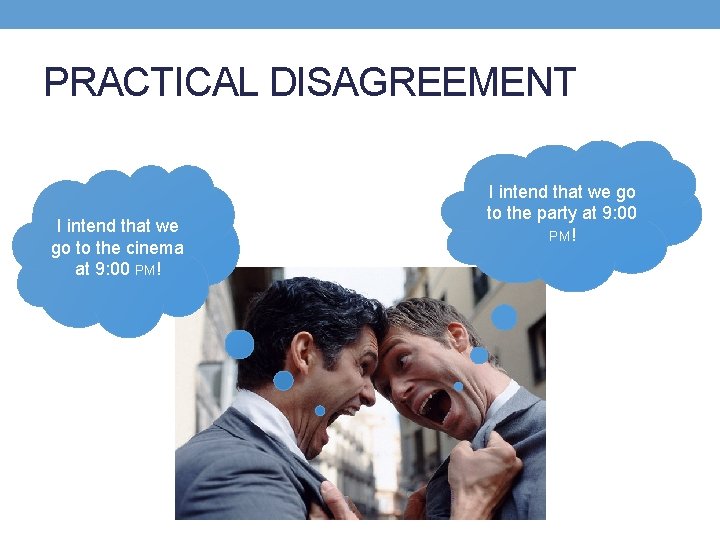
PRACTICAL DISAGREEMENT I intend that we go to the cinema at 9: 00 PM! I intend that we go to the party at 9: 00 PM!
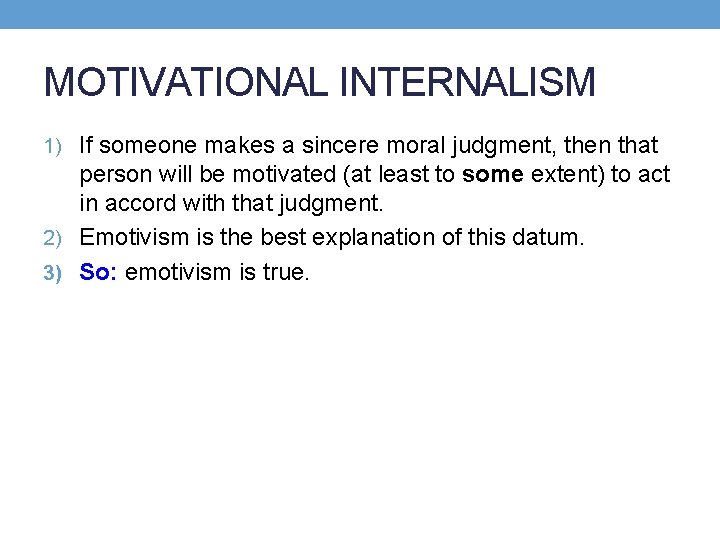
MOTIVATIONAL INTERNALISM 1) If someone makes a sincere moral judgment, then that person will be motivated (at least to some extent) to act in accord with that judgment. 2) Emotivism is the best explanation of this datum. 3) So: emotivism is true.
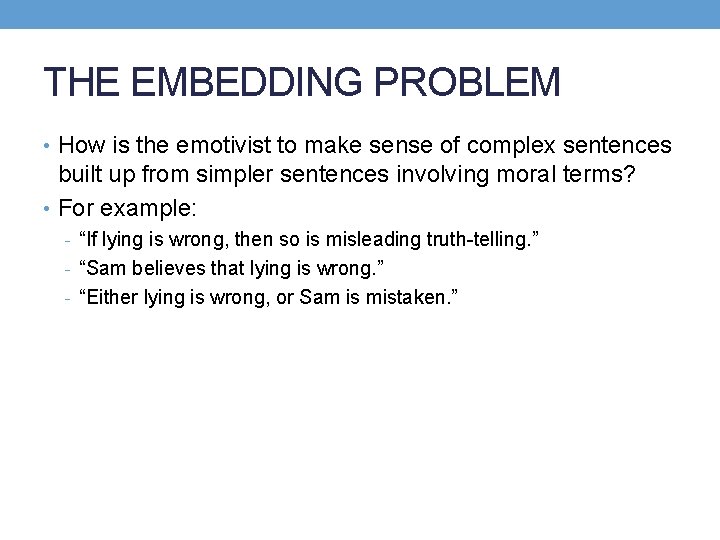
THE EMBEDDING PROBLEM • How is the emotivist to make sense of complex sentences built up from simpler sentences involving moral terms? • For example: - “If lying is wrong, then so is misleading truth-telling. ” - “Sam believes that lying is wrong. ” - “Either lying is wrong, or Sam is mistaken. ”
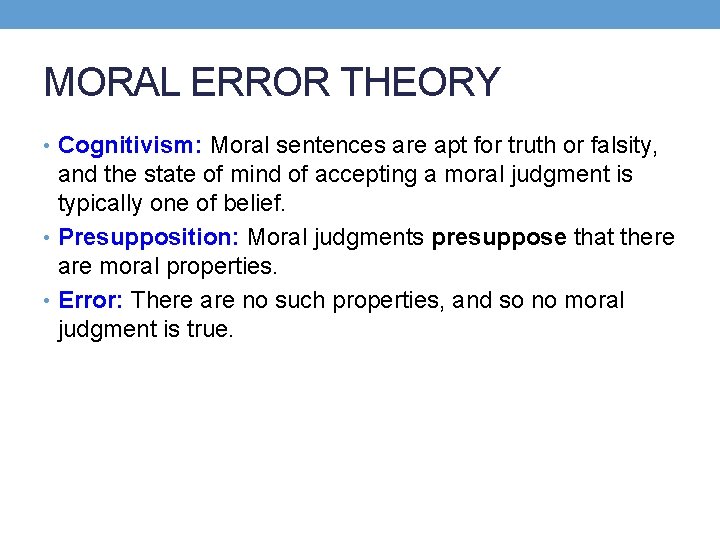
MORAL ERROR THEORY • Cognitivism: Moral sentences are apt for truth or falsity, and the state of mind of accepting a moral judgment is typically one of belief. • Presupposition: Moral judgments presuppose that there are moral properties. • Error: There are no such properties, and so no moral judgment is true.
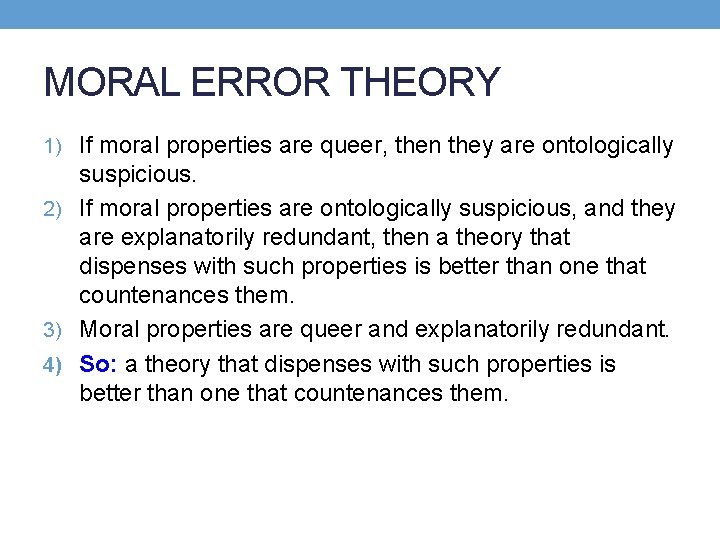
MORAL ERROR THEORY 1) If moral properties are queer, then they are ontologically suspicious. 2) If moral properties are ontologically suspicious, and they are explanatorily redundant, then a theory that dispenses with such properties is better than one that countenances them. 3) Moral properties are queer and explanatorily redundant. 4) So: a theory that dispenses with such properties is better than one that countenances them.
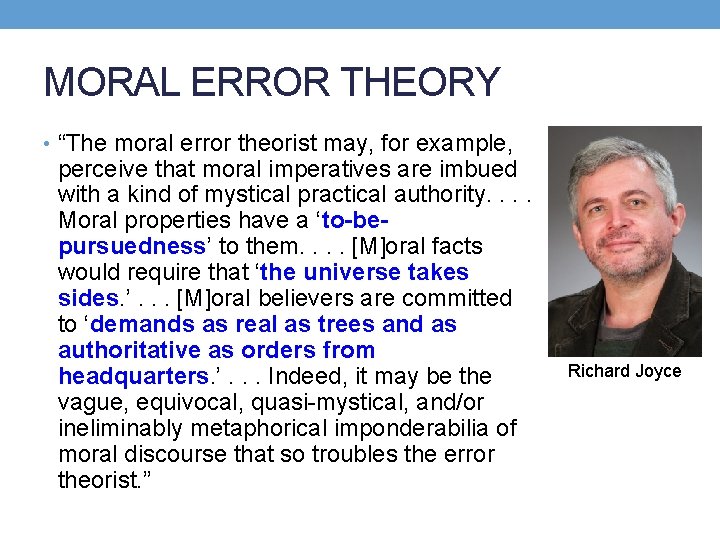
MORAL ERROR THEORY • “The moral error theorist may, for example, perceive that moral imperatives are imbued with a kind of mystical practical authority. . Moral properties have a ‘to-bepursuedness’ to them. . [M]oral facts would require that ‘the universe takes sides. ’. . . [M]oral believers are committed to ‘demands as real as trees and as authoritative as orders from headquarters. ’. . . Indeed, it may be the vague, equivocal, quasi-mystical, and/or ineliminably metaphorical imponderabilia of moral discourse that so troubles the error theorist. ” Richard Joyce
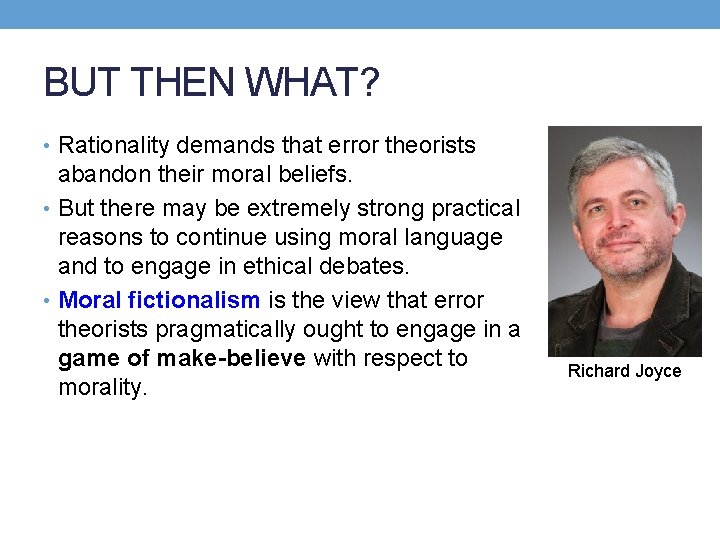
BUT THEN WHAT? • Rationality demands that error theorists abandon their moral beliefs. • But there may be extremely strong practical reasons to continue using moral language and to engage in ethical debates. • Moral fictionalism is the view that error theorists pragmatically ought to engage in a game of make-believe with respect to morality. Richard Joyce
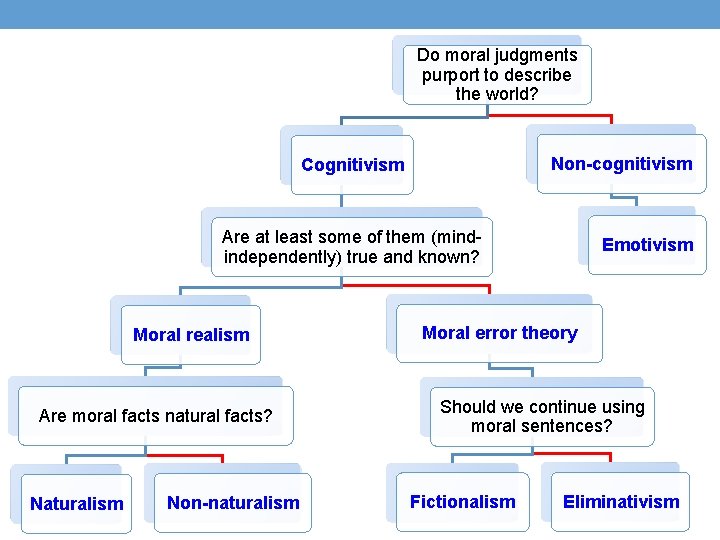
Do moral judgments purport to describe the world? Non-cognitivism Cognitivism Are at least some of them (mindindependently) true and known? Moral realism Are moral facts natural facts? Naturalism Non-naturalism Emotivism Moral error theory Should we continue using moral sentences? Fictionalism Eliminativism
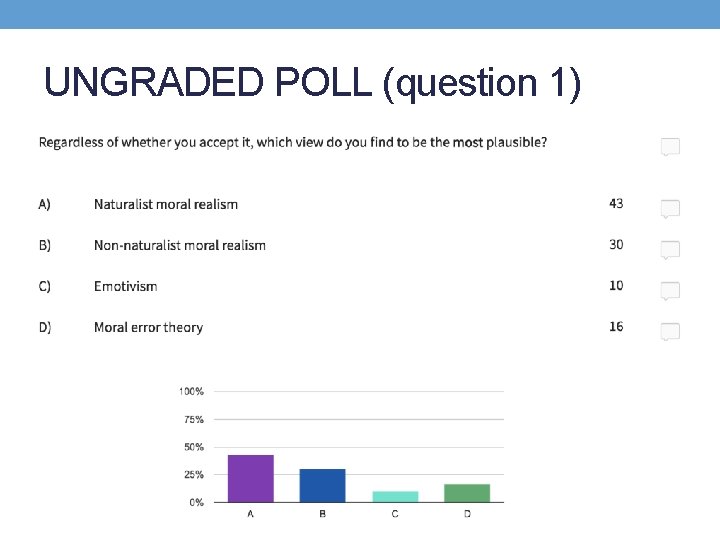
UNGRADED POLL (question 1) • Which view do you find to be the most plausible?