
Metadata Teams The Librarys Core of Discovery Chris

Metadata Teams: The Library’s Core of Discovery Chris Long Ohio University Libraries May 14, 2014
When Print was King Ø cataloging was reactive Ø we cataloged physical items Ø the items were inside our building
Comes Now the Internet Ø cataloging becomes more proactive Ø we catalog both online and physical resources Ø we provide access outside of the library building
Next Steps: Big Picture Ø shifting focus from cataloging individual pieces to building relationships Ø moving our metadata to the Web
Spinning Our Data Into the Semantic Web What is the Semantic Web? “The Semantic Web is not a separate Web but an extension of the current one, in which information is given well-defined meaning, better enabling computers and people to work in cooperation. ” (Tim Berners-Lee, James Hendler and Ora Lassila 2001) “The idea is to weave a Web that not only links documents to each other but also recognises the meaning of the information in those documents. ” (Mark Frauenfleder 2001) Ø it’s about linking Web documents together Ø it’s about finding meaning in the information in the documents Ø although people are involved, it’s largely about machine-to-machine processing of information
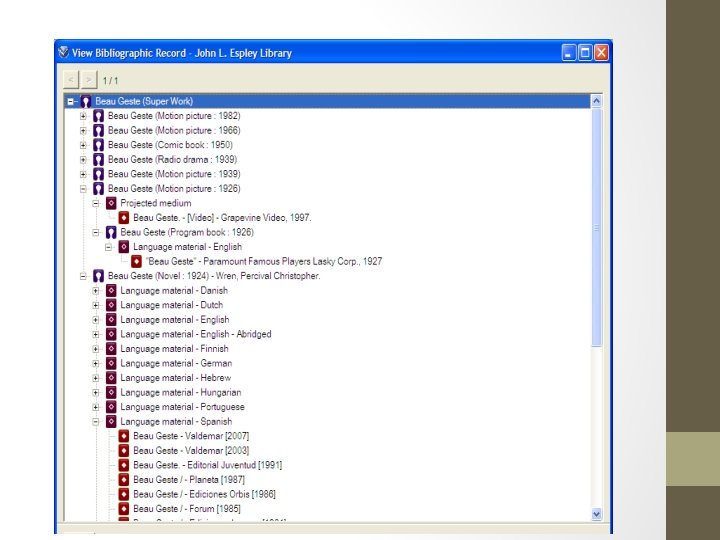
It’s a Matter of Semantics Two Steps in the Semantic Web Direction RDA (Resource Description and Access) Ø Based on the Functional Requirements for Bibliographic Records (FRBR) model Ø catalogers can build relationships among resources Ø allows for more granular description, aiding machine-to-machine processing BIBFRAME Ø Transforming MARC into RDF (Resource Description Framework), the language of the Semantic Web
Recombinant Innovation Ø Recombining things that already exist into something new “Economic growth occurs whenever people take resources and rearrange them in ways that make them more valuable … And every generation has underestimated the potential for finding new … ideas. We consistently fail to grasp how many ideas remain to be discovered … Possibilities do not merely add up, they multiply. ” (Paul Romer, quoted in The Second Machine Age: Work, Progress, and Prosperity in a Time of Brilliant Technologies by Erik Brynjolfsson and Andrew Mc. Afee) ØCan this apply to library data as well?
Next Steps: Local Picture The Core of Discovery ØSupplying metadata in new areas v digital collections § NCSU study: https: //staff. lib. ncsu. edu/confluence/display/MNC/Evaluating+the+e ffectiveness+of+manual+metadata+enhancements+for+digital+imag es v institutional repositories (IRs) Ø Providing expertise to discovery initiatives v discovery layers v connecting metadata silos
Challenges Ø lack of resources v examine current workflows v teach rather than do? Ø fear of the unknown v find partners v create a safe environment
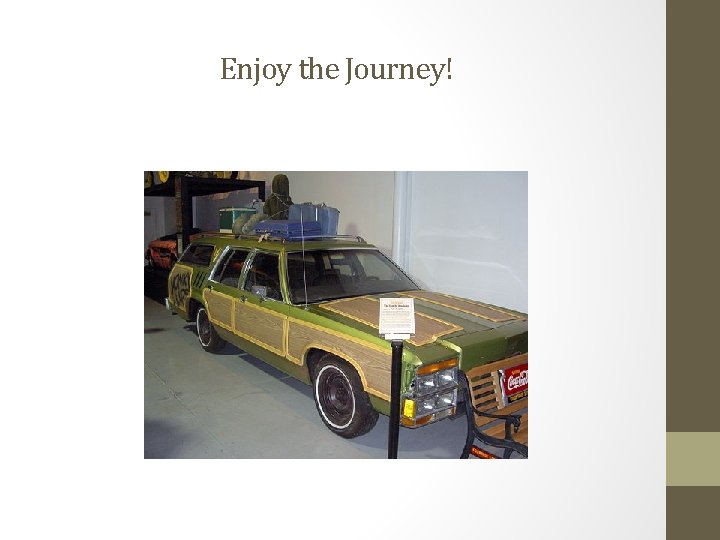
Enjoy the Journey!
- Slides: 12