
Metadata AKA Contextual Data Needed to Make Data
- Slides: 20
Metadata AKA: Contextual Data Needed to Make Data Meaningful to Others
Check-in • Any questions from last week?
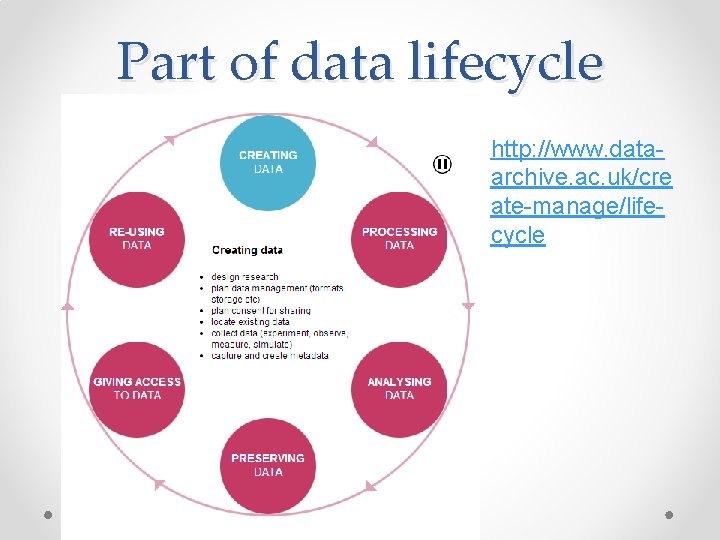
Part of data lifecycle • http: //www. dataarchive. ac. uk/cre ate-manage/lifecycle
Learning Objectives • Understand what metadata is • Understand why metadata is important • Identify how to locate applicable standards for capturing and documenting metadata • Understand varying practices associated with the collection and sharing of metadata • Identify an approach to creating metadata for a project
What is Metadata? • “Metadata is structured information that describes, explains, locates, or otherwise makes it easier to retrieve, use, or manage an information resource. Metadata is often called data about data or information about information” (NISO, Understanding Metadata 2004; 1). • In plain English: metadata is used to record information about data that has been collected. • It’s essential to enabling the use and reuse of data. Module 3: Metadata
You must have metadata to: • find data from other researchers to support your research; • use the data that you find; • help other professionals to find and use data from your research; and • use your own data in the future when you may have forgotten details of the research. (taken from the Marine Metadata Interoperability Project, https: //marinemetadata. org/guides/mdataintro) Module 3: Metadata
Basic Types of Metadata • Descriptive metadata • Structural metadata • Administrative metadata All three should give you a (mostly) complete picture of the object’s content, context and structure. Module 3: Metadata
How Metadata Facilitates Discoverability and Reuse • Discoverability • Accessibility Module 3: Metadata
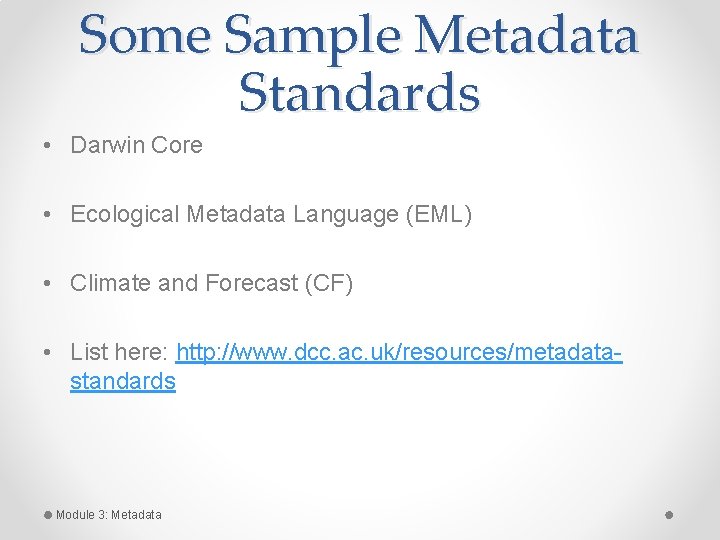
Some Sample Metadata Standards • Darwin Core • Ecological Metadata Language (EML) • Climate and Forecast (CF) • List here: http: //www. dcc. ac. uk/resources/metadatastandards Module 3: Metadata
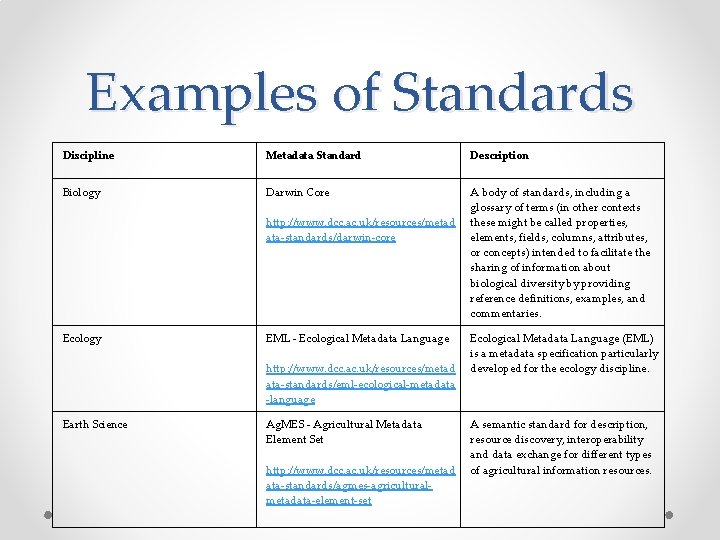
Examples of Standards Discipline Metadata Standard Description Biology Darwin Core A body of standards, including a glossary of terms (in other contexts these might be called properties, elements, fields, columns, attributes, or concepts) intended to facilitate the sharing of information about biological diversity by providing reference definitions, examples, and commentaries. http: //www. dcc. ac. uk/resources/metad ata-standards/darwin-core Ecology EML - Ecological Metadata Language http: //www. dcc. ac. uk/resources/metad ata-standards/eml-ecological-metadata -language Earth Science Ag. MES - Agricultural Metadata Element Set http: //www. dcc. ac. uk/resources/metad ata-standards/agmes-agriculturalmetadata-element-set Ecological Metadata Language (EML) is a metadata specification particularly developed for the ecology discipline. A semantic standard for description, resource discovery, interoperability and data exchange for different types of agricultural information resources.
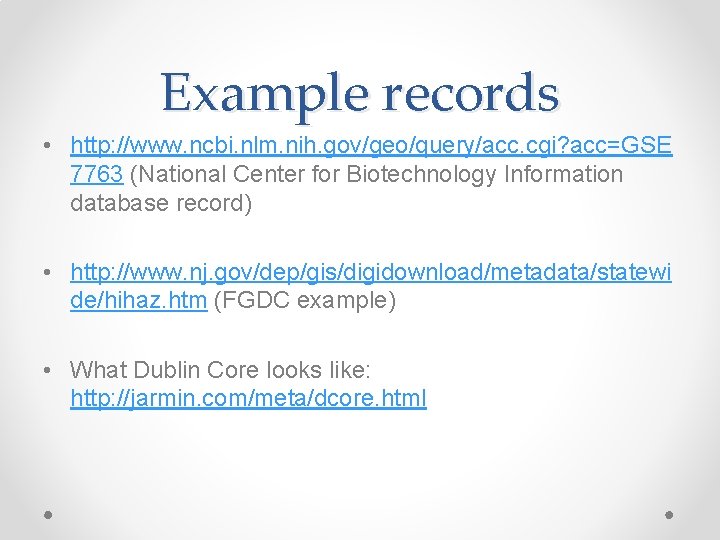
Example records • http: //www. ncbi. nlm. nih. gov/geo/query/acc. cgi? acc=GSE 7763 (National Center for Biotechnology Information database record) • http: //www. nj. gov/dep/gis/digidownload/metadata/statewi de/hihaz. htm (FGDC example) • What Dublin Core looks like: http: //jarmin. com/meta/dcore. html
Collecting and Sharing Metadata • Controlled vocabularies • Technical standards Module 3: Metadata
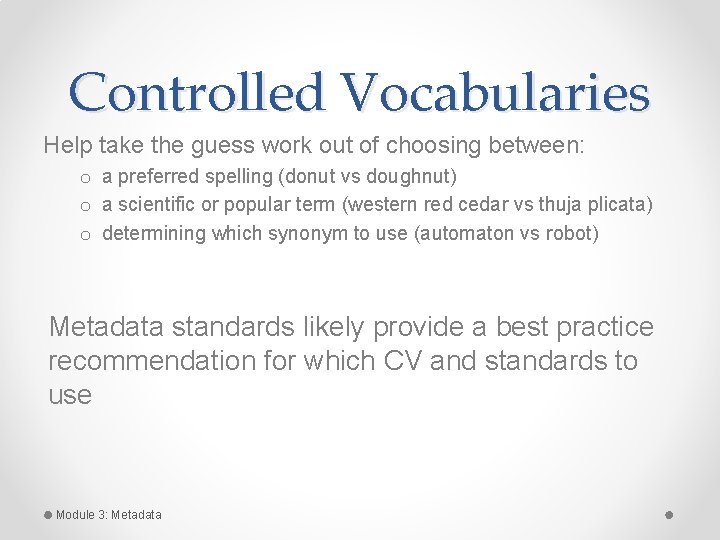
Controlled Vocabularies Help take the guess work out of choosing between: o a preferred spelling (donut vs doughnut) o a scientific or popular term (western red cedar vs thuja plicata) o determining which synonym to use (automaton vs robot) Metadata standards likely provide a best practice recommendation for which CV and standards to use Module 3: Metadata
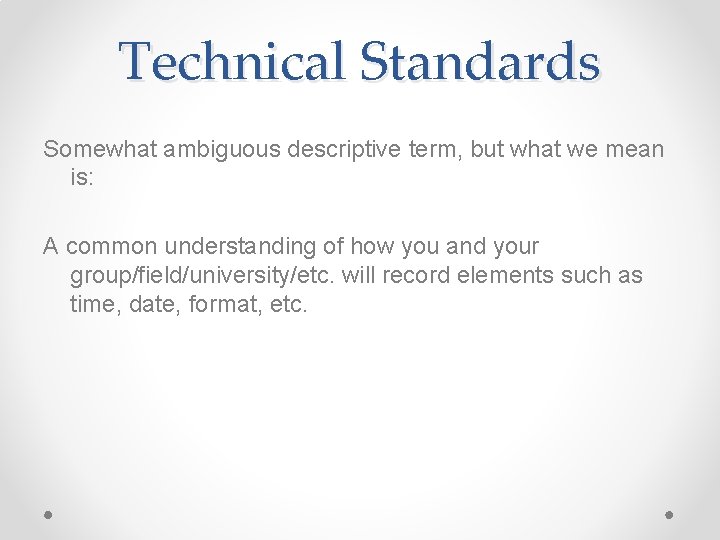
Technical Standards Somewhat ambiguous descriptive term, but what we mean is: A common understanding of how you and your group/field/university/etc. will record elements such as time, date, format, etc.
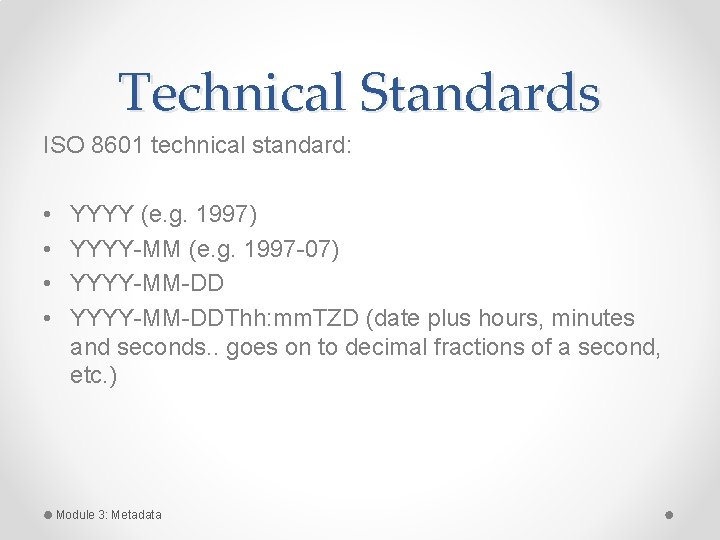
Technical Standards ISO 8601 technical standard: • • YYYY (e. g. 1997) YYYY-MM (e. g. 1997 -07) YYYY-MM-DDThh: mm. TZD (date plus hours, minutes and seconds. . goes on to decimal fractions of a second, etc. ) Module 3: Metadata
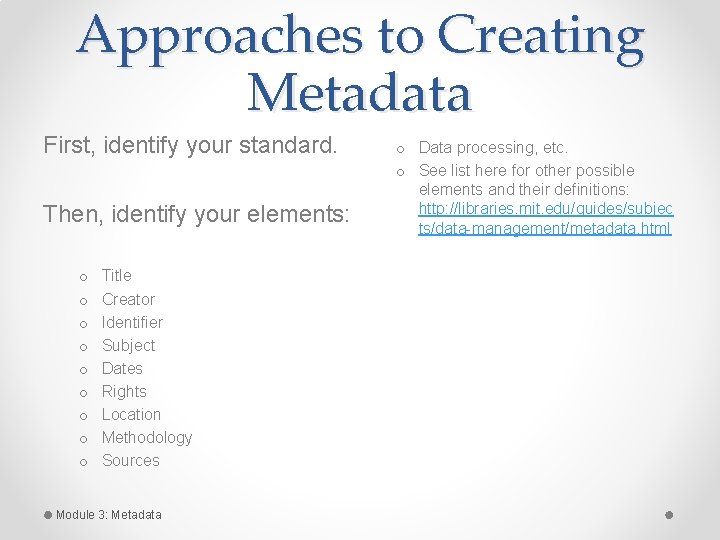
Approaches to Creating Metadata First, identify your standard. Then, identify your elements: o o o o o Title Creator Identifier Subject Dates Rights Location Methodology Sources Module 3: Metadata o Data processing, etc. o See list here for other possible elements and their definitions: http: //libraries. mit. edu/guides/subjec ts/data-management/metadata. html
Purpose of Metadata To ensure: • discovery • use, and • resuse of your research
Best Practices • • Always use an established metadata standard Consistent data entry is important Avoid extraneous punctuation Avoid most abbreviations Use templates and macros when possible Extract pre-existing metadata Keep a data dictionary UW has metadata librarians available for consultations Module 3: Metadata
Sources for this Unit What is metadata: • National Information Standards Organization (NISO). 2004. Understanding Metadata. http: //www. niso. org/publications/press/Understanding. Metadata. pdf • Neiswender, C. 2010. "Introduction to Metadata. " In The MMI Guides: Navigating the World of Marine Metadata. http: //marinemetadata. org/guides/mdataintro. Accessed April 1, 2013. Reuse and discoverability: • National Information Standards Organization (NISO). 2004. Understanding Metadata. http: //www. niso. org/publications/press/Understanding. Metadata. pdf • Miller, Steven J. 2011. Metadata Resources: Selected Reference Documents, Web Sites, and Readings: https: //pantherfile. uwm. edu/mll/www/resource. html Wikipedia page on “Metadata”: http: //en. wikipedia. org/wiki/Metadata • http: //www. library. illinois. edu/dcc/bestpractices/chapter_11_structuralmetadata. html Module 3: Metadata
Sources for this Unit (cont’d) Metadata standards: • Digital Curation Centre’s Disciplinary Metadata resource. http: //www. dcc. ac. uk/resources/metadatastandards. • Hogrefe, K. , Stocks, K. 2011. "The Importance of Metadata Standards. " In The MMI Guides: Navigating the World of Marine Metadata. http: //marinemetadata. org/guides/mdatastandards/stdimportance. Accessed March 22, 2013. Other suggested readings • Introduction to Metadata: Setting the Stage (Getty Research Institute) http: //www. getty. edu/research/publications/electronic_publications/intrometadata/setting. html • Documentation and Metadata (MIT Libraries): http: //libraries. mit. edu/guides/subjects/datamanagement/metadata. html • Version control and authenticity http: //data-archive. ac. uk/create-manage/format/versions Module 3: Metadata