
Metabolism of NMolecules Amino acid catabolismdegradation Amino group
Metabolism of N-Molecules Amino acid catabolism/degradation Amino group C-skeleton Amino acid anabolism/biosynthesis Non-essential amino acids Essential amino acids Other N containing molecules Nucleotide synthesis and degradation de novo synthesis and Salvage pathway N-containing waste 1
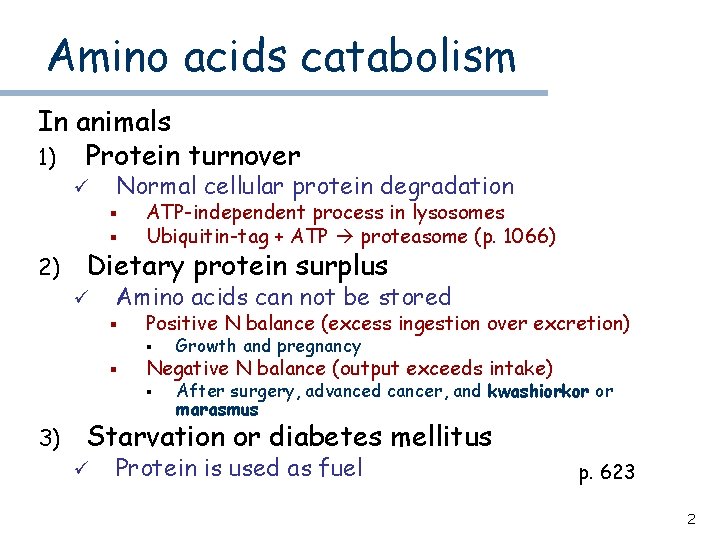
Amino acids catabolism In animals 1) Protein turnover ü Normal cellular protein degradation § § 2) Dietary protein surplus ü Amino acids can not be stored § § 3) ATP-independent process in lysosomes Ubiquitin-tag + ATP proteasome (p. 1066) Positive N balance (excess ingestion over excretion) § Growth and pregnancy § After surgery, advanced cancer, and kwashiorkor or marasmus Negative N balance (output exceeds intake) Starvation or diabetes mellitus ü Protein is used as fuel p. 623 2
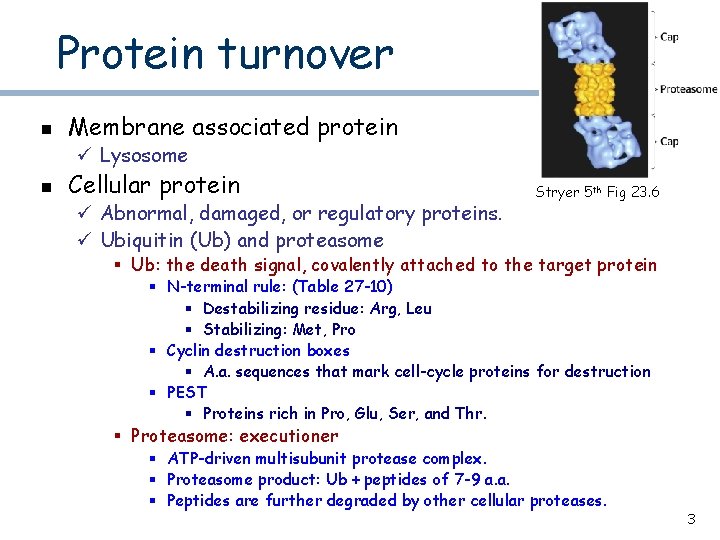
Protein turnover n Membrane associated protein ü Lysosome n Cellular protein ü Abnormal, damaged, or regulatory proteins. ü Ubiquitin (Ub) and proteasome Stryer 5 th Fig 23. 6 § Ub: the death signal, covalently attached to the target protein § N-terminal rule: (Table 27 -10) § Destabilizing residue: Arg, Leu § Stabilizing: Met, Pro § Cyclin destruction boxes § A. a. sequences that mark cell-cycle proteins for destruction § PEST § Proteins rich in Pro, Glu, Ser, and Thr. § Proteasome: executioner § ATP-driven multisubunit protease complex. § Proteasome product: Ub + peptides of 7 -9 a. a. § Peptides are further degraded by other cellular proteases. 3
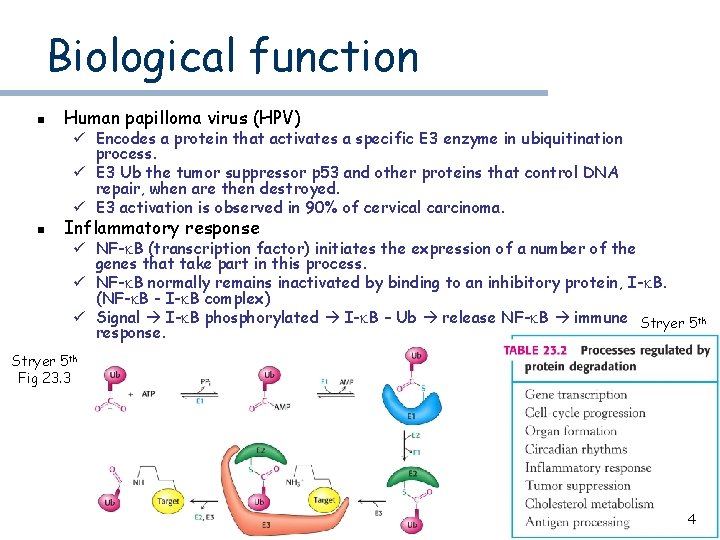
Biological function n Human papilloma virus (HPV) n Inflammatory response ü Encodes a protein that activates a specific E 3 enzyme in ubiquitination process. ü E 3 Ub the tumor suppressor p 53 and other proteins that control DNA repair, when are then destroyed. ü E 3 activation is observed in 90% of cervical carcinoma. ü NF-k. B (transcription factor) initiates the expression of a number of the genes that take part in this process. ü NF-k. B normally remains inactivated by binding to an inhibitory protein, I-k. B. (NF-k. B - I-k. B complex) ü Signal I-k. B phosphorylated I-k. B – Ub release NF-k. B immune Stryer 5 th response. Stryer 5 th Fig 23. 3 4
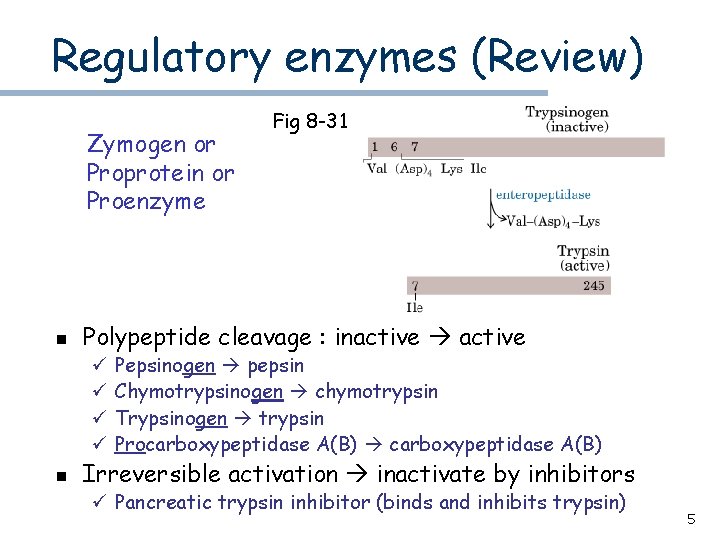
Regulatory enzymes (Review) Zymogen or Proprotein or Proenzyme n Polypeptide cleavage : inactive ü ü n Fig 8 -31 Pepsinogen pepsin Chymotrypsinogen chymotrypsin Trypsinogen trypsin Procarboxypeptidase A(B) Irreversible activation inactivate by inhibitors ü Pancreatic trypsin inhibitor (binds and inhibits trypsin) 5
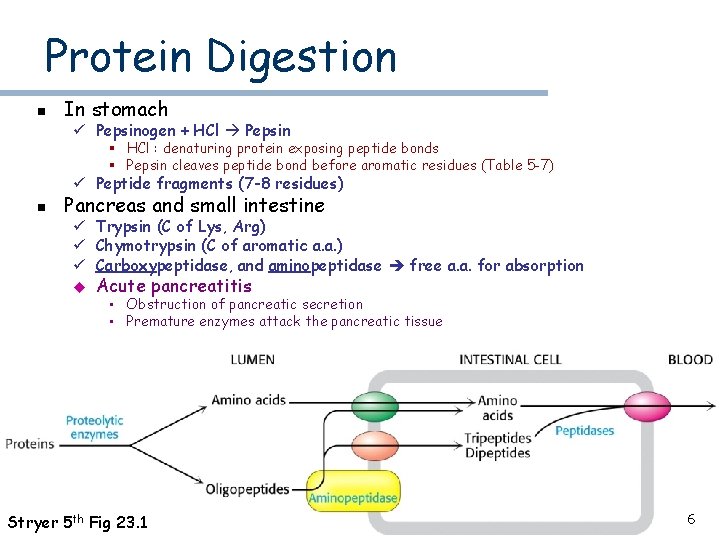
Protein Digestion n In stomach ü Pepsinogen + HCl Pepsin § HCl : denaturing protein exposing peptide bonds § Pepsin cleaves peptide bond before aromatic residues (Table 5 -7) ü Peptide fragments (7 -8 residues) n Pancreas and small intestine ü Trypsin (C of Lys, Arg) ü Chymotrypsin (C of aromatic a. a. ) ü Carboxypeptidase, and aminopeptidase free a. a. for absorption u Acute pancreatitis • • Obstruction of pancreatic secretion Premature enzymes attack the pancreatic tissue Stryer 5 th Fig 23. 1 6
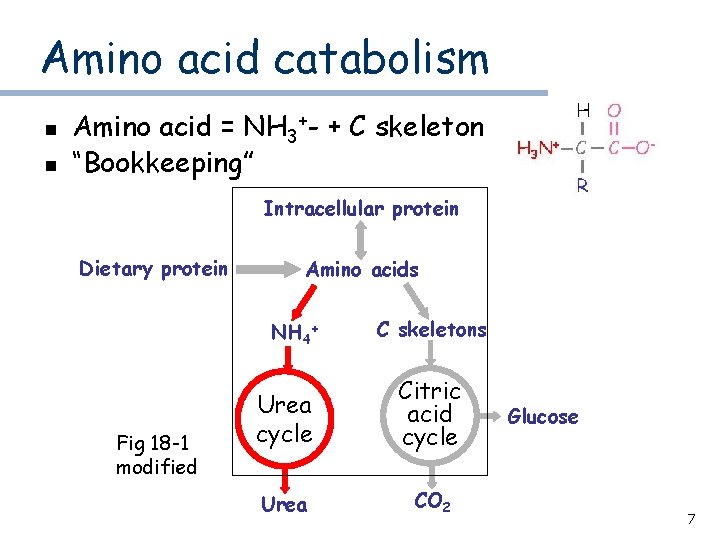
Amino acid catabolism n n Amino acid = NH 3+- + C skeleton “Bookkeeping” Intracellular protein Dietary protein Amino acids NH 4+ Fig 18 -1 modified C skeletons Urea cycle Citric acid cycle Urea CO 2 Glucose 7
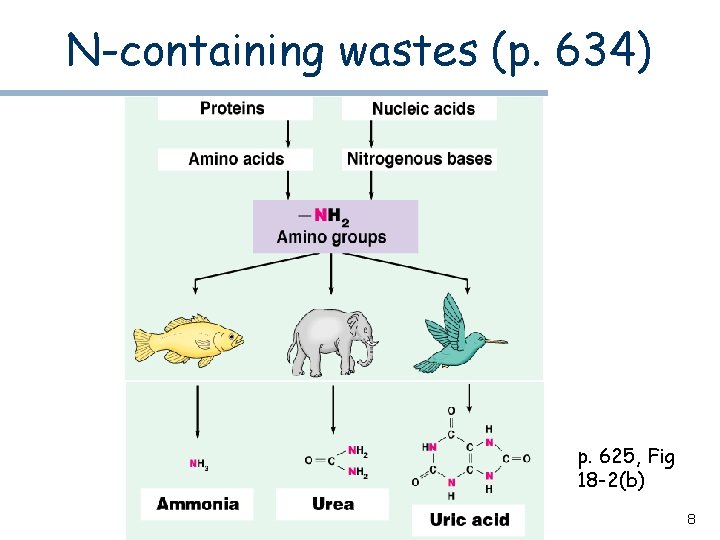
N-containing wastes (p. 634) p. 625, Fig 18 -2(b) 8
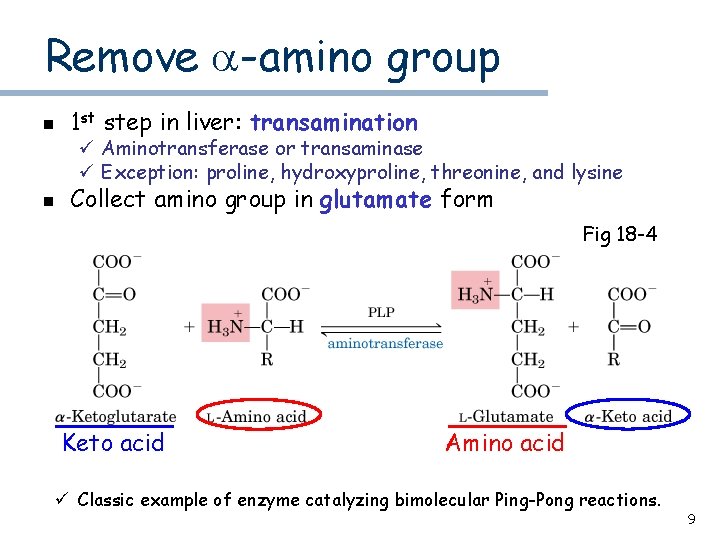
Remove a-amino group n 1 st step in liver: transamination n Collect amino group in glutamate form ü Aminotransferase or transaminase ü Exception: proline, hydroxyproline, threonine, and lysine Fig 18 -4 Keto acid Amino acid ü Classic example of enzyme catalyzing bimolecular Ping-Pong reactions. 9
Aminotransferase n A family of enzymes with different specificity for the amino acids. n A common prosthetic group (coenzyme): ü Alanine aminotransferase ü Aspartate aminotransferase ü PLP (pyridoxal phosphate) § Derived from Vit B 6 § Transamination § As a carrier of amino group (accept donate) § Decarboxylation § Racimization § Forms enzyme-bound Schiff base intermediate. n Medical diagnoses (Box 18 -1) ü A variety of enzymes leak from the injured cells into the bloodstream § Heart and liver damages caused by heart attack, drug toxicity, or infection. § Liver damages caused by CCl 4, chloroform, and other industrial solvent. ü [Enz] in blood serum § SALT test (alanine aminotransferase, or GPT) § SAST test (aspartate …, or GOT) § SCK test (serum creatine kinase) 10
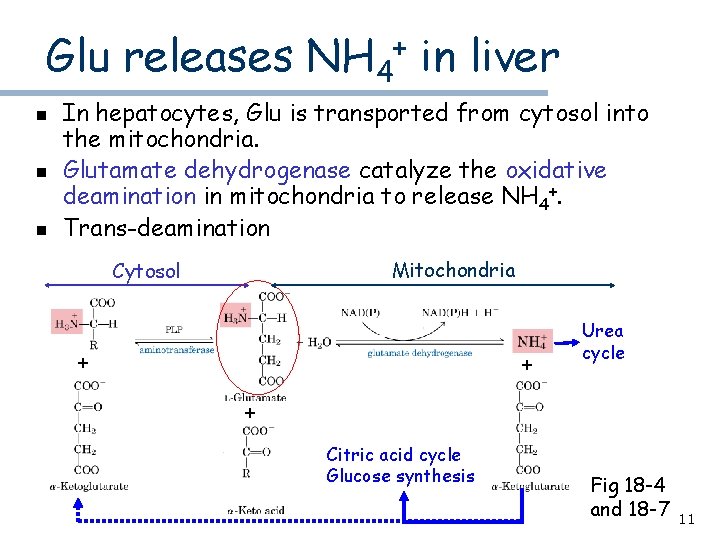
Glu releases NH 4+ in liver n n n In hepatocytes, Glu is transported from cytosol into the mitochondria. Glutamate dehydrogenase catalyze the oxidative deamination in mitochondria to release NH 4+. Trans-deamination Mitochondria Cytosol + + Urea cycle + Citric acid cycle Glucose synthesis Fig 18 -4 and 18 -7 11

Glutamate dehydrogenase n Operates at the intersection of N- and C- metabolism ü Present only in hepatic mitochondria matrix ü Requires NAD+ or NADP+ ü Allosterically regulated § Inhibitor: [GTP] and [ATP] § Activator: [GDP] and [ADP] ü A lowering of the energy charge accelerates the oxidation of a. a. ü Hyperinsulinism-hyperammonemia syndrome: ü mutation in GTP binding site, permanently activated. Fig 18 -7 Citric acid cycle Glucose synthesis Urea cycle 12
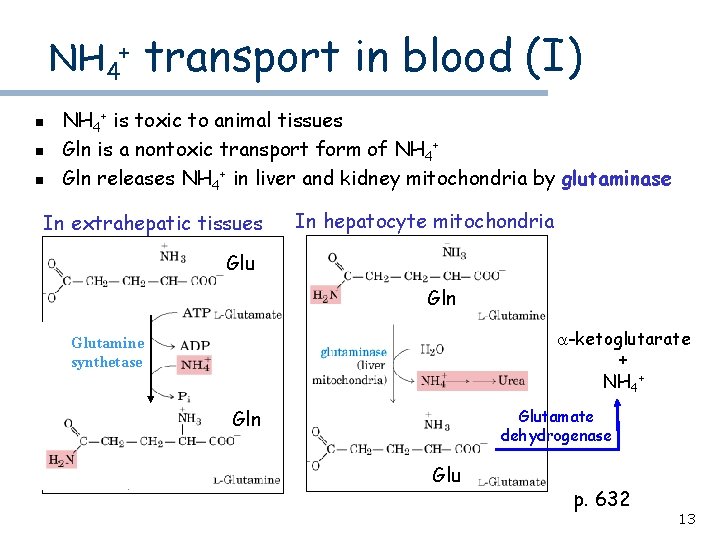
NH 4+ n n n transport in blood (I) NH 4+ is toxic to animal tissues Gln is a nontoxic transport form of NH 4+ Gln releases NH 4+ in liver and kidney mitochondria by glutaminase In extrahepatic tissues In hepatocyte mitochondria Glu Gln a-ketoglutarate + NH 4+ Glutamine synthetase Glutamate dehydrogenase Gln Glu p. 632 13
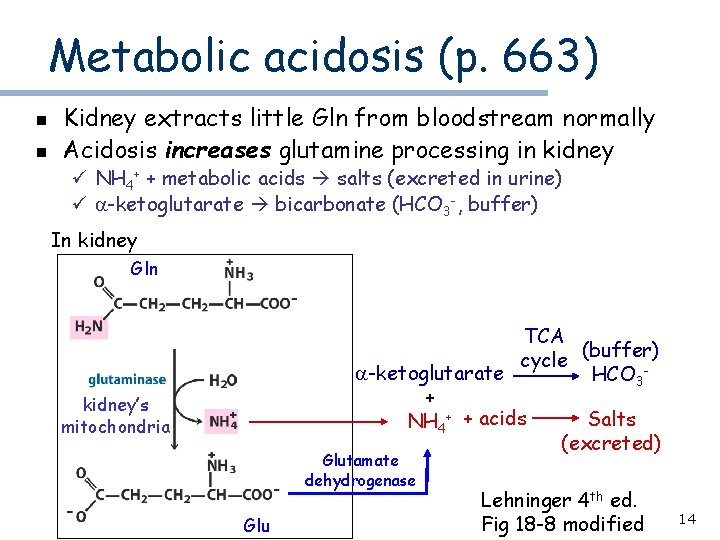
Metabolic acidosis (p. 663) n n Kidney extracts little Gln from bloodstream normally Acidosis increases glutamine processing in kidney ü NH 4+ + metabolic acids salts (excreted in urine) ü a-ketoglutarate bicarbonate (HCO 3 -, buffer) In kidney Gln TCA cycle (buffer) a-ketoglutarate HCO 3+ Salts NH 4+ + acids (excreted) kidney’s mitochondria Glutamate dehydrogenase Glu Lehninger 4 th ed. Fig 18 -8 modified 14
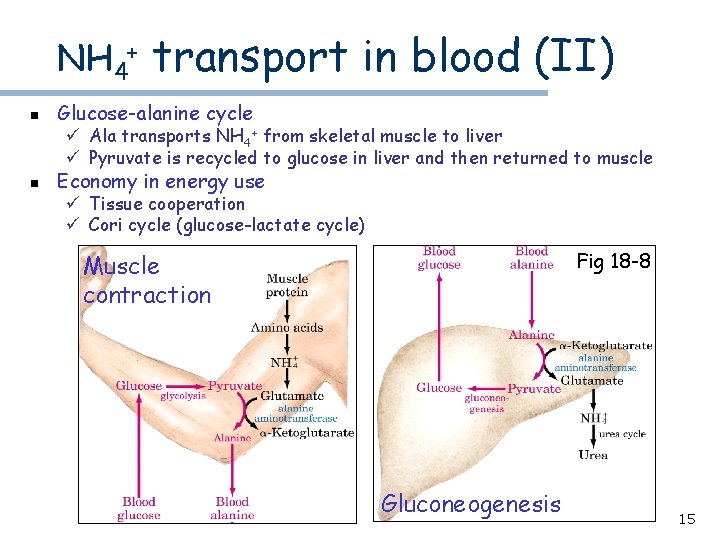
NH 4+ transport in blood (II) n Glucose-alanine cycle n Economy in energy use ü Ala transports NH 4+ from skeletal muscle to liver ü Pyruvate is recycled to glucose in liver and then returned to muscle ü Tissue cooperation ü Cori cycle (glucose-lactate cycle) Fig 18 -8 Muscle contraction Gluconeogenesis 15
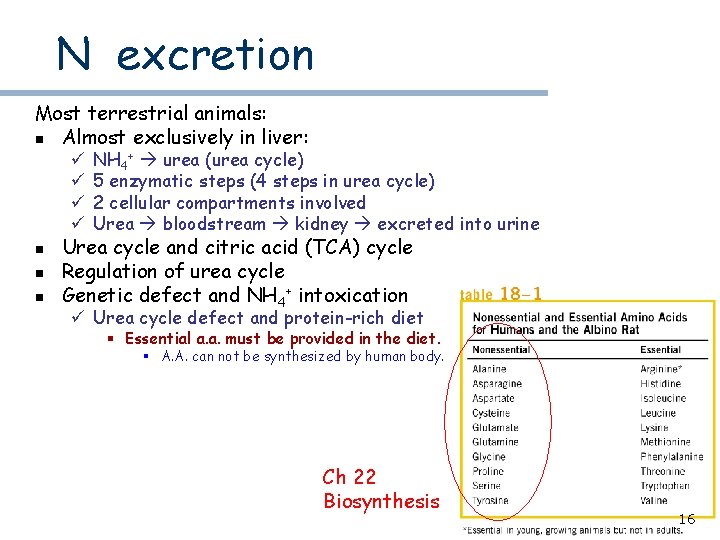
N excretion Most terrestrial animals: n Almost exclusively in liver: ü ü n n n NH 4+ urea (urea cycle) 5 enzymatic steps (4 steps in urea cycle) 2 cellular compartments involved Urea bloodstream kidney excreted into urine Urea cycle and citric acid (TCA) cycle Regulation of urea cycle Genetic defect and NH 4+ intoxication ü Urea cycle defect and protein-rich diet § Essential a. a. must be provided in the diet. § A. A. can not be synthesized by human body. Ch 22 Biosynthesis 16
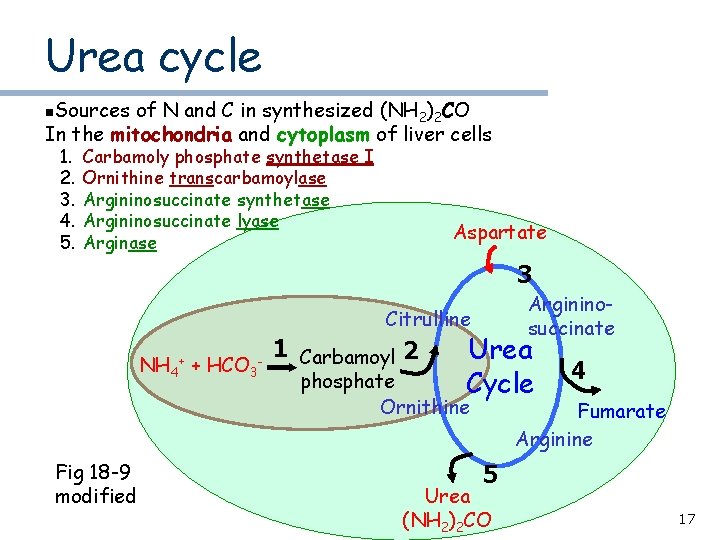
Urea cycle Sources of N and C in synthesized (NH 2)2 CO In the mitochondria and cytoplasm of liver cells n 1. 2. 3. 4. 5. Carbamoly phosphate synthetase I Ornithine transcarbamoylase Argininosuccinate synthetase Argininosuccinate lyase Arginase Aspartate 3 Argininosuccinate Citrulline NH 4+ + HCO 3 - Fig 18 -9 modified 1 Carbamoyl 2 Urea Cycle phosphate Ornithine 4 Fumarate Arginine 5 Urea (NH 2)2 CO 17
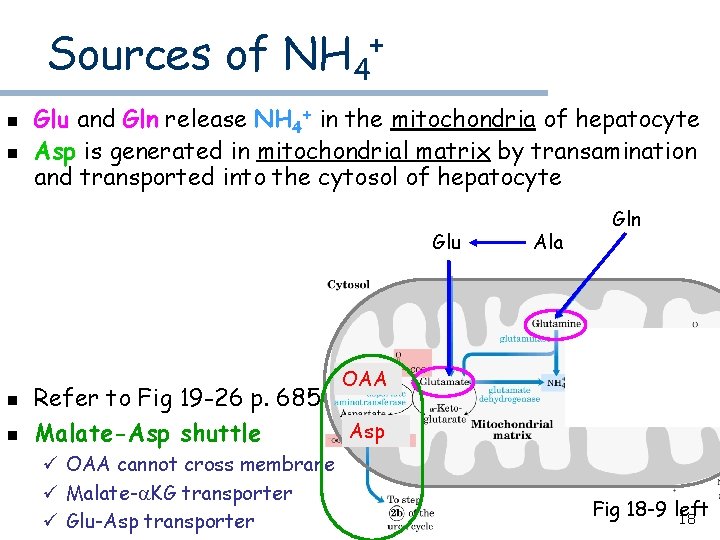
Sources of NH 4 n n + Glu and Gln release NH 4+ in the mitochondria of hepatocyte Asp is generated in mitochondrial matrix by transamination and transported into the cytosol of hepatocyte Glu n n Refer to Fig 19 -26 p. 685 Malate-Asp shuttle ü OAA cannot cross membrane ü Malate-a. KG transporter ü Glu-Asp transporter Ala Gln OAA Asp Fig 18 -9 left 18
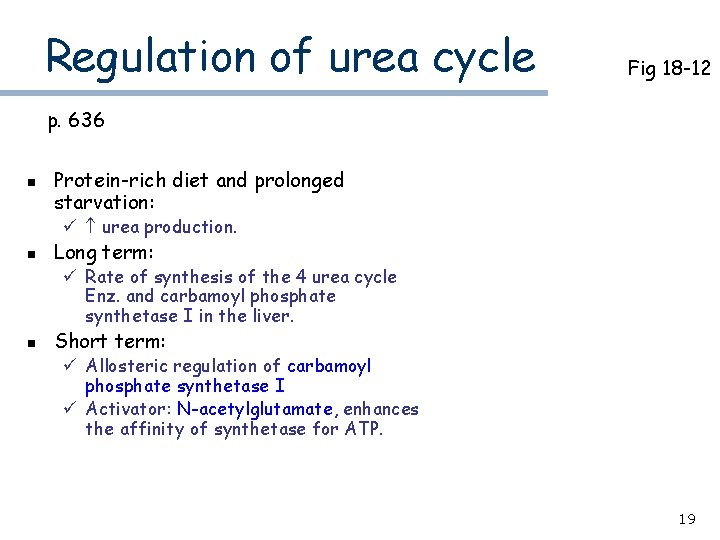
Regulation of urea cycle Fig 18 -12 p. 636 n Protein-rich diet and prolonged starvation: ü urea production. n Long term: ü Rate of synthesis of the 4 urea cycle Enz. and carbamoyl phosphate synthetase I in the liver. n Short term: ü Allosteric regulation of carbamoyl phosphate synthetase I ü Activator: N-acetylglutamate, enhances the affinity of synthetase for ATP. 19
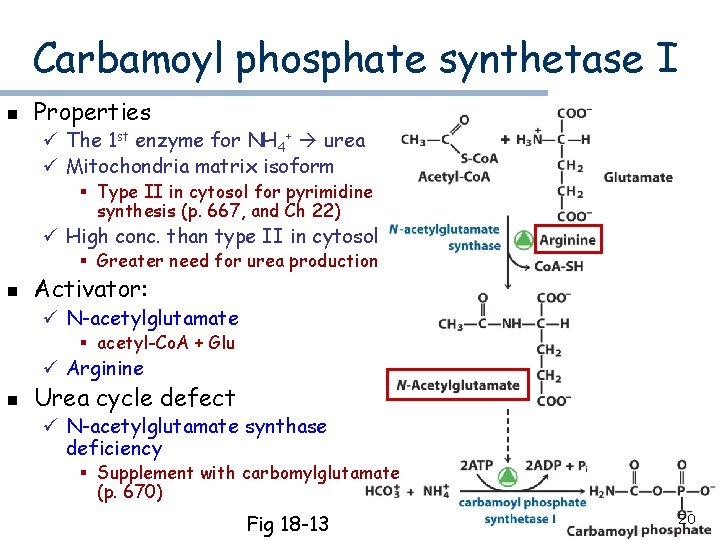
Carbamoyl phosphate synthetase I n Properties ü The 1 st enzyme for NH 4+ urea ü Mitochondria matrix isoform § Type II in cytosol for pyrimidine synthesis (p. 667, and Ch 22) ü High conc. than type II in cytosol § Greater need for urea production n Activator: ü N-acetylglutamate § acetyl-Co. A + Glu ü Arginine n Urea cycle defect ü N-acetylglutamate synthase deficiency § Supplement with carbomylglutamate (p. 670) Fig 18 -13 20
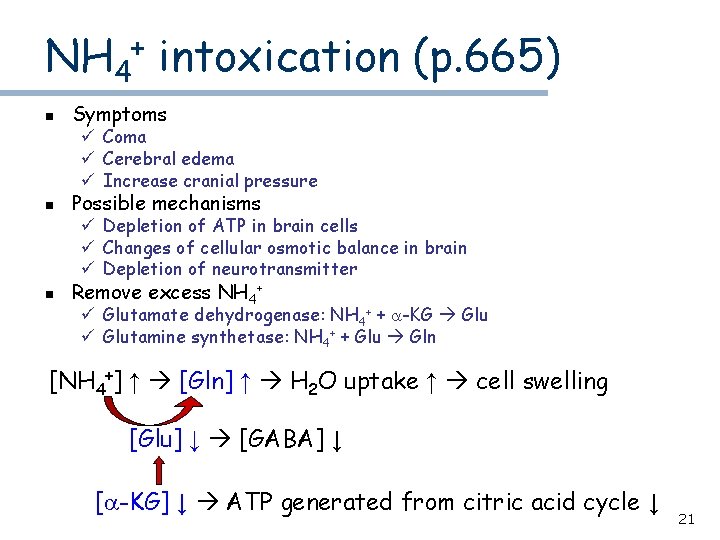
NH 4+ intoxication (p. 665) n Symptoms n Possible mechanisms n Remove excess NH 4+ ü Coma ü Cerebral edema ü Increase cranial pressure ü Depletion of ATP in brain cells ü Changes of cellular osmotic balance in brain ü Depletion of neurotransmitter ü Glutamate dehydrogenase: NH 4+ + a-KG Glu ü Glutamine synthetase: NH 4+ + Glu Gln [NH 4+] ↑ [Gln] ↑ H 2 O uptake ↑ cell swelling [Glu] ↓ [GABA] ↓ [a-KG] ↓ ATP generated from citric acid cycle ↓ 21
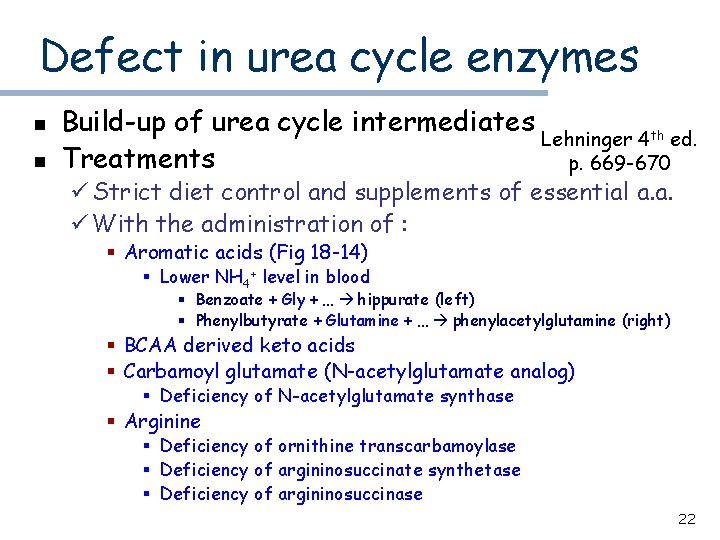
Defect in urea cycle enzymes n n Build-up of urea cycle intermediates Lehninger 4 th ed. Treatments p. 669 -670 ü Strict diet control and supplements of essential a. a. ü With the administration of : § Aromatic acids (Fig 18 -14) § Lower NH 4+ level in blood § Benzoate + Gly + … hippurate (left) § Phenylbutyrate + Glutamine + … phenylacetylglutamine (right) § BCAA derived keto acids § Carbamoyl glutamate (N-acetylglutamate analog) § Deficiency of N-acetylglutamate synthase § Arginine § Deficiency of ornithine transcarbamoylase § Deficiency of argininosuccinate synthetase § Deficiency of argininosuccinase 22
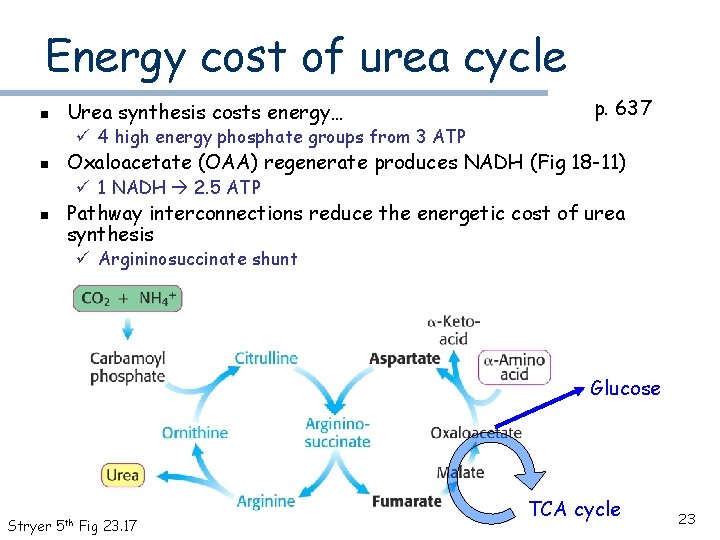
Energy cost of urea cycle n Urea synthesis costs energy… p. 637 ü 4 high energy phosphate groups from 3 ATP n Oxaloacetate (OAA) regenerate produces NADH (Fig 18 -11) ü 1 NADH 2. 5 ATP n Pathway interconnections reduce the energetic cost of urea synthesis ü Argininosuccinate shunt Glucose Stryer 5 th Fig 23. 17 TCA cycle 23
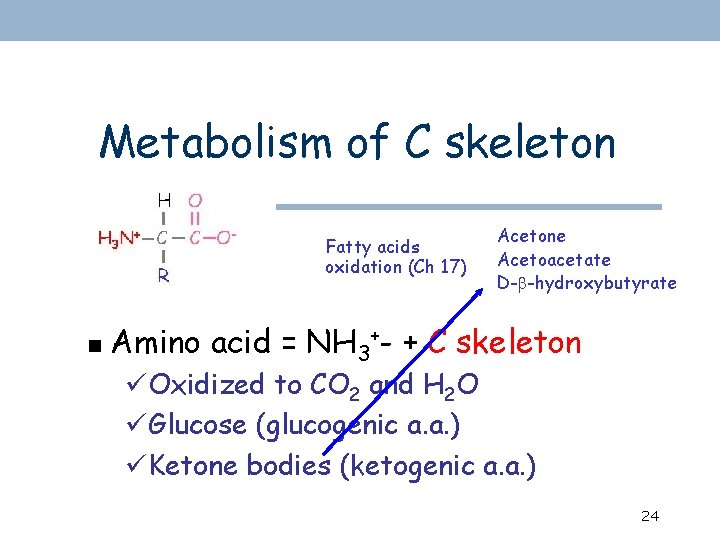
Metabolism of C skeleton Fatty acids oxidation (Ch 17) n Acetone Acetoacetate D-b-hydroxybutyrate Amino acid = NH 3+- + C skeleton üOxidized to CO 2 and H 2 O üGlucose (glucogenic a. a. ) üKetone bodies (ketogenic a. a. ) 24
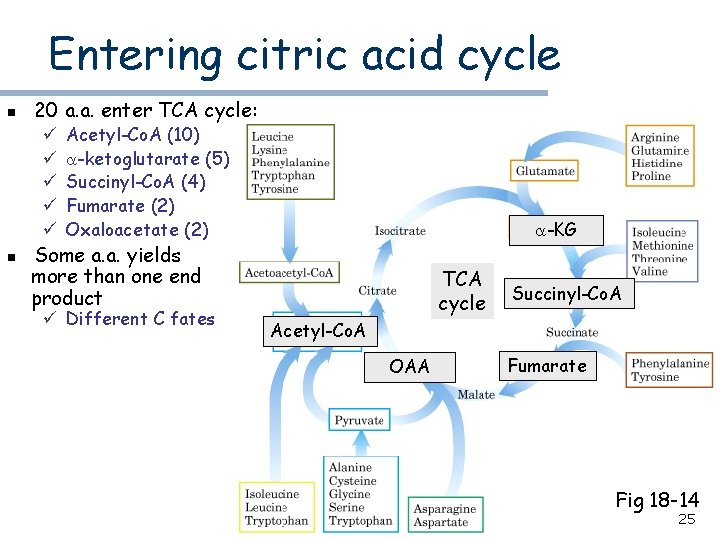
Entering citric acid cycle n 20 a. a. enter TCA cycle: ü ü ü n Acetyl-Co. A (10) a-ketoglutarate (5) Succinyl-Co. A (4) Fumarate (2) Oxaloacetate (2) a-KG Some a. a. yields more than one end product ü Different C fates TCA cycle Succinyl-Co. A Acetyl-Co. A OAA Fumarate Fig 18 -14 25
One-carbon transfer p. 640 -643 n n Transfer one-carbon groups in different oxidation states. Some enzyme cofactors involved (Fig 18 -15): ü Biotin § Transfer CO 2 ü Tetrahydrofolate (H 4 folate) § Transfer –HC=O, -HCOH, or –CH 3 ü S-adenosylmethionine (ado. Met, SAM) § Transfer –CH 3 26
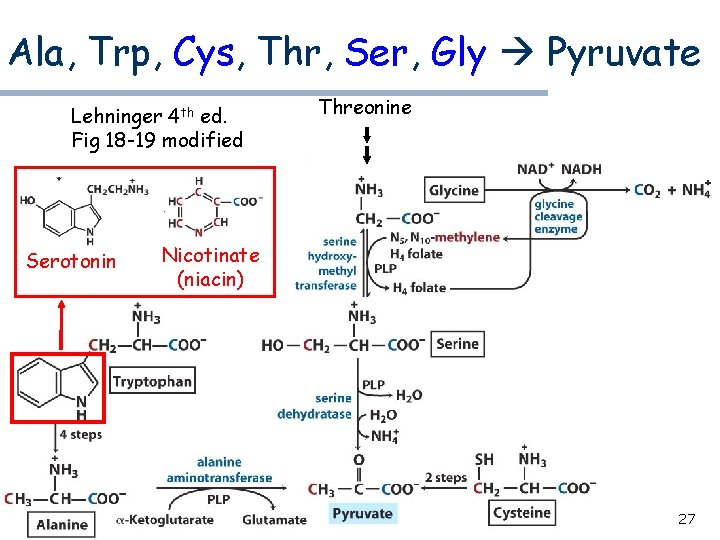
Ala, Trp, Cys, Thr, Ser, Gly Pyruvate Lehninger 4 th ed. Fig 18 -19 modified Serotonin Threonine Nicotinate (niacin) 27
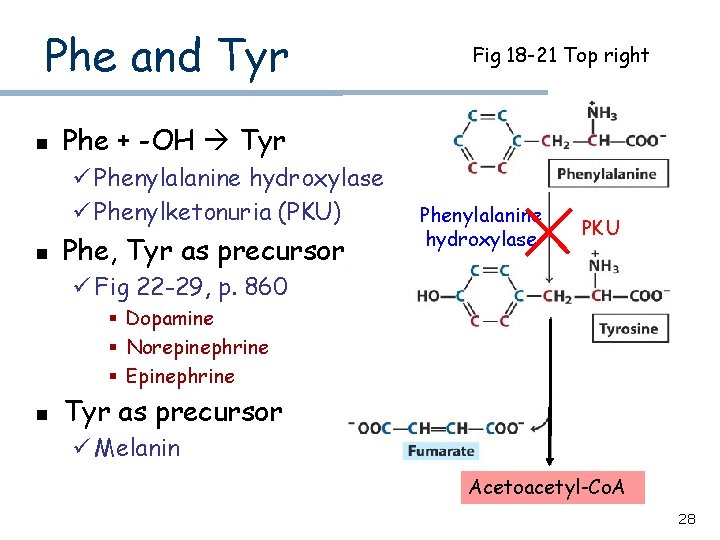
Phe and Tyr n Phe + -OH Tyr ü Phenylalanine hydroxylase ü Phenylketonuria (PKU) n Fig 18 -21 Top right Phe, Tyr as precursor Phenylalanine hydroxylase PKU ü Fig 22 -29, p. 860 § Dopamine § Norepinephrine § Epinephrine n Tyr as precursor ü Melanin Acetoacetyl-Co. A 28
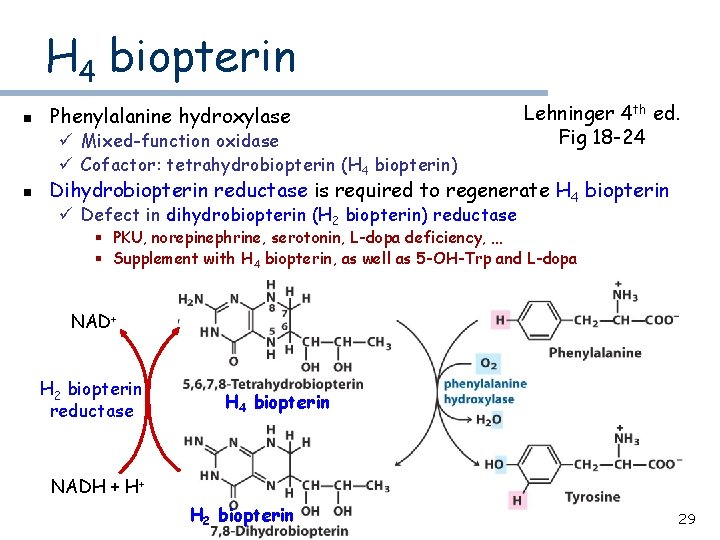
H 4 biopterin n Phenylalanine hydroxylase ü Mixed-function oxidase ü Cofactor: tetrahydrobiopterin (H 4 biopterin) n Lehninger 4 th ed. Fig 18 -24 Dihydrobiopterin reductase is required to regenerate H 4 biopterin ü Defect in dihydrobiopterin (H 2 biopterin) reductase § PKU, norepinephrine, serotonin, L-dopa deficiency, … § Supplement with H 4 biopterin, as well as 5 -OH-Trp and L-dopa NAD+ H 2 biopterin reductase H 4 biopterin NADH + H+ H 2 biopterin 29
Branched-chain a. a. (p. 651) n BCAA: Val, Ile, Leu ü Not degraded in the liver ü Oxidized as fuels in extrahepatic tissues § Muscle, adipose, kidney and brain n The 3 a. a. share the first 2 enzymes for catabolism ü Fig 18 -27 ü Branched-chain aminotransferase a-keto acids ü Branched-chain a-keto acid dehydrogenase complex acyl. Co. A derivatives § Closely resemble pyruvate dehydrogenase § Inactivated by phosphorylation § Activated by dephosphorylation 30
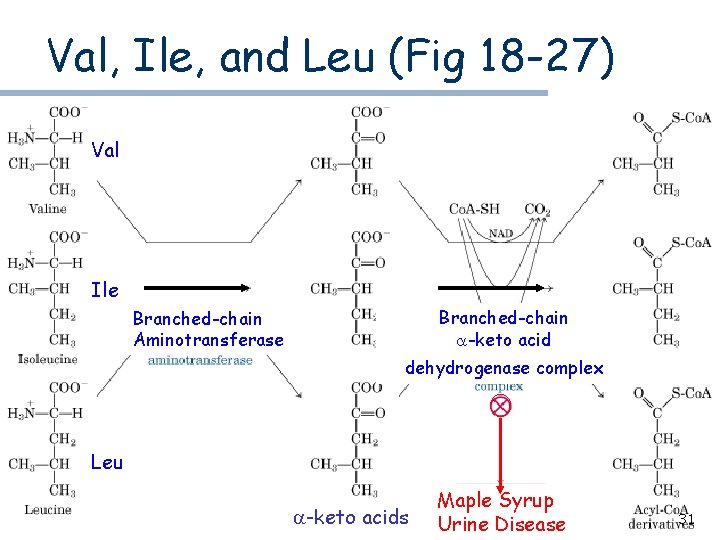
Val, Ile, and Leu (Fig 18 -27) Val Ile Branched-chain a-keto acid Branched-chain Aminotransferase dehydrogenase complex Leu a-keto acids Maple Syrup Urine Disease 31
Maple syrup urine disease n MSUD p. 652 ü Branched-chain ketonuria n n Defective branched-chain a-keto acid dehydrogenase complex a-keto acids (odor) derived (Val, Ile and Leu) accumulate in blood and urine ü Abnormal brain development ü Mental retardation ü Death in infancy n Rigid diet control ü Limit the intake of Val, Ile, Leu to min. requirement for normal growth 32
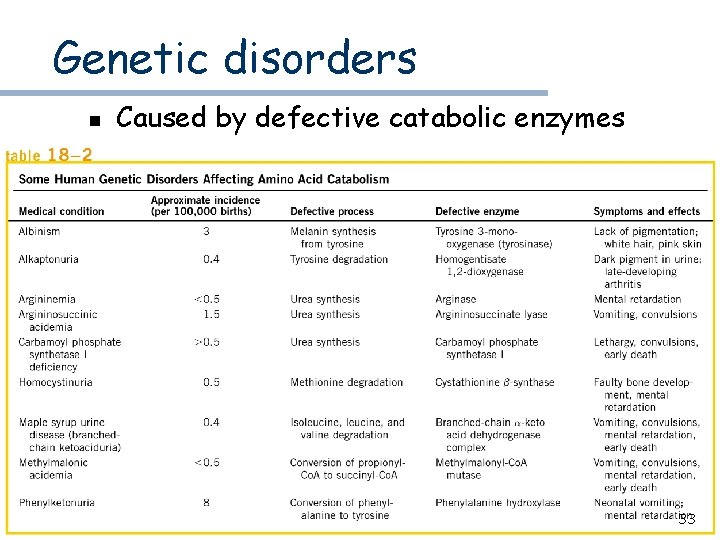
Genetic disorders n Caused by defective catabolic enzymes 33
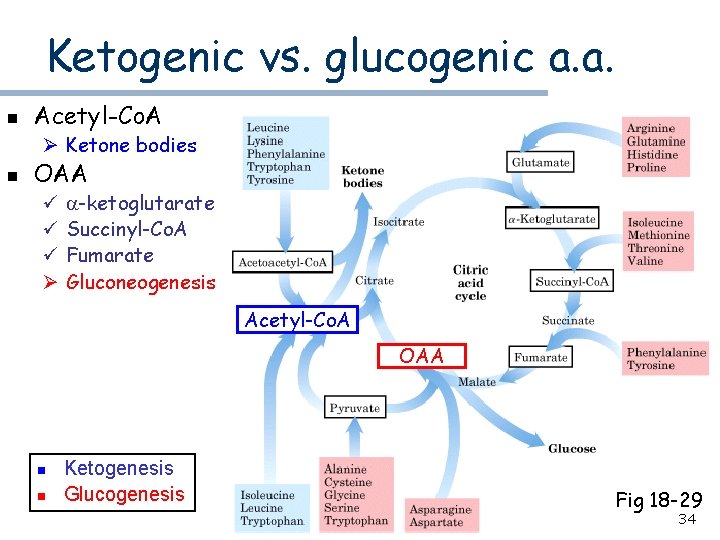
Ketogenic vs. glucogenic a. a. n Acetyl-Co. A Ø Ketone bodies n OAA ü ü ü Ø a-ketoglutarate Succinyl-Co. A Fumarate Gluconeogenesis Acetyl-Co. A OAA n n Ketogenesis Glucogenesis Fig 18 -29 34
Ketogenesis vs. glucogenesis n Ketogenesis ü A. A. degraded to acetoacetyl-Co. A and or acetyl-Co. A (6 a. a. ) ü Yield ketone bodies in the liver ü In untreated diabetes mellitus, liver produces large amounts of ketone bodies from both fatty acids and the ketogenic a. a. ü Exclusively ketogenic: Leu and Lys n Glucogenesis A. A. degraded to pyruvate, a-ketoglutarate, succinyl-Co. A, fumarate, and/or oxaloacetate ü Converted into glucose and glycogen. ü n Both ketogenic and glucogenic ü Phe, Tyr, Trp, and Ile On p. 588, read the 1 st paragraph under “The Glyoxylate Cycle” 35
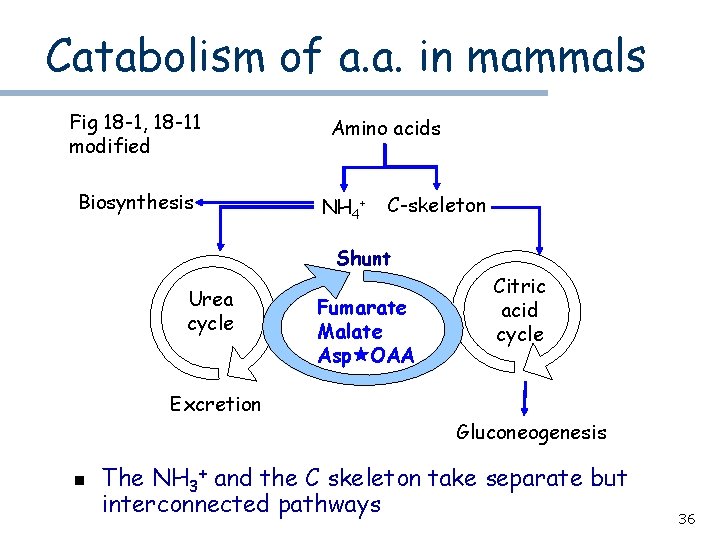
Catabolism of a. a. in mammals Fig 18 -1, 18 -11 modified Biosynthesis Amino acids NH 4+ C-skeleton Shunt Urea cycle Fumarate Malate Asp OAA Citric acid cycle Excretion Gluconeogenesis n The NH 3+ and the C skeleton take separate but interconnected pathways 36
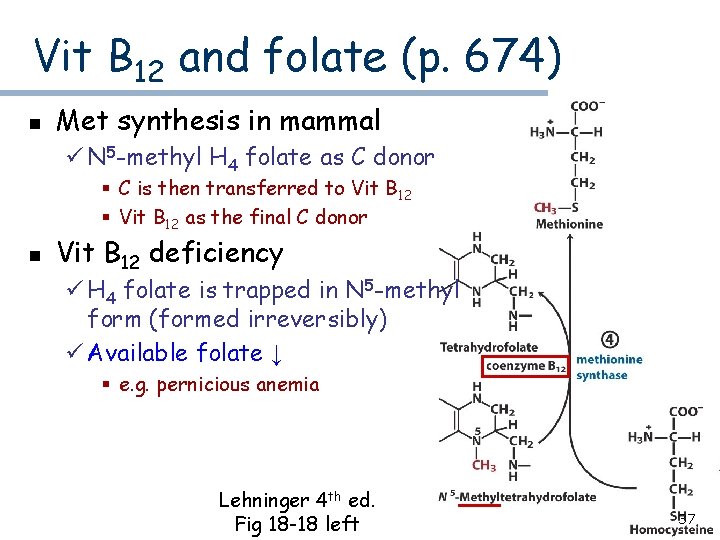
Vit B 12 and folate (p. 674) n Met synthesis in mammal ü N 5 -methyl H 4 folate as C donor § C is then transferred to Vit B 12 § Vit B 12 as the final C donor n Vit B 12 deficiency ü H 4 folate is trapped in N 5 -methyl form (formed irreversibly) ü Available folate ↓ § e. g. pernicious anemia Lehninger 4 th ed. Fig 18 -18 left 37
- Slides: 37